

The best tiny fall decor ideas work like a change of clothes for the room rather than a delivery of new objects. Autumn in a compact home is mostly textile, light and scent: a heavier throw where a light one lived, warmer light in the same lamps, and natural pieces gathered in ones and twos instead of bought in sets. Because floor and surface space are already spoken for, the seasonal shift has to happen on the sofa, the windows, the door and the table, in layers you can reverse in an afternoon when winter arrives.
That restraint is also the honest trade-off. Fifteen small touches, chosen well, will always beat thirty small ornaments in a compact room, because each extra object needs a home for the other forty weeks of the year. The fifteen touches below therefore favour swaps over additions, natural materials that can be composted or stored flat, and a few larger pieces instead of scattered clutter. Nothing here needs new furniture, nothing blocks a walkway, and everything either earns warmth, light or comfort as well as looks, which is the standard every seasonal change in a small home should meet.
Tiny fall decor ideas at a glance
| Touch | Where it goes | Why it works in a small space |
|---|---|---|
| 1. Plaid throw swap | Sofa or bed | Instant autumn pattern, zero new furniture |
| 2. Amber cushion covers | Existing cushions | Colour change that stores flat |
| 3. Few large pumpkins | Step, hearth side, table | Big signal, small count |
| 4. Pinecone bowl | Table or shelf | Gathered, free, contained |
| 5. Branch arrangement | Tall vase in a corner | Height without footprint |
| 6. Twig and leaf garland | Door or window frame | Uses a line the room already has |
| 7. Simmer pot scent | Hob, used briefly | Seasonal scent without candles |
| 8. Warmer bulbs | Existing lamps | Same fittings, cosier light |
| 9. Low layered lighting | One lamp plus flameless glow | Evening warmth without clutter |
| 10. Heavier curtains | Windows | Warmth as well as looks |
| 11. Layered rug | Over the main rug or floor zone | Defines the seating area, adds insulation feel |
| 12. One statement wreath | Door | The single strong autumn signal |
| 13. Runner and tray centrepiece | Table | Contained display that moves for meals |
| 14. Entry mat and boot tray | Inside the door | Seasonal and genuinely practical |
| 15. Summer swap box | Loft or bench storage | Autumn comes in, summer goes out |
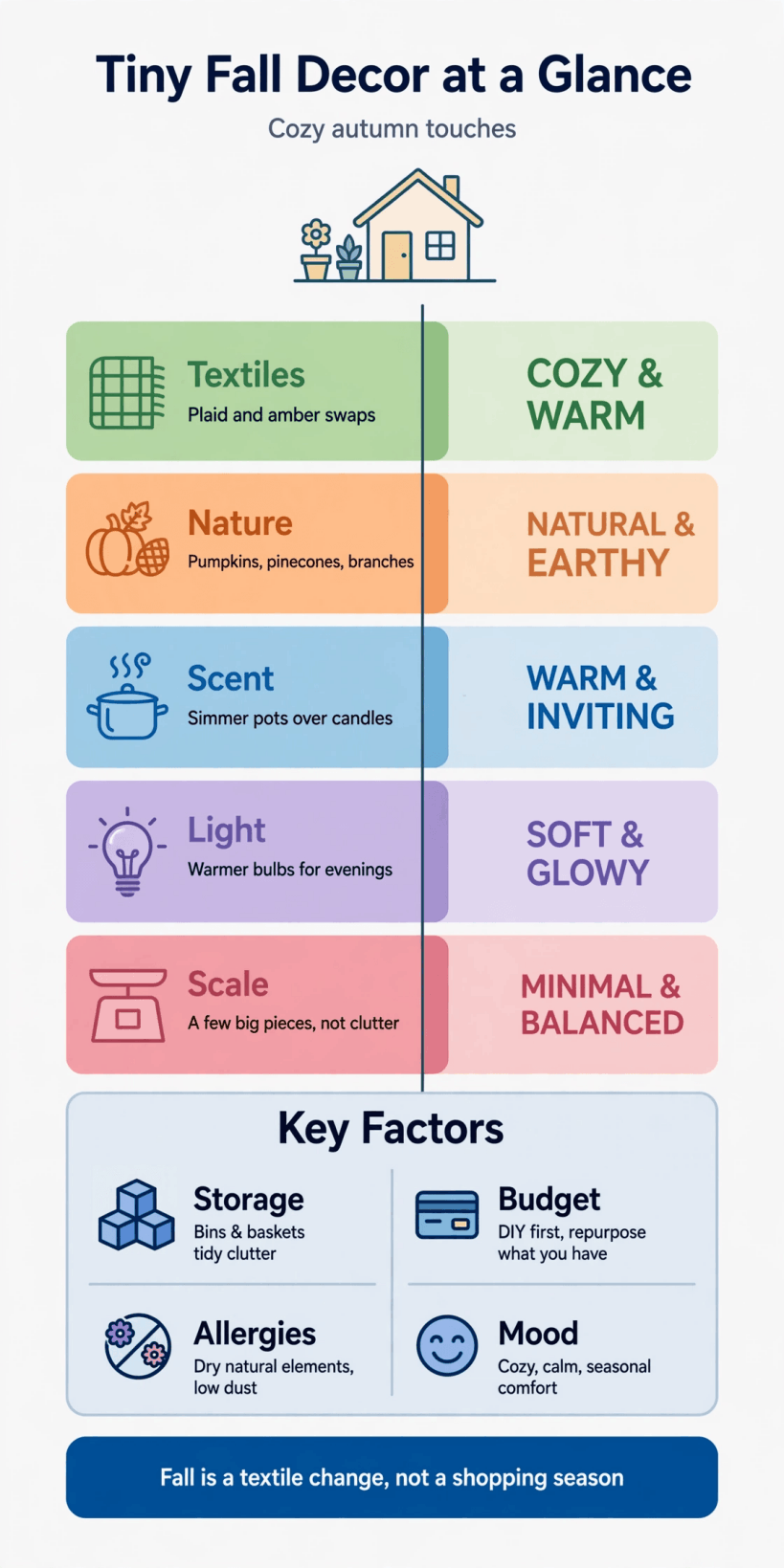
1. Autumn Textile Swaps in a Tiny Home: Plaid Throws and Amber Cushions
Touch 1: Swap one throw for a plaid one. The fastest autumn signal in any room is the throw on the sofa or the bed, because it is large, soft and always in view. Exchange the summer throw for a plaid or checked one in rust, mustard or deep green, and fold the summer one into the storage the plaid one came from, so the swap is volume-neutral. If the throw will be used every evening, choose a washable weave and a size that covers one person properly rather than a decorative strip that slides off. Textiles carry the season in a compact home precisely because they were already there, doing a job.
Touch 2: Change cushion covers, not cushions. Amber, rust and warm brown covers over the cushion pads you already own change the whole palette of the seating area for the storage cost of a folded square of fabric. Keep the summer covers, washed, inside the autumn ones in storage if space is that tight. Mix one patterned cover with plains in the same family rather than pattern on every cushion, which keeps a small sofa calm. Covers also wash easily after a season of woodsmoke, cooking and muddy paws, which plain decorative cushions bought for the season rarely survive as gracefully.
2. Natural Autumn Pieces, Few and Large: Pumpkins and a Pinecone Bowl
Touch 3: A few large pumpkins, grouped once. Three pumpkins in one group, on the step, beside the stove or at one end of the table, look generous. Nine small ones scattered on every surface look like clutter and make cleaning miserable. Choose sizes that nest visually, keep them out of the walkway and off the worktop, and plan their ending: soup, compost or seeds, rather than a slow collapse on a shelf. Faux pumpkins solve the ending but create storage, so in a compact home real ones, eaten or composted, are usually the more honest choice.
Touch 4: A bowl of pinecones. Gathered pinecones in a wooden bowl give texture, scent and a clear autumn note in a footprint the bowl already had. Dry them on a tray before arranging so they open fully and shed any damp, and keep the bowl somewhere it will be seen at sitting height. A turned or carved bowl suits the material well, and the projects in green wood bowls and spoons for beginner carving are a good route to a bowl made from a single found piece rather than another bought container.
3. Height Without Footprint: A Branch Arrangement in a Tall Vase
Touch 5: Branches in the tallest vase you own. A few bare or berried branches in a tall vase in a corner give the room autumn height and shadow play without taking a single shelf. Cut or gather lengths that clear heads and lights, strip low leaves, and weight the vase if it stands anywhere near a walkway. The arrangement lasts for weeks, needs no water if the branches are bare, and returns to the garden or compost when it comes out. Gathered material used this way is a whole craft in itself, as the ideas in fallen limb crafts with branches and twigs show, from wreaths to simple wall pieces.
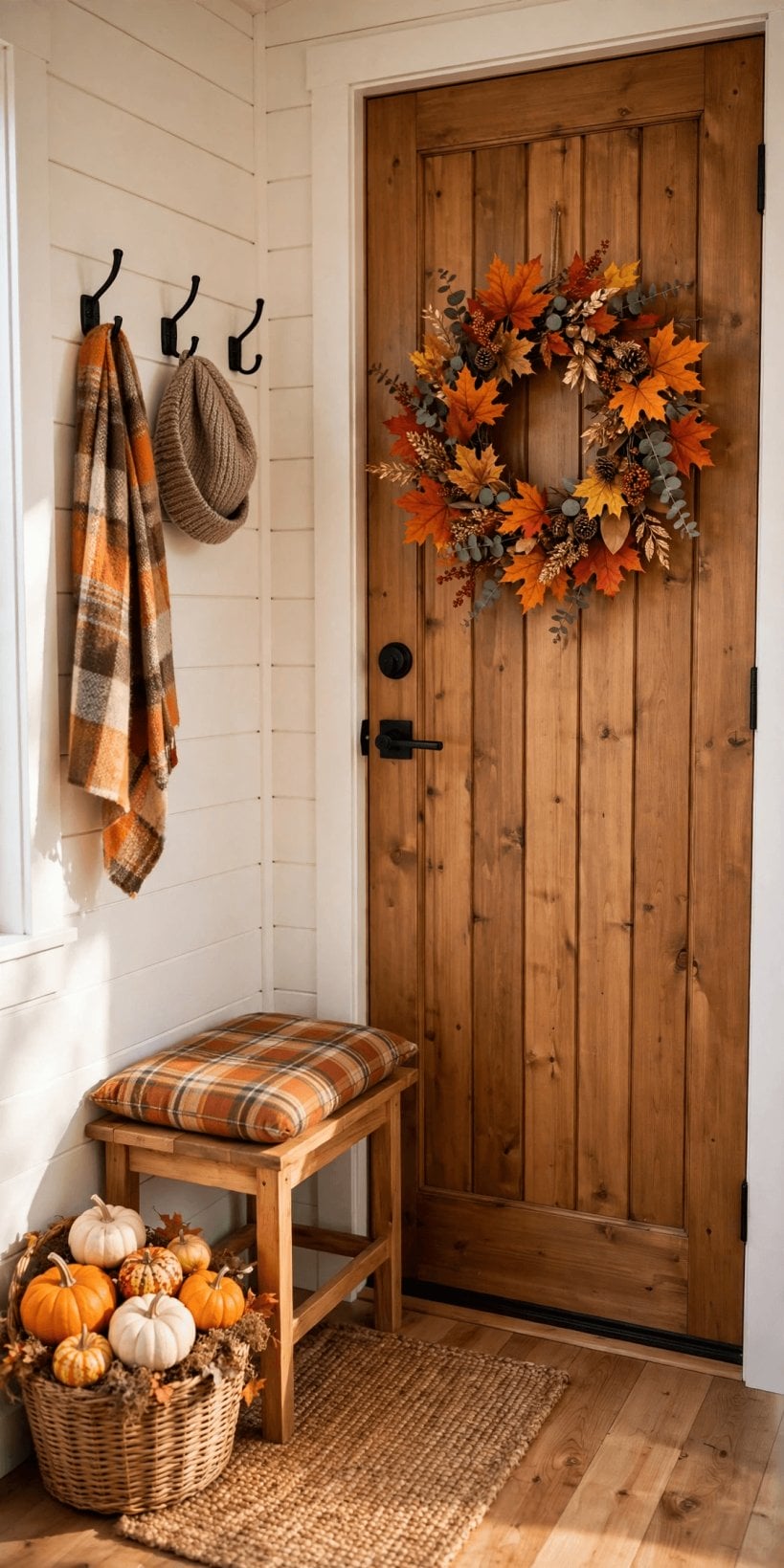
Place the vase where the branches are backlit by a window if you can, because autumn branches read as much by silhouette as by colour. In a home with a loft, keep tall arrangements away from the ladder swing and the route down in the dark. One arrangement, placed with that much care, does the work of a whole set of ornaments, and when guests ask where the rest of the decorations are, the honest answer is that the room is wearing them: in its throws, its light and its scent, not standing on its surfaces.
4. Door Garland and Hob Scent: Twig Garlands and a Simmer Pot
Touch 6: A twig and leaf garland on the door or window frame. A simple garland of twigs, dried leaves and a few seed heads follows the top of the entry door or the kitchen window, using a line the room already draws. Twist it loosely so it hangs in soft swags, fix it with removable hooks, and keep it clear of hinges, latches and the hob. Natural garlands are light, which matters on thin doors and lightweight walls; for how different wall surfaces behave under fixings, see lightweight interior wall finishes for tiny houses before you load any panel with hooks.
Touch 7: Scent from a simmer pot, not candles. A small pan of water with apple peel, cinnamon, cloves and orange rind, simmered briefly on the hob, scents a compact home in minutes, and the scent suits the small volume so well that a short simmer is plenty. This is deliberately scent without candles: no flame near curtains, no soot, nothing left burning in a room where bedding is metres away. Watch the pan, top up the water, and compost the contents afterwards. Never leave a simmer pot unattended, and treat it as cooking, because that is what it is.
5. Warmer Light for Shorter Days: Bulb Temperature and Low Layered Glow
Touch 8: Swap to warmer bulbs. The single most effective autumn change costs no space at all: warmer bulbs in the lamps you already use. Light that was bright and white in summer feels thin and cold against early darkness, while a warm bulb makes wood, textiles and skin tones look rich at the same wattage. Swap the main living lamp and the reading lamp first, store the summer bulbs labelled in the swap box, and check the new bulbs suit any dimmers or battery lamps before you commit the whole home.
Touch 9: Layer low light in the evening. One low lamp plus a flameless candle or two gives an evening room depth that a single ceiling light flattens. Keep the layers low and few: light at sitting height flatters a compact room and leaves the loft in soft shadow, which feels sheltered rather than small. If your lighting runs from a battery system, plan the extra evening hours as you would any load; the comparisons in off-grid power stations from Jackery, Bluetti and EcoFlow help judge what longer evenings mean for a system sized in summer.
6. Warmth You Can See: Heavier Curtains and a Layered Rug
Touch 10: Hang heavier curtains. Replacing sheers or light curtains with a heavier pair changes a window from a bright hole in the wall to a warm, dressed surface, and it genuinely helps a room hold heat in the evening. In a compact home choose curtains that finish at the sill or just below if a radiator, stove or worktop sits underneath, and check they cannot drift against any heat source. The swap also darkens a sleeping loft more effectively, which many people count as the real benefit by October.
Touch 11: Layer a rug over the main floor covering. A smaller, warmer-toned rug laid over the main rug or the bare floor zone defines the seating area, adds pattern, and puts another layer between feet and a cold floor. Keep edges flat and out of the main walk line, because a lifted rug corner in a narrow route is a trip waiting for a dark evening. This is also the moment to check the floor and window fabric of the home as a system; the background in vacuum insulated panels for tiny houses, explained shows how much of autumn comfort is insulation doing quiet work behind the decoration.
7. One Strong Signal: A Statement Wreath on the Door
Touch 12: One wreath, made or chosen once. A single generous wreath of dried leaves, seed heads, small cones and ribbon on the door is the autumn equivalent of a front-door sign: it announces the season before anyone steps inside. One strong piece is the whole strategy of this list in miniature. Make it from gathered material on a twig base and it stores flat or hangs in the loft until next year, and if it fades, it composts without guilt. A handmade base suits the log and branch skills in log craft ideas for candle holders, coasters and decor, where one weekend of making replaces a bag of bought decorations.
Resist the matching set. A wreath plus a garland plus a table swag in the same material looks staged in a large house and overwhelming in a small one. Choose the door, because it is seen from inside and out, by you and by guests, more than any other surface. If the door is glass or opens against a wall, move the wreath to the kitchen window rather than forcing the placement, and let that be the one exception that proves how deliberate the rest of the scheme is.
8. The Table in Autumn: Runner, Tray and a Centrepiece That Moves
Touch 13: A runner with a tray centrepiece. On a small table that is also a desk and a worktop, autumn dressing has to move. A fabric runner plus one tray holding the pinecone bowl, a small pumpkin and a flameless candle can be lifted off in one hand when the table returns to work. That single rule, the centrepiece is a tray, keeps the season welcome at meals and invisible at deadlines. Choose a runner that washes easily, because it will meet soup, and keep the tray small enough that two place settings still fit comfortably around it.
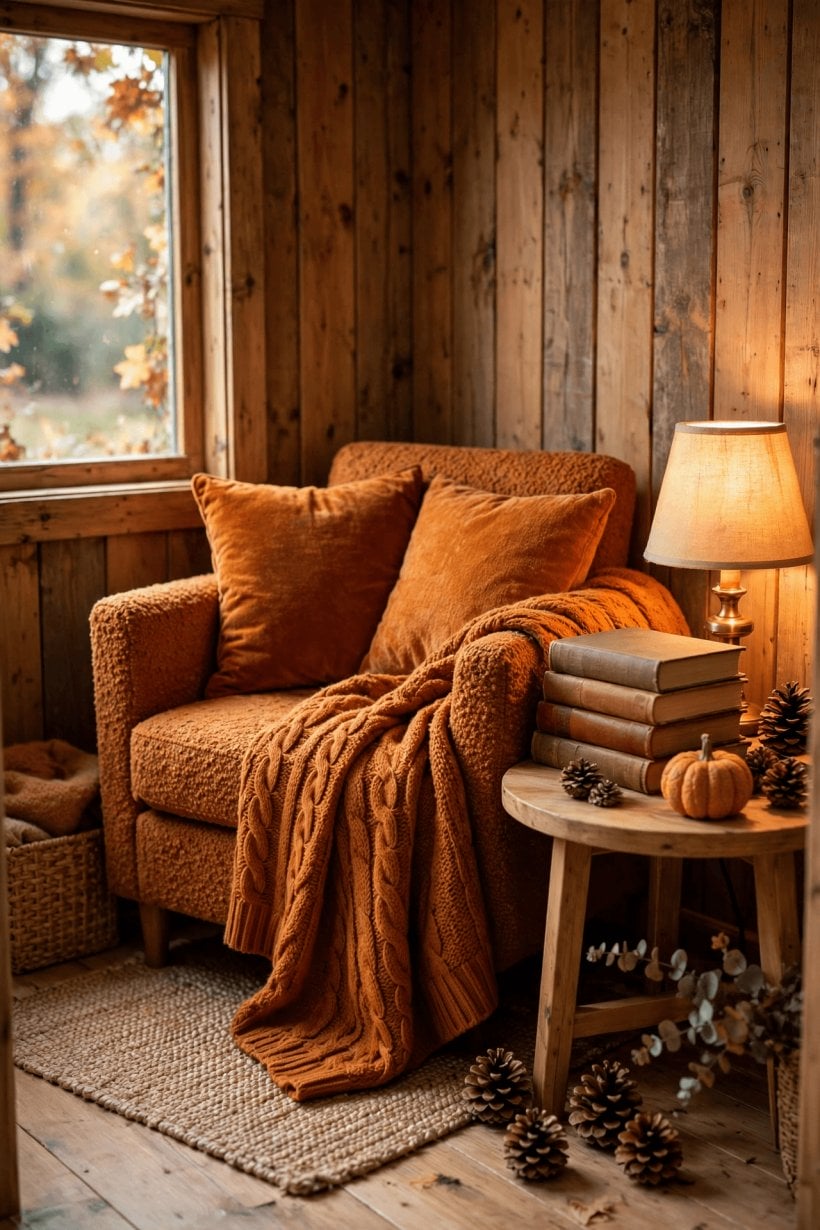
The kitchen end of a compact home needs the same discipline: seasonal pieces belong on the tray and the door, not migrating across worktops where onions and pans need the room. The layout logic in compact kitchen appliances for tiny houses is built on every centimetre having a job, and autumn additions should respect that order rather than quietly stealing prep space one ornament at a time through the season.
9. The Entry in Wet Weather: Mat, Boot Tray and a Hook That Works
Touch 14: A seasonal entry mat and boot tray. Autumn arrives at the door as mud and wet leaves before it arrives as colour. A heavier coir or patterned mat inside the door and a simple boot tray beneath the hooks protect the floor, catch the season at the threshold, and add pattern in the one spot that can take it. Size the tray to the boots the household actually wears and empty it often in a small home, because a tray of muddy water beside the living space earns its keep only when it is maintained.
While you are working at the threshold, check how the home meets the ground and the weather outside, especially before the first hard frosts. Skirting, steps and drainage decide how dry and warm the entry stays, and the options in tiny house skirting options for pipes and insulation are worth reviewing in autumn rather than mid-winter, when a small job at the base of the home protects both the pipes and the cosy interior you have just dressed for the season.
10. The Swap System: Summer Out, Autumn In, Nothing Extra Stored
Touch 15: Keep one summer swap box. The system behind all fourteen touches is a single box: summer throws, light cushion covers, sheers and bright accessories go into it on the same day the autumn layers come out, and the box lives where the autumn pieces lived, in the loft, a bench or a cupboard top. One box in, one box out means the season changes the room without changing the storage maths of the home. Label it, photograph the contents if you are forgetful, and hold the line when a shop display suggests a second box of autumn.
Do the swap in one pass, room by room, with the box open beside you. Textiles first, then light, then natural pieces, then the entry. At the end, walk the home slowly and remove one thing that now looks like too much, because there almost always is one, and a compact room in autumn should feel like a deep breath, not a full shelf. Heating choices made at this point in the year also shape how the dressed room feels; the even, background warmth described in installing a mini-split in a tiny house pairs well with layered textiles because neither has to work too hard.
Final Considerations
Autumn in a small home is a season of swaps, warmth and editing rather than accumulation. Change the textiles, warm the light, gather a few large natural pieces, scent the air from the hob instead of a candle, and let one wreath and one tray carry the display. The trade-offs are modest and honest: real pumpkins end as food or compost, natural garlands fade, and the palette narrows to the colours of the season itself. What you gain is a home that feels sheltered on the first dark evening, still works perfectly as a kitchen, office and bedroom, and can return to its everyday self, or dress for winter, with one box and one afternoon.


0 Comments