

Our earlier guide covered tiny-house bedroom designs and layouts — this one is about decor: the styling, textiles, lighting, and finishing touches that make a tiny bedroom feel like a retreat rather than a sleeping compartment. These 22 interior styling ideas turn small sleeping spaces into the best room in the house.
The Tiny Bedroom Philosophy
- Retreat, not afterthought: the bedroom deserves design attention proportional to the hours you spend there.
- Sensory design: in a small bedroom, texture, scent, and light matter more than square footage.
- The calm imperative: bedrooms should lower the heart rate — every styling choice serves rest.
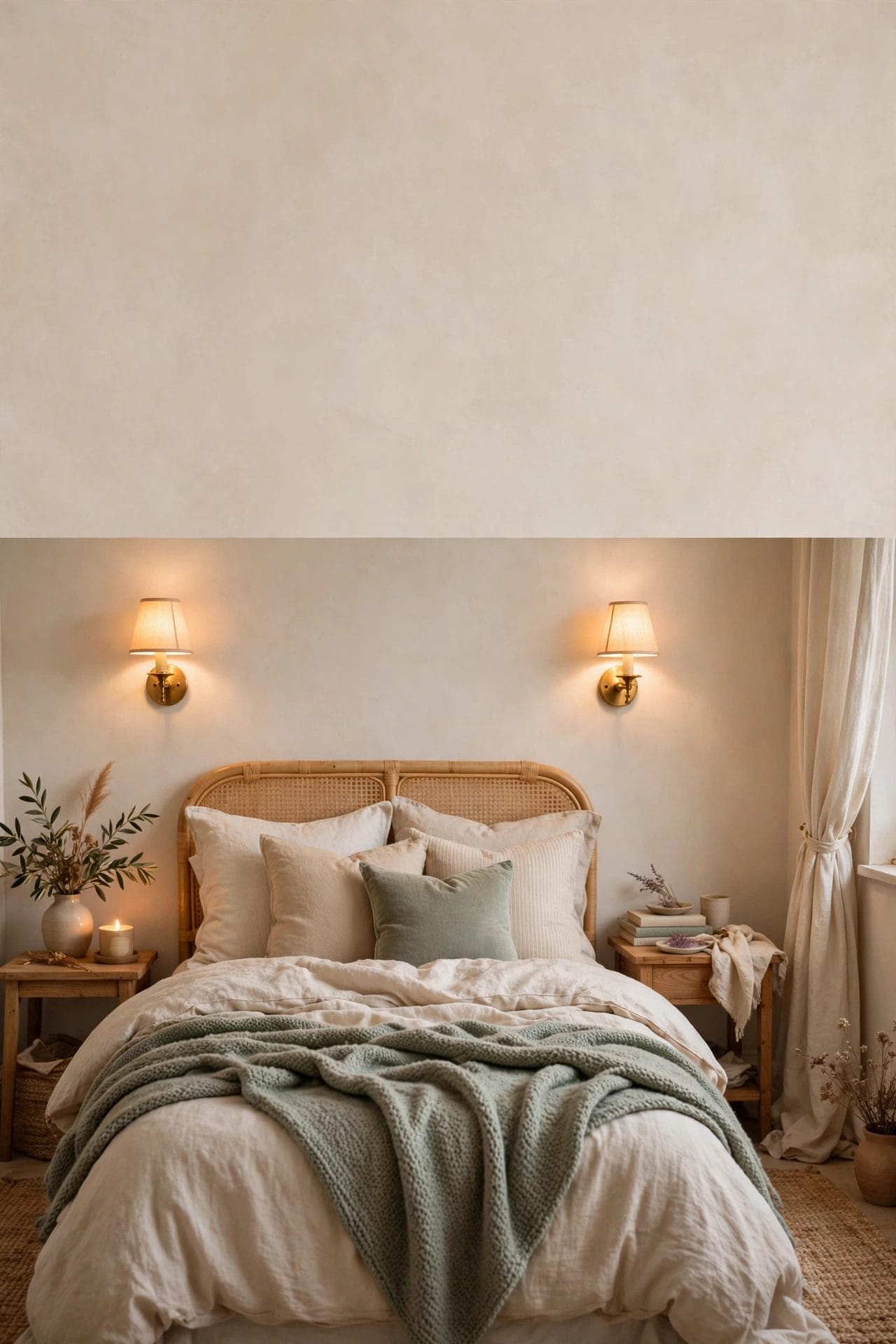
Walls & Color
1. Moody bedroom walls
Deep green, navy, or warm charcoal — small bedrooms go dark beautifully. Dark walls recede; the room feels cocooning, not small.
2. The accent wall behind the bed
One wall in a rich color or textured material (shiplap, limewash) — the headboard wall as the design moment.
3. Limewash/plaster texture
Textured wall finishes add depth without pattern — the subtle luxury that makes small rooms feel expensive.
4. Wallpapered nooks
Sleeping alcoves and loft ends in bold wallpaper — small areas take big pattern gloriously.
Bedding: The Main Event
5. Layered bedding
Sheet + duvet + quilt + throw + cushions — the layered bed looks abundant and feels luxurious. In a tiny bedroom, the bed is the decor.
6. Linen bedding
Stonewashed linen — the rumpled elegance that suits tiny-house aesthetics. Breathable, durable, better with age.
7. The seasonal switch
Light linen for summer, wool and flannel for winter — the bedding rotation that makes the bedroom feel new twice a year.
8. A real headboard
Upholstered, wood, or rattan — the headboard anchors the bed visually. In a tiny room, it’s the furniture that matters most.
Lighting for Rest
9. Sconces over lamps
Wall-mounted reading sconces free the nightstand — the tiny-bedroom lighting essential. Swing-arm for shared beds.
10. Dimmable everything
Every bedroom light on a dimmer — bright for making the bed, candle-level for winding down.
11. The sunrise alarm
Wake-up lights or smart bulbs on sunrise routines — gentle mornings, especially in windowless lofts.
12. Fairy lights (done right)
Warm-white string lights, not multicolor — draped along a beam or headboard. The cozy, not the dorm.
Textiles & Softness
13. The bedroom rug
A soft rug beside (or under) the bed — the first touch of the morning matters. Washable for practicality.
14. Curtains that close
Real curtains (not just blinds) — the softness, the light control, the ritual of closing the day. Blackout-lined for sleep.
15. Cushions, edited
3–5 cushions, not 12 — the styled bed without the nightly cushion-relocation project.
Storage That Disappears
16. Under-bed drawers
The tiny bedroom’s dresser — deep drawers on glides. Out of sight, fully accessible.
17. The nightstand alternative
Wall-mounted shelf, hanging pouch, or a slim floating drawer — the nightstand without the footprint.
18. Behind-the-door storage
Hooks and organizers on the bedroom door — the forgotten square footage.
Personal Touches
19. Art at pillow height
Art hung where you see it lying down — the gallery for an audience of one (or two).
20. The scent layer
Lavender, cedar, eucalyptus — scent is interior design for the nose. Diffusers, sachets, or linen spray.
21. Books within reach
A small shelf or stack by the bed — the bedroom library. The reading ritual needs its infrastructure.
22. One living thing
A plant (or a vase of branches) — the bedroom’s breath. Low-light tolerant for lofts.
Bedroom Styling Mistakes
- Overhead light only: the single ceiling light is the enemy of cozy — layer it.
- Cluttered surfaces: tiny nightstands collect everything — edit ruthlessly; the calm needs clear surfaces.
- Ignoring the ceiling: you stare at it falling asleep — paint it, beam it, or hang something soft.
- Matchy-matchy sets: the bedroom-in-a-bag look — mix textures and eras for character.
Bedroom designs: our 30 bedroom design ideas and colorful interiors.
Bedroom Styles for Tiny Houses
The Scandinavian calm
White oak, white linen, one black accent — the serene minimal. Light, airy, quiet. For the less-is-more sleeper.
The bohemian nest
Layered textiles, rattan, plants, warm color — the collected, cozy maximalist. For the more-is-more sleeper.
The modern rustic
Reclaimed wood headboard, wool throws, iron sconces — the cabin bedroom. For the mountain tiny house.
The boutique hotel
Crisp white bedding, upholstered headboard, symmetry (matching sconces, matching nightstands) — the luxury tiny. For the indulgent sleeper.
The Japanese minimal
Low platform, natural fibers, negative space — the zen bedroom. For the tiny house that’s already a meditation.
The Guest-Ready Tiny Bedroom
- Hotel touches: spare blanket, water carafe, phone charger, good reading light — the guest feels considered.
- Privacy: a curtain or door that actually closes — guests need the boundary more than owners.
- Luggage space: a folding rack or clear floor area — the detail hosts forget.
- The morning kit: coffee/tea accessible without waking the house — the considerate host’s setup.
Bedrooms for Couples
- Two lights: individual reading sconces with separate switches — the #1 couple-bedroom upgrade.
- His/hers storage: divided drawers or sides — the tiny bedroom needs explicit territory.
- Temperature compromise: separate duvets (the Scandinavian sleep method) — the marriage-saving bedding.
- Sound: white noise for different schedules — the early bird and the night owl coexist.
Kids’ Tiny Bedrooms
- Bunk styling: each bunk gets its own light, shelf, and curtain — personal territory in shared space.
- Washable everything: kids + tiny = mess concentration. Washable rugs, bedding, and paint.
- Display space: a cork board or clip string for art — the gallery that changes weekly.
- Growth room: adjustable, not precious — kids’ rooms should survive childhood.
Seasonal Bedroom Styling
- Spring: light linens, fresh flowers, aired-out woolens stored — the bedroom exhales.
- Summer: minimal bedding, breathable cotton, the fan’s soft whir — cool and spare.
- Fall: the quilt returns, warm tones deepen, candles appear — the nesting begins.
- Winter: flannel, wool throws, layered everything — the hibernation bedroom.
- The storage: vacuum bags for off-season bedding — the tiny bedroom’s seasonal wardrobe.
Bedroom Styling on a Budget
- Paint: one accent wall ($30) — the highest-impact dollar in decorating.
- Thrifted textiles: quilts, throws, and cushions from thrift stores — the bohemian bedroom is budget by nature.
- DIY headboard: plywood + foam + fabric ($50–$100) — the upholstered look, handmade.
- Sconce hack: plug-in wall sconces ($25 each) — no electrician, all the ambiance.
- Total: $200–$400 restyles a tiny bedroom completely — the cheapest room transformation in the house.
Designing for Sleep Quality
- Darkness: blackout curtains or shades — the single biggest sleep upgrade. Light is the enemy of melatonin.
- Quiet: soft furnishings absorb sound; white noise masks the rest. Tiny houses transmit every sound — design for it.
- Cool: 65–68°F is the sleep sweet spot — the bedroom wants its own temperature control.
- Air: ventilation matters in small sealed rooms — a cracked window or quiet vent fan.
- No screens: the TV stays out of the bedroom — the oldest sleep advice, still the best.
How do I stop my tiny bedroom from overheating?
Lofts trap heat — the classic tiny-house problem. Solutions: a dedicated vent or fan moving air out of the loft, light bedding, and (in hot climates) a mini-split head serving the sleeping area. Design airflow into the bedroom; don’t hope for it.
Frequently Asked Questions
How do I make a tiny bedroom feel cozy?
Layered bedding, warm dimmable lighting (sconces over overhead), soft textiles (rug, curtains), a rich wall color, and edited personal touches. Cozy is a layering effect — no single item does it, but five together transform the room.
What color should I paint a small bedroom?
Deep, saturated colors (forest green, navy, warm charcoal) make small bedrooms feel cocooning and intentional; light warm neutrals maximize airiness. Avoid stark white (clinical) and muddy mid-tones (dull). Test in the room’s actual light.
How do I decorate a loft bedroom?
Embrace the cocoon: low-profile bedding, wall-mounted sconces (no nightstand room), wallpaper or rich paint on the sloped walls, and minimal clutter (dust shows). Keep the palette calm — you see the whole room at once.
Do I need a headboard in a tiny bedroom?
Not structurally, but visually yes — the headboard (or a painted/wallpapered headboard wall) anchors the bed and finishes the room. Upholstered headboards add comfort for reading; slim profiles suit tight spaces.
How do I keep a tiny bedroom from feeling cluttered?
Closed storage (under-bed drawers, wardrobes), clear surfaces (one item per nightstand), and the one-in-one-out rule. Visual calm is mostly about surfaces — clear them and the room breathes.
How can I make my tiny bedroom look expensive?
Texture over stuff: linen bedding, a textured wall (limewash or shiplap), matching sconces, and a restrained palette. “Expensive” reads as cohesive and tactile — three quality textiles beat ten cheap accessories. The $200 paint + $150 bedding formula outperforms $1,000 of decor.
What should be on my nightstand in a tiny bedroom?
Less than you think: a light, water, and the current book. Everything else (chargers, glasses, lip balm) goes in the drawer or a wall organizer. The clear nightstand is the calm bedroom’s signature.
The Scented Bedroom: Fragrance as a Design Layer
Designers talk about color, light, and texture — but in a 100-square-foot bedroom, scent is a design layer with outsized power, because there’s no hallway to dilute it. The rule is one scent per zone, kept subtle enough that you stop noticing it after ten minutes. A cedar sachet in the closet, a lavender pillow spray (two spritzes, not ten), or an ultrasonic diffuser running 15 minutes before bed — pick one delivery method, not all three. Layered fragrances in a tiny bedroom don’t read as luxurious; they read as a candle shop.
Match the scent to the bedroom’s job: sleep. Lavender, chamomile, and sandalwood have the best evidence for actually supporting rest; bright citrus and peppermint belong in the kitchen or office, where alertness helps. If you share the bedroom, negotiate this like paint color — scent is intimate, and your partner’s headache is a design failure. Unscented is always an acceptable choice.
The practical side: tiny bedrooms concentrate the smells you’d rather not design around — laundry, shoes, the compost bin by the door. Ventilation beats fragrance every time. A cracked window or a quiet 4-inch exhaust fan on a timer does more for bedroom air than any diffuser, and in humid climates a small dehumidifier prevents the musty undertone that no candle can cover. Get the air right first; scent is the finishing layer, not the fix.
The 5-Minute Nightstand Reset
Tiny bedrooms accumulate clutter faster than any other room because every surface is within arm’s reach — and the nightstand is ground zero. The 5-minute nightstand reset is the habit that keeps a tiny bedroom feeling serene rather than chaotic: each night before bed, clear the nightstand completely, wipe it down, and return only the essentials (lamp, book, water, charger). Everything else — the mail, the random receipts, the three lip balms — goes to its home or the trash. In a 100-square-foot bedroom, a clear nightstand is the difference between a sanctuary and a storage unit.
The design implication: choose a nightstand with a drawer, not just a surface. The drawer hides the inevitable accumulation (medications, earplugs, the journal you mean to write in), while the surface stays clear. Wall-mounted nightstands are even better — they free floor space, make cleaning easier, and the visual lightness makes the bedroom feel larger. If your nightstand has no drawer, add a small lidded box or tray with a lid; the principle is the same: out of sight, out of mind, but still within reach.
Apply the same reset to the whole bedroom weekly. Set a timer for 15 minutes every Sunday: make the bed properly (not just pulled up), clear every horizontal surface, return clothes to closet or hamper, and vacuum or sweep. A tiny bedroom that gets a weekly reset never reaches the critical mass of mess that makes small spaces feel overwhelming. The reset is not cleaning; it’s curation — deciding what deserves space in the room where you start and end every day.
Final Considerations
The tiny bedroom rewards the stylist’s touch more than any room in the house — because you experience it intimately, every night. Layer the bedding, dim the lights, go moody on the walls, and edit the surfaces. The result isn’t just a place to sleep; it’s the retreat that makes the whole tiny house feel like home.


3 Comments