

Pennsylvania does not have a tiny-house policy; it has more than twenty-five hundred of them. The Commonwealth contains over 2,500 municipalities — cities, boroughs, first- and second-class townships — and nearly every one that zones does so with its own ordinance, its own zoning hearing board, its own habits. Above that patchwork sits one genuinely statewide layer, the Pennsylvania Uniform Construction Code, which standardises how a dwelling is built while leaving where it may stand to the borough or township line you happen to be standing behind. For the tiny-house buyer this produces a state of extremes: a township that welcomes a 500-square-foot house on a quiet road, and ten minutes away a borough whose minimum floor area, historic review or sceptical hearing board ends the same project. Tiny house laws in Pennsylvania therefore reward a single discipline above all others — verify the municipality before anything else, because in this Commonwealth the municipality is the law that matters.
This guide follows the order a project meets those layers: classification of wheeled and foundation houses, the Uniform Construction Code and its enforcement quirks, minimum sizes in code and ordinance, zoning and placement across 2,500-plus jurisdictions, accessory dwelling rules, full-time living options, the permits sequence — including the sewage approval that quietly governs rural Pennsylvania — worked regional examples, and a practical route through all of it. The summary up front: Pennsylvania is buildable almost everywhere and simple almost nowhere. The binding constraint is rarely the house; it is the sewage enforcement officer’s soil verdict, the township’s floor-area clause, and the calendar of a part-time zoning office.
1. Tiny House Laws in Pennsylvania at a Glance
The table below answers the questions Pennsylvania readers ask first. Read the “who decides” pattern in every row: construction is a state code enforced through local and third-party hands, zoning is municipal in the fullest American sense, and sewage is its own permit universe that outranks both on rural land.
| Question | Pennsylvania in brief |
|---|---|
| Are tiny houses legal in Pennsylvania? | Yes, as dwellings — a small house on a foundation, built to the statewide Uniform Construction Code, on a lot where the municipality’s zoning (where one exists) permits a dwelling of that size. There is no state tiny-house statute and no ban; permission is assembled municipality by municipality. |
| Is a tiny house on wheels a house or an RV? | An RV. Wheeled units are titled vehicles in Pennsylvania, not dwellings; living in one is generally confined to licensed campgrounds, RV parks and manufactured-home communities, and most zoned municipalities prohibit RV occupancy on residential lots. |
| Which building code applies? | The Pennsylvania Uniform Construction Code (UCC), which adopts the international model codes — including the residential code for one- and two-family dwellings — with state amendments. Enforcement is municipal where the municipality administers the UCC, often through contracted third-party inspection agencies; ask the township or borough who its code official is. |
| How small can a house be? | The UCC regulates rooms, ceilings and egress rather than total size, so a compact plan can comply. The binding minimums are municipal: many township and borough zoning ordinances set minimum dwelling floor areas — commonly in bands a very small house fails and a moderate tiny house passes. Read the local table before designing. |
| Are backyard cottages and ADUs allowed? | Entirely local. Pennsylvania has no statewide ADU entitlement; some cities and boroughs allow accessory apartments or in-law suites by right or by condition, others prohibit a second dwelling on the lot, and rural townships often address the question through sewage capacity rather than zoning. The municipal code text is the only answer. |
| Where can I live in one full-time? | In a permitted foundation tiny house on a conforming lot, in a legal accessory unit where the municipality allows one, in a manufactured home on owned land or in a licensed community, or long-term in campgrounds and parks whose licences and local rules permit extended stays. |
| What is the sewage factor? | Outside public-sewer areas, Pennsylvania’s Sewage Facilities Act requires an on-lot sewage permit issued through the local Sewage Enforcement Officer after soil and percolation testing — before the building permit. Many attractive rural lots cannot pass as drawn; the perc test is the true first permit of a country project. |
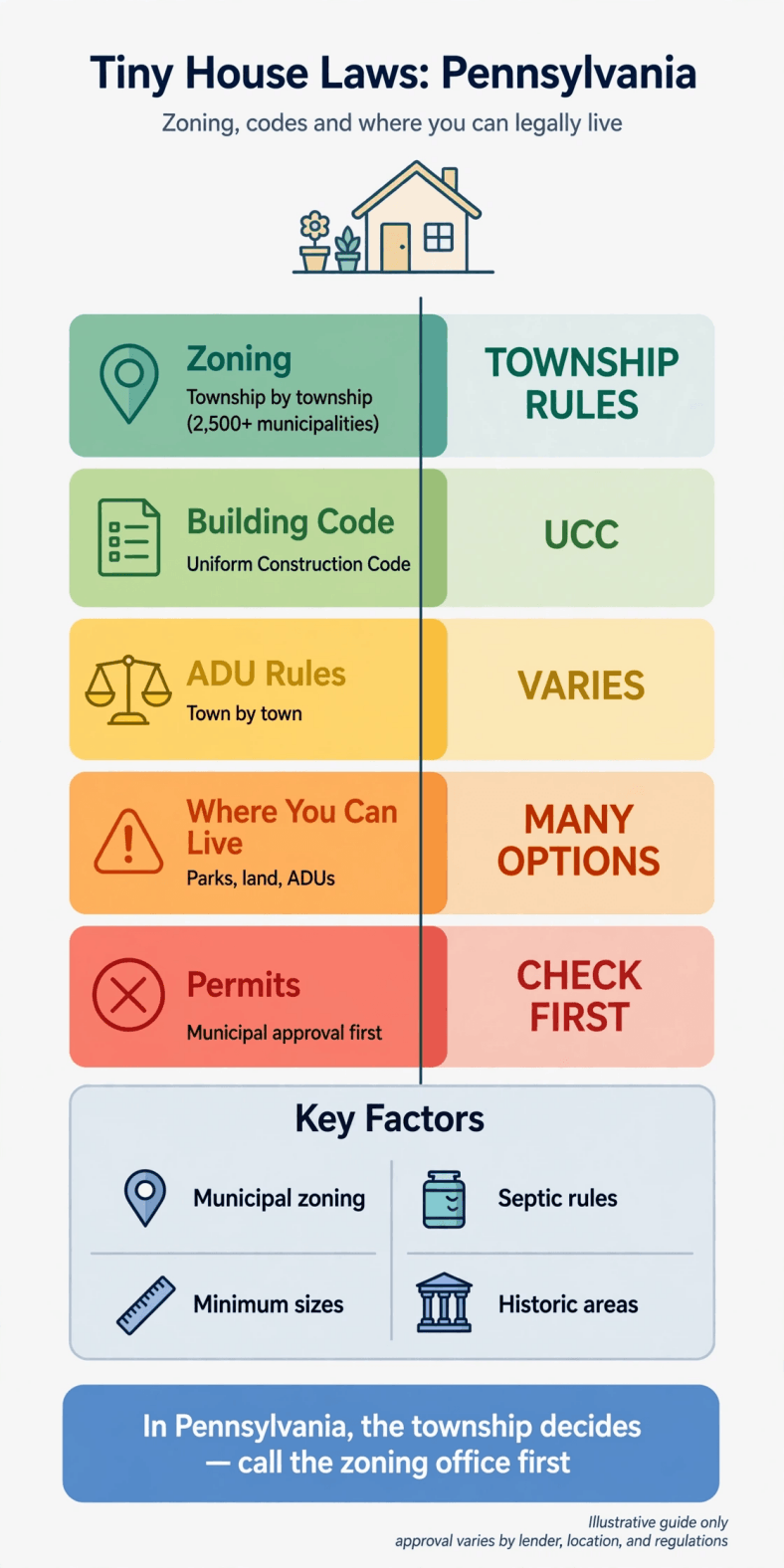
Tiny house laws in Pennsylvania — the whole picture on one chart: one statewide construction code, twenty-five hundred local zoning answers, and a sewage permit standing in front of both.
Two habits separate Pennsylvania projects that finish from projects that stall. First, sequence the enquiries correctly: municipal zoning answer, then the Sewage Enforcement Officer’s soil verdict, then design — never the romantic order of house first and permissions later. Second, respect the small-office calendar: many borough and township officials are part-time, hearing boards meet monthly, and a missed application deadline costs a full cycle. In Pennsylvania, patience is not a virtue; it is a line item.
2. Legal Status: Tiny Houses on Wheels vs on Foundations in Pennsylvania
The classification fork in Pennsylvania is the standard one, and everything downstream inherits it. A tiny house on a permanent foundation is a dwelling: reviewed under the UCC, assessed as real estate, eligible for a certificate of occupancy, and treated by zoning as a single-family home in every ordinance in the Commonwealth. A tiny house that remains on its chassis is a recreational vehicle — titled and registered through the vehicle code — and zoning ordinances across Pennsylvania overwhelmingly treat it as a vehicle to be stored, not a residence to be occupied, outside licensed parks and campgrounds.
The wheeled landscape has three territories. Licensed campgrounds and RV parks are the clean channel; Pennsylvania’s stock is deep, thanks to a century of mountain, lake and Pocono tourism, but many parks are seasonal and long-term occupancy terms are set by the operator within its licence. Manufactured-home communities are the second territory, regulated and common across the state, where the unit must meet the community’s and the code’s categories — a park-model RV is not a manufactured home and is not interchangeable with one. The third territory is private land, where the honest generalisation is that zoned municipalities prohibit dwelling in RVs on residential lots, unzoned rural townships may be silent on placement but never on sewage, and any arrangement survives at most until the first complaint. If wheels are the plan, ground the vehicle side properly: work through how to register a tiny house as an RV and what RVIA certification means for a tiny house before buying, because parks, lenders and insurers in Pennsylvania all sort units by exactly these papers.
The foundation route is slower and structurally permanent in the ways that matter here: it survives resale, refinance and municipal mood swings, and it is the only version Pennsylvania institutions recognise without footnotes. Given that rural Pennsylvania land is often genuinely affordable, the foundation premium buys unusual value in this state — provided, always, that the sewage verdict on that land cooperates, which is the subject every Pennsylvania section below keeps returning to.
3. Building Codes for Tiny Houses in Pennsylvania
Construction statewide is governed by the Pennsylvania Uniform Construction Code, enacted at the end of the 1990s and built on the international model codes — the residential volume governs one- and two-family dwellings, with Pennsylvania amendments layered in — administered under the state Department of Labor & Industry. The substance is therefore uniform: structure, fire safety, energy, plumbing, mechanical and electrical standards for a small house in Erie are the standards in Easton. Administration is the patchwork. Municipalities that administer the UCC do so with their own code officials or, very commonly in Pennsylvania, through contracted third-party inspection agencies; a minority of municipalities stepped back from administering residential enforcement, in which case other approved channels apply. Your first code question in any township is not “what does the code say” but “who is the code official here” — the answer is a name and a phone number, and it varies across every municipal line.
The engineering content for a small house is the familiar list, with two Pennsylvania inflections. Room sizes, ceiling heights, sleeping-room egress and loft geometry are policed as elsewhere, and lofts remain the negotiation point of small design. Snow load is the second inflection: roof design values climb across the northern tier and the lake-effect belt near Erie, and a catalogue plan drawn for a mild climate needs its roof checked before its kitchen. The energy provisions reward small envelopes as they do everywhere, with the caveat that an old-stone-farmhouse climate — real winters statewide — argues for insulation and air-sealing budgets that southern tiny-house literature undersells.
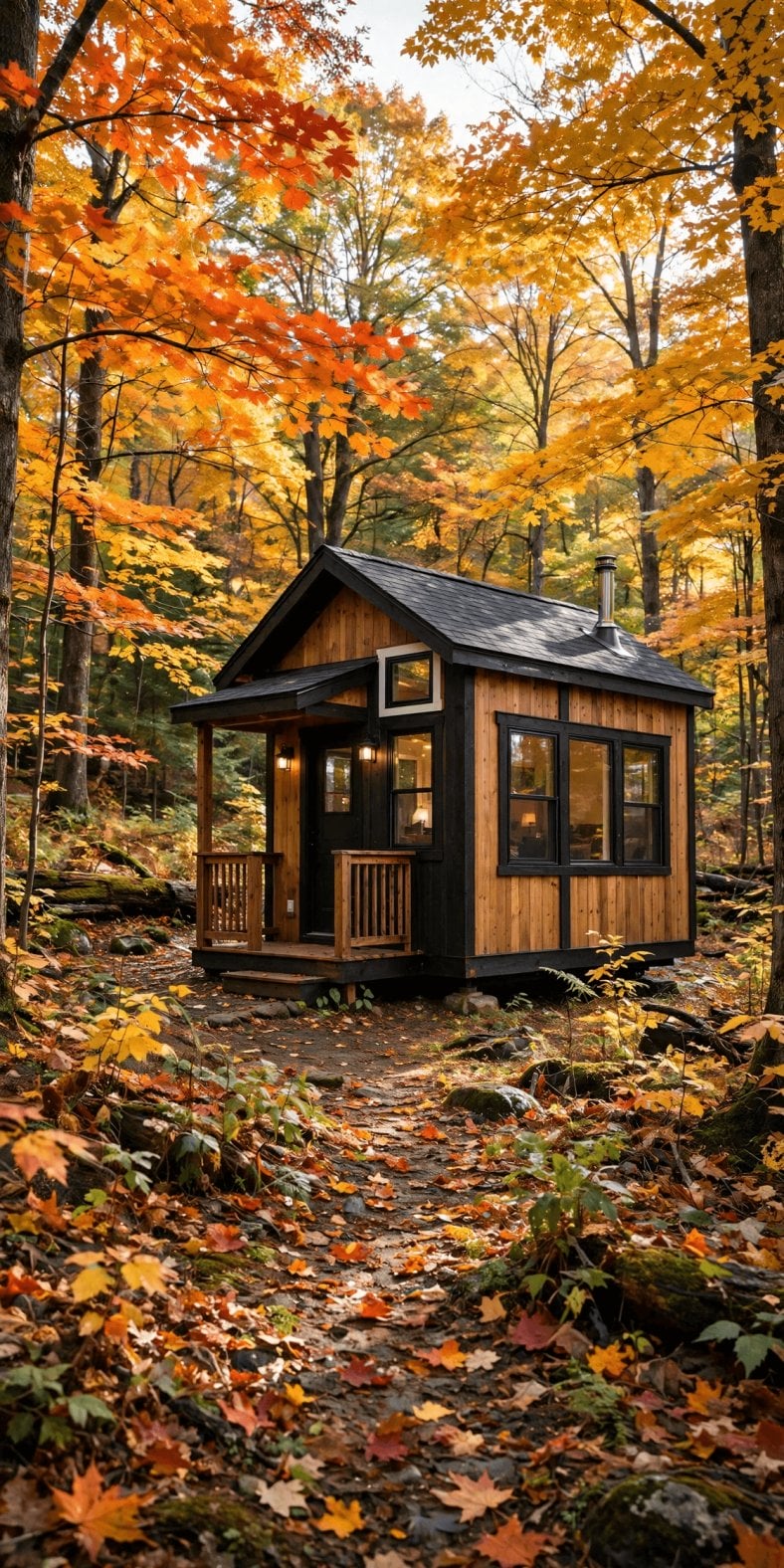
Tiny house laws in Pennsylvania — pin this overview for the build: a uniform state code, enforced through a very local cast of officials and agencies.
On the perennial small-house question — the relaxed loft, stair and ceiling rules collected in IRC Appendix Q for tiny homes — Pennsylvania practice is to verify rather than assume: the Commonwealth adopts model-code editions through its own review process with amendments, and whether a given appendix provision applies to your project is a question for your code official at plan review, answered on your specific drawings. Draw the house to survive the strict reading; let any confirmed relaxation be margin.
Factory-built units are classified by their documents, as elsewhere: HUD-labelled manufactured homes on approved foundations or installation systems, modular homes built to the UCC itself and carrying state insignia, and park models that remain RVs. Pennsylvania’s planning and tax systems treat the categories distinctly, and boroughs that prohibit “mobile homes” in a district are usually legislating about the category, not the silhouette. Confirm the category from the label and data plate, then confirm the category is permitted on the lot — two separate questions, both cheaper before the deposit.
4. Minimum Size Rules in Pennsylvania
The UCC contains no statewide minimum house size; its minimums are internal — floor areas for habitable rooms, ceiling heights with the standard allowances for slopes, and egress geometry for sleeping rooms. A disciplined small plan satisfies them, and a Pennsylvania plan review that pushes back is almost always arguing about a room, a stair or an egress window, each of which is a drafting problem with a drafting solution.
The consequential minimums are municipal, and they are everywhere. Generations of township and borough zoning ordinances wrote minimum dwelling floor areas into their residential districts — frequently in bands that begin around the size of a generous tiny house and climb well past it in the planned suburbs — alongside minimum lot areas, lot widths and coverage limits. The pattern is not random: older boroughs and cities, whose housing stock predates the clauses, tend to carry small or no floor-area minimums, which is one reason Pennsylvania’s in-fill tiny-house projects cluster in its old mill, rail and river towns; post-war suburbs tend to carry the strictest numbers. Where an agricultural district is involved — Lancaster County’s preserved farmland is the famous case, but the pattern is statewide — minimum lot areas for new dwellings can be measured in acres rather than square feet, because the ordinance’s purpose is to keep dwellings rare on farm soil.
Relief from a municipal minimum runs through the zoning hearing board — Pennsylvania’s variance process under the Municipalities Planning Code — and it deserves the standard warning in its strongest local form: the board is your neighbours’ neighbours, the hearing is public, the criteria are hardship-based rather than sympathy-based, and the timeline is measured in meeting cycles. A township whose ordinance already fits is worth real money against a township that requires a variance, and with 2,500 municipalities to choose from, Pennsylvania almost always offers the former within a reasonable drive of the latter.
5. Zoning and Placement Rules
Pennsylvania zoning is enabled by the state Municipalities Planning Code and written, or not written, locally. Cities, boroughs and townships each legislate for themselves; some rural townships have no zoning ordinance at all; counties plan and in places administer for member municipalities, but the operative document for your parcel is almost always the municipal ordinance and its map. A foundation tiny house inside a zoned municipality is placed like any dwelling: permitted use in the district, setbacks, height, lot coverage, the district’s minimums — plus the secondary clauses that carry the real risk for small projects, covering accessory structures, home occupations, vehicle occupancy, and the siting of manufactured housing, which many ordinances channel to particular districts or parks.
Two Pennsylvania overlays deserve names. The first is historic: the Commonwealth’s older communities were empowered decades ago to create local historic districts, and many did — review boards in boroughs and cities across the state (the celebrated cases run from Lancaster and Gettysburg to Bethlehem and West Chester, and Philadelphia operates its own historical commission) whose approval governs exterior changes, additions and new construction inside district boundaries. A tiny house in a historic district is a design review before it is a building permit, and ADU conversions of carriage houses — the state’s classic accessory stock — live or die in that room. The second overlay is private and unwritten in any ordinance: deed restrictions and homeowners’ association regimes, which govern much of the Pocono and planned-community stock and routinely prohibit small dwellings, RVs and sometimes rentals outright. Both overlays are discoverable before purchase; both are miserable after.
The working method is built for this fragmentation: identify the exact municipality (mailing addresses lie — a “Lancaster” address may be any of a dozen townships), obtain its ordinance or its confirmation that none exists, and take the parcel-specific questions to the zoning officer in the format how to talk to zoning officials about tiny houses recommends — parcel number, footprint sketch, written answers. In Pennsylvania add one question most states never need: who answers for this township — because the zoning officer, code official and Sewage Enforcement Officer may be three different part-time professionals in three different offices, and your project needs all three.
6. ADU Rules in Pennsylvania
Pennsylvania writes no statewide ADU entitlement, so the accessory dwelling map is the municipal map once more — with a recognisable structure. Cities and larger boroughs increasingly address accessory apartments, in-law suites and carriage-house conversions expressly in their codes, typically with conditions: owner occupancy of one unit, size subordination to the main house, entrance and parking rules, and in historic districts the design review already described. Other municipalities treat a second dwelling as a special exception or conditional use — attainable, but only through a hearing — and a third group prohibit two dwellings on one lot outright, a clause sometimes sitting unnoticed inside the definition of “single-family.” In unzoned rural townships, the zoning question may vanish entirely, which moves the whole ADU decision onto the second, harder desk: sewage.
Because on rural Pennsylvania land an ADU is a sewage event before it is a structure. The on-lot system serving the main house was permitted for a specific design flow and bedroom count; adding a unit — even a one-room cottage — increases the authorised load, and the Sewage Enforcement Officer must find soil and area for the expanded or replacement system under the Sewage Facilities Act’s standards. On the shale, clay and shallow-to-rock soils that cover much of the Commonwealth, that finding is the project; elevated sand-mound systems are the landscape’s familiar signature precisely because conventional trenches so often fail the standard. Price the sewage answer into the ADU before pricing the cottage.
The practical screen for Pennsylvania ADU hunters is therefore three questions, in order. Does the municipal text allow the unit, by right or by a hearing you can realistically win? Will the SEO certify capacity for the added bedroom load, in writing? And does any historic or association overlay govern the structure you intend to convert or build? A property that answers yes three times is an ADU project; anything less is a hope with a mortgage.
7. Where You Can Legally Live Full-Time
Stripped to essentials, Pennsylvania offers four full-time channels. A permitted foundation tiny house on a lot the municipality’s rules fit (or in an unzoned township, with UCC and sewage approvals in hand). A legal accessory unit where the code provides for one. A manufactured home on an owned lot where the category is permitted, or in one of the Commonwealth’s many licensed manufactured-home communities — a large, established sector, with lot rents and community rules doing the governing. And extended stays in campgrounds and RV parks whose operators accept them — deep stock in the Poconos, the Pennsylvania Wilds, the Laurel Highlands and around the lakes, much of it seasonal by design and some of it entangled with short-term-rental ordinances in resort townships, which is a diligence item in itself: a park or township that regulates nightly rentals may view a long stay through the same lens.
The comparison that matters is security against entry price, and tiny house communities versus RV parks lays out the structural differences — tenure, resale mechanics, rule-making — that the Pennsylvania buyer should price before the brochure photographs. In this state the foundation channel’s premium is frequently the smallest in the region, because rural land is honestly priced and old-borough in-fill exists at scale; buyers who default to the park channel on cost alone often discover they could have owned the dirt for a modest multiple of the deposit.
8. Permits, Inspections and Costs
The Pennsylvania sequence, stated once and in order: zoning approval from the municipality (or confirmation none is required), then — outside public-sewer areas — the on-lot sewage permit, which requires the Sewage Enforcement Officer’s site evaluation, soil probes and percolation testing and which gates everything behind it; then the UCC building permit on reviewed plans through the municipal code official or its inspection agency; staged inspections through the build; and the certificate of occupancy at the end. Two features surprise newcomers. The sewage permit is slow, seasonal (frozen and saturated soils do not perc), and outcome-uncertain in a way building permits are not. And administration is personal: in much of the state your permit’s progress depends on part-time officials and monthly boards, so applications that are complete on arrival move, and incomplete ones wait a cycle.
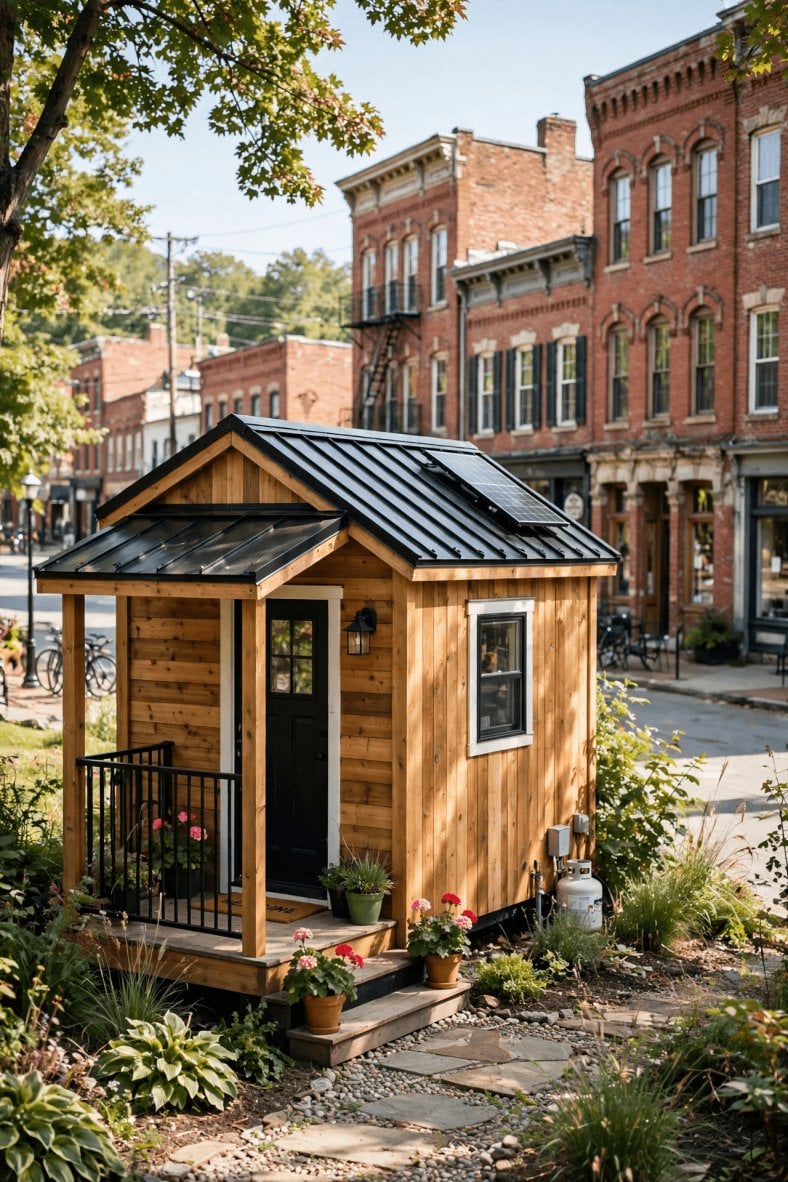
Tiny house laws in Pennsylvania — the permit trail at a glance: zoning answer, sewage verdict, building permit, staged inspections — in that order, or not at all.
Budget against the Commonwealth’s real geography of cost. Land spans the full American range inside one border — Philadelphia and Pittsburgh metro prices and Main Line premiums at one end, Northern Tier and coal-country acreage at prices that recall another decade at the other. The small-house-specific lines are the sewage system (a sand mound where soils demand one can cost several times a conventional system), well drilling in hard-rock country, driveway and road-occupancy permits for township and state roads, and the professional fees a hearing adds when one is unavoidable. School-district property taxes vary as widely as land and recur forever; model them at the parcel, not the county average. The house is the small number in Pennsylvania. Permissions and infrastructure are the budget.
Assemble the file as you go — sewage permit and site report, zoning correspondence, permit set and inspection sign-offs, occupancy certificate — because Pennsylvania’s property culture runs on paper: municipal lien letters, resale certificates in some communities, and buyers’ attorneys who ask for permits by reflex. A small house with its file sells as a house. Without it, the same structure is priced as an anecdote.
9. Notable City and County Examples
Philadelphia is its own chapter, as always: permitting through its Department of Licenses and Inspections, a city code family built on the international models with Philadelphia’s own amendments, a zoning code that has moved on accessory units and small-lot housing in recent years, and rowhome-scale in-fill logic that suits small footprints — administered at big-city tempo, with big-city verification at every step. Pittsburgh is the gentler counterpart: its Permits, Licenses and Inspections department runs UCC permitting for a city of hillside lots, older small housing stock and active neighbourhood-scale development, where slope and retaining structures join the usual small-house agenda.
Beyond the metros, four teaching examples. Lancaster County shows preservation economics: nationally known farmland-protection zoning keeps agricultural districts genuinely agricultural, with large minimum lots and few permitted dwellings — while its boroughs, dense and walkable, quietly host the small conversions the farm zones forbid. The Poconos in Monroe County show resort regulation: township short-term-rental ordinances and powerful homeowners’ associations govern much of the housing stock, making the association rulebook, not the township code, the first document to read. Erie and the northern tier show climate as code: lake-effect snow loads and seasonal park economies. And the old boroughs of the river valleys and the Wilds — places whose grids, lot sizes and minimums were set by nineteenth-century industries — show the in-fill opportunity in its purest form: serviced streets, small legacy lots, and councils that would like the rooftops back.
10. Practical Steps to Go Legal in Pennsylvania
Step 1 — Name the municipality exactly. Establish from county parcel records which city, borough or township the land sits in, whether it has a zoning ordinance, and which officials serve it — zoning officer, code official, Sewage Enforcement Officer. Every Pennsylvania question routes through those answers.
Step 2 — Extract the zoning verdict in writing. Read the district’s use table, floor-area and lot minimums, setback and accessory clauses, and any historic-district or floodplain overlay; check deed restrictions and association rules in the same week; keep the officer’s answer in your file.
Step 3 — Order the sewage evaluation before design. Book the SEO’s site testing for the bedroom count you intend, and treat the resulting permit pathway as a design input. In rural Pennsylvania this step, not the floor plan, decides what can exist on the lot.
Step 4 — Draw to the UCC on the strict reading. Commission plans that satisfy the residential code’s room, egress, stair, energy and snow-load provisions without relying on unconfirmed relaxations, and confirm at plan review how the code official reads the small-house details of your design.
Step 5 — Prepare the land in permit order. Survey, access and road-occupancy approvals, clearing, grading, foundation and the sewage installation follow the sequence the approvals dictate; How to prepare land for a tiny house supplies the workflow, and Pennsylvania’s freeze-thaw calendar argues for earthworks inside the frost-free window.
Step 6 — Contract the utilities with documents, not estimates. Public water and sewer taps where they exist; well and the permitted sewage system where they do not; electric service scheduled with the provider. tiny house utilities: power, water and sewage explained covers the choices — in this state the sewage branch of that decision tree is the one that bites.
Step 7 — Permit, inspect, occupy — and file everything. Hold approvals before work, call every inspection, and move in on the certificate of occupancy. Then keep the complete file with the deed papers. In a Commonwealth of 2,500 municipalities, your file is the only institution that travels with the house.
Final Considerations
Pennsylvania’s tiny-house question is really a question about which Pennsylvania you mean. The Commonwealth contains some of the most permissive practical environments in the East — unzoned rural townships, cheap northern land, boroughs whose housing stock was small before small was fashionable — and wraps them in the most fragmented administration in the country, where every answer is local, half the officials are part-time, and a sewage officer’s soil probe outranks any politician’s opinion. Buyers who want a statewide answer will be frustrated for exactly as long as they keep asking the state. Buyers who learn to ask the township get their answers in weeks.
Go in with the trade stated plainly. Pennsylvania charges process — municipal research, soil testing, hearing calendars, paper — and repays it in price and place: serviced borough lots, farm-country acreage and metro access at costs the coasts cannot approach, inside communities with centuries of building culture that know a small house when they see one. Name the municipality, respect the sewage verdict, draw to the code, and keep the file. Do those things and a tiny house in Pennsylvania becomes what it should be: not a loophole in 2,500 jurisdictions, but a small, legal, well-documented home in the one you chose on purpose.