

Spring in a small home is less about buying freshness than about removing winter. The most effective tiny house spring decor starts with a deep clean and a full airing, then changes what the light touches: heavy curtains give way to sheers, winter textiles give way to linen, and a single vase of stems sets a rhythm the whole season can follow. Because every surface already works hard, spring changes here are swaps, washes and edits, and their power comes from how much lighter the same rooms feel without a single new piece of furniture.
The honest trade-off is that spring asks for labour before it offers decoration. In a compact home the clean is fast, a room at a time, but it is thorough: windows, sills, the tops of cupboards and the corners winter hides. What you get for that effort is a home that smells of air instead of heating, colours that read pastel against a calm base rather than fighting winter clutter, and space that seems to grow because everything in it is clean, light and deliberate. The eighteen ideas below follow that order on purpose: clean and air first, fabric and light next, flowers and small pleasures last.
Tiny house spring decor at a glance
| Idea | Where it happens | Why it works in a small space |
|---|---|---|
| 1. Deep clean, room by room | Whole home | The foundation every other idea stands on |
| 2. Full airing | Windows, doors, loft | Fresh air is the cheapest spring scent |
| 3. Sheers for heavy curtains | Windows | More light, softer edges, winter pair stored |
| 4. Clean glass, inside and out | Windows and mirrors | Light you already own, working harder |
| 5. Linen cushion covers | Sofa and chairs | Texture change that stores flat |
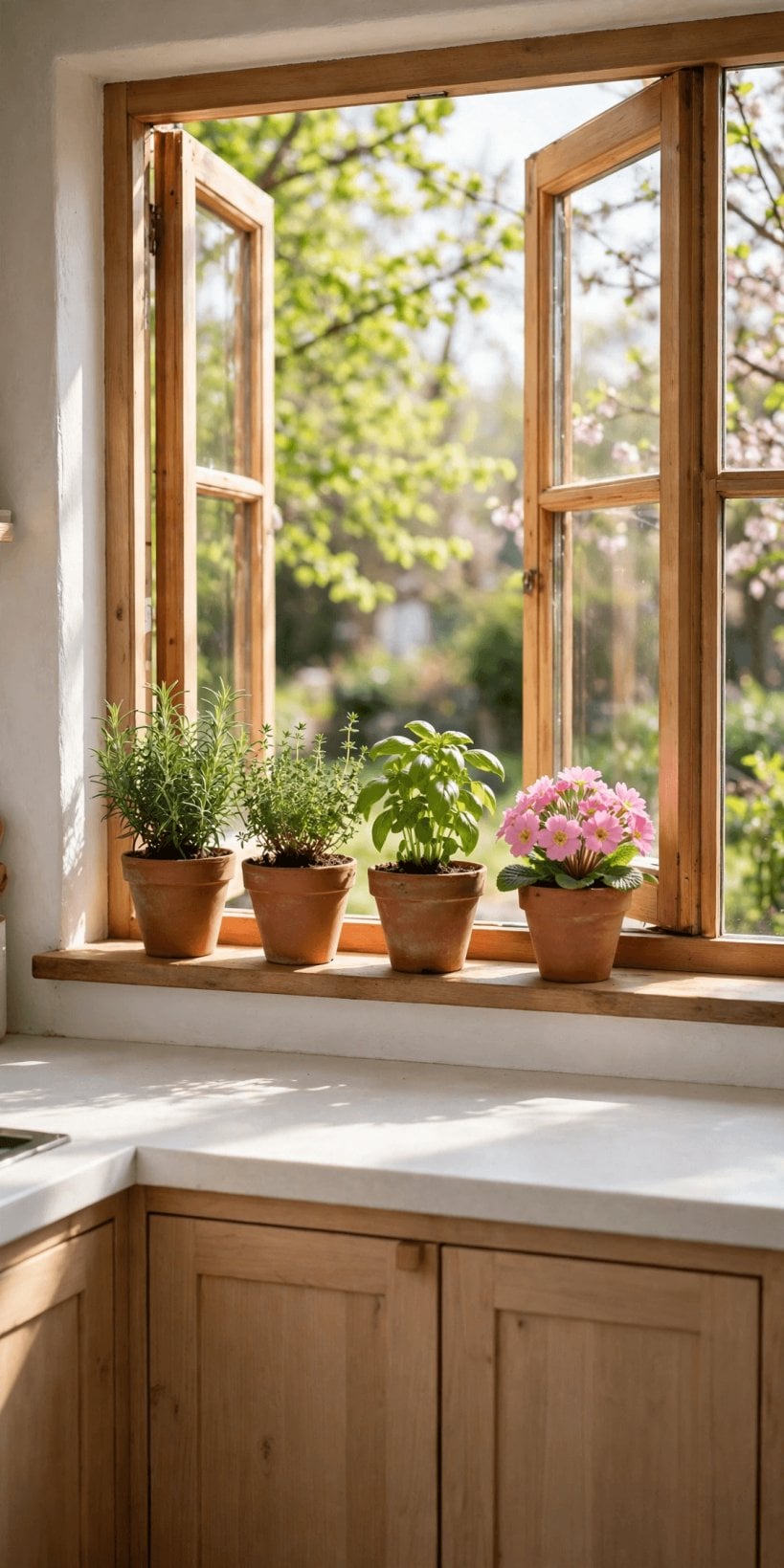
| 6. Linen bedding swap | Bed and loft | Cooler sleep, brighter sleeping space |
| 7. Pastel accents | Throws, cushions, towels | Colour on a calm base, in small doses |
| 8. Light rug swap or bare floor | Living zone | Floor reads bigger and cleaner |
| 9. One-vase flower rhythm | Table or shelf | One vase, refreshed weekly, never a crowd |
| 10. Herb pot on the sill | Kitchen window | Green, edible and useful |
| 11. Surface edit | Every worktop and shelf | Clear surfaces make small rooms feel new |
| 12. Winter textile storage swap | Loft or bench | Heavy layers out, light layers in, one box |
| 13. Entry refresh | Door, mat, hooks | Spring starts at the threshold |
| 14. Doorstep planters | Outside the door | Colour outside, footprint outside |
| 15. Pale bathroom towels | Bathroom | The smallest room gets the lightest swap |
| 16. Kitchen shelf edit | Open shelves and worktop | Jars, fruit and order as decoration |
| 17. Loft airing and storage check | Sleeping loft | Bedding aired, stored items checked for damp |
| 18. One small new thing | Whole home | A single deliberate addition, nothing more |

1. The Spring Reset in a Tiny Home: Deep Clean and a Full Airing
Idea 1: Deep clean one room at a time. Work through the home in the order you live in it: kitchen, living space, bathroom, loft. In each space, empty one surface or cupboard at a time, wash it, and put back only what earns its place, because a small home shows every shortcut. Wash walls where cooking and stove marks gather, wipe the tops of cupboards and the fridge, and clean behind the few pieces of furniture that move. For how different surfaces like to be treated, lightweight interior wall finishes for tiny houses is a useful reference before you scrub a panel with the wrong cleaner.
Idea 2: Air the whole home properly. On the first mild, dry day, open every window and the door, wedge the loft hatch or window wide, and let air move through for an hour or two while bedding, rugs and cushions air outside or across the door. A compact home holds a winter of cooking and heating smells in its fabrics, and air removes what sprays only cover. While the home airs, check under the sink and around the water heater for winter drips; the layout in tiny house plumbing layout and DWV design helps you recognise what you are looking at before small damp becomes a spring repair.
2. Spring Window Dressing: Sheers Up, Heavy Curtains Stored, Glass Cleaned
Idea 3: Replace heavy curtains with sheers. Take down the winter curtains, wash them, dry them fully, and store them in the swap box; hang sheers or the lightest curtains you own in their place. The change is immediate: daylight reaches corners it has not touched since autumn, edges soften, and the room stops bracing against cold that has gone. Keep the heavier pair’s hooks and rings with them in the box so autumn’s change-back takes minutes, and check the sheers cannot drift onto any heater that is still in occasional use during cold snaps.
Idea 4: Clean the glass, inside and out. Window glass is a light fitting you already own, and spring film, woodsmoke and condensation marks can dull it more than you notice from inside. Wash both sides, clean the frames and sills where black mould likes to start, and polish mirrors the same day for the same reason. If draughts were a winter complaint, this is also the kindest moment to note which seals have failed, while the weather forgives an open window; the background in vacuum insulated panels for tiny houses, explained puts those small losses in the context of the whole insulated shell.
3. Linen Fabric Swaps: Cushion Covers and Bedding That Breathe
Idea 5: Swap to linen cushion covers. Linen and linen-look cotton in pale, washed colours change a sofa’s whole register from cosy to fresh, and covers store flat in the swap box the winter ones came from. Choose one soft colour family, stone, sage, pale blue or blush, and repeat it rather than mixing spring patterns, because a compact seating area calms down when its fabrics agree. Linen wrinkles honestly and looks better for it, washes at normal temperatures, and dries fast on a small airer, which matters when laundry space is a rack in the living room.
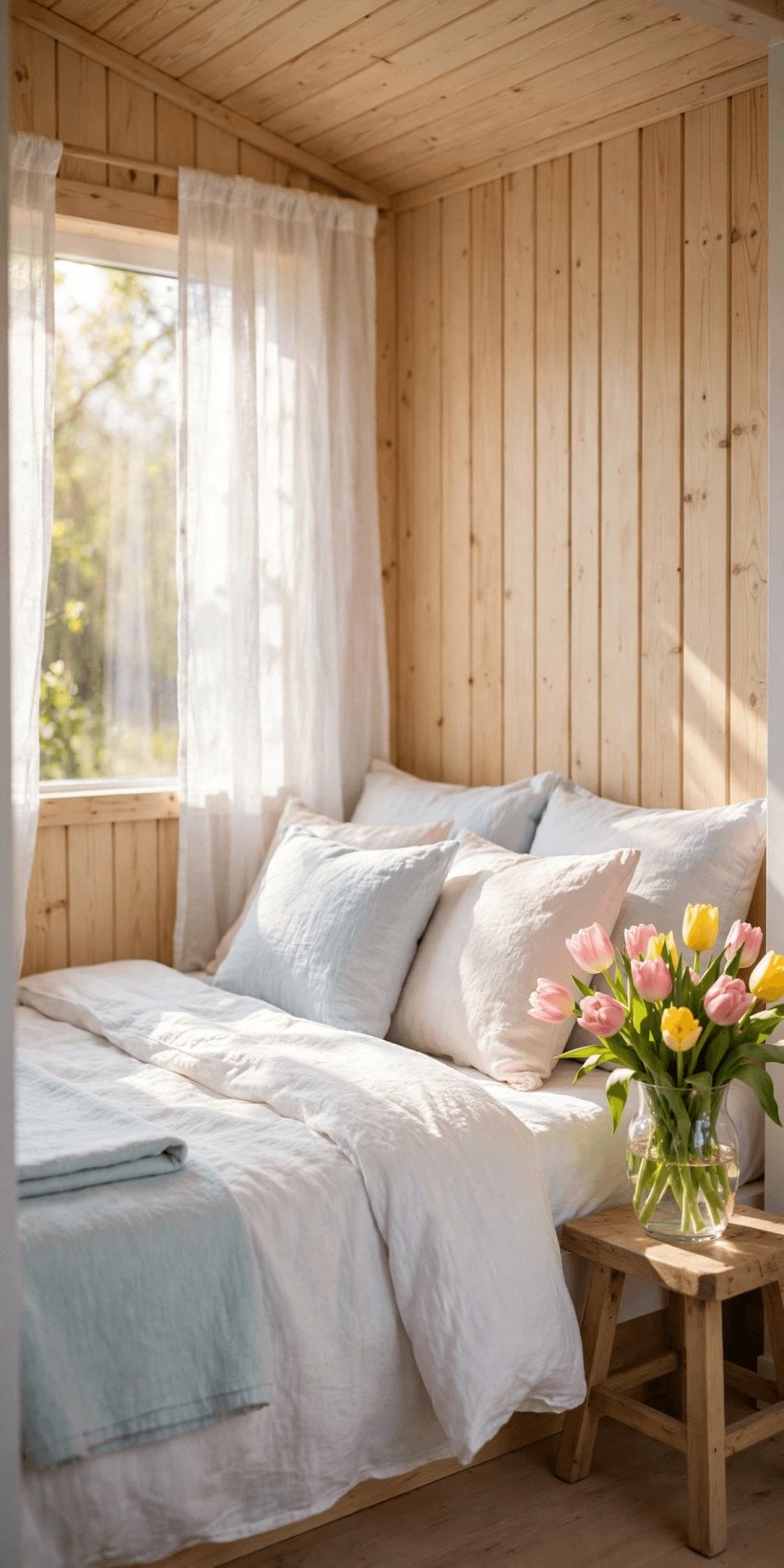
Idea 6: Change the bedding to lighter layers. Wash and store the heavy duvet or add it to the swap box if a lighter one replaces it, dress the bed in pale linen or cotton, and fold one light throw at the foot for the cool evenings that spring still sends. In a sleeping loft the effect doubles, because bedding is most of what you see from below. Air the mattress or topper while the bed is stripped, vacuum the loft corners where dust collects over winter, and let the space dry fully before the fresh bedding goes on.
4. Pastel Accents on a Calm Base: Small Colour, Light Floors
Idea 7: Add pastel accents in small, repeatable doses. With walls, sofa and floor kept calm and pale, pastel works as punctuation: two cushion covers, a throw, a set of hand towels, a jug. The rule that keeps it grown-up in a small home is repetition of one or two pastel shades rather than a rainbow of spring colours competing in a few square metres. If an accent cannot repeat somewhere else in the room, it will look lost; if it repeats once, it looks designed. Keep the saturated colour for the doorstep planters, where spring can be as loud as it likes.
Idea 8: Lighten the floor. Roll up the heavy winter rug if you layered one, wash or beat it outside, and either replace it with a flat, pale rug or leave the floor bare for the season. Bare or lightly covered boards read cleaner, show less dust between cleans, and make a small living zone feel wider, especially with sheers up and glass clean. Check the floor by the door and under the rug for winter damp as you lift it, and let any suspect patch dry in the airing before anything goes back down over it.
5. The One-Vase Flower Rhythm: Weekly Stems and a Kitchen Herb
Idea 9: Keep one vase, and refresh it weekly. One vase is the flower policy for a compact home: a single generous bunch, garden stems, or a few bought stems in the same vase on the same table or shelf, refreshed as part of a weekly rhythm rather than added to. One vase means one water change, one home for stems, and a display that always looks current because last week’s flowers actually leave. Garden prunings and gathered branches can open the season before flowers arrive, an approach explored in fallen limb crafts with branches and twigs, where material from the garden does decorative work and then returns to it.
Idea 10: Grow one herb pot on the kitchen sill. A pot of basil, mint or parsley on the sunniest sill is spring decoration that gets eaten: green at eye level, scent when you brush it, and leaves for the cooking happening a metre away. Keep it to one or two pots that the sill genuinely fits, in a saucer that protects the wood, and rotate the pot a quarter turn every few days so it grows evenly toward the light. A thriving herb also tells you the truth about your window’s light, which is useful intelligence for every other plant you are tempted to bring home.
6. Surfaces and Storage: The Spring Edit and the Winter Swap Box
Idea 11: Edit every surface back to its essentials. Spring cleaning that stops at washing misses the point in a small home; the edit is the decoration. Clear each worktop, shelf and the table completely, then return only the daily objects, placed with a little more air around them than winter allowed. What does not return goes to the swap box, the donation bag or its proper home, not to a new pile. Clear surfaces are why the same room photographs bigger in spring: light lands on empty planes, and the eye reads emptiness as space.
Idea 12: Run the winter textile swap in one pass. Heavy throws, winter cushion covers, the stored curtains and heavier bedding go into the one swap box on the same day the linen and sheers come out, and the box returns to the loft, bench or cupboard top it lives in. One box out, one box in keeps the storage maths of the home unchanged across the biggest seasonal change of the year. Label it plainly, add a note of anything that needs repair before autumn, and resist starting a second box for the pieces that did not make the edit; those pieces are telling you something.
7. Threshold and Doorstep: Entry Refresh and Planters Outside
Idea 13: Refresh the entry like a room. The entry of a compact home is a few hooks, a mat and the back of a door, and spring asks all three to work fresher: wash or replace the mat, clear the hooks back to the current season’s coats, and move boots and winter layers to storage so the threshold stops being a wardrobe. A small basket for gloves gives way to a basket for sunglasses, keys and the garden twine, and the door itself gets washed down inside and out, because it is the largest single surface most visitors ever see.
Idea 14: Put the colour outside in doorstep planters. One or two planters by the door carry spring’s strongest colour, bulbs first, then whatever follows, while taking no interior space at all. Group them to one side so the step stays clear, choose pots heavy enough not to blow or be knocked into the path, and water them as part of the morning routine you can see from the kitchen window. While you work at the base of the home, glance over the skirting and drainage after winter; tiny house skirting options for pipes and insulation covers what a sound base should look like if anything has shifted or cracked.
8. Small Rooms, Light Touches: Bathroom Towels and a Kitchen Shelf Edit
Idea 15: Swap bathroom towels to pale and light. In the smallest room, a set of pale, fresh towels and a washed or replaced bath mat change everything for the cost of laundry and one storage swap. Add a plant cutting rooting in a jar on the sill if light allows, keep surfaces at the sink to the daily three or four items, and let the mirror you polished do the decorating. Towels that spent winter drying slowly near heating often hold a stale smell that no fold hides, so this is also the moment to retire the worst set to rags without sentiment.
Idea 16: Edit the kitchen shelves and let food be colour. Wash open shelves, decant the half-used packets into the jars you already own, and arrange what remains with breathing room; then let a bowl of citrus or the first spring vegetables be the kitchen’s colour, on the one clear stretch of worktop. The order is the point: in compact kitchen appliances for tiny houses, every centimetre of a small kitchen is planned, and the spring edit restores that plan after winter’s extra jars, baking kit and stored produce have quietly colonised the shelves.
9. The Sleeping Loft in Spring: Aired Bedding and a Storage Check
Idea 17: Air the loft and check what winter stored there. Strip the loft fully on an airing day: bedding washed, pillows aired in sun if you can manage it, the mattress turned or vacuumed, and every stored box opened and checked for damp, condensation marks or unwanted guests. Small homes store things near where people sleep, and spring is the audit that keeps that arrangement healthy. Anything that smells musty gets washed, dried outside and only then re-stored, in a breathable bag rather than sealed plastic if the loft runs cool.
Warm-season servicing belongs in this section too, because comfort in the loft is decided before the first hot night, not during it. Clean or wash the filters of any heating and cooling unit while the clean is underway, and run it briefly to check it behaves; the servicing mindset in installing a mini-split in a tiny house shows how much of the system’s good behaviour is simple, regular attention to filters, drainage and airflow, all of which are five-minute jobs in spring and weekend-ruining jobs if they fail in July.
10. The One-New-Thing Rule: A Single Deliberate Addition for the Season
Idea 18: Allow one small new thing, chosen slowly. After the clean, the swaps and the edits, a compact home has earned exactly one addition: a plant you have wanted, a jug for the vase rhythm, a print for the one bare wall, or a better basket for the entry. One, chosen because the refreshed rooms showed you what was actually missing, rather than a basket of spring novelties bought on the first sunny Saturday. If nothing is missing, the new thing can be an experience instead, a garden visit or a meal eaten outside, and the home stays exactly as edited.
Keep the rhythm after the reset. The vase refreshes weekly, the sheers and linen wash in rotation, the entry basket gets a two-minute sort when it overflows, and the swap box stays shut until autumn. Spring freshness in a small home is not a look you install once; it is the natural state of a home that is aired, edited and lightly dressed, maintained in minutes because it was set up honestly in a day. When the season turns again, the same box, the same swaps and the same one-new-thing rule will carry the home back the other way.
Final Considerations
Spring rewards subtraction in a small home. Clean deeply, air fully, let sheers and linen replace winter’s weight, set pastels sparingly on a calm base, and keep flowers to one faithful vase and a herb on the sill. The trade-offs are modest: a day of labour, a strict edit of surfaces, and colour kept quieter indoors than the garden outside the door. What returns is a home that feels newly built out of its own rooms, brighter at every hour, easier to keep in minutes a week, and ready for the warm half of the year with its storage unchanged and its one small new thing chosen on purpose.


0 Comments