

An unused fireplace makes a room feel unfinished: a handsome surround wrapped around a dark, empty hole. The good news is that the firebox itself is a ready-made display niche, deep, framed and lit by the room around it.
This article shows how to decorate inside of fireplace openings in twelve different ways, from two-minute fixes to a weekend paint project. Every idea assumes the fireplace is genuinely out of use, so read the safety notes first, then pick the look that suits your room.
1. Styling an Unused Fireplace at a Glance
Whichever of the twelve ways you choose, the preparation is the same. Clean the firebox thoroughly, check how the opening is sealed, and decide whether your styling is permanent or something you will change with the seasons. This summary covers the essentials before the ideas begin.
| Check first | Why it matters |
|---|---|
| Is the fireplace truly retired? | Only style the inside of a fireplace that will not be lit again, or one you can fully clear before any future use. |
| Is the flue sealed? | A capped or balloon-sealed flue stops draughts, dust and soot falling onto your display. |
| Has it been swept and cleaned? | Old soot smells and marks pale objects; a proper clean makes the space feel like furniture, not a chimney. |
| What is the opening’s size? | Measure height, width and depth so logs, baskets and artwork fit with room to breathe. |
| Real flame or fake? | Choose flameless candles and battery lights for anything inside a firebox; keep real flames for a working hearth only. |
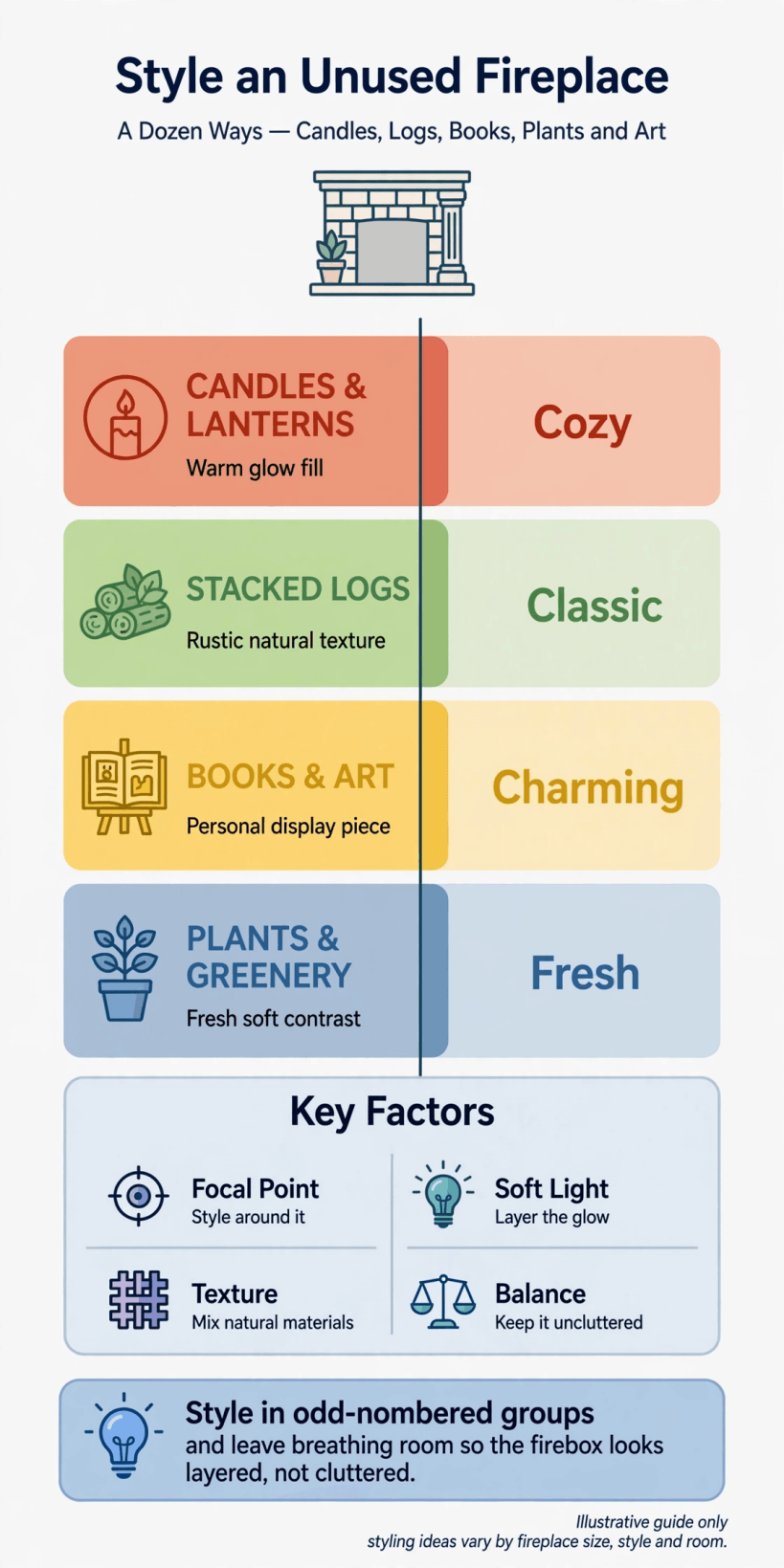
Twelve ways at a glance: prepare the firebox once, then swap the styling as often as you like.
One more word before the ideas. If there is any chance the fire will be lit again, by you, a guest or a future owner, keep every styling choice fully removable and store nothing flammable in the flue’s path. Decorators treat a retired fireplace as a cupboard with a beautiful frame, and that mindset keeps every idea in this article safe as well as pretty.
2. Way One: A Neat Stack of Logs
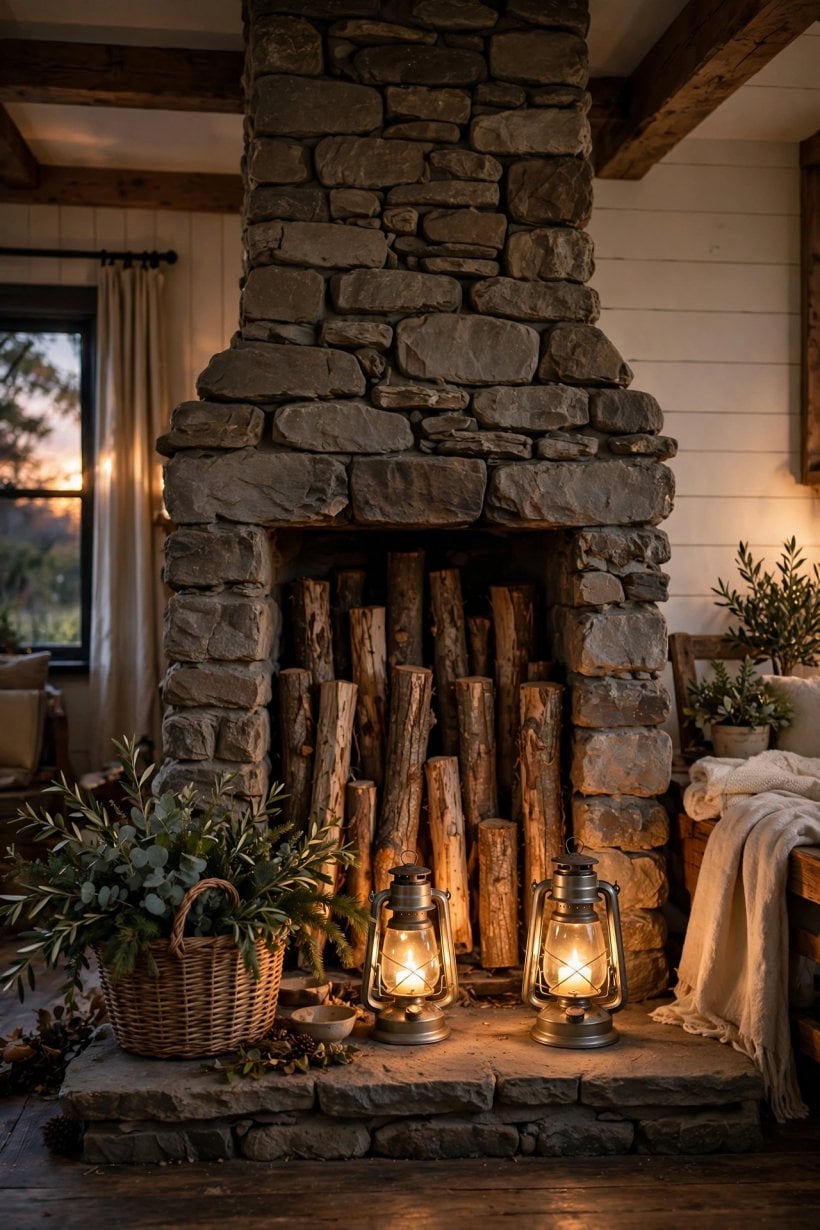
The classic answer, and still the most convincing: fill the firebox with a tidy stack of logs, cut ends facing the room. It honours what the fireplace was for, adds woody texture and warm colour, and asks almost nothing of you once it is done. Vary the log diameters a little so the stack looks gathered rather than manufactured, and keep the front face roughly level for a composed finish.
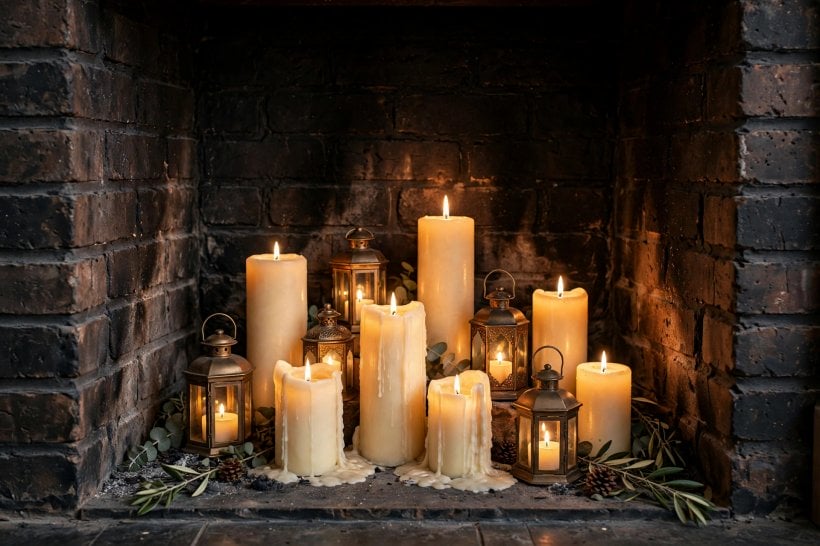
Use properly dried decorative logs from a reputable supplier, or sound offcuts you already have, and check them for insects before bringing them indoors. If real logs feel too rustic, painted log ends, all one colour or a soft ombre, give the same rhythm with a more tailored mood. In small rooms this stacked look works especially well, because it fills the visual hole completely without adding a single new object to the room, a trick borrowed from tiny house living room ideas where every feature has to earn its place twice.
3. Way Two: A Cluster of Candles
Candlelight is what a firebox was designed to hold, and a cluster of flameless candles returns the glow without the fire. Group pillar candles of different heights on a tray or a slate, odd numbers look best, and let the flicker do the decorating. Modern flameless candles with warm-toned flames are convincing from sofa distance, and timers mean the fireplace can glow to greet you each evening.
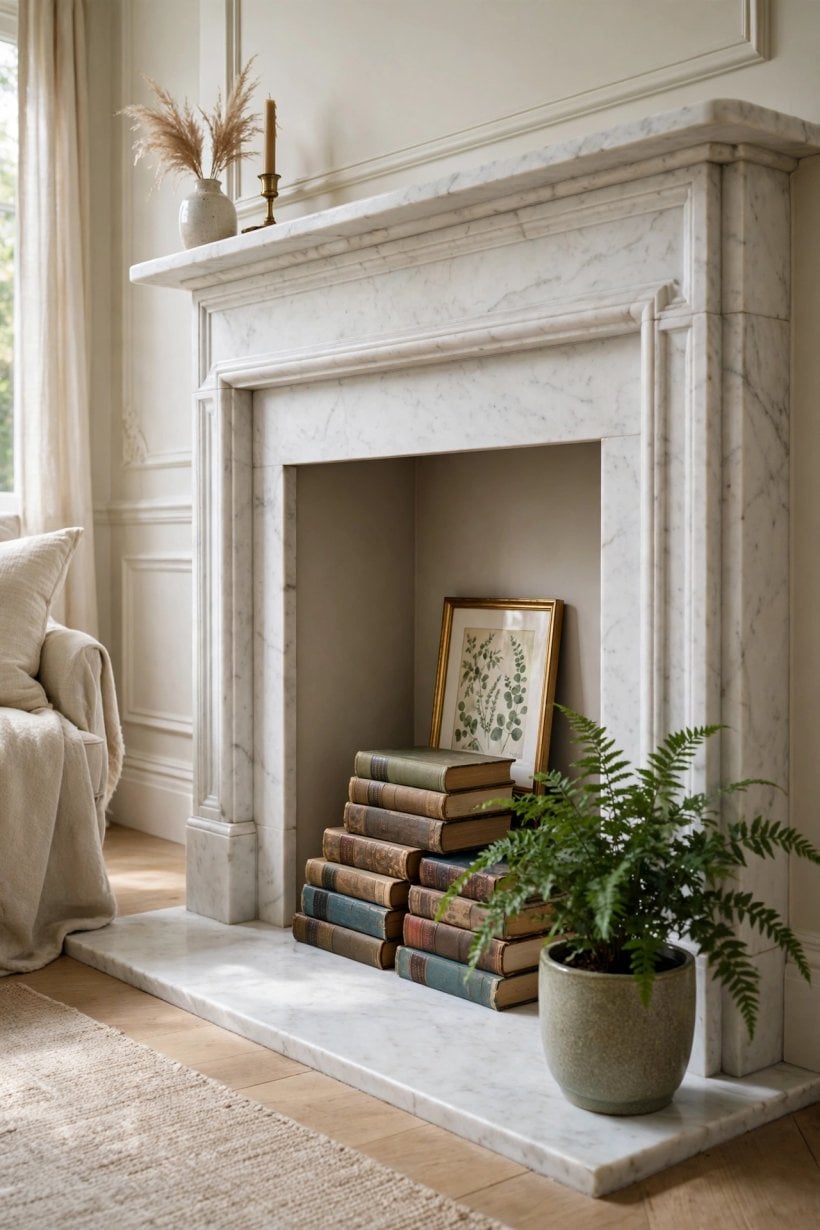
Keep real, lit candles out of a retired firebox as a rule: draughts, soot and forgotten flames are poor companions, and anything stored around them in the other eleven ideas is not chosen with fire in mind. If you love the look of hurricane lanterns, use them with flameless pillars inside. The layered effect, candles in the box, a mirror or pale painted back behind them, gives a small room the same evening warmth that layered schemes bring to colorful tiny house interior design, with none of the risk.
4. Way Three: A Small Library
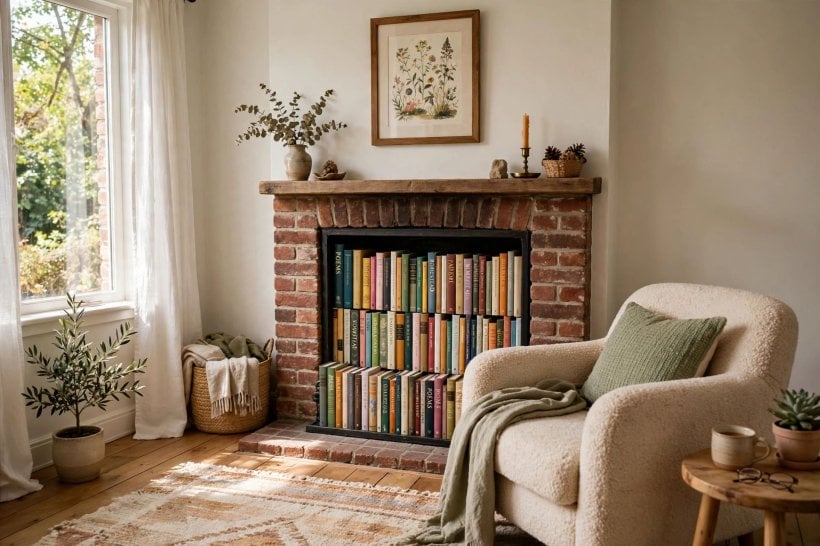
Books are the decorator’s friend: warm, personal and already in the house. Stack them inside the firebox in low piles, spines out or pages out, and the opening becomes a miniature library. Pages-out stacking in pale tones suits calm, neutral rooms; spines-out in mixed colours suits anywhere that needs a cheerful note at floor level.
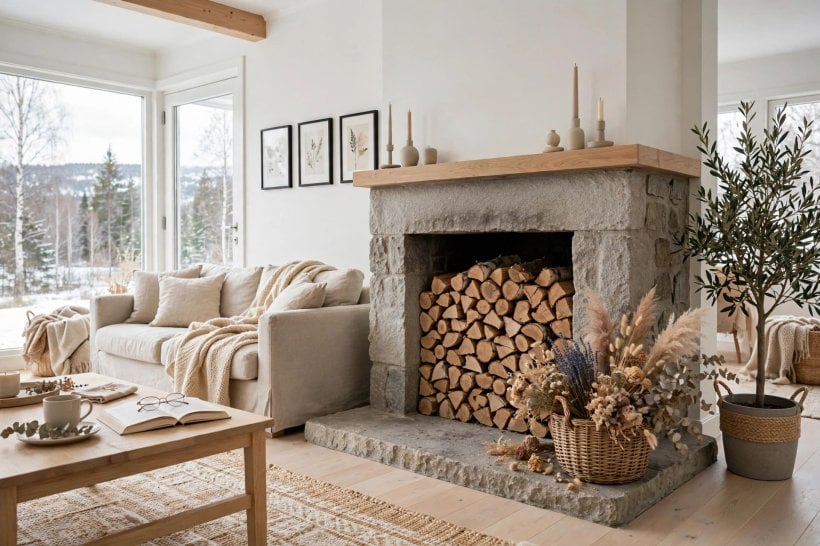
Protect the books first. Only use a fireplace that is dry and sealed, line the base with a board or tray so nothing touches old soot, and choose books you read but do not treasure, because firebox air is not archive air. Rotate them occasionally, dust them when you dust the room, and treat the display as a reading pile rather than storage. It pairs beautifully with a reading chair angled toward the fireplace, turning a dead feature into the room’s most inviting corner.
5. Way Four: Plants and Greenery
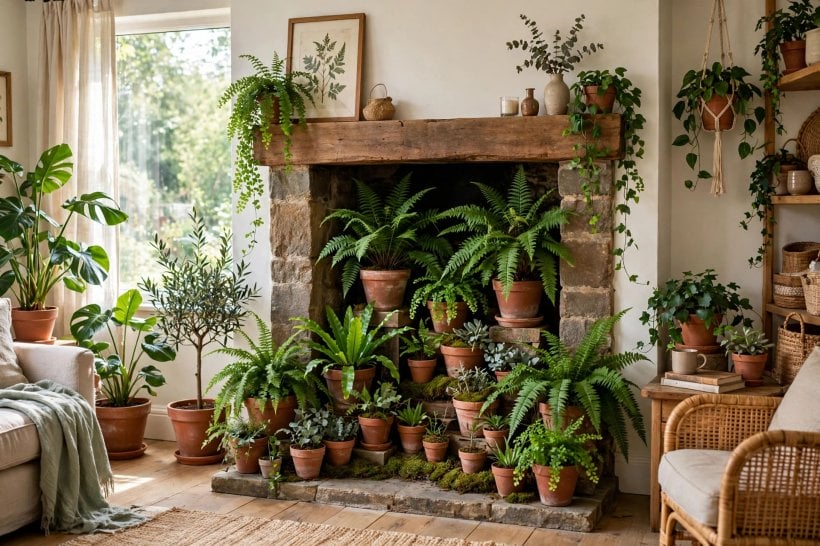
A plant brings a firebox to life in the most literal way. Ferns and trailing plants suit the cool, shaded character of a fireplace opening, and their green against brick, stone or blackened metal always looks deliberate. Sit the plant on a stand or upturned crate inside the box so its foliage spills at the height the flames once occupied.
Be honest about light: most fireplaces sit on an internal or shaded wall, so choose plants that tolerate low light, or rotate two plants between the fireplace and a brighter spot so each gets its turn in the sun. Faux plants have become remarkably convincing and remove the light problem entirely, which is why stylists use them so often here. A cluster of three, one tall, one trailing, one small and sculptural, beats a single plant every time, and the pots themselves become part of the room’s palette.
6. Way Five: Leaned Artwork or a Mirror
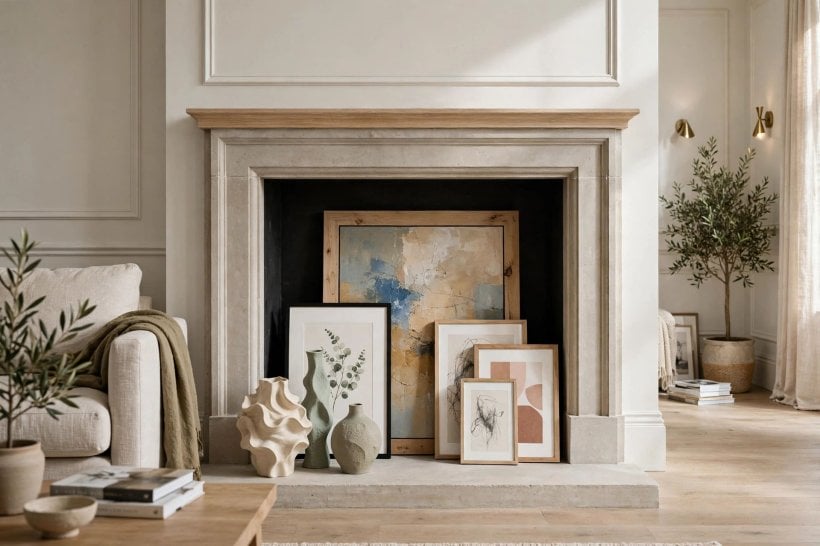
A framed picture or a mirror, leaned inside the opening or hung low within it, treats the firebox as the frame it already is. A mirror is the transformer: it bounces light into the darkest corner of the room and reflects the floor and rug, making the space feel larger. Artwork brings colour and personality, and the fireplace gives it a gallery setting for free.
Scale is the secret. Choose a piece that fills most of the opening, leaving a margin of firebox visible around it like a mount in a frame. Small pictures rattling around in a big opening look lost. Lean the piece at a slight angle, secure it so it cannot slide, and echo one of its colours somewhere in the room, a cushion, a throw, a lampshade, so it belongs to the scheme rather than visiting it. Rooms planned around a strong focal point, like the seating walls in tiny barn house interior schemes, show how far one well-placed piece can carry a whole wall.
7. Way Six: A Basket of Blankets
Texture is what most fireplace styling is really missing, and a basket of folded blankets or throws supplies it generously. Choose a basket wide enough to fill the opening’s width, in wicker, rattan or woven seagrass, and roll or fold two or three throws so their colours and fringes show. The effect is soft, welcoming and entirely practical on film nights.
This is also the most changeable idea in the twelve. Swap the throws with the seasons, linen and pale cotton in summer, wool and deep colours in winter, and the fireplace changes its mood in five minutes. Keep the basket on a mat or board if the hearth is rough, and shake the blankets out outdoors now and then. Because everything is simply placed, nothing is fixed, this is a favourite for renters and for households whose fireplace might one day return to work.
8. Way Seven: A Seasonal Display
A fireplace is a natural stage for the seasons, and an unused one can change its costume all year. Spring asks for a jug of branches or bulbs in pots; summer for shells, pale driftwood or a stack of white-painted logs; autumn for pumpkins and dried grasses; winter for greenery, pinecones and the candle cluster from Way Two wearing its festive clothes.
The discipline that makes seasonal displays look styled rather than cluttered is a container and a palette. Keep everything inside one tray, basket or low crate that fits the opening, and hold each season to two or three colours. When the season turns, the whole display lifts out in one go and the next goes in. Seasonal rhythm is one of the pleasures of a small, well-run home, the same pleasure that runs through tiny house landscaping ideas outdoors, brought inside to the hearth.
9. Way Eight: Lanterns of Different Heights
Lanterns give a firebox structure and glow in one move. Group two or three in different heights and finishes, black metal with glass, brass for warmth, or painted wood for a country feel, and fill them with flameless candles or a coil of fine string lights. Their frames suit the architecture of a fireplace, all straight lines and enclosures, in a way soft objects sometimes do not.
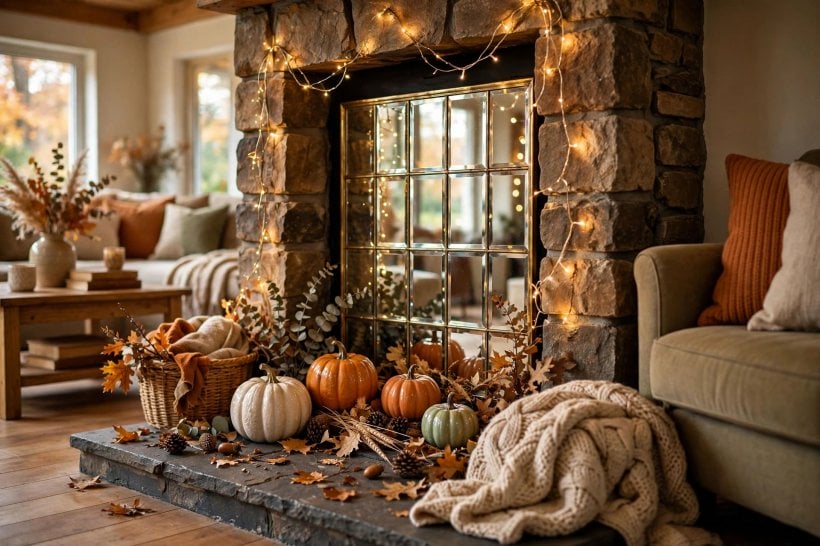
Arrange the tallest lantern at the back, the others forward and to the sides, and check the view from your usual seat: you want overlapping frames and layered light, not a straight row. Lanterns also travel well between ideas, moving to the hearth, the mantel or the garden table in summer, which makes them one of the hardest-working purchases in this whole list. Choose flameless candles with a warm colour temperature so the light flatters brick and skin alike.
10. Way Nine: Sculpture, Ceramics and Collected Objects
A firebox is a plinth waiting for an object. A single piece of sculpture, a group of handmade ceramics, a beloved carving or a collection of vases in one material makes a quiet, grown-up display that changes the room’s whole register. The dark interior of the box acts like a museum case, outlining whatever you place inside it.
Keep the group tight and the story clear: one material, one colour family or one maker, and fewer pieces than you first reach for. Negative space inside the opening is what makes the objects look chosen. This is the idea that suits formal rooms and minimal schemes best, and it asks for good light, so borrow the accent-light thinking from the living room guides: a small picture light or a lamp angled nearby will do the objects justice after dark. Rotate pieces from other rooms through the fireplace a few times a year and your existing possessions will keep feeling new.
11. Way Ten: A Jar of Lights
The simplest idea of the twelve, and often the one guests comment on: a large glass jar, vase or demijohn filled with warm string lights, standing inside the firebox. The glass softens the light, the jar gives it shape, and at night the whole fireplace glows like embers remembered rather than imitated. Battery-powered lights on a timer make it effortless.
Choose the largest vessel that fits comfortably; small jars look apologetic in a generous opening. A second, empty vessel beside it in the same glass adds the stylist’s touch of the odd-numbered group without more light. Keep spare batteries with the household spares, not in the firebox, and dust the glass when you dust the room so the glow stays clear. Children tend to claim this display as a night-light for the whole room, which tells you how much atmosphere one jar can hold.
12. Way Eleven: Paint or Tile the Inside
Sometimes the best styling is a finish, not an object. Painting the inside of a retired firebox transforms it: deep charcoal or black makes the opening look intentional and dramatic, while a pale, warm white turns it into a bright niche for any of the other eleven ideas. A contrasting colour borrowed from the room’s scheme can be braver still.
Preparation decides the result. Clean and degrease the surfaces thoroughly, repair loose pointing or crumbling render, and use a paint the maker states is suitable for the surface and setting you have; if the fireplace could ever be used again, only use products made for that purpose and take specialist advice first. Tiling the firebox back or floor with leftover tiles is the other finish worth considering, a small area where an expensive tile becomes affordable. Either way, a finished interior makes even an empty fireplace look designed, the same way a well-chosen interior scheme anchors the rooms in bedroom interior design for tiny houses.
13. Way Twelve: A Decorative Screen or Panel
The final way covers rather than fills: a decorative screen, a painted panel or a made-to-measure board set into or just in front of the opening. Screens in pierced metal, cane or painted timber add pattern at the exact spot the room was missing it, and they are the kindest solution for a firebox that is draughty, damaged or simply not beautiful, whatever you put in it.
A panel can carry more personality still: wallpaper it, stencil it, or paint it with a simple arch or landscape, and you have changeable art that lifts out in seconds. Fit matters more than decoration here; a screen that sits square and still looks tailored, while a wobbling one looks temporary. However you finish it, keep the panel easy to remove so the flue and any vents stay accessible for inspection, and label the back with a note that the fireplace is decorative only, a courtesy to whoever owns the house next.
Final Considerations
Twelve ways, one principle: treat the unused fireplace as a framed space and fill it with the same care you would give a shelf or a tabletop. Prepare it properly, seal it against draughts and dust, keep real flame out of it, and choose the idea that matches how you actually live, whether that is logs for texture, candles for glow, books for warmth or a screen for simplicity.
Start with the easiest idea that appeals, live with it for a few weeks, then refine. Styling an empty firebox is reversible, inexpensive and oddly satisfying, and once the dark hole becomes a display, the whole room settles around it. That is how to decorate inside of fireplace openings so they stop apologising and start contributing, in homes of every size.
One last encouragement: when you finish, photograph the fireplace from the doorway and from your favourite seat. Those are the views you will live with, and they will show you honestly whether the display needs one object more or one object fewer. Trust that view, adjust once, and then leave it alone to be enjoyed.


0 Comments