

Strip away the cards, the roses and the restaurant queues, and one plain fact remains: every person wants, at least once a year, to be deliberately remembered by the people they love. That is the whole of Valentine’s Day — and it is not a small thing.
This article considers what the day is actually for, and how a home — the setting most love is lived in — can honour it well: attention over expenditure, a house prepared with care, a meal, honest words, and room for every kind of love the household holds. It is written evergreen, for any February and any household, as part of the wider home design ideas collection.
1. Valentine’s Day at a Glance
Valentine’s Day, kept each year in mid-February, is the calendar’s appointed occasion for expressing romantic love — and, in the way most households actually keep it, affection more broadly: between partners, within families, and among friends. The day carries the name of a Saint Valentine of early tradition, about whom the stories vary and the certainties are few; what is certain is the custom’s own long life — centuries of exchanged tokens, verses and small attentions between lovers, carried into the present day of cards, flowers, meals and gifts. Its importance, this article argues, is not commercial and not really historical: it is that affection, which daily life assumes, benefits from being said — deliberately, at least once a year, in a form the other person can keep.
| Question | Short answer |
|---|---|
| What is the real importance of Valentine’s Day? | It gives affection a date. Love in a household is mostly expressed in labour — meals, lifts, repairs, patience — which is real but easy to stop noticing. A fixed day on which love is expressed deliberately, in words and small ceremonies, renews what the daily labour assumes. The day’s importance is the appointment itself: affection, like everything valued, benefits from being scheduled as well as felt. |
| Do the historical origins matter to how we keep it? | Only lightly. The day bears a saint’s name from early tradition, and later centuries layered their own customs of courtship, verses and tokens onto it — the honest summary is that the stories are many, the records are thin, and the custom outgrew its sources long ago. What a household keeps is not a history lesson but a habit of centuries: lovers using one February day to say plainly what the year makes implicit. |
| Must it be expensive or romantic in the grand style? | No — and the evidence of every long household says the opposite. The observances remembered for decades are specific, not expensive: the particular flower remembered, the meal cooked from a shared memory, the sentence that could only have been written by one person to another. Expenditure is the easiest substitute for attention, and the least convincing one. |
| Is the day only for couples? | Its centre is romantic love, but households have always widened it — children making cards, friends exchanging small kindnesses, grown children remembering parents. Affection is not diminished by being shared across its kinds. A home that marks the day at several of its tables — the couple’s, the family’s, the friend’s doorstep — keeps it most fully. |
2. What the Day Actually Asks: Attention, Said Out Loud

Begin with the day’s real request, which is modest and searching at once: to be noticed, particularly, by the person whose noticing matters most. Not admired in general, not treated in general — remembered in particular. The favourite song, the way they take their tea, the story only the two of you still tell. Every successful observance of this day is built from such particulars, and every failed one — however costly — failed by being generic.
Affection assumed is affection at risk
Long love runs on assumption the way a house runs on its foundations — necessarily, and invisibly. The danger is the same in both: what is never inspected is eventually taken for granted by both parties, giver and receiver alike. An annual day of deliberate expression is the inspection — small, regular maintenance on the most load-bearing structure in a household’s life.
The appointment is the meaning
Critics call the day manufactured, as if an appointment could discredit a feeling. But households already know that the things given dates — birthdays, anniversaries, holidays — are the things that reliably happen, while undated intentions dissolve into the year. Valentine’s Day is simply affection’s standing appointment, kept by people wise enough to know that love, like friendship and health, thrives on being attended to on purpose.
3. The Home as Setting: Prepared, Not Decorated
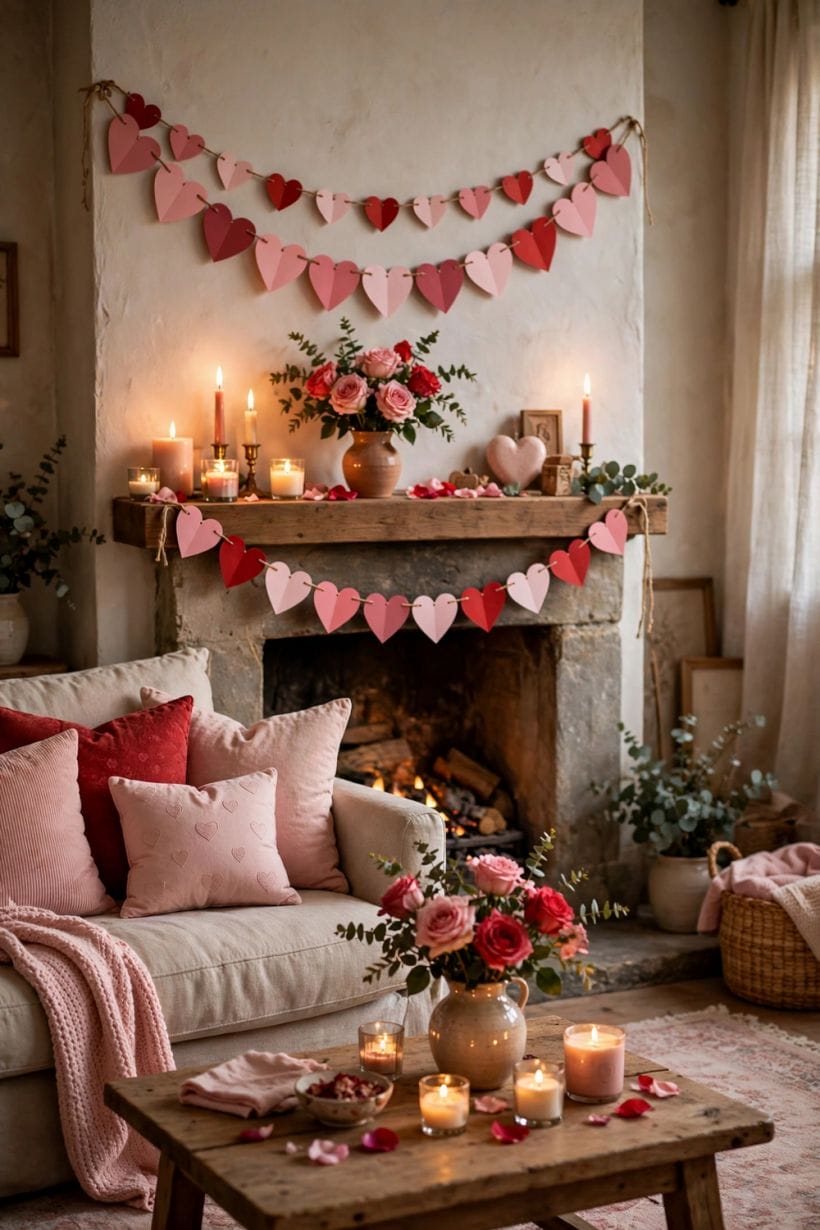
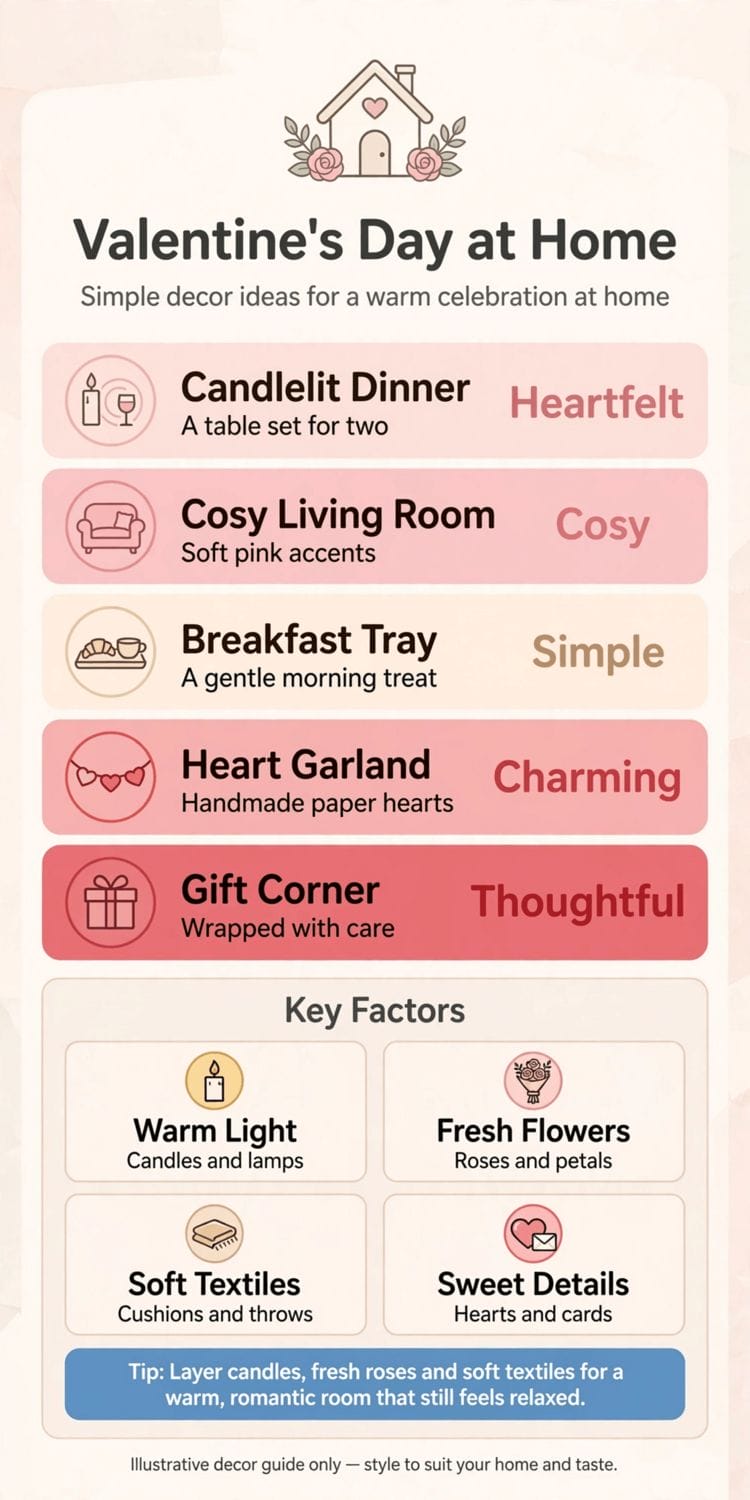
Most love is lived at home, and the day is best honoured where it is lived. Preparing a home for it is not the retail version — not a house dressed in red for an evening — but a quieter discipline: the house at its most cared-for. Rooms tidied to their best selves — the living room composed, the bedroom made calm, the good candles lit, flowers in a jug because the table deserves them. The beloved should feel that the house itself was prepared with them in mind, which is a compliment no restaurant can pay.
Care is the decoration
Clean windows, a polished table, the favourite chair’s cushion plumped and the fire laid — the visual language of a home prepared for someone is care, and it reads instantly. Against it, themed decoration is optional garnish. A household that does the first and skips the second has lost nothing; the reverse has produced a stage set.
Light the home kindly
Lamplight and candlelight are the day’s honest illuminations, at home as in the living room ideas tradition: light at the height of faces, warm and low, the ceiling lights forgiven their evening off. A home lit kindly makes its people look loved, which is not a trick of flattery but the actual atmosphere affection prefers to be expressed in.
4. The Table: A Meal Cooked Slowly and Served Kindly

The shared meal is the day’s oldest ceremony, older than any card industry, and the home table serves it better than any booked one — because the cooking itself is part of the message. A meal made by one person for another, from knowledge of their tastes, is affection in its most fluent language. It does not need to be elaborate. It needs to be chosen: the dish remembered from a journey, the pudding from a childhood, the breakfast that lets the day begin as it means to continue.
Cook what means something
The menu’s power is in its references. A recreation of a first meal, a dish from the town a couple met in, a grandparent’s recipe attempted with love and approximate success — these feed memory as well as appetite. Where cooking is impossible, assembling with the same intent — the bakery visited deliberately, the favourite things gathered — carries most of the same meaning.
Set the table like it matters
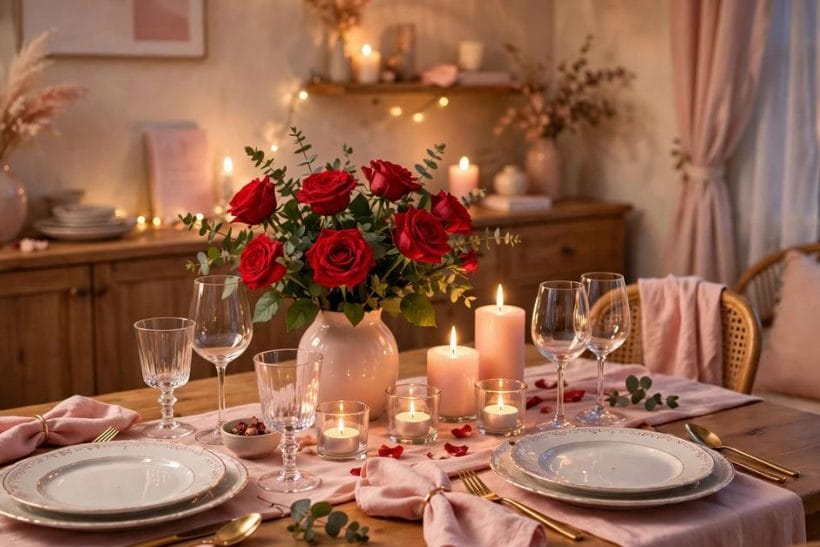
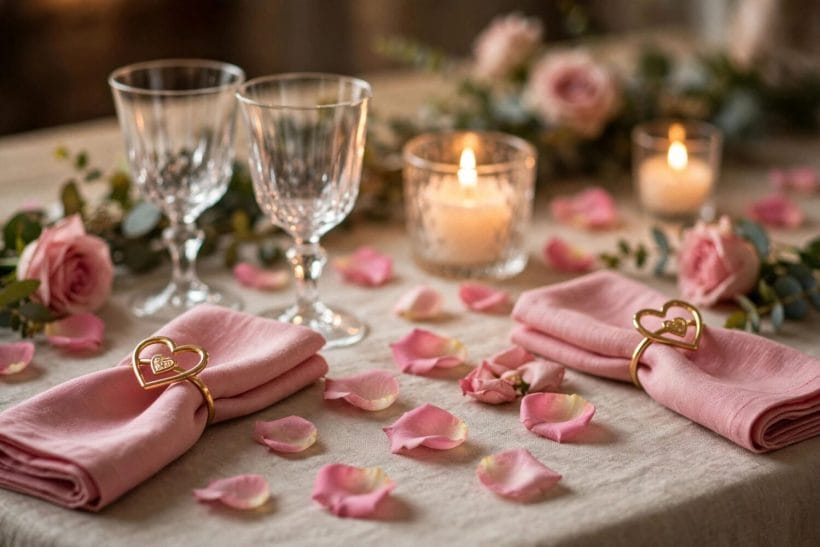
The good cloth, the better glasses, a candle, something green or flowering in the middle — the dining room used at its best for the people who eat there daily. Setting a table is a small piece of theatre performed entirely for its audience’s pleasure, and households that perform it for each other are richer than households that save it for guests.
5. Words That Land: Cards, Notes and Saying It Plainly

Of all the day’s instruments, words keep longest. Flowers are a week, a meal is an evening, but a sentence written down is reread for years — in drawers, in wallets, in the backs of books. This is why the exchanged card, for all its commercial company, refuses to die: it is the one gift that is itself the message. The craft of it is not poetry. It is specificity — the named memory, the noticed detail, the quality praised that the person feared went unseen.
Write the true sentence, not the fine one
A card’s value is in the sentence only its writer could have written. Generic verses are wrapping paper; the handwritten line beneath them is the gift. Anyone stuck for words can steal the oldest structure in the world: I remember, I notice, I am glad. Three clauses of that shape, honestly filled, outlast every printed sentiment ever purchased.
Leave words where they will be found
The note in the coat pocket, on the pillow, inside the lunchbox or the car’s sun visor — small ambushes of affection that extend the day across the whole of it. Households good at this day are usually good at placement: they know the beloved’s routes through the house and seed them, the way the family room is arranged around the household’s actual paths rather than its ideal ones.
6. Gifts With Judgement: Thought, Demonstrated
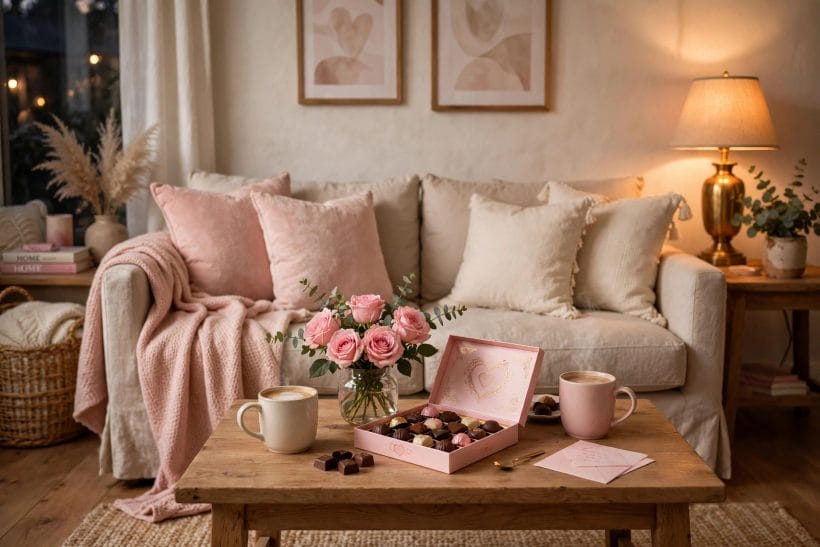
A Valentine’s gift succeeds by evidence — it proves the giver has been paying attention. The book mentioned once in October, the replacement for the beloved tool worn out in service, the ingredient they could not find, the experience shared rather than the object shelved. Judged this way, gift-giving stops being a test of budget and becomes a test of memory, which is why the day secretly rewards the observant and exposes the last-minute at any price.
Experiences bind; objects testify
Shared experiences — the walk, the concert, the afternoon cooking together — become the stories a household tells for years, while objects testify quietly from shelves. Both have their place; the error is buying objects when the household is hungry for time. Where time is the scarce gift, give time, formally: an evening defended against all other claims is a present with a date on it.
Flowers, given knowingly
Flowers remain the day’s emblem because they are beautiful, brief and entirely for pleasure — the least utilitarian gift there is, which is their whole statement. Given knowingly — the right flowers, the remembered favourites, the colour they love rather than the colour the season sells — they say the day’s sentence in its traditional dialect. Given by rote, they say only that a calendar was consulted.
7. When Distance or Duty Intervenes: Marking It Anyway
Not every February finds a household together — work, distance, illness and duty all keep their own calendars. The day’s importance survives separation precisely because its essence is deliberate remembrance, which travels: the letter that arrives, the call kept at length rather than snatched, the small parcel posted early enough to be an arrival rather than an apology. Distance tests the observance and, kept well, can deepen it; nobody who has received a carefully-timed letter across a separation doubts the day’s usefulness again.
The early-posted parcel beats the grand gesture late
In separated households the logistics are the love language: the thing chosen in time, wrapped properly, sent to arrive on the day. It proves the beloved was remembered before the shops began reminding. Set the reminder early in the year and let the calendar work for the affection, as it does for everything else a household refuses to forget.
Keep the ritual, change its form
The meal becomes two meals eaten on a call, the card a letter, the flowers delivered by a local florist near the beloved instead. Rituals survive by adaptation — a truth homes themselves teach, as rooms change use across a family’s life without the house ceasing to be home. The form is the servant; the remembrance is the master.
8. The Wider Circle: Children, Friends and the Elders

A household’s February widens naturally. Children, who deal in affection without embarrassment, take to the day instinctively — cards made at kitchen tables, small ceremonies of friendship at school, the first lessons in expressing regard deliberately and kindly. Let them learn on this day what the adults are practising: that feelings grow stronger for being expressed, and that expressing them is a skill of specifics, learned young and used for life.
Friendship and family belong at this table too
The friend who lives alone, the widowed parent, the elder whose Februarys were once full — a card, a visit, an invitation to the household’s table costs little and can carry a whole season for its receiver. The day’s centre is romantic, but its circumference is every affection a household holds, and the homes that honour the circumference find the centre better kept as well.
Teach the day’s craft, not its shopping
Children watching adults mark the day learn whichever version they see: the panicked purchase or the prepared kindness — the card written at the table over days, the meal planned, the small thoughtful thing remembered. The second education is among the most useful a home provides, and it is delivered, like most home education, entirely by example.
9. Keeping It Well, Any Year: A Small Annual Ritual

The households that keep this day best treat it as a small annual ritual rather than a yearly improvisation: a few fixed elements — a meal, words in writing, one deliberate act of remembrance — repeated with variations, the way a family’s other festivals gather meaning by repetition. Ritual is memory’s architecture; the same table, the same candles, the same walk, year on year, builds a structure inside which affection can be reliably found, even in the hard years when improvisation would fail.
Prepare in January what February will need
The card bought early, the table booked or the menu settled, the small thing ordered in time — modest administration that protects the day from the year’s weather. None of it diminishes spontaneity; it defends the appointment so that feeling, on the day, has somewhere prepared to happen. The porch decorated for a homecoming and the table set for this day are the same household skill: readiness as a form of regard.
Let the day end with the house at peace
Candles out, the good glasses washed, the card placed where it will be found again in a drawer-cleaning years from now. The day’s final importance is its residue — a household reminded, once more, of what it is for. Everything else about Valentine’s Day is decoration on that single, sufficient fact.
10. Costs and Pulling It Together
Nothing in this article’s observance requires money in any quantity — a prepared home, a cooked meal, true sentences and remembered particulars are the whole apparatus, and most are free. Where money is spent, it should buy evidence of attention, never a substitute for it. That ordering — attention first, expenditure as its servant — is the difference between a day that renews a household and a day that merely bills it, and it is available to every home at every income.
Pull the day together simply: decide its few rituals and keep them yearly; prepare the home with care rather than decoration; cook or assemble a meal that refers to the beloved’s own history; write the true sentence down; give, if you give, from memory rather than from displays; widen the table to the household’s other loves; and where distance intervenes, let the post and the calendar carry the remembrance in time. Kept so, the day does its real work — it tells the people in a home, in so many words and candles, that they are noticed. Few appointments on the calendar matter more.
Final Considerations
The real importance of Valentine’s Day was never the roses, and it survives every argument made against its commercial clothing. Underneath them stands a plain human arrangement: that once a year, on an agreed day, the people who love each other say so — deliberately, particularly, and out loud. Households run on what is expressed; the rest, however deeply felt, is weather inside the walls that nobody else can feel.
So keep the day, in the home where the love actually lives. Light it kindly, feed it well, write the sentence, remember the particulars. A house in which affection is spoken on schedule is not a less romantic house than one waiting for spontaneous grand gestures — it is a more honest one, and its Februarys will accumulate, year on year, into the story of a home that never forgot to say the main thing.




0 Comments