

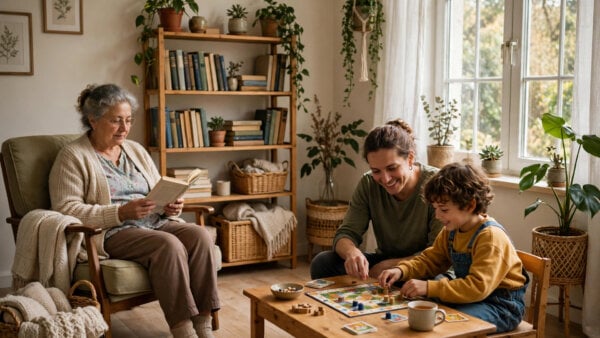
The family room is the living room with its tie off. It is where the household actually happens — homework beside the sofa, a film on Friday, a board game colonising the floor, somebody asleep under a blanket by nine. It does not need to impress the neighbours; it needs to survive Tuesday.
These 75 family room ideas treat the room as the household’s working common land: zoned, washable, storable and kind. The formal sibling is surveyed at living room ideas; this post owns the everyday version, where comfort is the brief and forgiveness is the specification.
1. Family Room Ideas at a Glance
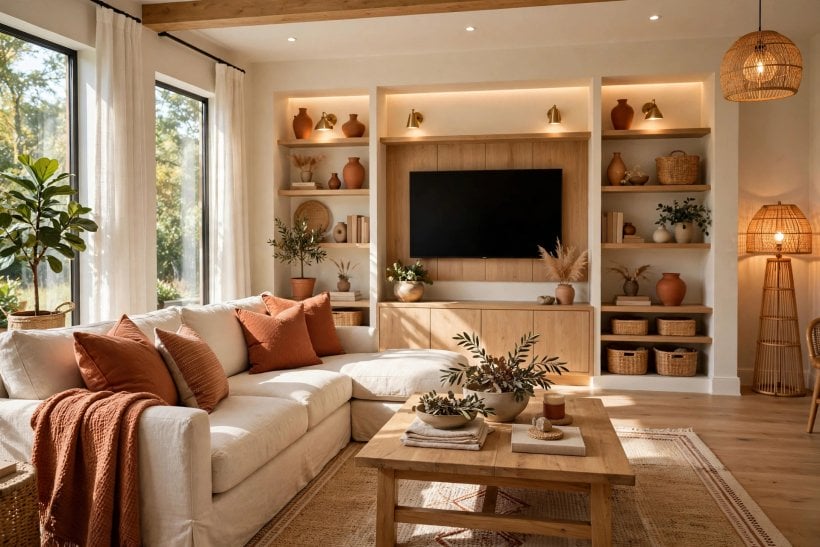
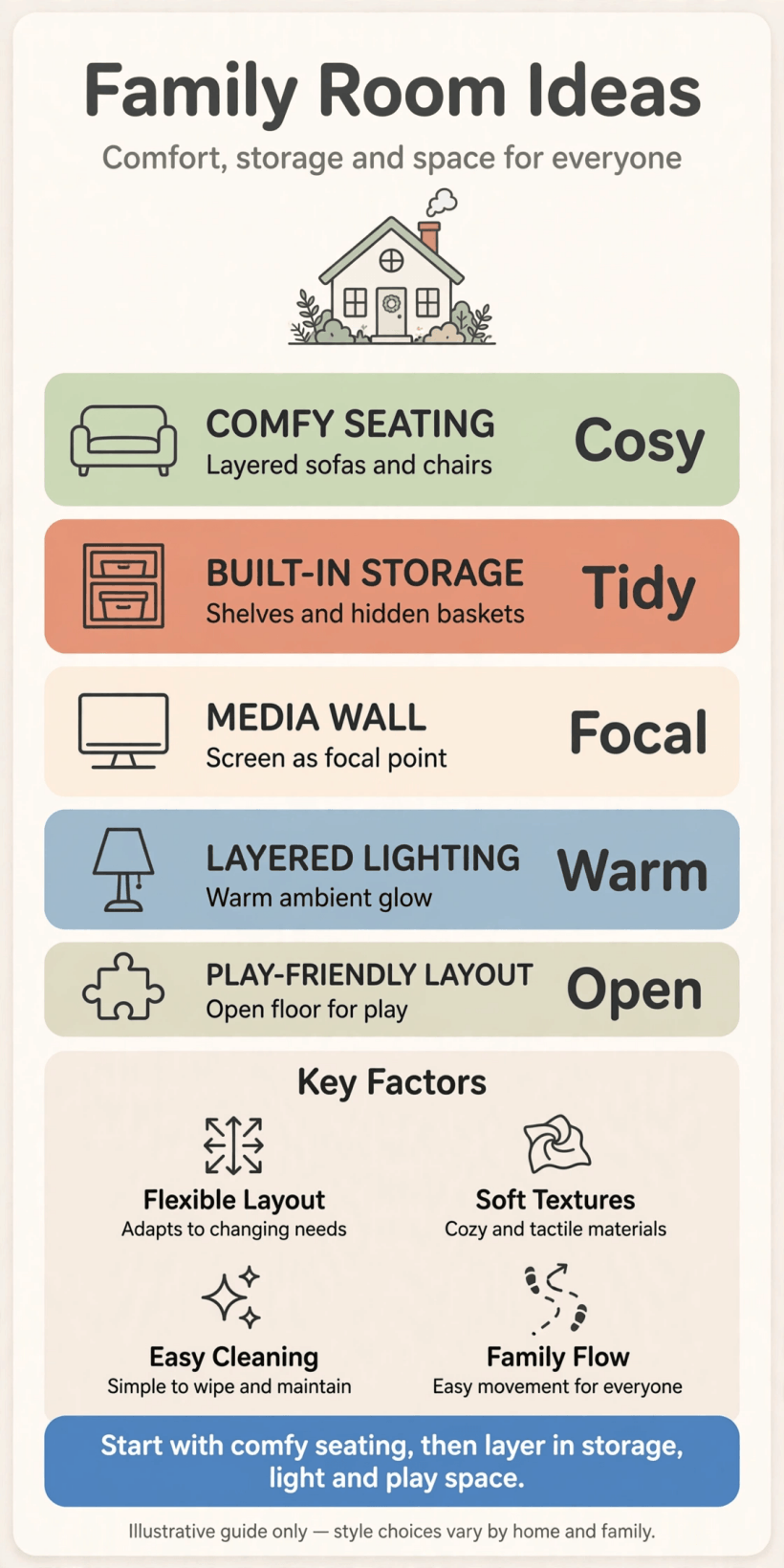
The central entity is the family room: the informal shared room whose job is to hold the whole household’s leisure at once — watching, playing, reading, talking, resting — without any activity evicting the others. Its attributes are zoning, seating capacity, the screen’s place, storage that resets the room, and surfaces that forgive. Every family room succeeds or fails on one measure: whether everyone can be in it, doing their own thing, together.
| How is a family room different from a living room? | By manners, not architecture. The living room receives; the family room resides. Same shell, different contract — one is for guests, the other for the household’s real life. |
| What does a family room need first? | Seating for every member at once, a surface for games and drinks, and storage that lets the room reset in minutes. Everything else is refinement of those three. |
| Can a small house have a family room? | Yes — the family room is a function, not a floor area. One well-zoned room in a small house does the work; the zoning matters more than the square footage. |
| What is the family room’s most common failure? | Being furnished like a showroom the family is afraid to use. A family room that cannot absorb a spilled drink and a den-building project is a waiting room. |
2. Layout: Zones for Watching, Playing and Talking
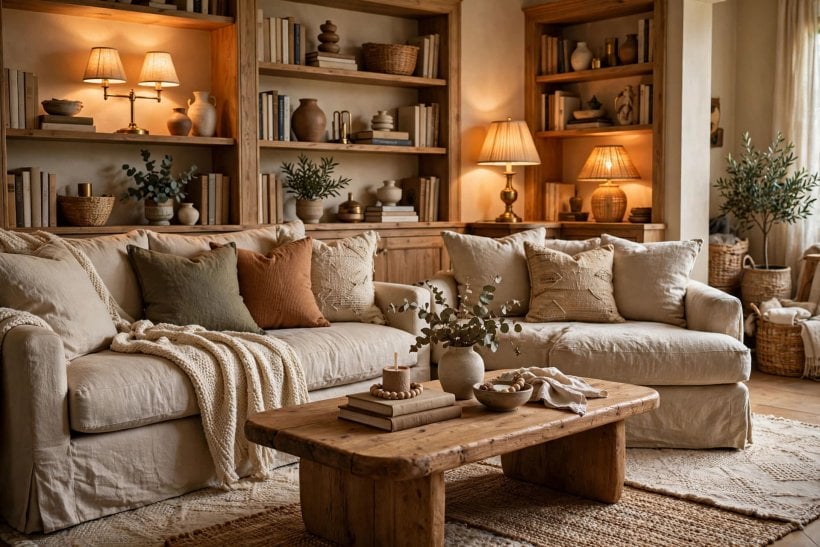
A family room holds several simultaneous lives, so it is planned as zones rather than as a single arrangement. The zones need no walls — rugs, light and furniture backs draw the borders — but each activity must own a defensible territory, or the loudest one takes the room.
1. Give Watching, Talking and Playing Separate Territories
Three zones, however small: a screen-facing seat group, a conversation pair, and open floor or a table for play. Overlap is fine; absence is not. The room works when nobody’s activity needs another to stop.
2. Anchor the Zones With One Rug Each
A rug is a border that feet understand. One under the seating group, one defining the play floor: the household will obey these lines without ever being told they exist.
3. Keep a Clear Lane From Door to Door
Family rooms are thoroughfares. If the route crosses the screen zone, every trip to the kitchen becomes an interruption. Route traffic along a wall, and let the zones sit in the calm water beside it.
4. Put the Play Zone Where It Can Be Seen, Not Heard Everywhere
Children play longest where they can see an adult. Place the play territory within sight of the sofa but off its acoustic centre — near enough for company, far enough for a film’s dialogue.
5. Face Some Seating Away From the Screen
Two chairs turned toward each other declare that conversation is also an activity here. A room where every seat faces the television has quietly made its choice about family life.
6. Reserve a Window Seat or Reading Corner
One place that is explicitly for one person — a chair, a lamp, a small table — gives the shared room a private gear. Teenagers especially defend, and use, a corner that is understood to be solitary.
7. Let Zones Be Re-Drawable in Five Minutes
Lightweight chairs, a folding table and a rug that can roll: the family room must re-form for a party, a sick day on the sofa, a train set of metropolitan ambition. Fixed zones fossilise.
8. Put the Quiet Zone Farthest From the Kitchen Door
Kitchens generate the house’s noise and traffic. Reading and homework territories belong at the room’s far end, buffered by the seating group from the clatter of the working rooms.
9. Plan the Christmas Configuration in Advance
Once a year the room must hold a tree, guests and wrapping paper. A layout with one movable wall-side piece — a console that can travel — absorbs the season without a redesign.
10. Keep the Centre of the Room Deliberately Empty
Floor is a furnishing. Dens, dances, yoga and wrestling matches all need unassigned space at the heart of the room. The empty middle is the family room’s most used square metre.
11. Light Each Zone on Its Own Switch
Zone lighting lets the film-watchers dim while the readers keep their lamp. One ceiling light for the whole room forces one activity’s brightness on everyone — the commonest zoning failure after furniture.
3. The Sofa System: Seating the Whole Household
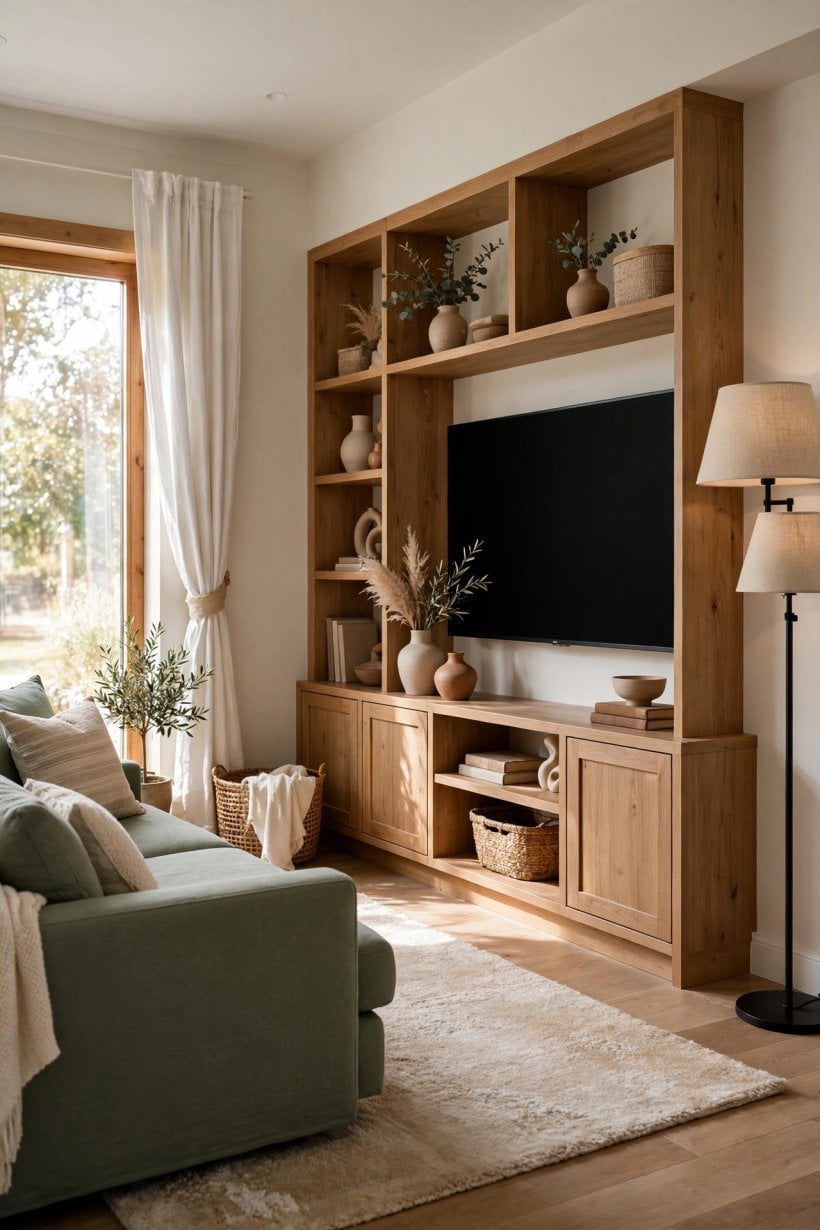
Seating is the family room’s constitution: everyone a place, at the same time, without negotiation. The compact-room tactics at small living room ideas apply here too — but the family room adds a sterner test, which is bodies, blankets and the occasional dog.
12. Seat the Whole Household Simultaneously, or Start Again
Count the family, add one guest, and make the seating meet the number at sofa comfort — not perched, not on the floor by default. Floor cushions supplement; they must not substitute.
13. Choose a Sectional for the Corner It Frees
A corner sectional seats more people per metre than any sofa-and-chairs set and creates the household’s natural pile-up point. In family rooms, the L-shape is less a style than a population policy.
14. Demand Washable Covers or Forgiving Fabric
The family sofa will meet ice cream, dog and felt-tip. Removable washable covers, or a tightly woven performance fabric, are not upgrades — they are the difference between a room used and a room guarded.
15. Add One Chair That Belongs to Somebody
Every household has a person whose chair is understood. Honour it: a distinct armchair gives the room a hierarchy of affection and gives one member a guaranteed seat in any configuration.
16. Keep a Footstool for Every Two Seats
Feet-up is the family room’s native posture. Ottomans double as seats, tables and den-roof supports. A room short of footstools is a room where comfort is rationed to the first arrivals.
17. Put a Table Within Reach of Every Seat
Drinks, books and remotes need landings. If a seat has no surface within arm’s reach, its occupant’s mug will find the floor. Side tables and a generous coffee table are logistics, not decoration.
18. Choose a Coffee Table That Survives Being Stood On
It will be stood on — for reaching, for performing, for winning an argument. A solid, low, blunt-edged table forgives all of it. Glass tops and family rooms have an agreement problem.
19. Keep Two Lightweight Chairs in Reserve
Guests, grandparents and film-night overflow need seats that can be carried in one hand. A pair of light chairs stored against a wall keeps the room’s capacity elastic.
20. Give the Sofa a Blanket System, Not a Blanket
One blanket serves one person. A basket of folded throws — one per regular occupant — ends the nightly negotiation and keeps the sofa’s population warm and stationary.
21. Face the Main Sofa at the Room, Not Only the Screen
If the biggest seat can only converse with the television, the room’s social centre is outsourced to a screen. Angle, split or supplement seating so faces meet faces at least as easily.
22. Replace on the Household’s Schedule, Not the Showroom’s
The family sofa’s life is measured in childhoods. Choose frames and springs that can be re-covered: the room’s history accumulates in its seating, and a recoverable sofa keeps it.
4. Screens, Sound and the Media Wall
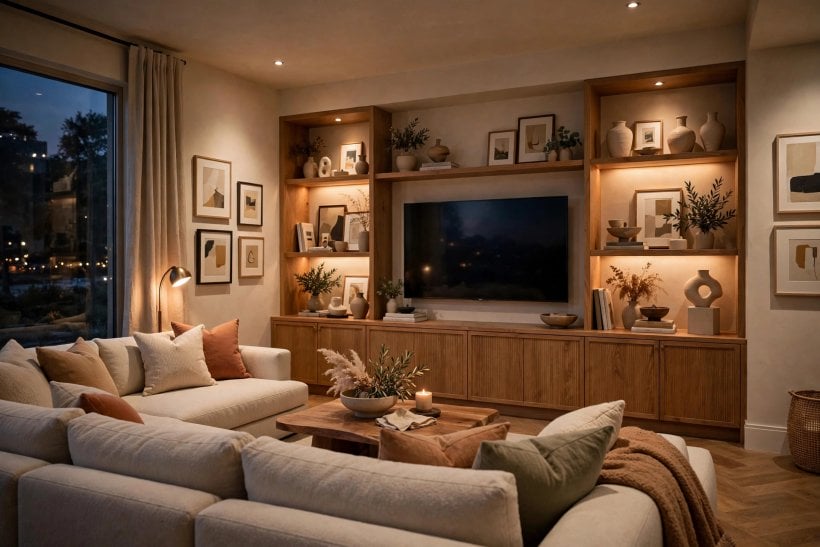
The screen is a citizen of the family room, not its king. This section houses it properly — visible from the right seats, invisible to the conversation zone, and acoustically contained so one member’s film is not the whole house’s soundtrack.
23. Size the Screen to the Farthest Regular Seat
The viewing distance that matters is from the seat used nightly, not the occasional one. A screen sized to that distance disappears as a question; oversize ones dominate every non-film hour.
24. Mount the Screen at Seated Eye Level
Family rooms watch from slumps, not from dining posture. A screen centred at the seated eye line ends the neck ache that high mantel mounting guarantees. Low and level is the ergonomic rule.
25. Give the Media Wall Closed Storage Beneath
Consoles, controllers, remotes and chargers need a home with a door. A low closed unit under the screen swallows the whole electronic undergrowth and returns the wall to calm.
26. Contain Sound With Soft Surfaces First
Rugs, curtains and upholstered seating absorb more family-room noise than any gadget. Treat the room’s softness budget as acoustic equipment — it serves films and tempers alike.
27. Offer Headphones as Room Infrastructure
A charged pair of wireless headphones on a hook is a peace treaty: late films, early gaming and one person’s documentary habit stop taxing the whole household’s ears.
28. Keep the Screen Off the Room’s Only Focal Wall
If the room has a fireplace or a great window, the screen should share or yield, not evict. A family room whose only view is a switched-off black rectangle has mislaid its centre.
29. Run Cables Once, Properly, Behind the Wall
Visible cables are the family room’s weeds — they return weekly. One proper hidden run to a single power and input point ends the tangle permanently and childproofs it in passing.
30. Add a Second, Smaller Screen Only With a Zone to Hold It
A gaming monitor in the play zone can save the main screen for films — but only if its zone keeps the sound and light local. Without a territory, two screens means two interruptions.
31. Dim the Media Zone Independently
Film light and homework light are opposites. Independent dimming for the screen end of the room lets both happen at once — the whole argument for zoned lighting, proven nightly.
32. Keep Board-Game and Screen Storage Separate
Analogue and digital leisure fight over the same cupboards. Separate homes — games near their table, electronics under the screen — end the excavation ritual before either can start.
33. Leave Wall Space for the Non-Screen Life
Photos, children’s art and one good picture: the media wall should not consume every vertical surface. A family room that only displays a screen displays only one of the family’s interests.
5. Play, Games and Homework Territory
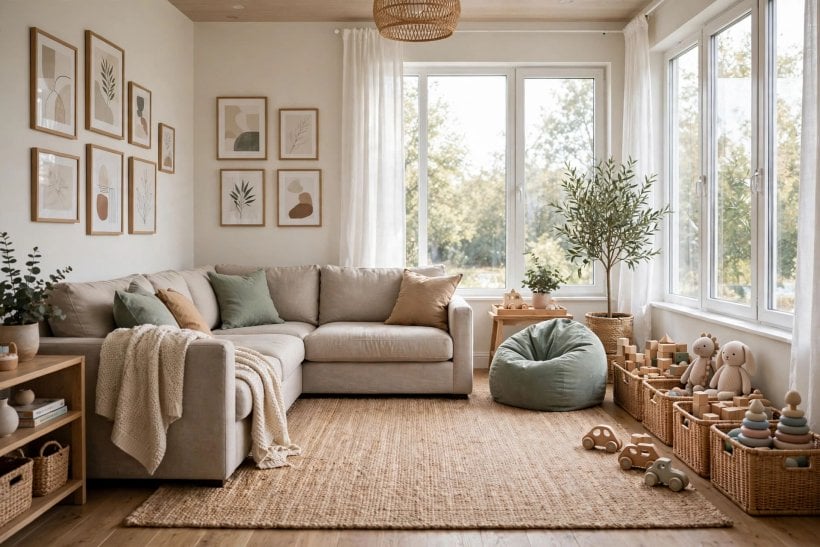
A family room earns its name in the hours when it holds a jigsaw, a spelling list and a model kit simultaneously. This section gives active uses their dignity — surfaces, light and storage of their own — instead of treating them as trespass on the seating.
34. Provide One Honest Table That Is Not the Coffee Table
Games, crafts and homework need a surface at proper height with chairs around it. A small dining-height table in the family room is the single most liberating piece a family can add.
35. Let a Game in Progress Stay in Progress
The thousand-piece jigsaw and the three-day board game die if they must clear nightly. A table — or a board that slides under the sofa — where a game can legally remain is civilisation.
36. Light the Table Like a Workbench
Homework under mood lighting is a nightly quarrel. A bright, adjustable lamp over the table zone makes study possible without flooding the film-watchers’ end of the room.
37. Keep a Homework Kit Resident in the Room
Pencils, paper, charger and ruler in one caddy that lives here: the school run’s evening edition stops requiring expeditions to bedrooms, and homework starts where it is meant to happen.
38. Give Toys a Curfew and a Container
Play belongs in the family room; permanent toy occupation does not. One lidded container per child, filled at day’s end, keeps the room shared rather than annexed — and the rule is the container’s size.
39. Choose a Rug That Hides a Week of Play
Patterned, mid-tone, tightly woven: the play-zone rug should conceal crumbs, crayon and the archaeology of snacks until wash day. Pale flat-weaves in family rooms are optimism, not decorating.
40. Make Room for the Den
Blanket forts are load-bearing childhood architecture. A sofa arrangement with a gap behind it, plus a store of large cushions, gives den-building a site that does not dismantle the seating.
41. Store Games Where the Table Is
Games shelved in another room are games unplayed. A low shelf or cabinet beside the table, sized for game boxes, turns “shall we play” into playing within a minute.
42. Keep One Wall Ready for Display Rotation
Children’s art, certificates and the family calendar need a sanctioned surface — a pinboard or picture ledge that rotates. Without one, display colonises the fridge and every door.
43. Plan for the Instrument in the Corner
Many family rooms host a guitar, keyboard or violin on a stand. Give music a corner with light and a chair: practising where the family is beats practising in exile, and happens oftener.
44. Let the Play Zone Grow Up on Schedule
The play corner of a five-year-old is the desk corner of a twelve-year-old and the second screen of a sixteen-year-old. Furnish it loosely — its job description will change three times.
6. Storage That Swallows the Day
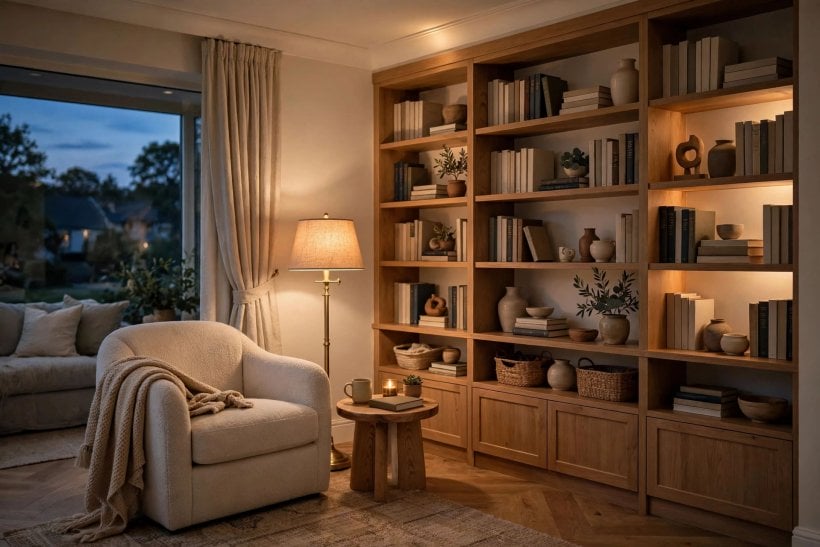
The family room’s tidiness is a storage equation, not a character trait. Every object the day brings in — bags, blankets, games, chargers, the dog’s entire estate — needs a home inside this room, reachable in seconds, closable in one motion. The traffic that feeds the room is managed at mudroom ideas; this section handles what survives the journey in.
45. Build the Reset Test Into Every Purchase
Before anything joins the room, ask where it sleeps. If the honest answer is “on the sofa”, the room cannot afford it yet. Storage first, object second — the order is the whole system.
46. Favour Closed Storage for the Visual Noise
Open shelves display; closed cupboards forgive. Family rooms hold too many small, bright, oddly shaped objects for open storage to read as anything but clutter. Doors are the calm.
47. Give Blankets, Cushions and Throws One Deep Home
A single large basket or ottoman with a hinged top swallows the soft mountain nightly. Scattered textile storage guarantees the textiles win and the floor loses.
48. Assign One Drawer or Basket Per Person
Personal overflow — headphones, knitting, sketchbooks, the current novel — in a named container per member ends the archaeology of shared surfaces. What has an owner has a destination.
49. Put Chargers in One Dock, Permanently
A single charging station with short cables, sited at the storage wall, ends the household’s cable diaspora. Devices sleep there; the room’s tables stay clear; mornings stop beginning with a hunt.
50. Store Vertically Where the Floor Is Needed
Family-room floor is play space. Tall, narrow storage — secured to the wall where children climb — keeps games and books in the room without taxing the territory they are played on.
51. Keep the Board-Game Shelf at Child Height
Games children can reach are games they can start — and clear — themselves. The household’s favourites at low level, the long strategic epics higher: shelving by independence, not alphabet.
52. Hide the Vacuum’s Reason to Visit
A small hand vacuum or a brush-and-pan in the storage wall means crumbs are handled in the moment. Rooms that must await a cleaning expedition accumulate evidence between visits.
53. Use the Space Behind the Sofa
A narrow console behind a floated sofa holds the remote caddy, the current books and a lamp — and gives the room a surface that is not in the traffic lane. Dead space, employed.
54. Label Nothing, Zone Everything
Families do not read labels at 9pm. Storage works when each category has exactly one obvious home — the rule a tired person can follow without thinking. Obvious beats organised.
55. Audit the Room Twice a Year Without Mercy
Outgrown games, dead remotes, the puzzle with pieces missing: a twice-yearly eviction keeps storage ahead of accumulation. The family room’s capacity problem is usually a history problem.
7. Floors, Fabrics and Surfaces That Forgive
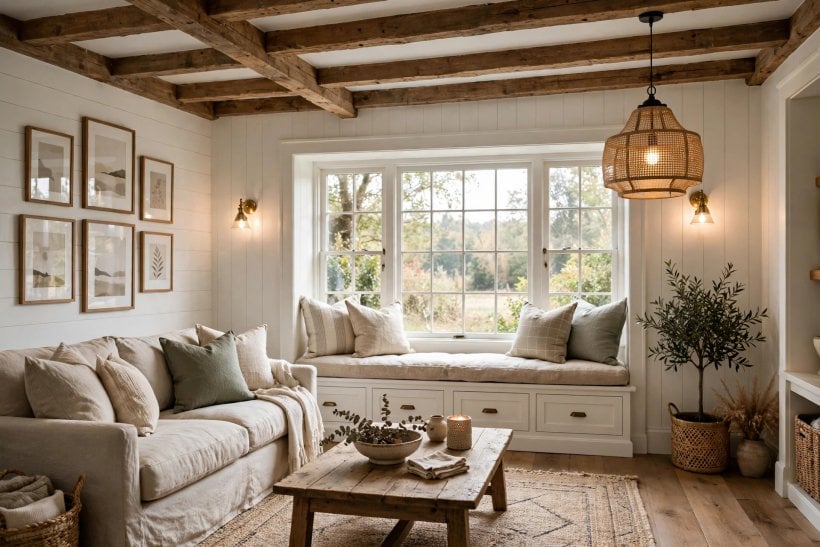
Forgiveness is the family room’s material brief: everything in it will be spilled on, stood on, dragged across and slept on. Choose surfaces as one chooses work clothes — for the life actually lived, with washing in mind. Small-house floor strategy is covered in tiny house floor plans; here the emphasis is endurance.
56. Choose the Floor for the Spill You Can Imagine
Hot chocolate, red wine, poster paint: the floor must survive the worst plausible evening. Sealed timber, quality vinyl or tile with a rug over — anything that needs coasters under life itself is wrong here.
57. Lay Rug Over Hard Floor, Never Wall-to-Wall Carpet
A washable or replaceable rug gives softness where bodies land and lets the disaster zone be rolled up and dealt with. Fitted carpet in a family room is a sponge with a memory.
58. Specify Fabrics by Their Wash Story
Every textile in the room should answer one question: how do you get clean? Machine-washable, wipeable or professionally cleanable at sane intervals — if the answer is “carefully, never”, it belongs in another room.
59. Prefer Pattern and Mid-Tones at Seat Level
Plain pale fabrics record every event. A gentle pattern or mid-tone weave at seats and cushions hides the interval between washes — the visual equivalent of a forgiving floor.
60. Keep One Surface Sacred for Drinks Only
Feet, games and homework will claim every table. Reserve a single tray-topped surface where drinks land and nothing else may — a tiny law that saves the room’s woodwork and its tempers.
61. Round the Corners That Heads Will Meet
Small children fall at furniture height, and family-room furniture is where they fall most. Rounded table corners and padded ottoman edges are not a style choice in a house with toddlers.
62. Let Walls Take Washable Paint at Family Height
The lower metre of family-room wall meets hands, balls and chair backs. A washable finish there — the same colour, a tougher skin — keeps the room presentable between decorations.
63. Give the Dog a Furnishing of Its Own
A dog with a bed in the room is a dog mostly off the sofa. Site the bed in a warm corner out of the traffic lane, washable cover fitted — the animal is a member; furnish accordingly.
64. Choose Curtains That Can Be Laundered, or Blinds
Family-room window dressings meet jam and dust in equal measure. Machine-washable curtains or wipeable blinds survive the constituency; dry-clean-only drapes are a hostage situation.
65. Accept Patina as the Room’s Finish
The family room that is winning looks gently worn, not showroom fresh. Choose materials — leather, timber, wool — whose wear reads as character, and the room improves as the family uses it.
8. Family Rooms in Small Houses and Open Plans
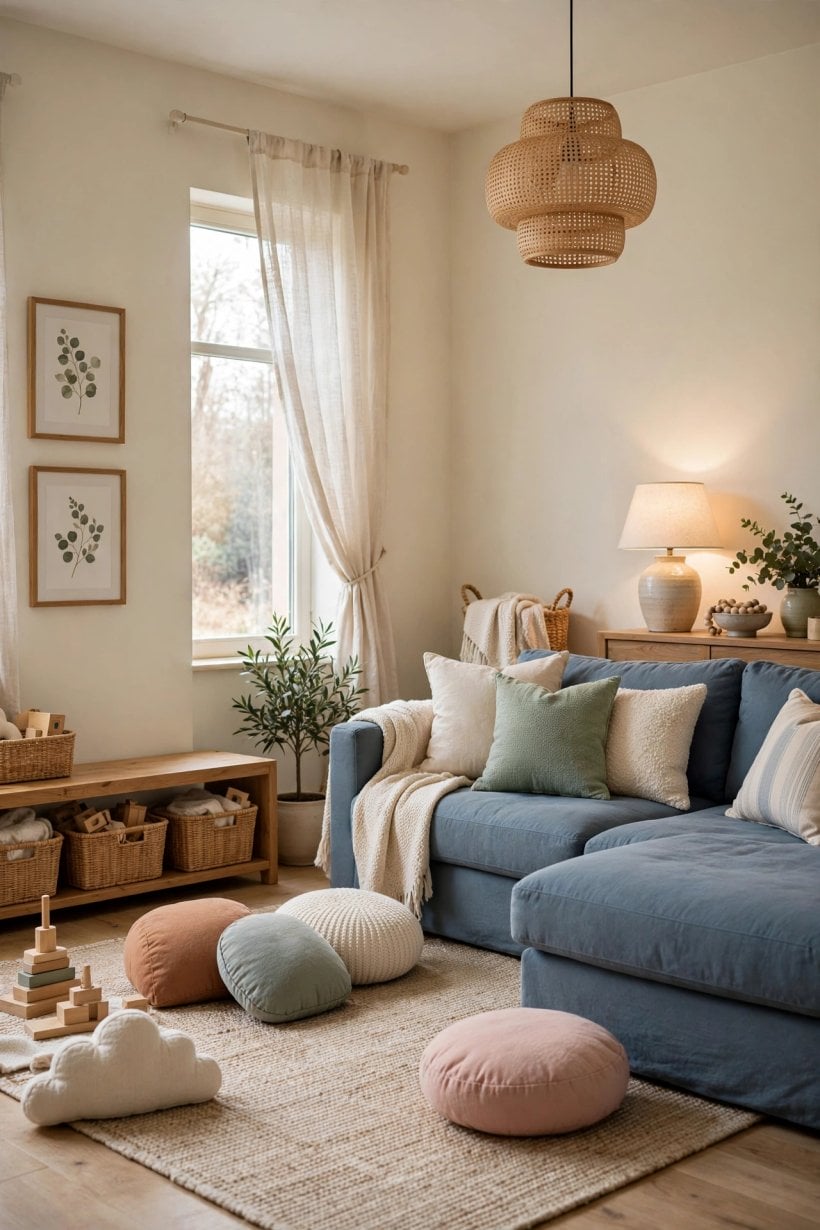
Small houses cannot spare a room for each function, so the family room must be several rooms in relay — and in open plans it must hold its borders without walls. The compact tactics of tiny living room ideas and how to decorate a tiny living room underpin this section; the family discipline is what is added.
66. Zone With Furniture Backs When Walls Are Absent
In an open plan, the sofa’s back is a wall you can sit against. Float the seating group, back it with a low console, and the family room exists as a country inside the larger space.
67. Steal the Under-Stair and Bay-Window Territories
Small houses hide spare volume under stairs and in bays. A reading nook in the bay, storage under the stair: the family room annexes these without touching the main floor.
68. Use the Basement as the Family Room’s Second Floor
Where a basement exists, the loud and large uses can live below — the survey at basement ideas covers the conversion. The ground-floor family room then keeps the quieter half of the job.
69. Choose Dual-Duty Furniture Without Apology
Sofa-beds for guests, storage ottomans, a table that seats four daily and eight at holidays: in small houses, furniture that does one job is a luxury the family room cannot fund.
70. Keep Sight Lines Long for Borrowed Space
A small family room feels larger when the eye can leave it — through a doorway, down a hall, out a window. Arrange seating to keep one long view open; enclosure is the enemy of calm.
71. Fold, Stack and Nest the Occasional Furniture
Nesting tables, stacking stools and a folding games table give the small family room an elastic capacity: daily compactness, occasional generosity, nothing stored in another room’s territory.
72. Put the Screen on the Short Wall
In a small rectangular room, the screen belongs on a short wall so seating depth is spent along the length. The arrangement preserves a conversation grouping that the long-wall layout squeezes out.
73. Run One Floor and One Palette Through the Plan
Open-plan family zones read as one room when floor and palette continue. Continuity is the cheapest space-expander known — the zones are drawn by furniture, not by finishes.
74. Contain Noise at Its Source in Open Plans
Without doors, sound management is furnishing: the rug under play, curtains at the glass, the screen’s speakers aimed at its zone. Softness placed early beats volume negotiated nightly.
75. Let the Family Room Borrow the Garden
Where doors open to a patio or deck, the family room’s summer territory doubles. Arrange the inside zones to face and flow to the outside ones, and the small house gains a seasonal room for free.
9. Checks and Mistakes: Before the Sofa Is Chosen
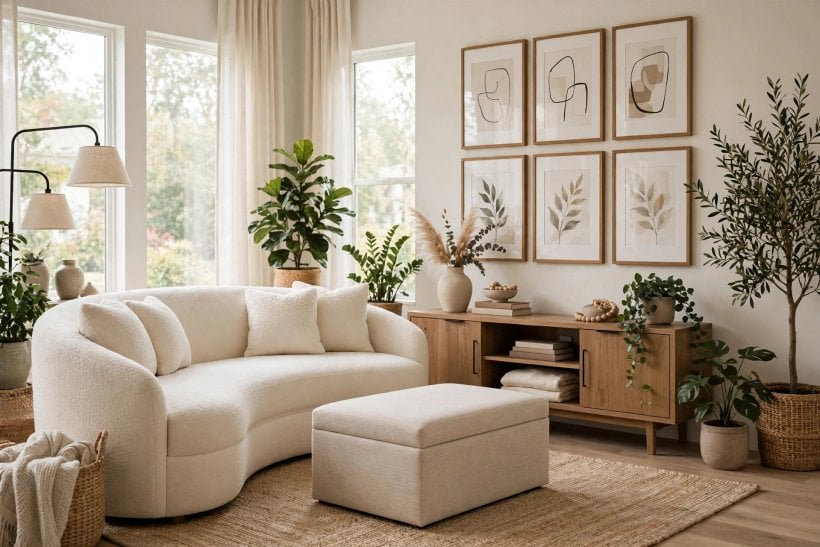
The classic family-room mistakes are generous ones: the beautiful pale sofa that turns the room into a museum with rules; the screen so large the room exists only in its service; storage planned for the family the household wishes it were — tidy, minimal, finished with toys. Run the honest checks instead. Can every member sit at once? Can the room reset in ten minutes? Can a drink be spilled without a summit meeting? If the answers are yes, the room is a family room. If not, it is a photograph of one.
10. Costs and Pulling It Together
The family room’s budget belongs where bodies land: seating first, floor second, storage third, screen last — the reverse of the usual spending order, and the reason so many expensive family rooms feel wrong. Covers, rugs and lamps are the cheap renewals that keep the room fresh between the big purchases; electronics date fastest and should be bought last and replaced without sentiment. Pull it together by zones, test it by the reset, and judge it on an ordinary Tuesday rather than a party Saturday: the family room is the house’s daily headquarters, and it should be furnished like one — for use, for everyone, for years.
Final Considerations
A family room is a promise a house makes to the people in it: there is a place where everyone fits, where nothing is too precious to use, and where the day can be set down at the door. Furnish for the family you have, store for the day you actually live, and the room will repay you in the currency that matters — evenings together, unforced and unremarkable, year after year.

0 Comments