

A wall niche is small architecture with big potential, and it rewards a little homework before the styling begins. These wall niche ideas explain what to check, what to choose and what to leave out, so the recess in your wall becomes a highlight rather than a dust trap.
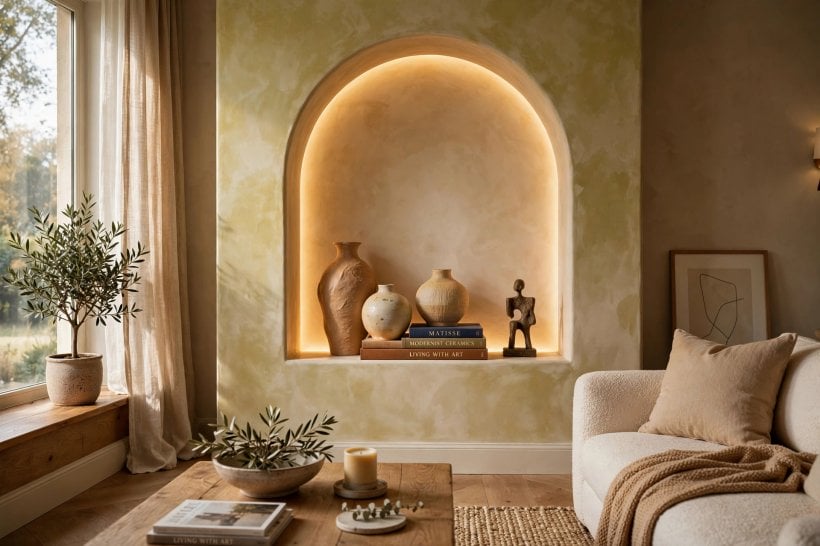
1. At a Glance
A niche is not a shelf that happens to be in a wall; it behaves differently. Its depth limits what fits, its sides cast shadows that change through the day, and whatever you place inside is framed whether you plan it or not. That framing is the opportunity: a modest object gains presence simply by sitting in its own little proscenium. It is also the risk, because a cluttered or badly lit niche advertises itself just as loudly. The quick answers below cover the questions people ask most before styling one, and the sections that follow unpack each answer properly.
| Question | Answer |
|---|---|
| What looks best in a niche? | One confident piece, or a tight group of three related objects, with breathing room around them. |
| How deep does it need to be? | Deep enough for your largest object plus a little air behind it; shallow niches suit art, plates and low bowls. |
| Should the inside match the wall? | Matching reads calm and architectural; a contrasting colour or texture turns the niche into a deliberate feature. |
| Does a niche need lighting? | Not always, but deep or hallway niches benefit from a small, warm light source or a lighter backing. |
| What is the biggest mistake? | Filling every centimetre, which turns a framed moment into storage with good PR. |
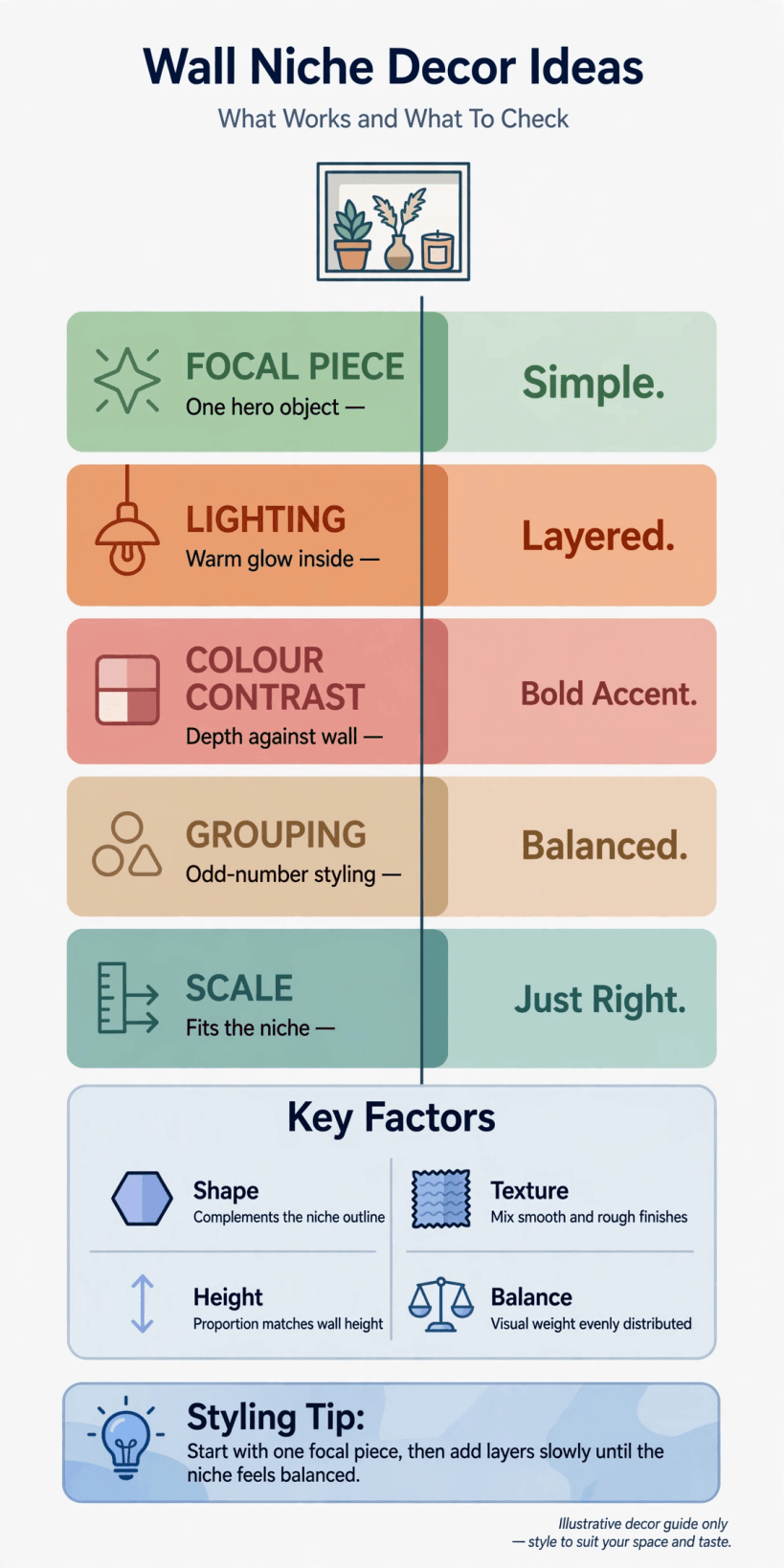
The essentials at a glance: measure first, edit hard, and let one or two pieces do the talking.
2. Know Your Niche: Size, Depth and Shape
Measure before you shop, and measure the awkward way: height, width, and depth at the top, the middle and the bottom, because niches are rarely perfectly square. Note whether the back wall is flat, whether the sides are parallel, and whether an arch, a step or a skirting detail steals any of the usable space. Depth is the number that rules everything. A shallow recess of a few centimetres is a natural home for a leaning print, a decorative plate or a low relief piece, while a deep niche can take books, baskets and sculptural objects, provided they do not have to be wrestled past the opening.
Shape sets the styling tone. An arched niche asks for softer contents, rounded vases, a curved silhouette, nothing that fights the curve. A crisp rectangular niche pairs happily with straight-edged frames, stacked books and clean-lined ceramics. If your niche is tall and narrow, think vertically: one taller piece rather than a crowd of small ones. The same measure-twice habit runs through all good small-space planning, as the room-by-room thinking in these modern interior design ideas shows; a niche is simply a room measured in centimetres instead of metres.
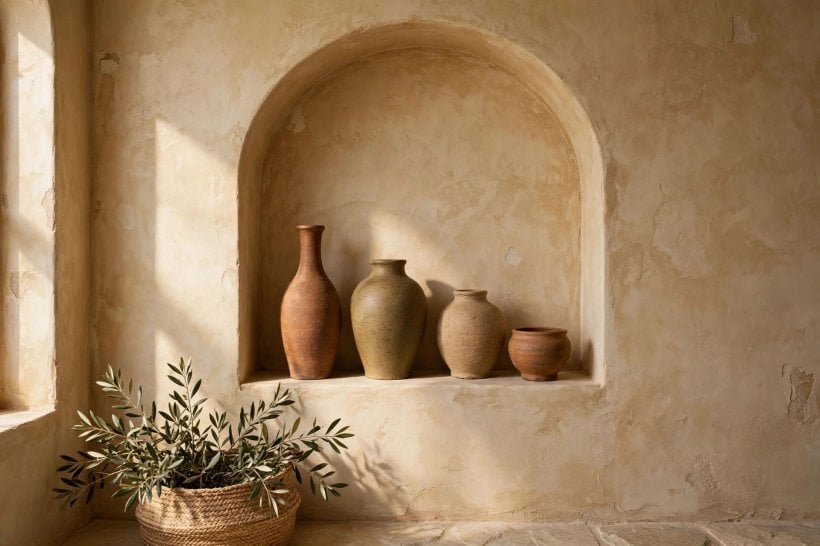
3. Check the Wall Before You Commit
Before any styling, understand what the niche is. Some are original features in older houses, some were boxed in around pipes or flues, and some are purely decorative panels applied to a flat wall. That history matters when you want to deepen a recess, add a shelf or fit lighting, because cutting into a wall that hides services is a job to approach with knowledge, not enthusiasm. If you inherited the niche, tap the back and sides, look for cracks, damp staining or crumbly plaster, and sort any of those before objects go in, since a vase will not hide a problem that is still growing.
Damp deserves special mention in bathrooms and exterior walls, where condensation can gather in a recess and quietly mark books, fabrics and unglazed ceramics. Ventilate, seal sound surfaces, and choose contents that tolerate the room. Styling a bathroom niche? The moisture-aware planning in these bathroom interior design ideas is a good companion read. Finally, check how the niche sits against studs, joists or masonry if you plan floating shelves or heavier pieces inside it; a beautiful arrangement is only beautiful until it slides, so fixings go into something solid, always.
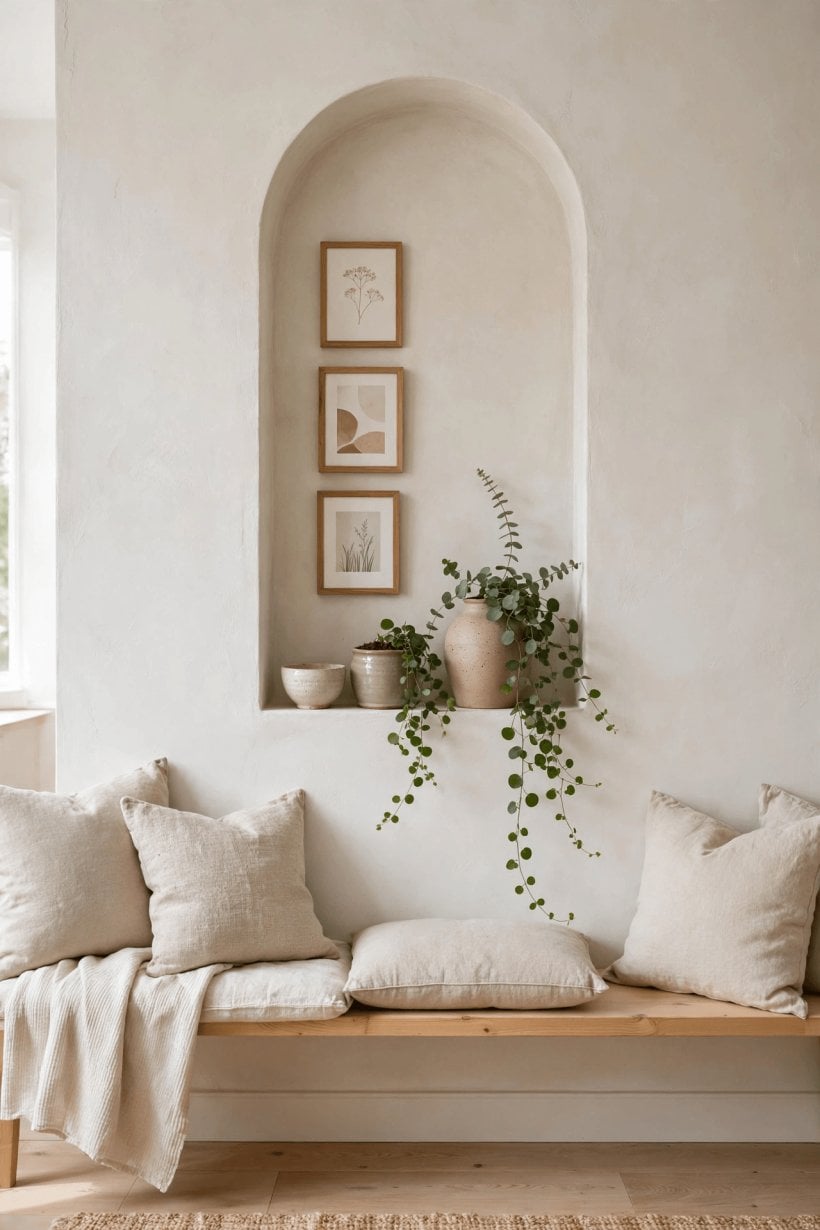
4. Decide Its Job Before Its Contents
Every well-styled niche has a job, even if the job is simply to be beautiful. Decide which of four roles yours will play. A display niche holds one or two treasured pieces and nothing else. A working niche stores things you reach for daily, towels by a bath, cookbooks near a hob, keys and post in a hallway, and earns its keep in a busy house. A gallery niche carries art, photographs or a rotating print. A quiet niche does almost nothing: a plant, a candle, a breath of empty space in a room that already has plenty going on, which is a legitimate and often the most sophisticated choice.
Let the job dictate the contents list, and write the list before browsing shops. Households often style by accumulation, adding one impulse purchase after another until the niche holds a little of everything and says nothing. If yours is a working niche, plan the containers first and the prettiness second; the prettiest kitchens apply exactly this order, as this tiny house kitchen design guide shows with its storage-first approach to small spaces. A niche with a clear job can be restyled in minutes for seasons and occasions, because you are swapping contents within a role, not reinventing the role every time.
5. The Editing Rule: Less, But Better
Here is the whole secret, and it costs nothing: a niche should hold slightly less than comfortably fits. Empty space inside the frame is not waste; it is what makes the contents look chosen. Start with the single strongest candidate piece and live with it alone for a day. Add a second piece only if the first looks lonely rather than serene, and a third only to complete a deliberate group. Then stop, step back to the doorway, and look at the niche the way a visitor will, from several metres away, not from arranging distance.
Editing also means rotating. A small stock of alternative pieces, stored in a cupboard, lets the niche change with the seasons: shells and pale ceramics in summer, warmer wood, brass and deeper colours when the evenings draw in. Rotation keeps a display fresh and quietly solves the souvenir problem, because new finds earn a turn in the frame instead of a permanent place in a crowd. If an object would not be missed for a month in storage, it is a rotation piece, not a resident. Residents should be few, loved and given room to be seen properly.
6. Colour, Backing and Texture Inside the Frame
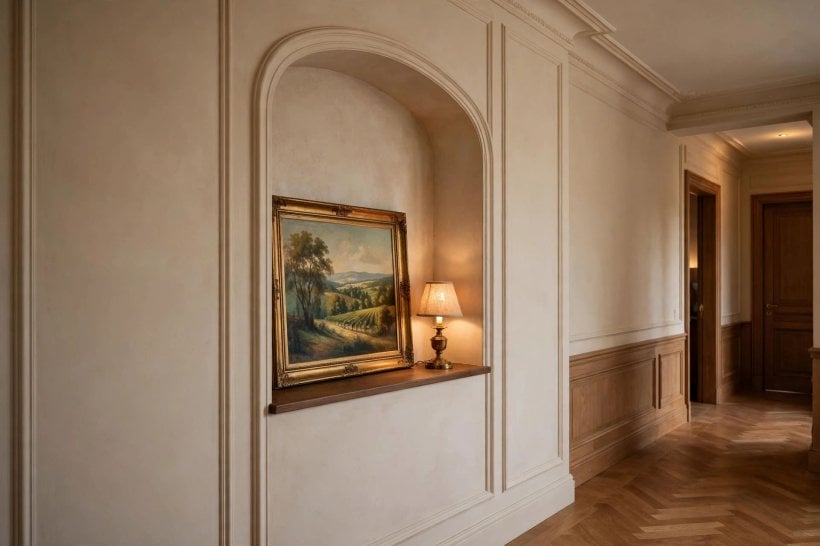
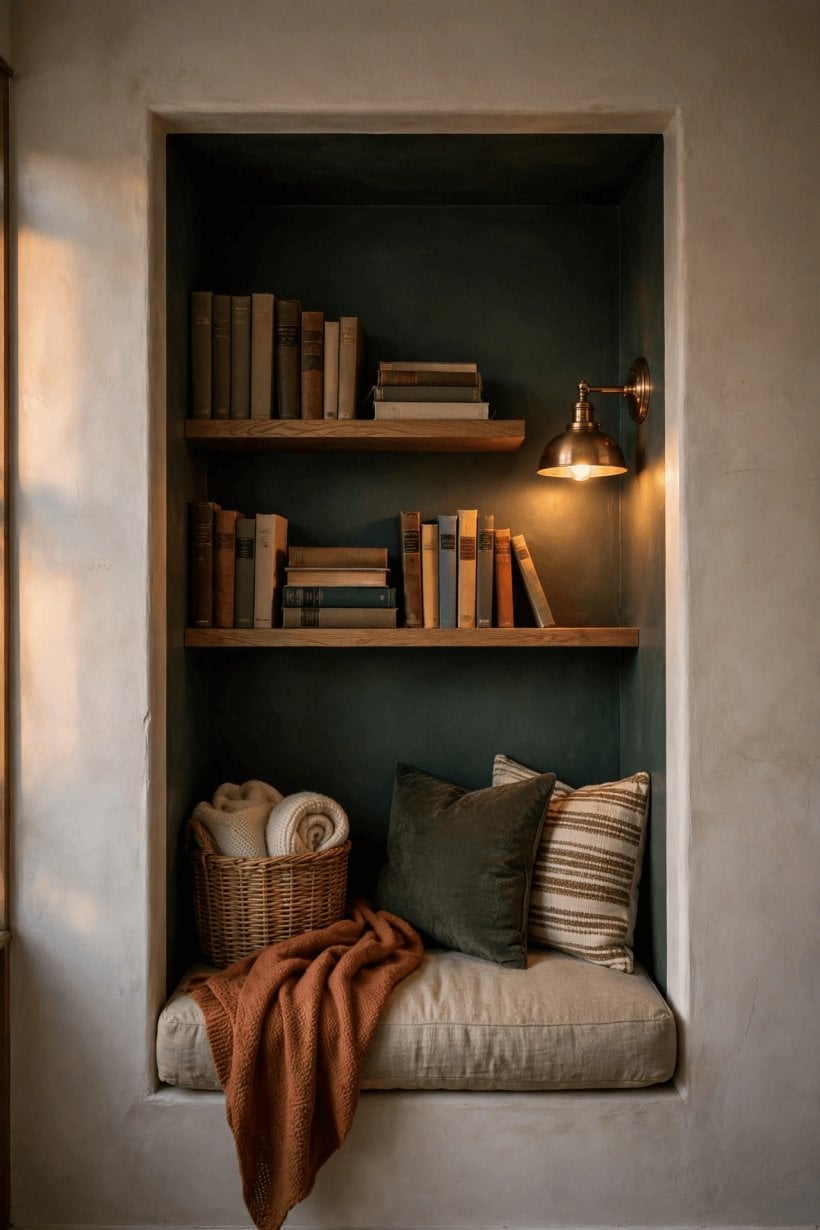
The inside surfaces of a niche are a design surface in their own right, and small changes there transform plain contents. Painting the back and sides to match the wall keeps the architecture quiet and lets objects supply all the colour. Painting just the back panel a deeper shade lends instant depth, making a shallow niche feel deeper and pale objects stand forward. A bolder contrast, a rich green, a warm clay, a near-black blue, turns the niche into a cabinet of curiosities and suits rooms that need a focal point more than they need calm.
Texture works the same trick in a subtler key. Limewash or a soft plaster finish catches light unevenly and flatters ceramics and glass; timber lining warms a modern room; a remnant of patterned wallpaper on the back panel only gives a traditional hallway a moment of theatre. Whatever you choose, test it at the times of day the room is actually used, because a shade that glows at noon can go muddy by lamplight. The palettes explored in these home designing ideas are a helpful reference for how backing colours shift the mood of everything placed in front of them.
7. Lighting a Niche Without Overdoing It
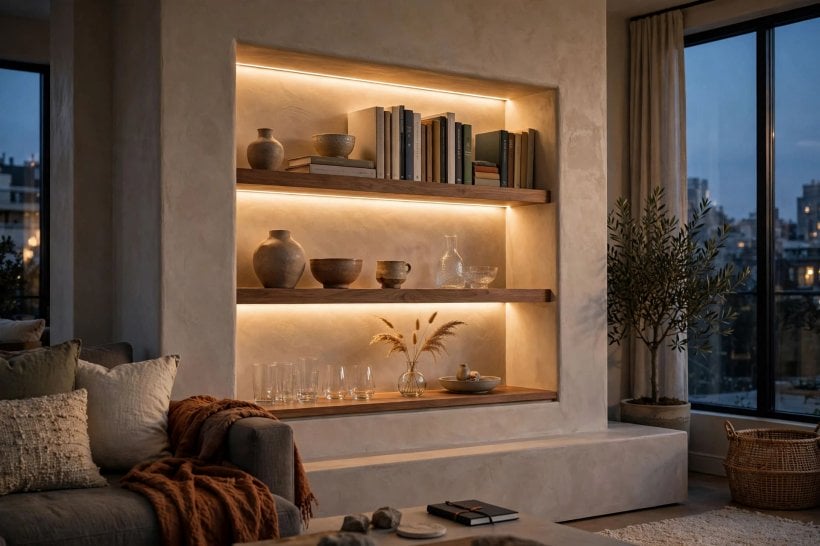
Light decides whether a niche whispers or shouts. Deep niches and those in hallways often sit in permanent half-shadow, where even lovely objects flatten into silhouettes. A small light source fixes this: a discreet downlight in the top of the recess, a slim strip hidden behind the front edge, or a battery picture light where wiring is impractical. Aim for warm light and a gentle wash rather than a spotlight beam, and angle it so the object is lit, not the back wall behind it. Any fixed wiring belongs to a qualified electrician, and in bathrooms the fittings must suit the zone they sit in.
Not every niche needs electricity. A lighter backing colour, a piece with a reflective surface, glass, glazed ceramic, a touch of brass, or simply leaving the top of a tall niche empty so daylight can fall in, can lift a display enough. Candles, real or battery, give a niche instant evening life, provided real flames sit somewhere they cannot be knocked and never near fabrics or dried arrangements. Judge the result after dark as well as by day; the goal is a soft glow that rewards a glance, not a lit shop window in the middle of your living room.
8. Styling by Room: Hallway, Living Room, Bathroom and Bedroom
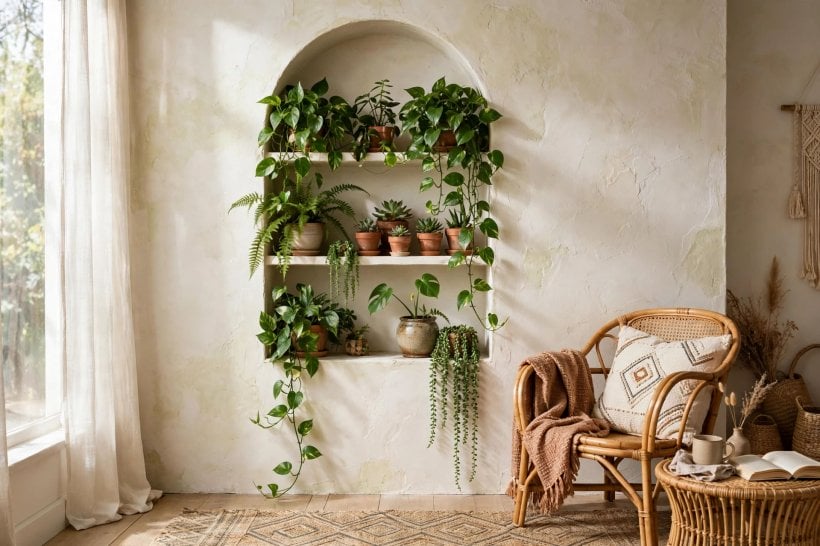
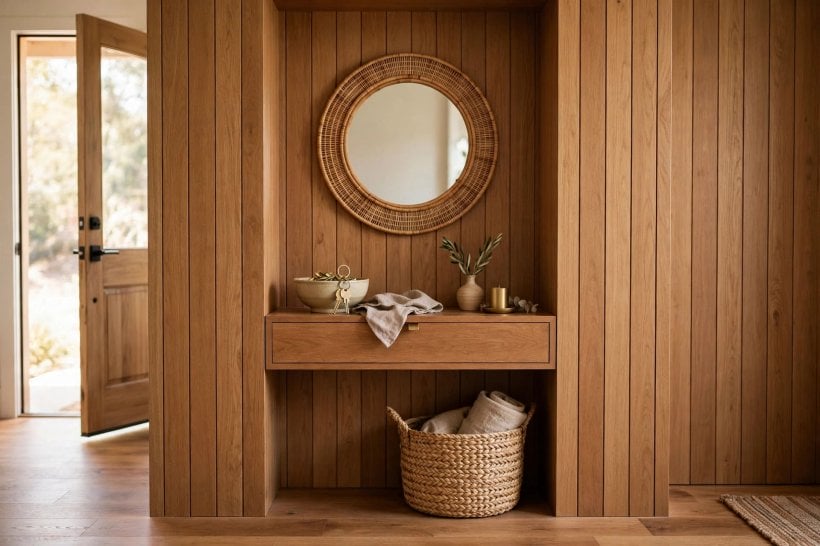
Context is everything. A hallway niche is seen in passing, often dozens of times a day, so it suits one bold, legible gesture: a large vase, a single artwork, a sculptural piece that reads at walking pace, with a basket beneath for the practical clutter of keys, gloves and post that hallways collect. A living-room niche can afford detail, because people sit and look: layered pieces, a small stack of books with an object on top, art leaned at the back. Keep its colours inside the room’s palette so it feels curated rather than imported.
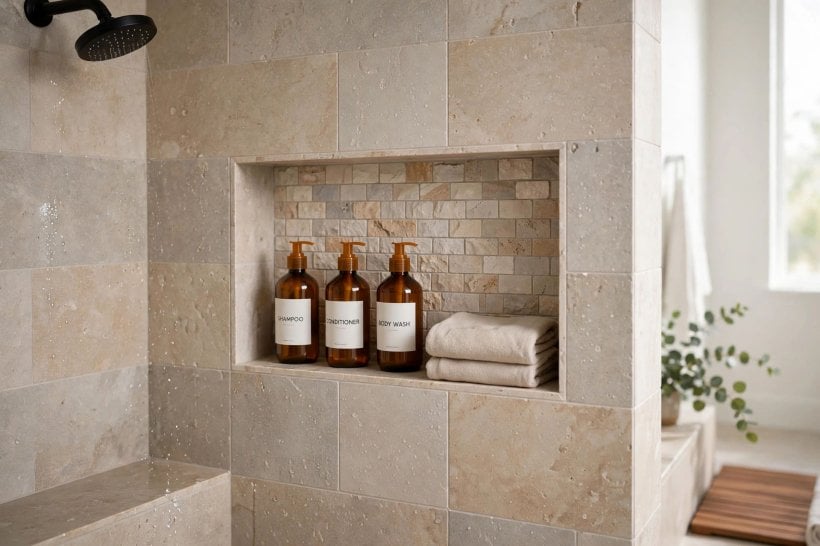
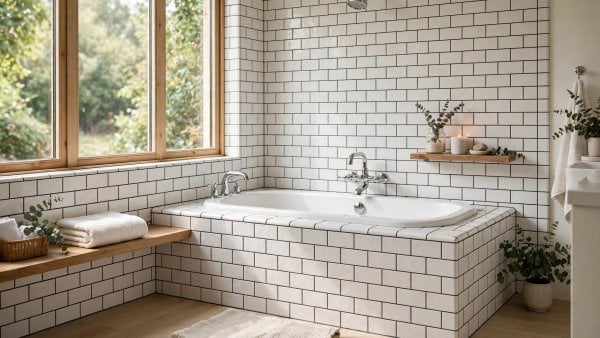
Bathroom niches work hardest: in the shower they hold bottles and need materials that shrug off water, while beside a bath they can carry the spa mood, rolled towels, a plant that likes humidity, a candle. Bedroom niches want quiet: soft textures, a small clock, a framed photograph, nothing visually loud beside a pillow. The relaxed, natural textures celebrated in these beachy interior design ideas translate beautifully to bedroom and bathroom niches alike, where woven, pale and unpolished pieces keep the mood restful. Match the ambition of the styling to the tempo of the room, and every niche will feel like it belongs.
9. Grouping, Height and the Art of Odd Numbers
When a niche holds more than one piece, composition rules borrowed from still-life painting do the heavy lifting. Odd numbers, threes and fives, group more naturally than pairs, which can look like they are queuing. Vary the heights so the eye travels: one tall piece, one medium, one low, arranged so their silhouettes overlap slightly rather than standing in a row like bottles on a shelf. A small stack of horizontal books makes an excellent plinth, lifting a short piece into the conversation and adding a deliberate, relaxed layer.
Leave the top third of a deep niche empty more often than you fill it; height inside the frame is what makes a grouping feel generous. Relate the group by something, colour, material or theme, but not by everything at once, or the arrangement turns into a matching set in a shop window. Step back and squint: if the group reads as one pleasant shape rather than five separate objects, the composition is working. Photograph it on your phone, too; the camera is merciless about clutter and balance, and it will show you the piece that is quietly spoiling the group.
10. Common Mistakes and Their Easy Fixes
Most unhappy niches suffer from one of a short list of fixable problems. The crowd is the first: too many small pieces, none of them visible, fixed by removing half and giving the survivors air. The second is scale, tiny objects lost in a grand recess or a huge piece wedged in with no margin; swap sizes between niches if you have more than one, because the piece that fails in the hall may be perfect in the bathroom. The third is the shrine effect, one object centred with funereal symmetry in a dark box, cured by a lighter backing, an off-centre companion and a warmer light.
The fourth mistake is treating the niche as overflow storage, where batteries, chargers and paperwork drift because it is there. Working niches are fine; accidental ones are not, so give daily clutter a closed container, a lidded basket or a beautiful box, and the niche keeps its composure. Finally, remember dust: open recesses collect it, and a monthly wipe of surfaces and objects is part of the deal, which is one more argument for fewer, larger pieces. The build-carefully spirit of how to build your own tiny house applies at this scale too: details done deliberately, at the start, are what make a small thing feel finished.
Final Considerations
A wall niche asks for so little: an honest measurement, a clear job, a well-chosen backing and a ruthless edit. Give it those four things and it will repay you every day, a small framed moment of order and beauty in the middle of ordinary life. Return to these wall niche ideas whenever the recess starts to drift towards storage, because the fix is nearly always subtraction rather than shopping. Start with one piece you love, live with it for a week, and add nothing until you are sure the niche, and not just the habit of filling it, is asking for more.


0 Comments