
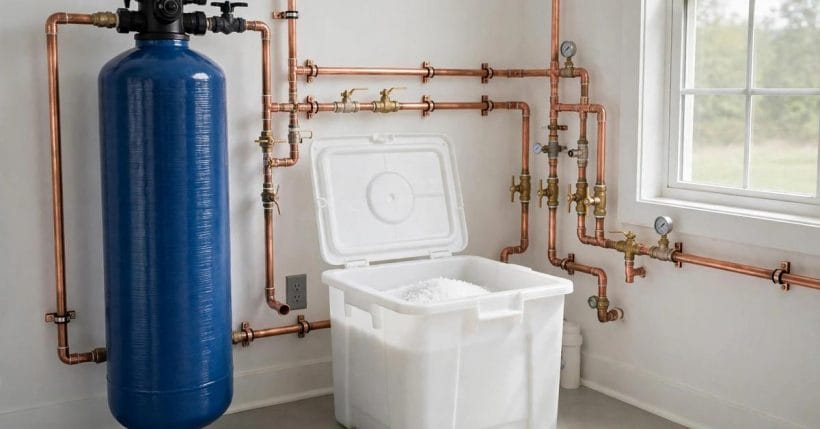
Hard water is one of those household facts that announces itself quietly. Glasses come out of the wash with spots, a kettle gathers a pale crust, shower glass streaks no matter how often it is wiped, and laundry can feel stiffer than it should. None of this means a home is badly kept. It usually means the water carries a high level of dissolved minerals, and those minerals leave their mark wherever water dries or is heated. A water softener is the household system designed to deal with that mineral load before the water reaches taps, appliances and pipes.
This guide is a water softener what-to-check walkthrough in general terms. It does not rank systems, recommend a particular make, or promise a result for any one home. Instead, it covers the checks that matter whatever system you are considering: how hard your water actually is, how much water your household uses, how much room you have, what kind of system suits the layout of your home, and what upkeep you are willing to take on. Fitting, pipework and any change to a home’s water system are plumbing work, and a qualified plumbing professional should plan and carry them out.
1. What Hard Water Does in a Home
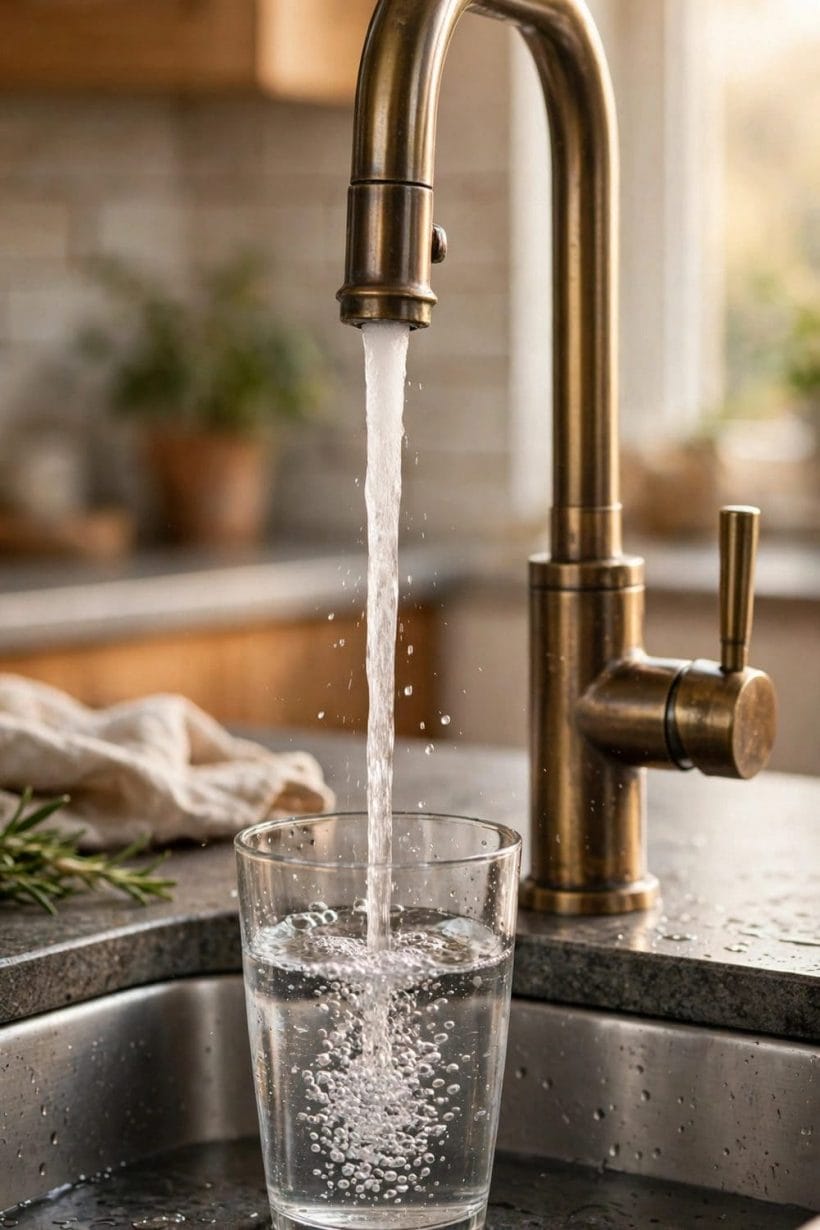
Hard water carries dissolved minerals, chiefly calcium and magnesium, picked up as water moves through rock and soil. When that water evaporates or is heated, the minerals stay behind. That is why scale forms inside kettles and water heaters, why spots appear on glasses and shower screens, and why taps and shower heads can slowly lose their shine and their flow. The effect is gradual, which is why it is easy to live with for years before wondering whether anything can be done about it.
Scale matters most where water is heated or left to dry. Inside a water heater, a layer of scale can act as insulation between the heating element and the water, so the heater works harder for the same result. On heating elements, in kettles and inside appliances that heat water, the same build-up shortens useful life and dulls performance over time. On surfaces, the marks are cosmetic but persistent, and they return quickly after cleaning while the water itself stays unchanged. A softener aims at the cause rather than the symptom, treating the water before it reaches those places.
Not every home with hard water needs the same answer, and some homes notice the effects far more than others. A home with many bathrooms, a large household, or appliances that heat water daily will feel the mineral load sooner than a small household with light use. Very hard water, the level this guide is concerned with, makes the checks below matter more, not less, because the system will be working hard every day. Start from what your water is actually like, not from what a neighbour’s system does, and let the rest of the checks follow from that. Tiny house designs show how much a compact home depends on every utility being well planned, and water treatment is no exception.
2. Start With a Water Test, Not a Guess
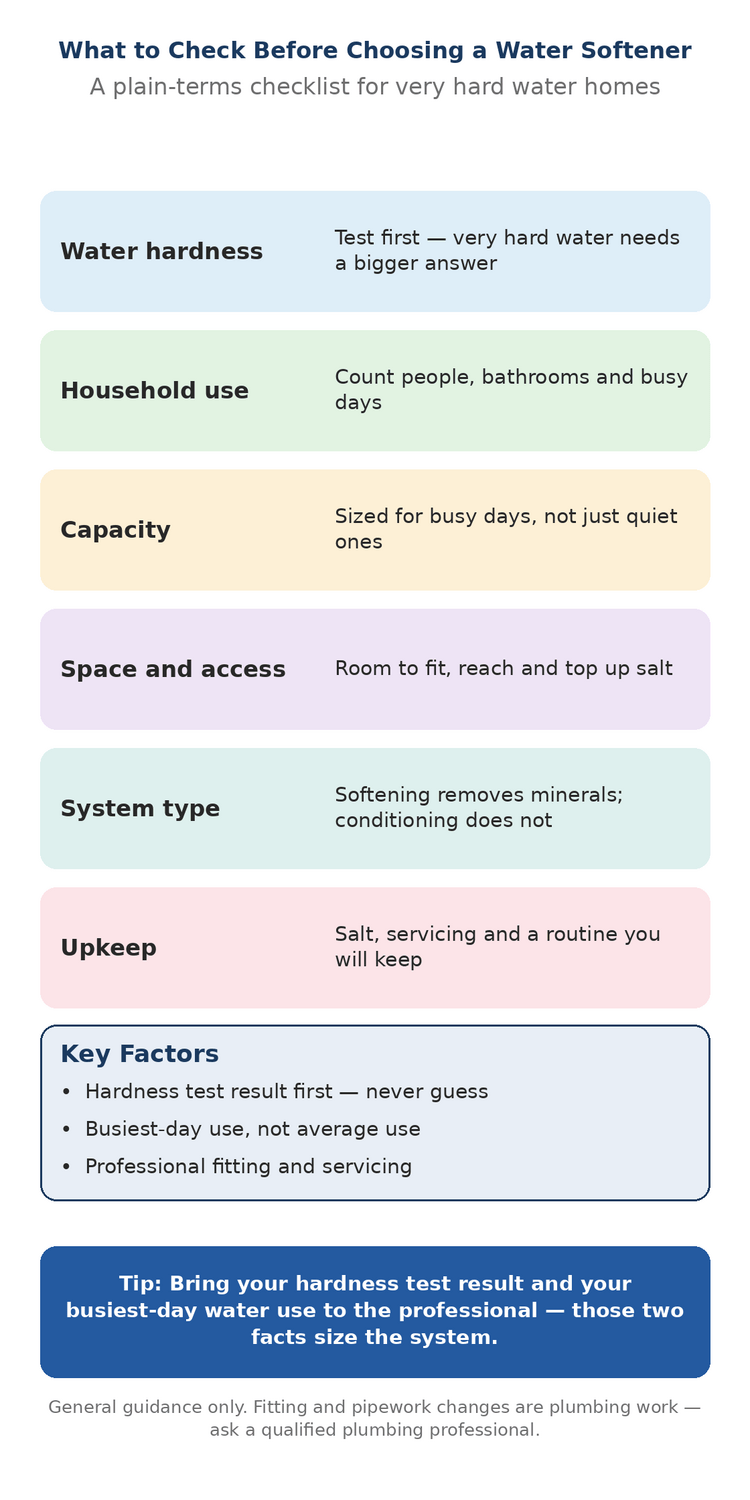
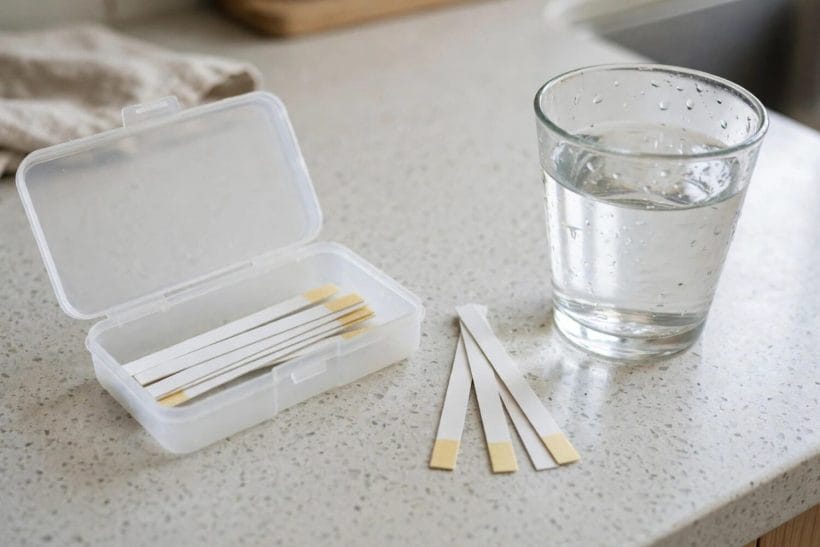
The single most useful step before choosing anything is to find out how hard your water is. Hardness varies a great deal from one area to another, and even between homes on the same supply, so a general description of your area is not a substitute for a test of your own water. A simple test kit, a test strip, or a sample sent to a laboratory can all give a reading, and a plumbing professional can test the water as part of a visit. The reading tells you whether you are dealing with moderately hard water or water at the very hard end of the scale, and that difference shapes everything that follows.
A test also tells you what else is in the water, at least in broad terms. Some supplies carry sediment, chlorine taste, or other qualities that a softener alone does not address, and knowing that early keeps you from expecting one system to solve every water concern. Ask what the test covers, what it does not cover, and whether a second test at a different tap would be useful, since water can behave differently at a kitchen tap and at a bathroom tap if the home’s pipework takes different routes. Keep the result written down: it is the reference point for every later conversation about size and type.
Be wary of any assessment that skips the test and moves straight to a recommendation. A system chosen without a hardness reading may be too small for the load, in which case it will regenerate constantly and still leave hardness behind, or larger than the household needs, in which case it will cost more to run and maintain than necessary. The test is inexpensive, quick, and it turns the whole decision from guesswork into something measurable. If a professional visits, ask them to show you the reading and explain it in plain terms before discussing any system at all.
3. Household Size and Daily Water Use
Once you know the hardness, the next question is how much water your household actually uses. A system is sized for a household, not for a house in the abstract. Count the people who live in the home, the bathrooms in regular use, and the water-using appliances that run most days: the washing machine, the dishwasher, showers and baths, and any appliance that heats water. A home where several showers run each morning and laundry runs daily places a very different load on a softener than a home where one person showers and the washing machine runs twice a week.
Daily use also varies through the week. Guests, grown-up children home for a visit, or a busy weekend can push use well above the weekday average, and a system that only just copes on an average day will struggle on those days. Think about the busiest realistic day rather than the quietest one, and be honest about habits: long showers, frequent baths, and a garden tap fed from the same supply all add to the load if they draw softened water. A professional can help you turn that picture into a sensible size, but the picture itself has to come from your own household routine.
Layout matters here too, because the number of bathrooms and the distance between them affect how the softened water reaches every tap. A compact home with one bathroom and a short pipe run is a simpler proposition than a larger home with bathrooms at opposite ends of the house. Tiny house floor plans make this point neatly: when rooms and pipe runs are short and simple, every utility decision gets easier, and the same logic applies when you map your own home’s water use before choosing a system.
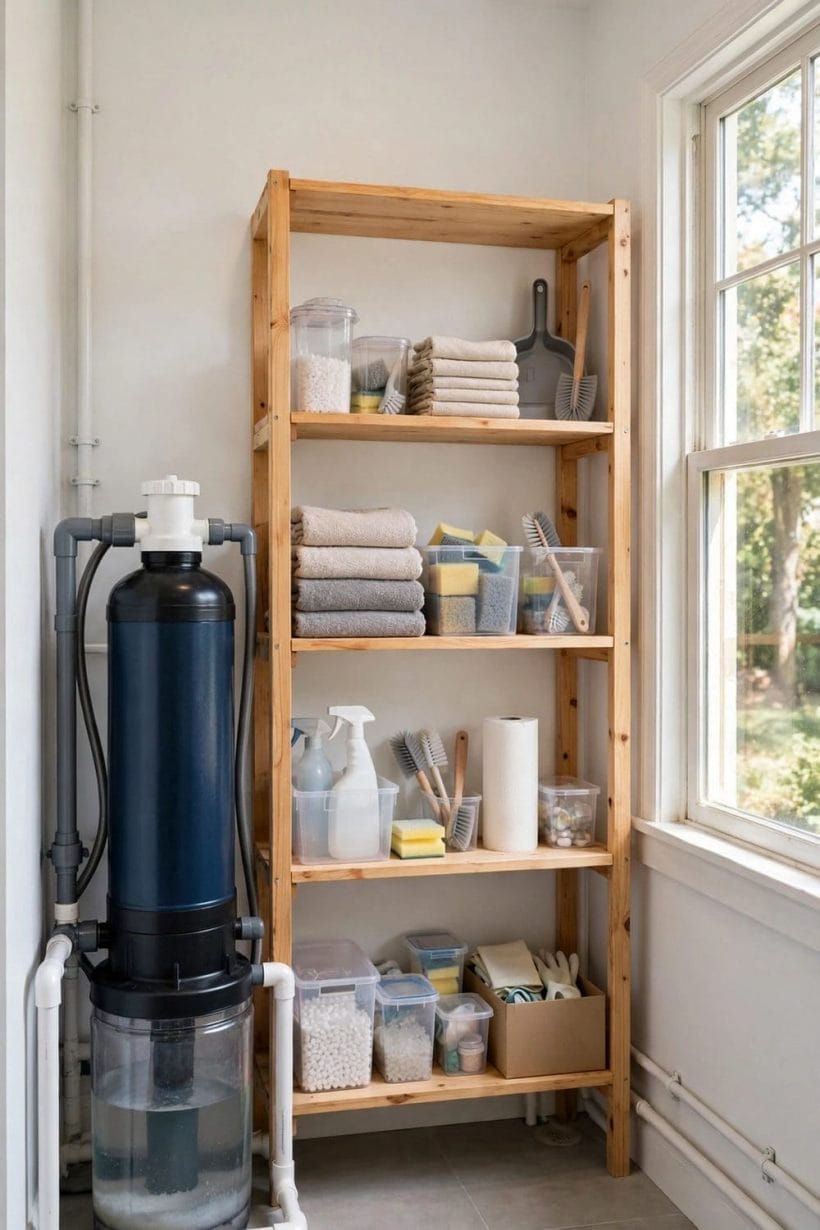
4. Capacity and Regeneration in Plain Terms
Capacity is the amount of hardness a softener can remove before it needs to regenerate, and regeneration is the cleaning cycle in which the system flushes its resin and restores its softening ability. A larger capacity means longer gaps between regenerations for the same household, while a smaller capacity means the system regenerates more often. For very hard water, capacity matters more than it does for moderately hard water, because the resin is exhausted faster by the heavier mineral load.
Regeneration uses water and, for salt-based systems, salt, so a system that regenerates too often costs more to run and uses more of both. A system that regenerates too rarely for its load, on the other hand, will let hardness slip through between cycles, and the benefit you paid for quietly disappears. The right balance is a system whose regeneration rhythm matches your household’s real use and your water’s real hardness, with enough headroom for busy days. This is a sizing conversation to have with a professional, using your test result and your usage picture, not a figure chosen from a chart alone.
Ask how regeneration is triggered. Some systems regenerate on a fixed schedule, others meter the water used and regenerate when the resin is actually exhausted, and each approach suits different households. Metered regeneration generally wastes less water and salt in a household whose use varies, while a fixed schedule can suit a household with very regular use. Ask also what happens during regeneration: whether softened water is still available, how long the cycle takes, and whether it is timed for the night so it never interrupts a morning shower. The answers tell you how the system will feel to live with, day to day.
5. Space, Access and the Spot for the Unit
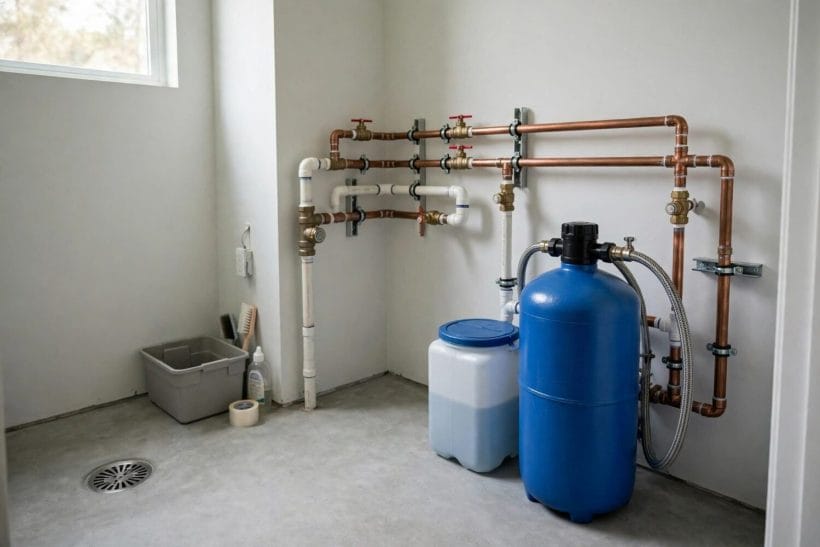
A softener needs a home of its own, and the spot you choose affects both installation and everyday upkeep. The usual place is near where the main water supply enters the house, often a utility room, garage, or basement, where the unit can sit close to the pipework and a drain. Measure the space honestly, including headroom for opening lids and reaching controls, and remember that salt-based systems need room for salt to be carried in and stored nearby. A unit squeezed into a corner that no one can reach will not be maintained, however good it is.
Access matters for the professional who installs it and for you afterwards. The installer needs working room around the pipes, the drain, and any power point the system requires, and you need to be able to reach the salt tank, check the level, and read any display without moving heavy items. Think about light, too: a dark corner makes routine checks less likely to happen. If the only available spot is tight, say so early, because the shape and layout of the system may need to suit the space rather than the other way round.
Also consider the route the softened water will take. In many homes the softener treats the whole supply, while in others an outside tap or a garden supply is left untreated, which can be a sensible choice where softened water is not needed. That decision is made at installation, by a professional who can see the pipework, and it is much harder to change afterwards. Tiny house storage ideas are a useful reminder that the space around a utility is part of the design, not an afterthought, and salt storage and access deserve the same thought as the unit itself.
6. Salt-Based and Salt-Free Systems in General Terms
The broadest choice is between salt-based softening and salt-free conditioning, and the two do different things, so the distinction matters. A salt-based system removes the hardness minerals from the water through an exchange process, replacing them so that the water leaving the system is genuinely soft. A salt-free system, by contrast, generally conditions the water so that minerals are less likely to form scale, but it does not remove them, and the water remains hard in the strict sense. Both approaches have their place, but they are not interchangeable.
For very hard water, that distinction deserves particular attention. If your main concern is scale in heaters and appliances, spots on glassware, and the feel of the water itself, removing the minerals addresses all three directly. If your main concern is only reducing scale build-up in pipes, conditioning may be presented as an option, but you should ask plainly what it will and will not change in your home: whether spots on glasses will remain, whether the water will feel different, and whether appliances will still accumulate scale over time. Honest answers to those questions make the choice much clearer.
Running needs differ as well. Salt-based systems need salt topped up, a drain for regeneration, and usually a power point, while salt-free systems typically need less routine attention but may need their conditioning media replaced on a schedule. Neither is maintenance-free, and neither should be sold as such. Compare them on what they actually do to your water, what they cost to keep running, and what your hardness test says you need, and let those three facts, rather than a general claim, settle the choice. A plumbing professional who has seen your test result can explain which approach fits your home’s hardness level.
7. What the System Should Protect
It helps to name, before you choose, the things you most want a softener to protect. For most households the list includes the water heater, the washing machine and dishwasher, taps and shower heads, and the pipework itself. Each of these suffers from scale in a different way: heaters lose efficiency, appliances lose performance and life, taps lose flow and shine, and pipes narrow slowly over years. Knowing your own priorities helps you judge whether a system is doing its job once it is running.
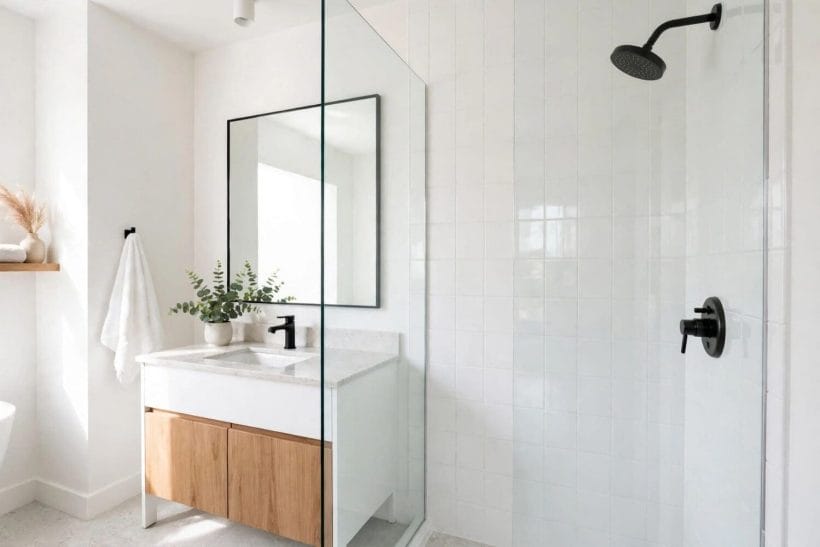
Fixtures deserve a closer look, because they are where you will notice the difference first. Shower heads clog, tap aerators fur up, and glass shower screens spot, and softened water should make all of those easier to keep clean. Tiny house interiors show how much small fixtures and finishes contribute to a home that feels cared for, and the same is true here: the daily evidence of softened water shows up at taps, in showers, and on glassware long before it shows up inside a heater.
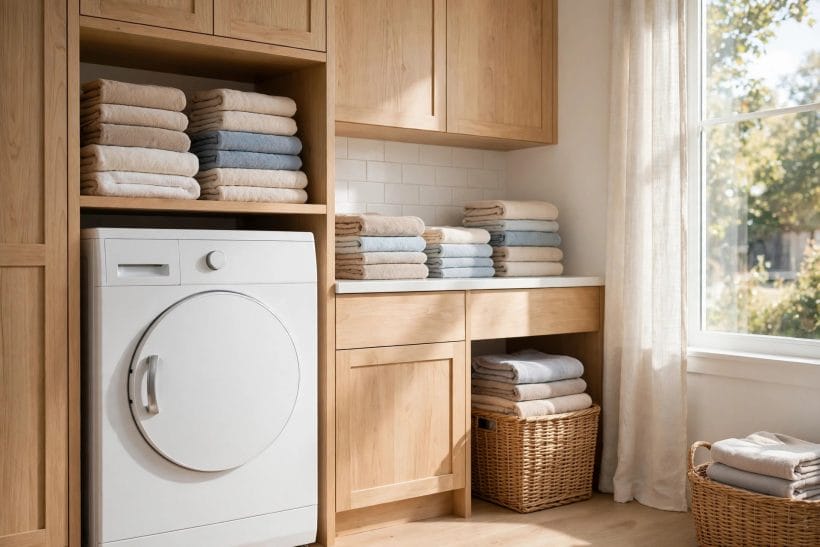
Laundry is another everyday test. Hard water can leave laundry feeling stiff and can dull colours over time, while softened water generally lets detergent work more effectively. If laundry matters to you, say so, and ask how the system will affect the washing machine’s own care routine, since some machines have their own guidance about water hardness. The companion guide on front-load washer checks covers what to look at when choosing a washer itself, and the two decisions sit naturally side by side: the water you feed a machine shapes how well it serves you.
8. Running Costs and Upkeep You Can Actually See
The price of the unit is only part of the cost of owning a softener. Salt, water used in regeneration, electricity where the system needs it, replacement media or parts, and occasional professional servicing all add up over the years, and they should be discussed before installation rather than discovered afterwards. Ask for the running picture in plain terms: how often salt will need topping up for a household like yours, how much water a regeneration cycle uses, and what servicing the system is expected to need and how often.
Upkeep is also a question of habit. A system that needs its salt checked regularly will only perform if someone actually checks it, so be honest about whether that routine suits your household. If the unit will sit in a place you rarely visit, a system with a low-maintenance rhythm or a visible reminder may serve you better than one that needs frequent attention. Some systems offer displays or alerts that make the state of the salt and the next regeneration easy to see; ask to see the display and the controls before deciding, and make sure you understand them without a manual in hand.
Floors and finishes around the unit deserve a thought as well, since a utility corner can see occasional drips and salt spills. A durable, easy-to-clean floor finish under and around the unit makes routine care simpler and keeps the area looking tidy. Tiny house flooring ideas include hard-wearing finishes that suit utility spaces, and the same practical thinking applies here: choose a spot and a finish that make upkeep easy rather than a chore you avoid.
9. Questions to Ask a Plumbing Professional
A good professional visit should feel like a conversation, not a sales pitch. Start with your test result and your usage picture, and ask the professional to explain, in plain terms, what size of system that picture points to and why. Ask how the system will be plumbed into your home: which taps will receive softened water, whether any supply will be left untreated, where the drain will run, and what happens to the water supply while the work is done. These are practical questions, and a professional should answer them without hesitation.
Ask about the home’s existing pipework as well. Older pipes, mixed materials, or a supply that already has treatment or filtration can all affect the choice and the installation, and a professional who has looked at your pipework can flag anything that needs attention before a softener is fitted. Ask whether any other work should happen at the same time, and whether the installation will need any local approval or notification. If the answers are vague, that is itself useful information, and a second opinion is never wasted on work that touches the whole home’s water.
Finally, ask about life after installation: who to call if the water feels unchanged, how soon the difference should be noticeable, what the first service should cover, and what to do if the system shows a fault. A clear answer to each of those questions is worth more than any general promise, because it tells you what support looks like when something actually needs attention. Keep the answers with the test result and the system’s paperwork, so the next person who works on the system starts from facts rather than guesses.
10. Fitting, Warranties and the Paperwork to Keep
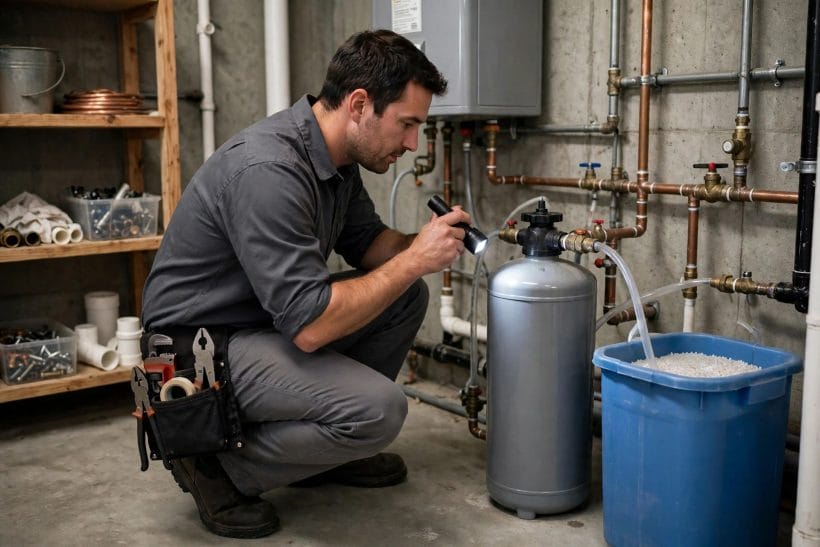
Fitting a softener is plumbing work, full stop. It involves cutting into the main supply, routing a drain, and in many cases an electrical connection, and mistakes can affect every tap in the home. A qualified plumbing professional should carry out the installation, test the system afterwards, and show you that softened water is reaching the taps it should. Ask for a demonstration before the installer leaves: how to check the salt level, how to read the display, and what normal regeneration looks and sounds like.
Warranties deserve a careful read, not a glance. Ask what is covered and for how long, what counts as normal maintenance that you must carry out to keep the cover valid, and what would void it. Keep the distinction clear between the unit itself, its parts, and the installation work, since those may carry different terms. A warranty that depends on servicing by an approved provider should be understood before you agree, not discovered when you need it.
Keep a small file for the system: the hardness test result, the installer’s notes, the warranty terms, the service history, and the manual. When the system is serviced, when you move, or when a future professional needs to understand what was fitted and why, that file saves time and prevents repeat tests and repeat questions. Tiny house exterior ideas often include the outdoor taps and garden supplies that a whole-home system may or may not treat, so note in the file which supplies are softened and which are not, for the next person who works on the home.
Final Considerations
Choosing a water softener for very hard water comes down to a short sequence done in the right order. Test the water first, so you know what you are dealing with. Map your household’s real use, so the system is sized for busy days and not just quiet ones. Check the space and the access, so the unit can be fitted and maintained without a struggle. Understand the difference between removing hardness and merely conditioning it, so you choose the approach that matches your priorities. And put the running costs and the upkeep routine in plain view before you commit, so the system keeps performing years after installation.
None of this requires you to become a water-treatment expert. It requires a test result, an honest picture of your household, and a qualified plumbing professional who can turn those two facts into a system that fits your home. Take your time, ask the questions in this guide, and keep the answers written down. A softener is a long-lived addition to a home, and the care taken before it is fitted is what decides whether it quietly does its job for years, or becomes one more appliance that never quite lived up to its promise.
If the checks above leave you with a clear picture of your water, your use, and your space, you are ready for that professional conversation. Bring the test result, bring the usage picture, and bring this list of questions, and let the system be chosen for your home as it actually is, not for a home in general. That is the whole of this water softener what-to-check approach: facts first, fitting by professionals, and a system judged on what it does to your water, day after day.



0 Comments