

Some fireplaces are appliances wearing a surround; a stone fireplace is a piece of the landscape brought indoors and built into the house’s bones. It is the heaviest, oldest and most permanent decision in a living room — and, made well, the one the room is remembered by.
These ideas stay on the stone itself: choosing it, building with it, seating around it and living with it. The general fireplace survey lives at the fireplace living room pillar; this page is the stone specialist, in the same spirit as the outdoor stacked stone fire pit.
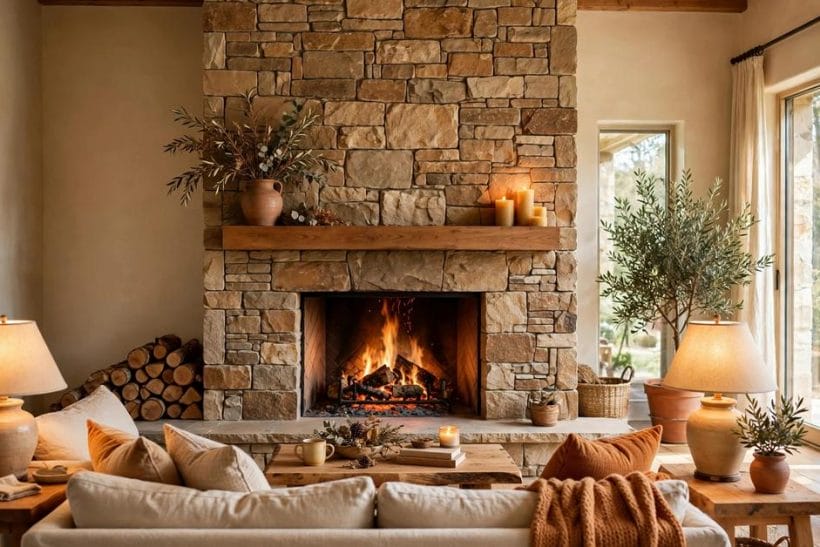
1. Stone Fireplace Living Rooms at a Glance
A stone fireplace is a fireplace and chimney breast built or faced in natural or veneered stone — fieldstone, ashlar, limestone, slate or stacked ledgestone — with a mantel shelf, a hearth and a firebox for an open fire, stove or insert. Its working parts are the stone and its mortar, the architecture (full-height or mantel-height), the seating plan it commands, and the light that models its texture. It is the material specialist inside the fireplace living room cluster, and it anchors the living room ideas it stands in, from cottage to the traditional living room.
| Question | Short answer |
|---|---|
| Which stone suits a formal living room? | Squared ashlar or pale limestone, laid in calm courses under a proper mantel — the tailored end of the family. |
| Can stone veneer look convincing? | Yes, when it is well made, honestly pointed and carried around the breast’s sides; the eye forgives veneer what it never forgives a stopped edge. |
| Is full-height stone too much for a small room? | Often, yes — stone to mantel height with a plastered wall above keeps the monument in proportion and leaves the picture wall free. |
| Does a stone fireplace need sealing? | Usually not, apart from hard-working hearths; most interior stone is best left breathing, brushed clean once a season. |
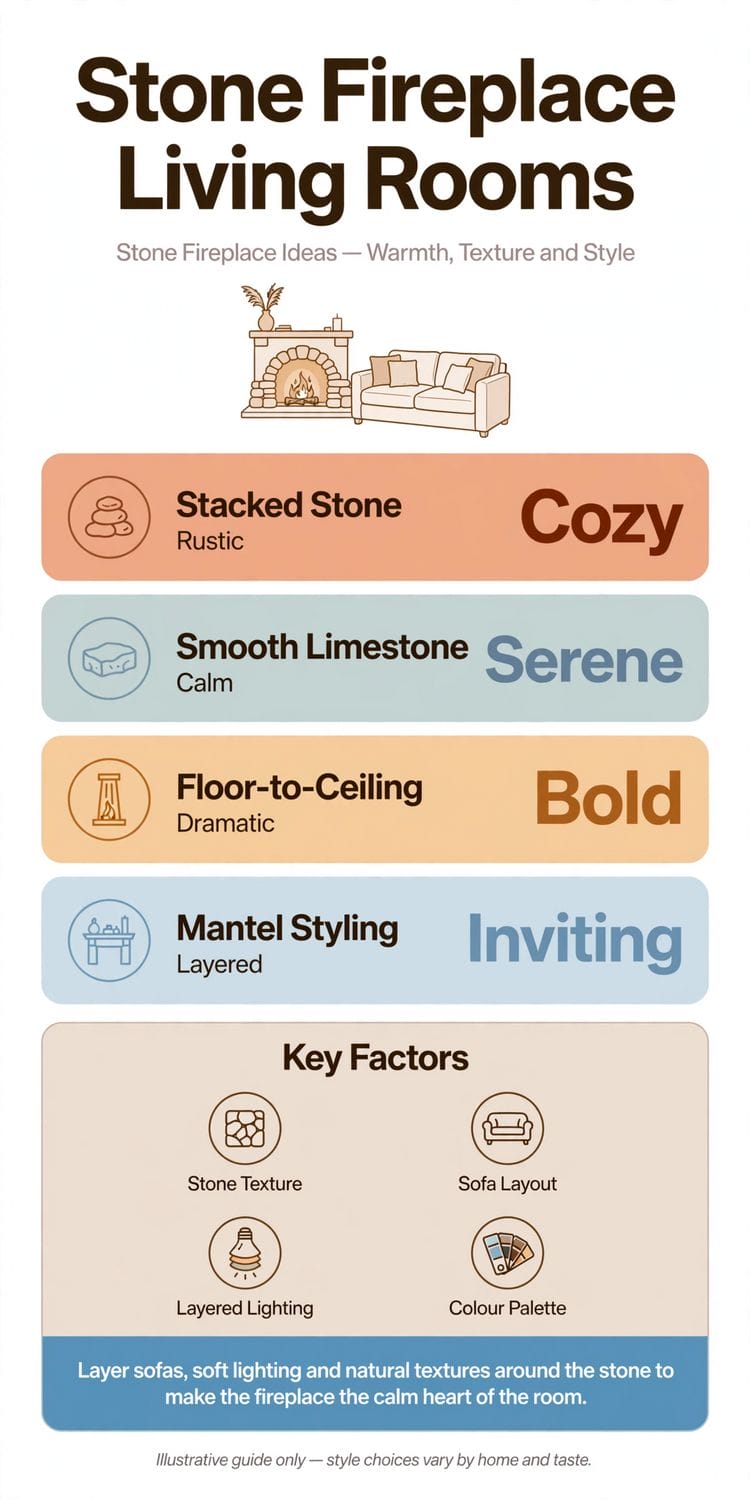
2. Choosing the Stone: Fieldstone, Limestone, Slate and Veneer
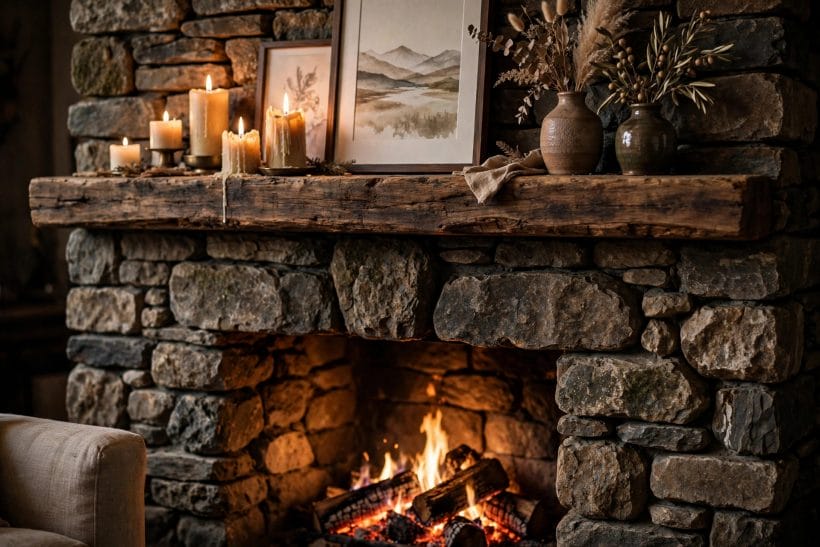
Stone is not one material but a family of tempers: rounded fieldstone that looks gathered, cut limestone that looks tailored, slate that splits into dark ledgers, and modern veneers that borrow all their faces. The stone you choose decides whether the living room feels like a cottage, a hall or a gallery — choose it before anything else in the room.
1. Start with fieldstone for the gathered, cottage character
Fieldstone’s rounded, irregular boulders look collected from the land itself, and they suit country and cottage living rooms down to the ground.
2. Choose cut or ashlar stone for tailored formality
Squared, coursed stone lays in calm horizontal lines that suit traditional and formal living rooms, where the fireplace should feel architectural rather than rustic. It pairs naturally with panelled walls and a proper mantel shelf.
3. Use limestone for pale, quiet elegance
Limestone’s soft, pale face lightens a stone fireplace that might otherwise dominate, and it takes a carved surround beautifully. It is the stone of calm rooms — the one that whispers where fieldstone tells stories.
4. Let slate bring the dark, ledged texture
Split-face slate stacks in thin, shadowed layers that catch lamplight dramatically, and its blue-grey depths suit contemporary living rooms. A slate fireplace is texture first and colour second, all the way up.
5. Consider stacked stone veneer for weight without the load
Modern stone veneers reproduce the stacked-ledge look at a fraction of a full masonry chimney’s weight, opening upper floors and existing rooms to the idea. Good veneer, honestly pointed, fools everyone who does not touch it.
6. Match the stone to the house’s own geology and age
Stone that matches the region’s walls, barns and garden stone looks inevitable; imported novelty stone looks applied. Living rooms in old stone houses have the easiest brief of all — continue what the walls began.
7. Decide the mortar’s colour as carefully as the stone’s
Pale mortar between dark stones makes a busy, graphic wall; mortar matched to the stone makes a quiet, monolithic one. The joint is half the visible surface, and it is chosen once, for decades.
8. Choose between dry-stack tightness and soft, wide joints
Tight dry-stack joints read modern and precise; wide, soft joints read old and handmade. Both are honest — the mistake is a mason and a client picturing different ones until the wall is built.
9. Sample the stone in the room’s own light
Stone changes colour between the yard, the showroom and your north-facing living room more than almost any material.
10. Let one stone win — do not mix faces
A fireplace of mixed stones, or stone fighting a brick chimney breast beside it, reads as indecision. The strong rooms in this collection commit: one stone, one joint, one character, carried through.
11. Think about what the stone does to sound
A full stone wall hardens a room’s acoustics a little, sharpening music and conversation. Soft seating, rugs and curtains — the room’s other layers — are the counterweight, and they are planned in a later section.
3. The Architecture: Full-Height Stone, Hearths and the Firebox
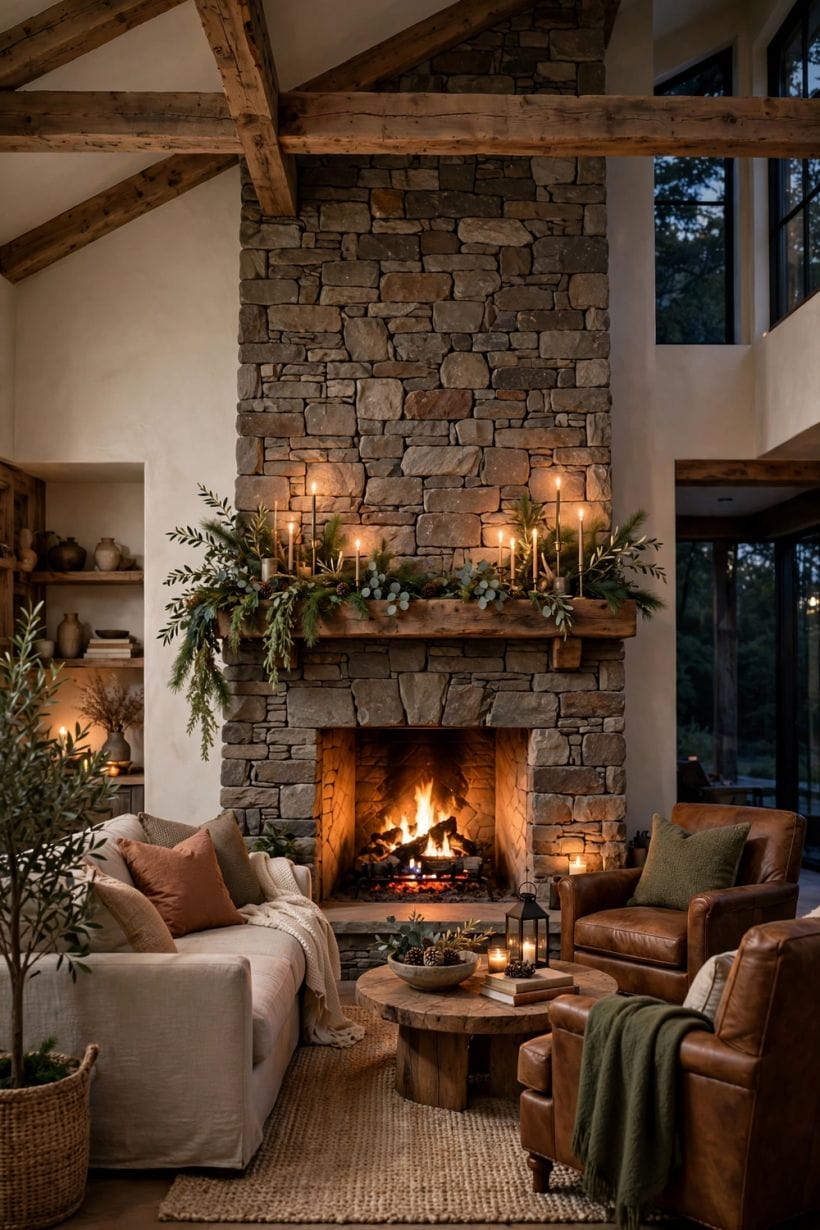
How much stone, and where it stops, is the second great decision. A chimney breast of stone to the ceiling is a monument; stone that stops at a mantel shelf under a plastered upper wall is a picture in a frame. Both are right — in different rooms, at different scales, with different furniture in front of them.
12. Take the stone to the ceiling for the full monument
Full-height stone makes the fireplace the room’s architecture rather than its furniture, and tall rooms carry it gloriously. It asks the rest of the room to be calm: the wall has said enough for everyone.
13. Stop at the mantel for the framed, tailored look
Stone to mantel height with a plastered or panelled wall above gives the room a horizon line and a place to hang its best picture. Smaller and lower rooms usually prefer this mercy to the monument.
14. Raise the hearth for fireside seating
A raised stone hearth, deep enough to sit on, is the oldest extra seat in the house — warm, informal and always claimed by someone.
15. Keep the hearth flush for a modern, floating composition
A flush hearth with a raised or cantilevered firebox reads contemporary and keeps the floor’s run unbroken. It suits the stacked-slate and veneer schemes, where the wall’s texture is the whole performance.
16. Centre the firebox honestly in the stonework
A fire opening even slightly off the chimney breast’s centre troubles the eye forever, because stone coursing makes asymmetry impossible to hide.
17. Scale the firebox to the stone around it
A small opening lost in a sea of stone looks mean; a vast opening in a narrow breast looks strained. The traditional proportion — generous stone surround, moderate fire — has survived because it flatters both.
18. Let a wood store become part of the architecture
A log niche built into the stonework — arched, squared or simply open — is storage that reads as design and keeps the fireside supplied.
19. Face the chimney breast’s sides, not just its front
In rooms where the fireplace is seen at an angle — most rooms — the breast’s returns matter as much as its face.
20. Choose the fire itself: open, stove or insert
An open fire is the romantic original; a stove or insert burns cleaner, hotter and with the door shut on draughts.
21. Leave a shadow gap where stone meets ceiling or wall
A fine dark line where the stonework ends lets old materials meet new rooms without a clumsy trim. It is a small joiner’s courtesy that makes full-height stone look deliberate rather than overrunning.
22. Build the stone before the room’s finishes, always
Stonework is wet, dusty, heavy trade. It goes in before floors are finished, walls painted and furniture anywhere near — the sequence is not a preference but the difference between a build and a rescue.
4. Seating Around a Stone Focal Point
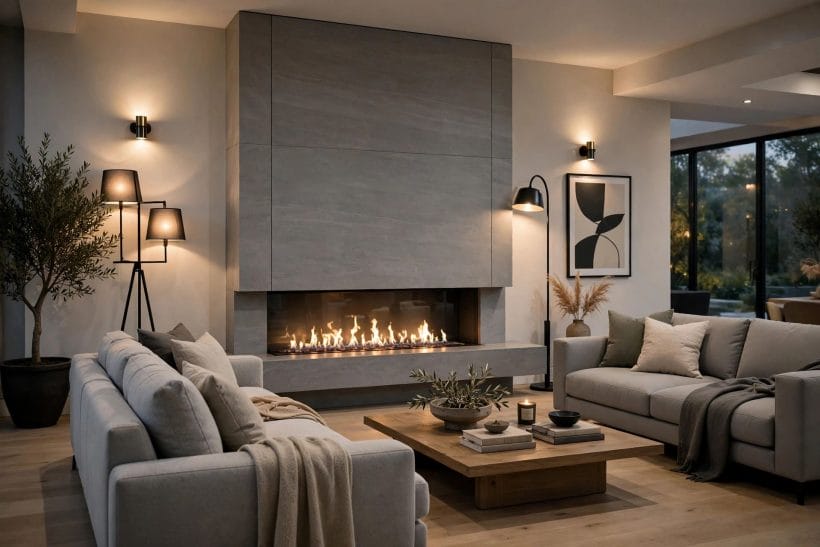
A stone fireplace organises a living room the way a harbour organises a town: everything turns toward it. The seating plan is therefore the room’s real design work — who sits where, facing the fire and each other, at distances the heat and the conversation both approve.
23. Face the main sofa to the fire, squarely
The classic arrangement — sofa opposite the fireplace, chairs at the sides — has lasted because it serves fire, conversation and the room’s axis at once.
24. Angle two armchairs into the fire’s warmth
A pair of chairs angled in from the sides makes the fireside conversation pit: close enough for talk, turned enough to face each other.
25. Keep a respectful distance from a working fire
Stone throws and holds heat generously, and upholstery placed too close ages fast and sits uncomfortably. Leave the traditional breathing room between hearth and first chair; the fire should warm the sitters, not toast them.
26. Use a hearth bench or low ottoman as the flexible seat
A long ottoman or bench before the fire seats the extra guests, stretches feet toward the warmth and moves when the room changes its mind. In stone rooms it also softens the composition’s base line.
27. Let the seating echo the stone’s weight
Wispy, leggy furniture looks bullied by a monumental stone wall. Substantial sofas, deep chairs and honest timber answer the stone’s scale — the room should feel like a fair contest between rock and comfort.
28. Arrange a second conversation away from the fire
Large stone living rooms earn a second seat group — at the window, around a table — so summer evenings are not spent facing an unlit monument.
29. Protect the rug line from sparks and shuffle
The rug before a working stone fire lives a hard life of sparks, ash and chair feet.
30. Give the fire-watcher the corner seat
Every household has one person who reads by the fire for hours. The corner chair — lamp behind the shoulder, table at the elbow, feet toward the stone — is theirs, and designing for that reader designs the room’s soul.
31. Avoid backing chairs hard against the stone
Furniture pushed against the chimney breast wastes the wall and blocks its warmth. Pull everything a hand’s breadth into the room; the shadow line behind the chairs makes the stone read deeper.
32. Plan the television’s treaty with the stone
Where a screen must share the room, the honest settlements are beside the fireplace or in the second seat group — the stone keeps the axis, as the fireplace living room collection argues, and the screen takes a supporting role.
33. Test the arrangement with the fire lit
A seating plan drawn in summer can fail in January, when heat, light and draughts join the design team.
5. Colours, Walls and Timber Beside Stone
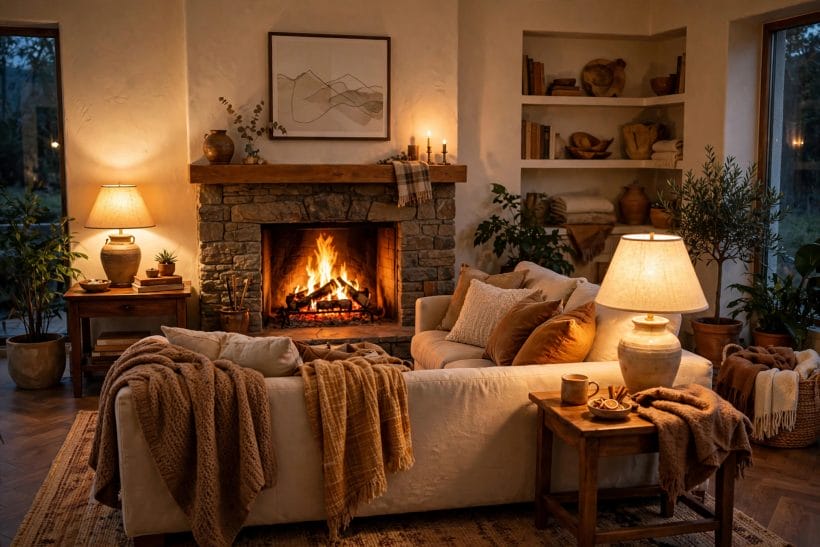
Stone brings its own colours to the room — greys, buffs, rusts, slates — and everything else must either harmonise with that palette or deliberately oppose it. The failures are the rooms that never looked at their own stone: the successes all start from the colours already in the wall.
34. Pull the room’s palette out of the stone itself
Every stone wall contains its own colour scheme: the dominant face colour, the shadow colour in the joints, and one or two accent flecks.
35. Pair warm stone with warm walls, cool with cool
Buff and rusty stones want cream, clay and warm white around them; grey and slate stones want cooler whites and blue-greys. Fighting the stone’s temperature is the slowest way to make a room feel wrong.
36. Let deep green or navy honour a pale stone
Against pale limestone or ashlar, a deep green or navy on the remaining walls gives the stone a dusk to glow against — the library treatment, and the reason pale stone fireplaces in dark rooms look like paintings.
37. Keep large patterns away from busy stone
Fieldstone’s movement is pattern enough for one wall; adding bold geometrics or florals on the sofas beside it starts a shouting match. Plain fabrics and quiet weaves are stone’s best-dressed companions.
38. Bring timber in to warm the mineral coolness
Oak beams, a walnut sideboard, a pine floor: wood is stone’s oldest partner, and its warmth answers stone’s cool weight exactly. In a stone room, every timber element earns its place twice.
39. Use black metal as the composition’s punctuation
A black fire basket, lamp bases, picture frames and curtain hardware give the eye full stops among the stone’s sentences. The metal family should be one and consistent — the fireside tools included.
40. Choose the sofa colour from the stone’s mid-tone
Upholstery in the stone’s middle register — not its lightest fleck, not its darkest joint — settles the big furniture into the wall’s family while keeping enough contrast to read as furniture, not camouflage.
41. Let one accent colour repeat three times
A cushion, a throw and a lampshade in one brave colour — rust against grey stone, ochre against slate — give the room its signature.
42. Paint the ceiling to lift a full-height stone wall
A stone monument under a low, white ceiling can feel like a well; a ceiling tinted warmly or carried slightly darker lets the room feel gathered rather than capped.
43. Respect the stone in the adjoining rooms
A monumental fireplace glimpsed through a doorway sets an expectation the hall and dining room must not contradict. Carry at least the palette’s main colour through the sightline, and the house reads as one composition.
44. Test colours at fireside, after dark
Firelight is the warmest light the room will ever know, and it forgives and flatters unevenly. The colour that looked right at noon may turn theatrical at nine — check the finalists by flame before committing.
6. The Mantel Shelf: Styling What Sits on Stone
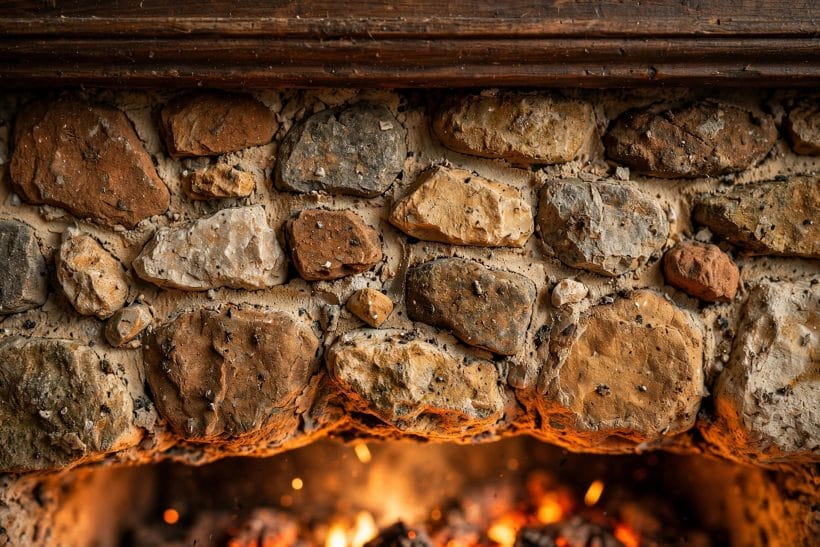
The mantel is the room’s mantelpiece in every sense — the shelf where the household displays its small treasures above its biggest material. Styling it is an exercise in scale and restraint: stone is a loud background, and what sits on it must hold its own without starting an argument.
45. Give the mantel one hero, not a committee
A single strong picture, a mirror or one large clock above the mantel holds the composition; a row of equals dissolves into clutter. The full styling argument is laid out in the fireplace mantel ideas — here, stone simply raises the stakes.
46. Use a mirror to give stone its reflection
A mirror above a stone fireplace doubles the fire’s light and returns the room to itself, softening the stone’s mass with movement. In darker stone rooms it is often the single most effective object in the house.
47. Work in odd numbers and varied heights
Three candlesticks of descending height, a stack of books with one object on top: the mantel obeys the same grammar as any shelf, but against stone the silhouettes must be bolder to register at all.
48. Choose objects with the weight to face stone
Delicate porcelain and wispy stems disappear against fieldstone. Brass, pottery, turned wood and stoneware — objects with the same material confidence as the wall — hold the shelf with dignity.
49. Let the mantel change with the seasons
Greenery at Christmas, branches in spring, a bowl of fruit or shells in summer: the mantel is the household’s noticeboard to itself, and its rotation keeps a permanent stone wall feeling alive rather than fixed.
50. Keep the shelf’s ends lighter than its centre
Composing the mantel with its weight in the middle and air at the ends echoes the fireplace below it — firebox centred, stone spreading. The echo is subtle and the eye reads it as rightness.
51. Frame pictures to stand the stone’s texture
Thin, bright frames vanish against rough stone; wide, dark or gilt frames hold their ground. Hang the picture a hand’s breadth above the shelf, not floating halfway to the ceiling.
52. Respect the heat above a working fire
The shelf above a real fire is a warm place: candles slump, greenery dries, and some finishes dislike it. Choose the mantel’s residents for the climate they will actually live in, or keep them seasonal and brief.
53. Use books lying flat as the shelf’s ballast
A horizontal stack or two anchors a mantel arrangement and gives smaller objects a plinth. Against stone, cloth-bound spines in the room’s palette do quiet, civilising work.
54. Leave the stone itself visible between objects
The mantel is a frame for the stonework, not a cupboard top. Gaps between groupings — bare stone, breathing — are what make the displayed pieces look chosen rather than stored.
55. Light the mantel from the sides, not above
Picture lights and sconces flanking the chimney breast graze the stone’s texture and warm the display, where a single ceiling spot flattens both. Stone rewards raking light more than any surface in the house.
7. Light and Texture: Making Stone Glow
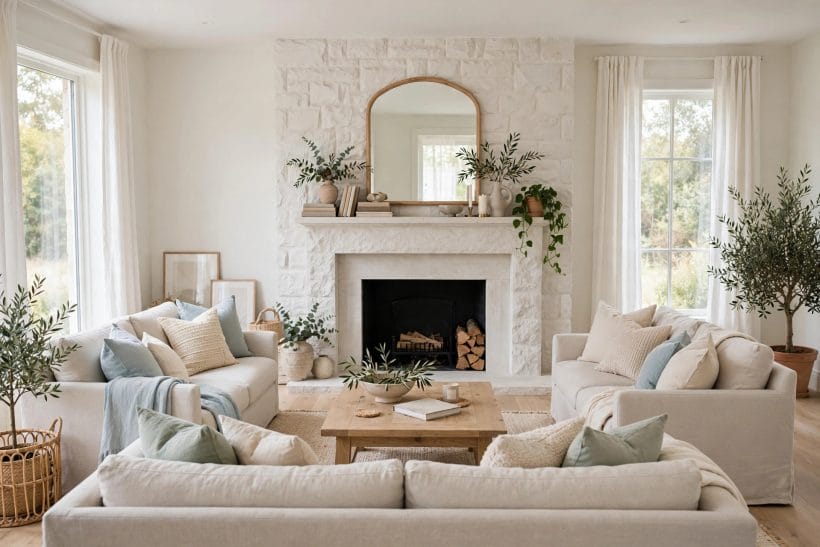
Stone is a texture before it is a colour, and light is what plays it. The same wall can look flat and grey at noon and rich as tapestry by lamplight, purely on how the light arrives. Designing the light is designing the stone — the two jobs are one.
56. Graze the stone with light from the side
Light angled across a stone face rakes every ledge and joint into relief, trebling the texture’s presence. A lamp or sconce placed to wash along the wall, rather than at it, is the stone room’s oldest trick.
57. Layer three lights: fire, lamp and candle
Firelight from below, lamplight at sitting height and candlelight on the mantel give a stone room its evening depth. Each layer warms a different register of the stone, and together they make even grey fieldstone look gilded.
58. Avoid the single central ceiling light
One overhead light flattens stone into wallpaper and leaves the fireside in its own shadow. In stone rooms the ceiling light is the last resort of the design, not its foundation.
59. Choose bulbs warm enough for the stone’s family
Warm light flatters buff and rusty stones and rescues grey ones from chill; cold, blue light makes all stone look like a car park.
60. Let daylight do its own modelling by day
A window beside the chimney breast rakes daylight across the stone all morning, changing the wall hourly. Keep that window’s dressing simple and open, and the stone performs its daily show for free.
61. Balance stone’s roughness with soft surfaces
Wool throws, linen curtains, a deep rug and cushions are not decoration beside stone — they are the texture’s counterweight, the soft half of the room’s material argument.
62. Add one smooth surface to set the stone off
A polished marble hearth, a glass tabletop or a lacquered tray gives the eye rest and makes the stone’s roughness read richer by contrast. Texture is always judged against its neighbour.
63. Keep metals matte where stone is rough
Brushed and blackened metals sit calmly with rugged stone; mirror chrome fights it for shine. The fireplace tools, lamp bases and hardware should share the stone’s matte manners.
64. Use the fire’s own light as the evening scheme
On the nights the fire is lit, it is the room’s true lighting designer — flickering, low and warm.
65. Check the stone at the hour you live with it
Most living rooms are evening rooms. Judge stone samples, paint and fabric together at the hour the room is actually used, in its actual light, and the composition will agree with itself when it matters.
8. Living with Stone: Fires, Cleaning and Care
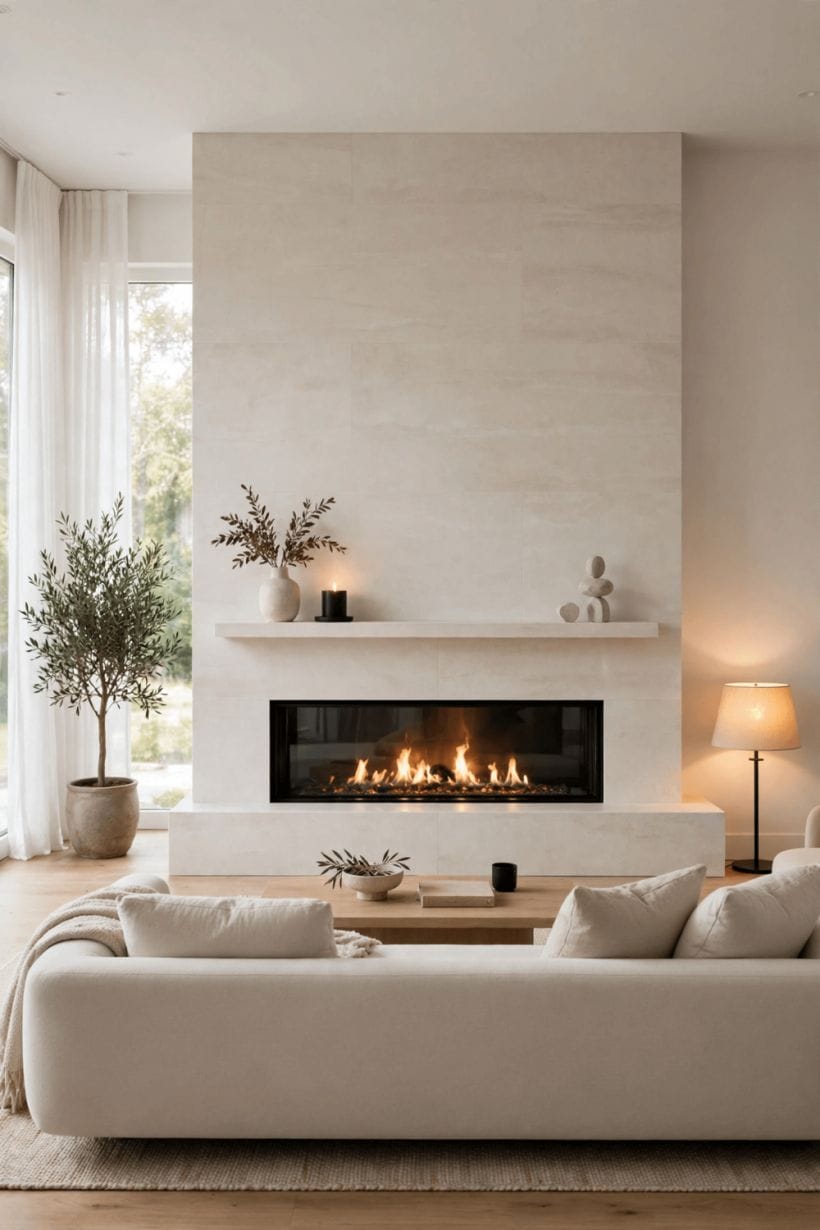
A stone fireplace is the lowest-maintenance monument a house can own, but it is not no-maintenance: soot creeps, mortar ages, ash has its habits and the hearth collects the evidence of every winter. The care is simple, occasional and mostly a matter of rhythm rather than effort.
66. Brush the stone down once a season
A stiff brush and warm water are all most stone ever asks; soot and dust settle into the texture and dull it gradually. A spring brush-down returns the colours so completely it feels like redecorating.
67. Deal with soot above the opening early
The dark bloom that creeps up the stone above a busy firebox is easiest lifted when fresh.
68. Keep the chimney swept and the flue checked
Stone outlasts everything around it, including flues. The sweeping rhythm that suits your fuel is the fireplace’s true service schedule, and it protects the house, not just the chimney breast.
69. Burn seasoned wood for the stone’s sake
Dry, seasoned logs burn hotter and cleaner, laying less tar and soot on stone and flue alike. The wood store built into the design — kept under cover, aired and rotated — is the care regime’s foundation.
70. Point mortar when it powders, not when it falls
Mortar joints are the stonework’s sacrificial layer, meant to age first. Repointing a softening joint with a matching lime mix is an afternoon’s preservation; leaving it invites water into the wall’s heart.
71. Seal only when the stone truly needs it
Most interior stone needs no sealer and breathes better without one; hearths that take spills and boots are the exception. A matte, breathable hearth seal, renewed rarely, protects without giving the stone a plastic shine.
72. Lift ash and spills before they settle in
Ash is alkaline and grit is abrasive; swept promptly, neither harms stone at all. The hearth’s daily minute with a brush and pan is the whole secret of a stone fireplace that ages gracefully.
73. Protect the floor where the logs live
The log basket’s corner collects bark, grit and the occasional beetle. A tray or mat beneath it keeps the stone hearth and the rug out of the woodpile’s debris field.
74. Let the stone age — it is better at it than you
Slight darkening around the firebox, a polish where hands steady themselves on the jamb: these are the fireplace’s autobiography, not damage. Stone rooms that are allowed their patina grow more beautiful for a century.
75. Keep a fireside kit that matches the room
Brush, pan, poker and tongs in black iron or brass, on a stand that suits the mantel’s family: the working tools live in view, so they are part of the composition.
9. Checks and Mistakes: Before the First Purchase or the First Stone
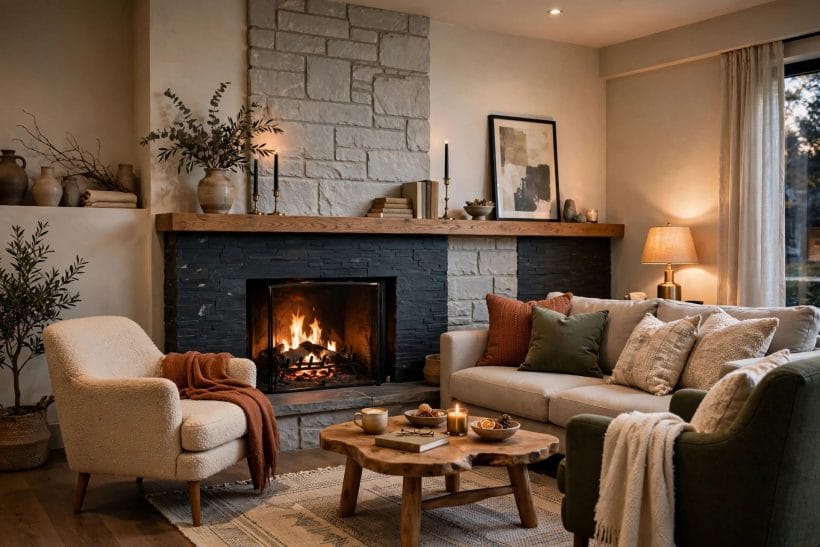
The checks that protect a stone fireplace are structural and sequential. Confirm the chimney and flue are sound before designing around them; confirm the floor and foundations accept the stonework’s considerable weight; agree the stone, the joint and the mortar colour from a built sample panel — not a brochure — because a chimney breast is the least reversible purchase in the house. And choose the fire itself first, since flue, hearth and clearances all draw from it.
The standing mistakes are the opposite of these: stone chosen from a photograph in different light, mixed faces and foreign imports fighting the house’s own materials, seating planned for an unlit summer room, and the television granted the axis that belongs to the fire. Stone forgives almost nothing and rewards almost everything — plan it like the permanent thing it is.
10. Costs and Pulling It Together
Costs in stone gather honestly: the masonry itself, whether full construction or quality veneer, is skilled, slow work; the hearth, mantel and fire or stove inside it are separate purchases; and the chimney’s preparation — lining, sweeping, repairing — is the invisible foundation the visible budget must not skip. What the spend buys is measured in decades: a stone fireplace is the one living-room feature that is never, in any fashion cycle, ripped out.
Pulling it together: commit to one stone and one joint, give the fire the room’s axis, seat the household at the distance the heat approves, and light the wall so its texture glows. Do that, and the room joins the long tradition the gray living room ideas borrow their calm from — a living room built around the oldest furniture there is: rock and flame.
Final Considerations
A stone fireplace is a promise a house makes to its winters. Built with commitment and lit with care, it organises the living room, warms it literally and figuratively, and outlasts every other fashion the room will ever wear.
For the rooms around it, the living room ideas pillar carries the whole-room schemes, and the home design ideas hub gathers the rest of the house.



0 Comments