
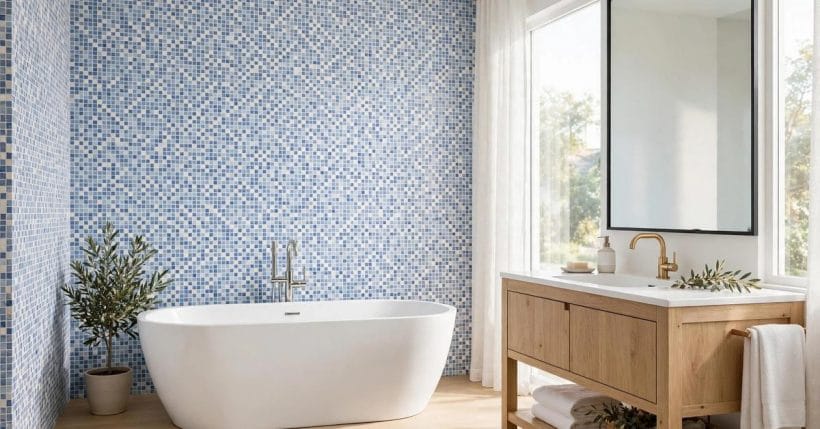
Mosaic tile has quietly become one of the most loved ways to finish a bathroom, and it is easy to see why. The tiny pieces fit curves, wrap around niches and turn an ordinary wall into something that catches the light all day long. Where large plain surfaces can feel cold or flat, mosaic feels crafted and alive, as if someone took the time to build the room piece by piece.
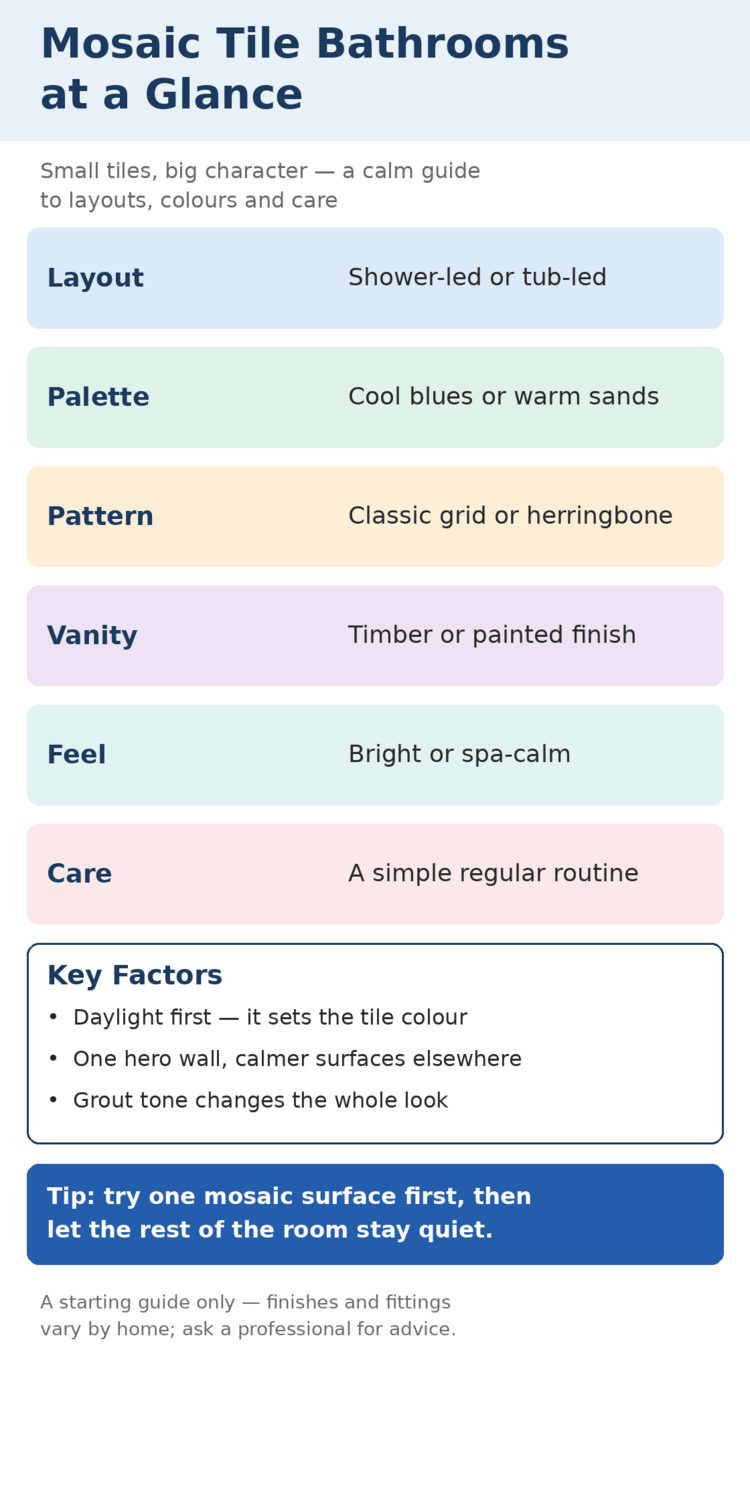
These mosaic tile bathroom ideas cover the whole room, from shower walls and tub surrounds to vanities, small rooms and everyday care. Plumbing and waterproofing are mentioned only as work for a qualified professional, and nothing here asks you to fit tile or pipework yourself. Read it as a source of ideas to take to your own bathroom, and pick the ones that suit your room, your light and your daily routine.
1. Mosaic Tile First: How Small Tiles Change a Bathroom
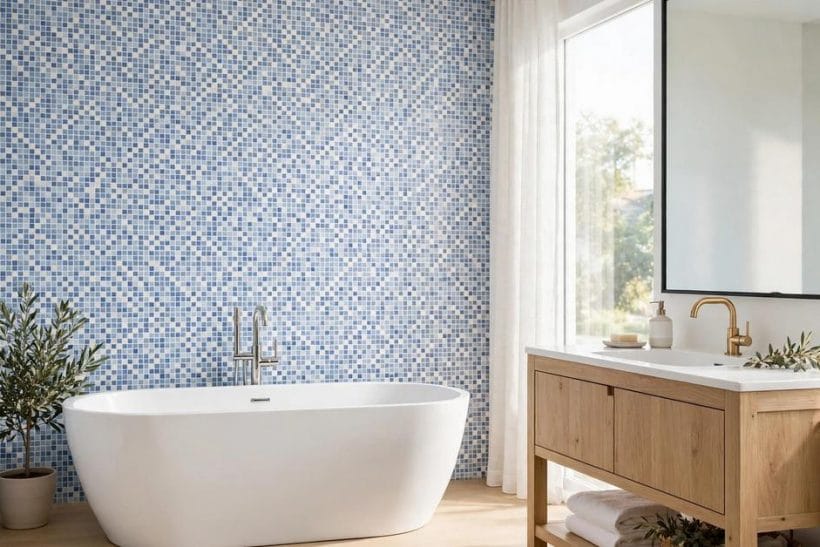
A bathroom lined in mosaic tile feels different from one finished in large plain surfaces. The small pieces catch the light in hundreds of places at once, so the wall seems to shimmer gently rather than sit flat, and even a modest room gains a sense of craft and care. That shimmer is the reason mosaic suits bathrooms so well: it turns the wettest, hardest-working walls of the house into the most decorative ones.
This guide gathers seventy-five ideas in a calm order, starting with where the tile goes, then moving through colour, pattern, showers, vanities, tubs, small rooms, storage, finishes and care. Every idea here stays with mosaic tile itself, and where work touches plumbing or waterproofing, it belongs with a qualified professional. For the wider room around the tile, these small bathroom ideas are a useful companion.
| Item | What it is |
|---|---|
| A Full Shower Wall in Mosaic | Covering one complete shower wall in mosaic makes the shower the clear centre of the room. |
| One Feature Wall, Nothing More | A single mosaic wall behind the basin or the tub gives the room a focal point without overwhelming it. |
| Floor to Ceiling in the Wet Zone | Running mosaic from floor to ceiling inside the shower or around the tub makes the wet zone read as one deliberate space. |
| A Lined Niche for Bottles and Jars | Lining a recessed niche in a contrasting mosaic turns everyday bottles into a small display. |
| A Half-Height Wall with a Clean Edge | Stopping mosaic at half height, capped with a neat trim, suits rooms where a full wall would feel heavy. |
| A Mosaic Floor Underfoot | A mosaic floor brings pattern to the surface you actually stand on, and the many grout lines give a gentle grip underfoot. |
| A Backsplash Behind the Vanity | A mosaic backsplash protects the wall behind the basin and gives the vanity area its own identity. |
| A Ceiling Accent Above the Tub | A mosaic ceiling panel above a freestanding tub is unexpected and quietly luxurious. |
| Classic Blue, from Pale to Deep | Blue is the natural home of mosaic bathrooms, echoing water without ever looking literal. |
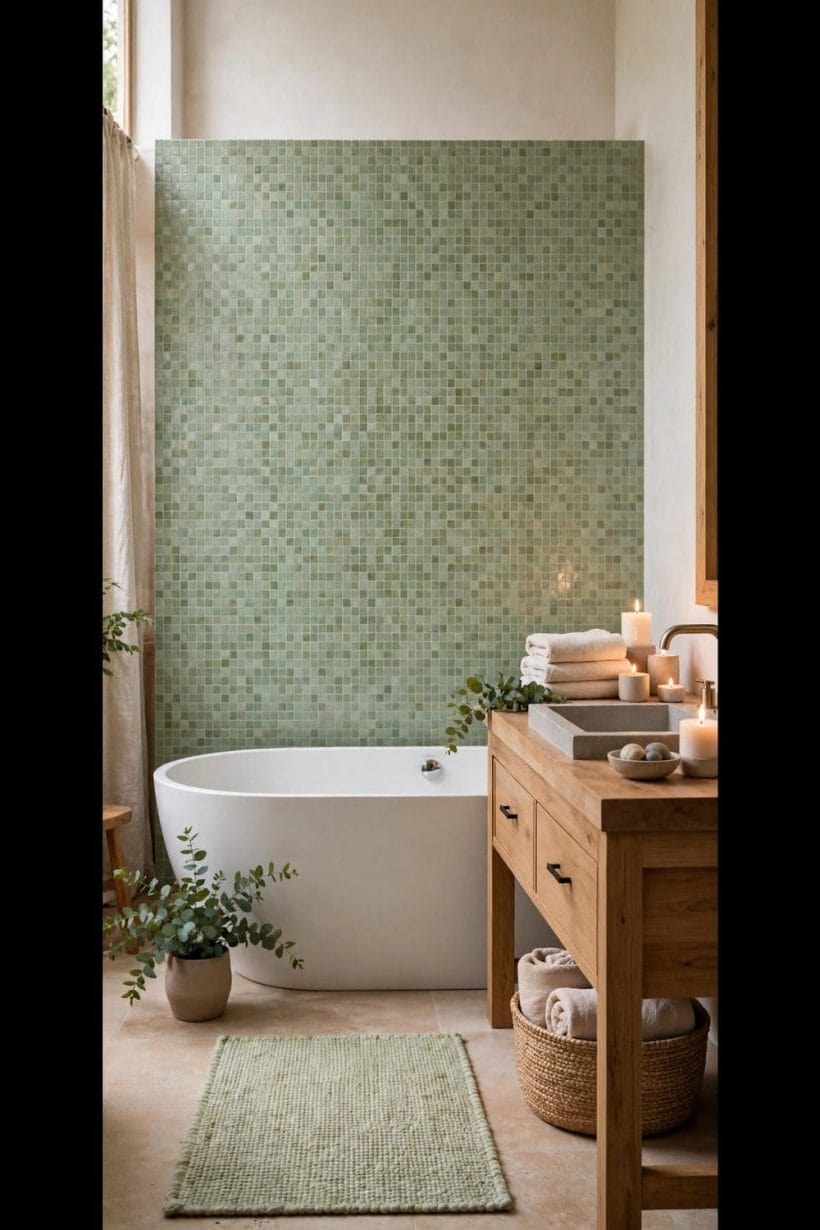
| Sea Green for a Calm Morning | Sea green sits between blue and nature, and it flatters both timber and white fittings. |
| Warm Sand for a Sunlit Feel | Sandy, warm-toned mosaic brings a sunlit quality even to a bathroom with a small window. |
| Soft Grey as a Quiet Backdrop | Grey mosaic reads as calm and grown-up, especially when mixed with white fittings and pale walls. |
| White on White, with Texture Only | An all-white mosaic bathroom relies on texture rather than colour: the small tiles and their shadows do all the work. |
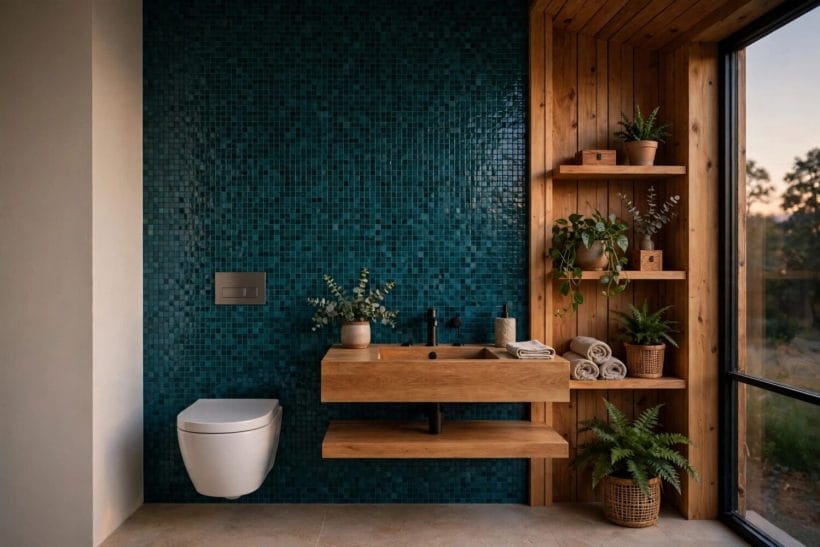
| Deep Teal as a Single Bold Wall | Deep teal makes a dramatic feature wall that still feels like water and depth rather than decoration for its own sake. |
| A Blush Warmth for Softness | Blush and warm rose tones soften a bathroom in a way that suits both traditional and contemporary fittings. |
| Charcoal Depth in a Larger Room | Charcoal mosaic gives a bathroom a cocooning, evening feel, especially with warm lighting and timber accents. |
| The Classic Grid, Neat and Timeless | The simple square grid is the most forgiving mosaic pattern, suiting almost any bathroom style. |
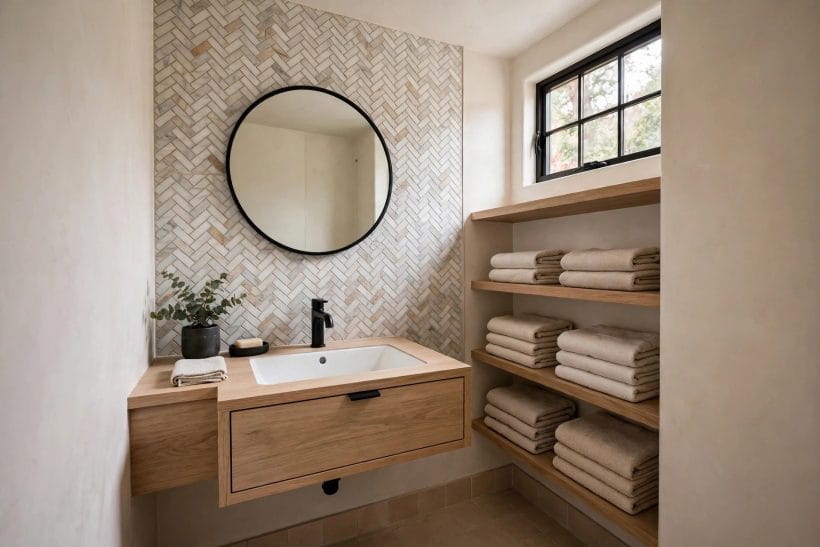
| Herringbone for Movement | Herringbone mosaic draws the eye along the wall in a zigzag rhythm that feels crafted and contemporary. |
| Stacked Verticals for Height | Stacking mosaic in vertical columns makes a wall feel taller, which helps in rooms with low ceilings. |
| A Woven Basket Pattern | A basket-style arrangement of small tiles feels handmade and traditional, with a rhythm that suits country and classic bathrooms. |
| Stripes and Bands as a Border | A horizontal band of mosaic across a plain wall acts like a picture rail for the bathroom, adding colour at eye level. |
| A Framed Panel on a Plain Wall | Framing a rectangle of mosaic within a plain wall turns the tile into artwork. |
| A Scattered Blend for Softness | A blend of closely related tones, scattered rather than arranged, gives a wall a soft, watercolour quality. |
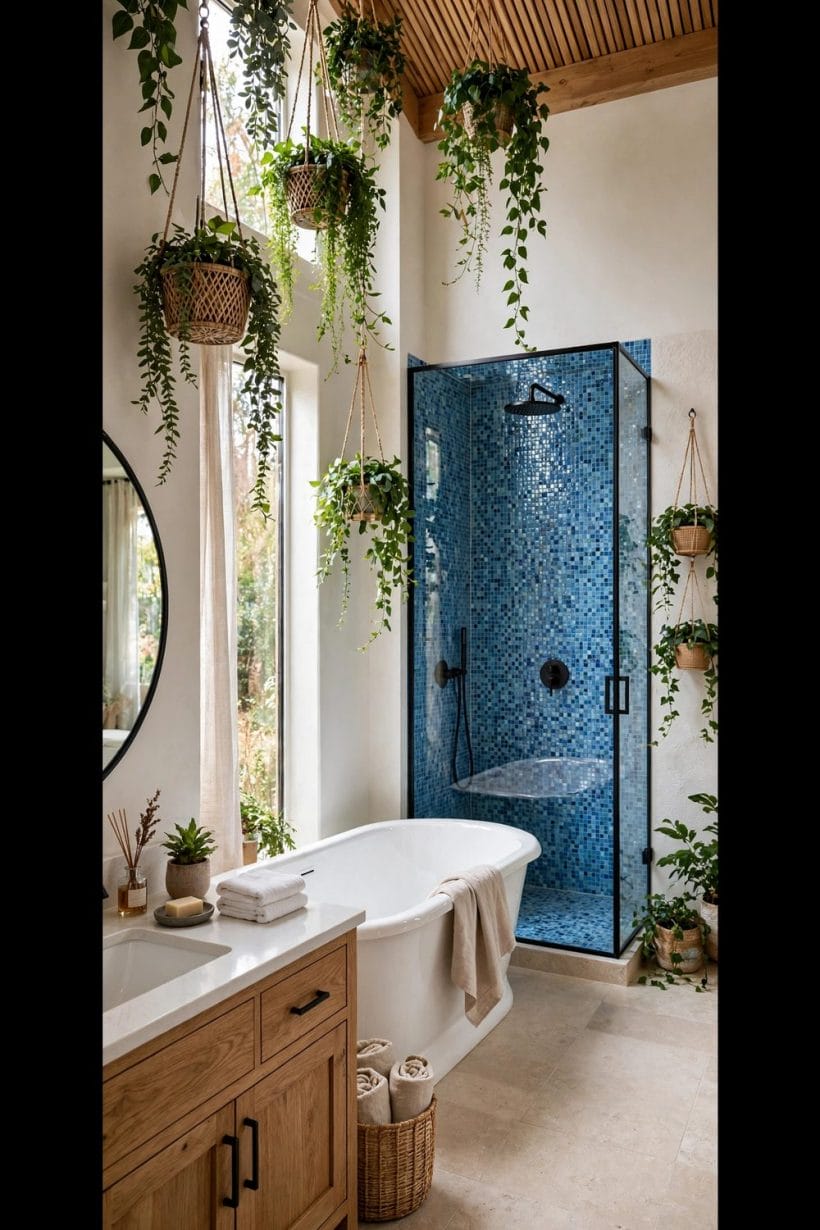
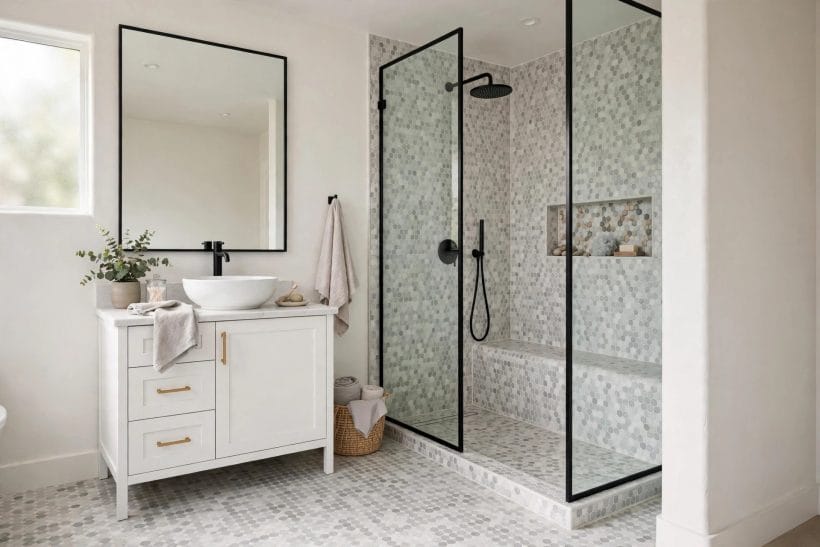
| A Walk-In Shower in Full Mosaic | A walk-in shower lined entirely in mosaic feels like a small room of its own, open and easy to step into. |
| A Mosaic Shower Floor | Small tiles on a shower floor follow its gentle fall towards the drain and feel comfortable underfoot. |
| A Niche Lined in a Contrast Tone | A niche in a contrasting mosaic tone becomes the shower's jewellery: a small, deliberate flash of colour. |
| A Tiled Bench Seat | A bench seat tiled in mosaic turns a shower into a place to sit and linger, not just to wash. |
| A Half-Wall in Mosaic | A half-wall dividing shower from room, tiled in mosaic on both faces, defines the shower without closing it in. |
| A Corner Shower Wrapped in Colour | Wrapping two corner walls in mosaic makes a corner shower feel deliberate rather than squeezed in. |
| A Panel Beside the Shower Door | A mosaic panel beside the shower entrance frames the doorway and signals where the wet zone begins. |
| A Shared Wall Between Shower and Tub | When shower and tub share a wall, tiling that wall in mosaic unites them into one wet zone. |
| A Backsplash That Frames the Basin | A mosaic backsplash rising from the basin to the mirror frames the washing area like a picture. |
| A Surround for a Vessel Basin | A vessel basin sitting against a mosaic wall gains a setting worthy of its shape. |
| A Backdrop for a Floating Vanity | A floating vanity leaves the floor visible beneath it, and a mosaic wall behind it makes that lightness feel intentional. |
| A Wide Wall for a Double Vanity | A double vanity deserves a wide mosaic wall that spans both basins without a break. |
| A Mosaic Mirror Frame | Framing a mirror in mosaic tiles turns the mirror into a feature instead of a flat necessity. |
| A Lined Shelf Above the Vanity | Lining the back of an open shelf above the vanity in mosaic makes stored towels and jars look arranged rather than merely stored. |
| A Return onto the Vanity Side Wall | Carrying mosaic around the side return of a vanity wall gives the vanity a sense of depth. |
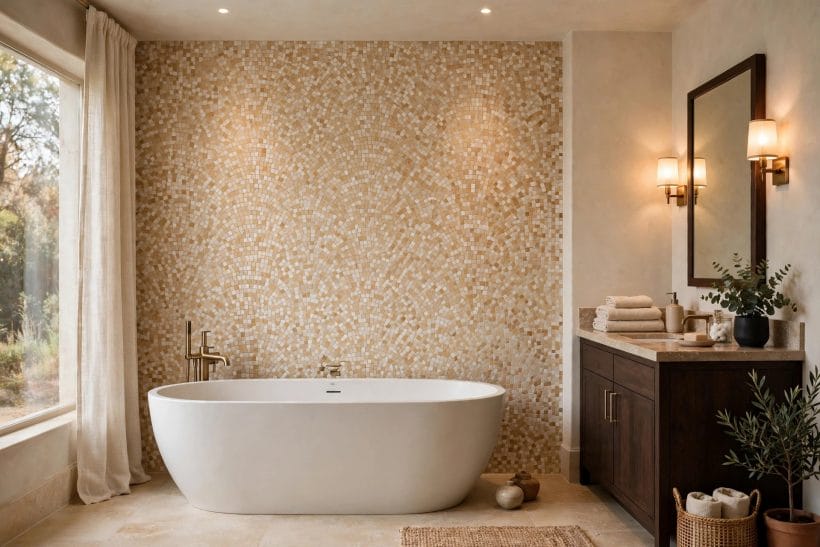
| A Freestanding Tub Against Mosaic | A freestanding tub set against a mosaic wall is the classic mosaic bathroom image, and it earns that status. |
| A Built-In Tub Surround | Tiling the surround of a built-in tub in mosaic makes the tub feel like part of the architecture rather than a box in the corner. |
| A Tiled Tub Deck Edge | A mosaic edge along the tub deck catches the light at hand height and rewards anyone sitting on the deck's edge. |
| An End Wall Behind the Tub | Tiling just the end wall behind a tub concentrates the colour where it is seen from the doorway. |
| An Alcove Tub Wrapped in Tile | An alcove tub with mosaic on all three walls feels like a bathing nook, sheltered and calm. |
| A Shelf Ledge in Matching Mosaic | A shelf ledge beside the tub, tiled to match the wall, keeps essentials within reach of the bather. |
| A Soaking Corner with a Quiet Palette | A soaking corner in pale, quiet mosaic tones invites long, slow baths. |
| A Tub Wall Carried to the Ceiling | Carrying mosaic above a tub all the way to the ceiling makes the bathing spot feel like a small chapel of calm. |
| One Mosaic Wall Only | In a small bathroom, one mosaic wall is often enough. |
| A Light Palette to Keep It Bright | Pale mosaic tones bounce daylight around a small room and keep it feeling bright. |
| Vertical Lines for a Taller Feel | Vertical mosaic stripes or stacked patterns make a small bathroom feel taller. |
| Floor Continuity into the Shower | Running the same mosaic floor from the room into the shower, without a threshold break, makes a small bathroom feel larger. |
| A Mirror Paired with Mosaic | A large mirror beside or above mosaic doubles the tile's sparkle and the room's apparent size. |
| An Open Shelf Backdrop | An open shelf with a mosaic backing adds storage and decoration in one move, without the bulk of a cabinet. |
| A Clear Sightline to the Tile | Keeping the sightline from the door to the mosaic wall clear lets the tile do its work the moment you enter. |
| A Recessed Shelf Lined in Mosaic | A recessed shelf lined in mosaic looks finished even when it holds nothing at all. |
| A Mirror Frame in Matching Tile | A mirror framed in the room's own mosaic ties the mirror to the wall instead of leaving it floating. |
| A Towel Shelf Backdrop | A mosaic panel behind a towel shelf makes folded towels look like part of the display. |
| A Backdrop Wall Behind the Toilet | A mosaic panel behind the toilet gives an often-ignored corner a quiet dignity. |
| A Linen Cupboard Door Panel | A mosaic panel set into a linen cupboard door turns storage furniture into a feature. |
| A Hook Rail Wall in Tile | A short mosaic panel behind a row of hooks makes hanging towels and robes feel arranged. |
| A Window Reveal Lined in Mosaic | Lining a window reveal in mosaic catches daylight and throws it gently into the room. |
| Timber Vanities Beside Mosaic | Timber vanities warm up mosaic walls, especially in blue and green tones that could otherwise feel cool. |
| Painted Cabinetry for a Softer Look | Painted cabinetry in a pale tone lets mosaic be the room's main colour. |
| Warm Lighting for Evening Baths | Warm lighting makes mosaic glow in the evening, turning the small tiles into a field of soft reflections. |
| Daylight as the Best Showcase | Daylight shows mosaic at its best, shifting its tones through the day. |
| Brushed Fittings for a Calm Finish | Brushed metal fittings sit calmly beside mosaic, without the glare of high polish. |
| Plain Walls Paired with a Hero Wall | Plain walls beside a mosaic hero wall give the eye somewhere to rest. |
| Plants Against a Tiled Wall | Plants against a mosaic wall bring a living softness to the room's geometry. |
| Textiles That Echo the Tile | Towels and bath mats in tones drawn from the mosaic tie the room together. |
| A Simple Regular Wipe Routine | A regular wipe with a soft cloth keeps mosaic surfaces bright and stops marks from settling. |
| Grout Care Without Harsh Treatment | Grout lines benefit from gentle, regular attention with a cleaner suited to the tile. |
| Ventilation After Every Bath | Good ventilation after bathing keeps a mosaic bathroom dry and fresh. |
| Professional Fitting for Wet Areas | Fitting mosaic in wet areas involves waterproofing and plumbing that belong with a qualified professional. |
| Viewing Samples in Your Own Light | Always view mosaic samples in the bathroom where they will live, in both daylight and evening light. |
| The One Hero Wall Rule | If in doubt, give a room one hero mosaic wall and keep the rest calm. |
| Living with Mosaic for the Long Term | Mosaic is a long-term choice, so choose a colour and pattern you will still enjoy in years to come. |
1. A Full Shower Wall in Mosaic
Covering one complete shower wall in mosaic makes the shower the clear centre of the room. The eye settles there on entering, and the rest of the bathroom can stay quiet, which keeps the room feeling calm rather than crowded.
2. One Feature Wall, Nothing More
A single mosaic wall behind the basin or the tub gives the room a focal point without overwhelming it. Choose the wall you face most often, and leave the remaining walls plain so the feature keeps its power.
3. Floor to Ceiling in the Wet Zone
Running mosaic from floor to ceiling inside the shower or around the tub makes the wet zone read as one deliberate space. The continuous surface also means there is no awkward line where tile stops halfway up the wall.
4. A Lined Niche for Bottles and Jars
Lining a recessed niche in a contrasting mosaic turns everyday bottles into a small display. The niche stays practical, holding everything within reach, while the tile gives it a finished, intentional look.
5. A Half-Height Wall with a Clean Edge
Stopping mosaic at half height, capped with a neat trim, suits rooms where a full wall would feel heavy. The lower band adds colour and texture at eye level near the basin, while pale paint above keeps the room airy.
6. A Mosaic Floor Underfoot
A mosaic floor brings pattern to the surface you actually stand on, and the many grout lines give a gentle grip underfoot. Keep the walls calmer when the floor carries the pattern, so the room does not feel busy from every angle.
7. A Backsplash Behind the Vanity
A mosaic backsplash protects the wall behind the basin and gives the vanity area its own identity. It is a small area, so it is also a good place to try a bolder colour before committing it to a whole wall.
8. A Ceiling Accent Above the Tub
A mosaic ceiling panel above a freestanding tub is unexpected and quietly luxurious. Seen from the tub, it frames the bathing spot like a canopy, and it works best when the walls around it stay simple.
2. Colour Stories: Blues, Greens, Sands and Neutrals
Colour is where a mosaic bathroom finds its mood. Because the tiles are small, a colour never arrives as one flat block; it arrives as a blend of closely related tones that shift with the light through the day. That blending makes mosaic forgiving: a blue that might feel cold as a painted wall feels lively and soft as mosaic.
Start from the feeling you want at the start of the day. Cool colours wake a room up, warm colours slow it down, and neutrals let the fittings and the daylight do the talking. The sibling stone tile bathrooms show how a different tile family handles the same question of colour, if you want a comparison before you settle.
9. Classic Blue, from Pale to Deep
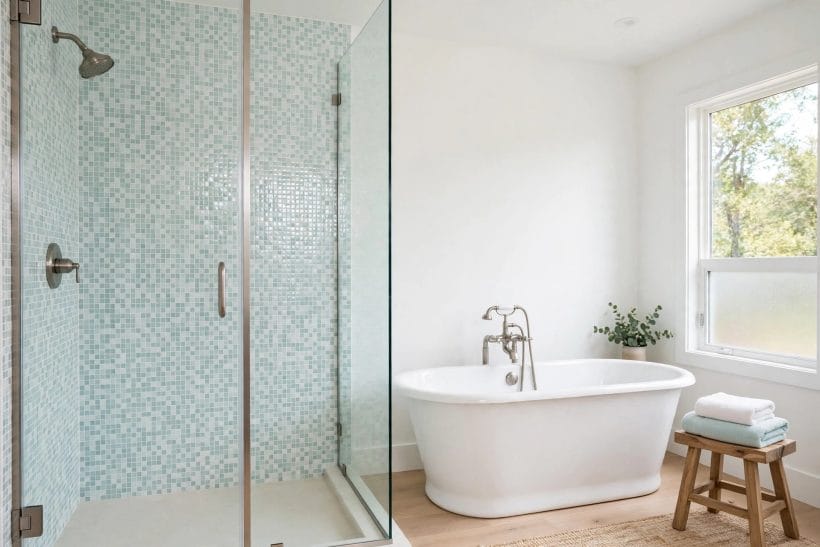
Blue is the natural home of mosaic bathrooms, echoing water without ever looking literal. Pale blues keep a small room bright, while deeper blues suit larger rooms where the colour has space to breathe.
10. Sea Green for a Calm Morning
Sea green sits between blue and nature, and it flatters both timber and white fittings. It is a restful choice for a bathroom used first thing, when a gentle colour is kinder than a loud one.
11. Warm Sand for a Sunlit Feel
Sandy, warm-toned mosaic brings a sunlit quality even to a bathroom with a small window. It pairs beautifully with timber vanities and cream walls, and it never feels cold underfoot in winter.
12. Soft Grey as a Quiet Backdrop
Grey mosaic reads as calm and grown-up, especially when mixed with white fittings and pale walls. Vary the grey tones slightly rather than using one flat shade, so the surface keeps its mosaic character.
13. White on White, with Texture Only
An all-white mosaic bathroom relies on texture rather than colour: the small tiles and their shadows do all the work. It is the brightest option of all, and it suits rooms where daylight is limited.
14. Deep Teal as a Single Bold Wall
Deep teal makes a dramatic feature wall that still feels like water and depth rather than decoration for its own sake. Keep it to one wall, with pale surroundings, and the drama stays elegant.
15. A Blush Warmth for Softness
Blush and warm rose tones soften a bathroom in a way that suits both traditional and contemporary fittings. Used on one wall or as a backsplash, they add warmth without turning the room sweet.
16. Charcoal Depth in a Larger Room
Charcoal mosaic gives a bathroom a cocooning, evening feel, especially with warm lighting and timber accents. Reserve it for rooms with good light or a generous window, so the depth reads as cosy rather than dark.
3. Patterns That Shape the Room
Pattern is the second decision after colour, and it changes how a room feels almost as much. A tight grid feels orderly and classic, a herringbone feels crafted and modern, and a scattered blend feels organic, like pebbles on a shore. Because mosaic arrives in small pieces, pattern is built into the tile itself rather than painted on afterwards.
Hold a sample against the wall in daylight before deciding, and look at it from the doorway, not just from close up. A pattern that looks busy in the hand can look calm on the wall, and the reverse is true too.
17. The Classic Grid, Neat and Timeless
The simple square grid is the most forgiving mosaic pattern, suiting almost any bathroom style. Its regularity calms a room, and it lets colour, rather than geometry, carry the interest.
18. Herringbone for Movement
Herringbone mosaic draws the eye along the wall in a zigzag rhythm that feels crafted and contemporary. It works beautifully as a backsplash or a feature band, where its movement can be appreciated up close.
19. Stacked Verticals for Height
Stacking mosaic in vertical columns makes a wall feel taller, which helps in rooms with low ceilings. The vertical lines pull the eye upward and give a small bathroom a little extra stature.
20. A Woven Basket Pattern
A basket-style arrangement of small tiles feels handmade and traditional, with a rhythm that suits country and classic bathrooms. It adds texture without shouting, and it pairs well with painted cabinetry.
21. Stripes and Bands as a Border
A horizontal band of mosaic across a plain wall acts like a picture rail for the bathroom, adding colour at eye level. Bands are also a gentle way to introduce a bold colour without covering a whole wall.
22. A Framed Panel on a Plain Wall
Framing a rectangle of mosaic within a plain wall turns the tile into artwork. The frame can be a simple trim, and the panel might sit behind the basin or above the tub.
23. A Scattered Blend for Softness
A blend of closely related tones, scattered rather than arranged, gives a wall a soft, watercolour quality. It hides the grid entirely, so the wall reads as colour and light rather than as tiling.
4. Showers: Walls, Floors, Niches and Benches
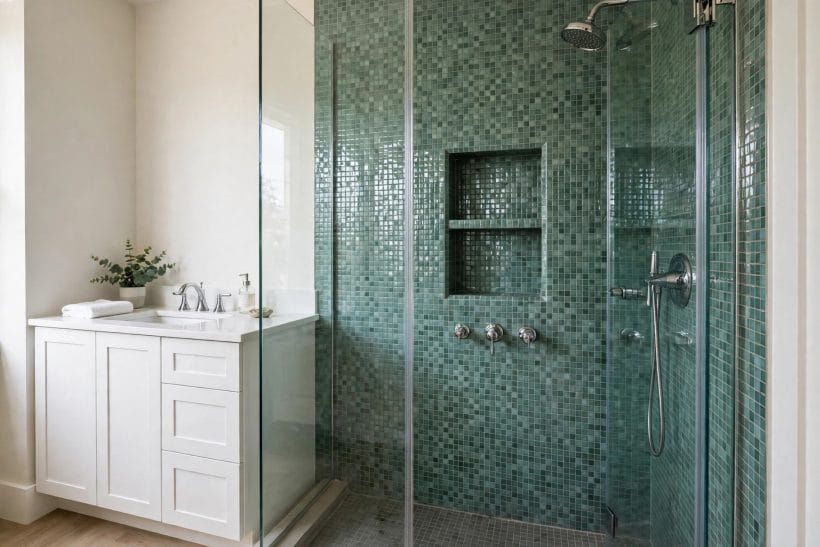
The shower is where mosaic tile earns its keep most visibly. Small tiles follow curves and falls in a shower floor that larger tiles cannot, and they wrap neatly around niches, benches and half-walls. That flexibility is practical as well as pretty, and it is why so many of the best shower rooms are mosaic rooms.
Shower work involves plumbing and waterproofing, so the fitting itself belongs with a qualified professional; the ideas here are about what the finished shower looks like and how it feels to use. The sibling travertine tile bathrooms offer a contrasting shower look if you are weighing tile families.
24. A Walk-In Shower in Full Mosaic
A walk-in shower lined entirely in mosaic feels like a small room of its own, open and easy to step into. The continuous tile makes the shower feel generous even when its footprint is modest.
25. A Mosaic Shower Floor
Small tiles on a shower floor follow its gentle fall towards the drain and feel comfortable underfoot. Choose a tone close to the wall tile for calm, or a darker tone to ground the shower visually.
26. A Niche Lined in a Contrast Tone
A niche in a contrasting mosaic tone becomes the shower’s jewellery: a small, deliberate flash of colour. It also makes bottles easy to find, since the niche stands out from the surrounding wall.
27. A Tiled Bench Seat
A bench seat tiled in mosaic turns a shower into a place to sit and linger, not just to wash. It suits larger showers and anyone who prefers to sit while showering, and it gives the room a spa-like ease.
28. A Half-Wall in Mosaic
A half-wall dividing shower from room, tiled in mosaic on both faces, defines the shower without closing it in. The top of the wall also offers a perch for a plant or a folded towel.
29. A Corner Shower Wrapped in Colour
Wrapping two corner walls in mosaic makes a corner shower feel deliberate rather than squeezed in. The corner becomes a feature, and the rest of the room stays free for the basin and storage.
30. A Panel Beside the Shower Door
A mosaic panel beside the shower entrance frames the doorway and signals where the wet zone begins. It is a small gesture that makes the whole shower arrangement feel designed.
31. A Shared Wall Between Shower and Tub
When shower and tub share a wall, tiling that wall in mosaic unites them into one wet zone. The shared surface makes the room feel planned as a whole rather than assembled fixture by fixture.
5. Vanities and Basins: Mosaic as the Backdrop
The vanity wall is the wall you see most in a bathroom, since it faces you at the mirror every morning. Mosaic behind the basin therefore works harder than mosaic anywhere else: it is the backdrop to the daily routine, and it sets the tone for the whole room.
Keep the vanity backdrop in scale with the vanity itself. A single basin suits a contained panel, while a double vanity can carry a wider stretch of tile. The sibling glass tile bathrooms show a lighter, more reflective take on the same vanity backdrop idea.
32. A Backsplash That Frames the Basin
A mosaic backsplash rising from the basin to the mirror frames the washing area like a picture. It protects the wall from splashes and gives the vanity a finished edge.
33. A Surround for a Vessel Basin
A vessel basin sitting against a mosaic wall gains a setting worthy of its shape. The tile behind it should be calm enough not to compete with the basin, but rich enough to reward a second look.
34. A Backdrop for a Floating Vanity
A floating vanity leaves the floor visible beneath it, and a mosaic wall behind it makes that lightness feel intentional. The tile draws the eye up the wall while the open floor keeps the room feeling spacious.
35. A Wide Wall for a Double Vanity
A double vanity deserves a wide mosaic wall that spans both basins without a break. The unbroken surface makes the pair feel like one piece of furniture rather than two basins pushed together.
36. A Mosaic Mirror Frame
Framing a mirror in mosaic tiles turns the mirror into a feature instead of a flat necessity. Keep the frame narrow so it decorates without shrinking the reflection.
37. A Lined Shelf Above the Vanity
Lining the back of an open shelf above the vanity in mosaic makes stored towels and jars look arranged rather than merely stored. The tile behind them does the decorating.
38. A Return onto the Vanity Side Wall
Carrying mosaic around the side return of a vanity wall gives the vanity a sense of depth. The wrap is visible from the doorway and makes the vanity arrangement feel considered from every angle.
6. Tubs: Surrounds, Backdrops and Freestanding Settings
A bathtub is the bathroom’s most generous fixture, and mosaic gives it a setting to match. Whether the tub stands free in the room or sits built into an alcove, the tile around it decides whether the tub feels like an afterthought or the room’s quiet centre.
Tub plumbing and any structural support belong with a qualified professional, as does the waterproofing around a built-in tub. What follows is about the look of the finished setting, not about fitting it. For a contrasting bathroom style, the sibling southwestern bathrooms show how a different design language treats the same tub-centred room.
39. A Freestanding Tub Against Mosaic
A freestanding tub set against a mosaic wall is the classic mosaic bathroom image, and it earns that status. The tub’s curves soften the tile’s grid, and the tile gives the tub a backdrop that plain paint cannot.
40. A Built-In Tub Surround
Tiling the surround of a built-in tub in mosaic makes the tub feel like part of the architecture rather than a box in the corner. The surround also offers a ledge for candles, books and bathing essentials.
41. A Tiled Tub Deck Edge
A mosaic edge along the tub deck catches the light at hand height and rewards anyone sitting on the deck’s edge. It is a detail noticed up close, which makes it feel personal rather than showy.
42. An End Wall Behind the Tub
Tiling just the end wall behind a tub concentrates the colour where it is seen from the doorway. It is an economical way to get a dramatic effect without tiling the whole room.
43. An Alcove Tub Wrapped in Tile
An alcove tub with mosaic on all three walls feels like a bathing nook, sheltered and calm. The wrap makes the alcove feel intentional, and it keeps splashes contained within the tiled zone.
44. A Shelf Ledge in Matching Mosaic
A shelf ledge beside the tub, tiled to match the wall, keeps essentials within reach of the bather. Matching the ledge to the wall makes the arrangement feel like one design, not an add-on.
45. A Soaking Corner with a Quiet Palette
A soaking corner in pale, quiet mosaic tones invites long, slow baths. The palette should be restful rather than exciting, since this is the room’s place for winding down.
46. A Tub Wall Carried to the Ceiling
Carrying mosaic above a tub all the way to the ceiling makes the bathing spot feel like a small chapel of calm. The height draws the eye up and gives even a compact bathroom a sense of occasion.
7. Small Bathrooms: Mosaic Tricks That Keep Rooms Calm
Small bathrooms and mosaic tile are natural partners, since the small scale of the tile suits the small scale of the room. The danger in a small room is overdoing it: too much pattern in too little space can feel restless. The trick is restraint, using mosaic where it earns its place and leaving the rest plain.
One strong mosaic gesture usually beats several competing ones in a small room. Pick the wall or surface that matters most, and let everything else support it quietly. The sibling black-floor bathrooms show how a single strong floor choice can anchor a small room in the same restrained way.
47. One Mosaic Wall Only
In a small bathroom, one mosaic wall is often enough. It gives the room its character, while plain walls and a plain floor keep the space feeling open.
48. A Light Palette to Keep It Bright
Pale mosaic tones bounce daylight around a small room and keep it feeling bright. Save darker tones for a single accent, and let the pale majority do the work of opening the space.
49. Vertical Lines for a Taller Feel
Vertical mosaic stripes or stacked patterns make a small bathroom feel taller. The eye travels up the lines, and the ceiling feels a little further away than it is.
50. Floor Continuity into the Shower
Running the same mosaic floor from the room into the shower, without a threshold break, makes a small bathroom feel larger. The unbroken floor reads as one space, not two cramped ones.
51. A Mirror Paired with Mosaic
A large mirror beside or above mosaic doubles the tile’s sparkle and the room’s apparent size. The reflection carries the pattern further than the wall itself could.
52. An Open Shelf Backdrop
An open shelf with a mosaic backing adds storage and decoration in one move, without the bulk of a cabinet. It suits small rooms where a closed cupboard would feel heavy.
53. A Clear Sightline to the Tile
Keeping the sightline from the door to the mosaic wall clear lets the tile do its work the moment you enter. Avoid placing a tall cabinet in front of the room’s best wall.
8. Storage and Fixtures: Shelves, Mirrors and Details
Mosaic tile is not only for walls and floors; it is also a way to finish the small details that make a bathroom work. A lined shelf, a tiled mirror frame or a mosaic panel behind a fixture turns a practical necessity into a considered detail, and these small gestures often give a room more character than a whole tiled wall.
Keep these details consistent with the room’s main tile. A shelf lined in a wildly different mosaic can look like an afterthought, while one that echoes the main wall feels like part of the plan.
54. A Recessed Shelf Lined in Mosaic
A recessed shelf lined in mosaic looks finished even when it holds nothing at all. The tile turns a hole in the wall into a deliberate feature.
55. A Mirror Frame in Matching Tile
A mirror framed in the room’s own mosaic ties the mirror to the wall instead of leaving it floating. The frame should be slim, so the mirror itself stays the star.
56. A Towel Shelf Backdrop
A mosaic panel behind a towel shelf makes folded towels look like part of the display. It is a small area, so it is a good place for a bolder tone.
57. A Backdrop Wall Behind the Toilet
A mosaic panel behind the toilet gives an often-ignored corner a quiet dignity. Keep the tone calm here, since this is a wall seen at close quarters.
58. A Linen Cupboard Door Panel
A mosaic panel set into a linen cupboard door turns storage furniture into a feature. The panel should match the room’s tile so the cupboard feels built in.
59. A Hook Rail Wall in Tile
A short mosaic panel behind a row of hooks makes hanging towels and robes feel arranged. The tile protects the wall behind the hooks, too, which is a practical bonus.
60. A Window Reveal Lined in Mosaic
Lining a window reveal in mosaic catches daylight and throws it gently into the room. The reveal is seen from every corner, so it repays the small effort many times over.
9. Finishes Around the Tile: Timber, Paint and Light
Mosaic never stands alone: the timber, paint, fittings and light around it decide whether the tile sings or shouts. Timber warms mosaic, pale paint gives it breathing room, and good lighting makes its small surfaces glitter. Getting these neighbours right matters as much as choosing the tile itself.
Think of the room as a conversation between materials. Mosaic should be the liveliest voice, with timber, paint and metal speaking more quietly around it. The sibling floating vanity bathrooms show how an airy vanity arrangement gives mosaic exactly that breathing room.
61. Timber Vanities Beside Mosaic
Timber vanities warm up mosaic walls, especially in blue and green tones that could otherwise feel cool. The natural grain softens the tile’s geometry and makes the room feel lived in.
62. Painted Cabinetry for a Softer Look
Painted cabinetry in a pale tone lets mosaic be the room’s main colour. The paint should sit quietly beside the tile, neither competing with it nor disappearing entirely.
63. Warm Lighting for Evening Baths
Warm lighting makes mosaic glow in the evening, turning the small tiles into a field of soft reflections. Place lights to wash the tiled wall rather than to glare into the mirror.
64. Daylight as the Best Showcase
Daylight shows mosaic at its best, shifting its tones through the day. If you can, place the main mosaic wall where daylight reaches it, and watch it change from morning to evening.
65. Brushed Fittings for a Calm Finish
Brushed metal fittings sit calmly beside mosaic, without the glare of high polish. Their soft sheen echoes the tile’s texture rather than competing with it.
66. Plain Walls Paired with a Hero Wall
Plain walls beside a mosaic hero wall give the eye somewhere to rest. Without that rest, even the prettiest tile can feel tiring after a while.
67. Plants Against a Tiled Wall
Plants against a mosaic wall bring a living softness to the room’s geometry. A trailing plant over a tiled shelf is one of the simplest ways to finish a mosaic bathroom.
68. Textiles That Echo the Tile
Towels and bath mats in tones drawn from the mosaic tie the room together. They are also the easiest thing to change, so they let you refresh the room’s mood without touching the tile.
10. Care, Upkeep and Choosing Well
A mosaic bathroom repays a little regular care, and it asks for very little in return. The small tiles themselves are hard-wearing, and most of the upkeep is about keeping grout lines clean and the room well ventilated. A few habits, kept up gently, will keep the room looking as good as the day it was finished.
When choosing mosaic, look at samples in your own bathroom’s light, and live with a sample for a few days before deciding. Tile seen in a showroom can look different at home, and a few days of looking is the cheapest insurance against regret.
69. A Simple Regular Wipe Routine
A regular wipe with a soft cloth keeps mosaic surfaces bright and stops marks from settling. Little and often beats an occasional deep clean, and it keeps the tile’s sparkle intact.
70. Grout Care Without Harsh Treatment
Grout lines benefit from gentle, regular attention with a cleaner suited to the tile. Avoid harsh treatment that could dull the tile’s surface, and deal with marks while they are fresh.
71. Ventilation After Every Bath
Good ventilation after bathing keeps a mosaic bathroom dry and fresh. Opening a window or running the fan for a while helps both tile and grout stay in good condition.
72. Professional Fitting for Wet Areas
Fitting mosaic in wet areas involves waterproofing and plumbing that belong with a qualified professional. A well-fitted mosaic room lasts for years, while a poorly sealed one causes trouble quickly.
73. Viewing Samples in Your Own Light
Always view mosaic samples in the bathroom where they will live, in both daylight and evening light. Colours shift with light, and your room’s light is the only one that matters.
74. The One Hero Wall Rule
If in doubt, give a room one hero mosaic wall and keep the rest calm. It is the simplest rule in this guide, and it is the one that most reliably produces a room people love.
75. Living with Mosaic for the Long Term
Mosaic is a long-term choice, so choose a colour and pattern you will still enjoy in years to come. Classic tones and simple patterns age gracefully, while a room you love slowly is a room you keep loving.
Final Considerations
The best mosaic tile bathroom ideas share one quality: restraint. One hero wall, one clear pattern, one palette that suits the room’s light will always beat a room where every surface competes for attention. Start with the wall you see first, choose a colour you enjoy in both morning and evening light, and let timber, paint and plain surfaces give the tile room to breathe.
Take these ideas slowly, and test them against your own room before committing. View samples where they will live, ask a qualified professional about anything involving plumbing or waterproofing, and remember that a bathroom is used every single day, so the calmest choice is usually the one you will still love years from now. A mosaic bathroom built on that patience becomes a small daily pleasure, not just a pretty room.

0 Comments