
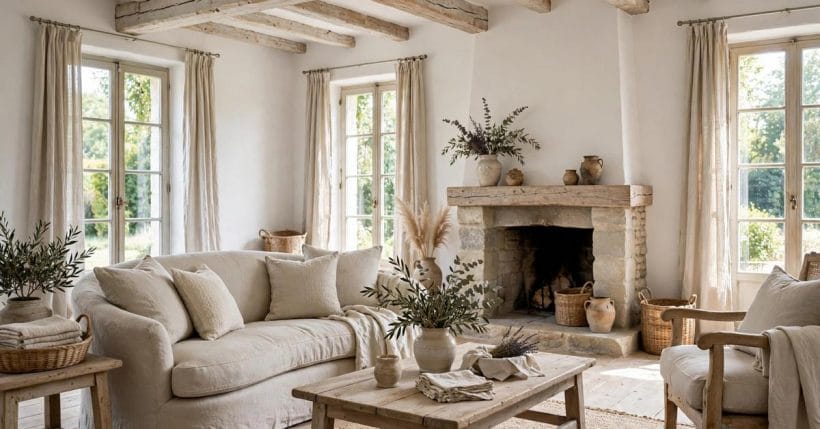
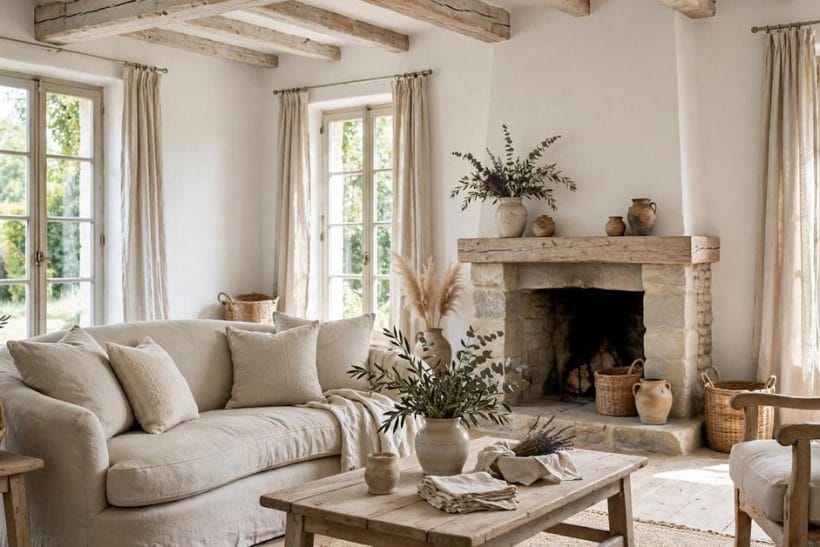
French country style has always been about rooms that feel gathered rather than decorated: sun-washed walls, curved timber, linen that wrinkles gracefully, and a table long enough for whoever turns up. The modern version keeps that warmth but edits it. It pares back the ornament, lightens the palette, and lets clean lines sit comfortably beside provincial curves, so the room feels calm and current without losing its country heart.
This guide stays with that one style only. It walks through the palette, the layouts, the furniture shapes and the room-by-room details that define the modern French country look, with practical notes for homes of every size. Where work touches wiring, plumbing or structure, it belongs with a qualified professional; everything else here is about choosing, arranging and living with the style.
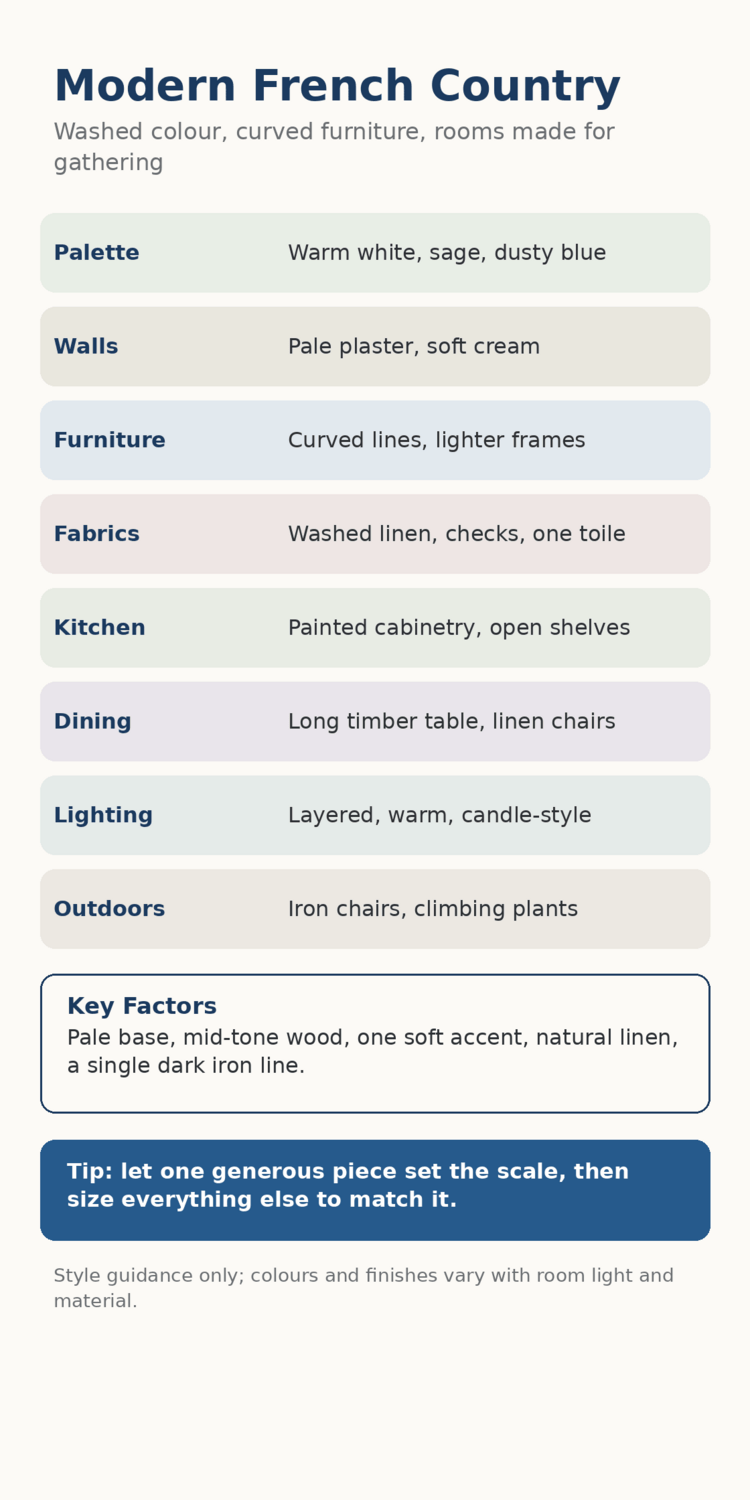
| Item | What it is |
|---|---|
| What Makes It Modern, and What Keeps It French Country | The French country half of the style comes from the rural homes of Provence and the French countryside: painted and limed wood, stone and plaster textures, natural linen, wrought iron, and furniture with softly curved legs and backs. |
| The Colour Palette: Washed, Warm and Restrained | The palette starts with warm white and soft cream on the walls, the colour of plaster in sunlight rather than a stark, cold white. |
| Layouts That Suit Everyday Living | The modern French country layout favours connection over formality. |
| Furniture: Curved Lines and Lighter Frames | Furniture is where the style is most recognisable. |
| Kitchens: Painted Cabinetry and Open Shelving | The kitchen is the natural heart of this style, and painted cabinetry is its signature move. |
| Bedrooms: Soft, Layered and Restful | The bedroom version of the style is quieter than the living room. |
| Dining Rooms: The Table as Gathering Place | If one piece of furniture defines this style, it is the dining table. |
| Bathrooms: Classic Fixtures and Calmer Finishes | The bathroom borrows the style's classic shapes and calms them down. |
| Fabrics and Patterns: Linen, Checks and Toile Used Sparingly | Fabric carries the style's softness. |
| Lighting and Finishing Touches | Lighting is what turns the style from a daytime look into an evening one. |
1. What Makes It Modern, and What Keeps It French Country
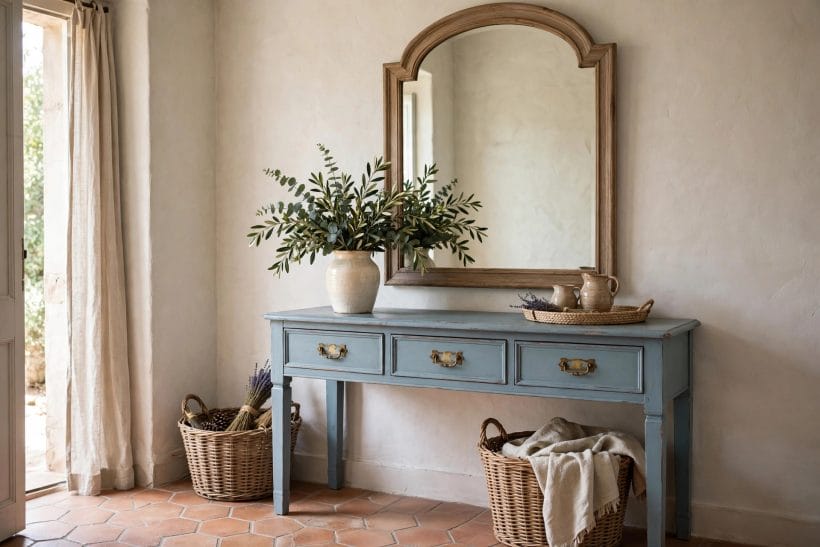
The French country half of the style comes from the rural homes of Provence and the French countryside: painted and limed wood, stone and plaster textures, natural linen, wrought iron, and furniture with softly curved legs and backs. Nothing is precious. Chairs are pulled up to the table, baskets hold firewood and throws, and a worn edge is treated as character rather than damage.
The modern half is an edit, not a replacement. Heavy carving gives way to simpler profiles, and crowded displays give way to a few well-chosen pieces with breathing room around them. Walls stay pale so daylight does the decorating, and the room’s colour comes from textiles, timber and greenery rather than from patterned walls. The result reads as French country at a glance, but it photographs cleanly and lives easily in a smaller home or a newer build.
A useful test for any piece you are considering is whether it would still work if it were the only decorated object in the room. A curved armchair, a painted armoire or a stone-topped console usually passes, because its shape carries the style. A room full of small themed ornaments usually fails, because the style then depends on clutter rather than form. This style trusts the big pieces and lets the small ones stay quiet.
2. The Colour Palette: Washed, Warm and Restrained
The palette starts with warm white and soft cream on the walls, the colour of plaster in sunlight rather than a stark, cold white. Against that base, the working colours are washed and sun-faded: sage green, dusty blue, pale lavender, warm grey and muted terracotta. Each one appears in small doses, a cushion here, a painted chair there, so the room feels layered without feeling busy.
Timber tones do much of the colour work. Limed oak, pale painted pine and weathered grey-brown wood sit beside darker walnut or stained beams where the house already has them, and the contrast between pale walls and mid-tone wood keeps the room from looking flat. Blackened iron in curtain rods, light fittings and chair frames adds a thin dark line that sharpens the soft palette, used sparingly so it reads as punctuation rather than theme.
When choosing paint for walls or cabinetry, test it in the room’s own light before committing, and view it beside the linen and timber you already own. Colours that look alike on a card can part company quickly in a north-facing room or under warm evening light. Because the palette is restrained, each colour choice carries more weight than it would in a bolder scheme, so a slow decision here pays for itself everywhere else.
3. Layouts That Suit Everyday Living
The modern French country layout favours connection over formality. Living, dining and kitchen spaces flow into one another where the house allows it, so cooking, eating and sitting down happen in one shared landscape rather than in separate ceremonial rooms. A long table between kitchen and sitting area often becomes the hinge of the plan, serving as a dining table, a homework desk and a place for morning coffee in turn.
In a smaller home the same idea scales down rather than disappearing. A two-seater sofa angled toward a fireplace, a round table tucked into a window bay, or a single painted armoire standing in for a whole wall of storage can carry the style in a compact footprint. The trick is to keep walkways clear and to let one generous piece, the table or the sofa, set the scale, with everything else sized to match it rather than competing with it.
Storage deserves planning early, because the style’s relaxed surface depends on clutter being somewhere to go. A painted dresser, a linen cupboard or a bench with a lidded seat keeps the everyday mess of a lived-in house out of sight while adding to the look rather than fighting it. Rooms that feel calm in this style are rarely rooms with nothing in them; they are rooms where everything has a home.
4. Furniture: Curved Lines and Lighter Frames
Furniture is where the style is most recognisable. Look for cabriole legs, curved chair backs, scrolled iron details and upholstery that sits softly rather than tightly tailored. A deep sofa in washed linen, a pair of bergère-style chairs that do not match each other exactly, and a farmhouse table with a gently worn top will carry a room further than any number of small accessories.
The modern edit shows in the frames. Legs are slimmer, silhouettes are lower and cleaner, and heavy carved aprons give way to plain ones with a single curve for interest. Mixed seating works well here: a bench on one side of the table and chairs on the other, or a painted chair beside a rush-seated one, keeps the room from looking like a matched set bought in a single afternoon. The lived-in quality of the style comes from that gentle mismatch.
When buying, sit in the chair and lean on the table before admiring either. French country furniture earns its place by being used hard every day, and a beautiful chair that no one wants to sit in will end up as decoration. Comfort, solid joints and a finish that can be touched up are the practical tests, and they matter more than any label or period claim.
5. Kitchens: Painted Cabinetry and Open Shelving
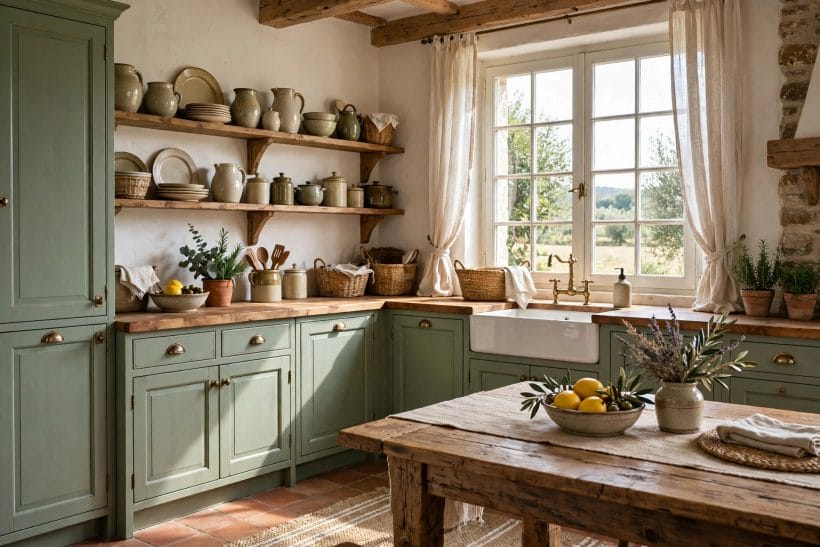
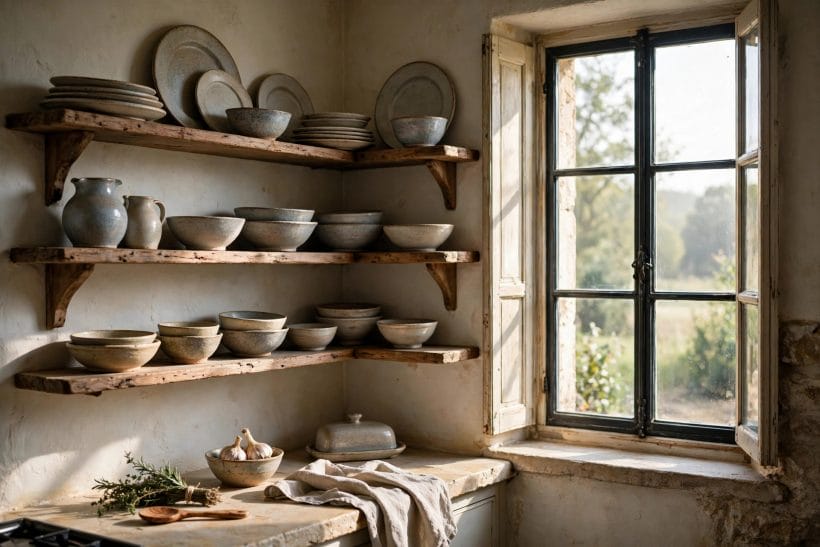
The kitchen is the natural heart of this style, and painted cabinetry is its signature move. Soft white, sage or pale grey doors with simple cup pulls and a stone or timber worktop give the room its country frame, while open shelving on one wall shows off stoneware, glass and everyday plates. The shelves work best when they hold things you genuinely reach for daily; a shelf of never-used display pieces quickly turns back into clutter.
A farmhouse table or a central island with turned legs anchors the room and gives it a gathering place beyond the worktop. Keep the island’s lines simple and its top clear enough for prep, serving and sitting, and let the room’s warmth come from timber chopping boards, a ceramic sink, linen tea towels and a bowl of whatever is in season. Copper pans hung on a rail add colour and are useful, which is exactly the style’s preferred kind of decoration.
Lighting in the kitchen should be layered: daylight where possible, a pendant or two over the table or island, and under-shelf light for work surfaces so the room stays welcoming after dark. Any new circuits, moved sockets or changes to existing wiring belong with a qualified electrician, and plumbing changes belong with a qualified plumber; the design decisions are yours, the connections are theirs.
6. Bedrooms: Soft, Layered and Restful
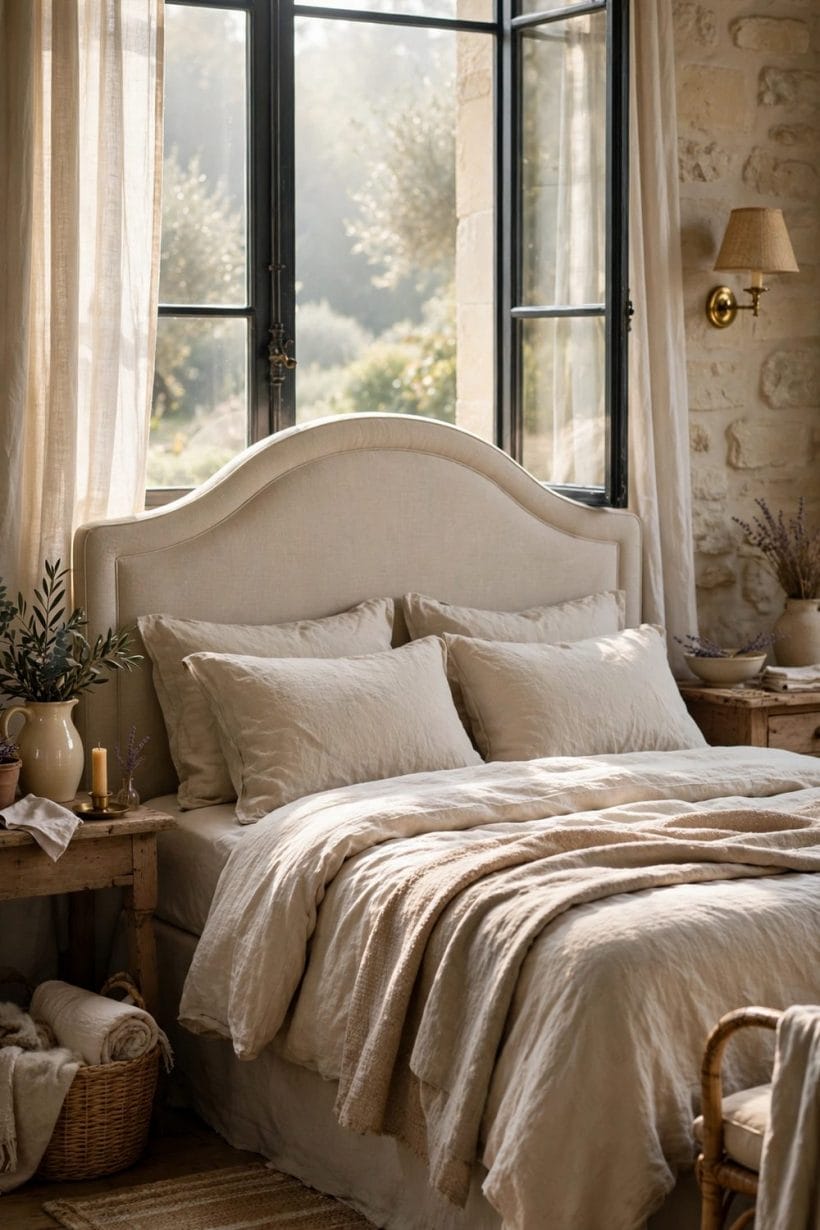
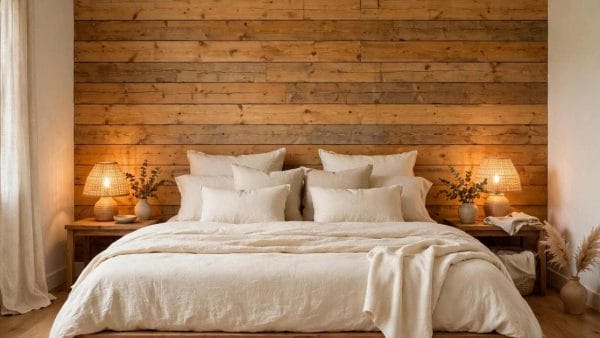
The bedroom version of the style is quieter than the living room. A painted or upholstered headboard with a gentle curve, bedding in washed linen or cotton in white and one soft accent colour, and a throw folded at the foot of the bed set the tone. Layers matter more than patterns here: a coverlet, a light duvet and a couple of cushions in different textures give the bed a dressed but unforced look.
Storage in the bedroom should be closed and calm. A painted armoire, a chest of drawers with cup pulls, or a pair of bedside tables with a drawer each keeps the room’s surface clear, which is what makes it feel restful. A single mirror with a softly shaped frame, a small vase of fresh stems and a lamp with a linen shade are usually all the dressing the room needs.
For the fullest room-by-room treatment of this style, see the companion guides to the French country bedroom and the French country living room, which stay in the same palette and furniture language while dealing with each room’s own storage and lighting problems.
7. Dining Rooms: The Table as Gathering Place
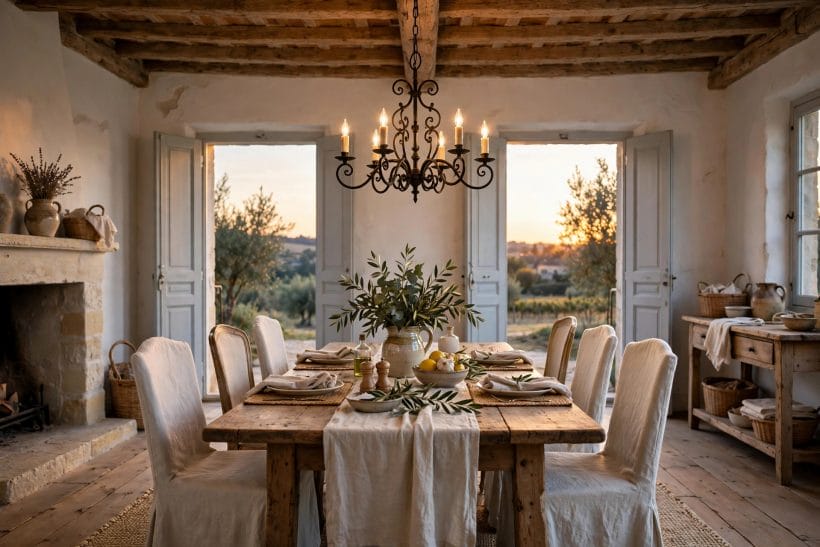
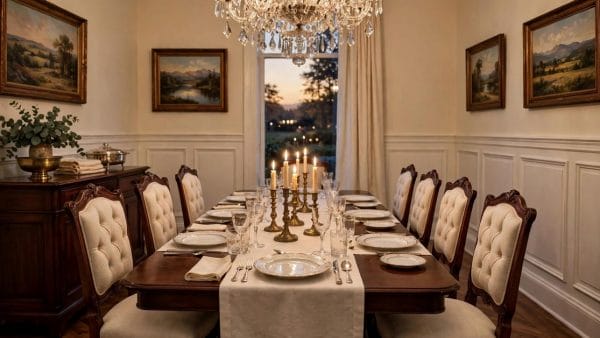
If one piece of furniture defines this style, it is the dining table. Long, timber-topped and built to seat more people than the household holds on an ordinary night, it is where the style’s hospitality lives. Linen chairs, a bench, or a mix of the two keep the seating relaxed, and a simple runner with stoneware and glass is usually a better table dressing than an elaborate centrepiece that has to be moved before anyone can eat.
A painted table suits the modern version of the style particularly well, because paint lightens a heavy timber piece and makes it easy to refresh when daily use leaves its marks. The guide to painted dining tables follows that finish in detail, from colour and sheen to chair pairing and care. Whichever finish you choose, keep the chairs comfortable enough for a long meal: the style measures a dining room by how long people stay at the table, not by how formal it looks.
Overhead, a single chandelier or a pair of pendants with candle-style lights gives the room its evening focus, with wall lights or lamps as a softer second layer. Keep the light warm and dimmable where the fitting allows, so the same room can move from a bright family lunch to a candlelit supper without changing anything but the light level. The companion guide to the French country dining room carries the same table-centred approach into fuller room layouts.
8. Bathrooms: Classic Fixtures and Calmer Finishes
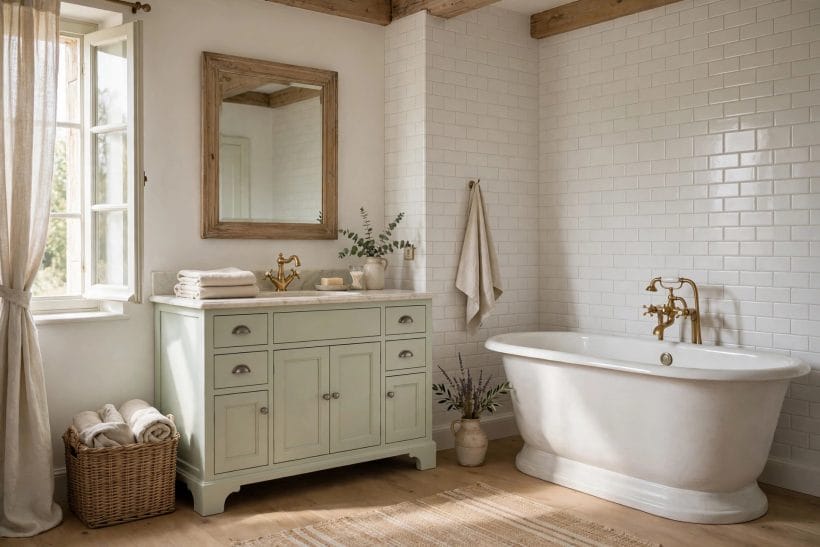
The bathroom borrows the style’s classic shapes and calms them down. A freestanding tub with simple feet, a painted vanity with cup pulls, a framed mirror with a soft curve, and wall tiles in white or pale stone give the room its character without turning it into a period set. Linen-look towels, a wooden stool and a small plant soften the hard surfaces, which is where the country feeling actually comes from.
Finishes should be chosen for wet-room practicality first and style second. Painted wood near water needs a finish made for damp conditions, stone and tile need sealing suited to their material, and any new pipework, drainage or electrical fitting belongs with qualified tradespeople. A bathroom that looks right but fails at the plumbing level is a poor bargain, and the style’s relaxed surface depends on everything underneath working properly.
Small bathrooms suit the style well, because its pale palette and mirrored surfaces help a compact room feel open. Keep the vanity simple, hang the mirror generously, and let one classic fixture, the tub or the vanity, be the room’s feature rather than crowding several statement pieces into a small footprint. The French country bathroom guide treats that compact-room problem at greater length.
9. Fabrics and Patterns: Linen, Checks and Toile Used Sparingly
Fabric carries the style’s softness. Washed linen is the first choice for curtains, loose covers and bedding, because it drapes naturally and improves with washing. Cotton in a similar washed finish works for cushions and table linen, and a wool throw adds winter weight without changing the palette. The shared quality is a matte, natural hand; shiny or stiff fabrics fight the look no matter how good their colour.
Patterns are rationed. A small check or ticking stripe is the everyday working pattern, and toile, the scenic pastoral print most associated with the style, is best spent once in a room: a single chair, a cushion, or a lined curtain, rather than on every surface at once. When toile appears everywhere it becomes wallpaper in effect, and the room loses the calm the modern version is aiming for. One considered use reads as a reference; repetition reads as a theme.
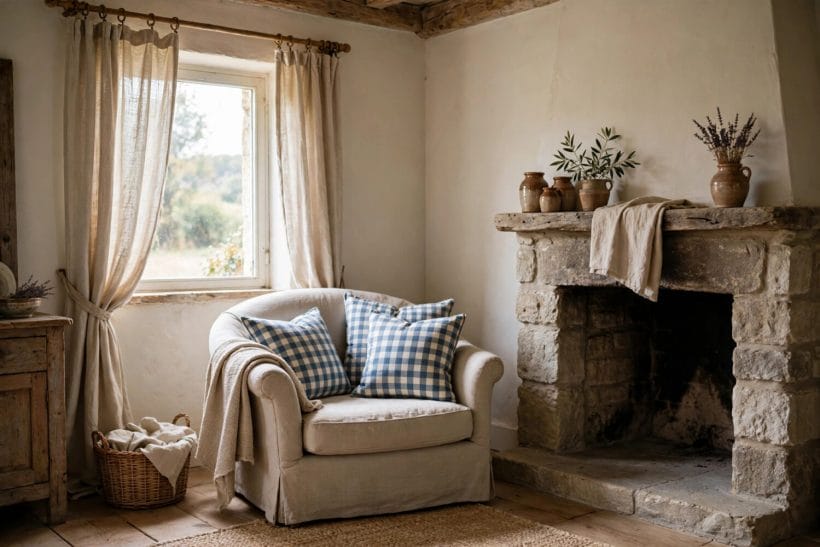
Curtains deserve particular care. Full-length linen curtains that pool slightly on the floor soften a window and a whole wall with it, and they suit the style’s relaxed tailoring. Keep the heading simple, a plain gathered or tab top rather than a formal pleat, and let the fabric’s own texture do the work. Sheer linen panels underneath give daytime privacy without shutting out the daylight the palette depends on.
10. Lighting and Finishing Touches
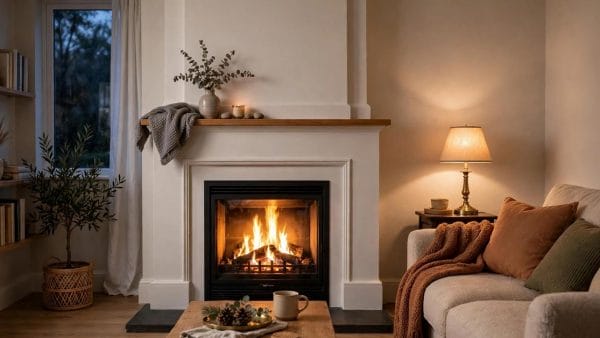
Lighting is what turns the style from a daytime look into an evening one. A central chandelier or pendant with candle-style lights, table lamps with linen shades at sitting height, and candlelight where it is safe to use it build the layered glow the style is known for. The aim is light pooled where people sit and eat, rather than a single bright ceiling source washing the whole room flat.
Finishing touches should be few, natural and useful. A basket of firewood, a ceramic jug of fresh stems, a stack of books, a wicker tray or a bowl of fruit all belong, because each one is either used or alive. Iron, stone, timber and linen are the material palette for accessories as well as for furniture, and keeping accessories inside that family is what stops a room drifting toward a general rustic look or a formal traditional one.
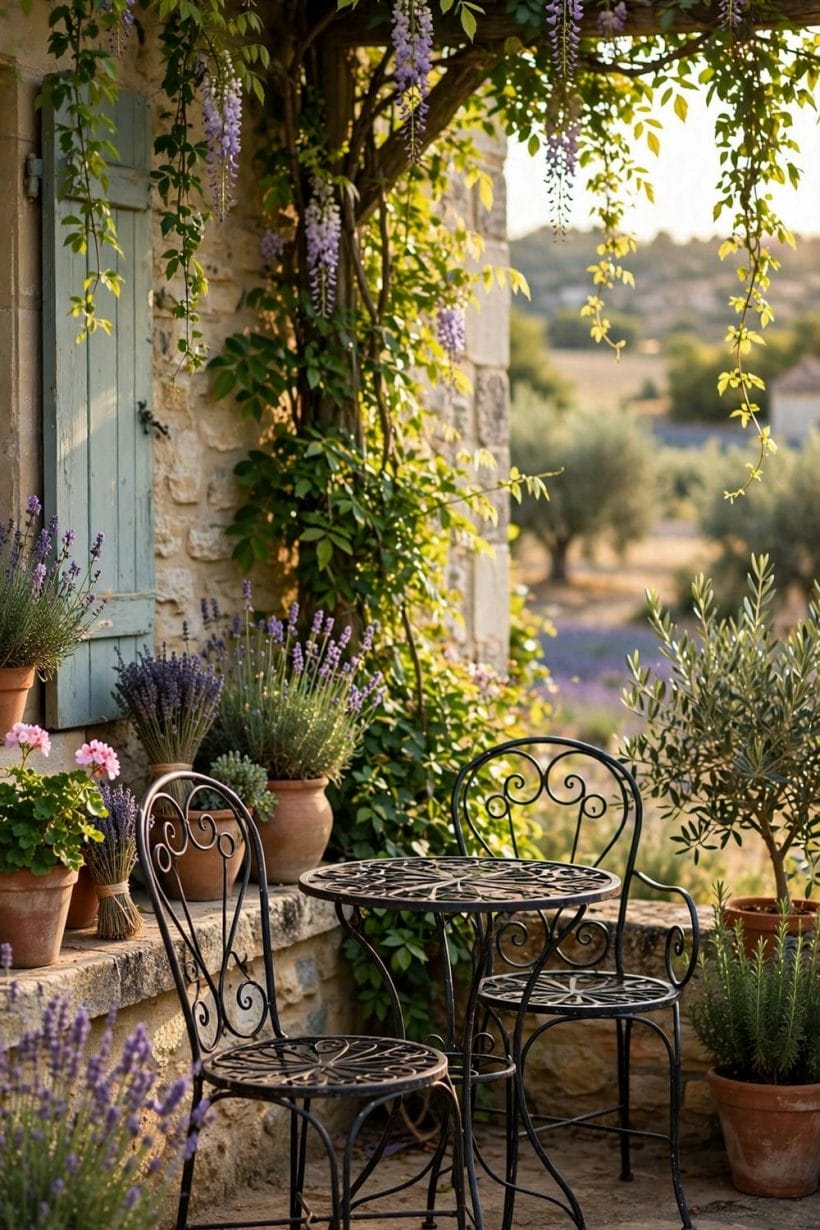
Greenery is the final layer, and it suits this style more than most. Climbing plants by a door, herbs on a kitchen sill, a potted olive or lavender by a window, and fresh stems on the table connect the interior to the countryside the style comes from. Choose plants that suit your light and your habits, and treat them as part of the room rather than as decoration added last; a thriving plant does more for the look than any ornament.
Final Considerations
Before starting, walk your rooms and decide what you already own that fits the style: a curved chair, a timber table, a linen curtain or a painted piece can be the seed of the whole scheme. Building around one or two good existing pieces keeps the result personal and avoids the matched-set look that this style resists. Add pieces slowly, one room at a time, and live with each change before making the next.
Common mistakes are easy to avoid once named. Over-patterning with toile, crowding surfaces with small ornaments, choosing shiny fabrics, or painting everything the same cream without timber and iron to break it up will each flatten the look. The style’s balance is pale walls, mid-tone wood, one soft accent colour, natural linen and a single dark iron line; when a room feels wrong, it is usually because one of those five is missing or one has taken over.
For a broader sense of how this style sits among its neighbours, the guides to rustic living rooms and living room ideas in general show where the country look overlaps with rougher textures on one side and with more formal room planning on the other. This style’s own ground sits between the two: softer than rustic, more relaxed than formal, and built, above all, for rooms that are used every day.
A room in this style is not a museum piece and not a trend to be completed in a weekend. It is a way of choosing pale walls, curved timber, washed linen and a long table, and then letting daily life soften the edges. Start with the palette, trust the big pieces, ration the pattern, and the style will look after itself.

0 Comments