
Look up. The biggest surface in your living room is probably plain, pale and quietly wasting its potential. A layer of timber up there changes the temperature of the whole room.
These 75 wood ceiling ideas photos and notes are organised by beams, boards, colour and light, so you can plan a ceiling that suits your sofa, your layout and your evenings, not just a photograph.
1. Start Overhead: Layout, Height and What Timber Suits Your Room
Before choosing a finish, study the room you have. Measure the ceiling height at its lowest point, note where the joists and any pipes or ducts run, and watch how daylight crosses the ceiling through the day. High rooms can carry deep tones and chunky beams. Low rooms do better with slim boards, pale washes and lighting that bounces upward instead of hanging down. The ceiling and the floor should feel like relatives, not twins, so sample both together in real light before committing.
| At a Glance | Good Starting Point |
|---|---|
| Best first step | Measure height, find joists and services, test samples overhead |
| Low ceilings | Slim planks, pale wash, flush or surface lighting, no dropped beams |
| High ceilings | Deeper tones, real beams, coffers and statement pendants |
| Board direction | Run planks along the longest dimension to stretch the room visually |
| Sofa pairing | Warm timber with cool fabric, pale timber with deep, cosy upholstery |
| Lighting base | Dim ambient layer plus reading light plus one glow accent |
| Before buying | Confirm fixing method, moisture suitability and fire rules with your installer |
| First check | Local building rules and what the ceiling structure can safely carry |
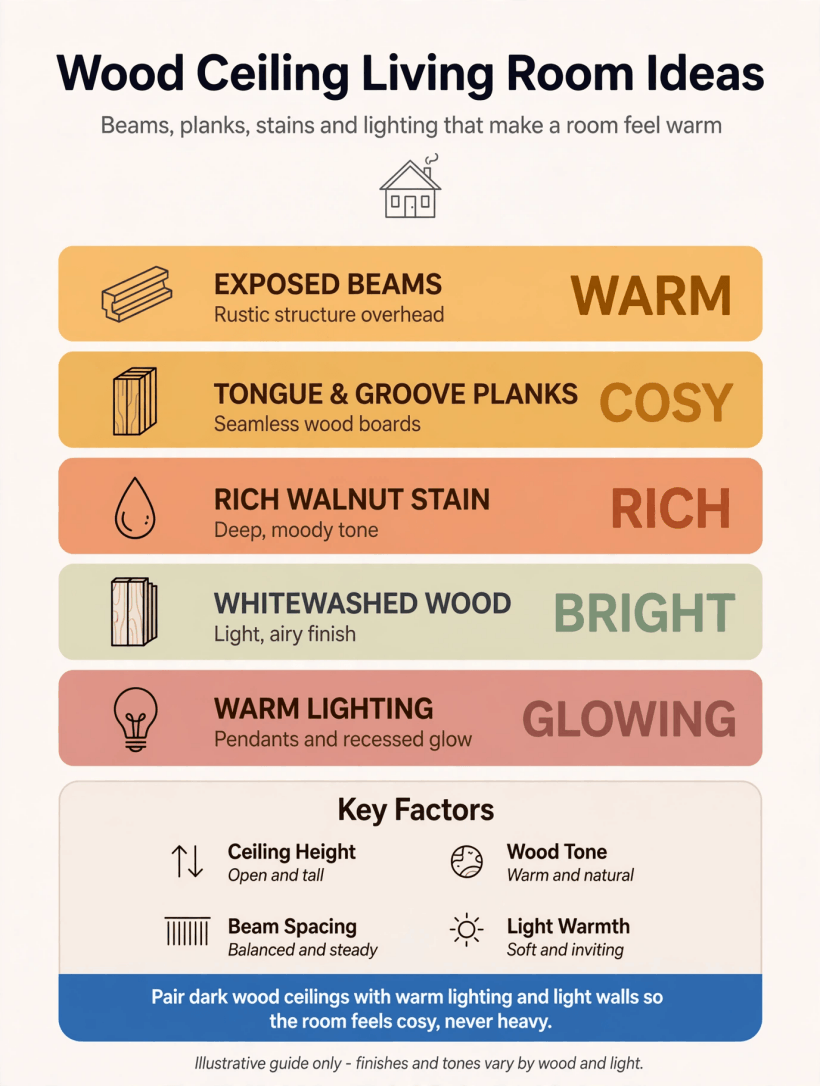
A quick visual summary of the layouts, finishes and lighting layers in this collection.
1. Run boards along the room’s longest wall to make a modest living room feel noticeably longer.
2. Keep one ceiling tone throughout an open-plan space so zones feel connected rather than chopped.
3. Define the seating zone only, with timber over the sofas and plain ceiling elsewhere, for impact on a budget.
4. Match the ceiling’s warmth to the floor’s undertone, warm with warm, cool with cool, never both at war.
5. Leave a plain border around a timber field to make installation and lighting runs far simpler.
6. In a compact room, copy the tricks from our guide to tiny house living room ideas for compact spaces: light tones, low profiles and nothing hanging lower than it must.
7. Photograph your ceiling at noon and at dusk before choosing a stain; the two lights will argue, so compromise kindly.
2. Beams: Real, Faux and Beautifully Arranged
Beams give a ceiling rhythm and a room its architecture. Real structural beams should be celebrated, cleaned, oiled and left honest. Where structure does not provide them, lightweight faux beams in hollow timber or timber-look materials give the same visual beat without the load, and they conveniently hide cables for lighting. Space beams to divide the ceiling into calm, even bays, align them with windows or the fireplace where you can, and keep their depth in proportion to the room’s height.
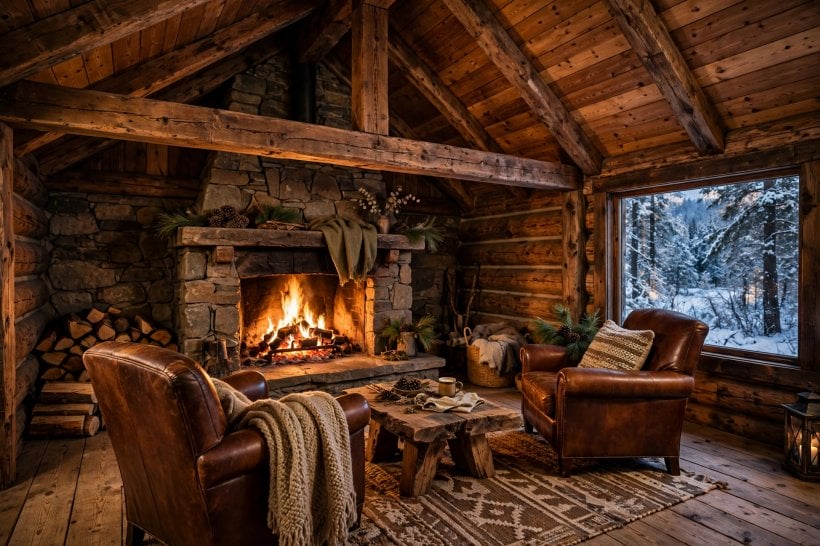
8. Install chunky rustic beams across the short dimension to widen a narrow room visually.
9. Box in an ugly steel or concrete beam with warm timber cladding so structure becomes a feature.
10. Paint beams the same colour as the ceiling for shadow-line texture without heavy contrast.
11. Stain beams two shades darker than the boards between them for a classic coffered feel.
12. Run a single spine beam down the centre and hang a pair of pendants from it over the seating.
13. Keep beams clear of the chimney breast and let the fireplace wall run uninterrupted to the ceiling.
14. Use reclaimed-look beams in a barn-style room; the mood matches our tour of tiny barn house interiors with rustic-modern style perfectly.
15. Stop beams short of the walls with a shadow gap for a lighter, more contemporary float.
3. Planks, Panels and Board Patterns
Boarded ceilings are the most versatile option of all. Tongue-and-groove planks give a continuous, calm surface; wider boards feel modern and relaxed; narrow boards add fine texture that suits cottages and smaller rooms. Panels and veneered boards bring consistency and speed, and they can be laid in chevron, herringbone or simple grids for pattern lovers. Whatever the format, acclimatise the timber in the room, fix it to a level framework, and stagger joints so the surface reads as craftsmanship rather than flooring that wandered upward.
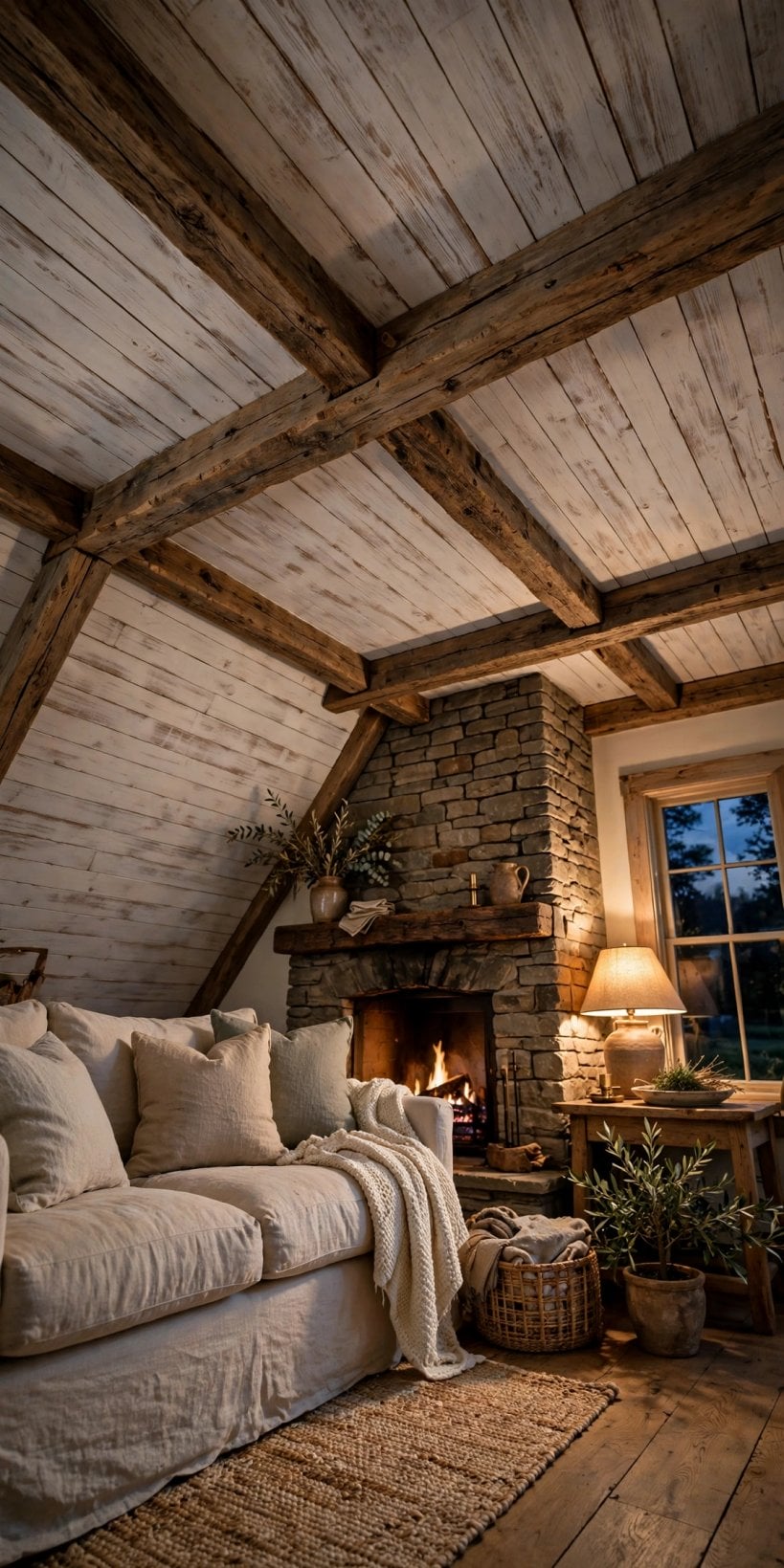
16. Lay wide planks with a tiny shadow gap between each for a calm, Scandinavian rhythm.
17. Choose V-groove boards painted soft white to brighten a north-facing room while keeping texture.
18. Try a herringbone board panel over the seating area as a ceiling rug that defines the zone.
19. Frame square timber panels with slim battens for a tailored, library-like grid.
20. Mix two board widths in a repeating pattern to keep a long ceiling interesting.
21. Continue the same boards a short way down one wall for a wrapped, cocooning corner behind the sofa.
22. Use slatted timber with a dark backing for a modern, acoustic-friendly ceiling that hides the void.
4. Timber Tones and Colour Pairings
Colour is where a timber ceiling succeeds or sulks. Pale, lime-washed and whitewashed finishes keep rooms airy and pair with almost any sofa. Honey and mid-oak tones are the friendly middle ground, warming grey upholstery and flattering skin tones in the evening. Deep walnut-look and smoked finishes are dramatic and best reserved for high ceilings or rooms blessed with daylight. Always judge colour with the walls, floor and largest sofa in the same glance, because the ceiling will borrow tones from all three.
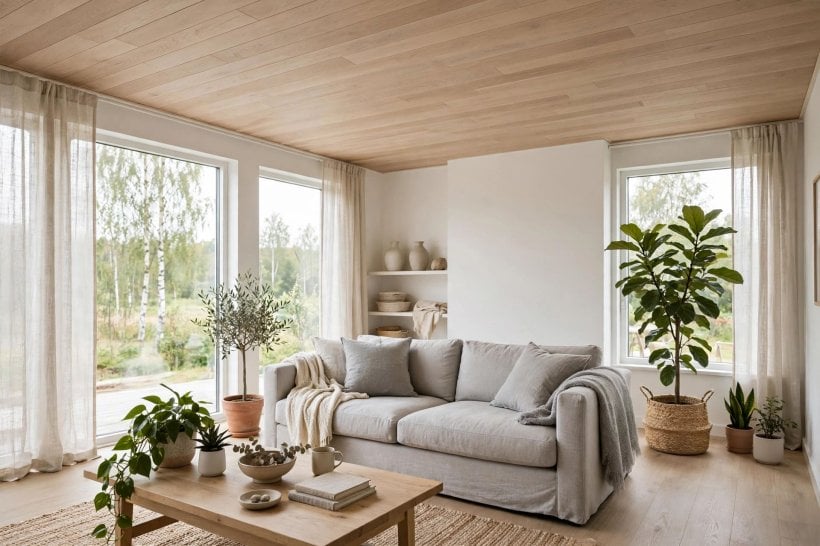
23. Whitewash boards for a coastal feel that still shows the grain working underneath.
24. Pair mid-oak with sage or olive walls and cream upholstery for an easy, leafy palette.
25. Go dark and moody overhead with charcoal walls kept lighter than the ceiling for balance.
26. Repeat the ceiling tone in one piece of furniture, a sideboard or coffee table, to tie the room together.
27. Keep metal accents, lamp bases, handles, picture frames, in one finish family so the timber stays the star.
28. Test stain samples overhead for a week; our advice on tiny house interior paint colours and combinations about testing in real light applies double up there.
29. Choose matte finishes over gloss; ceilings should glow softly, never glare.
30. Let a pale ceiling carry a bold sofa, rust, teal or mustard, without competition.
5. Sofas and Layouts That Love a Timber Ceiling
Furniture and ceiling should plan together. A timber ceiling adds visual weight overhead, so sofas look best when they are grounded: low backs, generous cushions and legs short enough to feel settled. Arrange seating to enjoy the ceiling’s geometry, parallel to beams or centred under a panelled field, and keep tall storage off the walls the beams run toward. In open-plan rooms, let the ceiling change, boards over the lounge, plain over the kitchen, do the zoning that walls no longer do.
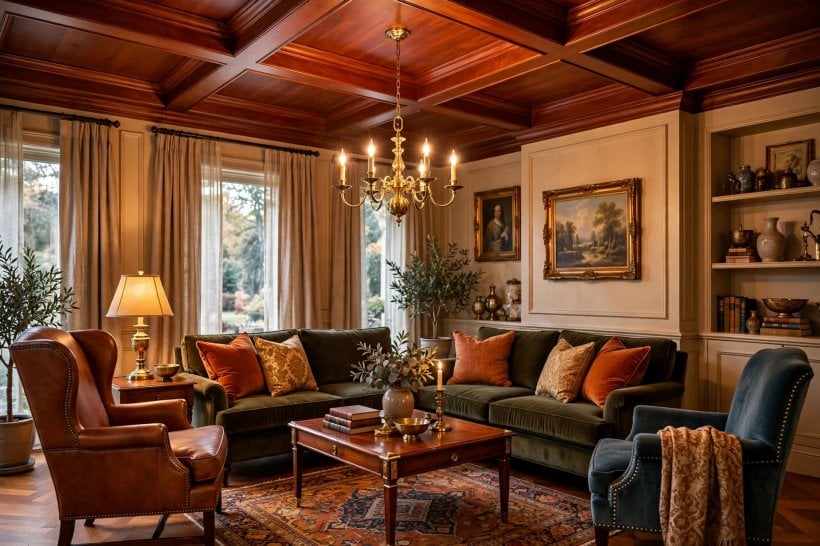
31. Centre an L-shaped sofa under the beam grid so the architecture frames the conversation area.
32. Float the sofa off the wall beneath a wrapped timber corner for a built-in, banquette feeling.
33. Choose boucle, linen or wool upholstery to echo timber’s texture in a softer register.
34. Keep the rug large and pale under dark ceilings to hold the light at floor level.
35. Run the TV wall in a deep, quiet colour so the screen rests visually under a busy ceiling.
36. Borrow layout discipline from our collection of tiny house interior design ideas and timeless styles: fewer, bigger pieces rather than many small ones.
37. Place reading chairs where ceiling lights or pendants already pool, instead of adding lamps later.
6. Layered Lighting Under Timber
Timber drinks light, so plan more layers than a white ceiling needs, on separate dimmers if you can. Start with a soft ambient wash that grazes the boards and shows their grain, add focused light where people read, knit and play games, and finish with a low glow, a shaded lamp, a lit alcove, candles on the table, for the last hour of the evening. Fittings fixed to beams keep the boards clean, while recessed spots need careful planning before boarding, not after.

38. Fit dimmable downlights between beams in even rows, spaced by the beam bays themselves.
39. Add a concealed LED strip along a beam or perimeter shadow gap for a floating evening glow.
40. Hang one generous pendant low over the coffee table as the room’s single statement fitting.
41. Use wall washers at the fireplace wall to bounce light back up into the timber.
42. Put reading lamps on side tables at sofa arms rather than relying on overhead light for books.
43. Choose warm bulbs throughout and keep every layer on its own switch or dimmer. Layering principles travel well between properties, as the lighting in our tiny house interior design ideas and timeless styles tour shows room after room.
44. Test the evening scene before finalising: sit in every seat and check for glare and dark corners.
7. Vaulted, Sloped and Awkward Ceilings
Sloped ceilings are timber’s home turf. Boards following the pitch exaggerate height and make a vault feel like a lodge in the best way, while beams across the slope give scale and somewhere to hang lights. Awkward features, bulkheads, dropped sections over kitchens, changes of level, can be unified by cladding them in the same timber as the main ceiling. Where headroom is tight on one side, stop the timber at the slope’s break and paint the low section pale so it quietly recedes.

45. Board a vault in the direction of the slope to draw the eye up and out to the view.
46. Add collar beams at the height where walls would be, and hang pendants from them over seating.
47. Clad a bulkhead in matching boards so an awkward box reads as deliberate architecture.
48. Keep skylight trims crisp and pale to contrast the timber and pull in daylight.
49. Insulate and ventilate above vaulted boards properly, and confirm the build-up with your installer first.
50. Use the high wall above the slope for one large piece of art rather than a crowd of small frames.
51. Run a picture ledge at the slope break to give the room a calm horizontal datum line.
8. Acoustic Comfort, Warmth and Practical Comfort
Living rooms should sound as good as they look. Hard floors, big glass and plain ceilings make voices echo, and timber, especially slatted systems with acoustic backing, soft furnishings and a serious rug, calms that down noticeably. Timber also feels psychologically warm, which pairs with real warmth when insulation above the ceiling is sound. Plan for the practical side early: access panels for services, fixings rated for the load, and finishes that can be dusted from a step ladder without drama.
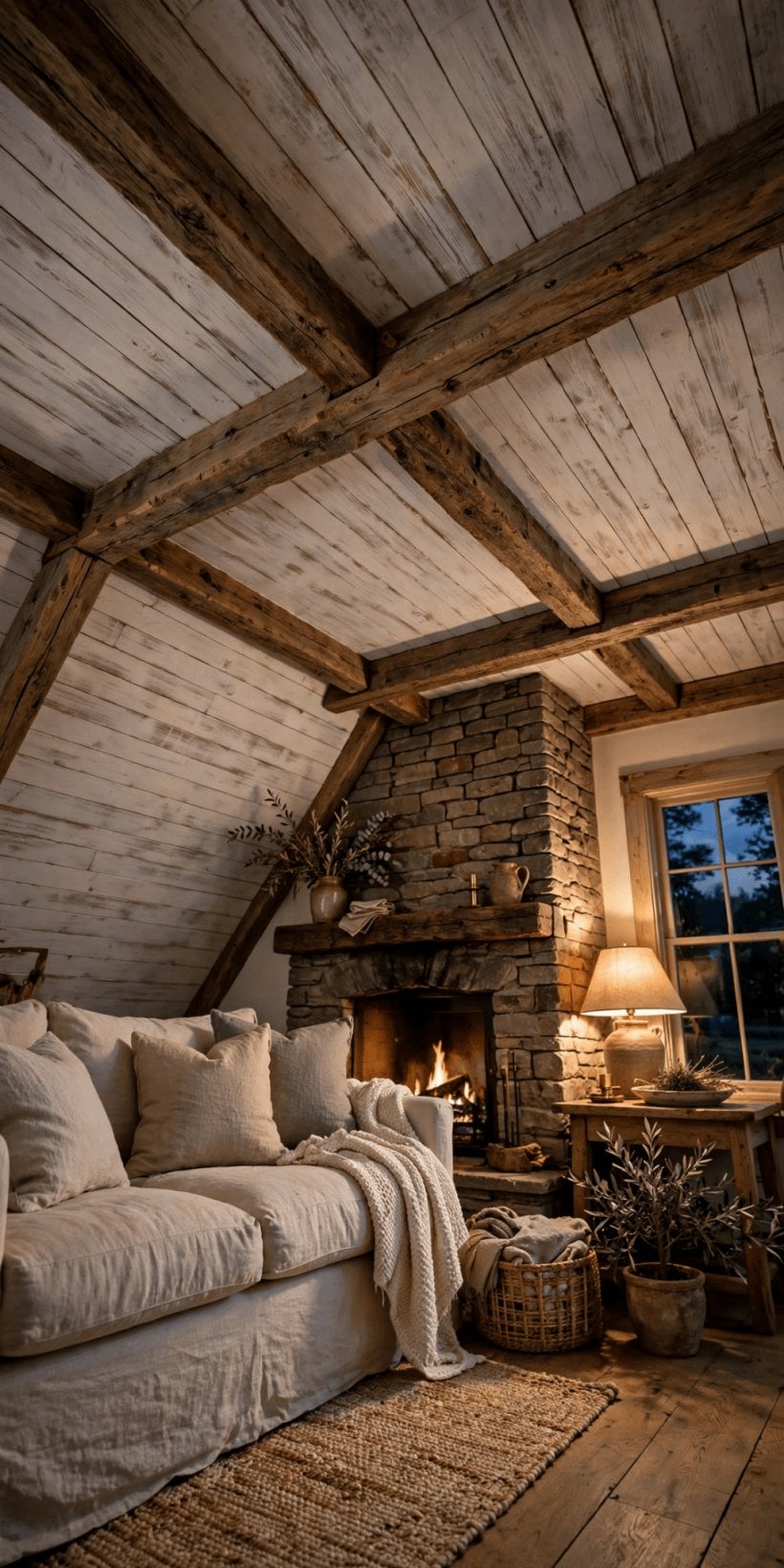
52. Choose slatted boards with acoustic felt backing in a room with lots of glass and hard floors.
53. Add the biggest rug the layout allows; it does more for echo than any single gadget.
54. Hide a neat access panel in the board pattern wherever valves, junctions or shutters live above.
55. Keep one spare pack of boards in the loft so a future repair matches perfectly.
56. Dust boards with a long-handled microfibre tool monthly; matte finishes show dust sooner than gloss.
57. In steamy open-plan kitchen-living spaces, pick finishes your installer confirms suit humidity. Comfort planning crosses over with the workspace ideas in our IKEA home office ideas for a tiny house, where acoustics matter just as much.
58. Let curtains run long and full; fabric at the windows balances timber overhead beautifully.
9. Small Rooms and Budget-Smart Timber Effects
You do not need a grand room or a grand budget for this look. A single timber zone over the seating, boards on just the ceiling’s central field, or even a beautifully made timber canopy frame can deliver most of the warmth at a fraction of the cost. Veneered and engineered boards stretch budgets further than solid timber and behave better in centrally heated rooms. Spend on what touches the eye, board quality and lighting, and save on what does not, hidden battens and basic fixings.
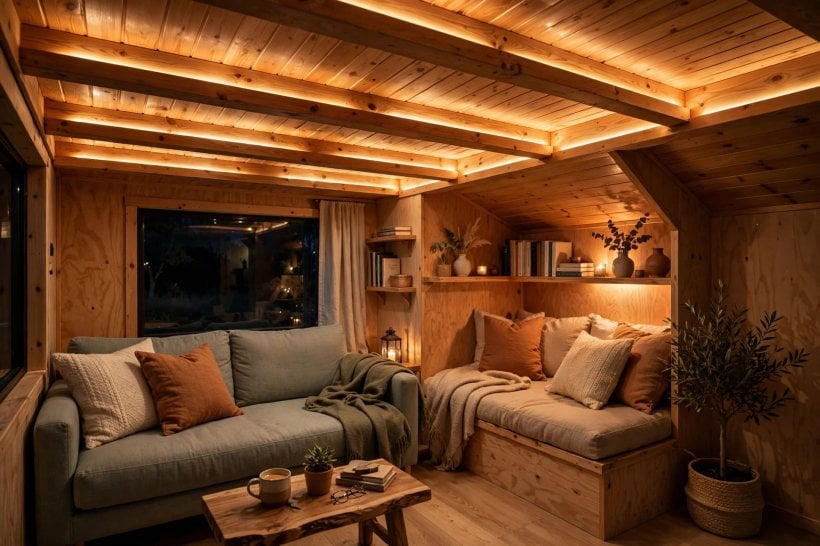
59. Board only the ceiling field above the sofas and paint a crisp border around it.
60. Use peel-and-stick or click-fit planks only where the maker confirms ceiling use and fire performance.
61. Choose engineered boards in a heated flat, where solid timber may move with the seasons.
62. Salvage sound boards from a single room renovation rather than mixing batches across the ceiling. Budget discipline like this runs through our tiny houses for sale and rent buyer’s guide, where checking what is included always beats assuming.
63. Paint existing beams and boards instead of replacing them when the structure is sound but the colour is tired.
64. Add one slatted timber panel behind the TV as a taster project before committing to the whole ceiling.
65. Keep ceilings pale in rental-friendly makeovers, using removable systems only with the owner’s written agreement.
10. Costs, Installers and Getting the Details Right
Costs swing with material, room size and how much preparation the existing ceiling needs, so gather itemised quotes that separate boarding, framework, electrics and finishing, and treat the cheapest with polite suspicion. A good installer will talk about levels, moisture, fixings and access before talking about colours, and will happily show a previous ceiling in person. Confirm who handles building-rule checks for your area, your city or county office can point you to the current requirements, and agree the lighting positions in writing before a single board goes up, because moving a cable afterwards is nobody’s favourite afternoon.
66. Get three quotes with the same written scope so you are comparing work, not handwriting.
67. Ask how the installer will level the framework; wavy ceilings cannot be fixed by beautiful boards.
68. Agree board direction, joint pattern and the exact stain on a sample board before ordering.
69. Photograph services and cable runs before boarding so future work never becomes guesswork.
70. Schedule dusty work before new sofas arrive, and protect floors as if the boards were already finished.
71. Keep payment stages tied to visible progress, framework, boarding, lighting, finishing, in writing.
72. Check smoke alarms and any sprinkler or detector positions still meet the rules after cladding.
73. Order a little extra material for cuts and mistakes; running short mid-ceiling is a false saving.
74. Plan a full evening test of lights and dimmers before the installer’s final visit.
75. File the product details, stain recipe and spare-board location somewhere the next owner will find them.
Final Considerations
A timber ceiling is the rare upgrade that changes how a room feels at every hour: softer in the morning, warmer at noon, and quietly glowing by lamp-light. Choose the tone against your sofa and floor, give it layered light to live in, and let an installer who respects levels and details do it justice. Whether you go all in with beams and boards or start with one defined field over the seating, look up before you sign anything, live with the samples, and trust the version of the room you most want to sit in.


0 Comments