

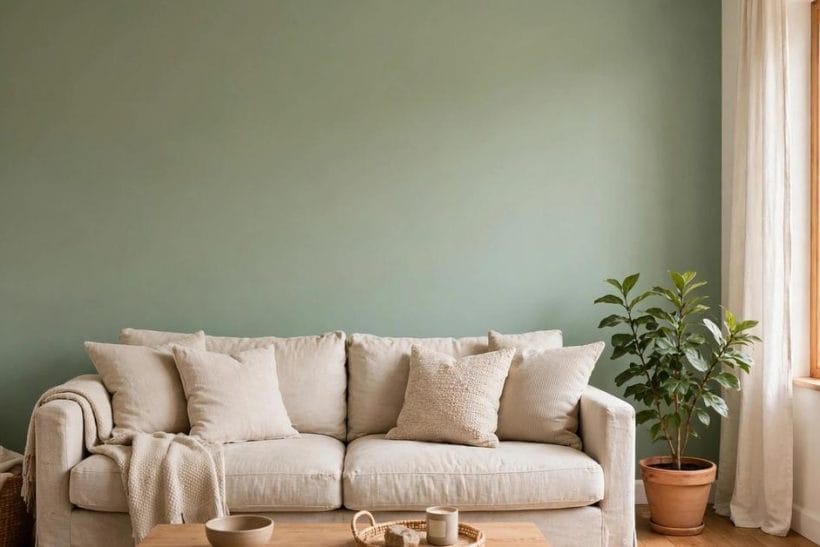
A free afternoon at home can drift past in front of a screen, and there is nothing wrong with rest. But if the day finds you bored at home and restless with it, the rooms around you are full of small, honest work: a wall that has always been the wrong colour, a corner that has never quite worked, a cupboard that swallows everything and gives nothing back in order.
This guide treats that free time as a chance to improve the rooms you live in. Every project here is small, reversible and finishable in a day, needs no permission and no structural change, and can be undone if the room disagrees. Anything fixed, wired, plumbed or load-bearing is left to professionals throughout, and is discussed in planning terms only.
1. Weekend Home Projects at a Glance
Five kinds of project suit a free day at home. They share one character: each changes how a room feels without changing the house itself. If you are framing the work as a question first — what does this room actually need? — the guide to how to ask a home design question sets out the photos, measurements and details that turn a vague feeling into a clear brief, even when the only audience is your own household.
| Family | Character | What it means |
|---|---|---|
| Paint One Wall | Try the colour on a board first | Refresh |
| Rearrange the Room | Move furniture, buy nothing | Restyle |
| Declutter and Reset | Cupboards, shelves, surfaces | Order |
| Light and Textiles | Lamps, shades and cushions | Warmth |
| Garden Corner | Planters, herbs and a seat | Green |
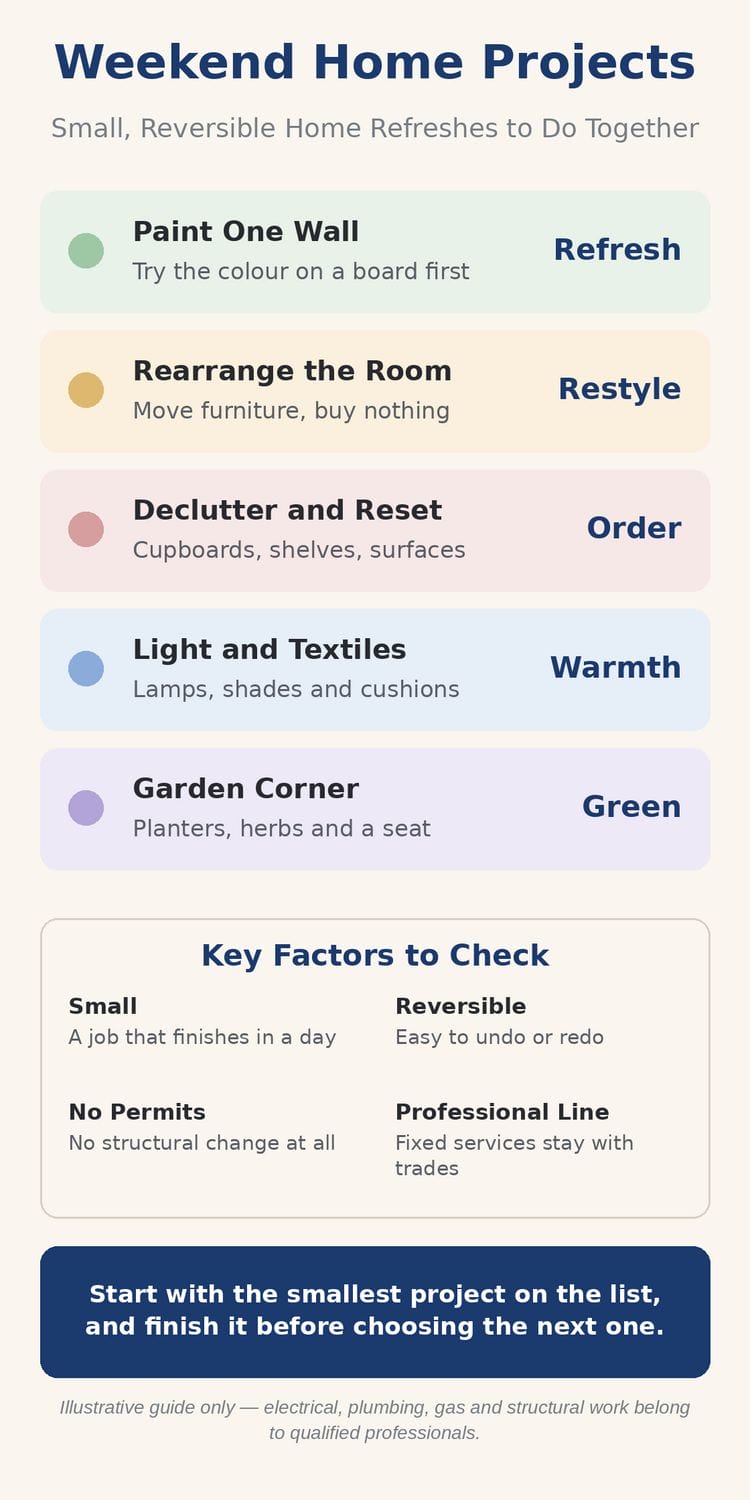
Four factors decide whether a project belongs on a weekend list. Small: a job that finishes in a day. Reversible: easy to undo or redo if the result disappoints. No permits: no structural change at all. And the professional line: fixed services — wiring, pipework, gas — stay with qualified trades, however simple they may look.
2. Choosing the Project
The best weekend project is rarely the one you have been meaning to buy things for. It is the one the house has been quietly asking for, in the room you use most and notice least.

Walk the Rooms Slowly
Begin with a slow walk, room by room, looking at each as if seeing it for the first time. Notice where clutter gathers, which chair nobody chooses, which corner stays dark even at midday. The kitchen ideas in the neighbouring collection reward the same habit: kitchens, like every room, improve fastest where the daily irritation is, not where the catalogue photograph points.
Write a Notice-List, Not a Wish-List
Write down only what you noticed, in plain words: the shelf that overflows, the wall that glares, the drawer that sticks. A notice-list is honest evidence from your own house. A wish-list, by contrast, is usually a shopping list in disguise — bought things looking for a purpose, rather than real problems finding a fix.
Pick the Job That Finishes in a Day
From the list, choose the smallest job that will still be visible by evening. Finishing is the pleasure that makes the next project happen; a half-done room teaches the opposite lesson. If two jobs tie, pick the one in the room the household uses most — a small improvement seen daily outweighs a larger one hidden in a spare room.
3. Paint One Wall
Colour is the largest change a reversible project can make. One wall is enough: it gives a room a direction, a background for its furniture and a reason to look at it freshly, and it can be painted back just as surely.
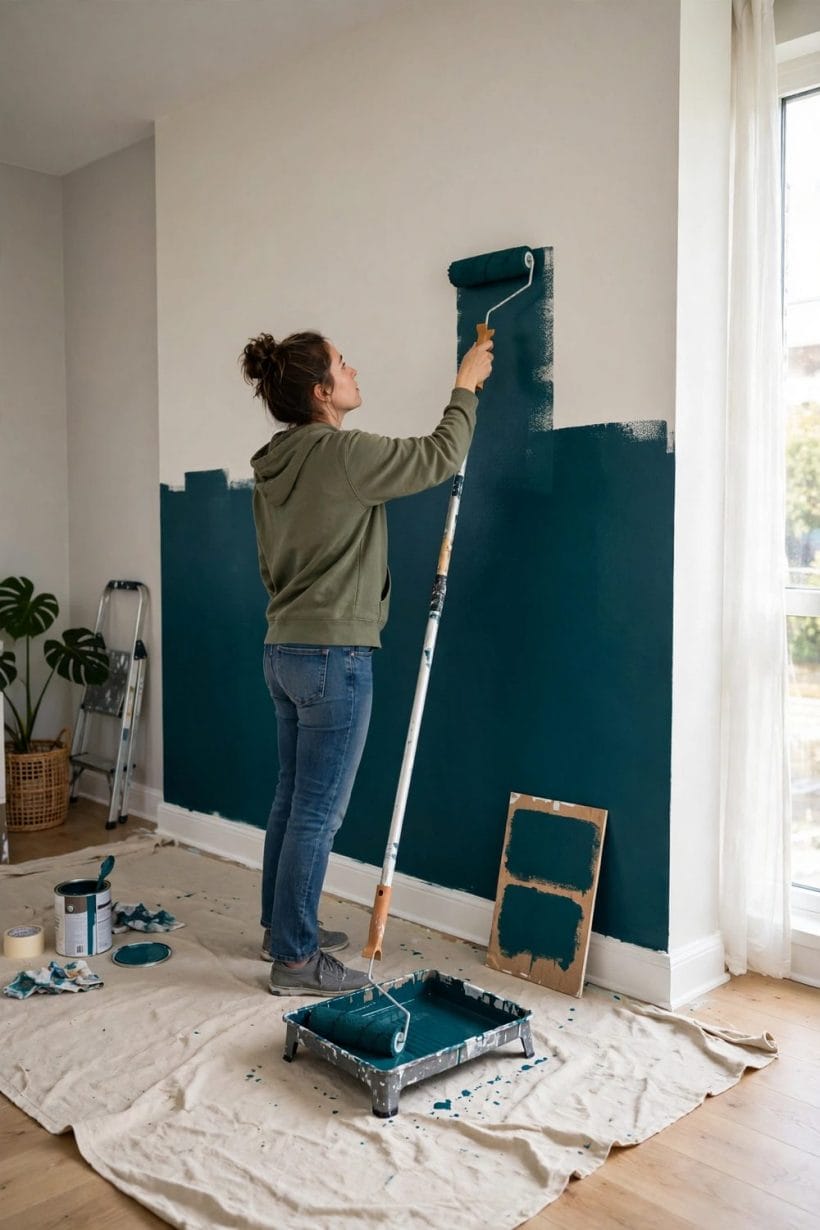
Try the Colour Before You Commit
Never choose from the small printed square alone. Paint reacts to the room it lands in — its light, its floor, its neighbouring walls — and a colour that looked gentle in the shop can turn loud or drab at home. Test first, on a board or a discreet patch, and live with the test through a full turn of daylight before deciding.
Sample Boards in Real Light
A painted board has one great advantage over a patch: it moves. Carry it around the room, stand it against different walls, and see it in morning and evening light. The guide to how to lighten a dark room makes the same point from the other direction — pale colours brighten only where the light can reach them, so the sample must be judged where the wall actually stands.
One Wall, Properly Finished
Choose the wall the room already looks at — behind the sofa, at the bed’s head, around the fireplace if there is one — and finish it completely rather than spreading effort thinly. Protecting floors and edges and tidying away afterwards are part of the project: a job done carefully in a day beats a dramatic one abandoned by lunchtime.
4. Rearrange and Restyle With What You Own
Before anything is bought, a room holds a second version of itself. The same furniture, moved with intention, can open a view, make a conversation corner or finally give the window its due.

Move the Largest Piece First
The biggest piece of furniture sets the room’s geometry; everything else negotiates with it. Move that piece first — the sofa, the table, the largest cabinet — and only then arrange the rest. Photograph the room before you start, so the original arrangement is recorded and the experiment stays genuinely reversible if the new one fails.
Shop the Other Rooms
A chair that is invisible in the spare room may be exactly what the living room lacks. Walk the house as a storehouse: lamps, side tables, rugs and pictures can all change rooms for a season. The ranch style home ideas in the neighbouring collection are full of rooms restyled around sturdy, well-worn pieces rather than new purchases — the principle travels to any style.
Restyle Shelves and Surfaces
Shelves and mantels carry a room’s small print. Clear one completely, clean it, and put back less than you removed — books grouped with breathing space, one or two objects given room to be seen. The surface will look curated rather than stored, and the removed pieces become stock for the next restyle elsewhere.
5. Declutter and Storage Resets
Decluttering is the least photogenic project and the one whose results are felt soonest. A reset is not a purge of the house; it is one cupboard, drawer or shelf returned to a state where everything in it has a reason and a place.
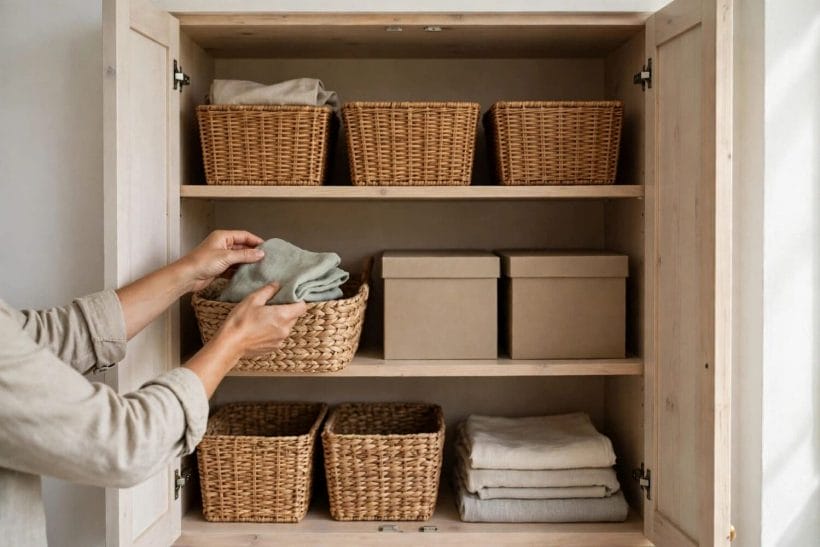
One Cupboard at a Time
Take one cupboard — not the room, not the house — and empty it fully. Clean the empty space, then return only what is used, working and properly housed there. The discipline of a single cupboard is what makes the job finishable; the wider decluttering ideas in the neighbouring collection apply the same one-space-at-a-time patience to whole rooms.
Give Everything a Home
Clutter is usually not excess; it is homelessness. Things drift to surfaces because no drawer, hook or box is officially theirs. A reset assigns homes: keys, post, chargers, tools and the rest each get a named place, close to where they are used. What cannot be given a home is the honest candidate for leaving the house altogether.
Storage That Fits the Space
Storage bought in hope often becomes the clutter it was meant to solve. Measure the cupboard or alcove first, decide in general terms what must live there, and only then consider whether a box, basket or divider would genuinely help. In small homes especially, the best storage is frequently the space already built in, finally organised.
6. Light and Soft Furnishings
Evening is when a room’s lighting stops being a detail and becomes the atmosphere itself. The reversible levers are lamps you can move, shades you can swap and textiles you can fold away — not the fixed wiring, which belongs to an electrician.
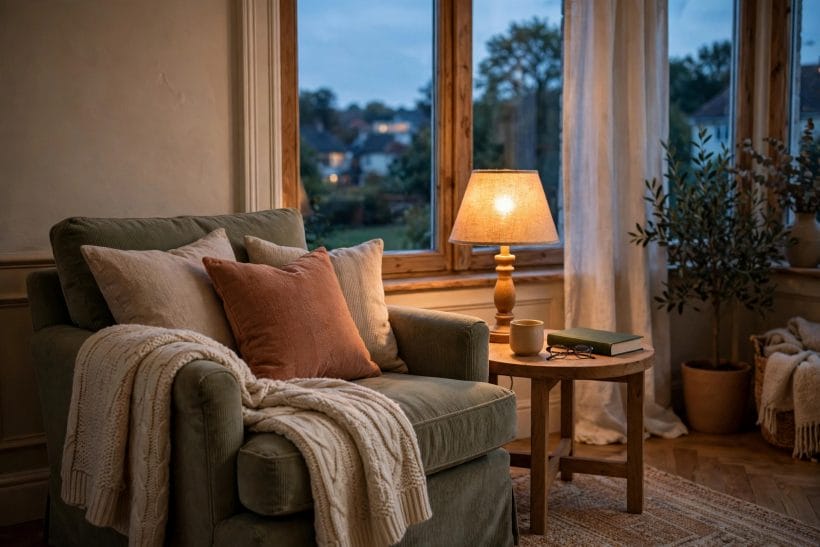
Move Lamps Before Buying Anything
Most rooms are lit from the wrong places rather than too dimly. Try the existing lamps in new positions: a table lamp where the dark corner is, the floor lamp beside the chair that is actually used for reading. The home lighting tips in the neighbouring guide work through the layers of light properly; the weekend version is simply to rearrange the layers you already own before adding any.
Shades Change the Mood
A lampshade decides whether light spreads softly or glares in a beam, and swapping a shade is a matter of moments. Warmer, wider shades flatter living rooms; clearer ones suit a desk. What must never be improvised is anything behind the shade: fittings, wiring and anything fixed to the ceiling or wall are an electrician’s work, in every case.
Cushions, Throws and Curtains
Soft furnishings are the room’s changeable clothing. Cushions and throws moved between rooms, curtains rehung or swapped seasonally where fittings allow, a folded throw that introduces the colour the painted wall suggested — each is a small, reversible refresh. They also carry the practical warmth of a room: a chair people linger in is usually a chair with something soft within reach.
7. The Garden Corner or Balcony
A household with even a small patch of outdoors has a project waiting there. A balcony, a patio corner or the strip by the back door can become the smallest and most-used room of the house with planters, herbs and somewhere to sit.

Start With Planters
Planters come before planting schemes. Group a few pots where they will actually be seen and watered — by the door, beside the seat, along the sunniest edge — rather than scattered hopefully around the plot. In general terms, pots need drainage, a size suited to the plant and a position the plant’s label would approve of; the label, as ever, is the authority.
Herbs Earn Their Space
Herbs are the beginner’s honest crop: useful in the kitchen, forgiving in a pot and pleasant simply to brush past. A small group of the herbs the household actually cooks with will be tended; an ambitious collection of the ones it does not will quietly become the balcony’s guilt.
A Seat Makes It a Room
A corner becomes a room when someone can sit in it. One chair or a small bench changes the patch from a place plants are kept to a place the household goes. Put the seat where the light and shelter are kindest, and let the planting arrange itself around the sitting.
8. Small Fixes That Are Genuinely Small
Between decoration and building work sits a class of tiny repairs that need no trade, no permission and no courage: the loose, the wobbling and the crooked. Their smallness is the definition — the moment a fix stops being small, it changes sections.
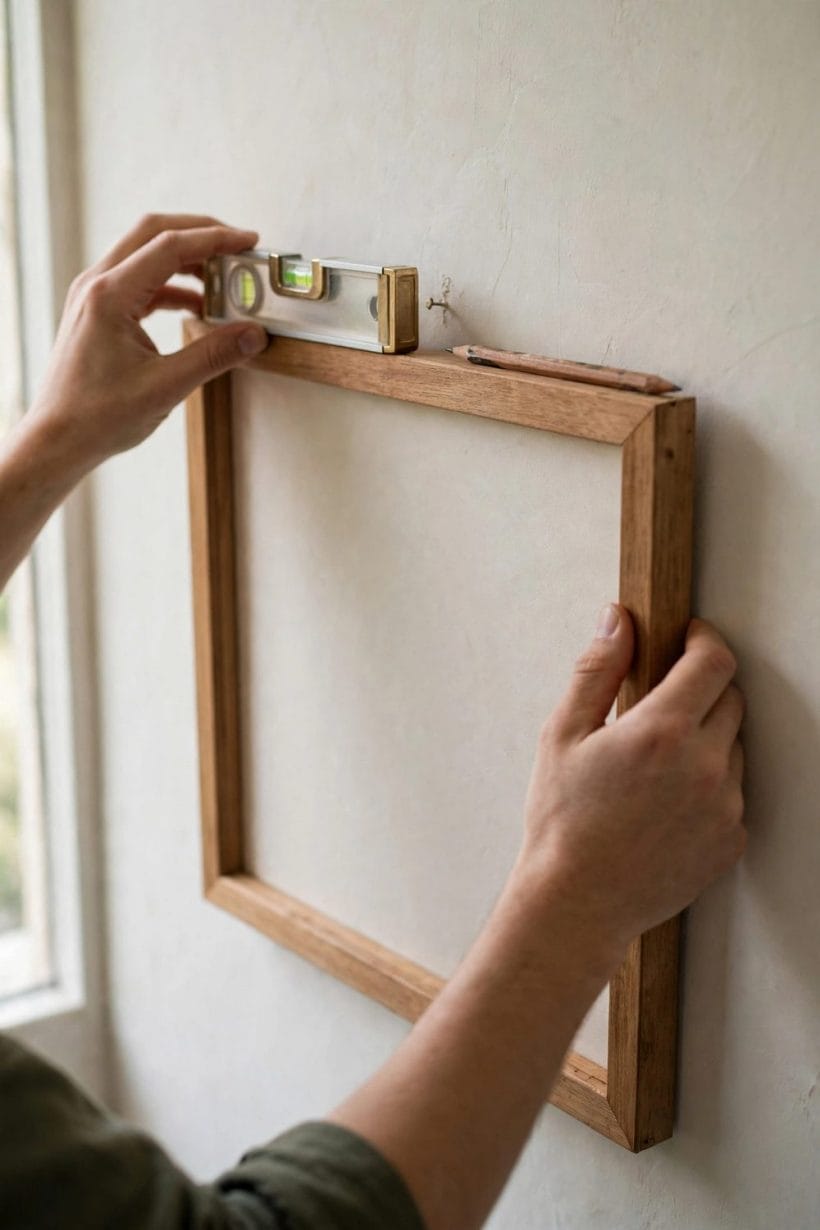
Tighten, Pad and Straighten
Handles, knobs and hinges that have worked loose can usually be tightened with ordinary household tools, in general terms and without force — anything that resists, or turns out to be part of a lock, a gas appliance or a fitted unit stops being this section’s business. Felt pads under chair and table legs end the scrape on hard floors.
Pictures Hung Properly
A picture hung crooked quietly taxes everyone who looks at it. Rehanging the house’s pictures — level, at a considered height, grouped where a group is intended — is an afternoon’s small fix with an outsized effect. Heavy pieces, fixings into uncertain walls and anything above a stairwell deserve more caution than confidence, and a professional picture hanger is a legitimate answer for those.
Know Where Small Ends
The honest skill in this section is recognising its border. A fix is small when it is surface-level, tool-light and fully reversible, and when getting it wrong costs nothing but time. The moment it involves the inside of anything — a fitting, a pipe, a sealed unit, a structural timber — it has crossed the line the next section draws, and it waits for a professional.
9. What Not to Attempt Yourselves
A weekend list earns its confidence from what it refuses. The jobs below are not harder versions of the projects above; they are a different category of work, regulated and skilled, and attempting them as leisure projects risks the house and the household.

Electrical, Plumbing and Gas Stay Professional
Fixed wiring, new sockets, water and waste pipework, and anything touching a gas appliance belong to qualified professionals — full stop. This guide offers no instructions for any of them, in any form. The household’s legitimate role is the planning around the work: deciding where light or water would serve better, and briefing the professional who will do it safely and lawfully.
Structural and Roof Work
Walls that carry weight, openings cut into anything, roof coverings and chimney work are structural territory, however small the visible part looks. A crack, a sag or a leak is information to hand to a builder or surveyor, not a prompt for a weekend experiment. The same applies to damp whose source is not obvious: treat the cause professionally before decorating over the symptom.
Work at Height
Gutters, high windows, tree work and anything needing more than a household step stool in a safe position belong on the professional list too. Most serious home injuries arrive by ladder, not by power tool. A free afternoon is for projects that end with the room improved and everyone who started the day still entirely unhurt.
10. Planning the Next One
One finished project usually reveals the next. The habit worth keeping is not any single refresh but the list itself — a standing record of what the house needs, in the order the household noticed it.
Keep the List Going
Keep the notice-list from section two alive after the first project is done. Add to it as rooms reveal their next irritation, cross off what is finished, and let it age: the item that still bothers you after a month is a real project; the one forgotten by Tuesday was a passing mood.
Budget Stated Generally
Money belongs in the planning in general terms only: most projects here need little beyond paint, small materials and things the house already owns, while the professional work in section nine is a separate, larger commitment to be quoted properly by the trades who would do it. Agree as a household what a weekend project may cost before it starts — the planned renovations in the remodeled ranch homes collection show the scale at which quotes and professionals properly take over.
Finish, Photograph, Live With It
End each project deliberately: tools away, room restored, a photograph taken. Then live with the result before judging it. Rooms settle, eyes adjust, and a change that felt bold on Saturday can feel inevitable by the following weekend. The photograph, compared with the one taken before, is the honest record of what a free afternoon can do.
Final Considerations
A home improves the way a garden does — by small, regular, attentive work rather than rare grand gestures. Keep the projects small, reversible and finished; keep the fixed services with the professionals; and let each free afternoon leave one room a little more itself than it was in the morning.


0 Comments