

A refrigerator rarely shouts. It hums, clicks, buzzes and falls silent again, mostly below the level of attention — until the evening it does not, and every cycle seems to travel straight through the kitchen wall into the room where you are trying to rest.
Choosing a quiet refrigerator is therefore less about chasing a single figure and more about understanding the sounds a fridge makes, where it will stand, and how honestly its rating should be read. This guide takes those checks in order, and names no winners.

1. Quiet Refrigerators at a Glance
Begin with the room, not the rating. The wider kitchen ideas collection treats the fridge as one working part of a lived-in room, and that is the right frame: a quiet refrigerator is simply one whose ordinary sounds suit the room it stands in, the floor beneath it and the hours your household keeps.
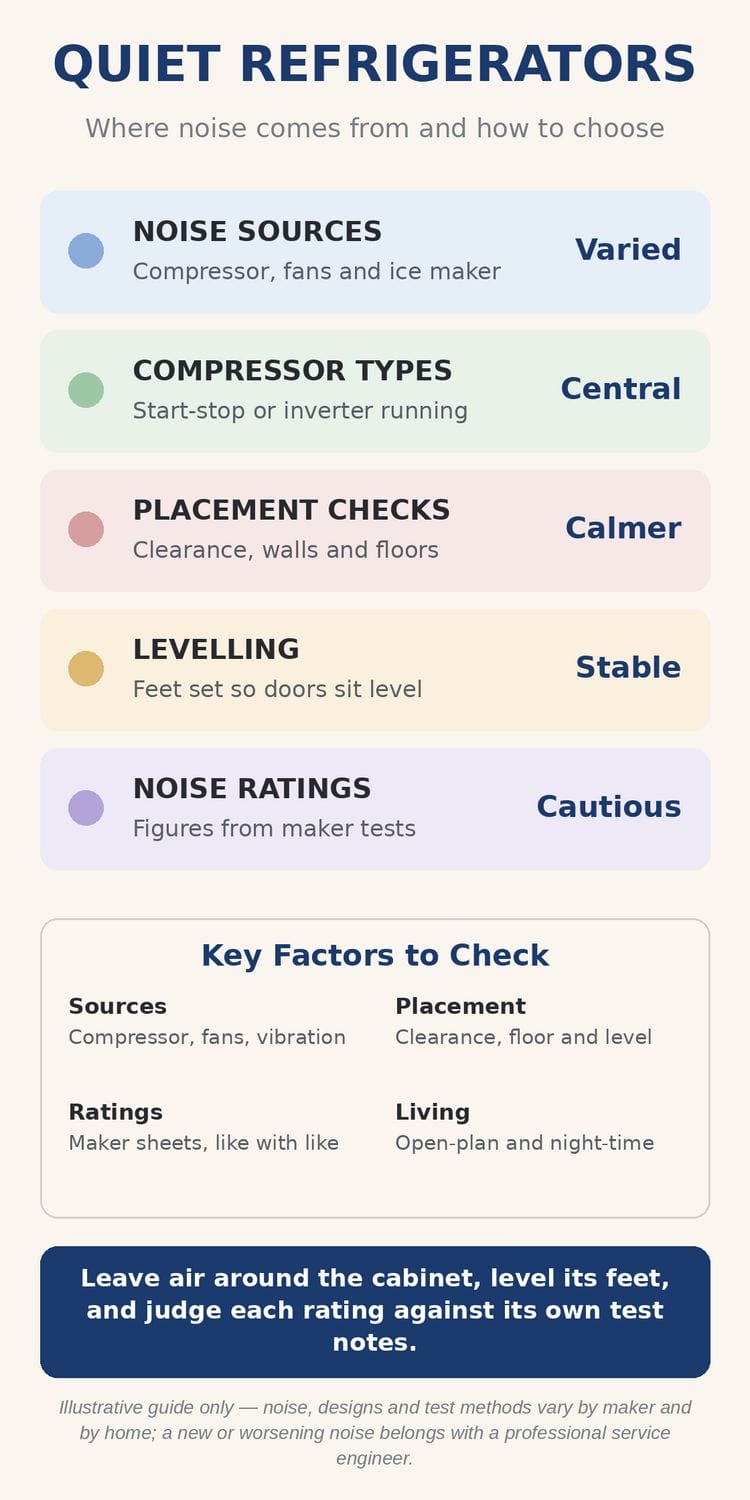
The five checks in the table below are the whole method in miniature. Work through them in order and most disappointment is avoided on paper, before a handsome door or a tempting rating tempts you.
| Family | Character | What it means |
|---|---|---|
| Noise Sources | Compressor, fans and ice maker | Varied |
| Compressor Types | Start-stop or inverter running | Central |
| Placement Checks | Clearance, walls and floors | Calmer |
| Levelling | Feet set so doors sit level | Stable |
| Noise Ratings | Figures from maker tests | Cautious |
One honest note: no guide can crown the calmest fridge for your home, because makers test differently, rooms behave differently and ears differ too. What can be settled — sources, placement, levelling and how a rating was produced — is settled below, in general terms.
2. Where Fridge Noise Comes From
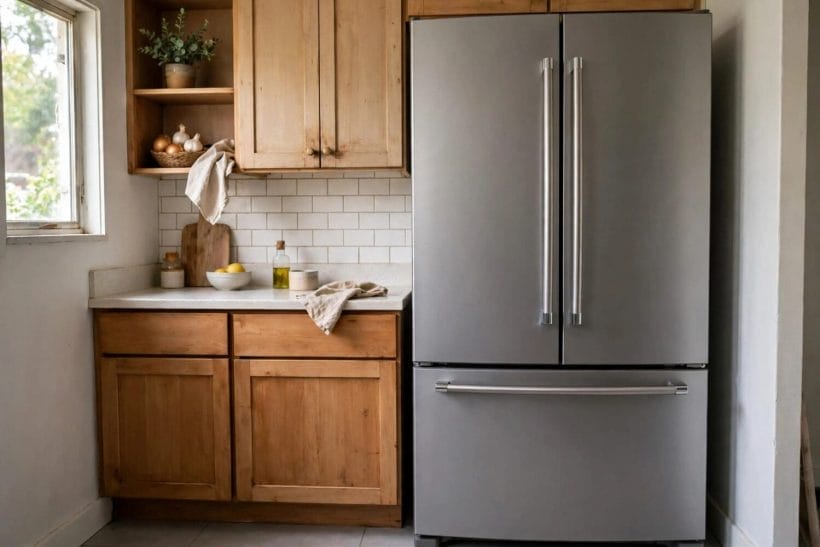
A fridge is not one sound but several, arriving at different moments. Learning which part is speaking turns a worrying noise into an ordinary one, and it is the first skill the wider major appliances guide would ask of any buyer: know what normal sounds like before judging what is loud.
The Compressor Cycle
The compressor is the fridge’s working heart, pressing the cooling gas around its circuit, and its cycle is the sound most people mean by fridge noise: a low hum that starts, runs for a while, then stops as the cabinet reaches its temperature. Short, regular cycles with a gentle start and finish are the ordinary pattern of a healthy machine.
Fans That Move the Cold Air
Fans share the work, moving cold air through the cabinet and across the machinery beneath it. Their sound is softer and airier — a whir that rises and settles with the cooling cycle. A fan note that changes when a door opens, then steadies again, is usually just the machine responding to warmer air arriving with your shopping.
Ice Makers, Water Lines and Vibration
Fridges with ice makers and chilled water add their own small percussion: cubes dropping, a valve opening as the tray refills, the line murmuring as water runs. Vibration is the fourth source, and the most fixable — a cabinet humming against a wall, a shelf rattling, or the body passing its tremor into a hollow floor until the whole room seems to join in.
3. Compressor Types in General Terms

Under the cabinet, two broad families of compressor do the same job in different rhythms. Neither label, on its own, promises a silent fridge — installation and room still have their say — but the rhythm explains much of the character you will live with.
Conventional Start-Stop Running
A conventional compressor runs at one pace. It starts, cools until the thermostat is satisfied, then stops and rests; when the cabinet warms, it starts again. The sound is therefore a pattern of beginnings and endings, and it is those beginnings — the small surge as the motor takes up its work — that ears notice most in a still room.
Inverter Running, Stated Generally
An inverter compressor, in general terms, can vary its pace instead of simply switching between full running and rest. It tends to work in longer, steadier stretches at a gentler pace once the temperature is held. Stated without any brand or model claim, that is the whole honest difference: a steadier rhythm, not a guarantee of silence in your particular kitchen.
Why the Label Alone Does Not Settle It
Two fridges sharing a compressor family can still sound different, because fans, cabinet build, mounting and the room all add their voices. Treat the type as background knowledge for reading a specification sheet — never as a verdict. The sections on placement and levelling that follow often matter more than the label on the box.
4. Reading a Noise Rating Honestly
Most fridges carry a published noise rating, a single figure offered as the measure of their sound. It is useful, but only when read for what it is: a result from a test, taken in the maker’s chosen conditions, and not a promise about your kitchen on a quiet night.
A Figure From a Test, Not a Promise
A published rating is measured under the maker’s test conditions — a prepared room, a set way of listening, the machine running in a particular state. Your home offers none of that preparation. Hard floors reflect, open shelves scatter, and a cabinet in a corner gathers its own sound. Expect the figure to guide comparisons, not to describe your evenings.
Compare Like With Like
Because test conditions differ between makers, a small gap between two ratings may mean very little, and a figure from one maker cannot always be set fairly against another’s. On a shortlist gathered with the discount appliances guide in mind, treat close ratings as effectively level, and let build, placement and your own ears break the tie.
Check the Current Specification Sheet
Ranges change and sheets are revised, so read the maker’s current specification sheet for the exact model you are considering, rather than a review, a listing or an older printout. Note how the rating is described, and whether the same method is claimed across your shortlist. If the method is unstated, hold the figure loosely and ask the questions in the store section below.
5. Placement: Clearance, Walls and Floors
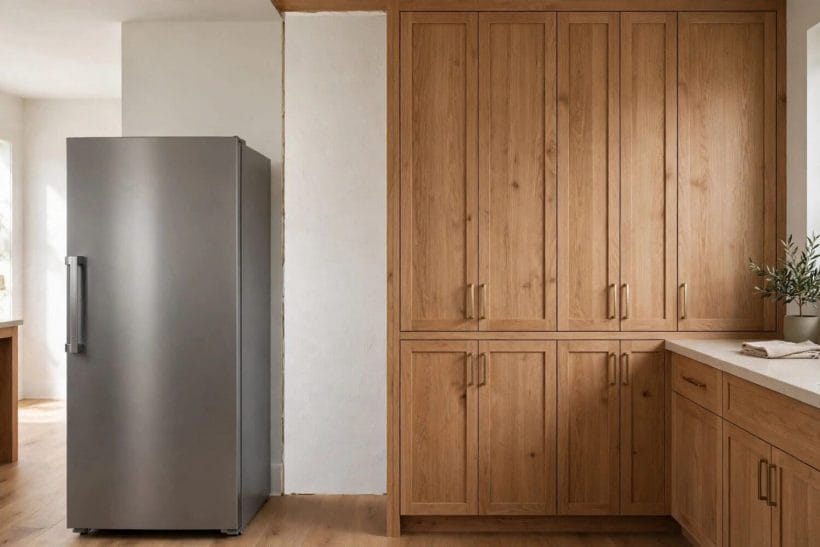
Where the fridge stands decides how much of its sound the room returns to you. Placement is the cheapest quietness there is: it costs nothing but thought, it is settled before delivery, and undoing a bad position afterwards is far harder than choosing a good one first.
Leave Room for Air to Move
A fridge sheds the heat it removes from its cabinet, and it needs air around it to do so without straining. Follow the maker’s stated clearance for the model — a squeezed machine works harder, runs longer and sounds busier. A cabinet pushed tight into its housing on every side has been given a harder, louder job than the one it was tested doing.
Keep the Cabinet Off Walls and Units
A fridge that touches a wall, a tall unit or a worktop edge has built itself a sounding board. Contact passes vibration straight into the neighbouring surface, which obligingly amplifies it. Leave a clear gap on every side, check that nothing stored beside the cabinet leans against it, and listen again after any kitchen rearrangement that nudges it into touch.
A Solid Floor Carries Less Noise
Floors differ in how they answer vibration. A solid floor absorbs the cabinet’s tremor quietly; a suspended or hollow floor can drum along with it, carrying the sound into the room. If a fridge must stand on boards, a level, firmly seated position matters doubly, which is where the next section begins.
6. Levelling: Why an Unlevel Fridge Complains
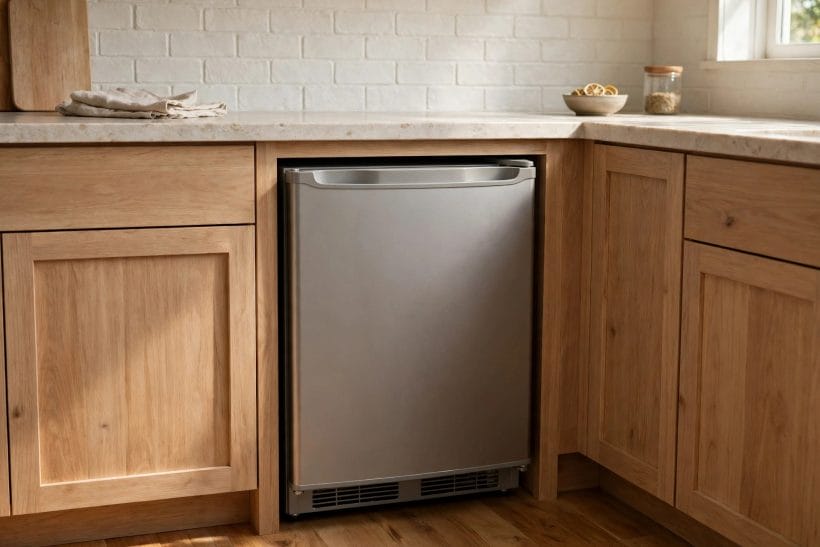
Ask a service engineer about avoidable fridge noise and levelling is named early and often. A cabinet that does not sit true works against itself in small ways all day, and most of its complaints — the hum that was not there in the shop, the rattle at a certain hour — trace back to its feet.
Feet, Doors and the Simple Check
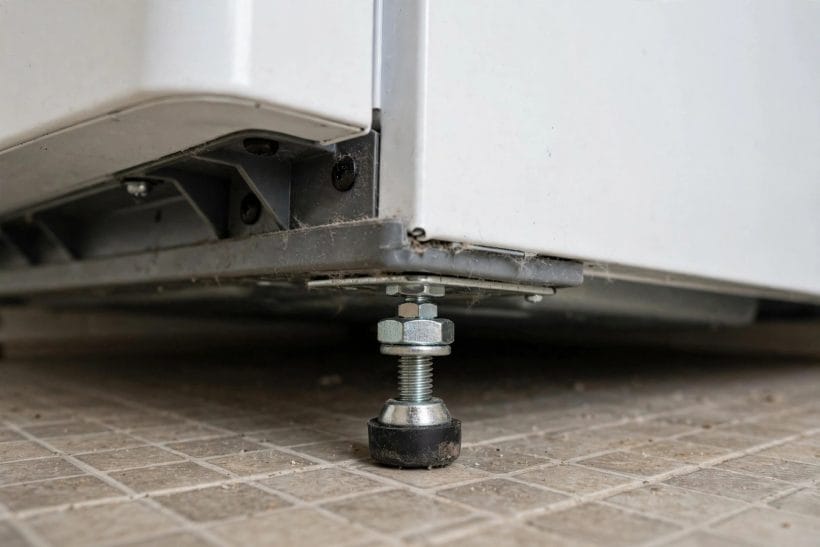
The adjustable feet at the cabinet’s base are set so the body stands level and steady, with its weight shared rather than rocking on a corner. The simple checks need no instruments: the cabinet should not rock when pressed at a corner, and the doors should hang true. If either fails, the fridge is telling you its feet want attention before anything else is blamed.
What Level Does for the Doors
Doors are part of the sound story. Hung on an unlevel cabinet, a door can sit slightly askew, its seal meeting unevenly and its shelves set at a faint slope, so jars and bottles lean, touch and chatter when the compressor starts. Level doors close with a soft, even seal — and a well-sealed cabinet also runs less often, which is quietness earned twice.
When to Ask for the Feet Again
Levelling is not set once for ever. Floors settle, cabinets are moved for cleaning, and a fridge shifted even slightly can lose the true position it was delivered into. A new hum or rattle after any move is a levelling question first. At delivery, as the later section explains, setting the feet is the delivery team’s work.
7. Open-Plan Rooms, Small Homes and Night-Time

The same fridge is a different neighbour in different homes. In a house with a closable kitchen door, its sounds stay politely in one room; in open-plan and small homes there is no door to close, and the fridge effectively lives in the room where you sit, work and sleep.
Kitchen-Living Rooms Share Their Sound
Open-plan rooms join the kitchen to the sofa, the desk and the television, and sound travels the whole shared space, bouncing from the hard surfaces kitchens are made of. A fridge that would pass unnoticed behind a door becomes part of the evening’s background. In such rooms the earlier checks — clearance, contact, levelling — stop being refinements and become the decision itself.
Studios, Tiny Homes and Nearby Bedrooms
In a studio flat or a tiny home, the fridge may stand only a room’s length from the bed, and the compact machines gathered in the compact kitchen appliances for tiny houses round-up are chosen under exactly that pressure. The layouts in the tiny house kitchen design collection show the usual answer: the fridge placed as far from the sleeping corner as the plan allows, on the most solid stretch of floor available.
Why Night Makes the Same Fridge Sound Louder
Nothing about the fridge changes at night; everything about the listening does. The house quietens, traffic fades, and a hum that competed all day with voices and kettles suddenly plays solo. Cycles starting in that stillness can wake light sleepers even when the machine is perfectly healthy. Judge any fridge, in the shop and at home, by imagining it at its loneliest hour.
8. Questions to Ask in Store

A good retailer visit is an interview, not a viewing. The fridges stand in a bright, echoing hall that flatters none of them. Bring the list below, and write the answers on the specification sheet you take home.
Ask How the Rating Was Measured
Start with the figure itself. Ask what test produced the published rating, whether the same method covers the other models on your shortlist, and whether the sheet in your hand is the current one. A straight answer, or a willingness to fetch one, tells you how much weight the number can bear. A shrug is also an answer — hold that figure loosely.
Ask to Hear It Running
If a display model can be run, stand at the distance your sofa or bed will be, and listen through a full start and settle rather than a first impression. Display halls are loud, so you are listening for character rather than volume: rattles, buzzes and fan notes that rise and fall unevenly are worth more attention than an honest, steady hum.
Ask About Ice, Fans and Fitting
Finish with the practical questions. Does this model make ice or chill water, and can those features rest when unused? How is it delivered, levelled and taken through your doors, and who sets its feet? The answers decide whether the fridge you heard in the hall is the fridge, in the position, that you will hear at home.
9. Checks at Delivery and First Switch-On

Delivery day is your last easy chance to get the quiet you paid for. The team brings the cabinet in, positions it and prepares it — and the minutes before they leave, with the machine first running in its real place, are worth more than a week of later correspondence.
Run It Before You Sign
Ask for the fridge to be switched on and run before you sign for it, and listen in the room as it will actually be used. A steady hum and a gentle fan note are a good delivery. Anything harsh, knocking or rattling at this first hearing should be raised there and then, while the team and the paperwork are both still in the room.
Doors Level and Seals Sitting True
Check the doors as part of the same visit: they should hang level with each other, close without persuasion and meet their seals evenly all round. Open and close each one and watch it settle. A door that needs a push, or swings oddly on its hinges, is a levelling note for the team to correct before they go, not a quirk to live with.
Packing and Transit Fittings Removed by the Team
New fridges travel protected: packing around shelves and drawers, and on some models transit fittings that keep parts still on the road. All of it is removed by the delivery team as part of their work — confirm it has been, and that shelves and drawers sit in their places and move freely. Leftover packing is a classic source of first-week rattles, and the easiest of all to prevent.
10. New Noises That Suggest a Fault
Most fridge sounds are the machine working as designed. This last section draws the other line: the noises that are not character but news, where the honest response is not adjustment but professional service.
Sounds That Are New, Loud or Getting Worse
The warning pattern is change. A grinding, scraping or knocking that was not there before; a buzz that grows week by week; a fan note turned harsh; a compressor that starts with a shudder or seems to labour rather than run. Any of these, stated generally, suggests something wearing, loosening or failing — and none of them improves for being waited out.
What Not to Open or Adjust Yourself
The cooling circuit is sealed, pressurised and not a household repair, and the electrical parts behind the cabinet belong in the same category. Beyond the household checks this guide does cover — position, contact, levelling, doors and seals — there is nothing inside the machine for an owner to adjust. Opening panels or disturbing the circuit turns a service visit into a larger problem.
Professional Service, Stated Plainly
So the rule is plain: a new or worsening noise means professional service, arranged while the machine is still running and the fault still small. Describe what changed and when it began, keep the model details from the specification sheet to hand, and let the engineer hear the machine in its place. That is the quickest route back to a fridge you no longer notice.
Final Considerations
A quieter fridge is rarely bought in a single decision. It is the sum of small ones: sounds understood, a rating read cautiously, a position with air around it, feet set true, questions asked in the shop and a first run listened to before the delivery team leaves.
Work through those checks in order and the result is a machine whose ordinary sounds suit its room — including the small, shared rooms gathered in the tiny kitchen ideas collection, where fridge, sofa and bed so often keep company. Quiet, in the end, is not a figure on a sheet. It is an evening in which the fridge never once asks for your attention.



0 Comments