
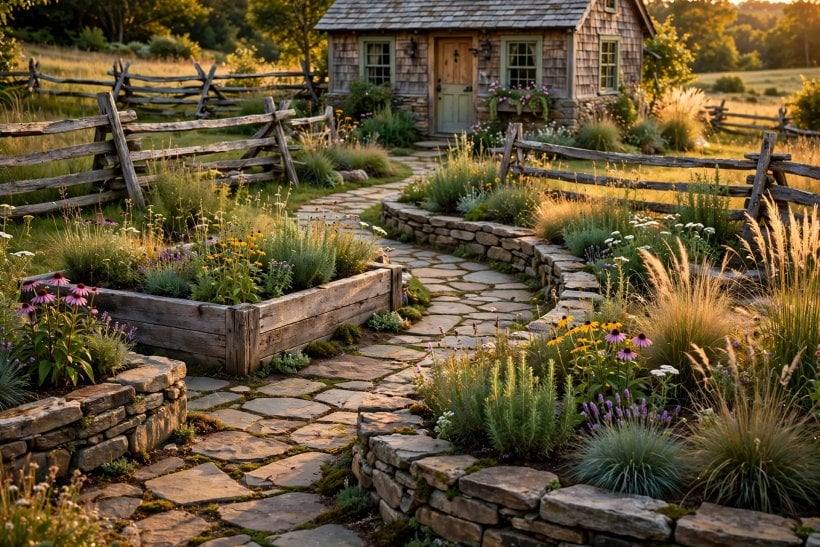
Timber, stone, gravel and plants with a little wildness in them: that is the whole recipe. The charm comes from simple materials, honest textures and layouts that look settled rather than installed.
These 75 rustic landscaping ideas are grouped so you can plan a whole garden or steal a single corner. Each one is practical first, pretty second, and easy to adapt to a small plot or a sprawling one.
1. Planning a Rustic Layout That Fits Your Plot
Begin by walking your plot slowly and noting what is already characterful: a mature tree, a slope, an old wall, a view worth framing. Rustic design works with what exists instead of flattening it away. Sketch zones for arrival, sitting, growing and utility, then connect them with the fewest, clearest paths. Keep shapes simple and slightly irregular, because ruler-straight geometry fights the relaxed feeling you are after, and leave generous room for plants to grow into their mature size.
| At a Glance | Good Starting Point |
|---|---|
| Core materials | Weathered timber, natural stone, gravel, corten-style steel, clay and terracotta |
| Colour palette | Sage, cream, terracotta, rust, warm grey, faded reds and dusty blues |
| Paths | Gravel, stepping stones or reclaimed brick with soft planted edges |
| Boundaries | Split-rail, hazel hurdle, dry stone or mixed native hedging |
| Planting style | Loose drifts, grasses, herbs and cottage favourites in odd-numbered groups |
| Budget order | Layout and drainage first, then structure, then planting, then decoration |
| Maintenance | Designed-in: mulch deeply, group thirsty plants, keep edges simple |
| First check | Boundaries, buried services and local rules before digging or building |
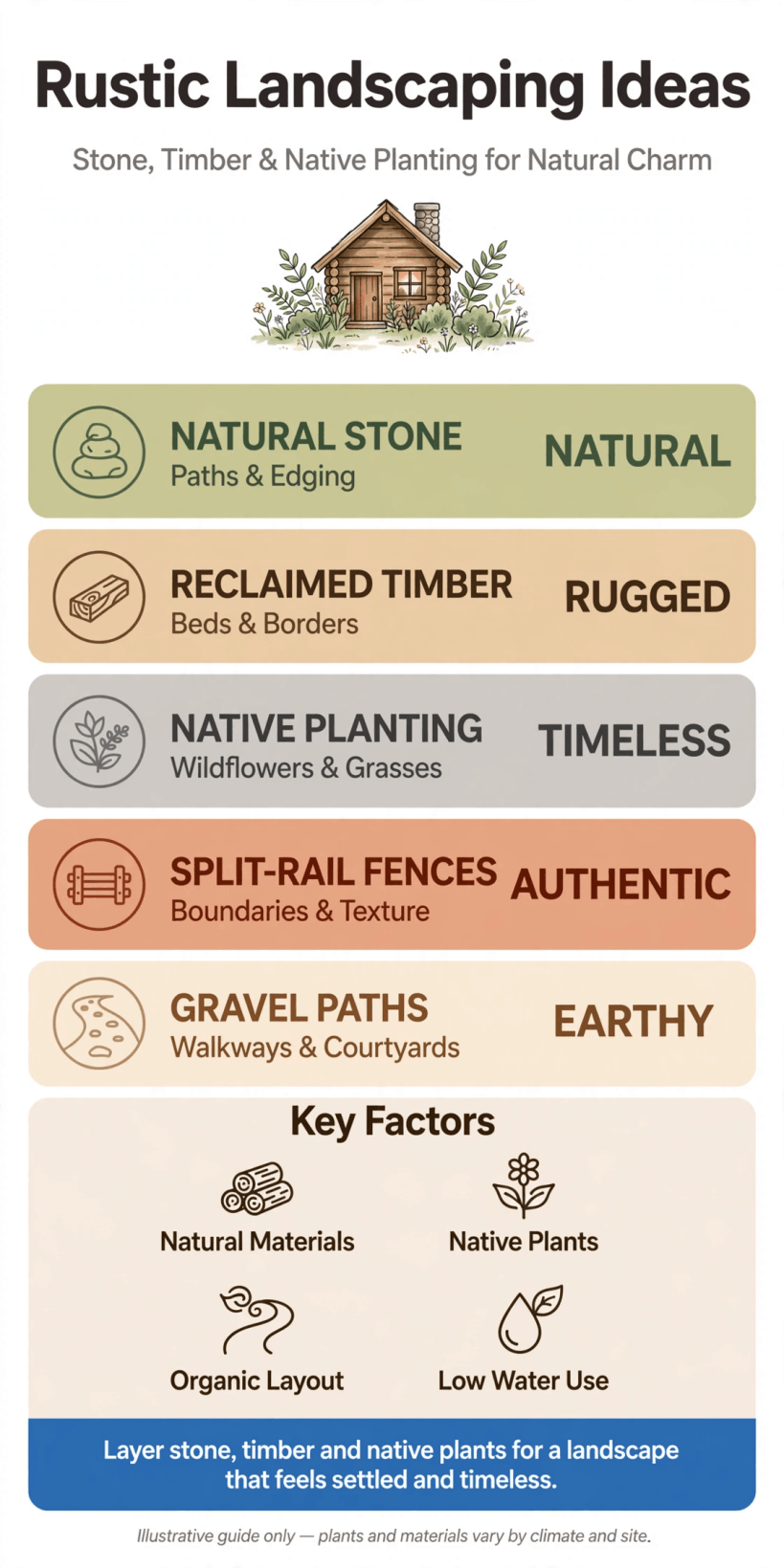
A quick visual summary of the materials, colours and layouts in this collection.
1. Map the sun before anything else, because seating, vegetables and shade-loving corners all depend on it.
2. Keep one simple loop path around the plot so every bed can be reached without trampling soil.
3. Place the largest structure first, shed, pergola or raised beds, and let smaller features arrange themselves around it.
4. Borrow the landscape beyond your fence by framing one good view and screening the rest with planting.
5. Leave one genuinely wild corner for insects and birds; it will make the rest feel intentional by contrast.
6. Repeat just two or three materials everywhere so separate projects still read as one garden. Small plots reward this discipline most, as our collection of tiny house landscaping ideas for compact gardens shows in detail.
7. Plan where snow, leaves and firewood will be stored now, not as an afterthought in the first storm.
2. Paths, Steps and Entrances With Character
Paths carry the whole design, so give them the best materials you can. A path should be wide enough for two people or a loaded wheelbarrow, firm in wet weather and edged so gravel stays where it belongs. Gentle curves suit this style, but every curve should lead somewhere real: a gate, a bench, a door. Steps deserve the same honesty, built from thick timber, stone or brick with a consistent rise so nobody trips carrying a watering can at dusk.
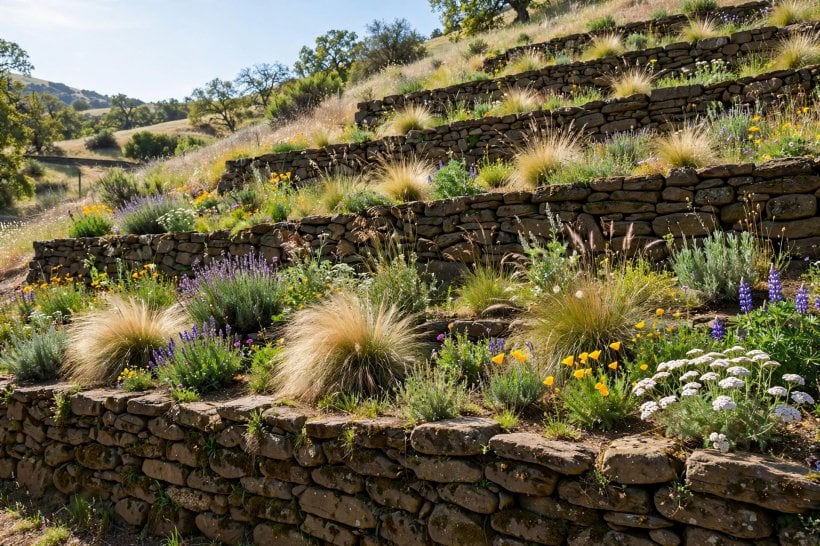
8. Lay a gravel path over a proper compacted base with landscape fabric beneath to keep it clean and weed-light.
9. Set chunky stepping stones through lawn or groundcover, spaced to a natural stride and bedded dead level.
10. Edge paths with half-buried logs, stone setts or weathered steel to stop gravel wandering into beds.
11. Build sleeper steps up a slope, backfilled with gravel, with a simple handrail on the steepest stretch.
12. Mark the entrance with an arch or two sentinel pots so arrival feels deliberate even on a budget.
13. Use reclaimed brick in a simple stretcher pattern for a short, high-traffic stretch by the door. The way a path meets the house sets the tone for everything inside, an idea explored beautifully in our tour of tiny house interior design ideas and timeless styles.
14. Light the main path low and warm, with fittings tucked into planting rather than marching in a line.
15. Widen the path into a small landing wherever a gate, tap or compost corner creates a natural pause.
3. Fences, Walls and Garden Boundaries
Boundaries are the backdrop for every planting picture, so choose them with the same care as the plants. Timber, stone and hedging all work, and mixing them along different sides of a plot often looks more natural than one material marching all the way round. Keep heights neighbourly, check the rules that apply to your boundary before building, and remember that a boundary you maintain from your own side, without needing access next door, saves years of friction.
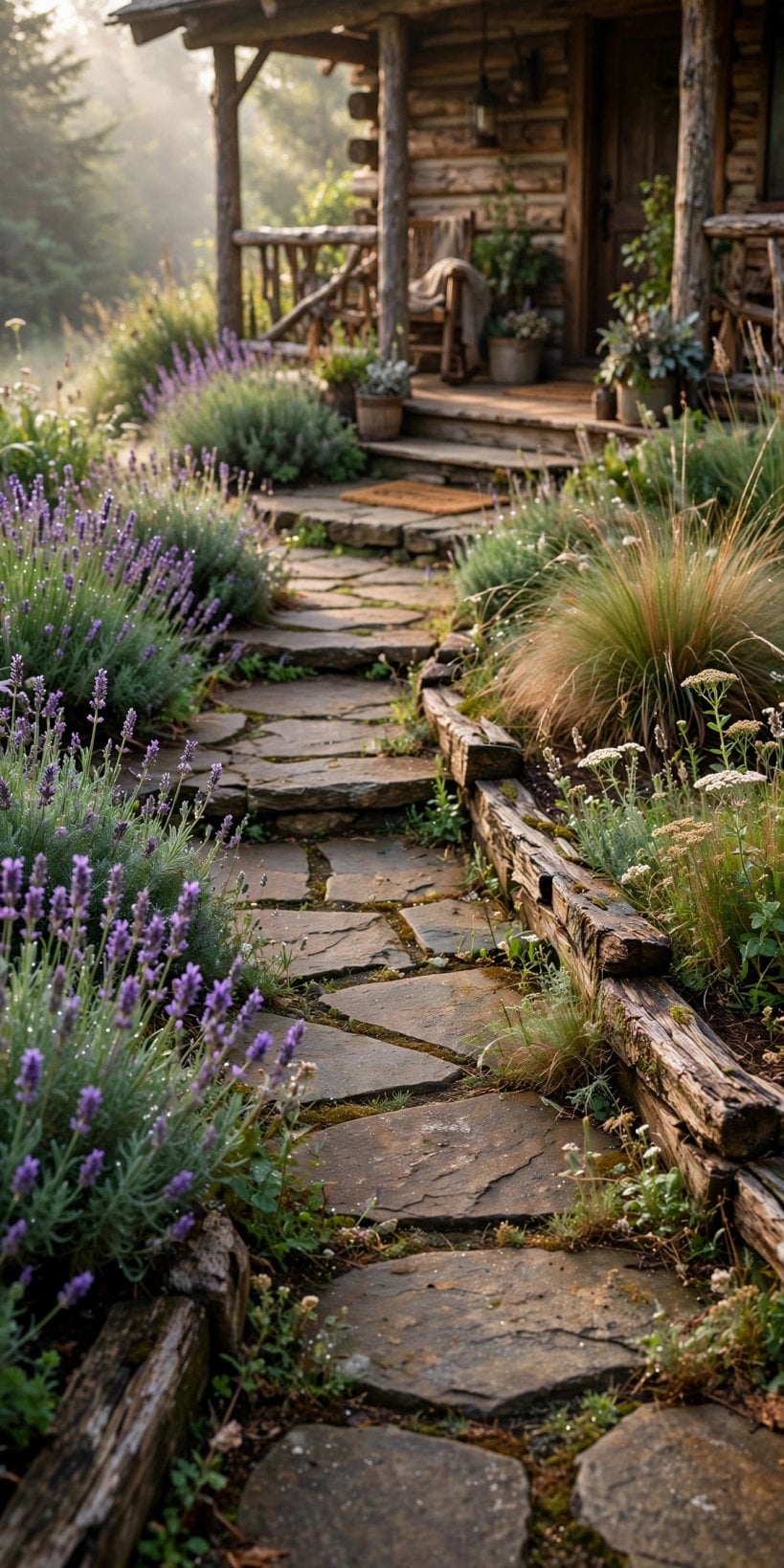
16. Build a split-rail fence along a frontage for instant countryside character and an easy climbing-plant support.
17. Weave hazel or willow hurdles between posts as a soft, repairable screen that silver-grey with age.
18. Dry-lay a low stone wall as a bed edge or seat-height divider, leaving gaps at the base for wildlife.
19. Plant a mixed native hedge and let it stay slightly billowy rather than clipped into a hard rectangle.
20. Hang a reclaimed timber gate with black iron hardware; the creak is practically a feature.
21. Grow climbers up, not through, the fence, with wires or trellis held off the wood so air can circulate.
22. Stagger a screen of tall grasses or pleached shrubs where you need privacy without a solid barrier.
4. Planting in a Relaxed Country Palette
Rustic planting is generous, layered and a little unbuttoned. Start with structure, shrubs and small trees that hold the garden together in winter, then weave in perennials and grasses in loose drifts, and finish with self-seeders that soften edges and fill gaps for free. Plant in odd numbers, repeat the same plant in several places to create rhythm, and let foliage texture do as much work as flowers so the garden looks good between bloom peaks.

23. Plant ornamental grasses in sweeps so low sun turns the whole border gold in the evening.
24. Mix cottage favourites, lavender, catmint, hardy geraniums and old roses, in groups of three or five.
25. Add one small multi-stem tree for dappled shade, blossom and a winter silhouette worth looking at.
26. Underplant with spring bulbs in informal drifts, then let later perennials hide the fading leaves.
27. Keep a herb patch near the kitchen door, rosemary, thyme, sage and chives, in gravel for drainage.
28. Let a few honest self-seeders, foxgloves, verbascum or poppies, colonise the gaps you did not plan.
29. Choose colours in families, dusty pinks with sage, cream with rust, faded blue with silver, rather than a sweetshop mix.
30. Mulch deeply every spring; it is the single cheapest way to make planting look cared for.
5. Lawns, Meadows and Groundcover the Easy Way
A billiard-table lawn fights this style, so relax the brief. A slightly shaggy lawn with mown paths through longer grass looks wonderful, feeds insects and halves your mowing. Where grass struggles, under trees, on banks, in deep shade, groundcover plants do the job without complaint. The secret of rustic landscaping at its best is knowing where to stop maintaining: crisp where people walk and sit, loose everywhere else, with the contrast reading as a choice rather than neglect.
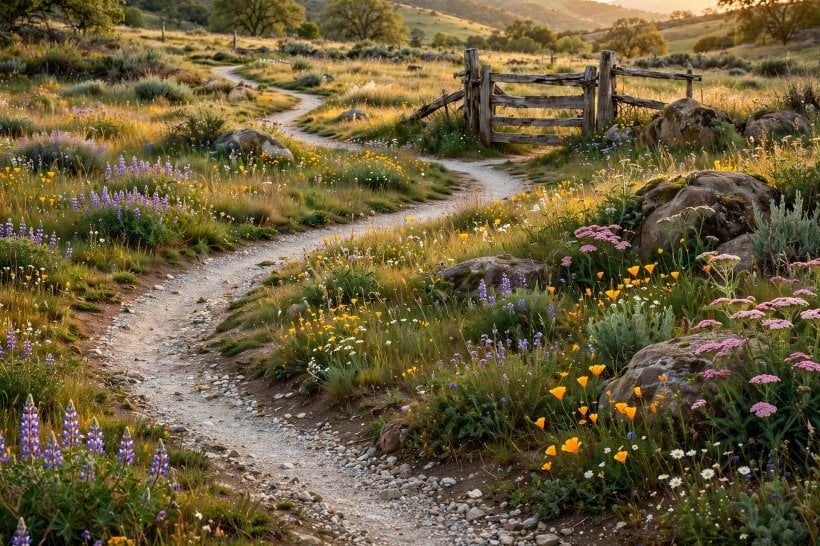
31. Mow a clear path through longer grass to create a meadow walk that changes with the seasons.
32. Sow a small wildflower patch on poor soil, where flowers thrive precisely because the ground is lean.
33. Carpet dry shade with groundcover such as vinca, hardy geranium or creeping thyme between stones.
34. Keep one neat, closely mown area for chairs, games and drying laundry, and let the rest breathe.
35. Edge the lawn with a mowing strip of brick or stone so the boundary stays crisp without strimming.
36. Overseed tired patches in autumn and feed the soil, not just the grass, with a light compost dressing.
37. Plant a clover-rich mix where children and dogs play hardest; it stays green and forgives wear.
6. Patios, Decks and Places to Sit
Every garden needs somewhere to sit that is not the kitchen step. Put seating where the sun is at the hour you will actually use it, morning coffee facing east, evening drinks facing west, and give it a firm, level base that drains. Surround it with planting rather than fencing so sitting feels like being inside the garden, and add one overhead element, a pergola, a sail or a tree canopy, to make the space feel held.
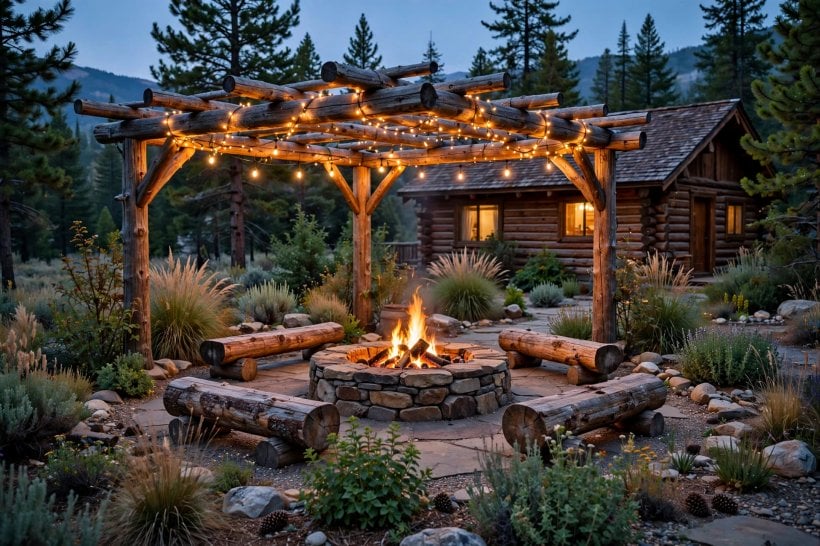
38. Lay a simple stone or gravel patio with a timber bench built in along its sunniest edge.
39. Build a rough-sawn pergola and grow a grape, rose or wisteria over it for dappled summer shade.
40. Deck a sloping corner level with wide boards, and stain it weathered grey rather than orange.
41. Circle a fire bowl with log seats and a gravel apron, well away from fences and overhanging branches.
42. Tuck a reading bench into the most sheltered corner, with a side table stump and a cushion box nearby.
43. Screen the seating area from the road with layered planting instead of a taller fence. Surface choices here follow the same logic as driveways, and our guide to eco-friendly driveway alternatives to asphalt and concrete compares permeable options honestly.
44. Add an outdoor rug, lanterns and a throw basket so the space works from spring breakfasts to autumn evenings.
7. Water, Wildlife and Natural Touches
Water brings a garden to life faster than any ornament. Even a stone trough with a small solar fountain adds sound, reflections and drinking visitors from dawn to dusk. Wildlife features work best when they look like part of the scenery, log piles in shade, stone stacks in sun, a hedge left thick at the base. Provide water, shelter and food plants and the visitors arrive on their own, turning the garden into the liveliest room of the house.
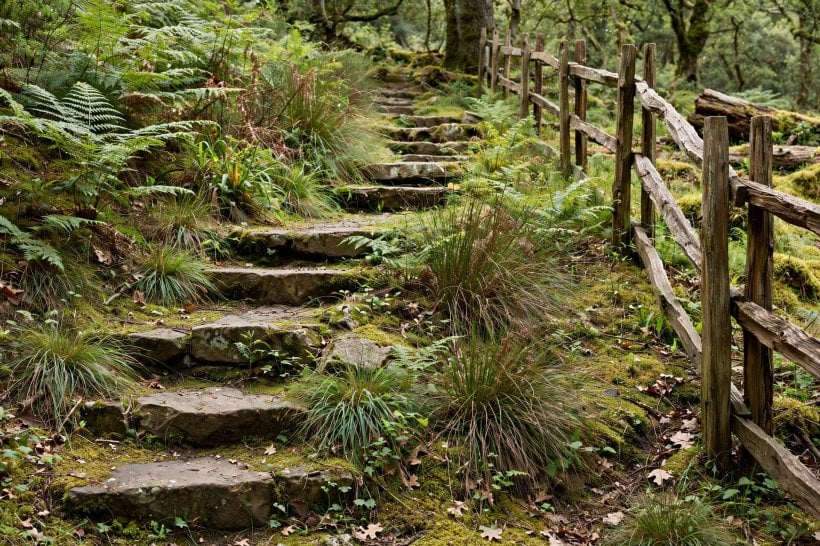
45. Sink a stone or galvanised trough as a mini pond, with a ramp of stones so creatures can climb out.
46. Stack a log pile in a shady corner for beetles, fungi and the birds that hunt them.
47. Hang nest boxes and a simple insect hotel on a sheltered fence, facing away from prevailing rain.
48. Add a bird bath on a stump or stone plinth where you can watch it from the kitchen window.
49. Let one nettle and bramble patch stand in the wild corner; butterflies will thank you all summer.
50. Run a shallow rill or rain chain from the roof into a planted swale instead of a hidden drain.
51. Keep outdoor lighting warm, low and off when unneeded so moths and bats keep their night shift.
8. Growing Your Own: Beds, Herbs and Orchards
A productive corner belongs in this style like nowhere else, because timber beds, gravel paths and a slightly unruly herb border look exactly right together. Start smaller than your ambition, two or three beds grown well beat eight grown guiltily, and put the plot in the sunniest spot you have, close to a tap. A fruit tree or two, trained against a wall if space is tight, gives blossom, shade and a harvest for almost no annual effort.

52. Build raised beds from chunky untreated-style timber, wide enough to reach the middle from both sides.
53. Grow herbs in a gravelled square by the door, divided by a simple cross of brick or stone.
54. Train an espalier fruit tree along wires on a sunny wall or fence for blossom and crops in little space.
55. Hide the compost bins behind a woven screen at the end of the loop path, close to the beds they feed.
56. Stand a simple cold frame against a sheltered wall for seedlings, salads and hardening off.
57. Plant soft fruit, currants, gooseberries or raspberries, along a boundary where they double as screening. The rustic mood continues beautifully indoors, as the kitchens in our feature on tiny barn house interiors with rustic-modern style prove with every timber shelf.
58. Mulch fruit and beds with straw or compost, and keep a water butt within hose reach of everything.
9. Colour, Texture and Seasonal Interest
A rustic garden earns its keep in every season when colour comes from more than flowers. Bark, berries, seed heads, autumn leaves and the silvering of weathered timber all play their part, and a restrained palette makes each one sing louder. Choose paint and stain colours from the landscape itself, sage greens, warm greys, faded reds, so structures settle in. Then repeat those tones in pots, cushions and even the shed door for a garden that feels composed rather than collected by accident.
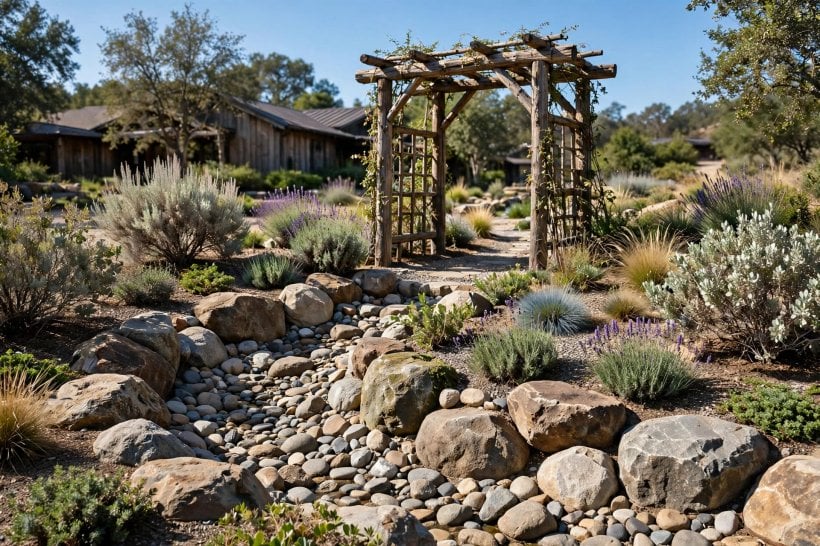
59. Paint fences and sheds in sage, slate or warm charcoal so planting glows against them.
60. Plant for autumn deliberately: one fiery shrub, ornamental grasses and late sedums in every main bed.
61. Leave seed heads standing through winter for birds, frost pictures and next spring’s free seedlings.
62. Group terracotta and clay pots in odd clusters, unified by similar tones rather than matching sets. Colour confidence outdoors follows the same rules as indoors, and our guide to tiny house interior paint colours and combinations translates surprisingly well to fences and furniture.
63. Mix textures in threes, feathery grass, bold leaf, spiky flower, in every border for built-in contrast.
64. Add evergreen bones, yew, box alternatives, holly or shrubs, so winter still has a skeleton to admire.
65. Use rust-finish steel accents, edging, obelisks, a fire bowl, as the warm metal note that ties browns together.
10. Costs, Care and Keeping It Looking Good
Spend in the right order and this style stays affordable: layout, drainage and soil first, because they are invisible when right and miserable when wrong; then boundaries and paths; then structures; and plants last, bought small and given time. Salvaged and reclaimed materials suit the look perfectly and often cost less than new, provided timber is sound and stone is clean. Before digging anywhere near boundaries or services, check what rules and records apply to your plot, your city or county office can confirm, and the background in our guide to where you can build a tiny house and what rules apply explains the usual questions.
66. Phase the work over two or three seasons, living with each stage before funding the next.
67. Buy plants small, in the smallest healthy size, and let the garden’s own growth be the saving.
68. Make compost from the start; it is free soil improvement and the engine of the whole garden.
69. Keep a simple seasonal rhythm: mulch in spring, water deeply but rarely, tidy lightly in autumn.
70. Sharpen, oil and store tools in one dry spot; rustic charm never extends to rusty kit left in the rain.
71. Divide perennials every few years and swap the spares with neighbours to refresh beds for nothing.
72. Re-gravel thin patches on paths annually rather than relaying whole areas when they finally fail.
73. Photograph the garden each season from the same spots; the record shows what to move, split or remove.
74. Keep one flexible area, a bed that can become seating, or a lawn corner that can become beds, as life changes.
75. Walk the garden monthly with fresh eyes and a notebook, fixing the one small thing that bothers you most.
Final Considerations
The best rustic gardens look inevitable, as if the house simply grew a garden the way a tree grows shade. That effect comes from simple materials repeated calmly, planting allowed to be generous, and maintenance designed down to a rhythm you actually enjoy. Start with the layout and the paths, plant for every season rather than one glorious month, and let weather and time do some of the decorating for you. A garden built this way does not demand perfection, it rewards attention, and it gets better every single year you live with it.


0 Comments