
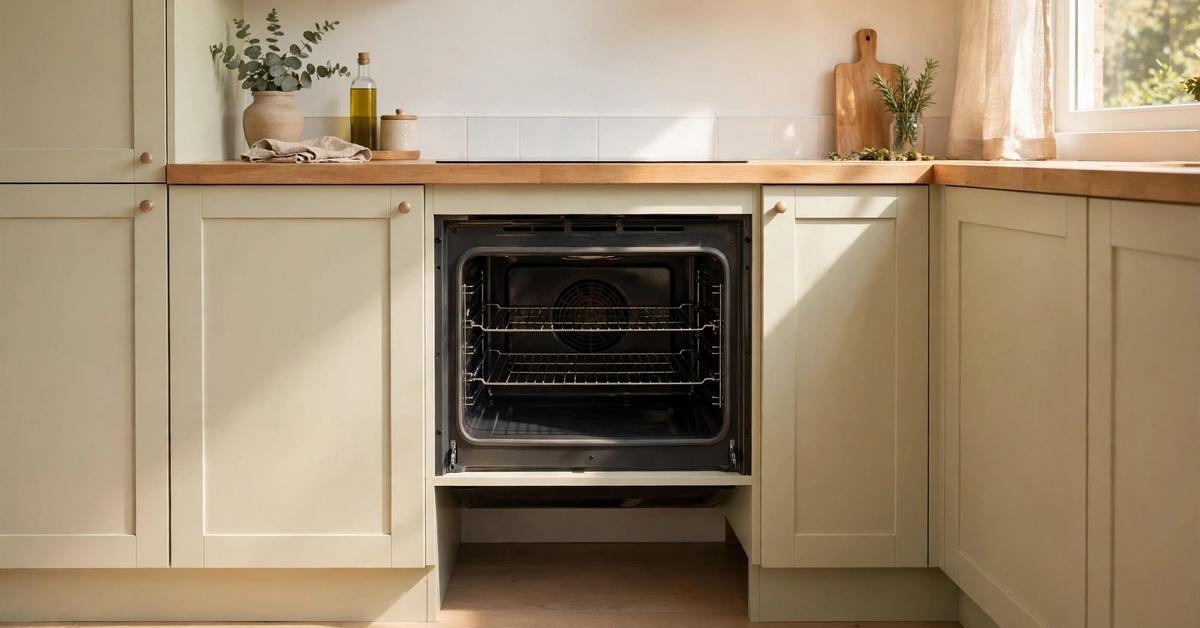
An ordinary oven door swings down into the room, and in a small kitchen that swing is exactly where you need to stand. The slide-away oven door answers that frustration neatly: open it, slide it, and it stows beneath the cavity, out of your way.
This guide gives the checks that decide whether such an oven suits your home: mechanism, clearance, cleaning, safety, formats, fitting and spares. It names no brands and crowns no winners.
1. Slide-Away Oven Doors at a Glance
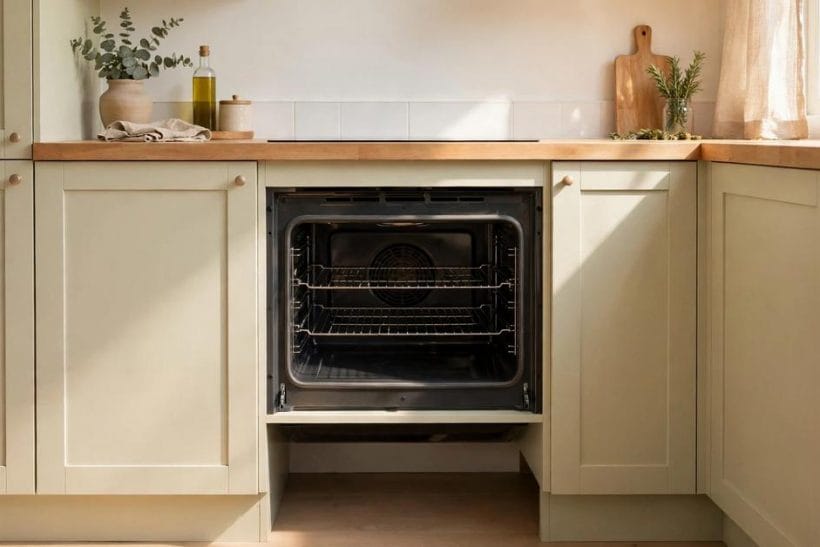
Start with the room, not the showroom. A door that stows beneath the cavity changes how the space in front of the oven is used, how close you can stand to the shelves, and how the door is reached for cleaning. The wider kitchen ideas collection shows ovens planned within a whole run of cabinetry — the right starting point.
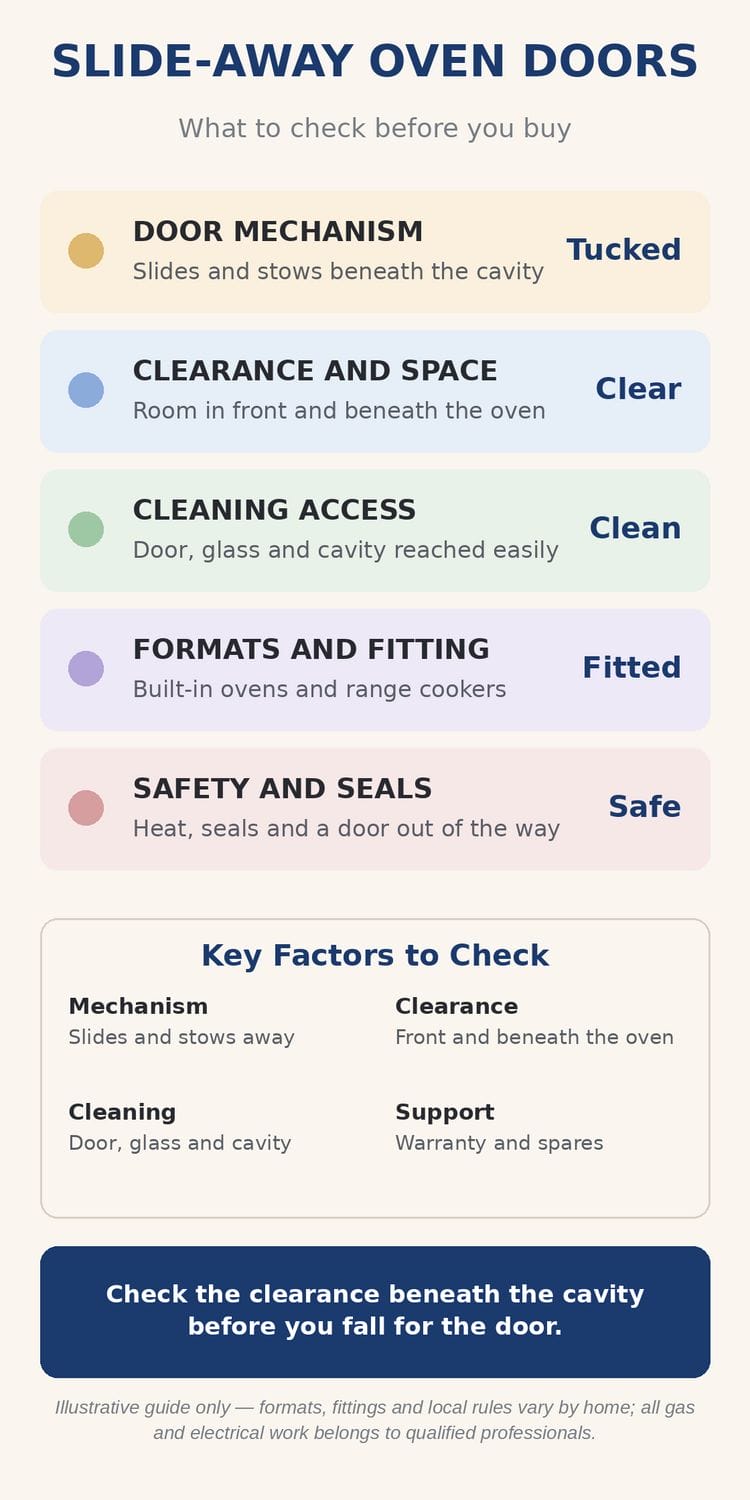
The five checks in the table below are the whole method in miniature. Work through them in order and you will set aside most unsuitable ovens on paper, before a clever door tempts you.
| Family | Character | What it means |
|---|---|---|
| Door Mechanism | Slides and stows beneath the cavity | Tucked |
| Clearance and Space | Room in front and beneath the oven | Clear |
| Cleaning Access | Door, glass and cavity reached easily | Clean |
| Formats and Fitting | Built-in ovens and range cookers | Fitted |
| Safety and Seals | Heat, seals and a door out of the way | Safe |
One question arrives with this door more than any other: why is it easy to find in some places and rare in others — why, as readers often put it, do we not have this where we live? The honest answer is general, and it is the only one a guide should give: regional ranges and market choices differ by maker and by country, and they change over time. Nothing about a specific maker or a specific market should be asserted from that. What can be checked — mechanism, clearance, cleaning, warranty and spares — is covered below.
2. How the Sliding Mechanism Works
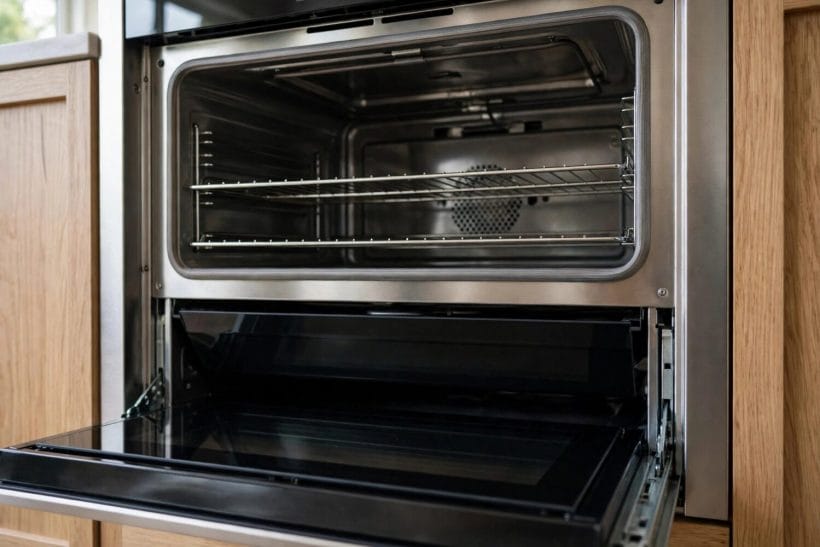
A slide-away oven door does not swing down and stay down. Opened, it travels on runners or guides, sliding away and settling beneath the oven cavity, so the front stands open with no door leaning into the room. Understanding that travel is the first real check.
From Swinging Door to Stowed Door
A conventional door hangs on hinges and opens like a drawbridge: you lean over it, work around its hot inner face, and step back to let it close. A sliding door removes that drawbridge. Once stowed, the shelves can be reached from directly in front, without the door dictating where your feet and knees must be.
Runners, Guides and a Smooth Travel
The movement is only as good as the hardware carrying it. In a showroom, open and close the door slowly through its whole travel. The action should feel even and guided, without grinding, sticking or a point where the weight suddenly shifts. A door that hesitates on the shelf will not improve at home.
The Door Still Has Weight and Heat
Sliding does not make a door light or cool. It remains a substantial glazed panel at oven temperature, to be handled with the same respect as any oven door: oven gloves, a steady grip, and no hurry. Judge the handle’s position while the door is moving as well as at rest.
3. Clearance in Front and Beneath
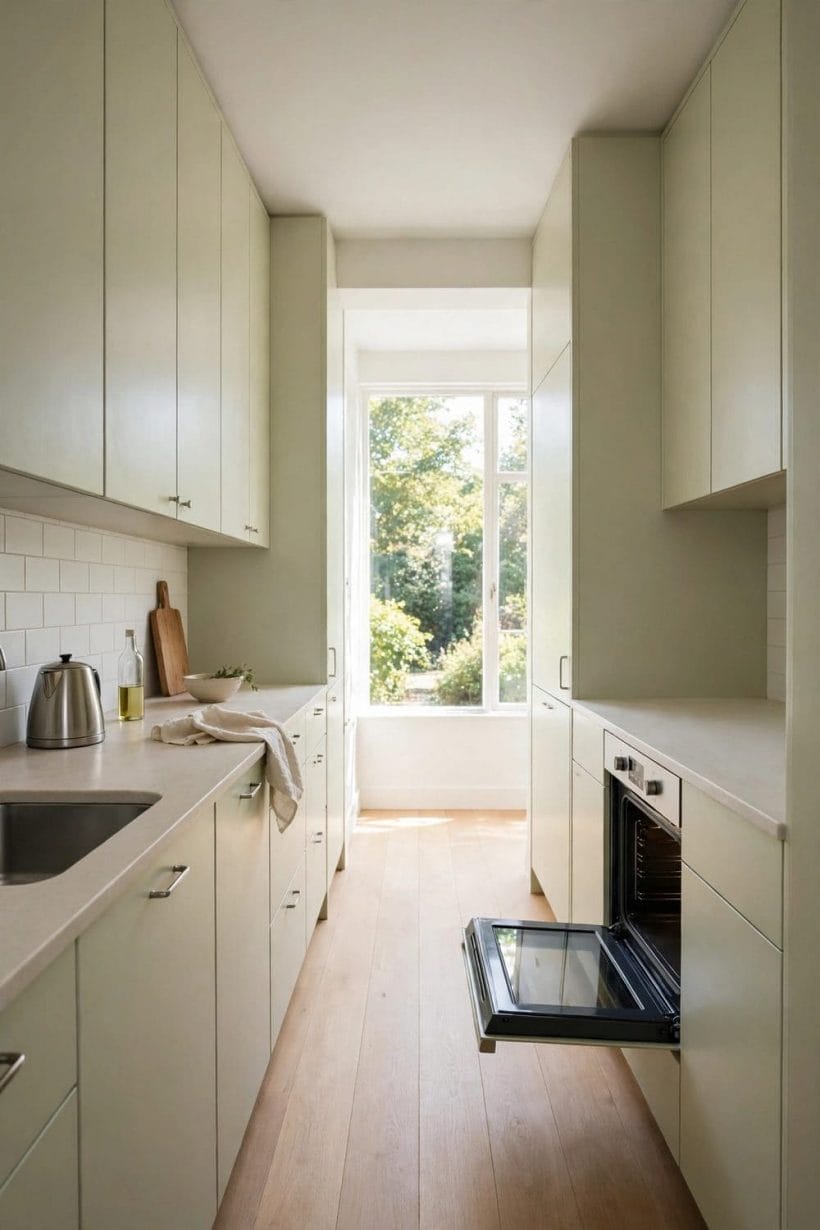
Clearance is where this door earns its keep, and where it must be checked hardest. The space it saves is real, but specific: the door needs room beneath the cavity to stow, and the room in front changes once no swing has to be allowed for.
Room in Front of the Oven
With no door swinging down, the floor in front of the oven becomes standing space again. Measure yours honestly: the gap between the oven run and whatever faces it, and the route trays take from oven to worktop. The benefit is greatest where that gap is tightest, and only your tape measure can tell you how much difference the stowed door would make at home.
Room Beneath the Cavity
The stowed door has to go somewhere, and beneath the cavity is that somewhere. Check what your chosen format places below the oven: a drawer, a plinth or a warming compartment may share that zone, depending on the design. The maker’s fitting notes describe each model’s arrangement. Treat that space as spoken for.
Floors, Plinths and Toe-Kicks
Small details decide whether the travel stays smooth: level flooring up to the oven, a plinth fitted as the maker intends, and nothing stored where it can drift into the door’s path. Whether your present cooker is a range or a built-in unit, the gas range guide sets out how formats sit within a run — useful background before you measure.
4. Formats to Choose From
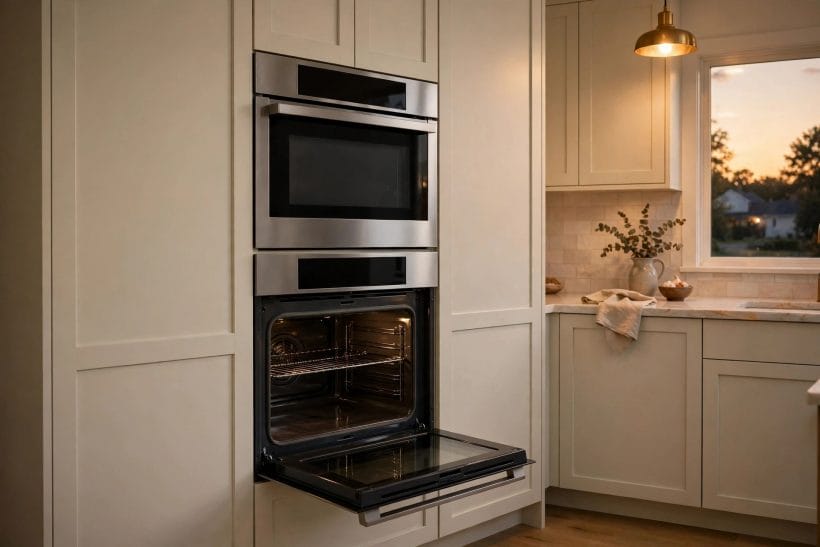
The sliding door appears on more than one kind of oven, and the format matters as much as the door itself. Capacity, height and the work around the oven all follow from it, so decide the shape of the appliance first and the door within it.
Built-In Single and Double Ovens
Built-in ovens sit within cabinetry, at under-worktop height or in a tall housing at eye level. A single oven gives one cavity; a double oven gives two, typically a larger main cavity and a smaller second one. At eye level the stowed door is especially welcome, because no dropped door stands between you and a high shelf. Check which cavity carries the sliding door before assuming both do.
Range Cookers With a Sliding Door
On a range cooker the oven sits beneath a hob as one freestanding appliance, and a sliding door changes the whole front: no wide door dropped towards your shins while pans are on the go above. The major appliances guide treats cookers alongside the other large appliances they must live with — a range is chosen as a suite of functions, not as a door with extras.
Height, Width and the Housing
Every format asks something of its housing: a cabinet of the right size, ventilation as the maker specifies, and a power or fuel supply in the right place. The fitting notes are the authority, and they belong to the professional fitting the appliance, as later sections explain. Choose the format your housing and cooking genuinely suit.
5. Who a Slide-Away Door Helps Most
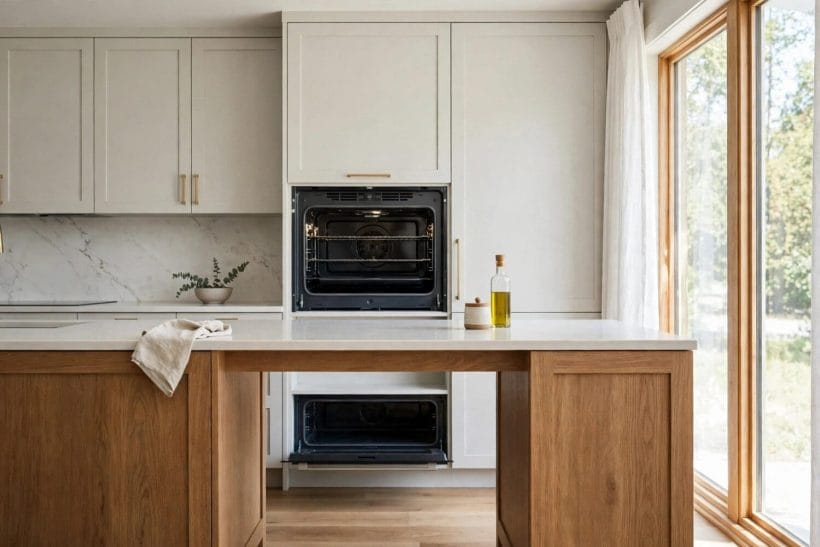
Not every kitchen needs this door, and honesty about that strengthens the case where it does help. The pattern is consistent: the tighter the room and the closer the cook works to the oven, the more the stowed door gives back.
Small and Galley Kitchens
In a galley kitchen, two runs face each other across a narrow floor, and a dropped door can bridge much of that floor, turning unloading into a sideways shuffle. With the door stowed, you stand in front of the oven, lift the tray out, and turn to the worktop behind you without negotiating a hot panel at knee height. For one-cook kitchens, that sequence is the whole argument.
Close Islands and Busy Walkways
An island placed close to the oven run creates the same problem in a larger room: the door opens into the space where a second person is standing or carrying shopping past. A stowed door keeps the walkway a walkway. If your island or table sits within the swing of a conventional door, your kitchen belongs high on the list of rooms this design was made for.
Cooks Who Lean In
Some cooks baste, turn and check constantly, working close over the dish rather than lifting it out. A dropped door forces that work to happen at arm’s length, over the door itself. With the door away, you can stand close, reach the back of the shelf more comfortably, and lift heavy dishes upwards rather than outwards and over.
6. Cleaning the Door and Cavity
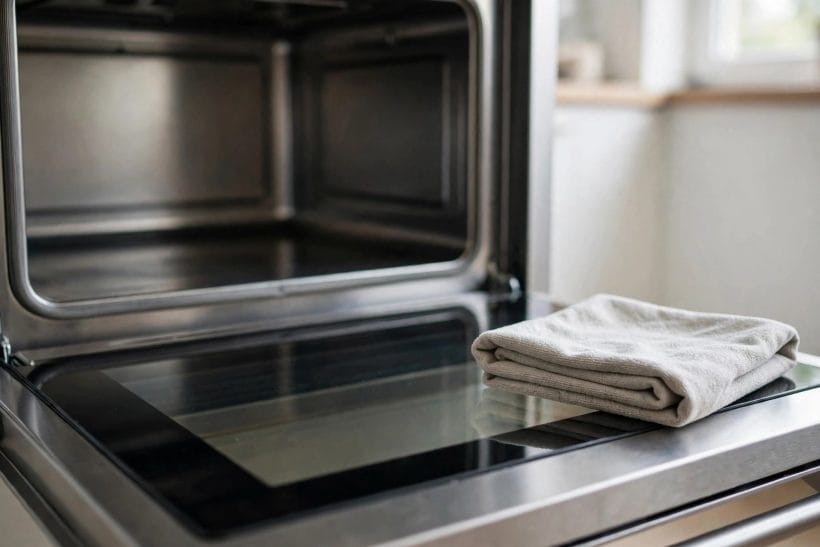
An oven is cleaned where it stands, so access decides whether cleaning happens often or rarely. A door that moves away changes the cleaning geometry of the whole cavity — mostly for the better, provided a few checks are made first.
Reaching Into an Open Cavity
With no door dropped in front, you can stand squarely before the opening and reach the back wall, the cavity floor and the shelf runners without stretching across a panel. Trays and racks lift straight out. A cavity that is easy to reach gets wiped after a spill, while it is still a wipe rather than a project.
Where Splatters Travel
Ask how the moving door meets the cavity: where splashes can land as the door slides, and how the area around the runners and guides is wiped. The maker’s care notes describe each design’s routine. A mechanism kept clean with a soft cloth and warm water suits real life; one asking for tools and patience at every clean will gather what it was meant to avoid.
Cleaning Products and Gentle Habits
Oven surfaces — enamel, glass and seals alike — are harmed by enthusiasm: abrasive pads and harsh chemicals can dull glass and damage finishes that gentle cleaning would have kept for years. Follow the maker’s guidance, clean spills sooner rather than later, and let the door cool fully before cleaning begins.
7. Glass Panels, Seals and Heat
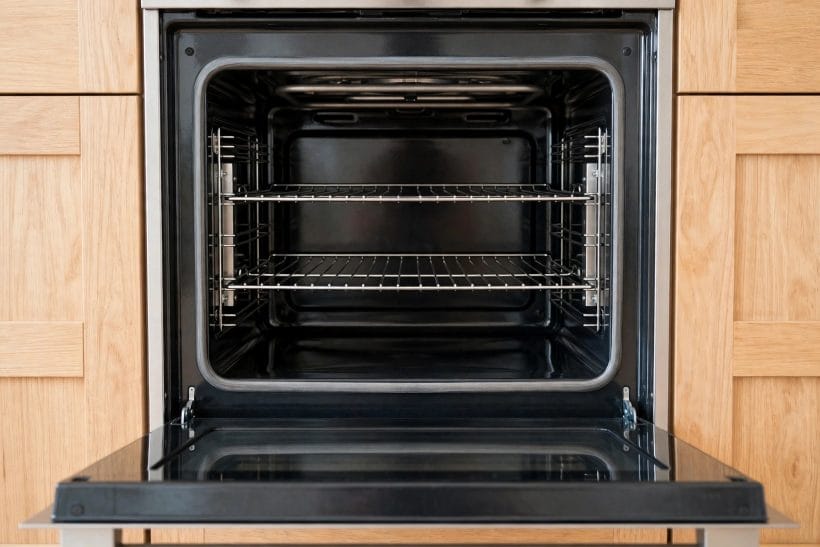
The door is also the oven’s window, insulation and seal carrier, and sliding adds moving parts to all three jobs. Each deserves a general check before the door’s cleverness carries the day.
Glass Panels and Seeing the Food
Oven doors are glazed, commonly with more than one panel of glass, so food can be watched without opening the door and losing heat. Check that the view through the glass is clear and generous, and ask how the panels are kept clean — on many designs the inner glass can be reached or lifted out once the door is open, following the maker’s instructions exactly.
Door Removal, in General Terms
On many ovens, of every door type, the door can be removed for deeper cleaning or service and refitted afterwards — a task the manual describes step by step for that model. Treat removal as an occasional, manual-led job: note whether your design describes it and its refitting clearly, and leave any door that resists to the service visit rather than to force.
Seals and Heat, in General Terms
The seal around the cavity keeps the heat working inside the oven rather than escaping into the room and cabinetry. In general terms, a sound seal sits evenly, feels supple rather than brittle, and meets the door cleanly all the way round. A sliding door must meet its seal as faithfully as a hinged one, so check the closed door for even contact, and ask how a worn seal is replaced.
8. Safety in Everyday Use
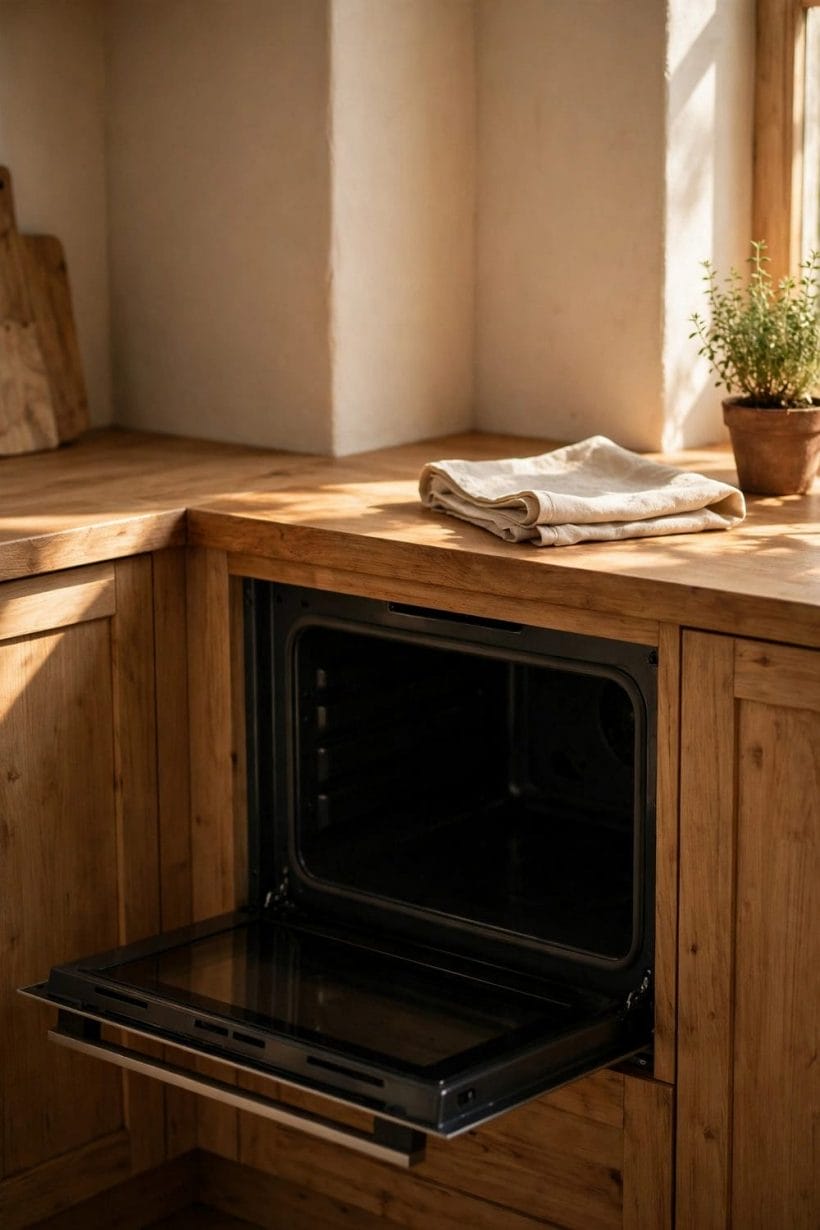
Safety here is best stated plainly and generally, without figures: an oven door is hot while cooking and for some time afterwards, whatever way it opens. The sliding design changes where that hot surface spends its time, and that change is worth understanding rather than overstating.
A Hot Door, Stowed Out of the Swing Path
A dropped conventional door puts its hot inner face across the standing space, at the height of a reaching hand or a passing leg. A stowed door takes that surface out of the swing path and parks it beneath the cavity, so the route past the oven stays clear while dishes are lifted in and out. It remains hot — but hot in one predictable place, not across the walkway.
Children, Pets and Passing Traffic
In family kitchens the oven front is a thoroughfare, and small hands and curious pets explore at door height. No door design removes the ordinary rules: supervise children around a working oven, keep pets out of the kitchen while loading and unloading where you can, and teach everyone that the oven front is warm even when it looks innocent. The stowed door removes one obstacle; the habits still matter most.
Handles, Gloves and Unhurried Habits
Most oven mishaps are hurry wearing gloves that do not fit. Use dry gloves that cover the wrist, keep a clear landing place ready before the door is opened, and finish the sequence after unloading rather than leaving the cavity open while you turn away. In the showroom, test that the handle can be gripped securely with a gloved hand through the door’s whole travel.
9. Cost Drivers and Professional Fitting
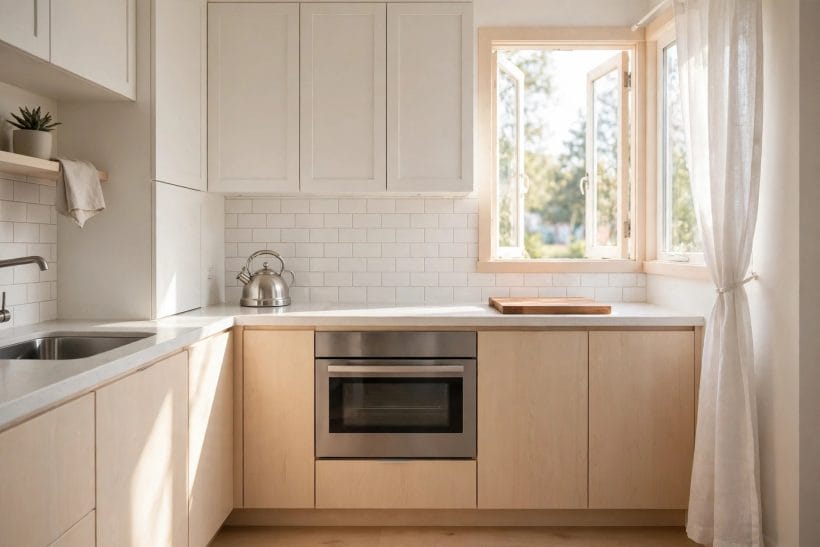
What an oven like this costs is driven by understandable things, and naming them honestly beats quoting figures that would date and differ between shops. Fitting is not a driver to economise on at all.
What Drives the Cost, Qualitatively
Three drivers shape the outlay. The mechanism: runners, guides and a door built to travel are more involved than a pair of hinges. The format: a tall built-in double oven is a larger appliance than a single under-worktop model. And the capacity class: bigger cavities, more functions and finer finishes move an oven up its range. The discount appliances guide shows how to read offers without letting a reduction choose the wrong model.
Fitting Belongs to Professionals
An oven connects to serious services. Gas work and electrical work are professional-only, throughout and without exception: a gas appliance is fitted and tested by a qualified gas professional, and a hard-wired electric oven is connected by a qualified electrician, with housing, ventilation and clearances checked against the maker’s notes in the same visit. Your part is preparation — never the connection itself.
Small Kitchens and the Value Question
Judge value against your room. In a spacious kitchen the door is a pleasure; in a tight one, it can be the feature that makes the layout work at all. The compact kitchen appliances for tiny houses collection makes the same point at the smallest scale: every appliance in a compact kitchen must earn its footprint, and a door that returns standing space earns part of its place before it cooks anything.
10. Warranty, Spares and Service Questions
Close the decision at the shelf, with the years after fitting day in view. A moving door asks a little more of its maker’s support than a hinged one, and the time to discover how that support works is before the purchase, not at the first stiff runner.
The Warranty Questions
Read the maker’s cover as written: what it covers — cavity, door, mechanism and glass — and for how long, and what it asks in return, usually no more than correct fitting and gentle care. Cover that names the door’s moving parts is worth more here than a longer promise that stays vague. Keep the wording with the paperwork.
The Spares Questions
Ask whether the parts this door will one day need are sold openly and listed by model: runners or guides, seals, handles and replacement glass among them. Ask how a seal is ordered, and whether a local service agent can obtain parts without a long wait. A maker who lists spares by model expects its ovens to be kept.
The Service Questions
Finally, ask who services the oven locally, how stiff or noisy door travel would be assessed, and whether a first inspection of the mechanism is a short visit or a major strip-down. Keep the model details, fitting notes and care notes together somewhere dry. Years later, every useful conversation about this door begins with that model name.
Final Considerations
A sliding, stowing door is a small mechanical idea with an outsized effect on a tight kitchen: standing room returned, shelves reached squarely, a hot surface parked out of the walkway. The checks in this guide — mechanism, clearance, cleaning, glass and seals, safety, format, fitting and spares — repay their hour at every meal.
Ask them of every oven carrying such a door, let your floor space and cooking habits speak before the showroom does, and choose the model your home can keep. The tiny kitchen ideas collection carries the small rooms this door suits best, and the tiny house kitchen design guide shows the same thinking at its most concentrated — a kitchen where nothing swings into space somebody needs to stand in.


0 Comments