

A wooden crate costs almost nothing, weighs almost nothing, and already looks like it belongs in a garden — which is why gardeners keep turning them into planters, and why so many of those planters disappoint by August.
This guide covers what to know before using a wooden crate as a planter box: choosing a safe crate, drainage and liners, soil and planting, and the small construction tricks that decide whether it lasts one season or five.
1. Wooden Crate Planters at a Glance
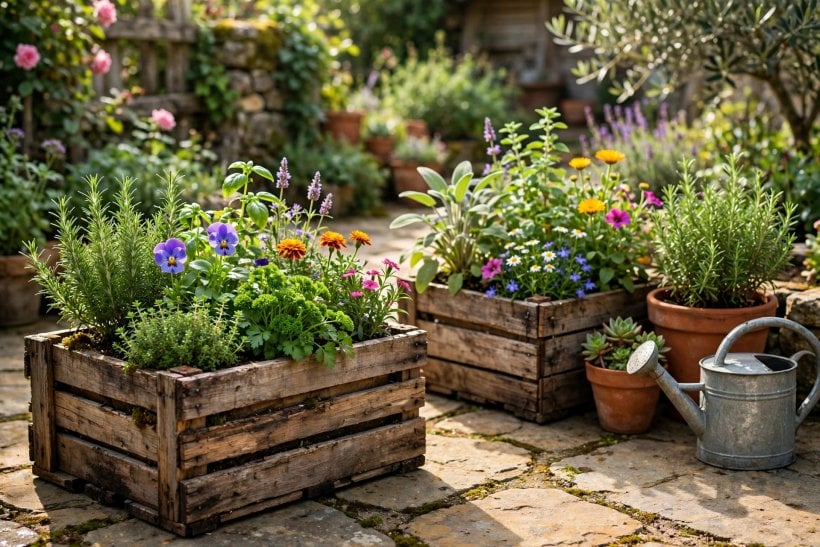
A wooden crate planter is a slatted or solid-sided wooden crate — ex-fruit crate, wine crate, market box or a purpose-built garden crate — adapted to hold soil and plants by adding drainage and usually a liner. The entity’s attributes are the crate’s virtues and faults in one list: it is light, cheap, breathable and charming; it is also thin-timbered, quick to rot where soil touches it, and of uncertain history. Everything in this guide is a way of keeping the virtues and managing the faults — lining the soil away from the slats, lifting the base off the ground, and choosing crates whose past life will not poison their next one. The crate sits in the same family as the projects in this guide to creative log planters: found timber, given a second working life in the garden.
| Why use a crate at all? | Cost, weight and looks. A crate planter can be carried by one person, moved with the sun or the season, and suits the relaxed, recycled register of a cottage or kitchen garden perfectly. |
| What is the biggest risk? | History. A crate that carried chemicals, or timber treated with preservatives not meant for food growing, has no place around edible plants. Know the crate’s past or grow ornamentals in it. |
| Does it need a liner? | Almost always. A liner keeps soil off the timber and moisture in the root zone; unlined crates dry out fast and rot faster. The liner choice is a section of its own below. |
| How long will it last? | Honestly variable — a lined, raised, sound hardwood or thick softwood crate gives several seasons; a thin fruit crate in ground contact may give one good summer. Plan for charming and temporary, be pleasantly surprised. |
| What grows best in one? | Shallow-to-medium rooted, thirsty-but-forgiving plants: herbs, salads, strawberries, annual flowers and bulbs. Deep-rooted and very thirsty crops outgrow the format quickly. |
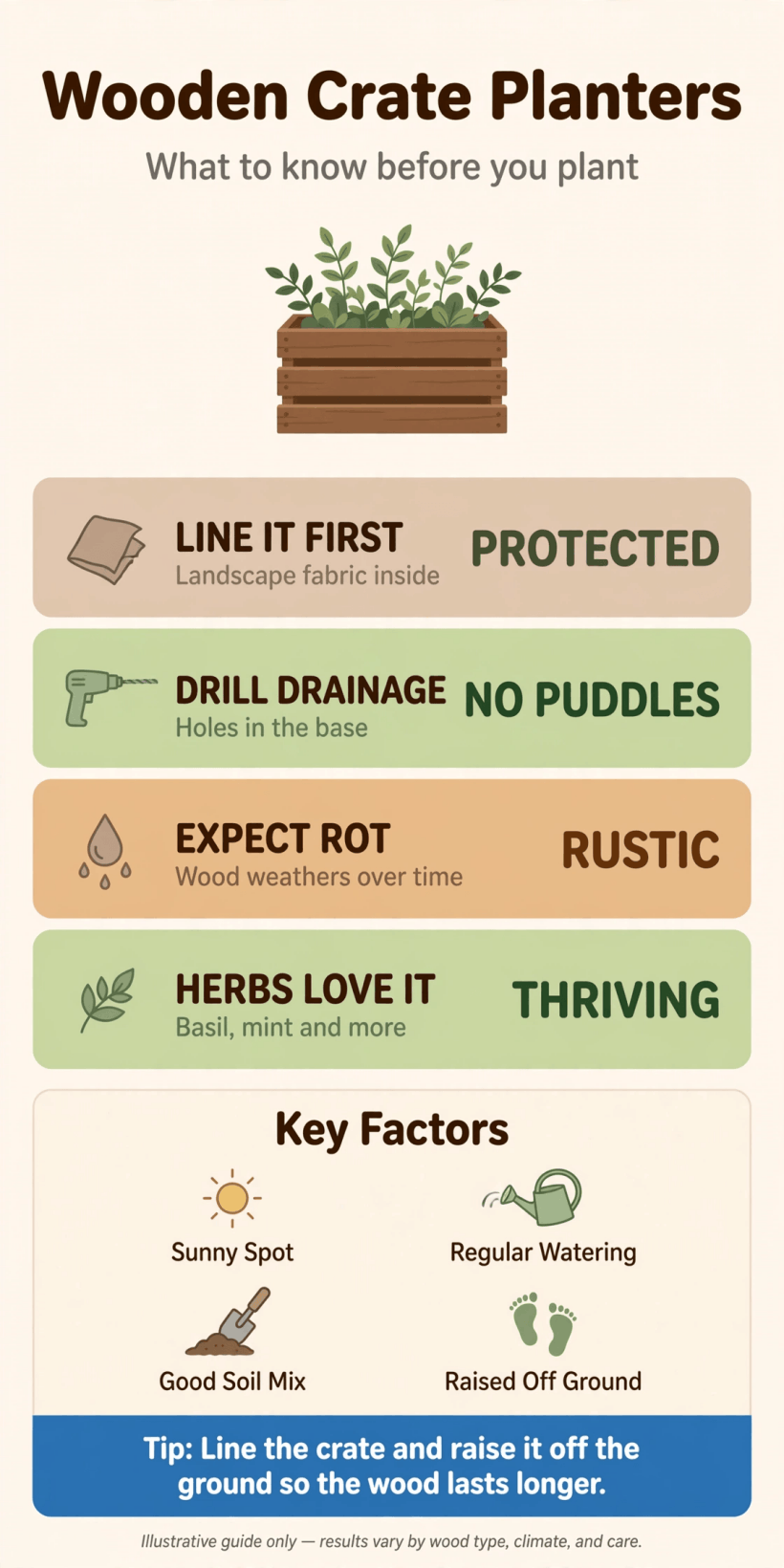
At a glance: sound crate, known history, liner in, base up — then plant it like the small, fast-drying container it honestly is.
2. Choosing a Crate: Sound Timber and a Safe History
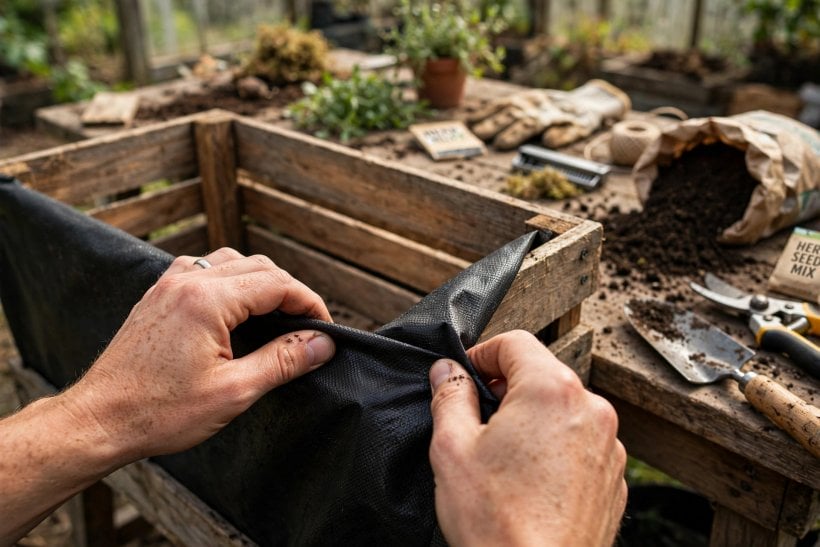
Start with structure. A planter crate holds a surprising weight of wet soil, so reject anything with cracked slats, split corner posts or rusted-through fixings; flex the crate empty, and imagine it twice as heavy and being carried — because you will carry it, full, at least once. Thick-slatted crates built for bottles, produce or machinery outlast the tissue-thin slats of decorative gift crates by seasons. Corner construction matters more than side decoration: a crate is only as strong as the four corners its whole load hangs from.
Then the history check, which for edible growing is the section that matters most. Crates that carried food, wine or household goods are the safe pool. Crates of unknown industrial history — stained with oils, smelling of solvent, or stencilled with chemical markings — should grow flowers at most, or be passed over entirely. Timber treatment is the quieter question: old pallets and crates sometimes carry treatment stamps, and where a stamp indicates chemical treatment rather than heat treatment, the cautious and standard advice is to keep that timber out of food-growing service. When in doubt, line thoroughly and grow ornamentals — the garden has a thousand uses for a handsome crate that never has to be food-safe. The same found-timber discipline runs through these log furniture and planter projects: sound wood, known provenance, treated with respect for what it carried before.
3. Preparing the Crate: Cleaning, Strengthening and Feet
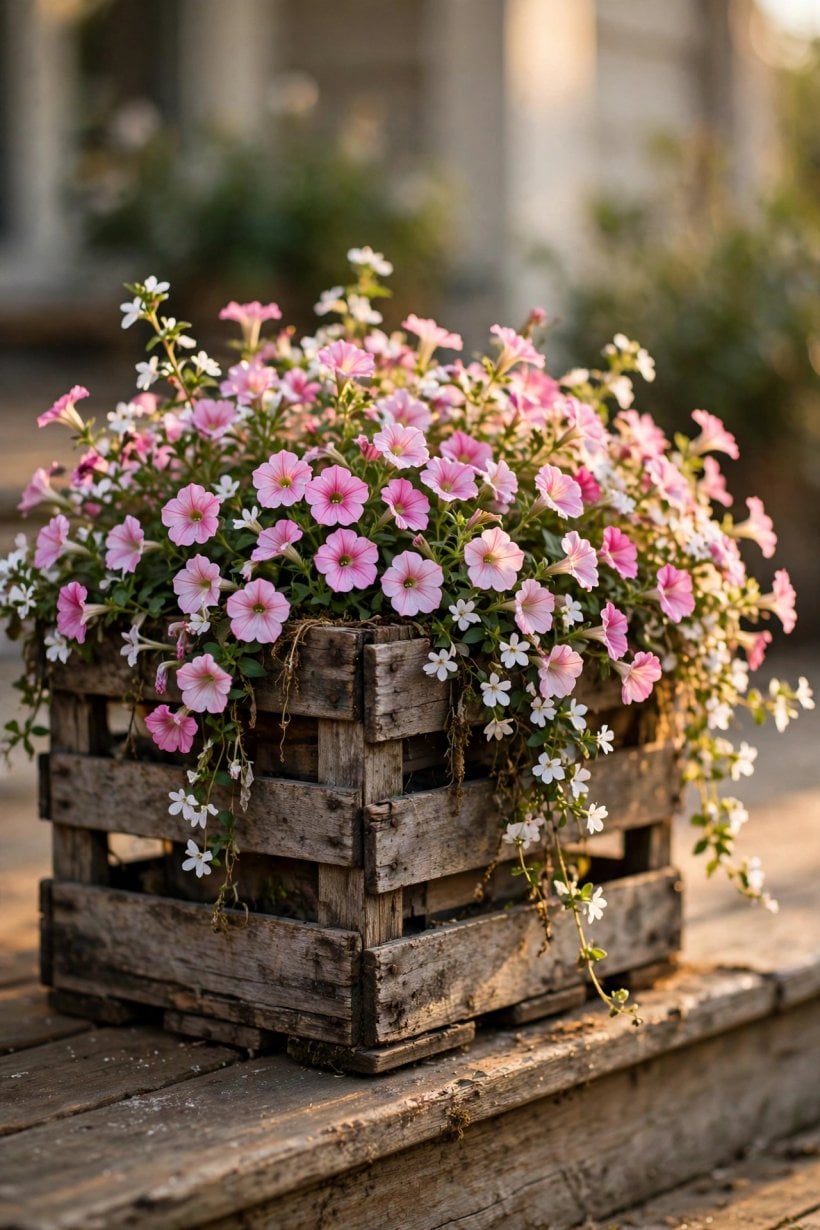
Preparation is an unglamorous twenty minutes that doubles the crate’s life. Brush out soil, dust and the previous life’s debris; wash if the history is food-safe and let it dry fully. Tighten or replace loose nails and staples — protruding points will find your hands all season — and add a screw or two to any corner that rocks. If the base slats are widely spaced, add one or two battens across them: the liner and wet soil will otherwise belly through the gaps and split the fabric by midsummer.
Feet are the highest-value addition on the list. Raising the crate even a small distance off the ground — on timber battens, brick offcuts or purpose-made pot feet — breaks the permanent damp contact that rots bases, lets drainage escape instead of pooling underneath, and slows the slug-and-snail motorway into the planter. While it is upside down for its feet, drill the drainage: a pattern of holes through the base slats, generous rather than timid, because a crate planter’s failure mode is waterlogging far more often than drought at the base — the drought happens at the top, and the next sections deal with it.
4. Drainage and Liners: The Working Heart of the Conversion
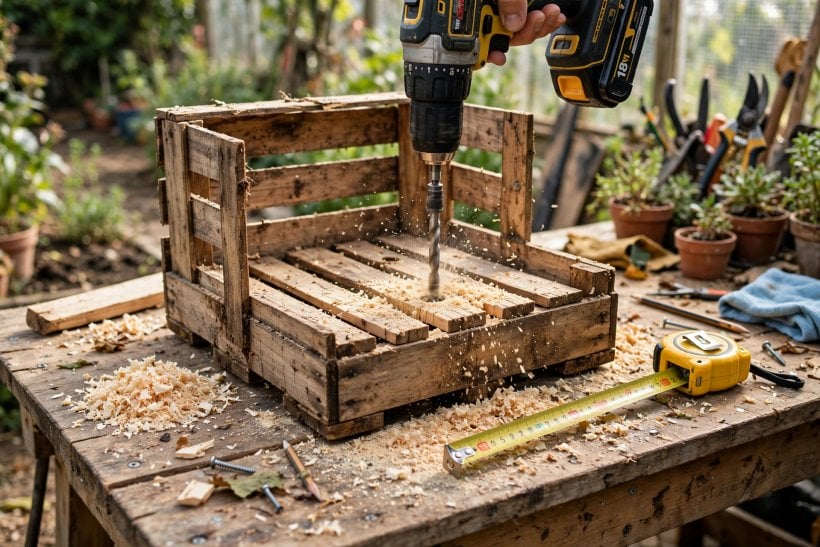
The liner does three jobs at once: it holds the soil in through the slat gaps, it keeps soil and its moisture off the timber (slowing rot), and it moderates the crate’s naturally fast drying. The main options trade durability against breathability. Landscape fabric is the durable default: it passes water, holds fines, and survives several seasons; staple it loosely so soil pressure settles it into the corners rather than tearing it taut. Hessian and burlap are the good-looking, breathable choice — they read beautifully through slats and suit herbs and salads — but they rot in a season or two and are best treated as renewable. Plastic sheeting is the most protective of the timber and the least forgiving of the roots: if you use it, punch drainage holes through it in a deliberate pattern, because a fully wrapped crate is a bucket, and buckets drown plants.
Fit whichever liner you choose like upholstery, not like a bin bag: press it into the corners, staple around the top inside edge below the rim so the fixings stay hidden, and trim the excess. A shallow layer of coarse material over the base holes — a few crocks or a handful of gravel — keeps the drainage paths from sealing with fines, a small classic step that container gardeners swear by. All of this is standard container craft, and the wider repertoire in these container garden ideas applies to a crate exactly as to a pot — a crate is simply a container with corners, better looks and worse manners.
5. Soil, Filling and the Weight Question
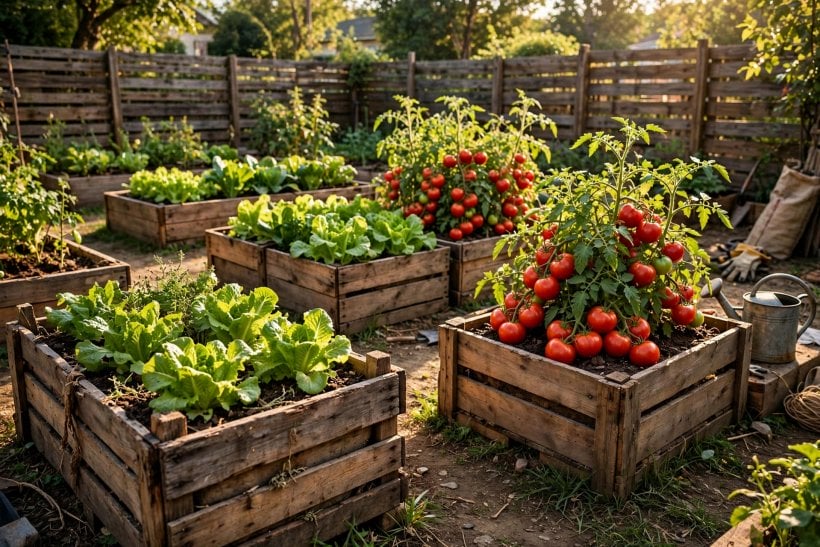
Use a proper container compost or a soil-based potting mix, not garden soil dug from a bed: garden soil compacts in a container, drains poorly, and brings weed seed and soil pests to a party they were not invited to. A mix with some body — soil-based compost with added organic matter — suits a crate better than the lightest peat-free multi-purpose blends, because the crate’s slatted sides lose moisture to the air and the soil must hold its share. Mix in water-retaining granules or a generous proportion of compost if the crate will sit in sun; the theme, again, is that this container dries from five sides, not one.
Fill to a little below the rim — soil settles, and a brim-full crate sheds its first watering across the patio. Then face the weight honestly: a filled, watered crate of any size is a two-hand lift, and a big one is a two-person or a trolley job. Decide its position before filling wherever you can, add casters under a batten frame if it must move for sun or frost, and never plan to drag a filled crate by its top slats — that is how corners part company with crates. If the planter is destined for a balcony or a roof terrace, the weight check stops being a courtesy and becomes a structural question: ask it before the soil goes in, not after the celebration planting.
6. What to Plant: Suited Crops and Planting Patterns
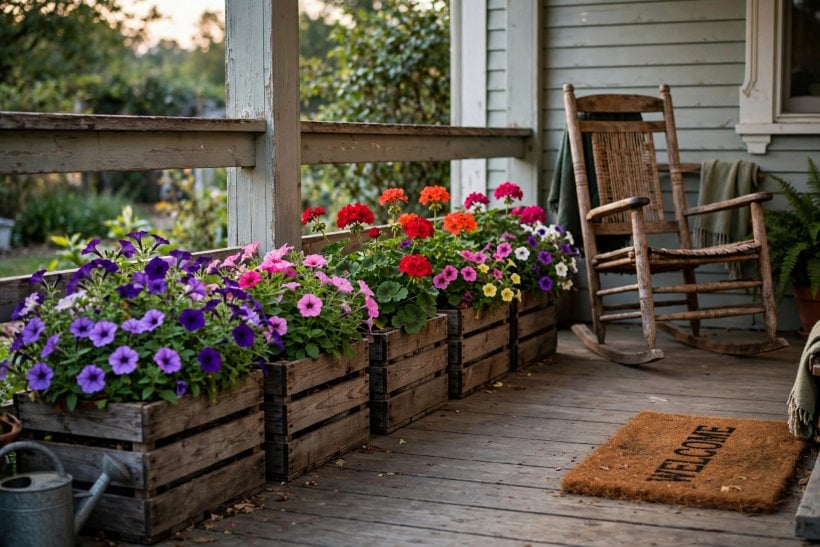
The crate’s depth writes the planting list. Shallow crates are herb and salad country: basil, parsley, chives, cut-and-come-again lettuce, radishes and spring onions live happily in a hand’s depth of soil, and a herb crate by the kitchen door is the single most-used planter most gardens ever own. Medium crates take strawberries — which trail over slatted sides as if designed for it — dwarf beans, chillies and peppers in a warm spot, and the whole annual flower repertoire: petunias, geraniums, lobelia and marigolds in the relaxed, overflowing register that suits a crate’s looks.
Plant a crate more densely than a bed. Containers forgive crowding because you control the water and feed, and a crate planted sparsely looks like an apology by July; planted generously, it becomes the tumble of green the whole idea promises. Feed on a container rhythm — a liquid feed at the maker’s stated intervals through the growing season — because a small volume of soil holds small reserves, and the leaching from frequent watering strips them steadily. Succession is the salad grower’s trick: sow a short row every few weeks rather than the whole crate at once, and the planter produces from spring to autumn instead of peaking for one heroic fortnight. The soil-building side of the craft — what good compost is and does — is covered properly in this guide to composting and soil basics, and a crate is one of the best places to spend the finished product.
7. Watering: Managing a Container That Dries From Five Sides

Everything about watering a crate follows from its geometry: slatted sides breathe, and a crate in sun and wind can need water daily in high summer — sometimes twice in a heatwave. Water deeply rather than often-slightly: a thorough soak that runs from the drainage holes resets the whole root zone, while daily sprinkles wet the top and leave the base dry, training roots upward into the driest layer. Morning watering sets the plant up for the day and leaves foliage dry by night; the finger test — soil dry a knuckle deep means water now — beats any calendar.
Three aids make the rhythm easy. Mulch the surface with bark, gravel or a layer of compost: it shades the soil, slows evaporation, and keeps the top layer from crusting. Group crates together in summer — a huddle of containers holds a pocket of humidity and shades its own sides, and the whole group drinks less than the same crates scattered. And for holidays, stand the crate in a shallow tray of water or set a slow drip from a bottle reservoir into the soil; a crate’s reserves are too small for a fortnight’s neglect in July, and asking a neighbour to water a named, charming planter is, experience shows, far more successful than asking them to water “the garden”.
8. Finishes, Paint and Making It Look Intentional
A crate planter looks best when it looks chosen, and the finishing touches are cheap. Exterior wood stain or paint on the outside only — keep finishes off the soil-facing interior, where the liner belongs — turns a rescued box into a designed object: deep green and black disappear into planting, white and pale colours lift a shaded corner, and the classic is no finish at all on sound weathered timber, which needs nothing. Where paint is used on a food-growing crate, choose products sold for garden timber and let them cure fully before lining and planting.
Composition is the other half of looking intentional. Crates compose in odd numbers and in steps: a trio at staggered heights — one on its feet, one on a low bench or upturned crate, one at ground level — reads as a display rather than storage. Repeat the planting palette across the group so the eye reads one scheme in three boxes. Stencil a word or a number if the crate’s own markings are ugly, and keep the handsome original stencils — produce marks, vineyard names — wherever they survive: provenance is decoration. Placed against the relaxed structures in these garden shed ideas, a finished crate group holds its own as the soft, planted foreground to the garden’s working buildings.
9. Longevity: Rot, Repairs and Knowing When to Retire a Crate
Wood and wet soil are in a slow negotiation, and soil eventually wins. The rot arrives predictably: base slats first, then the lower corners, then any face in permanent ground contact. Your defences are the ones this guide has already built — liner between soil and timber, feet breaking ground contact, drainage that keeps the base from sitting in its own outflow, and a winter habit of emptying, drying and storing working crates under cover, which alone can double a crate’s service. An annual brush-down and a coat of exterior wood treatment on the outside faces, done on a dry spring day, is maintenance measured in minutes.
Repairs are proportionate: a split slat can be sistered with a batten, a corner re-screwed, a base renewed entirely with two fresh boards — a crate is the most repairable planter ever made, which is part of its charm. Retirement comes when the corners no longer hold fixings or the base cannot carry a load of wet soil safely; at that point the crate ends honourably as kindling, and its liner, soil and plants move to its successor. Expect, and budget for, replacement on a cycle of a few seasons for softwood crates, longer for hardwood and thick construction. The planter that “failed” after three good summers did not fail at all — it amortised to almost nothing per season of herbs.
10. Crate Planters Indoors and on Balconies
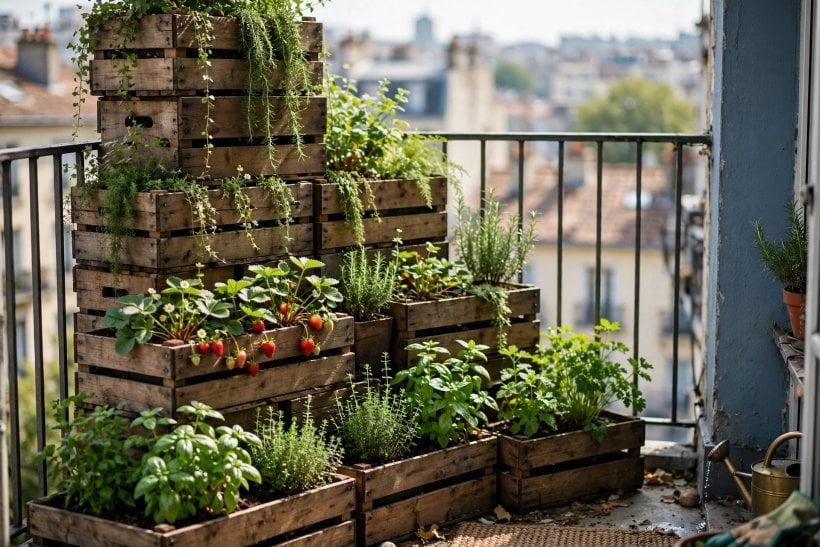
The crate idea travels. Indoors, a lined crate — this time with a watertight liner or an internal tray, because indoor drainage holes have nowhere polite to go — makes a handsome houseplant trough and a classic log-and-kindling store by a stove. On balconies it is close to ideal: light to carry up, kind to surfaces on its feet, and productive in a footprint a raised bed cannot match. The checks indoors and aloft are the practical ones already covered — total watered weight, drainage containment, and air flow around the timber so it dries between waterings rather than staying damp against a wall.
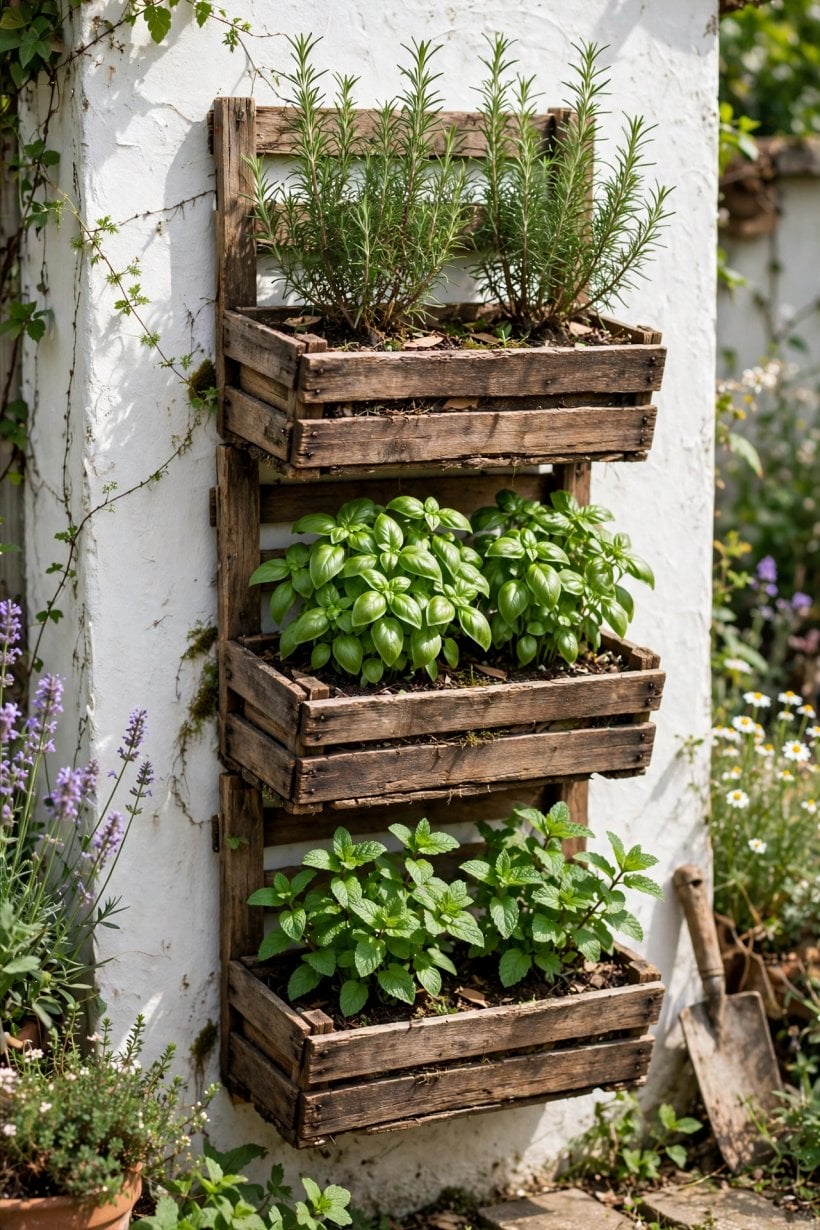
Stacking deserves its own caution and its own applause. As display, crates stack beautifully — stepped pyramids of herbs are a market-garden cliché because they work, each tier draining onto the one below by design. As structure, a filled crate should never be stacked on another filled crate unless the arrangement was built for it: wet soil is heavy, timber sides are not columns, and the second tier’s drainage becomes the first tier’s flood. Build the steps from empty crates, staging or a bench, and plant the display in single layers. Done with that one respect for physics, the crate does indoors and aloft what it does in the garden — turns a few boards and a liner into the hardest-working small planter you own, at home in the small-space schemes in these tiny house landscaping ideas where every object has to earn its footprint.
Final Considerations
A wooden crate becomes a good planter by respecting four things: the timber’s history, the liner between soil and slats, drainage that actually drains, and a base lifted out of the wet. None of them costs real money; together they are the whole difference between a planter and a rotting box of mud.
Choose a sound crate with a past you can trust, prepare it once and properly, plant it generously, and water it like the small fast-drying container it is. It will not outlive a stone trough and was never meant to. It will give you seasons of herbs, strawberries and flowers for the price of a bag of compost — which is exactly the bargain a crate offers, and a good one.



0 Comments