

Every room has one wall the eye already visits first — the wall behind the sofa, the bed’s headboard wall, the wall the door opens onto. An accent wall is simply the decision to dress the wall the eye has already chosen, and to let the other three stay quiet.
This survey works the accent wall whole, as the anchor of the wider home design ideas collection: choosing the wall, painted colour, pattern, real materials, built panelling, the accent’s behaviour room by room, and the light and art that finish it. One wall, fully considered — the highest return on decorating effort a house offers.
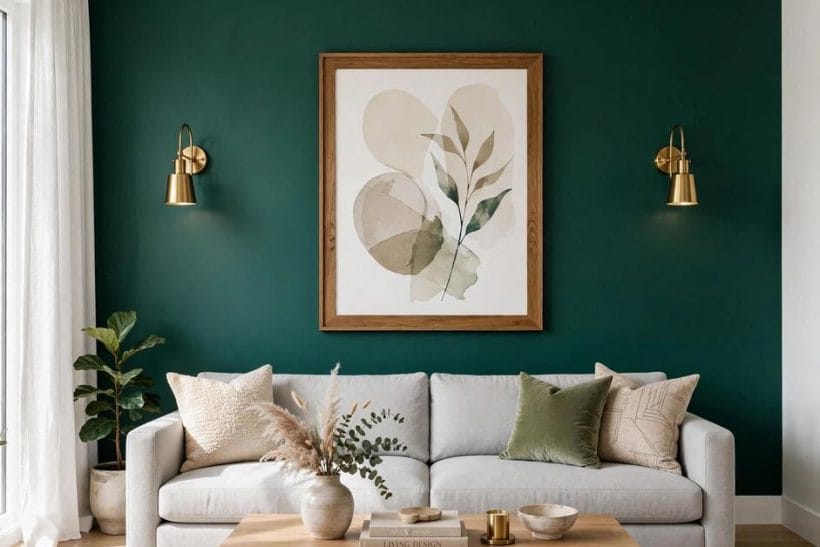
1. Accent Wall Ideas at a Glance
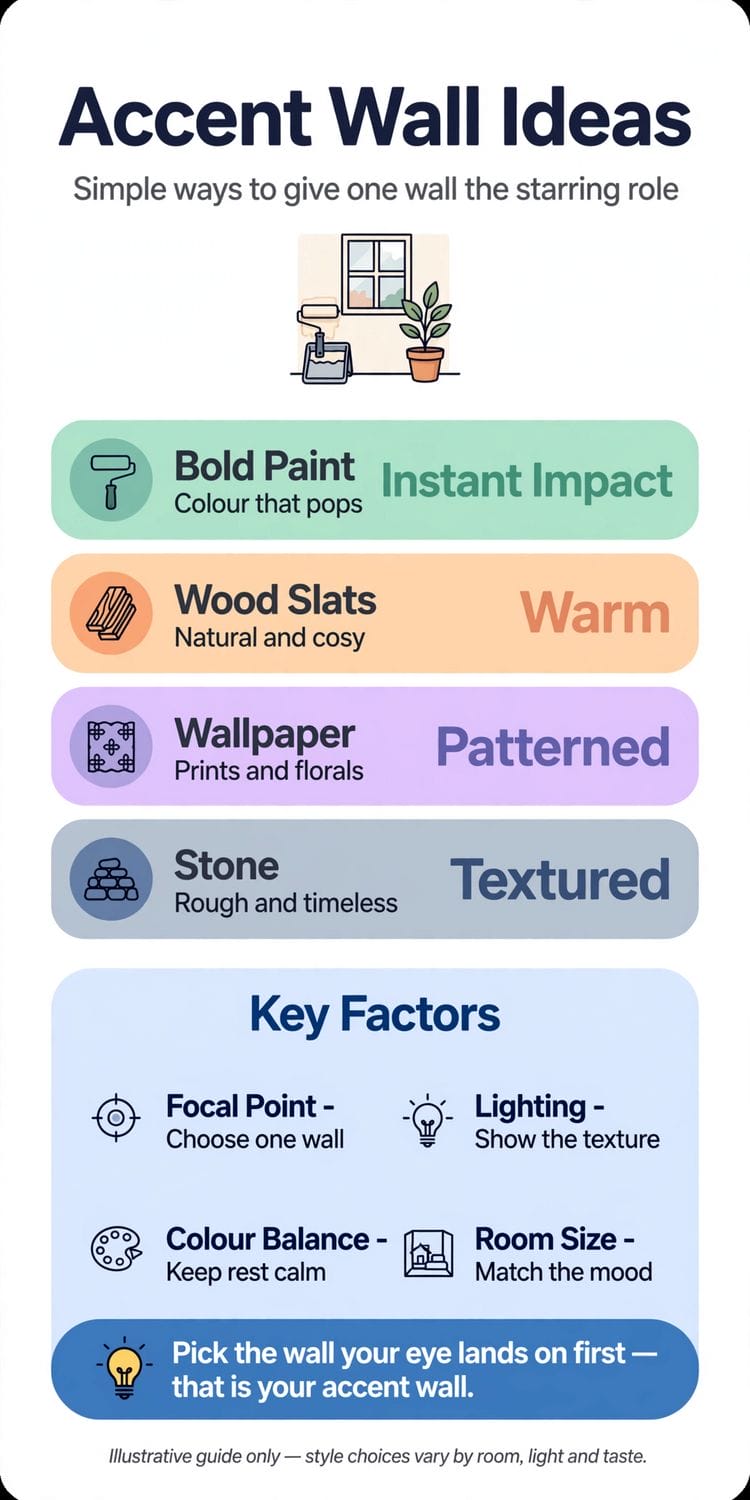
An accent wall is a single wall in a room finished differently from the rest — in a deeper or contrasting colour, a pattern, or a distinct material — so that it becomes the room’s focal plane. Its elements are strict: the right wall (the one the room’s sightlines and furniture already nominate), a finish whose strength matches the room’s size and light, edges resolved cleanly where the accent stops, and a supporting cast — the other walls quiet, the furniture arranged to face or back the accent as intended. Everything else is taste. An accent is a hierarchy decision before it is a colour decision: it works because exactly one wall was chosen.
| Question | Short answer |
|---|---|
| Which wall should be the accent wall? | The wall the room already looks at: the one behind the main seating, the bed’s headboard wall, the fireplace wall, or the wall facing the door. Accent the wall with the fewest interruptions — doors and windows break a finish’s field — and the one whose proportions are kindest. If two walls compete, the room does not need a stronger accent; it needs a decision. |
| How strong should the accent be? | One clear step beyond comfortable. An accent only slightly deeper than the other walls reads as a mistake in the paint order, while an accent at full intended strength — deep colour, bold pattern, real texture — reads as design. The exception is the small or dark room, where a mid-strength accent in a warm or mid tone gives the hierarchy without the cave. |
| Do accent walls make a room look smaller? | A single deep wall can make its own plane feel nearer, which in a long room is a gift — it shortens the corridor feeling — and in a small square room is usually balanced by the other walls staying pale. What shrinks rooms is accents on several walls, or a strong accent chopped by furniture. One wall, fully committed, organises space more often than it eats it. |
| Paint, paper or material — which accent lasts longest? | Material accents — timber, stone, brick, panelling — age slowest in fashion because they read as architecture rather than decoration. Paint is the cheapest to give and to retire, which makes it the right medium for experiments and rented rooms. Paper sits between: more commitment than paint, more pattern than any paint can give. Choose by how long the room’s arrangement will live, not by the photograph. |
2. Choosing the Wall: Sightlines, Symmetry and the Honest Candidate
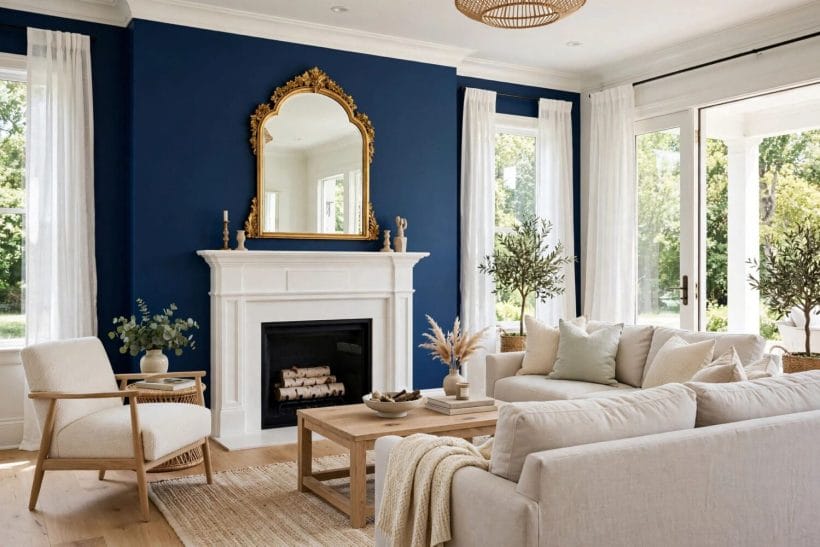
The accent is chosen before it is coloured. This section reads the room — its sightlines, its furniture’s allegiance, its architecture — the same ground-reading the living room ideas pillar performs for a whole room, narrowed to one plane.
1. Accent the wall the furniture already faces
Sofas and chairs are arranged around a focus — fire, television, view, conversation. The wall behind that focus is the room’s natural proscenium, and dressing it confirms an arrangement the furniture has already voted for.
2. Give the bed its headboard wall
In bedrooms the headboard wall is the standing candidate: it is seen on entering, it backs the room’s largest piece of furniture, and its accent is enjoyed in the doorway view rather than from the pillow, where a strong wall would be wasted.
3. Let the fireplace wall keep its crown
A chimney breast is an accent the architecture built — deepen its colour, clad it, or paper its alcoves’ neighbour walls, but do not crown a second wall in the same room.
4. Choose the wall with the fewest interruptions
Doors, windows and radiators chop a finish into episodes. The plainest wall — longest unbroken run, cleanest rectangle — carries colour, paper and panelling best, and needs the least trim negotiation at its edges.
5. Use the accent to shorten a long room
A deep or warm accent on the far short wall of a long, thin room pulls that wall visually nearer and corrects the corridor proportion without moving a stick of furniture.
6. Use the accent to widen a narrow room, carefully
In a narrow room the long walls are the problem, so the accent belongs on a short wall and the long walls stay pale — the eye reads the dressed short wall as the room’s destination and forgives the corridor sides.
7. Respect symmetry where the room offers it
A wall centred on a window pair, a chimney breast or a doorway composes an accent like a picture; an off-centre wall asks the finish to be quieter or the arrangement to be rebalanced around it.
8. Mind what the accent will back
The accent wall is a backdrop: it will stand behind the sofa’s cushions, the sideboard’s objects, the bed’s pillows, the dining table’s settings.
9. Let the door’s first view cast the vote
Stand in the doorway of the room as a guest enters it.
10. Skip the accent where the room is already composed
Some rooms — a panelled study, a tiled bathroom, a room of windows — are finished compositions whose hierarchy is already set. An accent forced into them is a soloist joining a choir.
11. Plan the accent’s edges before its centre
Every accent ends somewhere: at an internal corner, a chimney breast’s return, a door architrave.
3. Painted Accents: Colour Fields, Depth and Restraint
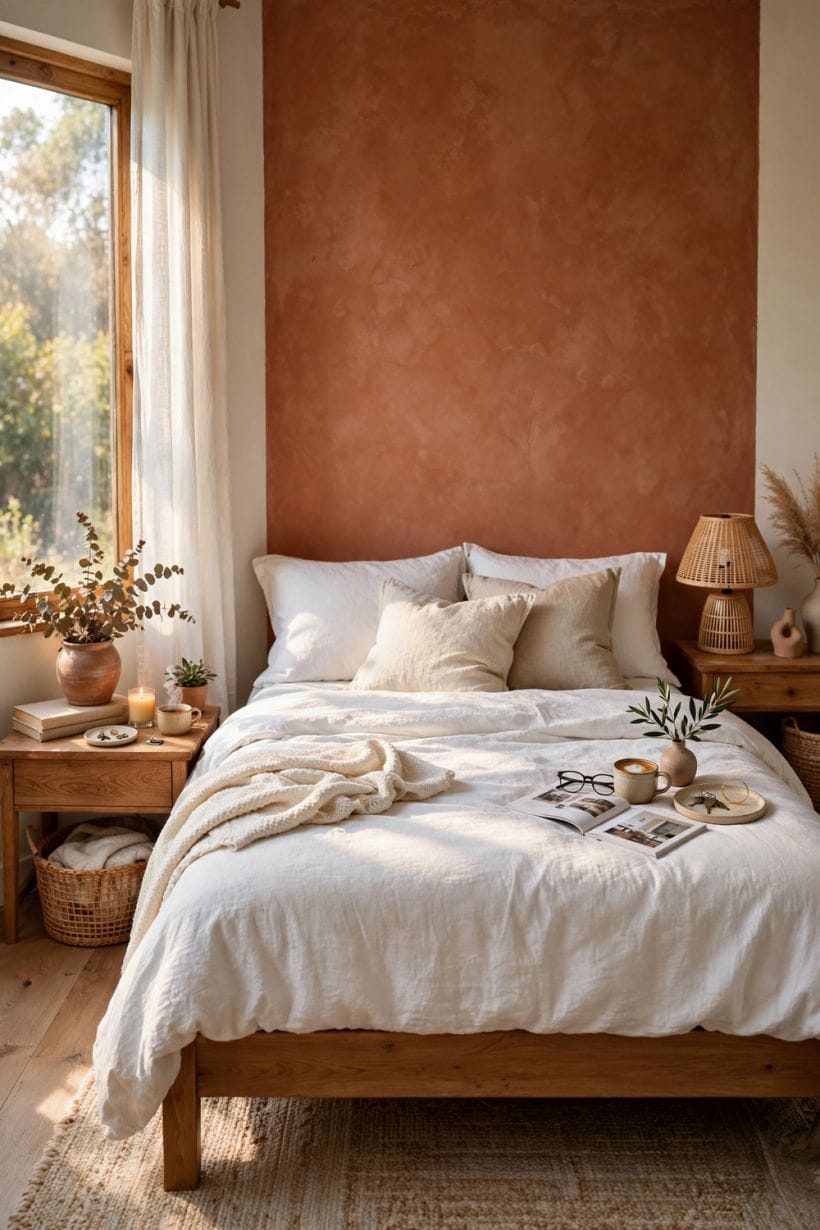
Paint is the accent’s first language — cheapest to speak, easiest to unsay. This section works the painted field in depth, in conversation with the wall-colour thinking of the grey living room walls lane, where a single family’s range is the whole subject.
12. Take the accent one full depth beyond comfort
Choose the colour you love, then use the shade one step deeper than the one your nerve first picked.
13. Deep green, the modern classic accent
Bottle, forest and racing greens give living rooms and studies a library depth that flatters timber, leather and brass, and they photograph as richness rather than darkness.
14. Navy and inky blue, the evening accent
Deep blues make a wall recede and glow at once, especially behind lamplight and pale upholstery, and they are the natural partner of the grey-blue schemes elsewhere in this cluster.
15. Charcoal and near-black, the gallery accent
A charcoal wall is a hanging system: pale art, light furniture and bright objects ignite against it, and the room’s colours all appear more saturated.
16. Terracotta and clay, the warm accent
Earth reds and clay pinks give the accent warmth without brightness — the Mediterranean register — and they flatter plaster, linen, rattan and old timber.
17. Colour-drenched alcoves beside a quiet breast
Paint the alcoves either side of a chimney breast in the deep tone and leave the breast itself in the room’s quiet colour — or the reverse.
18. The two-tone wall: dado depth below, air above
A horizontal split — deep colour below a picture rail or a measured line, pale above — is the accent for rooms that cannot take a full deep wall: halls, dining rooms, children’s rooms.
19. Paint the ceiling’s neighbour: the fifth-wall hint
Carrying the accent colour a short way — onto the ceiling’s edge, a deep picture rail zone, or the wall’s return — can finish an accent whose wall ends awkwardly, softening the stop into a wrap.
20. Tone-on-tone: the accent in the same family
A mid-blue wall among pale blue-grey walls, a warm stone wall among creams: the tone-on-tone accent whispers its hierarchy and suits rooms whose furniture is loud, whose art is the point, or whose household prefers its drama in objects.
21. Test the painted accent at full wall scale
A painted square reads darker and stronger than a card and weaker than a whole wall; paint the largest test the tin allows, live with it through a full day of light, and judge it from the doorway.
22. Keep the other walls honestly quiet
The painted accent’s contract is that its three neighbours stay in the scheme’s pale register, warm or cool as the accent demands.
4. Pattern: Wallpaper, Murals and Painted Design
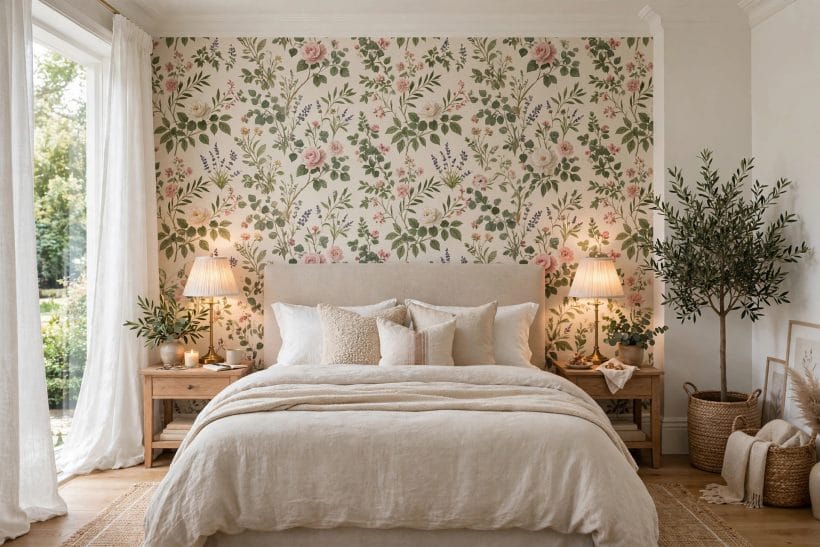
Pattern is the accent with a memory: it gives the wall a story the eye can revisit. This section hangs it — paper, mural and the painter’s own geometries — beside the patterned calm of the transitional living room ideas lane, where pattern is used as diplomacy between styles.
23. Botanical prints, the forgiving pattern
Leaves, branches and garden motifs are the accent pattern households tire of slowest, because nature’s own repeats never feel mechanical.
24. Geometric patterns for the modern room
Lattices, arcs, chevrons and mid-century geometries give contemporary rooms the accent their plain furniture asks for, and they hold a wall’s flatness like a tailored suit.
25. Murals: the wall as a window
A printed landscape, a misty forest, a classical vista — the mural accent replaces the wall with a view, and it is the strongest statement in this survey.
26. Stripes, the proportion tool
Vertical stripes lend a low wall height and formality; horizontal stripes lend width and calm.
27. Grasscloth and texture papers: pattern without print
Woven and natural-fibre wallcoverings give the accent texture instead of motif — the wall gains depth, shadow and a handmade irregularity that flatters plain-lined furniture.
28. Damask and traditional papers, used straight
Classical damasks and heritage prints are not only for period houses; hung on one wall of an otherwise plain modern room they give it a past, and the contrast is the design.
29. Painted arches and shapes: the renter’s mural
A painted arch behind a sideboard, a full circle behind the bed’s head, a rectangle framing a desk zone — shaped colour is the accent reinvented for small budgets and rented walls.
30. Stencilled and hand-finished pattern
A stencilled motif repeated across one wall — or a limewashed, ragged or sponged finish — gives pattern with a hand in it, at paint prices.
31. Pattern scale matched to viewing distance
Patterns are read from where the room is used: the sofa’s wall is read from across the room and can carry the large repeat; the desk’s wall is read from a chair’s distance and rewards the fine one.
32. One patterned wall, plain companions
Pattern multiplies a room’s information faster than colour does; its contract is even stricter.
33. Paper the alcove, the niche, the unexpected inside
The small accent — paper inside alcoves, behind shelves, in the back of a glazed cabinet, on the wall of the smallest room — delivers pattern’s pleasure at miniature risk.
5. Material Accents: Timber, Stone, Brick and Tile
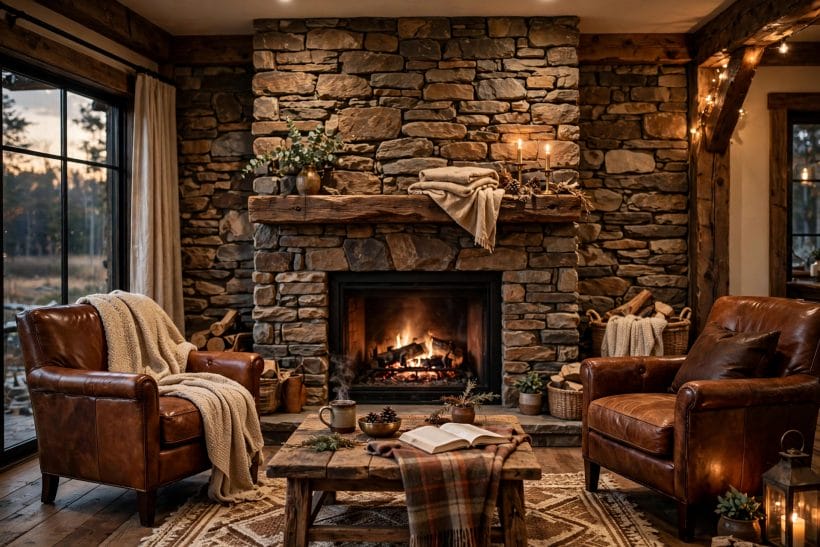
Material is the accent as architecture — the wall changed in substance, not only in surface. This section builds it, from slats to stone, and it is where the survey’s costs honestly rise and its results longest endure.
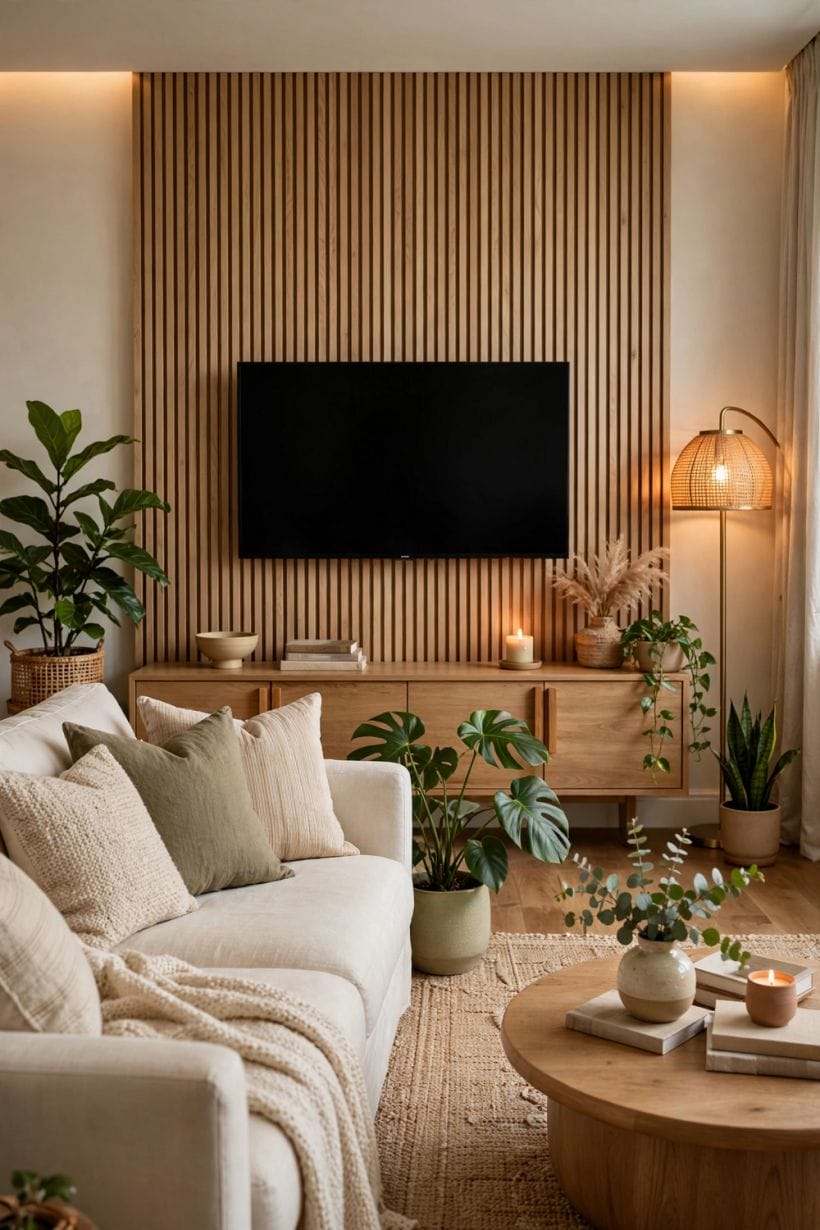
34. Timber slat walls, the contemporary standard
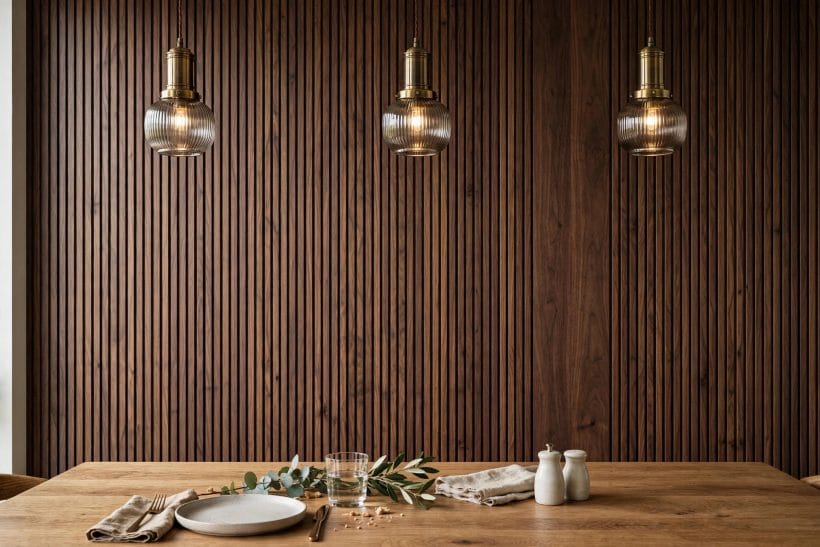
Vertical timber slats over a dark backing give a wall rhythm, shadow and acoustic kindness at once, and they have become the modern accent’s signature for good reason: they flatter screens, beds and sofas equally.
35. Board-and-batten and panelled timber
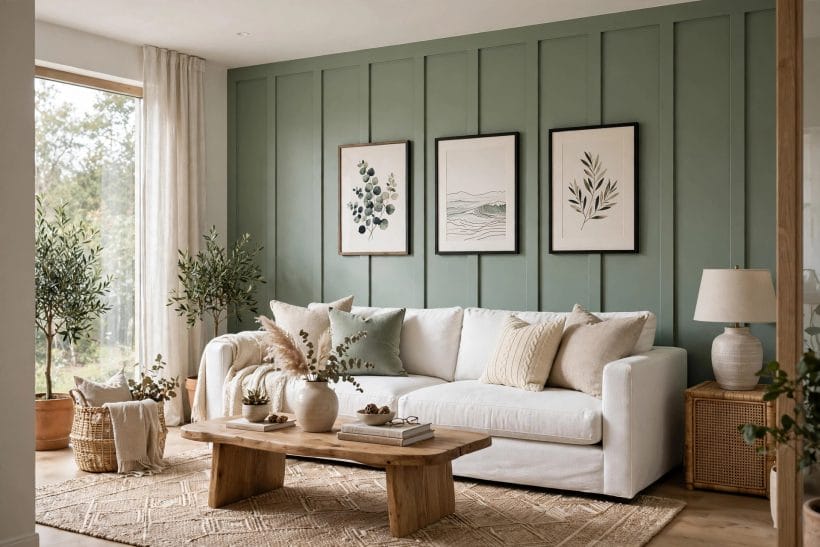
Applied battens over a painted board wall, or full raised panelling, give the accent a carpentered permanence that suits halls, dining rooms and bedrooms alike.
36. Exposed and faux brick: texture with a past
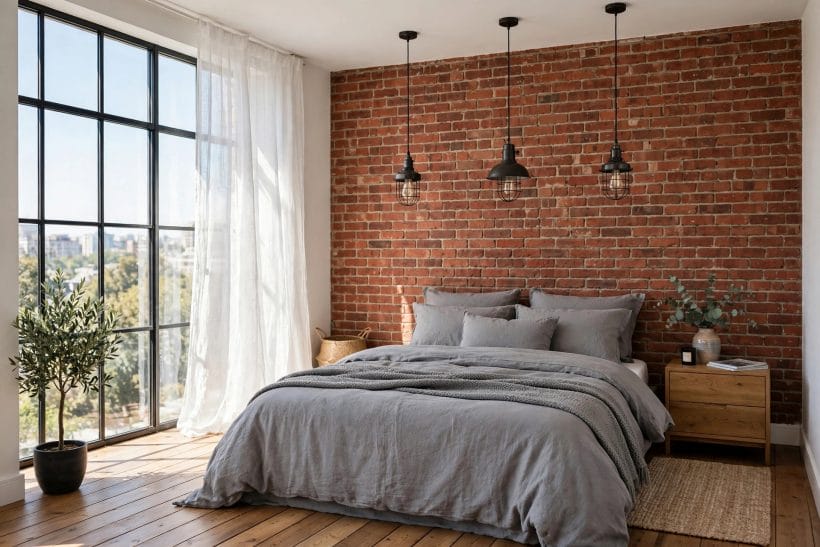
Real brick, uncovered and cleaned, is the accent a house gives itself; brick slips and panels give the same register where the wall is plaster.
37. Stone cladding and the hearth wall
Stacked stone, slate or a single great slab behind a stove or fire makes the wall a geological fact, and the room organises itself around it gratefully.
38. Tile as accent: the wet-room wall
In bathrooms and kitchens tile is the working wall, and its accent is a choice of field: one wall in the patterned, glazed or large-format tile, the rest in the quiet companion.
39. Limewash and clay plaster: the soft material
Mineral finishes give a wall movement — clouded, matte, alive to light — without pattern or panel.
40. Mirror and metal: the light accents
Antiqued mirror panels, brushed metal sheets and metallic finishes make the accent out of reflected light — they borrow the room and give it back doubled.
41. Fabric walls: upholstery at room scale
A wall hung or panelled in fabric — linen, wool, a quiet suede-look — gives the accent softness and sound-absorption that bedrooms and media rooms prize.
42. Books as the material accent
A wall of shelving, filled, is an accent built from the household’s own library — colour, texture and meaning in one surface, and the only accent that improves as it is used.
43. Concrete and microcement: the urban field
Polished plaster and microcement give a wall the cool, continuous surface of the modern gallery, against which timber and textiles glow warm.
44. Mix one material only — and finish its edges
Material accents fail by mixture more than by choice: the slatted, stoned and papered room has three accents and therefore none.
6. Architectural Accents: Panelling, Moulding and Built Form
The built accent changes the wall’s shape — shadow lines, coffers, arches and shelves — and it is the accent least likely to date, because it reads as the house itself. This section raises it.
45. Picture-frame moulding: the tailored wall
Applied moulding rectangles, painted the wall’s own colour, give a flat wall the panelled manners of an older house for the price of timber strips and patience.
46. Half-height panelling with a ledge
Panelling to dado or picture-rail height, capped with a slim ledge, gives halls and dining rooms their wainscot gravity and a display shelf in one build.
47. The coffered and beam-dressed wall
Where a wall meets a beamed or coffered ceiling, dressing the wall’s top zone — a deep frieze colour, a run of panelling carried up — completes an architecture the ceiling began.
48. Arched niches and alcove dressing
An existing alcove or niche is a built accent awaiting its finish: paint its interior deep, paper it, line it with shelves or light it, and the architecture does the rest.
49. The fireplace surround as built accent
Where a fire exists, its surround — stone, tile, timber, plaster — is the wall’s built centrepiece, and the accent budget is best spent enlarging its authority: a deeper mantel shelf, a clad breast, a hearth raised to sitting height.
50. Stair walls: the house’s tallest canvas
The stair wall is the largest uninterrupted plane in most houses and the accent most often wasted.
51. Ceiling-height shelving as architecture
Shelving taken to the ceiling stops being furniture and becomes the wall’s built form — an accent of rhythm and storage that suits studies, living rooms and wide halls.
52. Tongue-and-groove and rustic boarding
Vertical or horizontal boarding gives bedrooms, halls and country rooms a wrapped, cabin-honest accent, painted or limed.
53. The window wall dressed as accent
A wall of windows can be the accent when its dressing is the design: full-height curtains in the scheme’s deep tone, a built window seat beneath, shutters or a pelmet giving the glazing a frame.
54. Ribs, battens and shadow-gap modernism
The contemporary built accent is subtraction: battens standing proud in a strict rhythm, or a recessed shadow gap where the accent panel floats off the wall, lit from behind its edge.
55. Respect the house’s own period grammar
Built accents succeed when they speak the house’s dialect: panelling a Victorian room in its own proportions, boarding a cottage, slatting a modern flat.
7. Accents by Room: The Same Idea, Five Temperaments
An accent is a different instrument in every room. This section tunes it room by room, in the company of the family room ideas lane, where the accent must survive daily life at full volume.
56. Living room: the sofa wall, dressed for conversation
The living room’s accent usually backs the sofa or faces it behind the fire or screen. Its temperament is social: strong enough to be the room’s portrait, calm enough to sit in front of for an evening.
57. Bedroom: the headboard wall, calm at the edges
The bedroom accent backs the bed and is judged from the door and in lamplight. Its temperament is rest: mid and deep tones, soft materials, pattern at pillow-viewing distance kept gentle.
58. Dining room: the candlelit wall
Dining rooms are evening rooms, and their accents should be chosen by lamplight: deep colours, mirror, metallics and traditional papers all ignite after dark. The accent usually backs the sideboard or faces the table’s length.
59. Hall and landing: the travelled accent
Halls are passed through, not sat in, so their accents can be the house’s boldest — the deep colour, the dramatic paper, the stair gallery — because nobody has to live inside them for hours.
60. Bathroom: the working accent
The bathroom’s accent is tile, mirror or a moisture-wise paint behind the bath or basin, and its temperament is practical theatre: small room, short viewing distances, hard wear.
61. Kitchen: the splashback and the dresser wall
Kitchens accented by paper or paint must answer grease and steam; the honest kitchen accents are the tiled splashback field, the glazed dresser wall, the deep colour on a chimney breast or island-facing wall.
62. Home office: the background wall
The office accent stands behind the worker on every video call and behind the desk in every working hour: it wants to be composed, mid-toned and undistracting, with shelving or panelling giving it professional calm.
63. Children’s rooms: the changeable accent
Children outgrow walls faster than any other occupants, so their accents should be the painted shape, the removable paper, the pinboard wall — accents priced for retirement.
64. Small rooms: the mid-strength rule
In the smallest rooms the accent works at mid strength — a clear statement in a mid or deep-warm tone on the plainest wall, companions pale — because a full-strength accent at close quarters shouts, and a timid one merely stains.
65. Open-plan rooms: the accent as zoning
In open-plan spaces the accent wall is a boundary: it tells the dining end from the sitting end more cheaply than any screen.
8. Light, Art and Finishing: Making the Accent Land
An accent is finished by what stands against it and what shines on it. This closing section lights and hangs it, alongside the pale discipline of the white living room ideas lane, whose quiet grounds make other rooms’ accents possible.
66. Light the accent deliberately
A washed wall of light — from a picture light, a pair of sconces, or a lamp placed to rake across texture — completes material and panelling accents, whose whole effect is shadow.
67. Hang art as the accent’s partner, not its rival
Art on an accent wall should be in conversation with it: pale pictures ignite on deep grounds, dark frames steady pale papers, and one large piece usually serves a strong wall better than a scatter.
68. Let furniture silhouettes do the foreground
The dark sideboard against the pale accent, the pale sofa against the deep one — the accent’s success is measured in silhouettes.
69. Repeat the accent’s colour twice, quietly
Two small echoes — a cushion, a vase, the spine colours of books on a shelf — tie the accent into the room without challenging it.
70. Carry the accent’s material once more
As with colour, a single repetition of the accent’s material — the slat timber echoed in a side table, the stone in a hearth or a threshold — marries the wall to the room.
71. Finish the ceiling line and the skirting
An accent that stops at a ragged ceiling line or floats above an unresolved skirting reads as unfinished whatever its centre holds.
72. Live with it before extending it
The accent’s success tempts extension — a second wall, the whole room — within the week. Resist for a season. The accent’s power is its singularity, and rooms are most often ruined by the encore.
73. Keep a retirement plan for bold accents
Paint can be painted out, paper can be stripped, panels can be removed — but the household that chooses a strong accent should know its exit cost before entering.
74. Photograph the finished wall, once
A single photograph from the doorway is the accent’s honest audit: it shows the hierarchy, the edges and the silhouettes as a guest receives them, and it catches the one object too many that the room’s familiarity hides.
75. Let one room keep the idea pure
If the house takes to accents, let each room’s be its own — but keep one room, the best-lit and most-lived, where a single accent wall is executed perfectly and let alone.
9. Checks and Mistakes: Before the First Purchase or the First Stone
Check the wall before the finish: is it the room’s natural focus, the plainest field, the one the doorway frames? Check the finish against the room’s light at its worst hour, and against the furniture silhouettes it must back. Check the edges — every accent is believed or doubted at its borders, so walk the corners, the ceiling line and the skirting before a tin is opened or a panel ordered.
The mistakes are this survey’s laws broken: two accents competing in one room; a timid accent at half strength reading as an error; pattern or colour chosen from a card and never tested at wall scale in the room’s own light; material accents mixed from three stories at once; and the strong accent chopped by tall furniture until only its top edge shows. Each is a hierarchy failure, and hierarchy — one wall, chosen well — is the entire subject.
Check the household, finally: who must live inside this statement, and for how long? The accent that delights its chooser and wearies its partner will be painted out by spring, and the exit cost — priced before entering, per the survey’s closing rule — is part of the accent’s true price. Boldness chosen by the whole household is the only kind that lasts.
10. Costs and Pulling It Together
Costs, in the survey’s honest order: paint is the accent of an afternoon and a tin — the cheapest strong statement in the house, priced mostly in preparation and nerve. Painted shapes and hand finishes cost little more. Papers run from the modest to the luxurious by the roll, plus the hanging. Panelling, boarding and applied moulding are carpentry, priced by the wall’s size and the joiner’s day. Stone, tile and plaster finishes are trades, priced as building work — and all of them are one wall’s worth, which is the accent’s eternal financial argument: the strongest effect in the room for a quarter of the room’s surface.
Pulling it together: choose the wall the room nominates, give it one finish at full strength, keep its neighbours quiet, light it deliberately, and finish its edges like joinery. The accent wall is the house’s best ratio of courage to cost — and within the wider grey living room and colour clusters it is the move that turns a scheme into a portrait of the household that chose it.
Final Considerations
An accent wall is a small decision with a long shadow: one wall dressed, three walls rested, and a room given the focal point its furniture was already asking for. Choose the wall honestly, dress it at full strength, and let it be the room’s single loud voice — rooms, like conversations, are remembered for the voice that knew when it had said enough.
Start in the doorway, where your guests start. The wall you are looking at is probably the one.

0 Comments