

Paint the walls gray and a living room changes its manners: furniture looks more deliberate, pictures look more expensive, and the light itself seems to slow down. Gray is the backdrop colour of the decade for good reason — but it is also the easiest colour to get quietly, persistently wrong.
These ideas keep the walls at the centre of the story: choosing the shade by undertone and daylight, laying out the room so the gray has something to frame, pairing it with sofas, colours, textures and light that bring out its best. For gray as a whole-room scheme — floors, sofas and all — the companion survey sits one click away; this page is about gray living room walls themselves.
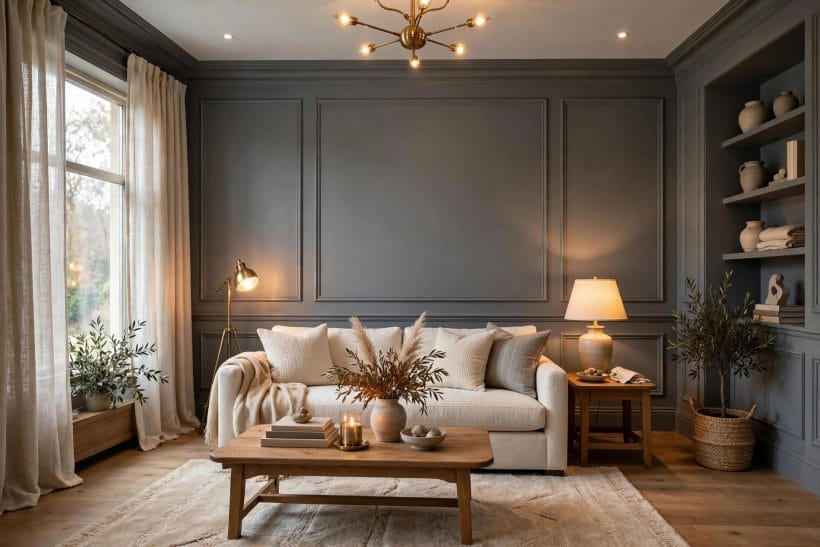
1. Living Rooms with Gray Walls at a Glance
The gray-walled living room is a scheme built on a single attribute: a neutral wall colour with a chosen undertone (warm greige, balanced neutral or cool blue-gray) and a chosen depth (pale, mid or deep), against which every other element is set. Its working parts are the paint (undertone, depth and finish), the seating (tone and texture against the wall), the colour partners (the accents the gray flatters), the soft layers (rug, curtains, cushions) and the light (daylight direction and lamp warmth). This page is one spoke of the wider living room ideas pillar, and it stays on the walls: the general living-room questions of layout, storage and seating live there, while the gray decisions live here.
| Question | Short answer |
|---|---|
| What is the safest gray for a living room? | A mid-tone warm or neutral gray, tested on large boards in the room’s own light for two days. |
| Do gray walls make a room feel cold? | Only when texture and warm light are missing; wool, timber and warm bulbs answer the chill completely. |
| What colours sit best with gray walls? | Navy, ochre, warm white, blush, natural wood and one brave accent — paired to the wall’s undertone. |
| Should all four walls be the same depth? | Not necessarily; one deeper focal wall and paler companions is the most forgiving arrangement. |
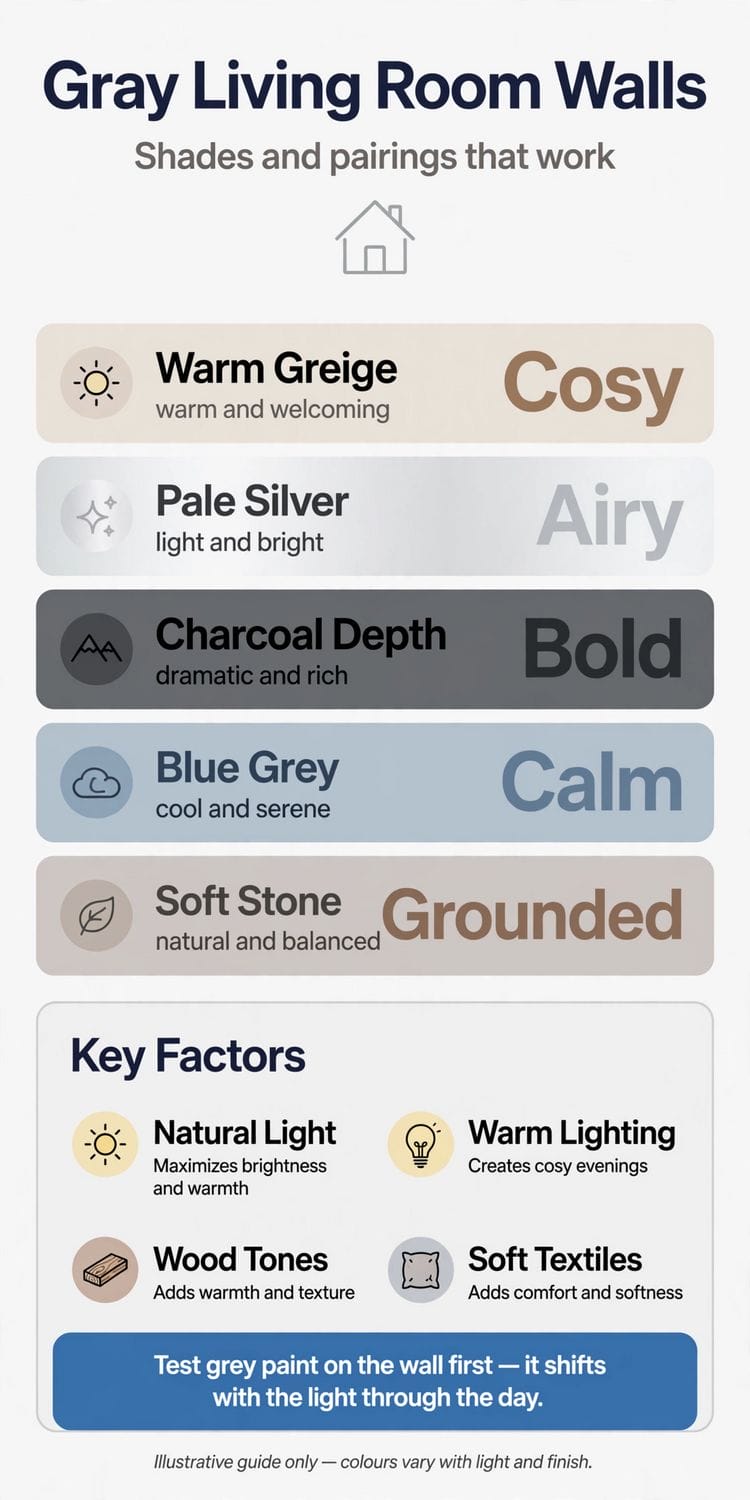
2. Choosing the Gray: Undertone, Depth and the Daylight Test
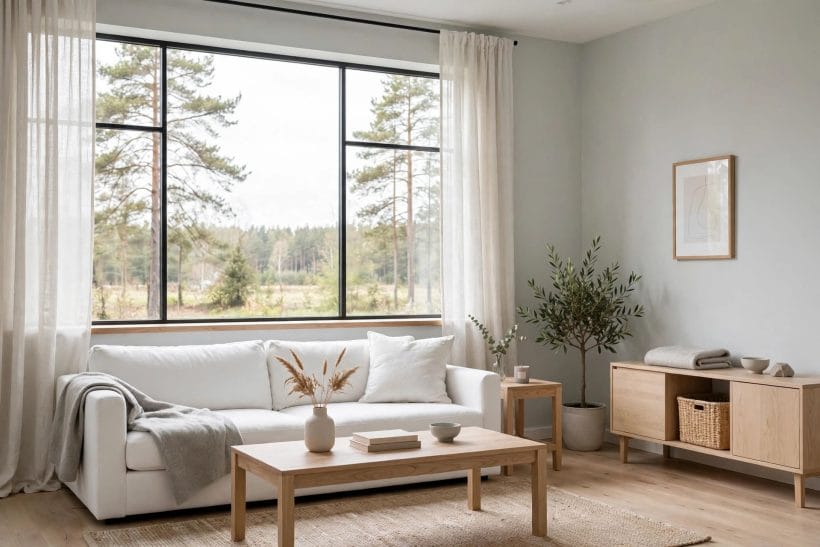
Gray is never just gray. Every gray wall paint leans somewhere — toward blue, toward green, toward the warm beige family the trade calls greige — and the lean decides whether the finished room feels crisp or cold, calm or flat. Work through the choice on the wall itself, in the room’s own light, before a single full coat goes on.
1. Start with the undertone, not the colour card
Hold the swatch against white paper and the lean shows at once: blue-grays read cool and tailored, green-grays read soft and botanical, warm greige reads gentle and forgiving.
2. Match cool grays to cool light
Rooms lit by northern or shaded windows already run cool, and a blue-leaning gray can tip them chilly.
3. Let warm grays balance bright southern light
Strong warm sunshine yellows a room’s palette, and a cooler gray restores the balance. The wall reads neutral in the midday glare and pleasantly fresh by evening, instead of drifting toward cream.
4. Test at three depths before committing
Paint large sample boards in a pale, a mid and a deep version of the chosen family, and live with all three for a couple of days.
5. Judge the samples after dark as well
Lamplight warms every paint, and a gray that looked steely at noon can turn almost lilac or almost green under warm bulbs.
6. Watch how the gray treats the woodwork
Gray walls expose every yellowed skirting board and tired door.
7. Use one gray family across adjoining rooms
Open sightlines punish clashing undertones. Carrying the same gray family — deeper in the hall, paler in the living room — knits the floor plan together and makes each room feel deliberately chosen.
8. Keep a deep gray for the wall that earns it
Charcoal and slate make a superb single wall behind a sofa, a bookcase or a fireplace, where the depth reads as intention.
9. Beware the blue surprise in pale grays
The palest blue-grays are the great shape-shifters of the paint shelf, reading silver at noon and distinctly blue by evening.
10. Let the floor vote on the shade
Warm oak floors ask for warm or neutral grays; cool concrete, pale tile and grey-washed boards sit happily with cooler ones. Lay the sample board on the floor, not just against the wall, before deciding.
11. Write the winning formula down
Note the brand, the range, the shade name and the finish somewhere permanent, and keep the stirred remainder tin labelled.
3. Layouts Around Gray Walls: Giving the Eye a Place to Land
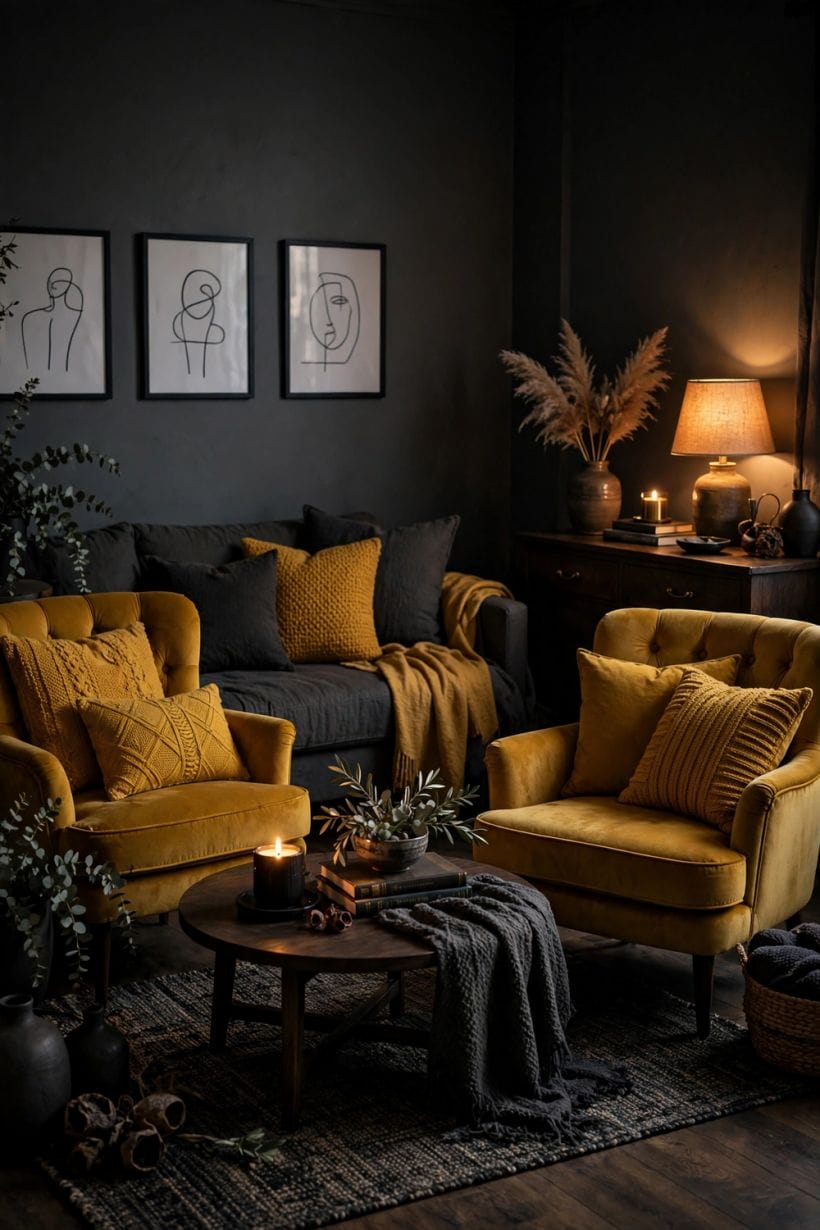
A gray-walled room succeeds or fails on what the walls are asked to frame. If the whole-room gray story is what you are after, the companion piece on gray living room ideas covers sofas, floors and schemes end to end; here the walls stay the subject, and the layout simply gives them something worth backing.
12. Give the gray one clear focal wall
Choose the wall the seating faces — the fireplace wall, the media wall or the wall behind the main sofa — and let it carry the deepest tone or the largest art.
13. Float the sofa off a mid-gray wall
Pulling the sofa a hand’s breadth forward stops the furniture silhouette merging into the paint. The thin shadow gap it leaves is a small, free piece of depth that works in rooms of every size.
14. Anchor the scheme with a rug that argues gently
Gray walls are a quiet backdrop, so the rug can carry the room’s pattern or its warmest colour.
15. Hang art larger than feels safe
Pale and mid grays flatter big pictures: the wall behaves like a gallery and the art gains presence. One large piece over the sofa beats a nervous cluster of small frames scattered across a calm expanse.
16. Use the corners instead of fearing them
Corners are where gray walls show their shading most beautifully.
17. Keep tall storage on the palest wall
Bookcases and cabinets read as furniture against pale gray and as architecture against deep gray. Placing the tallest pieces where the wall is lightest keeps the room’s weight low and its air intact.
18. Let mirrors borrow light for the gray
A mirror opposite or beside the window doubles the daylight the walls receive, and gray rewards borrowed light more than any colour. The reflection also breaks the flatness a single-tone scheme can suffer from.
19. Divide an open plan with depth, not colour
In a combined room, keep one gray family but step the depth down between zones — deeper where people sit, paler where they cook and eat.
20. Leave one wall quieter than the rest
Not every wall needs art, shelving or a lamp against it. A deliberately empty gray wall gives the eye a resting place and makes the dressed walls look chosen rather than crowded.
21. Set the television into the scheme, not against it
A black screen on a mid or deep gray wall nearly disappears when off, which is the television’s most polite state. On pale gray, a slim pale frame or a picture-mode display softens the contrast instead.
22. Plan the layout for the evening, not the photograph
Gray walls are at their kindest in low, warm, layered light. Arrange the seating where the lamps will pool, and the room’s best hours — the evening ones — will also be its best-looking ones.
4. Sofas and Seating Against a Gray Backdrop
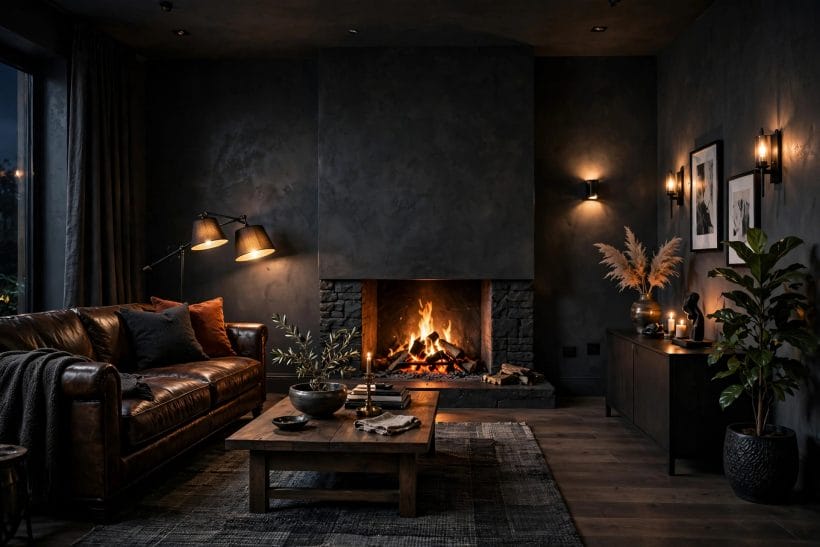
The sofa is the largest object the walls will ever frame, and the pairing runs both ways: gray makes upholstery colours look richer, while the wrong sofa tone can vanish into the paint or fight it for attention. Treat the sofa, the chairs and the cushions as one decision taken against the actual wall shade.
23. Set pale upholstery against mid and deep grays
Cream, oatmeal and pale stone fabrics glow gently against a deeper wall, and the contrast does the decorating.
24. Give deep sofas a paler wall to sit against
A charcoal, navy or bottle-green sofa needs air behind it. Against pale silver gray it reads tailored and calm; against a wall of its own depth it becomes a dark mass the room must work around.
25. Avoid the exact-match sofa
A sofa in the same gray as the walls flattens both into one grey weather system.
26. Use leather to warm a cool scheme
Tan and cognac leather are gray’s oldest friends: the hide’s warmth answers the wall’s coolness, and the pairing suits traditional and modern rooms alike. One leather chair can warm a whole seating group.
27. Let cushions carry the seasonal colour
With walls and sofa held neutral, cushions become the room’s changeable layer — rust and ochre for winter, sage and linen for summer. The gray backdrop makes every rotation look deliberate rather than random.
28. Choose fabrics with visible texture
Bouclé, linen weave, wool and brushed cotton all catch light differently against a smooth gray wall, and that play of texture is what stops a tonal scheme feeling flat.
29. Break a long sofa line with a contrasting chair
One chair in a different colour or a honest pattern — a stripe, a check, a faded kilim — keeps a gray room from reading as a showroom set.
30. Mind the leg and frame tones
Pale oak legs lift a sofa visually against mid gray; black metal suits cooler, deeper schemes; warm walnut bridges the two. Small and cheap to change later, but the wall notices the difference every day.
31. Test fabric samples against the painted wall
Fabric shifts against gray just as paint does: creams can turn yellow, blues can turn green.
32. Keep a throw within reach and in the palette
A folded throw over the sofa arm is both comfort and composition — the soft vertical of colour a gray scheme uses well. Choose it from the room’s accent family rather than the sofa’s own tone.
33. Seat people toward the light, not the wall
However good the walls look, arrange the main seats to face each other and the window’s light rather than staring at paint. Gray rewards a social layout; the walls are the setting, never the show.
5. Colour Partners: What Sits Happily Beside Gray
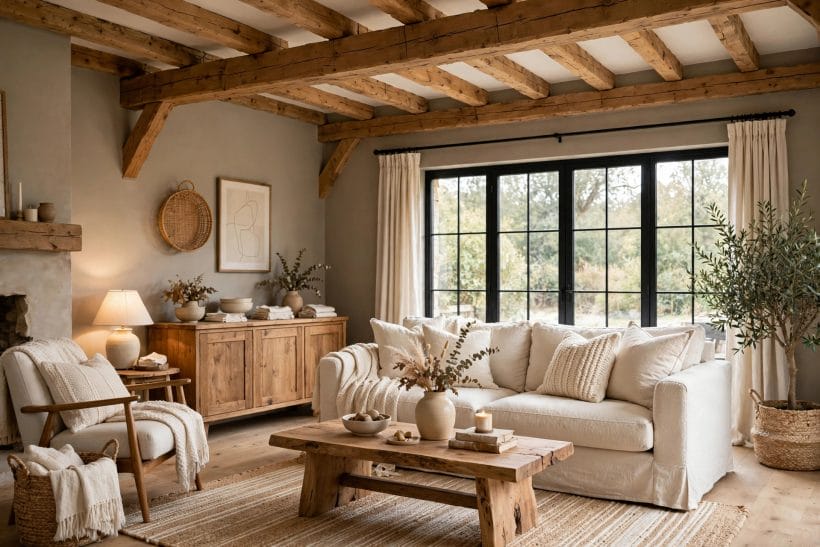
Gray’s reputation as a safe neutral undersells it: it is the most sociable colour on the wheel, flattering nearly everything placed beside it while changing character with each partner. The schemes in the wider traditional living room story show how kindly gray treats classic furniture; these ideas pair it deliberately, one partner at a time.
34. Pair gray with warm white for the calm classic
Warm white ceilings, trim and linen beside mid gray walls give the tailored, hotel-calm scheme that suits nearly every house.
35. Add navy for depth without darkness
Navy cushions, a navy chair or a deep blue rug against gray walls read rich and composed, a combination that flatters both colours.
36. Use mustard and ochre to switch the warmth on
A little ochre goes a long way against gray: a cushion pair, a lampshade, a single chair. The yellow family wakes cool grays instantly, which is why it appears in so many successful gray rooms.
37. Let blush and dusty pink soften a cool gray
Pink is gray’s gentlest partner, taking the steel out of a blue-gray wall and leaving something romantic but grown-up. Keep the pink dusty rather than sugary and the scheme stays firmly adult.
38. Bring green in through plants first
Before committing to green paint or fabric, stand the plants against the wall: gray makes foliage look lusher and more sculptural than any other backdrop. If the green pleases, echo it in one textile.
39. Treat black as punctuation, not a theme
Thin black lines — picture frames, a lamp stem, table legs — sharpen gray schemes beautifully. Used in small doses they give the room its grammar; used everywhere they turn calm into stark.
40. Warm the scheme with natural wood
Oak, walnut and rattan against gray walls supply the organic note the colour cannot give itself. A wooden coffee table or woven basket does more for a cool gray room than another cushion ever will.
41. Use brass and warm metals by lamplight
Brushed brass and bronze glow against gray in the evening and stay discreet by day. Chrome and polished steel push the scheme cooler and more formal — fine where that crispness is the aim.
42. Try the tonal scheme for a serene room
Layering grays themselves — pale walls, mid sofa, deep cushions, a near-black frame or two — produces the quiet, cocooning room many people actually want. Texture, not colour, must then do all the talking.
43. Give gray one brave guest colour
A single saturated note — a burnt-orange chair, a peacock-blue cushion pair, an oxblood throw — turns a tasteful gray room into a memorable one. One guest only: two brave colours start competing with each other.
44. Match the partner to the undertone
Warm greige welcomes rust, camel and olive; cool blue-gray prefers navy, plum and crisp white. Pairing against the undertone is the one reliable way to make a gray room feel slightly wrong all day.
6. Texture and Warmth: Keeping Gray from Feeling Cold
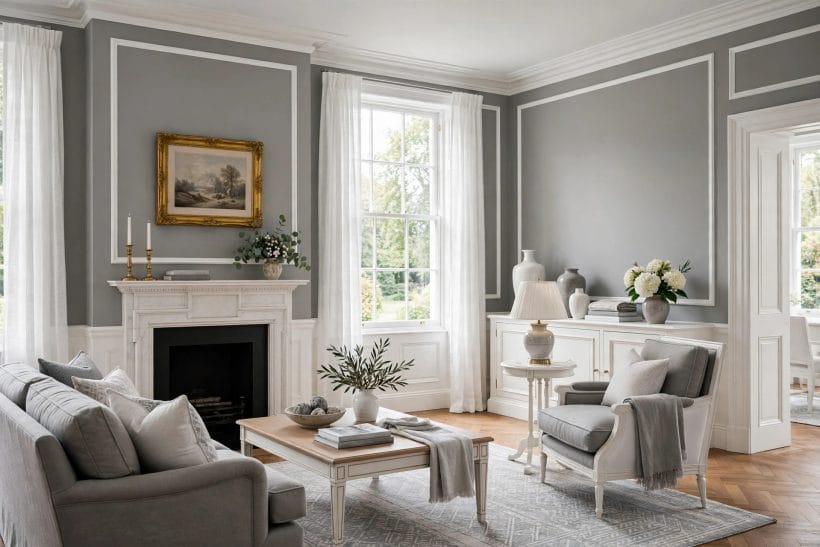
Every failed gray room fails the same way: smooth walls, smooth sofa, smooth floor, and a chill that no one can quite name. The cure is never more colour — it is more texture. The layered approach that makes farmhouse living room ideas feel gathered rather than decorated works exactly the same magic here.
45. Put wool somewhere in every sightline
A wool throw, a wool-blend rug or wool cushions answer gray’s coolness at the level of touch, not just sight. From any seat in the room, one visibly soft surface should be within view.
46. Choose a matte finish for the walls themselves
Flat and eggshell finishes drink light softly and make gray look velvety; silk and satin sheens throw reflections that cool the colour further. The deeper the gray, the more a matte finish flatters it.
47. Layer a rug over hard floors
Timber, tile and polished concrete are all cool underfoot and cool beside gray walls. A substantial rug in the seating zone — patterned, woven or deep-piled — is the single warmest object the room can own.
48. Hang curtains that pool or brush the floor
Linen and wool-look curtains soften the window wall, muffle echo and give gray a textile counterweight. Short, skimpy curtains do the opposite, emphasising the wall’s flatness at its largest opening.
49. Mix three textures before adding any colour
Work the room in layers — one rough (woven, rattan, raw timber), one soft (wool, linen), one smooth (leather, glass, metal). A gray room with honest texture contrast rarely feels cold, whatever its undertone.
50. Bring in woven and cane pieces
Rattan chairs, seagrass baskets and cane-fronted cabinets scatter warm, patterned shadow across gray walls. They are light to move, cheap to try and almost impossible to overdo in a gray scheme.
51. Use timber on the largest piece you can
A wooden bookcase, sideboard or coffee table gives the walls a warm mass to lean against. Even one big timber piece changes how the whole room’s temperature reads.
52. Let books do quiet warming work
Shelves of real books — cloth spines, worn jackets, uneven heights — add the irregular, human texture gray needs most. A book-lined wall is the oldest cure for a room that feels like a showroom.
53. Add a sheepskin or heavy knit for winter
Draped over a chair back or the sofa arm, one deep-textured layer signals warmth instantly and can be stored away in summer. Seasonal texture is how gray rooms stay interesting all year.
54. Soften the fireplace if there is one
A stone or painted-brick fireplace against gray walls wants a wooden mantel shelf, a basket of logs and a picture hung low. Treated kindly, the hearth becomes the warm heart that balances the cool walls.
55. Check the room by sitting in it at dusk
Coldness is a dusk complaint. Sit in each seat as the light fades; where the room feels stark, add texture or a lamp — never more paint.
7. Layered Lighting for Rooms with Gray Walls
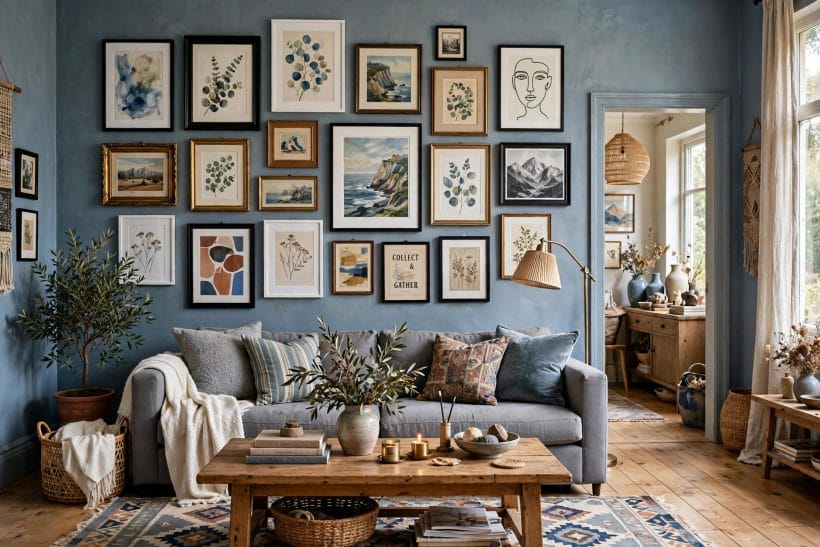
Gray is the most light-dependent colour in the house: the same wall can read silver, blue, green or beige between morning and midnight. Lighting is therefore not an accessory in these rooms but half the colour scheme, planned in layers so the walls look as good at nine in the evening as at nine in the morning.
56. Start by reading the daylight honestly
Spend one day noticing where the sun enters, where it never reaches, and which wall stays in shadow.
57. Put lamps where people sit, not where sockets are
Table and floor lamps belong beside sofas and chairs, washing the walls at seated height where eyes rest. A lamp glowing in an empty corner lights nothing but the corner’s own gloom.
58. Choose warm bulbs for cool grays
Warm-white light takes the blue edge off cool gray walls and turns them silvery and calm. Daylight-rated bulbs push the same walls toward hospital blue — the fastest way to ruin a good gray.
59. Wash one wall with light on purpose
A picture light, a wall washer or a lamp angled at the focal wall gives the gray depth and modelling. Even a single washed wall stops the whole scheme reading as flat paint.
60. Layer three heights of light
Ceiling light for general brightness, lamps at table height for faces and books, and a low glow — a hearth, candles, a lit cabinet — for atmosphere.
61. Add dimmers before adding more lamps
The difference between a gray room at full glare and the same room dimmed to evening level is the difference between an office and a home. Dimmers on the main circuit are the cheapest transformation available.
62. Light the art, and the walls follow
A lit picture or a lamp beside a bookcase gives the eye a bright, warm destination, and the surrounding gray reads as its frame.
63. Beware downlights on deep gray
Rows of ceiling spots over charcoal or slate walls create scalloped hotspots and turn depth into gloom between them. Deep grays prefer bounced, shaded and side light — lamps do the job far kindlier.
64. Keep window dressings light by day
Sheers and pale linings keep daylight washing the walls instead of stopping at the glass. In a gray room, daylight is a furnishing; dress the window to admit it, not to defeat it.
65. End the day on the low layer
Make the last lighting scene of the evening the lamps and the low glow only. Gray walls settle beautifully into that register, and the room ends the day looking the way the brochures promised.
8. The Finishing Layer: Art, Curtains, Rugs and Greenery
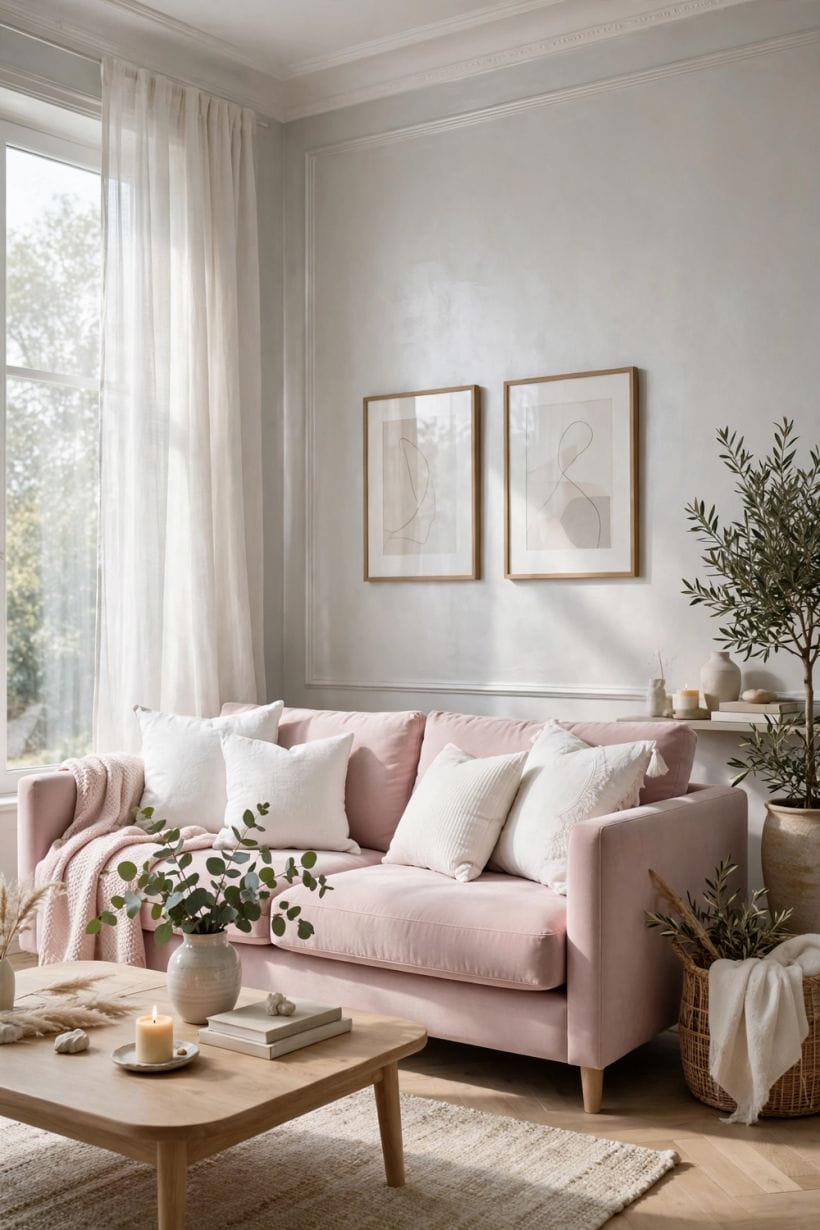
With the paint chosen and the seating settled, the finishing layer decides whether a gray-walled room feels curated or merely completed. These are small, reversible decisions — the ones to live with slowly, in the spirit of the wider small living room ideas advice that a room is finished when it is used well, not when it is full.
66. Hang art with breathing room around it
Gray is the gallery colour for a reason: pictures gain presence against it.
67. Choose curtain colour from inside the scheme
Curtains in a deeper or paler step of the wall’s own gray family look tailored and calm; a warm natural linen suits every gray.
68. Let the rug set the room’s temperature
A warm-toned rug — rust, camel, faded red — heats a cool gray room from the floor up, while a blue-gray rug deepens the calm of a warm one.
69. Place plants where the gray is flattest
A tall plant in a dull corner, a trailing one on the bookcase, a small one on the side table: greenery against gray looks deliberate and sculptural, and it softens the wall’s geometry at exactly the dull points.
70. Style shelves in odds and gaps
Books upright, books stacked, one object, one gap: shelves against gray walls look best edited rather than filled. The empty spaces are part of the styling, and gray makes a graceful background for restraint.
71. Add one piece with a past
An inherited chair, a flea-market table, a picture with a story — gray schemes can drift toward the impersonal, and a single storied object anchors the room in a real household.
72. Keep cushions odd-numbered and mixed
Three or five cushions in mixed sizes and two related fabrics look arranged by life rather than by a catalogue. Against gray, keep one cushion clearly warm so the grouping never reads chilly.
73. Finish the fireplace wall last
Decide the mantel picture, the fireside basket and the hearth objects after everything else is placed, because this wall will borrow tones from all of them.
74. Edit one thing out at the end
Stand at the door and remove the object that contributes least. Gray rooms reward restraint more than any colour scheme, and the removed piece is almost always the making of the finished room.
75. Live in it for a season before repainting
Gray changes with the year’s light, and a shade that feels cool in spring may be perfect by autumn. Give the walls a full season of lamps, curtains and living before judging the colour a mistake.
9. Checks and Mistakes: Before the First Purchase or the First Stone
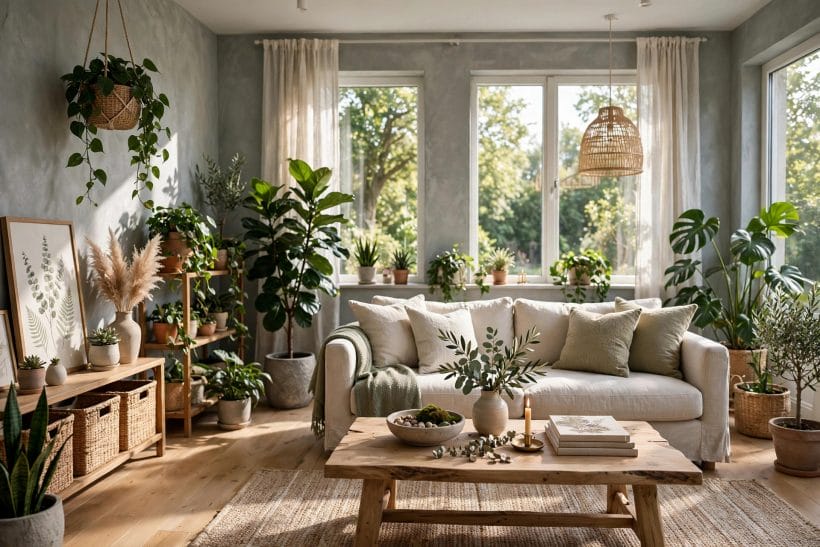
The commonest mistake is choosing paint for gray living room walls from the card alone. Gray is the most light-sensitive colour in the house, and a shade approved under shop lighting can arrive home as a different colour entirely; sample boards, used for two full days, are the only honest shortcut.
The second mistake is matching everything to the walls. Sofa, rug, curtains and cushions all in the same gray produce a room with no edges, where nothing can be seen properly. Contrast — of depth, of texture, of temperature — is what makes a gray scheme readable.
Finally, check the bulbs before blaming the paint. Cold-rated light bulbs turn good grays blue and kind grays harsh, and they undo more gray rooms than bad colour choices ever have. Warm the light first; only then judge the walls.
10. Costs and Pulling It Together
Costs in a gray scheme behave kindly: the paint itself costs what any good paint costs, and the money that matters goes on the same things as in any living room — the sofa, the rug, the curtains and decent lamps. Gray does not demand premium versions of anything; it rewards contrast and texture, which are matters of choosing rather than spending.
The sensible order is walls after fabric, not before: settle the sofa and rug tones first, then choose the gray that flatters them, because paint comes in every shade and sofas do not. Worked that way round, the expensive pieces stay and the cheapest layer — the paint — does the adapting.
Pull the scheme together around one warm counterweight — timber, leather or an ochre textile — and one cool calm — the walls themselves — and the room will hold together through years of small changes. That balance, not any single shade, is what people are admiring when a gray room stops them at the door.
Final Considerations
Gray walls are not a retreat from colour but a decision about where colour should live: in the furniture, the textiles, the pictures and the people, against a backdrop that flatters all of them. Start from the room’s light, test honestly, and the walls will repay the patience for years.
For the wider canvas — whole-room schemes, sofas and floors in every colour — the pillar collection of living room ideas and the general family room ideas carry the story on, and the house-wide home design ideas hub ties this frontier together.


0 Comments