
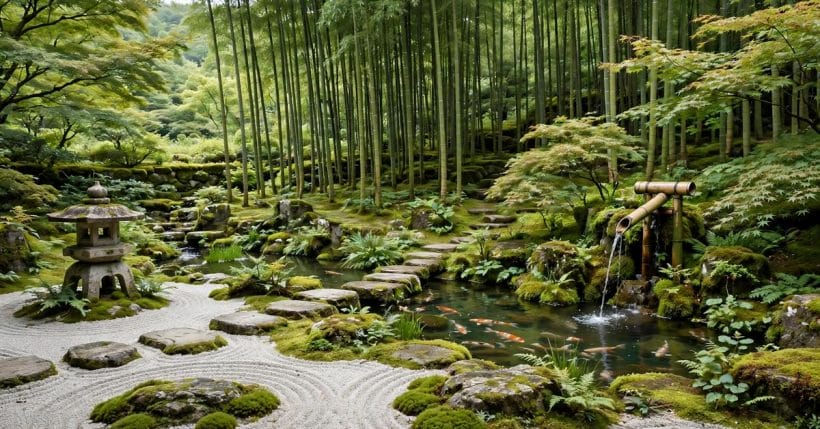
Asian landscaping is a style built on restraint: a few stones, a little water, some bamboo and a great deal of empty space. It suits gardens of every size, from a courtyard to an acre, because its power comes from composition rather than from display. These seventy-five ideas cover the elements, the planting and the quiet corners that make the style work.
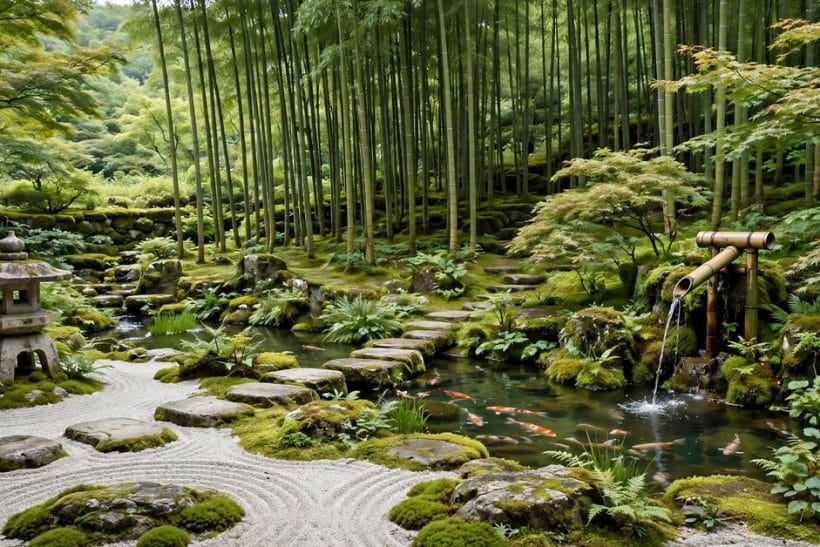
One split matters before anything else. This post is about Asian landscaping — gardens, paths, water and planting. Asian home design, belongs to a separate post, and the two should not be confused. Here the garden itself is the subject, and everything below stays outdoors.
1. Stone and Gravel Gardens
Stone is the bones of the Asian garden. It gives shape when plants are quiet, holds the eye in winter, and asks for almost nothing in return beyond an occasional sweep.
1. A raked gravel bed
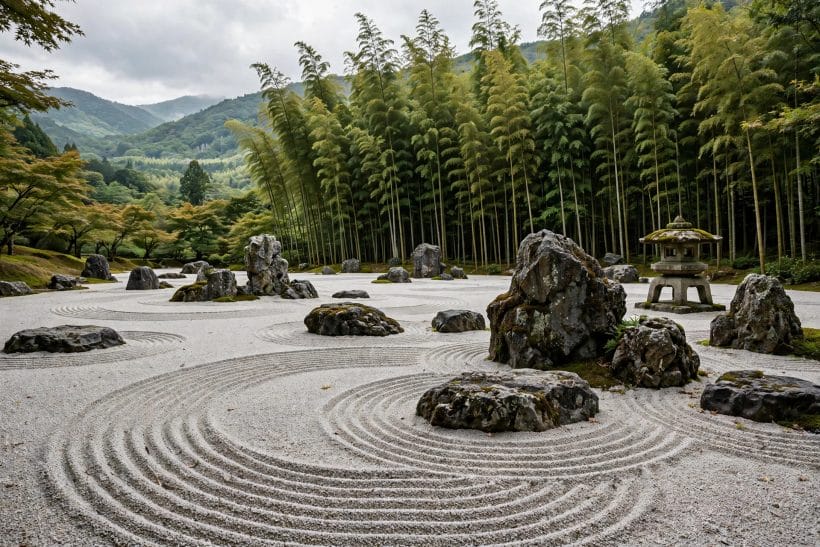
A flat bed of fine gravel, raked into gentle waves or rings around a standing stone, makes a calm centre for a small garden. The raking itself is part of the pleasure, and the pattern can change with the seasons.
2. One standing stone
A single upright stone, chosen for its shape rather than its size, anchors a corner better than a group of small ones. Set it deep so it looks grown rather than placed.
3. A trio of stones
Three stones of different heights, grouped as if they belong together, echo the classic island groupings of Japanese gardens. Keep the tallest off-centre so the group feels natural.
4. A dry stream of pebbles
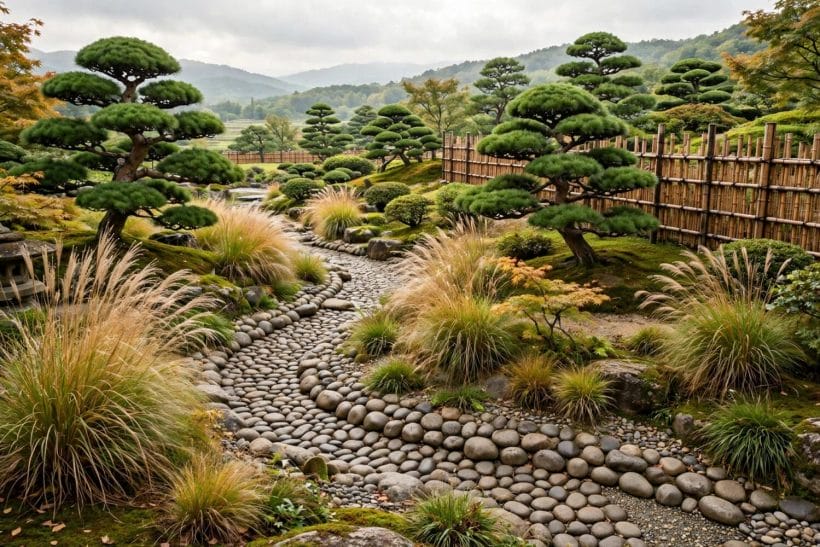
A winding line of smooth pebbles suggests water without needing any. Edge it with larger stones and let it curve out of sight for a sense of journey.
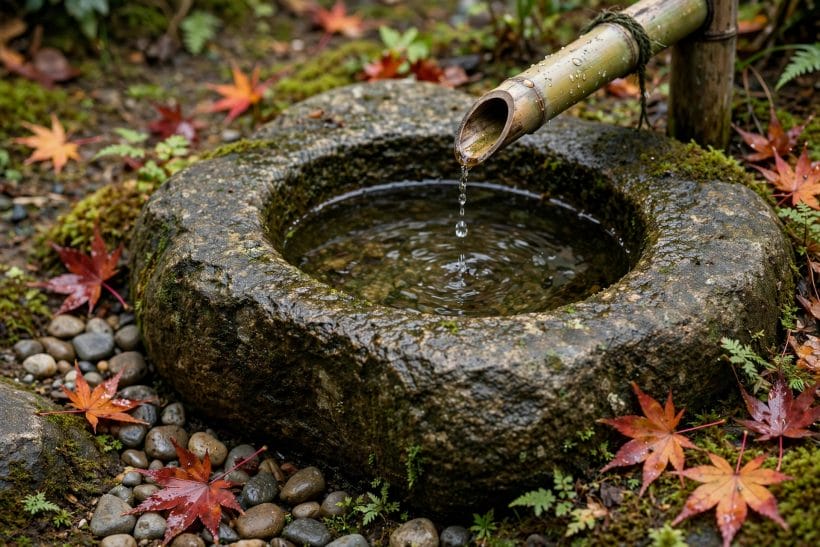
5. A stone basin
A low stone basin, filled by rain or topped up by hand, brings still water and birdsong to a quiet corner. Site it where it can be seen from a seat, not just from a path.
6. Gravel as a path
Fine gravel paths crunch softly underfoot and suit the quiet mood of an Asian garden. Edge them with stone or timber so the gravel stays where it belongs.
7. Boulders half-buried
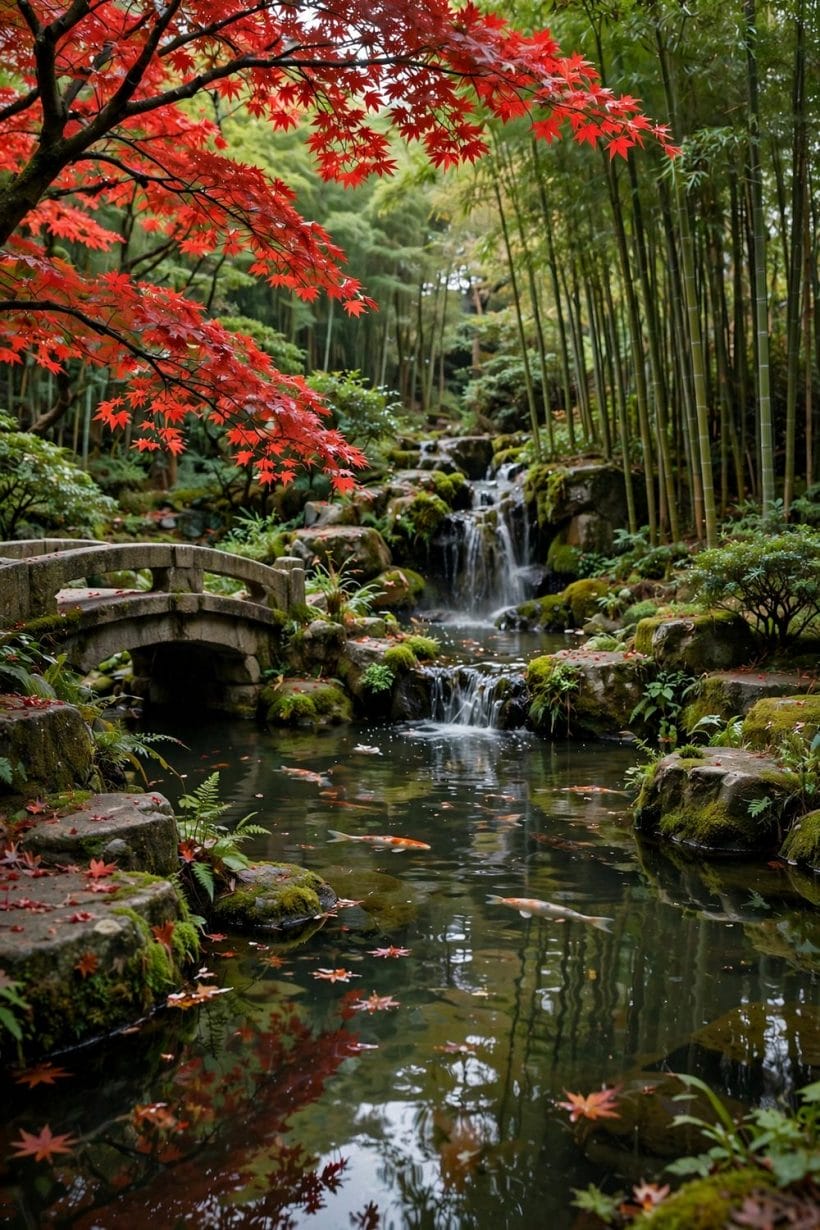
A boulder looks most natural when a third of it sits below the soil line, as if it surfaced there. Avoid lining boulders up like sentries along a path.
8. A moss-covered step
A single broad stone step, softened with moss at its edges, slows the walk and marks a threshold. Moss needs shade and moisture, so site the step where both occur naturally.
Stone work rewards patience. A stone placed today may look awkward for a season until planting softens around it and weather settles its surface, so resist the urge to rearrange a new stone garden at once. Walk it in different lights, watch where shadows fall, and let moss and rain do the finishing work that hands cannot. The best stone gardens look as if they were found rather than made, and that illusion takes time.
Gravel colour changes a stone garden’s mood more than its size does. Pale gravel brightens a shady corner and makes the garden feel larger, while darker gravel grounds a sunny space and lets pale stones stand out. Choose a gravel that suits the local stone and the garden’s light, and keep it topped up, since thin gravel over bare soil looks neglected within a season.
2. Bamboo and Screening
Bamboo gives an Asian garden its movement and its music. It screens, it rustles, and it grows fast, which means it also needs a firm hand.
9. A bamboo screen
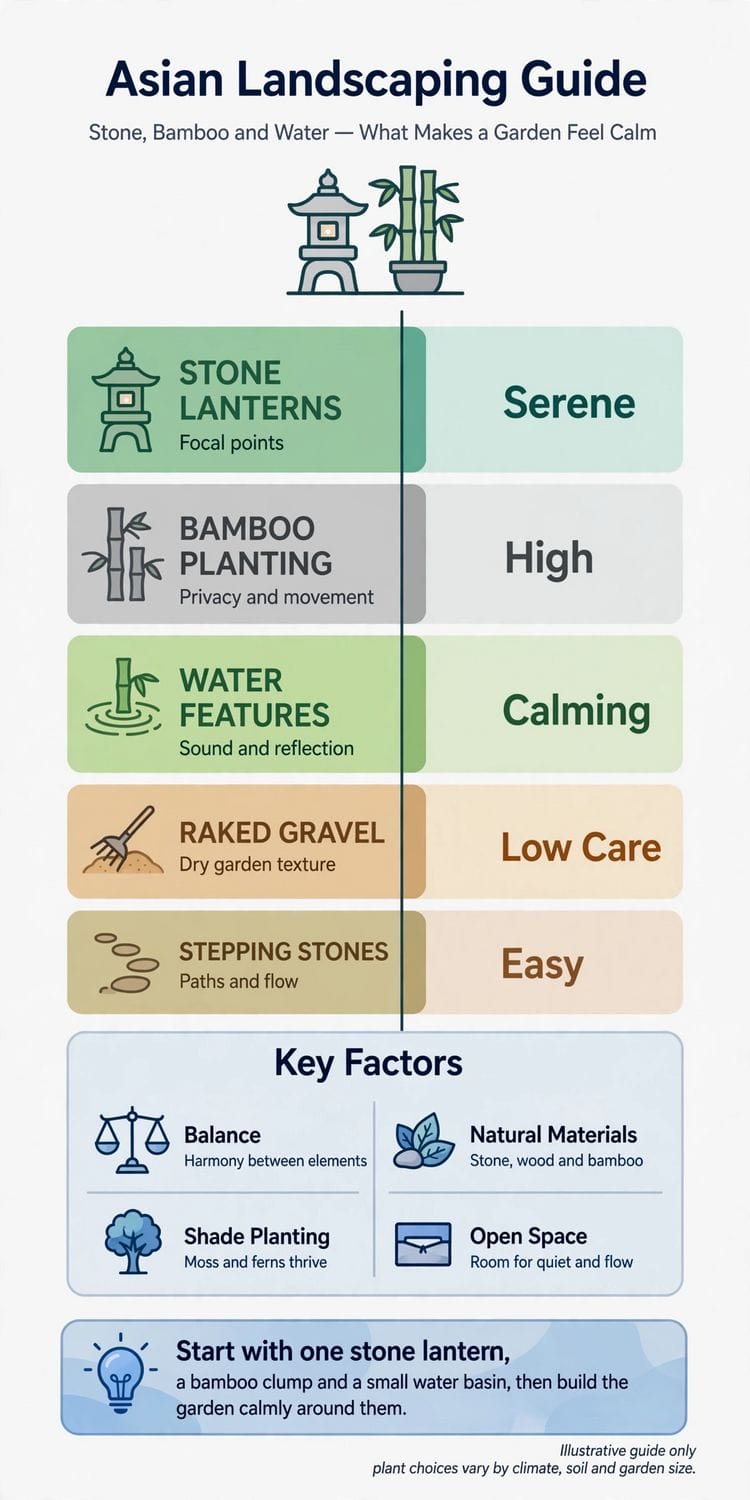
A dense row of clumping bamboo makes a living screen that moves in the wind and softens a boundary. Choose a clumping variety unless you enjoy digging out runners. For a drier regional style, see southwestern landscaping ideas.
10. A bamboo fence panel
Split bamboo tied to a simple frame makes a fence that looks crafted rather than built. Lashings of dark twine suit the style better than bright fixings.
11. Bamboo in a pot
Bamboo in a large pot brings the plant to a patio or courtyard without any risk of spreading. Water it well, since pots dry out faster than open ground.
12. A bamboo grove corner
A small grove of tall bamboo in a sheltered corner creates a green room of its own, with filtered light and a rustling canopy. Underplant it with ferns for a woodland floor.
13. A bamboo water spout
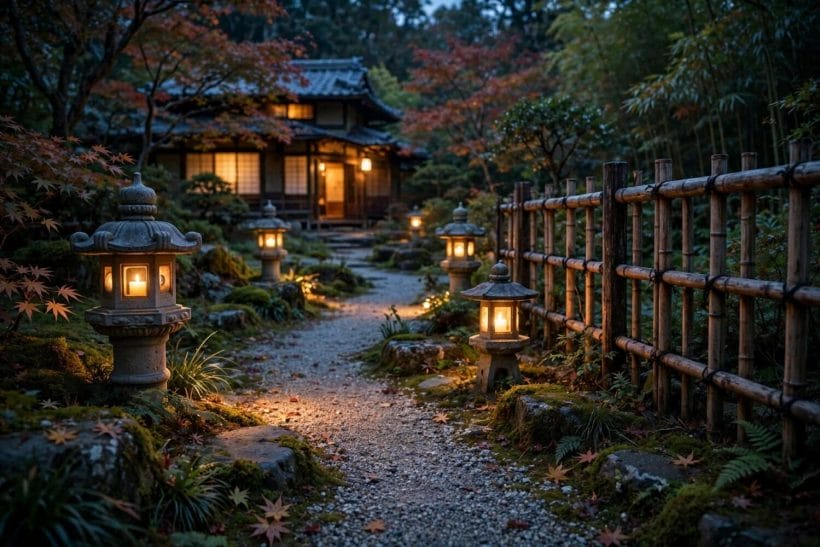
A short length of bamboo, angled over a basin, turns a trickle of water into a garden feature. The sound is gentle and constant, and the whole device is beautifully simple.
14. Bamboo canes as edging
Short bamboo canes, pushed into the soil along a path edge, give a light, informal border. Replace them as they weather, since part of their charm is their impermanence.
15. A bamboo trellis
A trellis of thin bamboo canes supports climbing plants without the heaviness of a timber structure. Tie the crossings with twine for an authentic look.
16. Bamboo shade over a seat
A simple bamboo frame with a light cover gives dappled shade over a garden seat. Site the seat to catch the evening light through the canes.
Bamboo’s vigour is both its gift and its warning. A clump that looks modest in its first year can become a dense screen by its third, which is exactly what most gardens want — provided the variety suits the space. Check the mature spread of any bamboo before planting, give running types a proper root barrier, and cut out old, dead canes each winter to keep the grove open and healthy.
3. Water in the Garden
Water in Asian gardens is rarely grand. It is a basin, a trickle, a still pond — something to hear and reflect in, rather than to swim in.
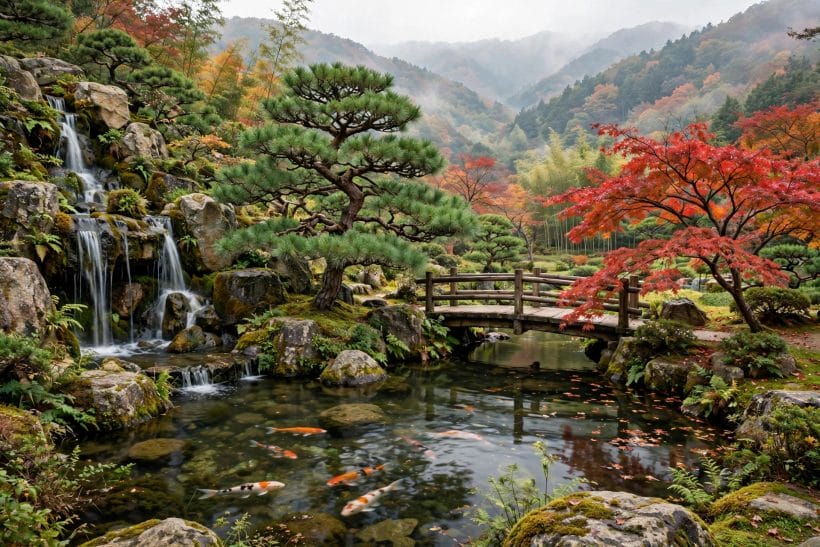
17. A still pond
A small still pond, edged with stone and planted at its margins, reflects sky and trees and doubles the garden’s calm. Keep it shallow and simple. Hot tub patios take the water idea in a more social direction.
18. A trickling stream
A narrow stream, falling over a few low stones, adds sound without needing much water. The fall matters more than the flow.
19. A stone lantern by water
A stone lantern set at a pond’s edge is the classic pairing: light and water together. Site it where its reflection can be seen from the house.
20. Stepping stones across water
Flat stones set just above the waterline turn a pond crossing into a small adventure. Space them for a comfortable stride and keep them level.
21. A koi pond corner
A deeper corner of a pond, kept clear of plants, suits ornamental carp if you keep them. Shade part of the water so the fish have somewhere cool.
22. A rain chain
A chain of linked cups, hung where a downspout would be, turns rain into a visible, musical feature. It suits the Asian garden’s love of honest, simple devices.
23. A reflecting basin
A dark, still basin reflects the sky more clearly than a rippling pond. Keep fallen leaves out and the reflection stays sharp.
24. A mossy water edge
Moss softening the stones at a water’s edge blurs the line between built and grown. It needs shade and regular moisture to thrive.
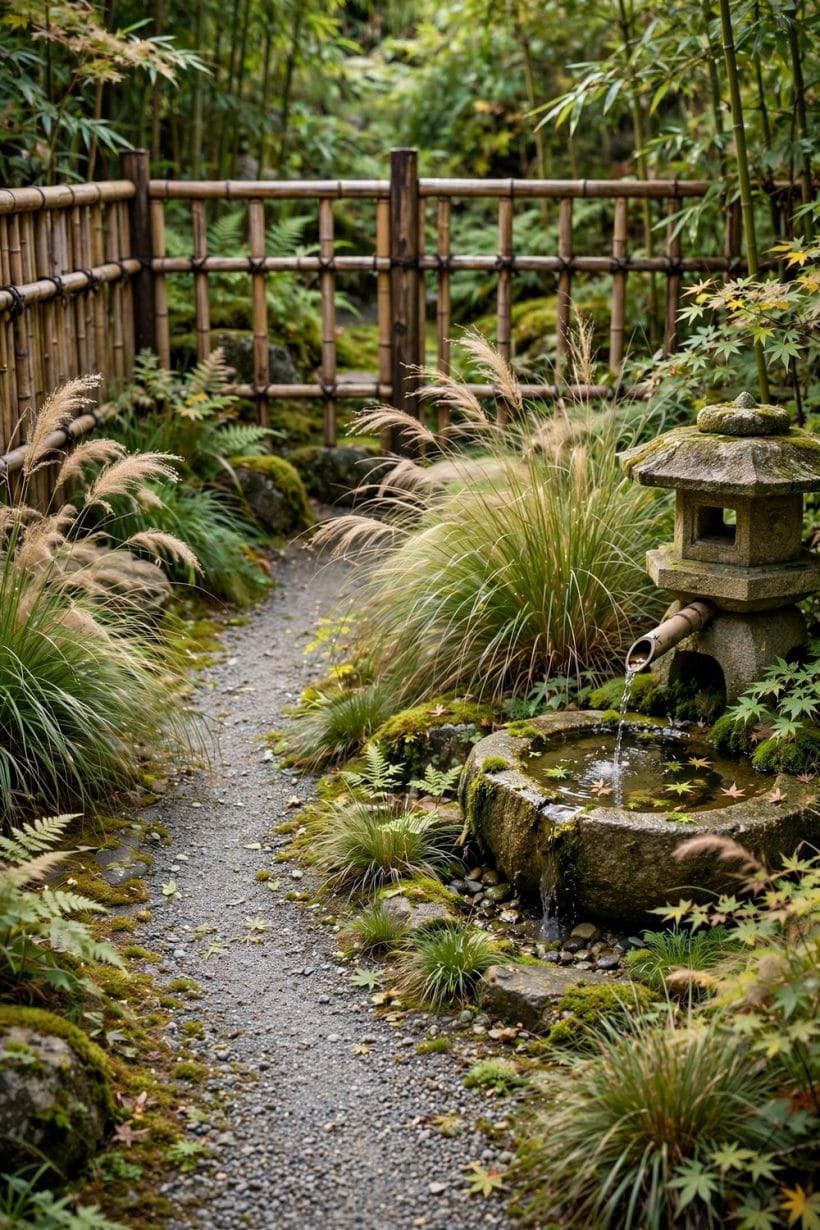
Water features need less water than most people imagine, but they do need regular attention. Leaves clog small pumps, algae clouds still basins, and a level that drops in hot weather exposes liners and pipework. A simple design with easy access for cleaning will be enjoyed far longer than an elaborate one that is hard to reach, so plan maintenance into the design from the start.
Sound is as important as sight in a water garden, and it carries further than most people expect. A trickle that is pleasant beside the pond can be intrusive beside a bedroom window, while a fall that sounds lively in the afternoon can seem loud at night when the rest of the garden is quiet. Site water features where their sound is welcome, and consider a simple valve or adjustable flow so the sound can be softened in the evening without dismantling anything.
4. Paths and Stepping Stones
Paths in Asian gardens are meant to be walked slowly. Their stones set the pace, their curves hide what comes next, and their materials stay close to nature.
25. Irregular stepping stones
Flat stones of different shapes, set with gaps of moss or gravel between them, make a path that asks you to look down and slow down. That is the point.
26. A curved gravel path
A path that curves out of sight makes even a small garden feel larger, because the eye cannot finish it. Edge it loosely so it feels like a track, not a road. Side-yard landscaping ideas cover narrow plots in the same spirit.
27. A wooden boardwalk
Weathered boards laid over damp ground give a dry walk through a shady corner. Let them silver naturally rather than painting them.
28. A stone slab path
Broad stone slabs, laid with joints of gravel or moss, suit a formal approach to a house or a garden room. Keep the slabs level to avoid trips.
29. A pebble mosaic
Small pebbles set in a simple pattern — a wave, a ring, a fan — make a path that rewards a second look. Keep the pattern bold so it reads from standing height.
30. A path through grass
Stepping stones set into a lawn give a soft, informal route that keeps feet dry. Mow around them and let the grass creep to their edges.
31. A threshold stone
A single large stone at a garden entrance marks the crossing from one world to another. It is a small gesture with a long history.
A path’s width sets how a garden is used. A narrow path, barely wide enough for one person, makes a walk feel private and contemplative, while a broader path invites two people to walk together. Match the width to the garden’s purpose: narrow for quiet corners and meditation routes, broader for the main approach and for any path that must carry a wheelbarrow.
5. Lanterns and Ornaments
Ornaments in Asian gardens are few and carefully placed. One lantern in the right spot does more than a dozen scattered figures.
32. A classic stone lantern
A stone lantern, placed where a path turns or a pond ends, gives the garden a focal point by day and a glow by night if you light it. Choose a size that suits the space, not the biggest you can find.
33. A small lantern among plants
A low lantern half-hidden among ferns or hostas rewards the walker who notices it. Half-hidden is better than prominent for small ornaments.
34. A pagoda ornament
A small stone pagoda on a rise or beside water adds height and a sense of distance. Site it where it can be seen framed by plants, not standing alone on a lawn.
35. A carved stone figure
A single carved figure — a frog, a crane, a monk — tucked beside a path adds a quiet surprise. One is enough; two starts a collection.
36. A ceramic pot
A large glazed pot, planted simply or left empty as a sculpture, brings colour and craft to a corner. Choose glazes in muted tones that suit the garden’s palette.
37. A hanging lantern
A lantern hung from a tree branch or a bamboo frame lights a seating area softly. Use a candle or a small solar light and keep it sheltered from wind.
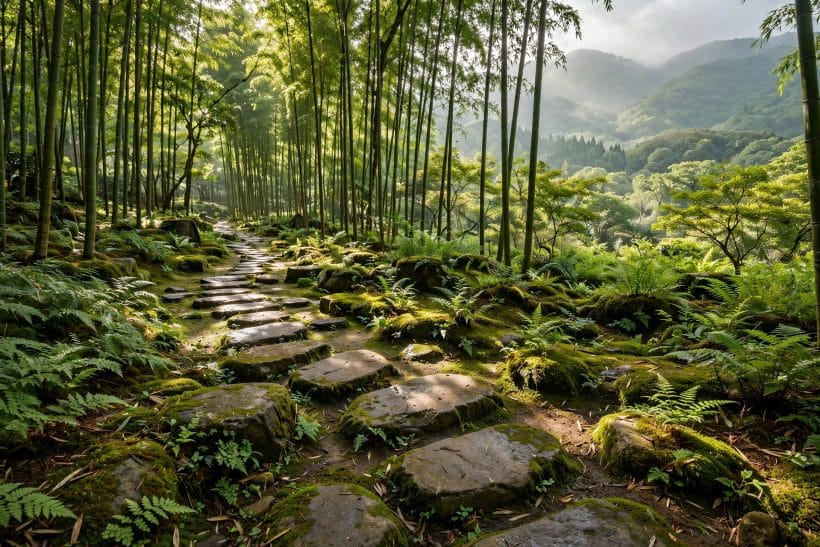
38. A stone bench
A plain stone bench, set where the garden can be contemplated, is both ornament and invitation. Site it facing the best view, not facing the house.
Ornaments weather, and weathering suits them. Stone lanterns grow moss, ceramic pots craze, and ironwork rusts gently, all of which deepen their place in the garden rather than spoiling it. Avoid ornaments that need constant cleaning to look right, and choose materials that age gracefully in your climate, so the garden improves rather than deteriorates with the years.
Placement matters more than price for ornaments. A lantern bought cheaply and placed where a path turns will give more pleasure than an expensive piece stranded on an open lawn, because the garden’s structure does the work of showing it off. Walk the garden first, find the spots where the eye naturally rests — a turn, a water’s edge, a gap in planting — and place ornaments there.
6. Pruned Trees and Shrubs
Pruning in the Asian garden is an art of suggestion: a pine shaped to show its structure, a maple allowed its natural form, a shrub kept cloud-like rather than boxy.
39. A cloud-pruned pine
A pine pruned into cloud shapes shows its trunk and branch structure while keeping soft masses of foliage. Prune a little each year rather than reshaping all at once.
40. A Japanese maple
A Japanese maple, planted where its autumn colour can be seen against evergreens, is the garden’s seasonal clock. Give it shelter from harsh wind and strong sun.
41. A pruned azalea mound
Azaleas clipped into low, rounded mounds flower spectacularly in spring and stay neat the rest of the year. Prune just after flowering, not later.
42. A shaped boxwood
Boxwood clipped into soft domes or low hedges gives structure through winter. Keep the shapes rounded rather than square for an Asian feel.
43. A cherry tree
A flowering cherry brings a brief, glorious spring display and then settles into quiet green. Plant it where its blossom can be seen from indoors too.
44. A camellia in shade
Camellias flower in late winter and spring and suit the sheltered, shady corners of an Asian garden. Protect early flowers from hard frost where frosts occur.
45. A wisteria on a frame
Wisteria trained over a simple frame or pergola gives hanging blossom in spring and dappled shade in summer. Prune twice a year to keep it flowering well.
46. A pine by the gate
A single pine beside a garden gate greets visitors with the classic image of the Japanese garden. Keep it pruned to show its character, not to hide it.
Pruning is a conversation with a tree, not a single event. A pine shaped over several years keeps its character, while one cut hard in a single session can take years to recover. Prune a little, stand back, and look at the tree from the angles it will be seen from — from the house, from the path, from the seat — before cutting more. The best pruning is the pruning you barely notice.
7. Moss, Ferns and Shade Planting
The shaded floor of an Asian garden is a world of moss, ferns and hostas — plants that ask for little light and give a great deal of calm.
47. A moss lawn
Moss as a groundcover suits shady, damp corners where grass struggles. It needs no mowing and feels soft underfoot, but it dislikes hot sun and heavy wear.
48. Ferns along a wall
Ferns planted along a shaded wall or fence soften hard edges and thrive where little else will. Mix heights for a natural woodland look.
49. Hostas in drifts
Hostas planted in drifts give bold leaves through summer and disappear in winter, which suits a garden that changes with the seasons. Protect them from slugs in damp gardens.
50. A fern by the basin
A fern beside a stone basin links water and planting in one small composition. Choose a variety that suits the light and moisture available.
51. Shade-tolerant groundcover
Low groundcover plants fill the gaps between stones and paths in shade, keeping weeds down and moisture in. Let them creep over stone edges for a settled look.
52. A woodland corner
A corner planted as a small woodland — canopy tree, shrubs, ferns and moss — recreates the forest floor in miniature. Keep it simple and let it mature.
53. Seasonal bulbs in shade
Spring bulbs planted among ferns and hostas give an early display before the shade closes over. They need little attention once planted.
Shade planting succeeds when the plants match the shade rather than fighting it. A fern planted in sun will scorch no matter how much it is watered, while the same fern in dappled shade thrives on neglect. Read the shade in your garden through a day — deep shade, dappled shade, morning sun — and choose plants for the shade you actually have, not the shade you wish you had.
8. Courtyards and Small Spaces
Asian gardens suit small spaces better than almost any other style, because they are built from a few strong elements rather than from large displays.
54. A courtyard with one tree
A single tree in a small courtyard gives shade, height and seasonal change without crowding the space. Choose a species that suits the courtyard’s light and size.
55. A gravel courtyard
Gravel as a courtyard surface is cheap, permeable and quiet underfoot. Rake it occasionally and it always looks cared for. Porch ideas show how the same gravel approach works at a house entrance.
56. A wall with a window
A garden wall with a shaped opening frames a view beyond it, borrowing scenery from neighbours or from the wider landscape. This borrowed view is an old Asian garden trick.
57. A small bridge
A tiny arched bridge over a dry gravel stream adds charm and a crossing point in even a small garden. Keep it low and simple.
58. A seating stone
A flat stone or low bench in a courtyard gives a place to sit and contemplate. One seat is enough; the garden is for quiet, not for crowds.
59. A screen for privacy
A bamboo or lattice screen gives a small garden privacy without the heaviness of a wall. Plant climbers at its base to soften it further.
60. A courtyard pond
A small raised pond in a courtyard brings water and reflection to a paved space. Keep it simple — still water and one or two plants are enough.
61. Pots as a garden
A collection of pots — stone, ceramic, bamboo — can be a whole garden on a balcony or terrace. Group them in odd numbers and vary their heights.
Small gardens punish clutter more than large ones do. Every object in a courtyard must earn its place, because there is nowhere for the eye to escape a poor choice. Before adding anything to a small garden, remove something else, and ask whether the new piece improves the composition or merely fills a gap. Restraint is the small garden’s best design tool.
9. Bridges, Gates and Boundaries
Boundaries in Asian gardens are part of the design, not an afterthought. A gate, a fence or a bridge all mark thresholds and shape how the garden is experienced.
62. A moon gate
A round opening in a wall — a moon gate — frames the garden beyond like a picture. It is a bold feature that suits a wall, not a fence. Italian villa home designs use walled courtyards in a similar way.
63. A simple wooden gate
A plain wooden gate, built from weathered boards with simple ironwork, suits an Asian garden better than an ornate one. Let it weather naturally.
64. A bamboo fence
A bamboo fence, tied rather than nailed, gives a boundary that looks crafted and ages gracefully. Replace weathered canes as needed.
65. A hedge as a wall
A clipped evergreen hedge makes a living wall that changes with the seasons and softens sound. Keep it trimmed to a soft, rounded profile.
66. A bridge over dry gravel
A low bridge over a dry gravel stream marks a crossing and adds height to a flat garden. Build it from wood and keep the curve gentle.
67. A stone wall
A low dry-stone wall, built without mortar, suits an Asian garden’s natural materials. Cap it with flat stones for a finished look.
68. A gate lantern
A lantern beside a garden gate lights the threshold and welcomes visitors after dark. A stone lantern suits a stone wall; a hanging lantern suits a wooden gate.
A boundary that is also beautiful changes how a garden feels from inside. A fence that looks crafted, a hedge that is clipped with care, a gate that opens smoothly — all of these make the garden feel intentional rather than enclosed. Spend on boundaries as generously as on planting, because they frame everything the garden contains.
10. Seasonal Care and Quiet Corners
An Asian garden changes through the year, and part of its pleasure is noticing those changes. Care is mostly gentle: raking, pruning, sweeping and watching.
69. Spring blossom watch
Spring is the season of blossom in the Asian garden — cherry, azalea, camellia. Plan a seat where the display can be enjoyed without leaving the house.
70. Summer shade
Summer care is mostly about water and shade: keep moss and ferns damp, and enjoy the garden in the cooler hours. The garden is for early morning and evening in hot weather.
71. Autumn colour
Autumn brings maple colour and falling leaves, which can be left where they fall in quiet corners. A few leaves on gravel or moss look intentional, not neglected.
72. Winter structure
Winter reveals the garden’s bones: stone, trunk, fence and lantern. This is the season to judge whether the structure works, and to plan changes.
73. Raking as ritual
Raking gravel is both maintenance and meditation in the Asian garden tradition. A few minutes with a rake restores order and calm together.
74. A quiet corner
Every Asian garden needs a quiet corner — a seat, a stone, a view — where nothing is asked of the visitor except attention. Protect it from clutter.
75. Letting the garden age
An Asian garden improves with age as stone weathers, moss spreads and trees gain character. Resist the urge to renew everything at once; let the garden settle.
The quietest garden chore is also the most valuable: simply watching. Sit in the garden through a season and notice which corners are used, which plants thrive, and where the light falls at different hours. That watching tells you more about what to change than any plan drawn indoors, and it is the habit that turns a garden from a project into a place.
Final Considerations
An Asian garden is never finished, and that is part of its appeal. Stones weather, moss spreads, trees gain character, and the garden grows calmer as it grows older. Start with one element done well — a stone, a basin, a bamboo screen — and let the rest follow at the garden’s own pace.

0 Comments