
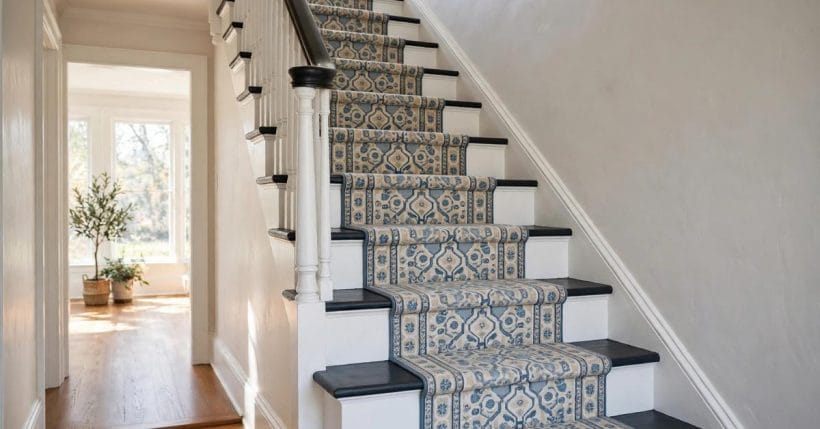
Painting a staircase is the fastest way to change a hall, and the cheapest way to make it feel designed. A flight that was once plain timber or tired carpet becomes a feature the moment colour touches it — but the choices matter. Paint on the treads must grip, paint on the risers can play, and the whole flight must still work as the hardest-working surface in the house, walked daily, often in socks, sometimes in muddy boots.
This post gathers 75 painted staircase ideas, from quiet all-white flights to rainbow climbs, organised so you can find the idea that fits your hall. It is about paint and finish only: for the railings themselves, the stair railing ideas live elsewhere, and for the staircase as a whole, the staircase ideas post is the companion piece. Tread slipperiness is treated throughout in general terms — grip, roughness and texture options described qualitatively, never as a guaranteed safety claim — because a painted tread must be both beautiful and sure underfoot.
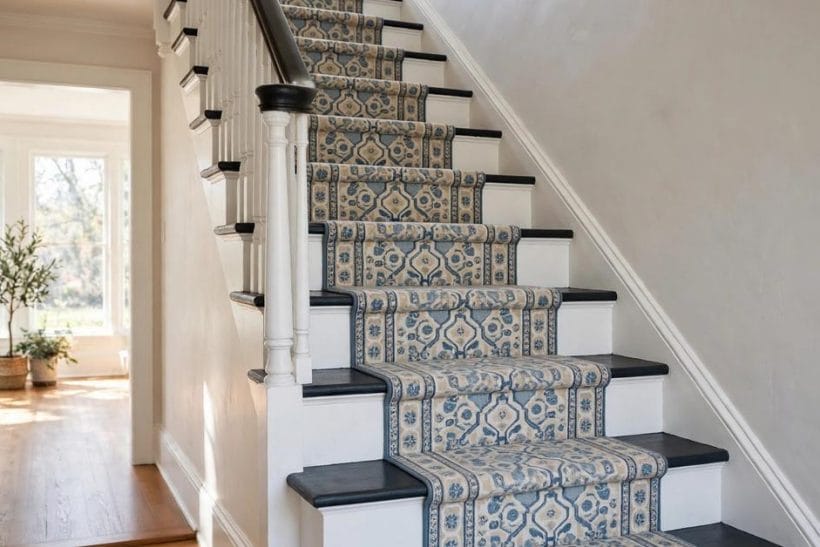
Before any of these ideas, the unglamorous work decides the result. Strip loose paint, fill dents and gaps, sand to a key, prime properly and let each coat cure before the next — a painted staircase is only as good as its preparation, and shortcuts show within months on the treads. Work from the top of the flight downward so you never paint yourself into a corner, keep the household off the stairs while coats cure, and accept that a good painted staircase takes days, not an afternoon. The ideas below reward that patience; none of them rescues a rushed job.
The ideas below are grouped by what they change: colour, risers, treads, rails, runners, patterns, small halls, light, finishes and statements. Read them as a menu, not a programme. One good idea, well executed, beats ten half-done ones, and a painted staircase rewards patience — preparation, primer and a steady hand matter more than the colour on the tin.
1. Colour Foundations
Colour is where most painted staircases begin, and it is where the biggest decisions hide in plain sight. The flight is the largest painted surface in most halls, so its colour sets the hall’s temperature: pale colours open a narrow space, dark colours give a wide hall focus, and a mid-tone can do either job depending on the walls around it. Before choosing a shade, live with large painted swatches on the treads themselves for a few days, watching how the colour changes from morning light to evening lamplight. A colour that looks perfect on a tin lid can turn cold or garish on a whole flight, and repainting a staircase is a far bigger job than repainting a wall. The eight ideas below cover the foundations — the all-over colours and two-tone splits that the rest of the flight builds on.
1. All-White Ascent
Paint every tread, riser and baluster white for a staircase that feels taller and brighter, especially in a narrow hall where light is scarce.
2. Soft Grey Wash
A pale grey on the whole flight reads as calm and modern, and it hides scuffs better than pure white while keeping the hall airy.
3. Deep Navy Flight
Paint the flight a deep navy and keep the walls pale, so the staircase becomes the hall’s one confident gesture rather than a background.
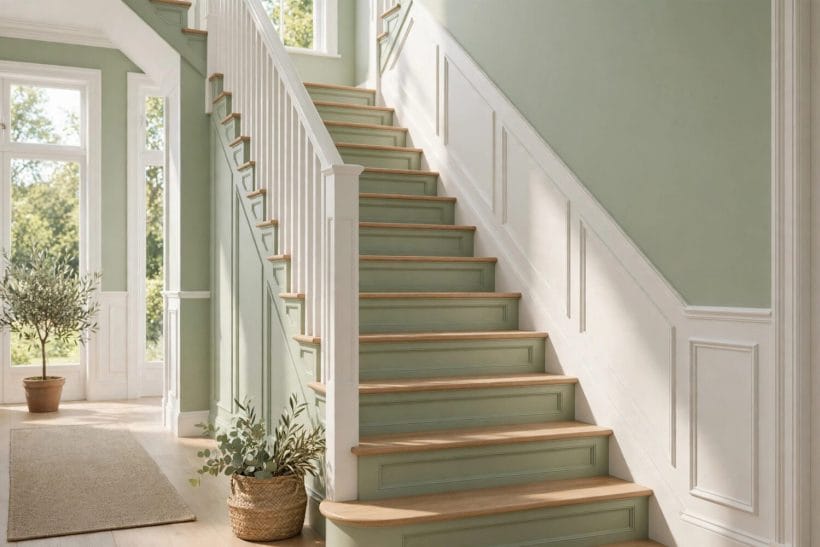
4. Sage Green Stairs
Sage on the treads and risers brings a garden softness indoors, and it pairs naturally with timber handrails and cream walls.
5. Charcoal and Cream
Charcoal treads with cream risers give a crisp, tailored contrast that suits both period halls and pared-back modern ones.
6. Warm Terracotta Risers
Terracotta risers against neutral treads add warmth without shouting, and they echo brick and clay tones elsewhere in the house.
7. Two-Tone Split
Paint the lower flight one colour and the upper another where a landing breaks the climb, marking the turn with colour rather than structure.
8. Colour-Matched Hall
Carry the hall’s wall colour onto the staircase in a deeper tone, so the flight reads as part of the room instead of an interruption.
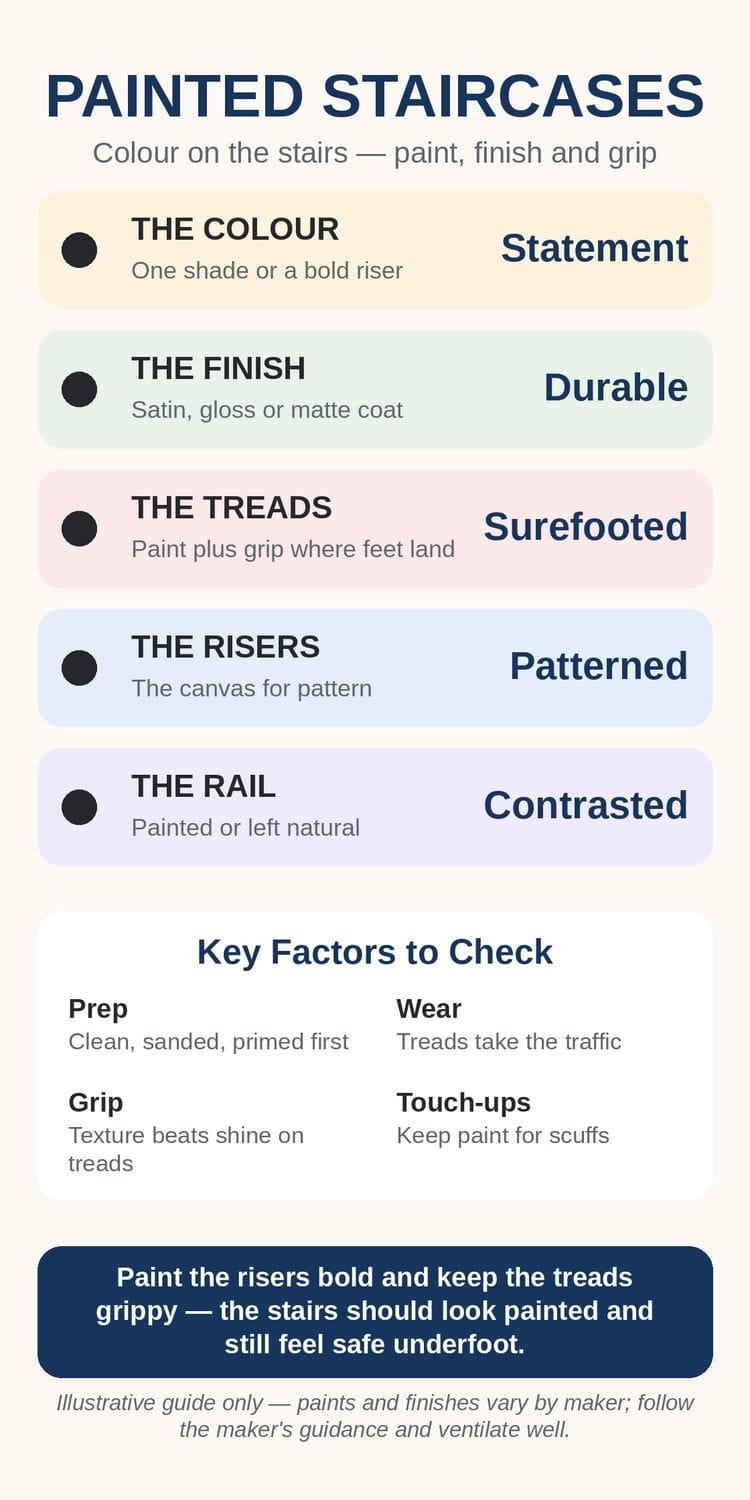
Whatever foundation colour you choose, test it on the treads themselves before committing, and remember that the foundation is the hardest part to change later. Risers, rails and runners can all be refreshed around it, but the main colour is the flight’s identity — choose it slowly, and choose it for morning light as much as for evening.
2. Riser Ideas
Risers are the staircase’s canvas because feet never touch them. While treads must be practical above all, risers can carry pattern, pictures, numbers and colour with no wear at all, which makes them the safest place to be bold. A painted riser idea that would be impractical on a tread — a delicate stencil, a pale shade, a chalkboard surface — works beautifully here, and it can be repainted or refreshed without touching the walking surface. The seven ideas below treat the riser as the flight’s decorative edge, the place where personality lives without compromising grip or durability.
9. Patterned Riser Tiles
Tile-effect paint or stencils on the risers give a tiled look without the weight or cost of real tiles, and they are easy to refresh.
10. Striped Risers
A single painted stripe across each riser adds rhythm to the climb and draws the eye upward, step by step.
11. Ombre Climb
Shade the risers gradually from dark at the bottom to pale at the top, so the staircase seems to lighten as it rises.
12. Numbered Risers
Paint a small number on each riser for a playful touch in a family home, and a practical one for guests finding their way.
13. Botanical Riser Stencils
Leaf and vine stencils on the risers bring the garden indoors and suit halls that already lean green and natural.
14. Contrasting Riser Only
Leave the treads natural timber and paint only the risers, so the colour reads as a ribbon running up the flight.
15. Chalkboard Risers
Chalkboard paint on the risers lets a family home change its message with the seasons, and wipes clean when the mood changes.
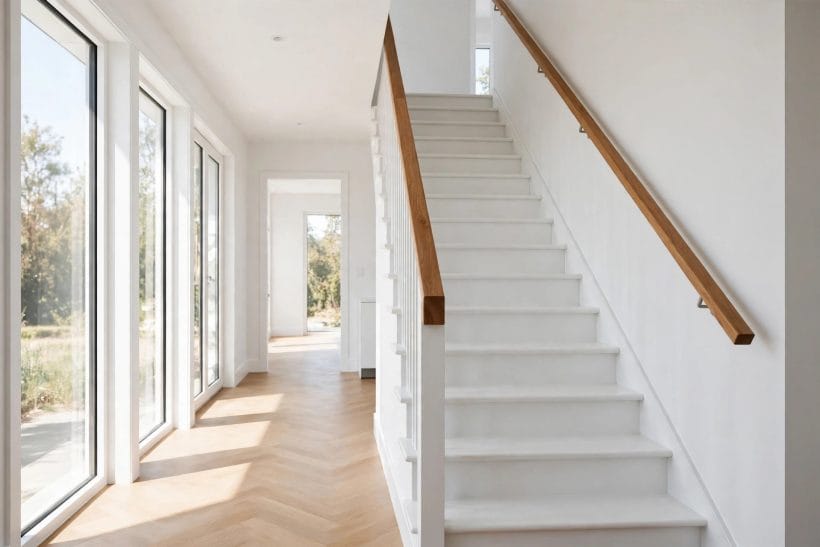
Risers reward a test run: paint one riser, live with it for a week, and only then commit to the flight. A riser idea that delights on a single step can tire across fifteen of them, and the test costs an hour while a full repaint costs a weekend.
3. Treads and Grip
Treads are where beauty meets responsibility. Every idea in this section keeps grip first and looks second, because a tread that is slippery when wet or in socks is a hazard no colour can excuse. The options below are described in general, qualitative terms — texture, roughness, grip strips, runners — rather than as guaranteed safety measures, because the right choice depends on the household, the footwear and the finish involved. What they share is a principle: the walking surface should feel sure underfoot in every condition the house actually sees, from rainy boots to bare feet on a summer morning.
16. Matte Tread Finish
A matte finish on the treads cuts glare and shows fewer scuffs than gloss, while still wiping clean after muddy feet.
17. Anti-Slip Tread Strips
Painted treads with a fine anti-slip additive, or discreet tread strips, keep grip where feet actually land without changing the look.
18. Textured Tread Paint
A lightly textured paint on the treads gives grip underfoot in socks and bare feet, which is where most slips happen.
19. Rubber Tread Mats
Removable tread mats in a colour that matches the paint protect the finish and add grip, and they can be lifted for cleaning.
20. Contrasting Tread Nosing
Paint the nosing edge a shade lighter than the tread, so each step’s edge reads clearly in low light.
21. Sanded Tread Grip
A fine sanded finish on painted treads, sealed over, gives a subtle roughness that feet notice and eyes do not.
22. Grip Runner Down the Middle
A narrow runner fixed down the centre of the flight gives grip where feet fall and leaves the painted edges visible on both sides.
23. Outdoor-Grade Tread Paint
On stairs that meet a porch or a mudroom, an exterior-grade paint on the treads stands up to wet boots far longer than interior paint.
When in doubt about a tread finish, favour grip over gloss. A tread that looks slightly less polished but feels sure underfoot will be walked on with confidence for years, while a beautiful slippery tread will be avoided, covered, or repainted within months.
4. Banisters and Rails
The banister is the staircase’s handrail and its jewellery at once: it is touched every day, seen from every angle, and it frames the whole flight. Painting the banister is a smaller job than painting the flight, which makes it a good place to experiment — a bold rail against a quiet flight, or a quiet rail against a bold flight, each changes the staircase’s character completely. The seven ideas below play with that relationship, treating balusters, newels and rails as separate voices that can harmonise or contrast.
24. Painted Balusters, Natural Rail
Paint the balusters white and leave the handrail natural timber, so the eye follows the warm line of the rail up the flight.
25. All-Black Banister
A black banister against pale walls reads as graphic and modern, and it frames the staircase like a drawing.
26. Two-Tone Newel Posts
Paint the newel posts a deeper shade than the balusters, giving the staircase’s endpoints a quiet emphasis.
27. Colour-Popped Handrail
Paint the handrail alone in a bold colour while the rest stays neutral, turning one line of the staircase into its signature.
28. White Spindles, Dark Rail
White spindles with a dark rail is the classic pairing for a reason: it is crisp, it suits most halls, and it never dates.
29. Metal Balusters, Painted Flight
Slim metal balusters with a painted flight give a contemporary edge without rebuilding the staircase.
30. Painted Underside of the Rail
Paint the underside of the handrail a contrasting colour, a detail nobody expects and everyone notices when they grip it.
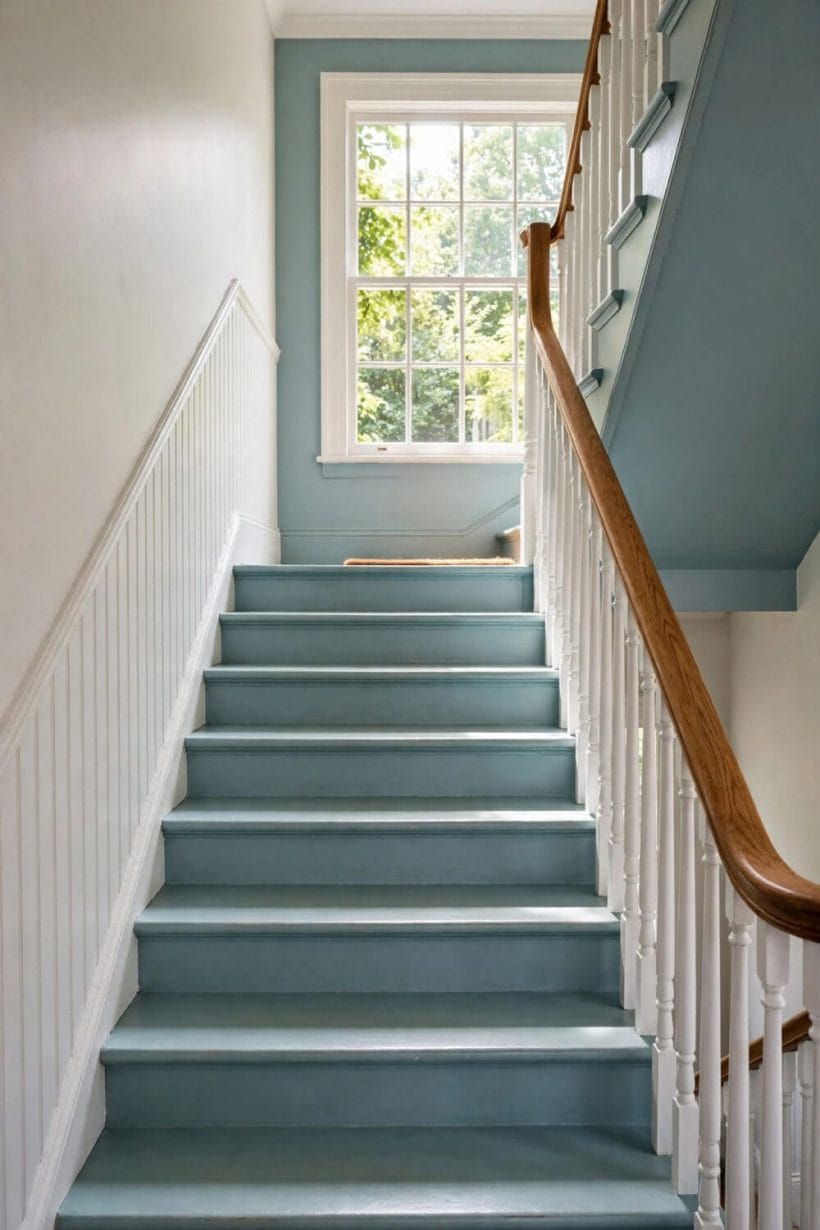
Paint the banister last, after the flight itself is done, so you can judge the rail against the finished colours rather than guessing. The rail is the staircase’s signature line, and it deserves to be chosen with the whole flight in view.
5. Runners and Carpets
A runner is the meeting point of paint and textile: it protects the painted treads, adds grip, softens sound, and brings pattern that paint alone cannot. It also changes the economics of a painted staircase, because a runner takes the wear that would otherwise fall on the paint, and it can be replaced far more cheaply than a repaint. The eight ideas below cover runners as partners to paint — striped, natural, bold, vintage — and the details, like stair rods and painted borders, that make runner and paint read as one design rather than two.
31. Striped Runner
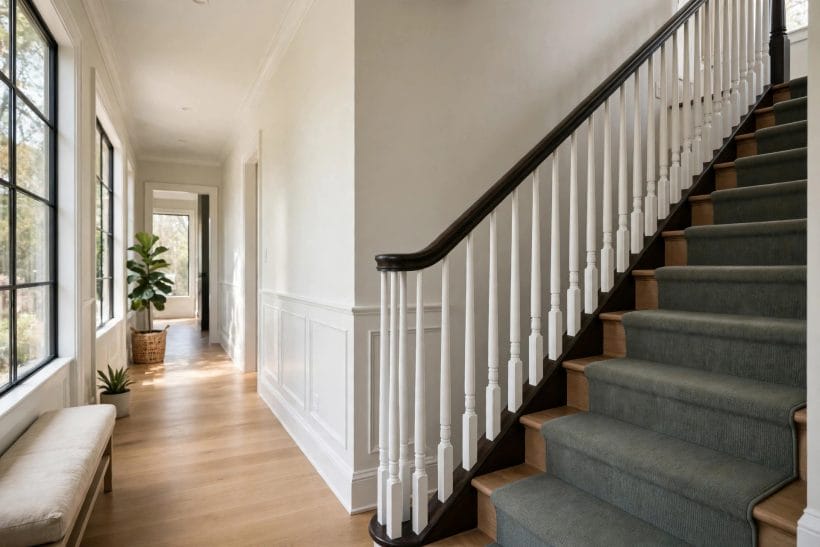
A striped runner down a painted flight adds pattern and grip at once, and it softens the sound of the climb.
32. Natural Jute Runner
A jute or sisal runner brings texture and a natural tone that suits painted stairs in any colour.
33. Bold Pattern Runner
A geometric or floral runner turns a plain painted flight into the hall’s centrepiece, with the paint as its frame.
34. Runner with Painted Borders
Paint a border stripe on the treads either side of the runner, framing it like a rug and tying it to the flight.
35. No Runner, Painted Landing
Skip the runner and paint the landing to match the flight, keeping the whole climb as one continuous painted surface.
36. Half Runner, Painted Edges
A runner that stops short of the tread edges leaves painted margins visible, showing off both the paint and the pattern.
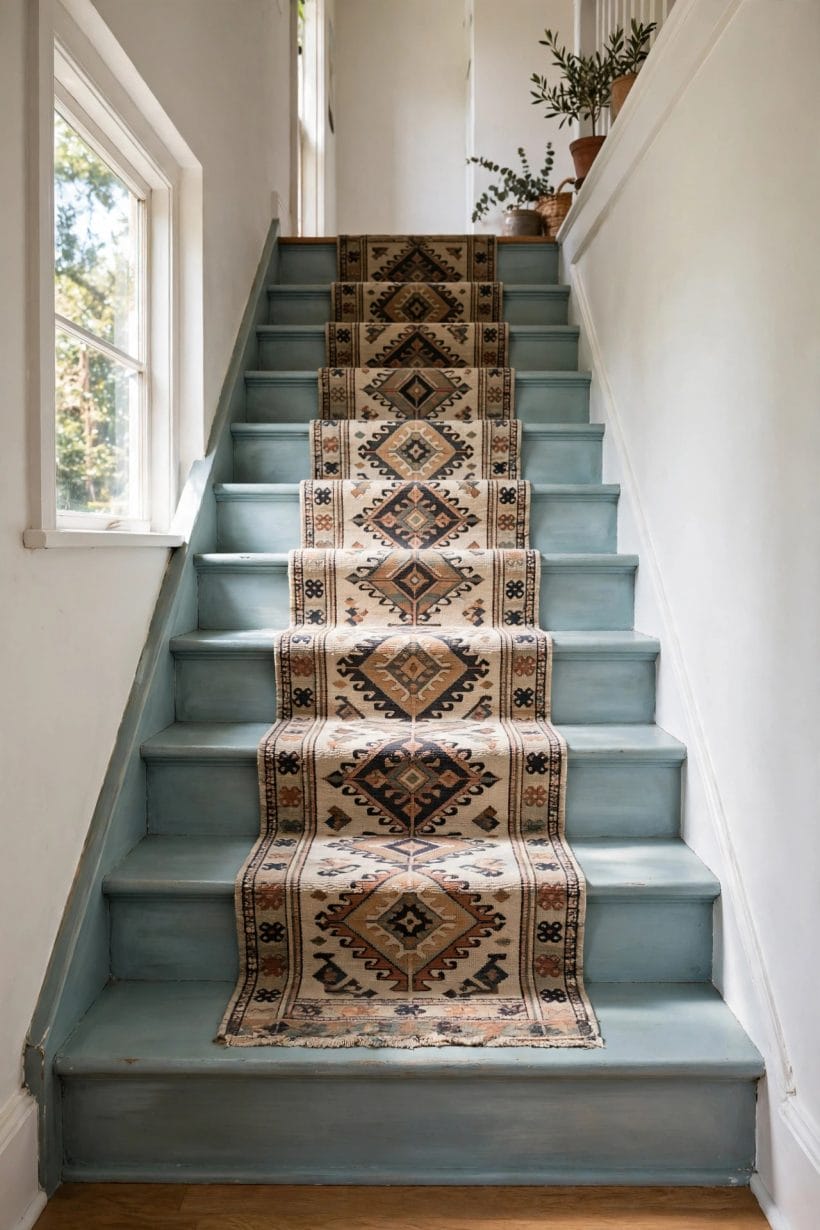
37. Vintage Rug Runner
A vintage-style rug as a runner gives a painted staircase instant character, and it can be swapped when tastes change.
38. Stair Rods in Brass
Brass stair rods over a runner add a traditional finish and hold the runner flat, preventing the creep that wears carpet edges.
A runner is also the easiest part of a painted staircase to change, so it is the right place to be fashionable. Keep the paint timeless and let the runner carry the trend — when tastes change, the runner changes, and the paint endures.
6. Patterns and Motifs
Pattern is where a painted staircase stops being a colour choice and becomes a design. Stencils, geometry, florals and checkerboards all work on risers and landings, where they escape foot traffic, and they reward a steady hand and a little patience. The key discipline is scale: a motif that looks charming on one riser can overwhelm a whole flight if it is too large or too busy, so test a single riser before committing to all of them. The seven ideas below range from subtle tone-on-tone pattern to full candy colour, so there is a level of boldness for every hall.
39. Herringbone Riser Pattern
A painted herringbone motif on the risers gives a tailored, almost textile feel to the flight.
40. Geometric Riser Blocks
Blocks of colour on alternate risers create a geometric rhythm that suits modern halls and bold colour lovers alike.
41. Floral Stencil Flight
A repeated floral stencil climbing the risers turns the staircase into a garden wall that happens to be walked on.
42. Damask Riser Detail
A damask stencil in a tone close to the riser colour gives pattern that reveals itself gradually rather than shouting.
43. Checkerboard Landing
A checkerboard painted landing at the turn gives the climb a punctuation mark and a place for the eye to rest.
44. Arrows Up the Risers
Small painted arrows or chevrons on the risers point the way up and add a playful, graphic note.
45. Mismatched Riser Colours
A different pastel on every riser gives a candy-coloured climb that suits a playful family home and a brave decorator.
Patterned risers photograph beautifully and live best when the rest of the hall stays calm. If the risers carry pattern, keep the walls plain, the rail simple and the landing clear, so the pattern has room to breathe.
7. Small Halls and Narrow Flights
Small halls punish indecision: every colour, every object and every shadow shows, and a painted staircase in a tight space must earn its place twice over. The ideas below are about making a narrow flight feel intentional rather than cramped — using light colours to open the space, mirrors and light to borrow spaciousness, and storage and colour pops to turn dead corners into features. A small hall with a well-painted staircase feels designed; the same hall with a thoughtless one feels like a corridor that happens to have stairs.
46. White Flight, Dark Walls
In a narrow hall, paint the flight white and the walls dark, so the staircase advances while the walls recede.
47. Mirror at the Turn
A mirror on the landing wall doubles the painted flight visually and brings light into the darkest part of the climb.
48. Light from Above
A skylight or a high window over the stairwell makes painted colours read true and keeps the flight from feeling enclosed.
49. Slim Profile Paint
Keep the paint palette to two tones on a narrow flight, so the small space reads as intentional rather than busy.
50. Under-Stair Colour Pop
Paint the wall beneath the staircase a bold colour, turning dead space into a backdrop for the flight above.
51. Open Risers, Painted Strings
On an open-riser flight, paint the strings and treads and leave the gaps open, keeping the small hall feeling airy.
52. Vertical Stripe Wall
A vertical stripe on the stairwell wall draws the eye up and makes a low ceiling feel taller above the painted flight.
53. Compact Landing Storage
Paint built-in storage under the landing to match the flight, so a small hall gains cupboards without gaining clutter.
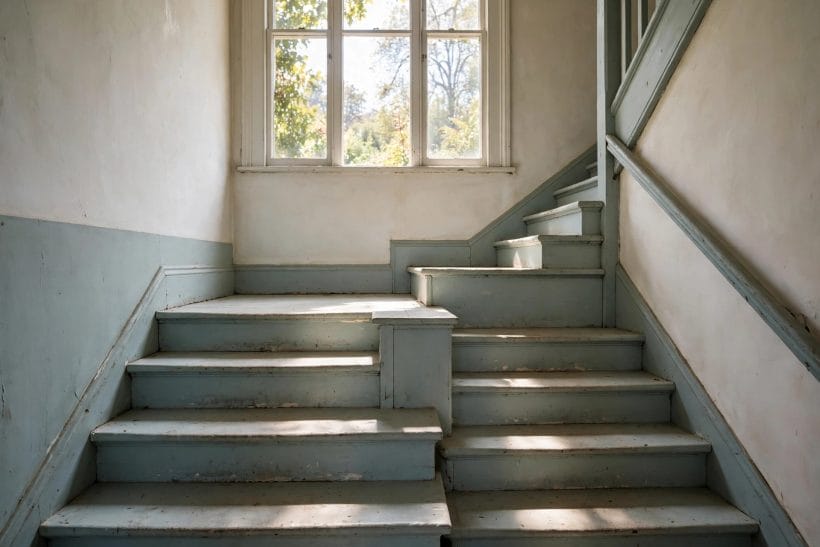
In a small hall, the painted staircase and the hall itself are one design problem, not two. Solve them together — colour, light, storage and mirror as a single scheme — and the small space will feel considered rather than compromised.
8. Light, Walls and Surroundings
A staircase never stands alone: its walls, its lighting and its landing shape how its paint reads. A colour that glows under a skylight can look flat under a single bulb, and a flight beside a gallery wall shares attention in a way a flight on a bare wall does not. The seven ideas below treat the stairwell as a room in its own right — its lighting, its wall colour, its ceiling and its landing — because painting the stairs without thinking about the space around them is like framing a picture without looking at the wall it hangs on.
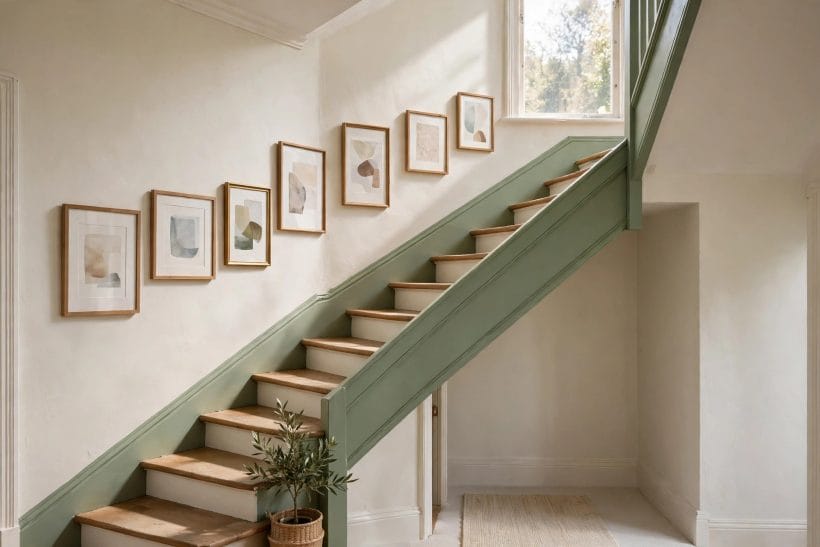
54. Gallery Wall Beside the Flight
Hang a gallery wall along the painted staircase, letting art and paint share the climb without competing.
55. Wall Lights on Every Third Step
Small wall lights spaced along the flight wash the painted treads with light and make the colours glow after dark.
56. Dark Hall, Bright Flight
Paint the hall walls dark and the flight bright, so the staircase becomes a lit path through a moody space.
57. Pastel Hall, White Flight
Pastel walls with a white painted flight give a soft, calm climb that suits bedrooms and quieter homes.
58. Timber Floor, Painted Flight
Let a timber floor run into a painted flight, so the change of material marks the change of level honestly.
59. Painted Stairwell Ceiling
Paint the stairwell ceiling the same colour as the flight, wrapping the climb in one continuous tone.
60. Window Seat at the Landing
A window seat on the landing turns the pause in the climb into a destination, painted to match the flight.
Check your painted staircase under its real lighting before judging it: daylight, evening lamps and landing lights each change the colours. A flight judged only in daylight will surprise you at night, usually unpleasantly.
9. Finishes, Durability and Care
Finish is the unglamorous half of a painted staircase and the half that decides whether it still looks good in three years. Sheen, primer, top coats, sealing and touch-up routines all sound dull beside colour choices, but they are what separate a flight that ages gracefully from one that peels, chips and stains. The eight ideas below are practical rather than pretty, and they repay attention out of proportion to their excitement: a well-primed, well-sealed flight with a touch-up pot to hand will outlast a beautiful flight that was rushed.
61. Satin Finish Throughout
A satin finish across the whole painted flight balances wipeability with a soft look that gloss cannot give.
62. Gloss on the Handrail Only
Gloss paint on the handrail, where hands grip daily, wipes clean while the rest of the flight stays matte and calm.
63. Scuff-Resistant Tread Coat
A hard-wearing top coat on the treads, renewed yearly, keeps a painted flight looking fresh under daily feet.
64. Touch-Up Pot Kept Handy
Keep a labelled touch-up pot for the flight’s colours, so scuffs are fixed in minutes rather than lived with for months.
65. Primer Before Colour
A proper primer under painted stairs prevents the peeling that ruins more flights than any colour choice ever does.
66. Sealed Riser Stencils
Seal stencilled risers with a clear coat, so the pattern survives cleaning and feet that miss the tread.
67. Seasonal Deep Clean
A seasonal wash of the painted flight, with attention to the tread edges where dirt collects, keeps colours true.
68. Repaint the Treads First
When a painted flight tires, repaint the treads first: they take the wear, and fresh treads revive the whole climb.
Keep a small kit for the flight — touch-up pots, a fine brush, a cloth and the clear coat used — in one labelled box near the hall. The flights that look best after five years are not the ones painted best on day one, but the ones touched up promptly ever since.
10. Statement Stairs
Some staircases deserve to be statements, and paint is the cheapest way to make one. The seven ideas below are the boldest in this post — rainbows, monochrome drama, spirals, murals, black and gold — and they share one rule: a statement staircase must be deliberate. Half-hearted boldness reads as a mistake, while a fully committed flight, even a wild one, reads as confidence. If your hall can carry a statement, and your household will love living with it, these are the ideas to reach for.
69. Rainbow Flight
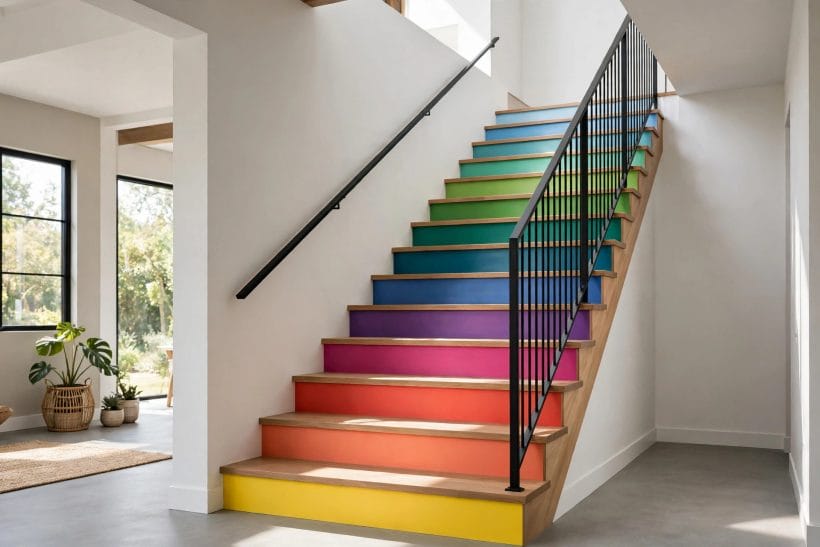
A full rainbow flight, one colour per step, is the boldest painted staircase of all, and it belongs in a home that loves colour.
70. Monochrome Drama
A flight in shades of a single colour, from charcoal to silver, gives drama without a single competing hue.
71. Painted Spiral Stair
A painted spiral staircase, with each tread a shade deeper as it winds, turns a compact climb into sculpture.
72. Mural Up the Wall
A painted mural on the stairwell wall, with the flight painted to match its palette, makes the whole stairwell one artwork.
73. Black Flight, Gold Rail
A black painted flight with a gold or brass handrail gives a staircase the glamour of a theatre stair.
74. Coastal Blue and White
Blue and white painted stairs, with a rope handrail, bring a coastal calm to any hall, far from any sea.
75. Your Colour, Your Climb
The best painted staircase is the one painted in the colours you love, maintained with care, and walked with pleasure every day.
A statement staircase should be the hall’s only statement. If the flight shouts, let everything else whisper — plain walls, simple rail, clear landing — so the statement lands instead of competing with itself.
Final Considerations
One last practical note before you begin: paint a staircase in stages if the house cannot spare it for days. Do the risers and balusters first, since they take no foot traffic, then the treads in alternating sets so the flight stays usable, or paint the whole flight and plan around a weekend away. However you schedule it, keep children and pets off fresh paint, ventilate the stairwell well while painting, and do not rush the cure — a tread walked on too soon will carry the mark of that impatience for years.
Choose one idea that fits your hall, prepare properly, prime well, and paint the treads for grip as much as for colour. For the staircase as a whole, see the staircase ideas post, and for railings, modern stair railing ideas, floating staircase ideas and traditional staircase ideas cover the forms a painted flight can take. The brown living room ideas post and the porch ideas post show painted stairs in fuller room settings. Take the ideas that fit your hall and leave the rest: a quiet flight in a calm house is no failure beside a rainbow flight in a bold one, and the best painted staircase is the one that still pleases you after a thousand climbs. A painted staircase is a hall’s signature — make it one you enjoy walking up, every day.

0 Comments