
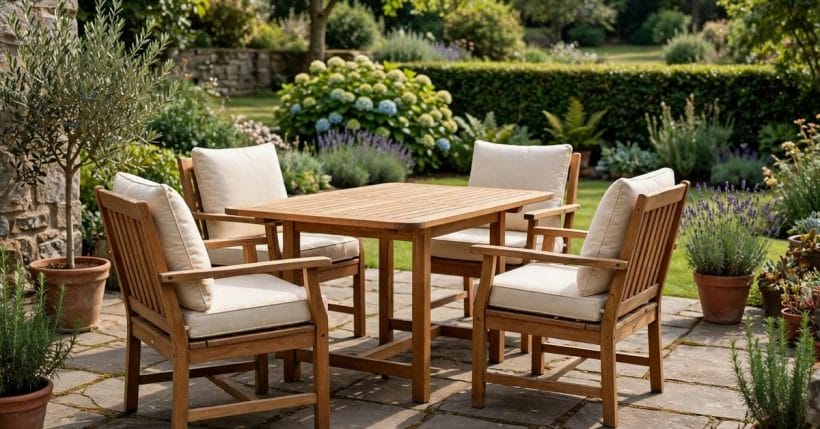
Buying patio furniture looks simple until the first summer teaches otherwise. A set that looked perfect in a showroom can wobble on uneven paving, hold water in its cushions after rain, or fade to a colour nobody chose. The questions that matter are not about any single maker or model. They are about frame, finish, fit and care — the four things that decide whether a set earns its keep outdoors for years or becomes a problem by autumn.
This guide answers the question behind the forum thread: what should you check before you buy patio furniture? It names no brand, reviews no maker and gives no verdict on any product. Instead it walks through the checks that apply to any set, in any material, at any price, so you can judge what you are looking at with your own eyes and hands.
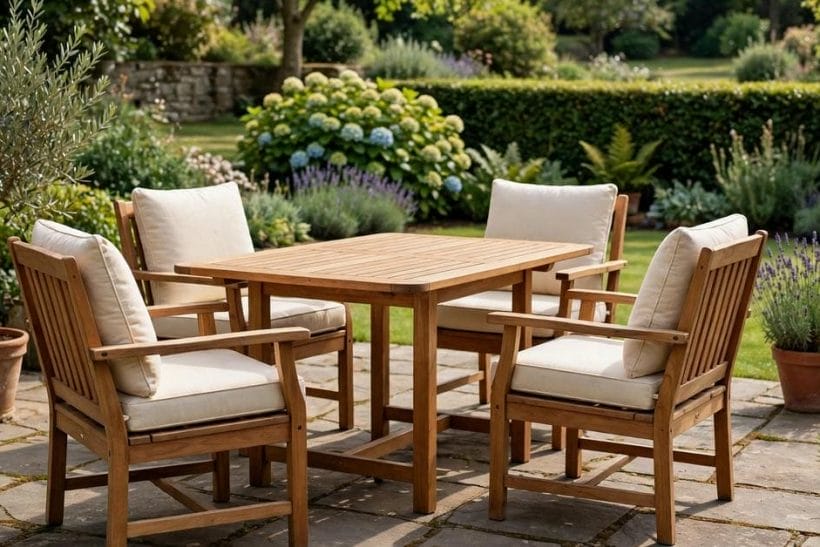
Start with the honest truth about outdoor furniture: it lives in weather. Rain, sun, frost and wind are not occasional hazards but the daily conditions of its working life. A set built for a covered showroom and a set built for a terrace are different objects, and the difference shows in joints, finishes and weight long before it shows in looks.
1. The Frame: What Holds It Together
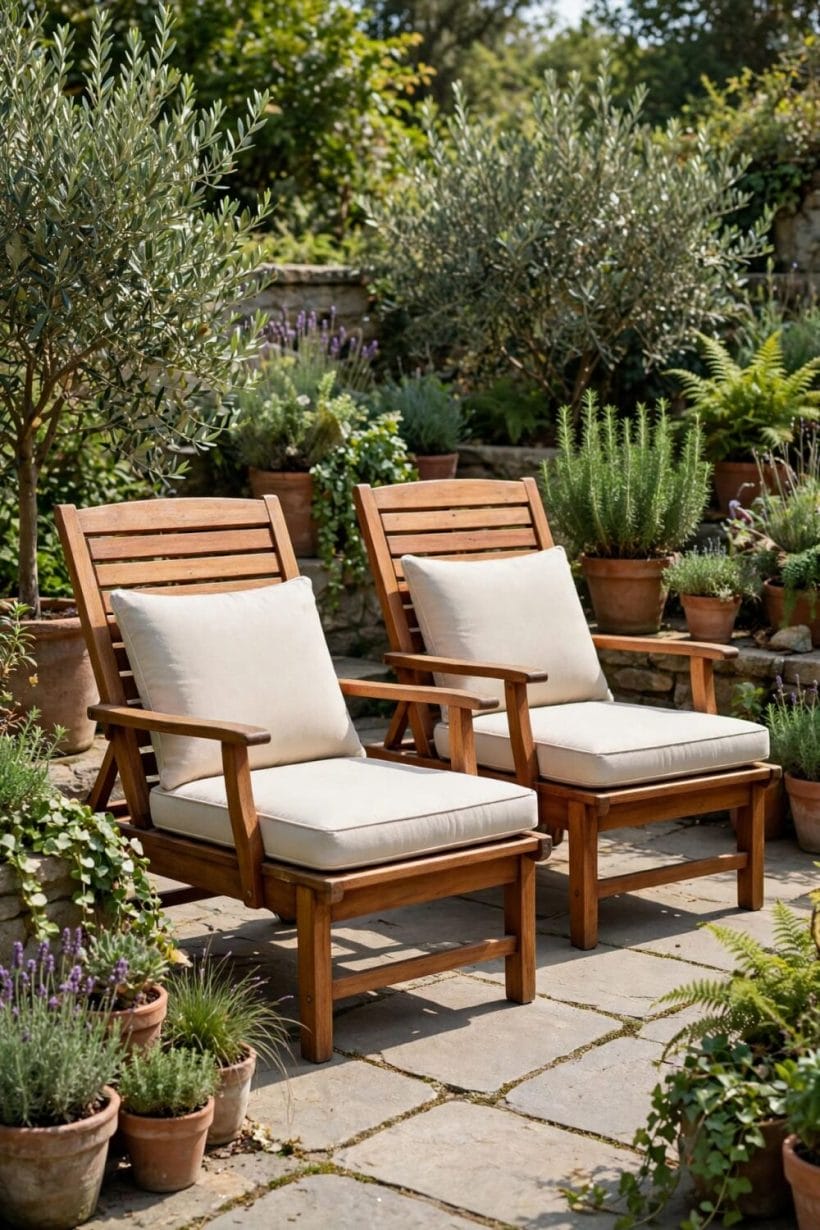
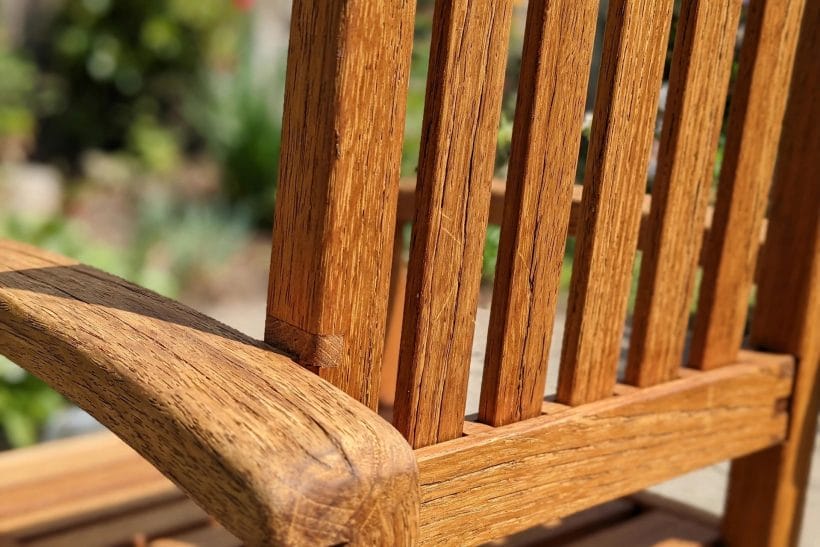
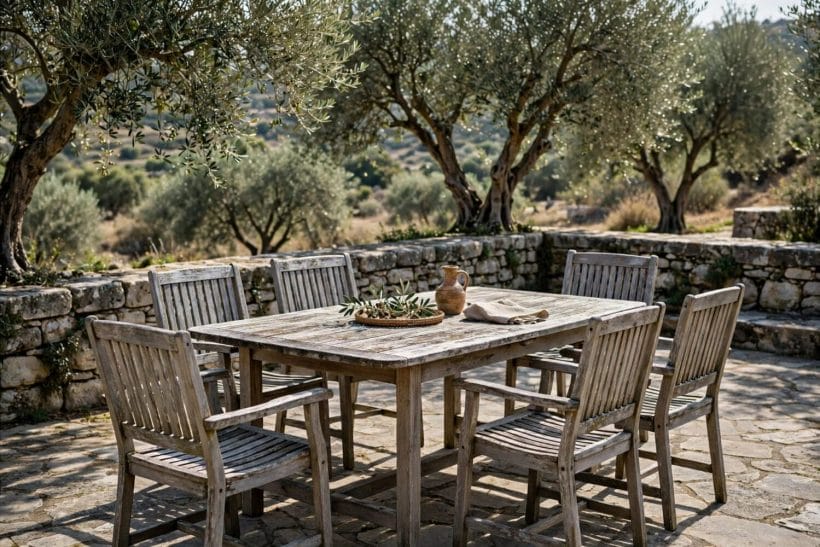
The frame is the set’s skeleton, and its material sets the terms of everything else. Hardwood frames are heavy, warm to the touch and age visibly, weathering to grey unless oiled. Metal frames are lighter and more precise, but they depend on their coating; once a coating chips, the metal beneath is exposed to weather. Woven frames over a metal core sit between the two, offering texture with a lighter weight, but their weave can trap dirt and moisture if it is not kept clean.
Whatever the material, check the joints before anything else. Sit in the chair, rock it gently side to side, and feel for movement at the corners. A well-made joint feels solid and silent; a poor one clicks, flexes or gives a fraction of an inch. Look underneath: are the joints bolted, screwed, glued or welded, and can they be tightened later? A set whose joints cannot be maintained will only get looser, and a loose chair outdoors becomes a wobbly one fast.
Weight is a practical check, not a quality score. A very light set blows across a terrace in a gale and needs storing; a very heavy set is hard to move for cleaning or for winter cover. Lift a chair as you would on a windy day and judge whether its weight suits your terrace and your strength.
2. The Finish: How It Faces the Weather
Every outdoor material has a finish, and the finish is what meets the weather. On timber, the choice is usually between an oiled finish that needs renewing, a sealed finish that holds colour longer, and a weathered look that accepts greying as part of the material’s character. None is wrong; the mistake is buying one while expecting another. If you love the honey colour of new timber, be ready to oil it regularly, or accept that it will silver.
On metal, look at the coating closely, especially at edges, welds and the undersides of frames, where coating is thinnest and water lingers longest. A smooth, even coat with no bubbles or thin patches will last; a coat that is already rough at the edges will not improve outdoors. On woven frames, check that the weave is tight and even, with no loose ends, and that the frame beneath is not already showing through.
Ask how the finish is maintained, in general terms, before you buy. If the answer involves a product you cannot easily obtain, or a routine you will not realistically keep, choose a different finish rather than a different set. The best finish is the one you will actually maintain.
3. The Cushions: Comfort That Dries
Cushions decide whether a set is used or admired from indoors. Sit in them for longer than a showroom minute: do they support without sagging, and do they spring back when you stand? A cushion that bottoms out on the frame will not improve with age, and one whose foam is too soft will hold water after rain.
Drying matters as much as comfort. Outdoor cushion covers should come off for washing, and the foam inside should drain rather than hold water. After a shower, a good cushion dries within hours in sun and breeze; a poor one stays damp into the next day, and damp cushions grow musty. If the set will live uncovered, favour cushions that dry fast and covers that wash easily over cushions that merely look luxurious.
Storage is part of the cushion question. If you have a dry store for winter, thick cushions are no burden; if cushions must stay out, or be carried inside every evening, lighter and faster-drying ones will be used more. Measure your storage before you fall for the deepest seat.
4. The Fit: Sized to the Terrace
A set that fits the terrace is worth more than a grander set that crowds it. Measure the space, then measure the set, and leave room to pull a chair out, walk behind it and open any gate or door nearby. A dining set needs room for chairs to be pulled out and sat in, not just for the table’s footprint; a lounge set needs room for feet and for a side table within reach.
Seat height and depth matter too. A dining chair that is too low for its table makes meals awkward; a lounge chair that is too deep for its user makes standing up a struggle. Sit in the actual chairs, at the actual table, before deciding. Showroom floors are flat and generous; terraces rarely are, so check how the set sits on your own paving, and whether adjustable feet or level ground are needed.
Count the seats you genuinely use. A set for eight that seats four most of the year wastes terrace space and cleaning time; a set for four with two stackable extras covers both the everyday and the occasion. Buy for the usual, not the exceptional.
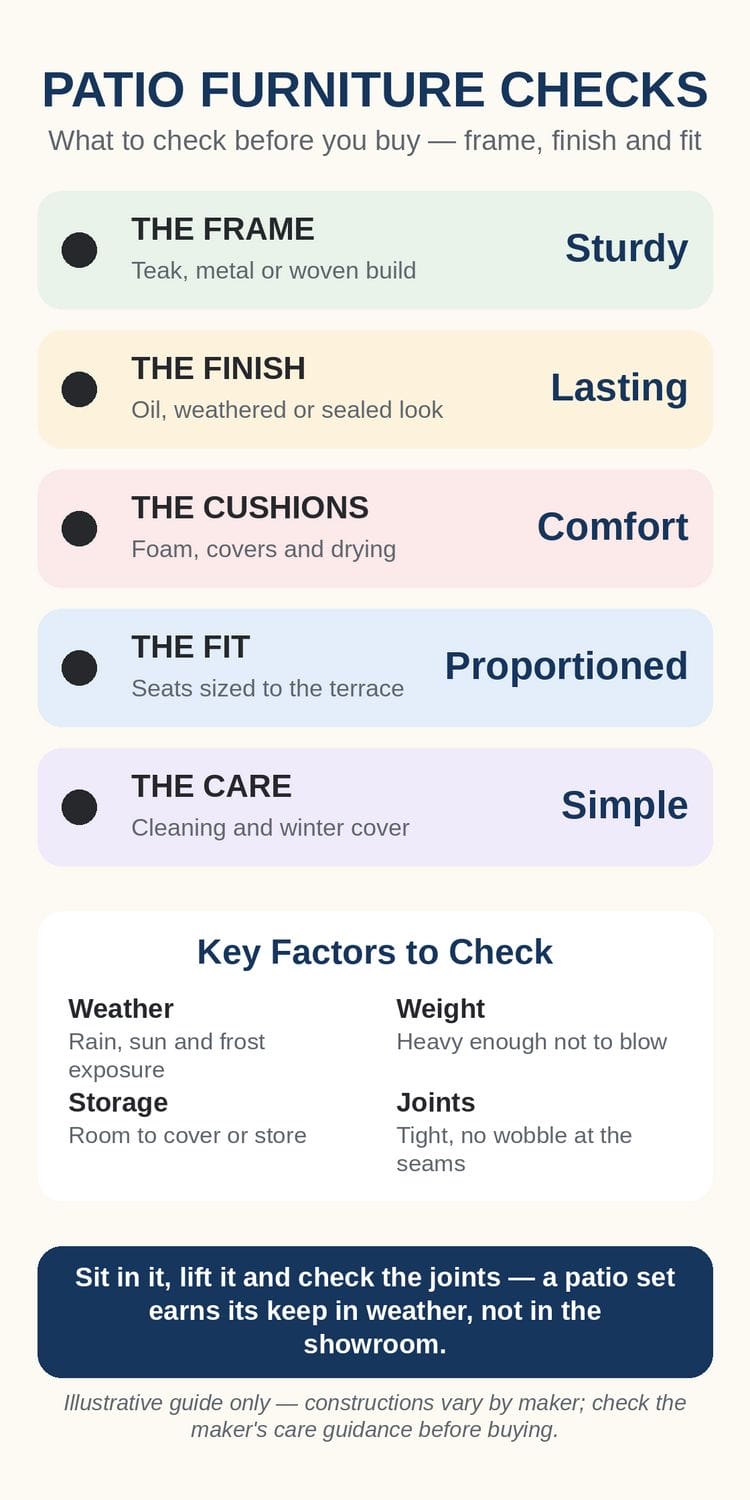
5. The Table: Surface, Height and Stability
The table is the set’s workhorse, and its surface should suit its use. A slatted top sheds rain and dries fast but lets crumbs and glasses wobble; a solid top is steadier for dining but holds water after rain unless it is tilted or covered. A glass top looks light and shows the frame beneath, but it shows every mark and needs regular cleaning. Choose by how you will actually use it, not by how it photographs.
Stability on real ground is the table’s real test. Set it on uneven paving and press each corner: does it rock? A table with adjustable feet, or with a pedestal base that tolerates a slope, will serve better than a rigid four-legged table on a terrace that is not perfectly flat. Check the fixings under the top as well — a top that is only lightly attached will loosen with seasons of expansion and contraction.
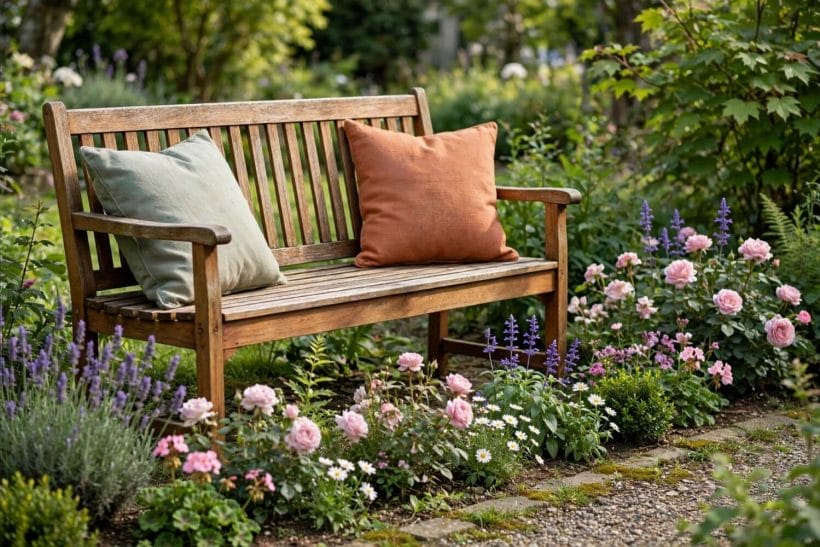
6. The Care: Cleaning and Winter Cover
Care is where many sets quietly fail. Timber needs cleaning and periodic re-oiling if its colour is to be kept; metal needs washing to remove salt and grime before they attack the coating; weave needs brushing out, because trapped dirt holds moisture against the frame. None of this is difficult, but all of it must actually happen, so choose a care routine you will keep.
Winter is the hardest season for outdoor furniture, even when it is not used. A breathable cover that keeps rain off while letting moisture escape protects far better than a plastic sheet that traps damp underneath. If you have indoor storage, use it for cushions at least; if not, covers for the frames as well are worth their cost. Stack chairs where they cannot blow over, and keep feet off wet ground where possible.
Before buying, ask what spares exist in general terms: can feet, bolts or cushion covers be replaced? A set whose small parts cannot be renewed will be retired by a single failed foot or a torn cover, while a set with replaceable parts can be kept for years.
7. The Setting: Sun, Shade and Wind
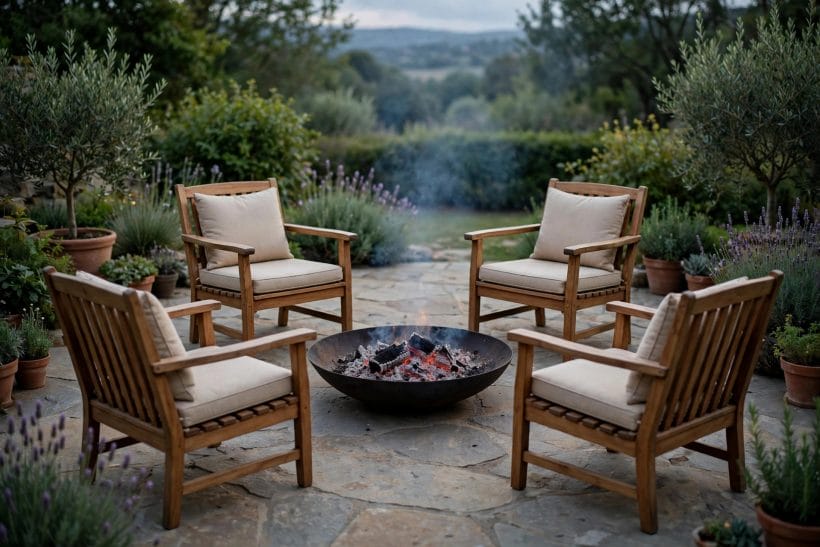
Where the set sits matters as much as what it is made of. Full sun fades fabrics and heats metal frames; deep shade keeps everything damp longer; a windy corner tests weight and stability daily. Walk the terrace at different times of day and notice where sun falls, where wind funnels and where rain pools, then place the set accordingly.
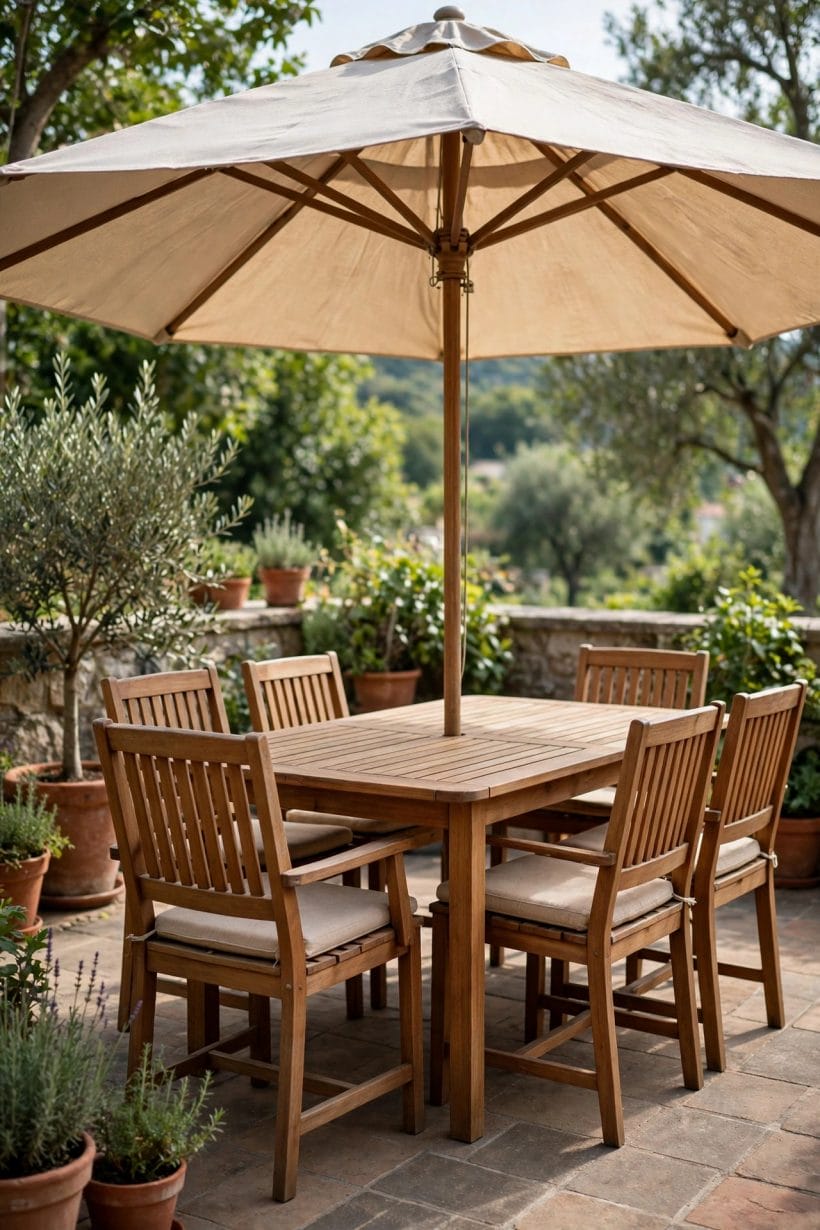
Shade is the single biggest comfort factor for a patio set. A parasol, a pergola or a nearby tree changes how long a set is usable on a hot day, and it protects cushions and finishes from the harshest sun. Check that a parasol’s base fits the table or stands clear of it, and that its canopy does not foul a wall or a branch when opened.
Wind deserves respect. Lightweight chairs on an exposed terrace become projectiles; heavy sets stay put but are hard to move for cleaning. If your terrace is exposed, favour weight and low profiles, and store cushions indoors when a storm is forecast.
8. The Extras: Storage, Side Tables and Flexibility
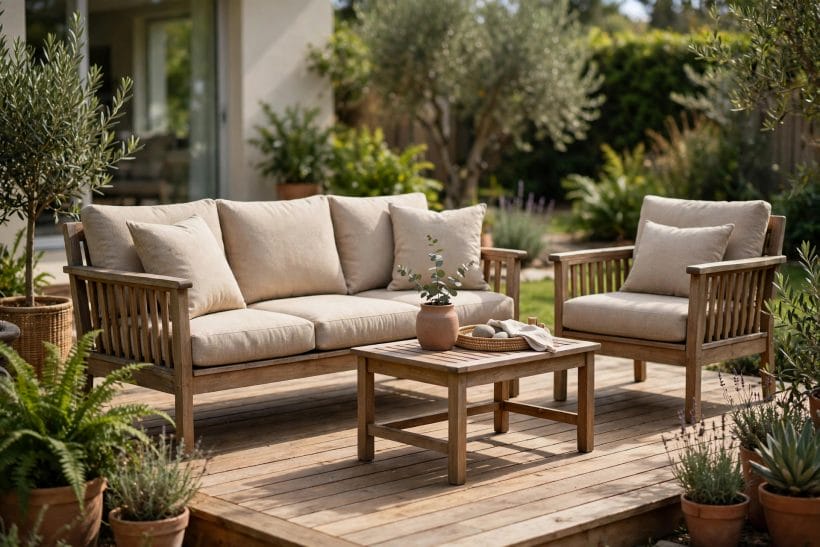
Side tables, storage boxes and footstools are where a set becomes a place to live rather than a place to sit. A side table within reach of every seat matters more than a large coffee table in the middle, which often ends up too far from someone to be useful. A storage box that doubles as a bench solves the cushion problem and the seating problem at once.
Flexibility is worth paying attention to. Stackable chairs, folding extras and modular sections let a set adapt to a quiet evening and a full terrace alike. A rigid set that only works at one size will frustrate on the days it does not match the occasion. Test the moving parts: do stackable chairs stack without scratching, and do folding chairs fold without a fight?
9. The Buy: Questions to Ask Before Paying
Before paying, run through the checks in one pass. Sit in every seat, rock every chair, lift the table’s corners, check the coating at the edges, remove a cushion cover, and ask about care, spares and covers. If any answer depends on a claim you cannot verify — a lifespan, a guarantee against weather, a promise about a material — treat it as a claim, not a fact, and judge the set on what you can see and feel.
Delivery and assembly are part of the buy. Check whether the set arrives assembled or flat-packed, whether assembly needs two people or special tools, and whether packaging is taken away. A set that arrives damaged because it was poorly packed is a problem regardless of its quality, so inspect on delivery and keep the packaging until you are satisfied.
Finally, buy for the terrace you have, not the one in the photograph. The photograph has perfect light, no wind and no rain. Your terrace has all three, and the set that suits it is the one whose frame, finish, cushions and fit you have checked with your own hands.
10. Keeping It Good: A Year With the Set
A good set’s first year sets its pattern. Clean it in spring, check its joints and coating, re-oil timber if that is the finish you chose, and wash cushion covers before they stain. In summer, keep cushions dry between showers and brush weave clear of debris. In autumn, cover or store before the first frost. In winter, check covers after storms and keep feet out of standing water.
Small repairs done early — a tightened bolt, a touched-up chip, a replaced foot — prevent the slow decline that retires most sets. Keep a note of the care routine that works for your set and your terrace, and repeat it. Outdoor furniture does not ask for much, but it asks every year.
Final Considerations
Check the frame’s joints, the finish’s edges, the cushions’ drying, the set’s fit on your terrace and the care routine you will actually keep — and buy on what you can see and feel, not on any claim you cannot verify. For the terrace around the set, the hot tub patios post covers layout and shade, the porch ideas post covers the sheltered end of outdoor living, and deck railing ideas, deck built-in benches and ground level decks cover the structures a set sits on. The dream homes survey shows these same outdoor moves across house styles. A set chosen this way will not be the most talked-about purchase you make — it will simply still be there, solid and comfortable, summer after summer.



0 Comments