
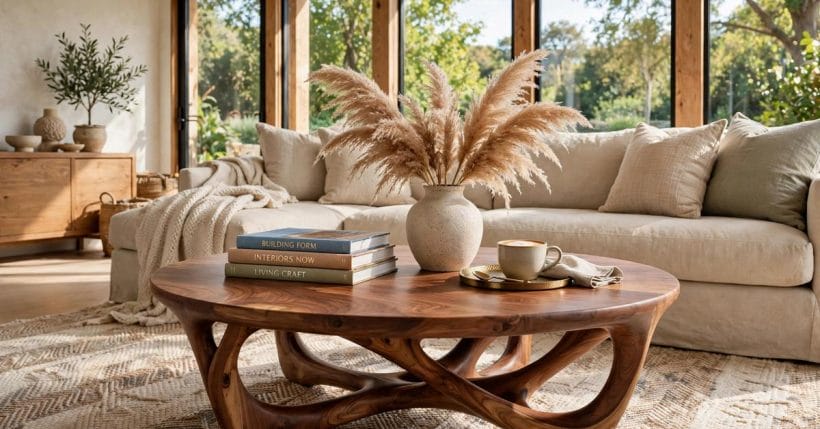
A coffee table is the smallest piece of furniture a living room cannot do without, and the most photographed. It anchors the seating, holds the everyday clutter of a household, and sets the room’s tone more than any sofa does, because it sits in the middle of everything. Pictures of coffee tables are popular for exactly that reason: they show not just a table but a whole way of living around one.
This post is a gallery-led survey of coffee table pictures and ideas. It carries no count, because the point is not a number but a range — shapes, materials, heights and styling approaches, shown together so you can see what suits your room. Browse it the way you would browse a gallery: notice what you return to, and let that tell you what your room is asking for.
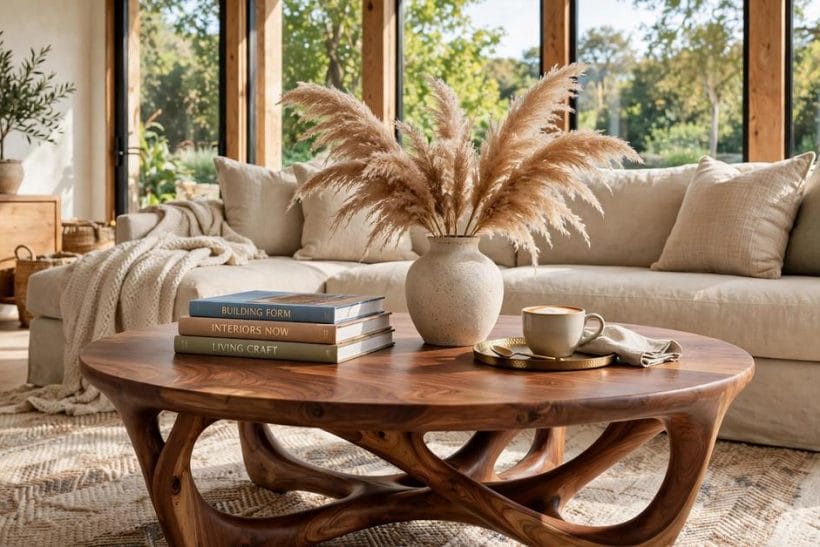
What follows is organised by the decisions a buyer actually makes: shape first, then material, then height and scale, then styling. Each section shows the idea, explains where it works and where it does not, and ends with the practical catch — the cleaning, the weight, the cost of getting it wrong — that pictures alone never show. Read it straight through for the full survey, or dip into the section that matches the table you are considering.
The first thing pictures teach is proportion. A coffee table should relate to its sofa the way a rug relates to a room: large enough to be useful, small enough to leave walking space. The pictures that look best are almost always the ones where the table, the sofa and the rug are in conversation, not competition. When one of them dominates, the room feels off, even if every piece is beautiful on its own.
1. Round Tables: Softening the Room
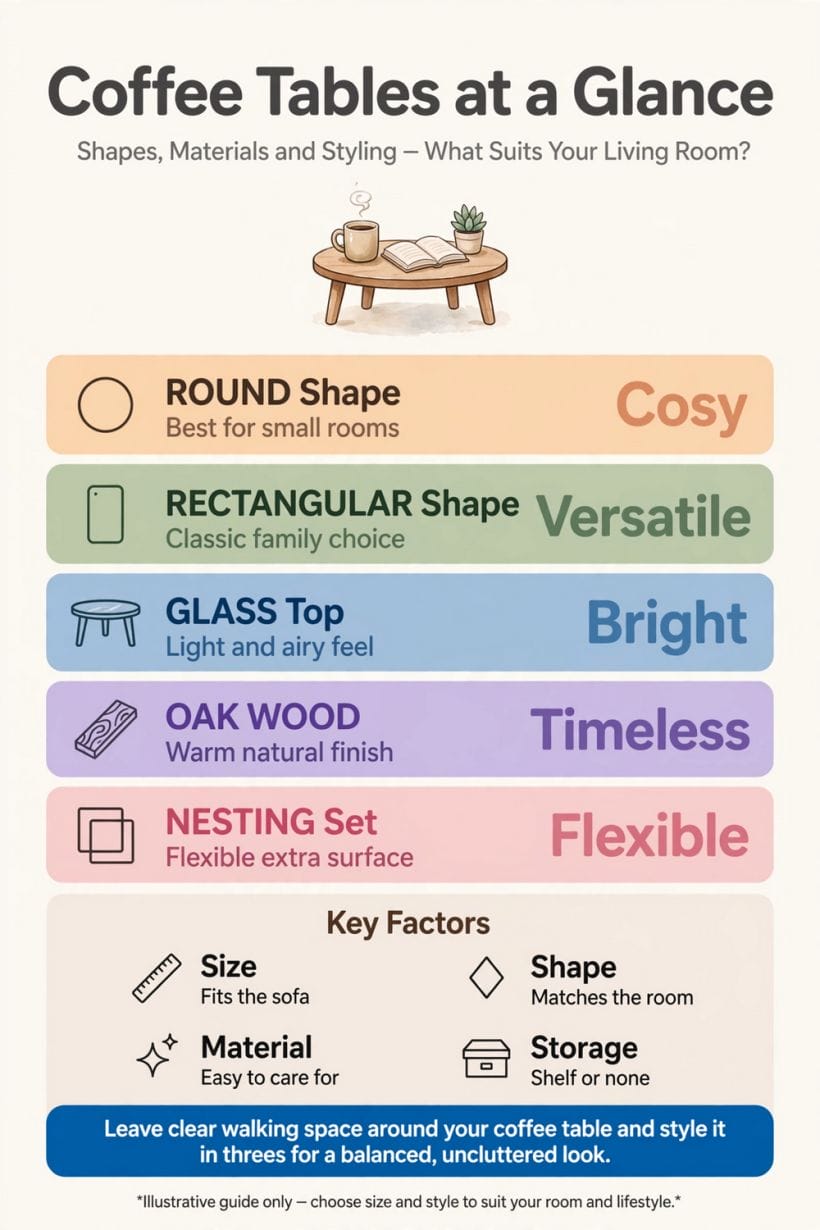
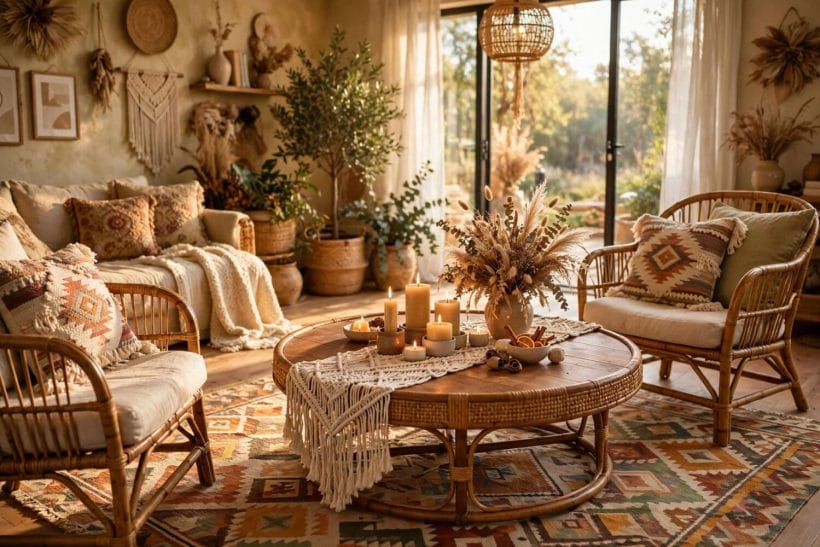
Round coffee tables suit rooms where movement matters. With no corners to catch a shin, they work well in smaller rooms, in rooms where children play, and in arrangements where people walk around the table from several directions. A round top also changes the room’s geometry, breaking up the rectangles of sofa, rug and television with a softer shape.
Styling a round table is an exercise in odd numbers. A tray, a small stack of books and a single object — a vase, a bowl, a candle — fill the surface without crowding it. Because the top is smaller than a rectangular one, restraint pays: three things, not six, and room left for a cup of coffee, which is after all the table’s job.
Round tables also pair well with sectional sofas, where a rectangular table would leave awkward corners unreachable. In a room with a curved sofa or a bay window, a round top echoes the architecture and keeps the arrangement feeling soft rather than squared off.
2. Rectangular Tables: The Classic Choice
The rectangular coffee table is the classic for a reason: it matches the shape of most sofas and most rugs, and it gives the longest useful surface for its footprint. In a long room with a standard three-seater sofa, a rectangular table is usually the safest and the most generous choice.
Rectangular tables reward symmetry with a twist. Two matching objects at either end, or a long tray running down the middle, give order; one unexpected piece — a sculptural object, a plant with height — keeps it from feeling staged. The pictures that work best show a table that is styled but still usable, with clear space left for everyday life.
When choosing a rectangular table, check its depth as well as its length: a very deep table forces people to lean forward for a cup, while a shallow one leaves the sofa side crowded. A depth that lets a seated person reach the middle comfortably is the sweet spot.
3. Glass Tops: Light and Airy
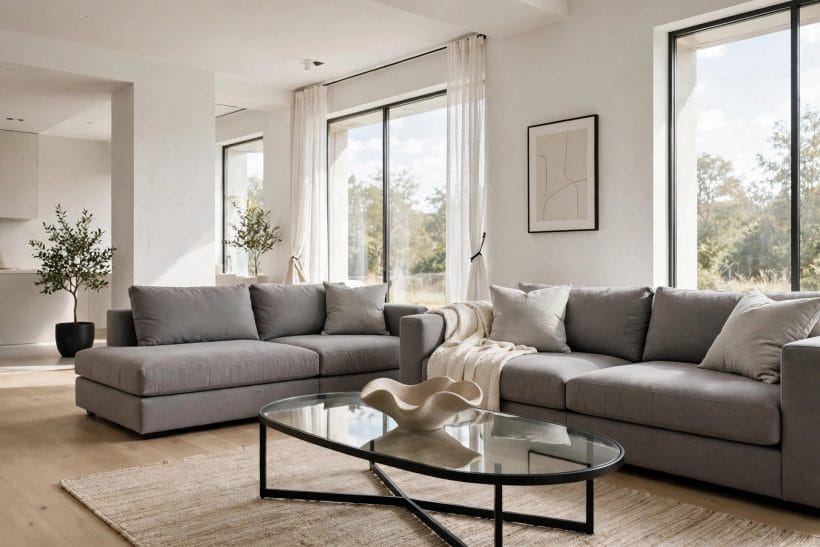
A glass-topped coffee table all but disappears, which makes it a friend to small rooms and to rooms with a beautiful rug that deserves to be seen. It keeps the sightlines open and the room feeling larger, and it pairs well with heavier seating that might otherwise dominate.
The price of that lightness is maintenance. Glass shows every fingerprint, every ring and every speck of dust, and it needs wiping far more often than wood or stone. It also shows whatever is stored beneath it, so a glass table with a lower shelf demands tidiness in a way a solid table does not. Choose glass when you love the airy look enough to keep it clean.
Glass also suits rooms with patterned rugs or detailed floors, since it does not hide what lies beneath. If your rug is the room’s artwork, a glass top is the frame that lets it show, provided you accept the cleaning that comes with transparency.
4. Wood: Warm and Timeless
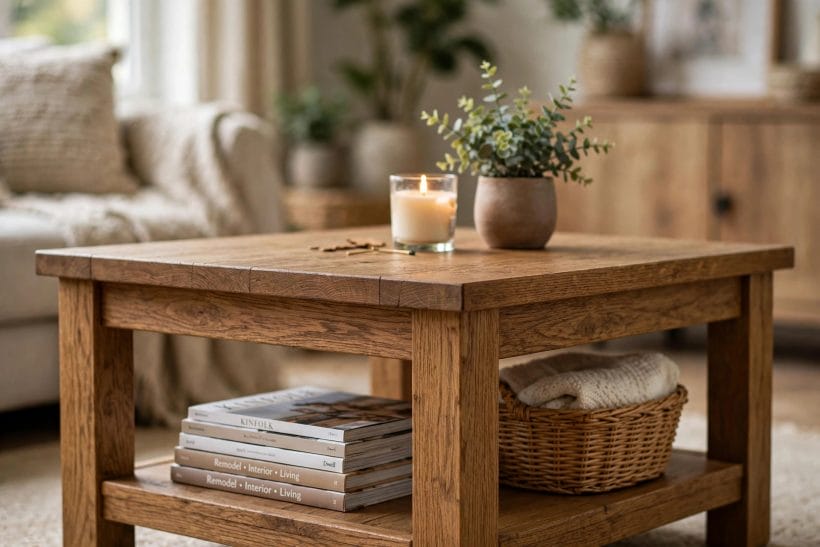
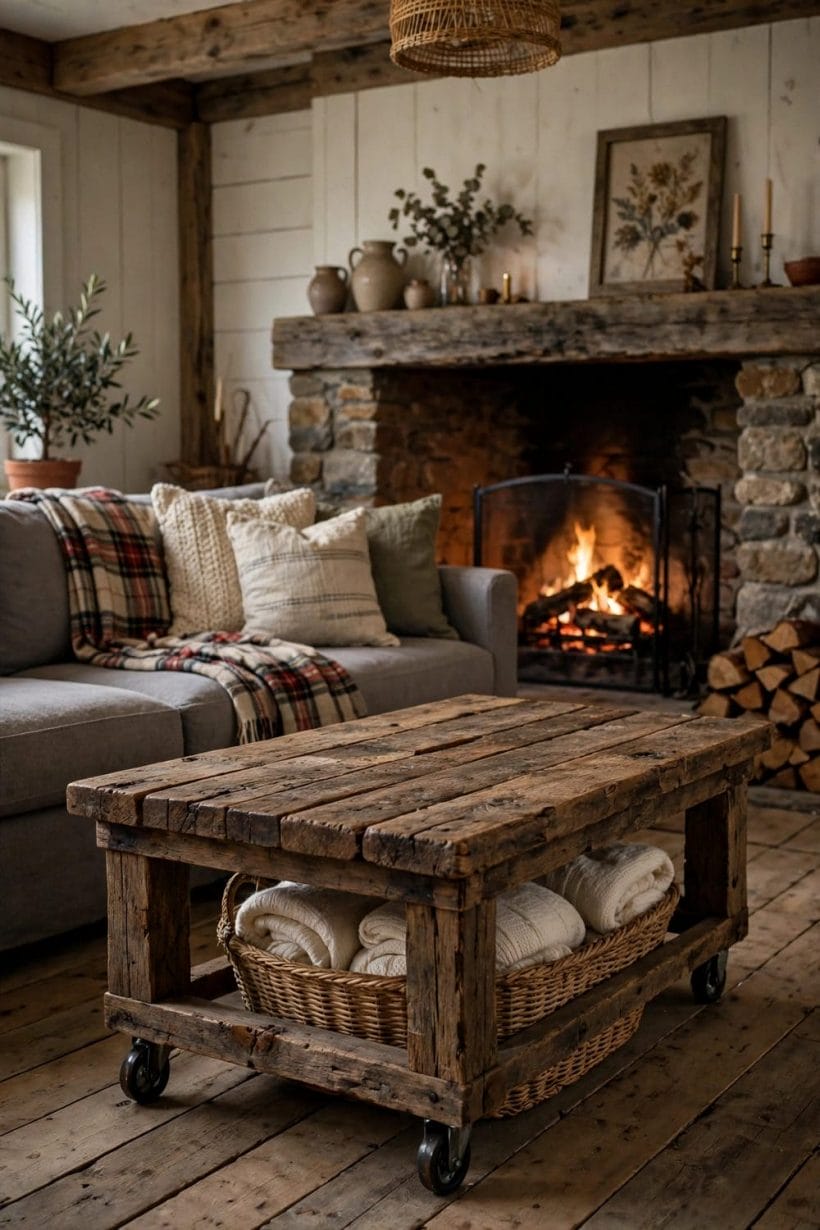
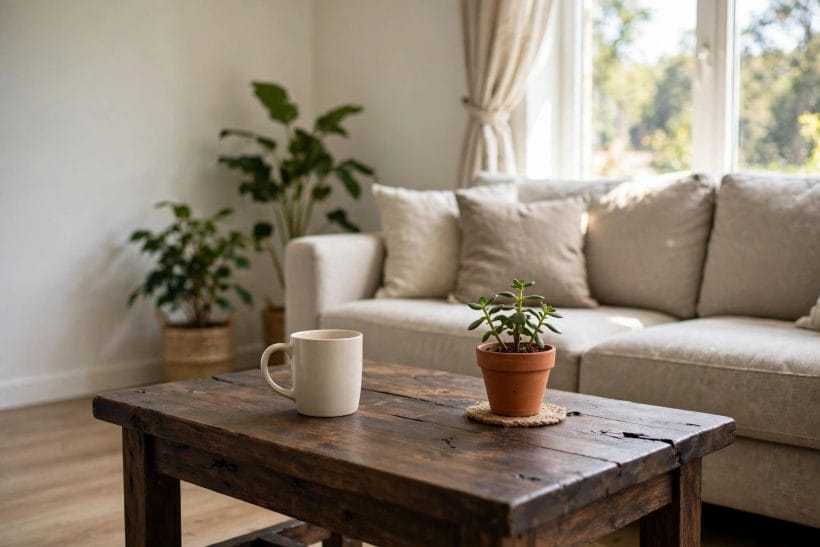
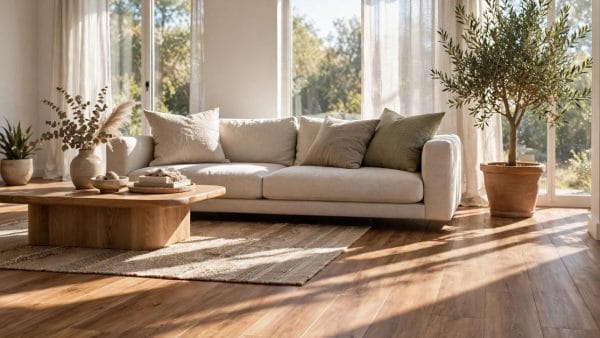
Wooden coffee tables are the warmest choice, and the most forgiving. Oak, walnut and reclaimed timber each bring a different grain and colour, and wood ages with a room rather than against it, picking up marks that read as character rather than damage. A solid wood table can be sanded and refinished, which makes it the longest-lived choice in this survey.
Wood suits almost any style, from a rustic farmhouse room to a pared-back modern one, because its character comes from the timber rather than the fashion of the moment. A live-edge slab makes a statement; a simple plank top with clean legs disappears into the room and lets everything else speak. Both are wood doing what wood does best.
Wooden tables also take finishes well, from a natural oil that deepens the grain to a painted finish that matches the room’s palette. A painted wood table can be repainted when tastes change, which makes it the most adaptable choice in this survey.
5. Stone and Marble: Weight and Presence
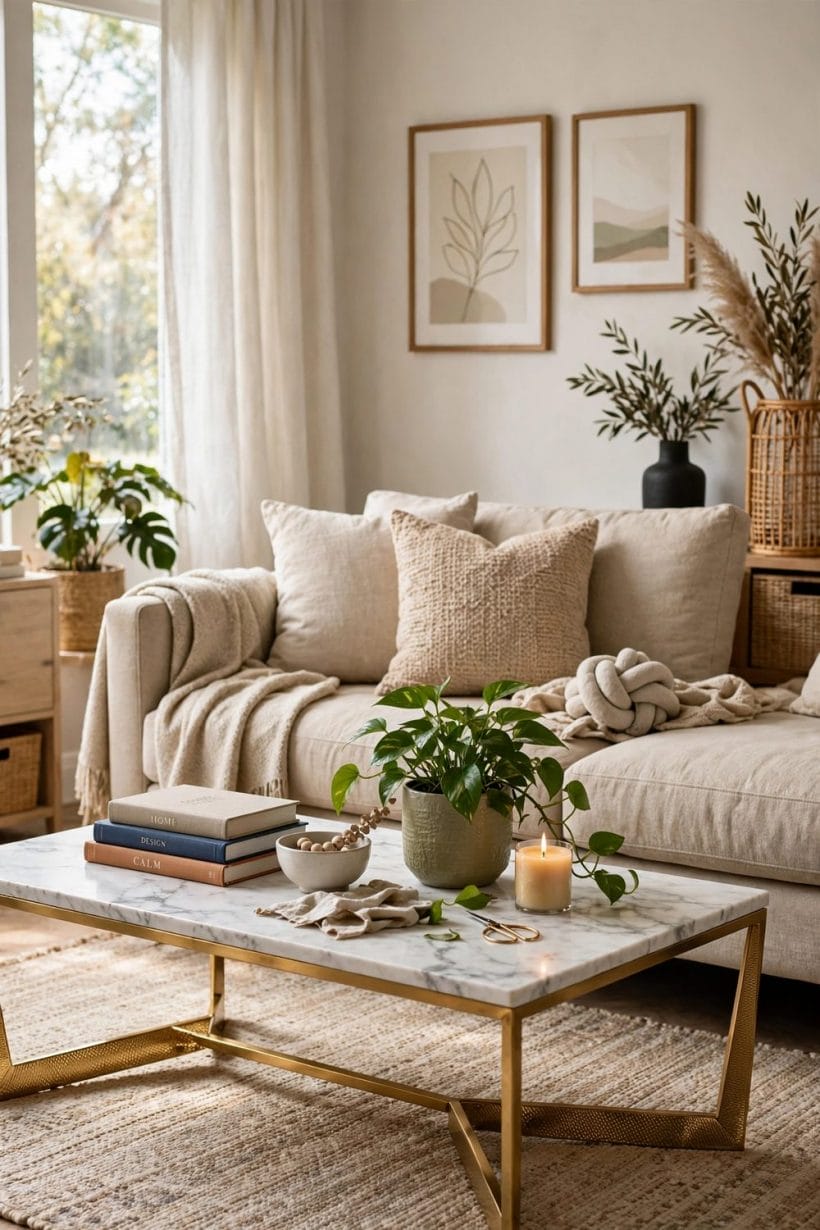
A stone coffee table — marble, travertine or a cast-stone top — brings weight and presence that no other material matches. It grounds a room, literally and visually, and it suits rooms where the seating is light or the palette is pale, giving the arrangement an anchor.
Weight is also stone’s practical consideration. A stone table is hard to move for cleaning or rearranging, and it needs a floor that can bear it without complaint. Its surface stains if it is not sealed and cared for, so stone suits households ready to treat it with a little respect — coasters, prompt wiping, and a seal renewed when it starts to look tired.
Stone tables pair naturally with timber and linen, which soften their hardness, and with metal accents, which echo their coolness. In a room that already has stone — a fireplace surround, a tiled floor — a stone table ties the materials together.
6. Nesting Sets: Flexible Extra Surface
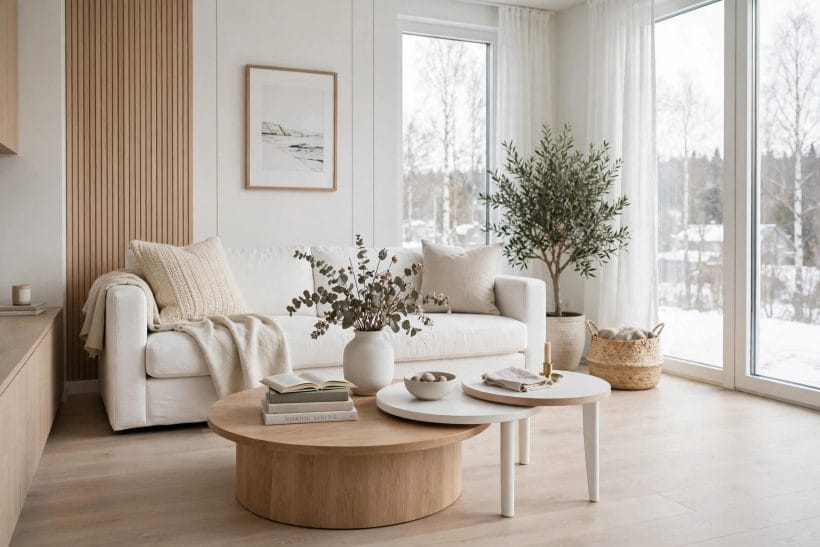
Nesting tables are the quiet problem-solvers of this survey. Tucked together they occupy the footprint of one table; pulled apart they give extra surface for guests, for a laptop, for a board game, for a second cup of coffee. They suit rooms that change shape through the day or the week.
Pictures of nesting sets work best when they show the tables both nested and separated, because that flexibility is the point. Style the largest table as you would any coffee table, and keep the smaller ones simple — a single object each, or nothing at all — so they can be pulled out without a restyle.
Nesting sets also solve the small-room problem elegantly: one table by day, two or three when friends arrive, and back to one when they leave. Their smaller tables double as side tables beside armchairs, which makes them the hardest-working tables in this survey.
7. Storage Tables: Hiding the Everyday
A coffee table with storage — a shelf below, a drawer, a lift-up top — earns its place in rooms where clutter accumulates. Remote controls, magazines, chargers and children’s things all need a home, and a table that provides one keeps the room looking calm without demanding constant tidying.
The trick is to keep the storage honest. A shelf crammed with books looks curated; a shelf crammed with everything else looks like a cupboard. Use baskets or boxes on the lower shelf to contain the everyday, and keep the tabletop itself to the styled few. The best storage tables are the ones whose storage you forget is there.
A lift-up top deserves a special mention: it raises to laptop or dining height, turning a coffee table into a work surface or a casual dining spot. In a small home without a separate desk or dining table, that flexibility can matter more than any styling choice.
8. Height and Scale: Getting the Fit Right
Height is the detail most often got wrong in pictures and in rooms alike. A coffee table should sit at roughly the height of its sofa’s seat, or a fraction lower — low enough to reach comfortably from a seated position, high enough not to feel like a step. A table that is too tall dominates; one that is too low disappears and strains the back.
Scale follows the same rule as proportion: the table should be about two-thirds the length of the sofa it serves, and it should leave clear walking space on every side that people use. Pictures that look effortless usually obey this rule without drawing attention to it; pictures that feel awkward usually break it in exactly one place.
When in doubt about scale, err slightly smaller rather than larger. A table that is a touch too small still leaves a room feeling generous, while a table that is a touch too large makes the whole seating arrangement feel cramped and hard to move around.
9. Styling in Threes: The Balanced Surface
The most repeated styling lesson in coffee table pictures is the rule of threes: group objects in threes, at varied heights, and the surface reads as intentional. A tall vase, a medium stack of books and a low bowl give the eye somewhere to travel; three objects of the same height give it nowhere to go.
Leave empty space on purpose. A table that is completely covered looks like a shop display, while a table with clear space looks like a home. The empty third of a tabletop is what makes the styled two-thirds work, and it is what leaves room for the coffee cups that give the table its name.
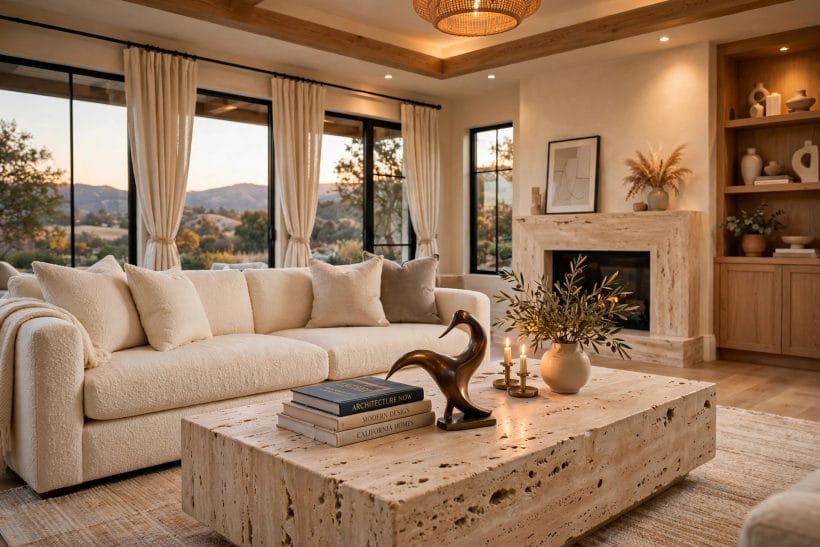
Vary the heights in your trio deliberately: something tall, something medium, something low. A tall vase beside a flat stack of books beside a low candle gives the surface a skyline, and the eye reads it as composed rather than cluttered.
10. Matching the Room: Style, Not Fashion
The last lesson of the gallery is that a coffee table should match its room, not the fashion of the moment. A rustic wood table in a sleek modern room looks like a mistake unless the room has other warm, natural notes to answer it; a glass table in a cosy, layered room can look cold unless the room has other light, reflective surfaces.
Look for echoes: the table’s material answering the floor, its shape answering the rug, its finish answering the side tables or the shelving. When those echoes exist, the table feels inevitable, however unusual it is on its own. That is what the best pictures in this survey share — not a single style, but a single coherence.
If your room mixes styles — and most lived-in rooms do — let the coffee table be the peacemaker. A simple timber table can sit happily between a modern sofa and a vintage armchair, bridging the two with a material both can share.
Final Considerations
Browse the gallery again with your own room in mind: the shape that suits your movement, the material that suits your maintenance, the height that suits your sofa, and the styling that suits your life. For the rooms around the table, brown living room ideas and the dream homes survey show coffee tables in fuller settings, while fireplace wall designs and rustic fireplace ideas show the other anchor a living room often has. white cabinets with dark floors and cabin interiors show the same table ideas carried into kitchens and retreat rooms. The right coffee table is the one that looks like it was always there — and that leaves room for the coffee.


0 Comments