

A built-in bar cabinet turns an awkward alcove, a spare wall or the end of a kitchen run into the most sociable corner of the house. These bar cabinet ideas cover layouts for small nooks and full entertaining walls, colours from pale oak to deep green, and the practical details — shelving, sinks, fridges and lighting — that decide whether a home bar gets used every week or only admired.
1. Bar Cabinet Ideas at a Glance
Before the details, the whole approach fits on one page. Decide where the bar lives, how much it must store, and whether it needs water and power; then choose a layout, a colour, and storage that matches the bottles and glassware you actually own. A built-in should feel like part of the architecture, not furniture that wandered in, so proportions, materials and lighting matter as much as the drinks themselves.
| Aspect | What to choose | Why it helps |
|---|---|---|
| Location | Alcove, kitchen end wall, dining-room wall or under-stairs nook | Uses dead space and keeps the party out of the cooking zone |
| Layout | Single run, L-shape, or tall cabinet pair with a counter between | Matches the footprint instead of forcing it |
| Storage | Mix of open shelves, glass-front and closed cabinets | Display the pretty, hide the practical |
| Worktop | Stone, solid wood or hard-wearing compact surface | Survives ice, citrus and red-wine evenings |
| Colour | Match the room, or one deliberate deep accent | Built-ins look best intentional, never apologetic |
| Extras | Wine fridge, small sink, ice drawer, glass racks | Fewer trips to the kitchen, easier hosting |
| Lighting | Warm shelf lighting plus a small pendant or two | Glassware glows; the corner feels like a destination |
| Doors | Bi-fold or pocket doors for hideaway bars | The bar can disappear entirely in calm rooms |
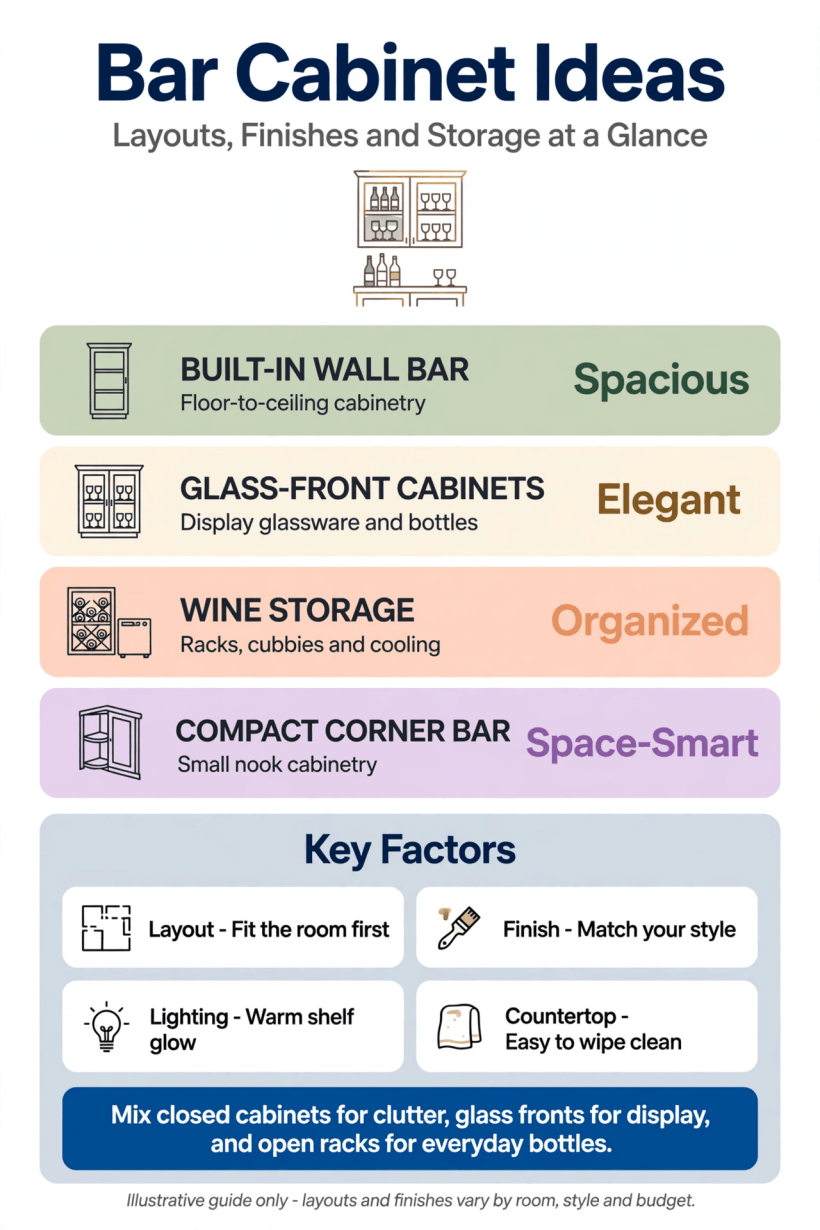
The bar cabinet formula at a glance: the right nook, a layout that fits it, mixed open and closed storage, and lighting that makes glassware earn its place.
2. Choose the Spot Before the Style
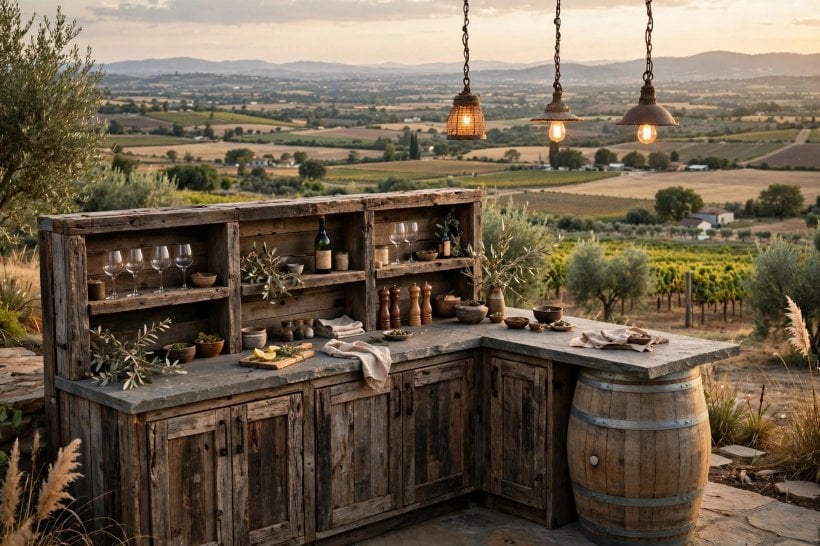
Every good home bar starts with a slightly unloved piece of wall. Alcoves beside fireplaces, the dead end of a kitchen run, the wall behind a dining table and the space under a staircase are the classic candidates, because they are already defined as a place apart. Nearness to the kitchen helps for water and ice, but a self-contained cabinet with a small fridge can thrive in a living room, a hallway wide enough to linger in, or a garden room.
Stand in the spot at party o’clock and think about flow. Guests need to reach the bar without crossing the cook’s path, the bartender needs elbow room, and everyone needs somewhere to set a glass down that is not the worktop itself. If the bar will share a room with seating, face it toward the conversation rather than turning hosts away from their guests. Small homes reward this precision: the same thinking shapes our tiny house living room ideas, where every zone has to earn its floor space twice over.
Measure the candidate spot properly before falling for it: width and height, obviously, but also the swing of nearby doors, the clearance bar stools or standing guests will need, and whether skirting, radiators or sloping ceilings will complicate the cabinetry. Note where the nearest sockets and water supply already live, because a bar that borrows the kitchen’s services is far cheaper to build than one that needs new pipework run across the house. A spot that passes these dull tests will still be pleasing you in ten years.
3. Layouts for Nooks, Walls and Whole Rooms
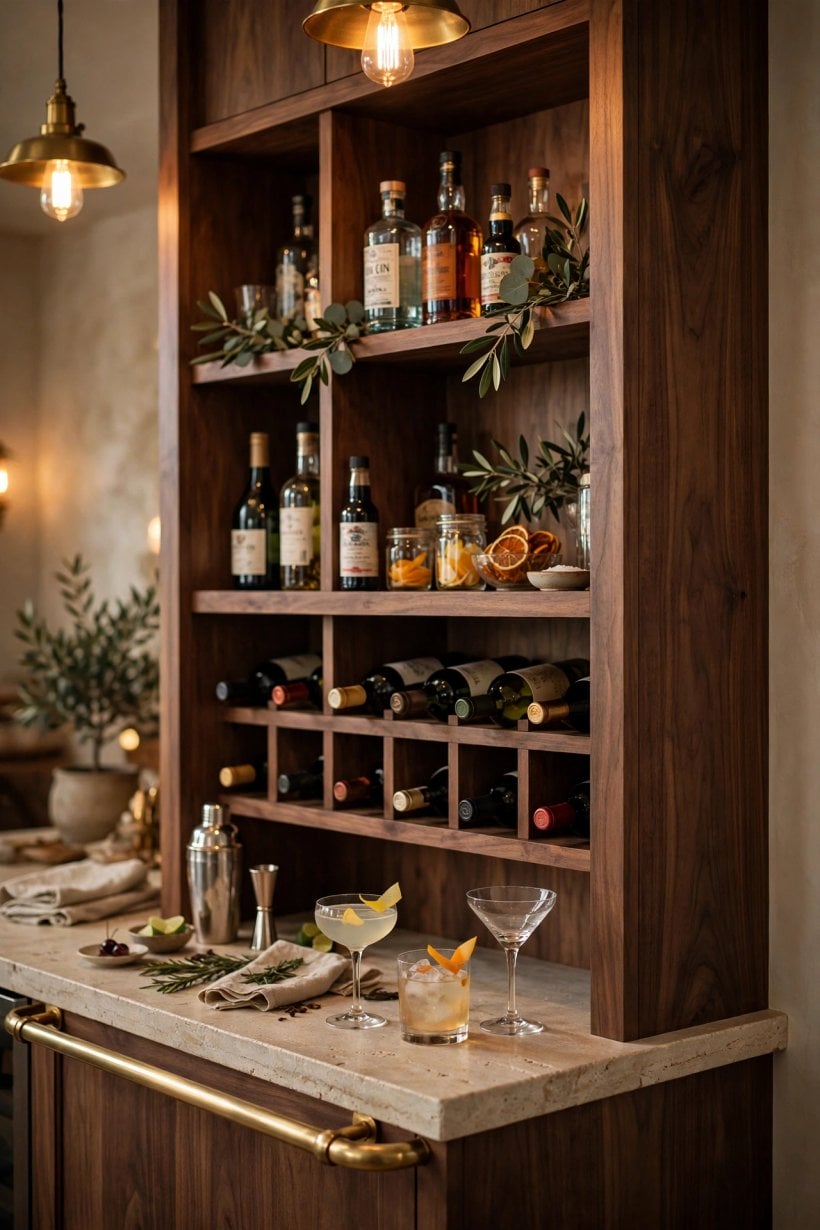
The simplest built-in is a single straight run: base cabinets, a worktop, open shelves or wall cabinets above. It suits narrow walls and can be as modest as a coffee and drinks station or as complete as a full bar with fridge and sink. Where the wall turns a corner, an L-shaped layout adds a return for glass storage or a small seating ledge, and it naturally separates the mixing zone from the display zone.
Tall formats deserve more attention. Two full-height cabinets flanking a lower counter create a furniture-like focal point that works beautifully in dining rooms, while a single tall hideaway cabinet, with doors that fold or slide away, keeps alcohol and glassware behind closed doors in family rooms. In genuinely compact homes, a shallow-depth run steals very little floor yet still holds bottles upright in base cabinets and glasses on shelves above. Match the layout to the architecture first; the styling can follow any of these bones.
4. Colours That Make a Bar Feel Built-In
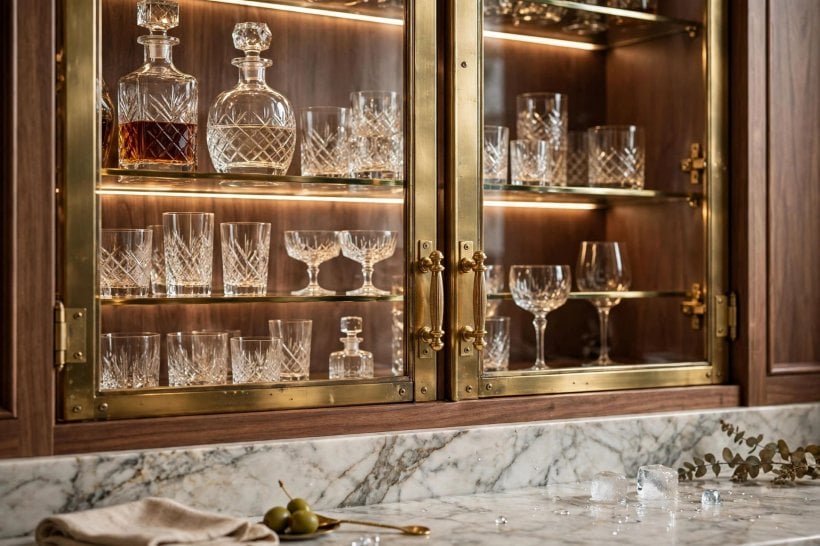
Colour decides whether a bar cabinet whispers or performs. Painting built-ins to match the surrounding walls and woodwork gives the calmest, most architectural result, and it is the safest choice in small rooms where a big contrast block would shrink the walls. Soft whites, warm greys and putty tones keep the focus on glassware and bottles, which bring plenty of colour of their own.
For a bar that is meant to be a destination, go deliberately deeper: bottle green, ink navy, oxblood or near-black cabinets look rich behind glass and brass, and they photograph as beautifully as they host. Natural timber, especially walnut and white oak, sits between the two camps, calm in daylight and warm under evening lighting. Whatever you choose, repeat the colour somewhere else in the room, on a door, a bookcase or a painted ceiling, so the bar reads as part of a scheme. The jewel-toned joinery in our colorful tiny house interior tour shows how one confident colour, used on cabinetry, can carry a whole small space.
Finish matters as much as hue. A satin or eggshell sheen on the cabinets catches evening light softly and wipes clean without the glare of gloss, while the inside of glass-front cabinets and open shelves can take a shade deeper than the exterior for a shadowy, layered backdrop. Two-tone schemes work well too: darker bases that forgive kicks and spills, lighter uppers that keep the run from looming. Test colours on a board propped in the actual nook, because alcoves live in shadow and most colours deepen there.
5. Storage: Bottles, Glassware and the Awkward Things
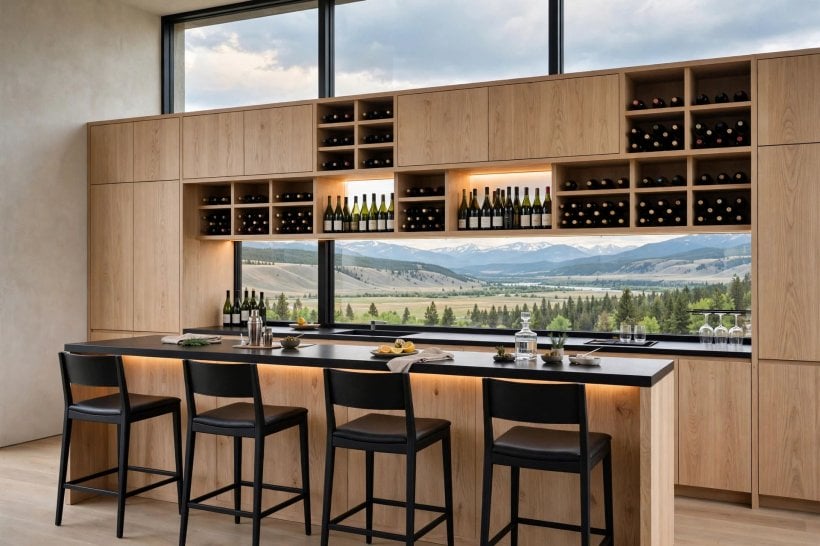
Measure your collection before you design a single shelf. Bottles vary in height, wine bottles like to lie down or stand in divided cubbies, and glassware eats vertical space if shelves are fixed too close together. Adjustable shelves are the unglamorous hero of bar design. Give everyday glasses an open shelf or glass-front cabinet at easy reach, keep the special bottles visible, and put the rarely used punch bowl somewhere it does not steal prime space.
Drawers earn their keep here too: a shallow drawer for openers, pourers, coasters and cocktail picks; a deeper one for linens and the tools you want out of sight. Closed base cabinets hide the blender, spare tonic and the recycling-bound empties. If you collect wine seriously, a dedicated rack or an under-counter wine fridge keeps bottles at a steadier temperature than a sunny shelf ever will. Plan a small, wipeable landing zone for the bottles in current use, because every bar develops one whether you design it or not.
6. Worktops, Sinks and Cold Storage
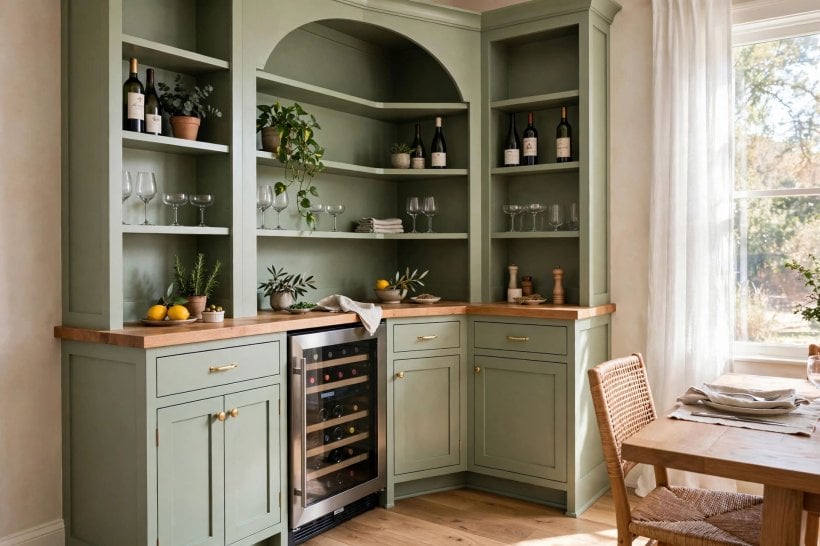
The worktop is the bartender’s bench, so choose it for spills first and looks second. Stone and good compact surfaces shrug off ice melt, citrus and red wine; solid wood is warmer and kinder to glassware but asks for oiling and quick mopping. A raised lip or a slightly recessed serving tray area contains the inevitable puddles before they reach the floor or the cabinet fronts below.
A small sink transforms a drinks cabinet into a true bar: rinsing glasses, dumping ice and filling water jugs all happen in place. It needs plumbing, so it is easiest where the bar backs onto a kitchen or bathroom wall. Cold storage matters just as much. An under-counter fridge for mixers, wine and garnishes ends the host’s marathon between bar and kitchen, and a slim ice drawer or a good insulated bucket covers the rest. These practical layers are what separate a bar used weekly from a decorative one, in the same way that the working details make the kitchens in our tiny barn house interior feature feel designed for real life.
Think beyond the evening, too. A bar cabinet with a kettle or compact coffee machine on the worktop becomes a morning station that the whole household uses daily, which justifies the good spot it occupies. Add a small drawer or basket for teas and pods, keep two everyday mugs on a shelf, and the built-in stops being a party piece and becomes part of the home’s daily rhythm, the surest sign that the layout was chosen well.
7. Lighting and Back-Bar Drama
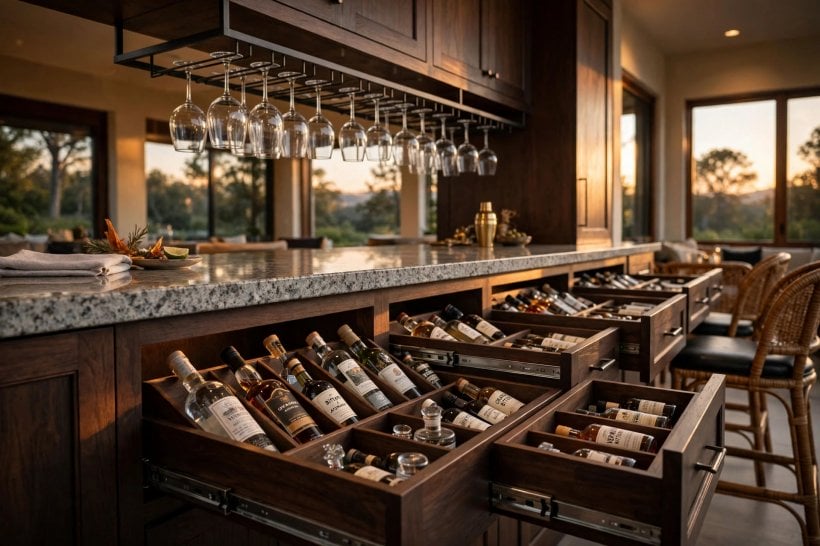
Bars are evening creatures, and lighting is where a built-in earns its atmosphere. Warm light under each shelf washes bottles and glassware in a glow that makes even a modest collection look curated, and it doubles as task light for mixing. A pair of small pendants over the counter marks the bar as a place, gives faces a flattering light, and helps guests find the corner from across the room.
Back panels are the other quiet stage trick. Mirror, antiqued or plain, multiplies the sparkle; fluted glass and dark painted backs add depth; a simple tiled splashback in a tone picked from the cabinet colour keeps things practical where mixing gets enthusiastic. Keep the lighting dimmable if you can, and on its own switch, so the bar can glow gently during a film or brighten properly for a party. Avoid cold, blue-leaning light anywhere near glass and skin; warm light is the difference between a bar that feels glamorous and one that feels like a shop display.
8. Doors, Hardware and the Hideaway Option
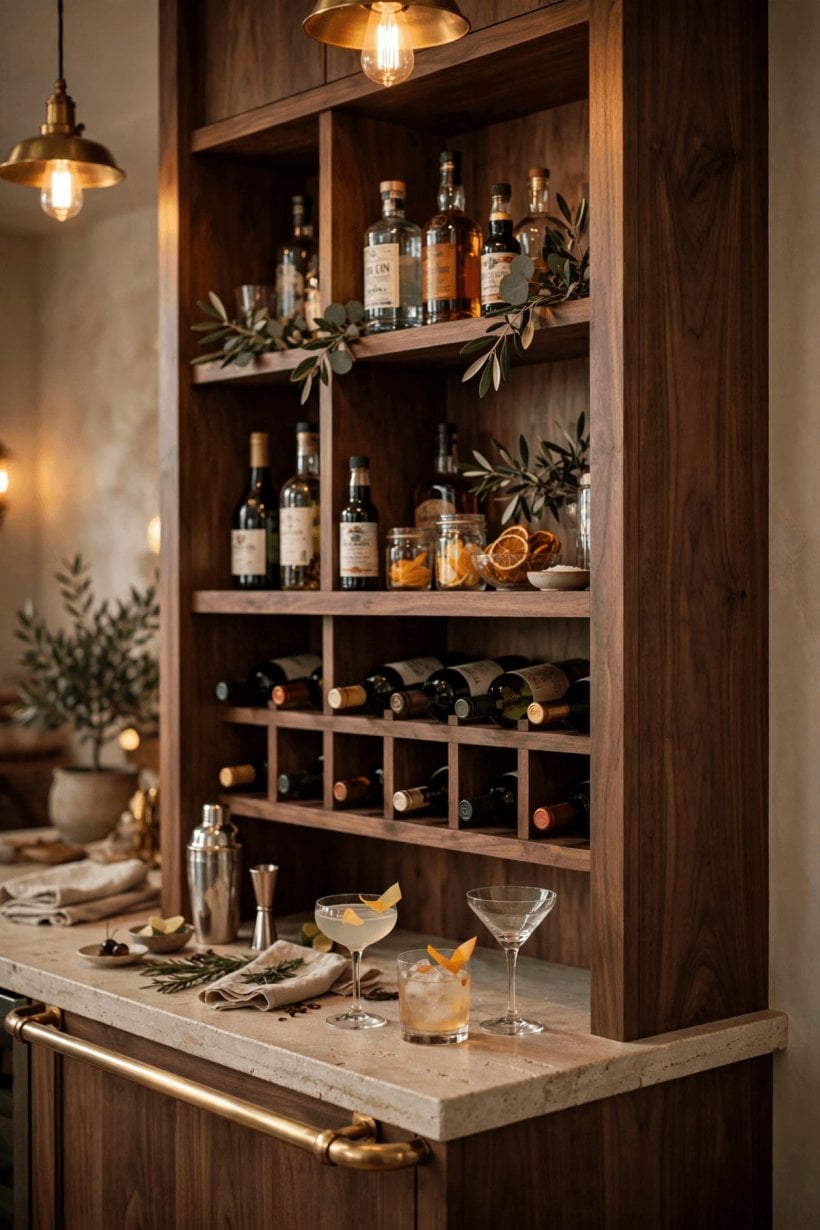
Not every bar wants to be on show all day. Hideaway designs, where bi-fold or pocket doors open to reveal shelves, a worktop and even a small fridge, are perfect for living rooms that host both playdates and parties, and for anyone who prefers their calm rooms calm. When the doors open fully and tuck away, the bar performs; when they close, the room returns to bookshelves and sofas.
Hardware finishes the thought. Brass and aged bronze bring warmth and a little ceremony; matt black sharpens pale cabinets; unobtrusive integrated pulls suit the match-the-walls approach. Hinges and door mechanisms on a hideaway bar work hard and deserve the good versions, because a door that sticks will simply stay shut. Handles on base cabinets should be comfortable for wet hands, and glass-front doors benefit from proper catches so they close with the soft finality that makes built-ins feel expensive, an attention to joinery detail that runs through the best projects in our guide to how to build your own tiny house.
9. Styling the Bar Without Cluttering It
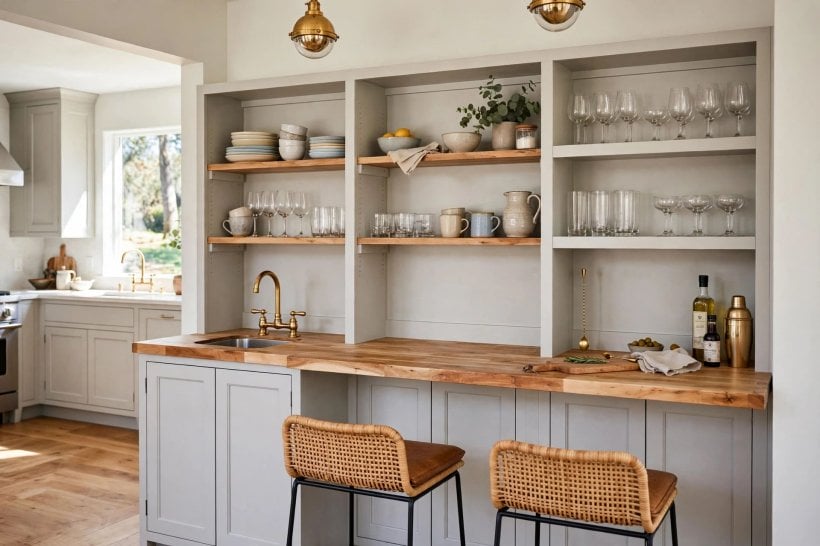
Styling a bar is an exercise in editing. Group bottles by height and colour family rather than scattering them, keep the middle of the worktop clear for actual mixing, and let one or two beautiful objects, a decanter, a small sculpture, a framed print leaning at the back, carry the personality. A plant that tolerates low light softens all the glass and right angles, and a small lamp on the counter can be lovelier than any pendant for a quiet evening drink.
Rotate the display with the seasons and the household’s habits: the everyday spirits and the two glass styles you truly use should hold the prime shelves, with occasion bottles promoted when guests are due. Keep coasters, a linen towel and a small bin within reach but out of the photograph. The most-used bar cabinet ideas are never the fullest; they are the ones where everything visible has a job or earns its beauty honestly, and everything else has a door to close. Hosts who love orderly, layered rooms will find the same discipline in our tiny house bedroom ideas, applied to rest rather than refreshments.
A little maintenance keeps the styling honest. Glassware on open shelves gathers dust in quiet weeks, so choose shelves for the glasses you use constantly and let the precious pieces live behind glass doors. Wipe bottles before they return to the shelf, keep a microfibre cloth in the tool drawer, and the bar will always look party-ready rather than party-worn. Five unglamorous minutes after each gathering is the whole secret; display bars reward households that treat tidying as part of the ritual.
10. Planning, Power and Common Pitfalls
Most bar cabinet regrets are practical, not aesthetic. The first is forgetting power: fridges, lighting, a coffee machine or a blender all need sockets, planned before cabinets are built, ideally hidden inside or beneath units rather than trailing across the worktop. The second is plumbing promised but never costed; if a sink matters, settle its water and waste routes at the design stage, not during installation. The third is underestimating depth and height for the bottles and appliances you actually own.
Other regular pitfalls: open shelves placed so high that everyday glasses need a step stool; a worktop material chosen from a photograph that stains at the first negroni; and lighting fitted after the cabinets, when the cables have nowhere kind to go. Finally, think about sound and neighbours in flats, and about little hands in family homes, where lockable cabinets or high shelves for spirits are a sensible, unglamorous essential. A bar that plans for real life gets used in real life, which is the entire point of building one in.
Budget in the order the bar is built: structure and services first, then the worktop and appliances, then doors and hardware, and only then the decorative layer of rails, mirrors and styling pieces. If money runs short, a simple cabinet run with beautiful lighting will serve you better than elaborate joinery with a bare bulb, because you can upgrade handles and add a fridge later far more easily than you can move a sink. Phasing a bar over two or three stages is not a compromise; it is how most good ones actually happen.
Final Considerations
A great built-in bar cabinet is a small piece of architecture: the right nook, a layout that respects it, a colour with a point of view, storage measured around real bottles and glasses, a worktop that forgives spills, and lighting that turns the corner into a destination after dark. Decide on water and power early, choose doors and hardware you will enjoy touching, and style with a strict editor’s eye. Do that, and yours will be the corner of the house where evenings naturally gather, whether the party is twelve guests or one quiet drink at the end of the day.

0 Comments