

Every house has one room that is already dark at noon, already quiet, already cool — and it is usually storing paint tins. The basement is a cinema waiting for permission.
This collection turns it into one properly: layout and seating first, then the screen and front wall, the sound, the light a windowless room must invent, moisture-smart finishes, the social rear half, and finally the small-room priorities that keep the whole build honest.
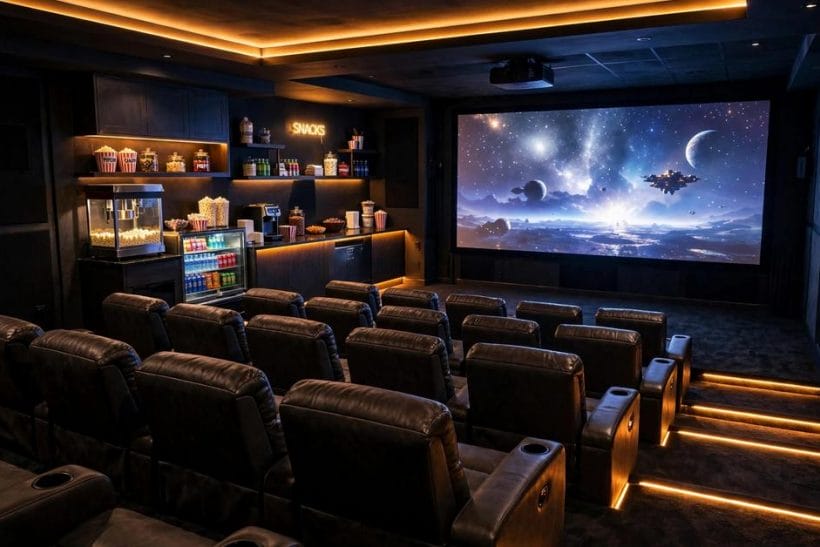
1. Basement Home Theater Ideas at a Glance
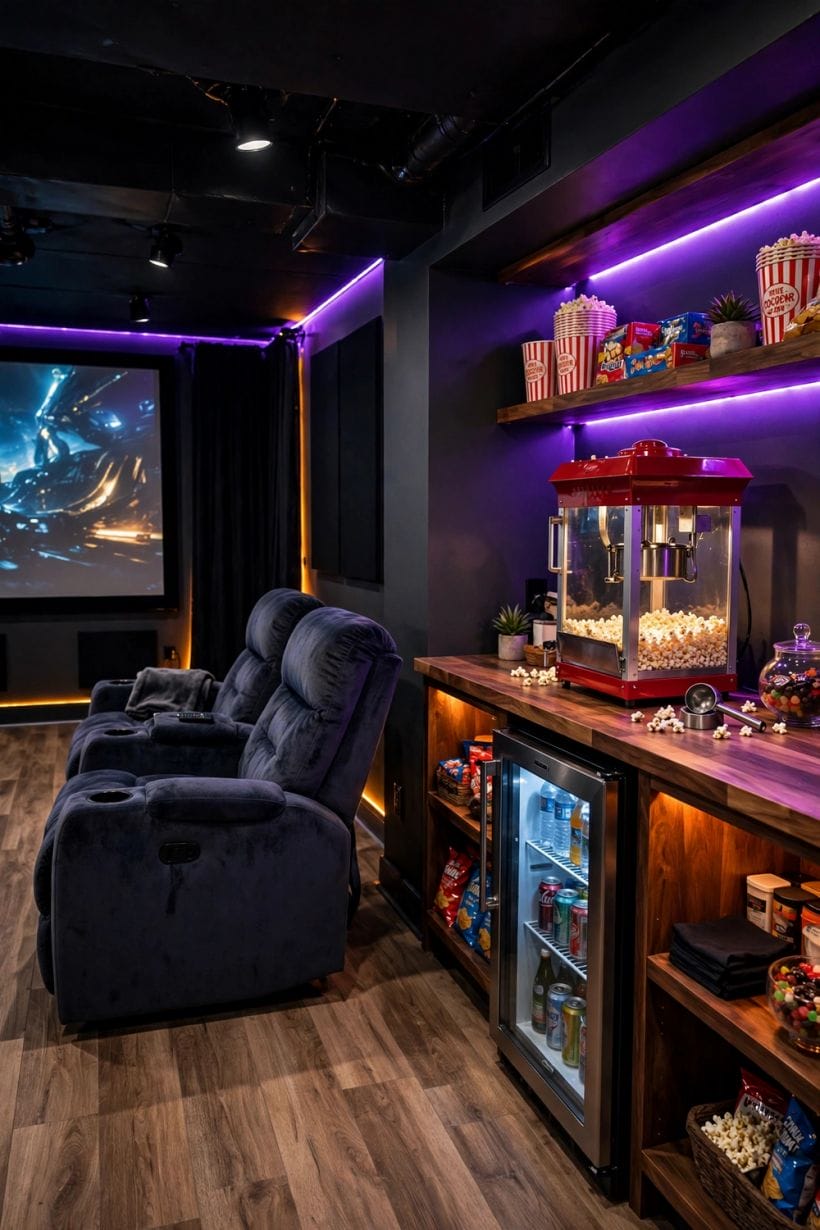
The basement home theater is the below-grade cinema of this collection — distinct from the small home theater ideas, which solve the same problem above ground in spare rooms: here the angle is the basement itself, with its natural darkness, its cool and quiet, its low ceilings and its moisture discipline. It belongs to the entertainment cluster of the home design ideas hub, and to the basement’s own story of being finished well rather than merely filled.
| Question | Short answer |
|---|---|
| Why is the basement the best theater room? | It is dark, cool and acoustically heavy by nature — the three things other rooms must fake. |
| Projector or big television? | Projector for pure cinema scale; a large television for mixed use, gaming and daytime sport. |
| How many seats should a basement theater have? | As many as fit with a real aisle and honest viewing distances — usually fewer than first imagined. |
| What colour should the walls be? | Deep and matte near the screen; the darkness is a picture-quality decision, not a mood. |
| What is the first upgrade to fund? | The front speakers and the main seats — dialogue and comfort carry every film. |
| How do I keep the sound from the bedrooms? | Seal the door, soften the room, decouple the platform, and keep a quiet mode for late shows. |
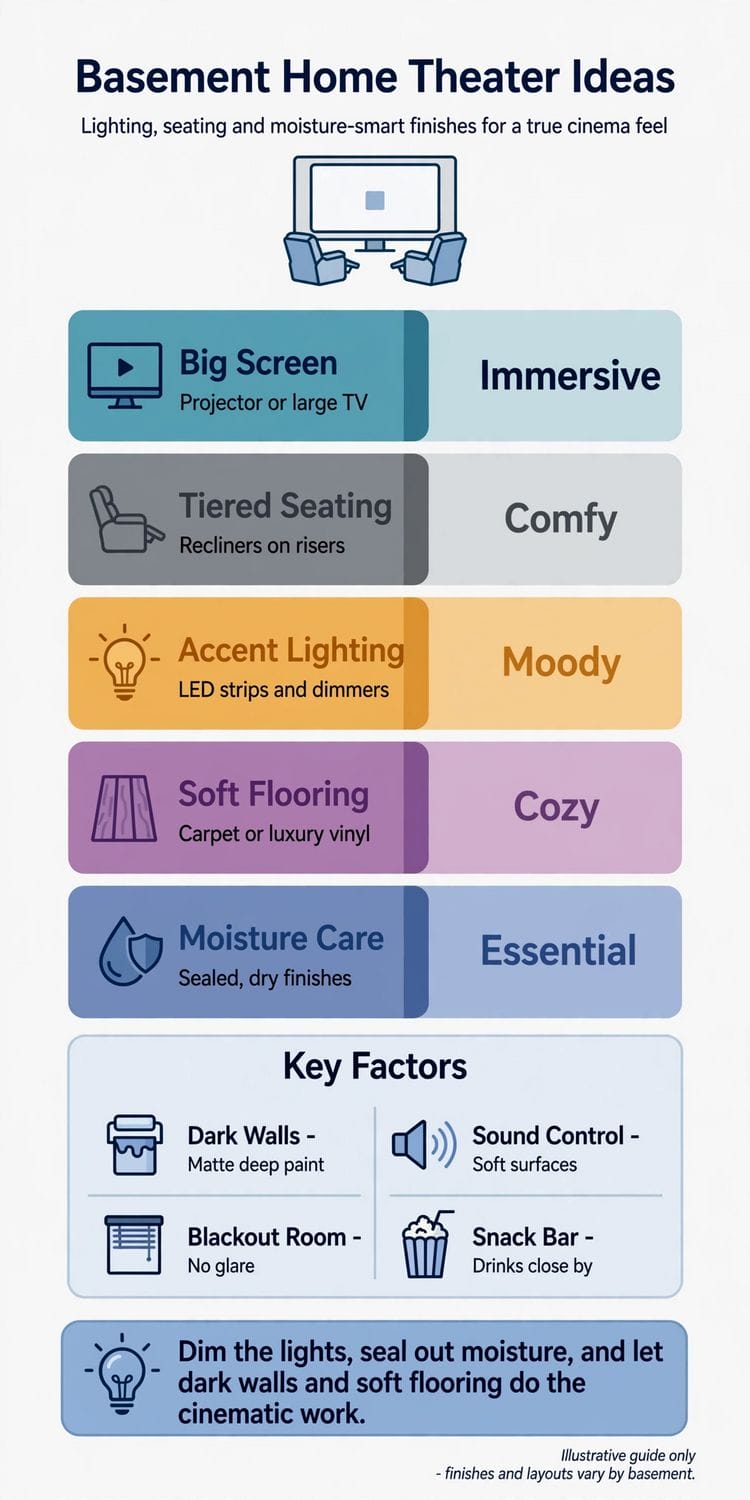
2. Layouts and Seating Rows
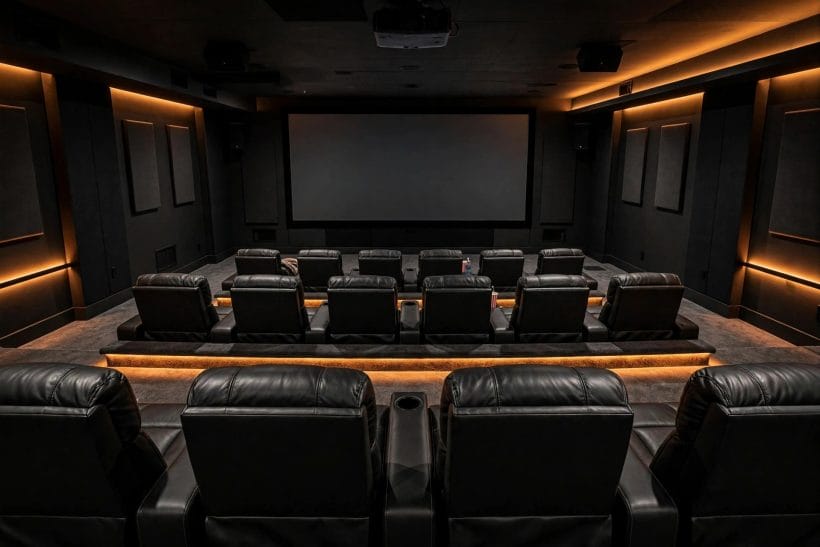
A basement is the best room in the house for a theater and the worst for everything else — dark by nature, cool by geology, and separated from the bedrooms by a floor of earth and timber. The layout spends those gifts wisely: screen at the windowless end, seats in honest rows, and the door where it disturbs nothing.
1. Put the screen on the windowless short wall
Most basements have one wall with no window well and no door: that is the screen wall.
2. Build one raised row instead of two shallow ones
A single rear platform, deep enough for recliners and a walkway, beats two low steps that serve neither row well. The platform also hides cable runs and can carry the bass shakers that make action films physical.
3. Keep the front row honest about distance
Seats too close to a big screen turn a film into a tennis match.
4. Leave a real aisle on one side
Every seat reachable without climbing past knees: an aisle down one side, wide enough for a tray of drinks in the dark. The squeeze-past arrangement is charming in a cinema and tiresome at home.
5. Angle the rear corners for a second sofa
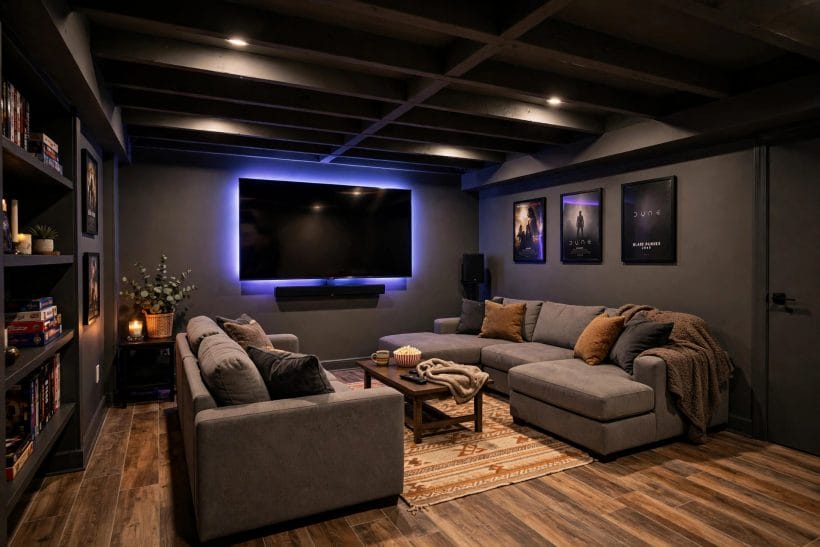
A basement theater that only faces forward fails the family. A loveseat or day bed angled in the rear corner gives the room a second life for reading, naps and the overflow of children’s friends.
6. Face a sectional for the sport-and-games mode
If the room’s real religion is sport and gaming rather than cinema, a deep sectional facing the screen — sociable, sprawl-friendly — beats rows of recliners. Choose for the use that will actually happen weekly.
7. Keep the door at the back, always
A door beside the screen leaks light onto the picture every time someone fetches a drink.
8. Reserve the under-stair void for the kit rack
The dead space under the basement stairs is the natural home of the amplifier, players and router — ventilated, out of sight, and a short cable run from the screen.
9. Plan the projector throw before the ceiling
Projector distance, ceiling height and screen size are one equation. Solve it on paper before the ceiling is closed, because discovering the image is too small after plastering is an expensive kind of sad.
10. Give the room a second exit route of light
Not an escape route — a dignity route: a low lit path from seats to door that never crosses the screen’s light. Step lights in the platform edge do it for almost nothing.
11. Tape the whole layout on the floor and live a week
Chairs, tape lines, a bedsheet for a screen: rehearse the room at full size. Layout mistakes discovered in tape cost an evening; discovered in joinery they cost a season.
3. Screens, Projectors and the Front Wall
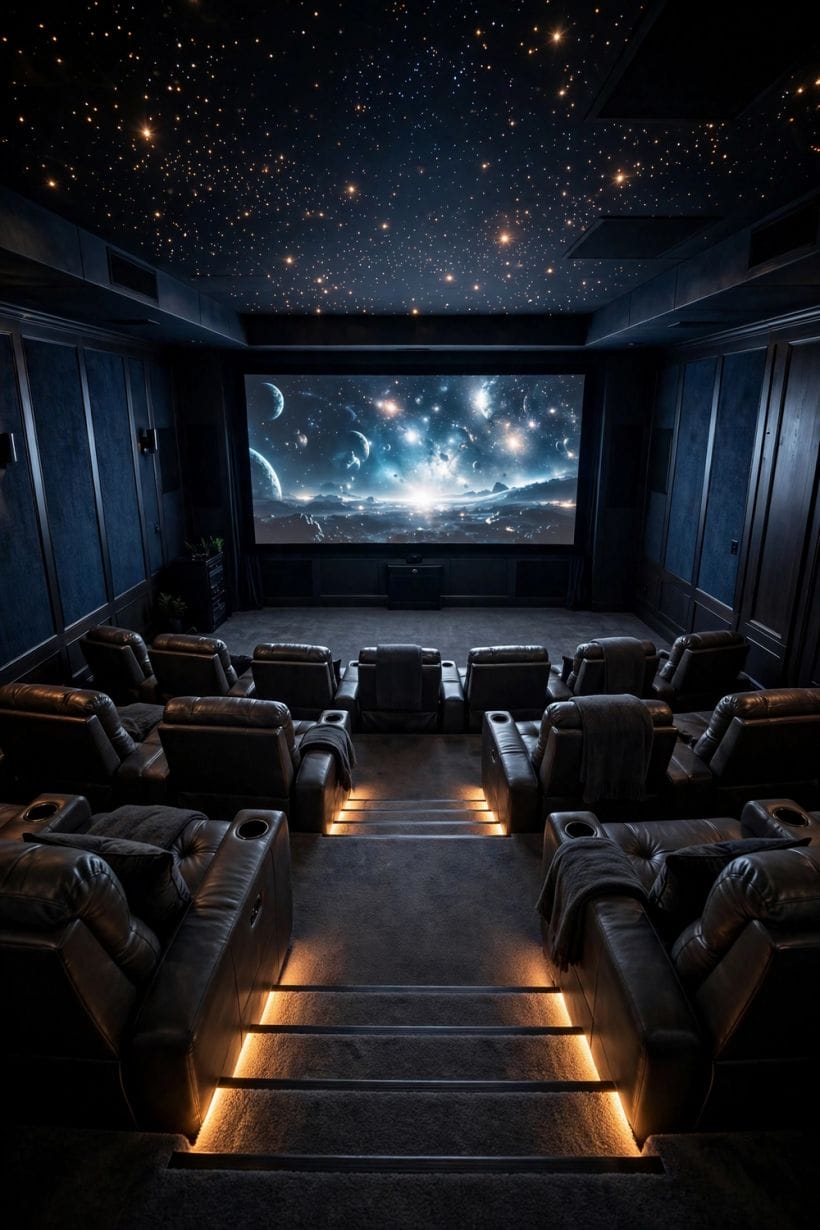
The front wall is the theater’s altar, and its discipline is subtraction: picture, darkness, and nothing else competing. Everything in this section serves the image — including the paint colour most people get wrong.
12. Choose the biggest screen the front row can take
Screen size is set by the nearest viewer’s comfort, not by the wall. Within that limit, bigger is better — nobody in the history of home theaters has upgraded to a smaller picture.
13. Projector for cinema, television for everything else
A projector gives the true cinema scale and a blacked-out room to match; a large television gives brightness, instant-on gaming and daytime sport. Households honest about mixed use often choose the television and never look back.
14. Paint the screen wall and ceiling a deep matte tone
Dark walls near the screen stop stray light washing the picture and make the image appear brighter by contrast. A deep charcoal, ink or near-black in dead matte is the single cheapest picture upgrade there is.
15. Frame the screen with nothing — or with intention
A bare screen on a dark wall is the cinema answer.
16. Float the speakers or hide them behind cloth
Front speakers either stand as honest sculpture at the screen’s sides or vanish behind an acoustically transparent screen or fabric panels. The worst option is the visual clutter of boxes at odd heights and angles.
17. Run every cable in conduit, with spares
Standards change; conduit does not. Pull the cables through accessible runs with one or two spare cords drawn in, and the next decade’s upgrade is an afternoon instead of a demolition.
18. Control light spill from the kit
Standby lights, glowing displays and the router’s disco all shine in a black room. Kit in a closed rack, indicator lights taped or disabled in settings, and the darkness stays theatrical.
19. Centre the picture on the seated eye, not the wall
The screen’s centre belongs near the eye level of the front row as actually reclined — usually lower than intuition suggests. Mount to the viewers, not to the geometry of the wall.
20. Add blackout where the window wells leak
Basement window wells admit a surprising blade of light at exactly screen height on bright days. A fitted blackout panel or blind per well, stored in the kit cupboard, restores the cave in seconds.
21. Consider the screen a piece of furniture for cleaning
Dust dulls projection screens and television glass alike; a soft dry cloth routine, and hands-off rules for small visitors, keep the picture’s contrast. The screen is the one surface in the house nobody should touch.
22. Leave the front corners empty for the bass
Subwoofers often work best in or near the front corners, and they need floor space and a power point. Leaving the corners free in the plan is designing; filling them and moving speakers later is furniture Tetris.
4. Sound: Speakers, Treatment and Keeping It In
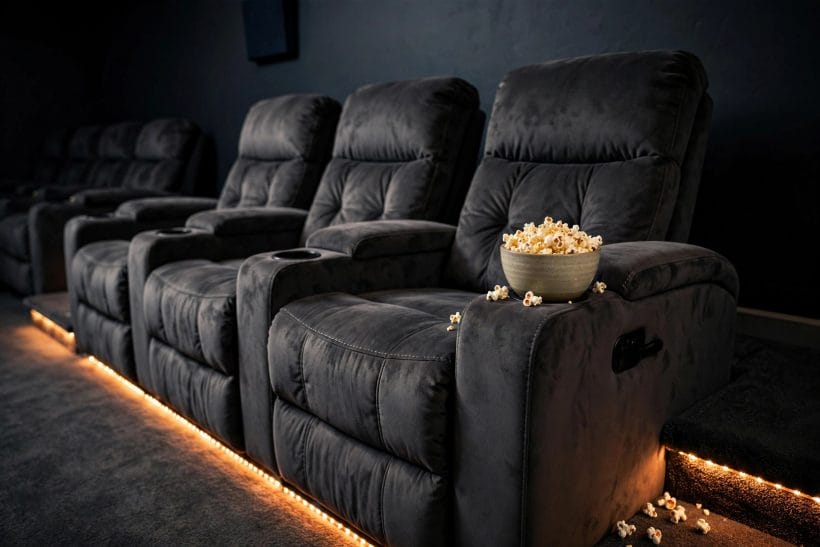
Picture gets the applause, but sound is what makes a basement theater feel like a cinema rather than a television in a cellar. The basement’s gift is mass — earth and concrete keep sound in and out — and the room’s own surfaces decide whether that sound is thrilling or merely loud.
23. Start with three good front speakers
Left, centre and right carry nearly everything — dialogue above all. Three matched front speakers of quality beat seven cheap ones scattered hopefully; add the rest of the system around a solid front stage.
24. Put dialogue first: the centre speaker matters most
Most of a film is people talking, and the centre channel does that work. Site it directly above or below the screen, angled at the listeners’ ears, and muffled dialogue becomes a memory.
25. Use two smaller subwoofers rather than one giant
A pair of modest subwoofers placed apart smooths the bass through the room, where one large one booms at one seat and vanishes at another. In a rectangular basement this is the difference between effect and mud.
26. Soften the first reflection points
The wall spots where sound bounces from speaker to ear — mirror points on the side walls and ceiling — take panels, a bookcase or heavy fabric. Treating just these few patches calms the whole room’s sound.
27. Carpet and a rug are acoustic treatment too
A hard basement floor reflects sound straight at the ceiling. Carpet or a large rug under the seating settles the room more cheaply than any panel, and warms bare feet into the bargain.
28. Seal the door like it matters — it does
Sound escapes through gaps, and the door is mostly gaps. A solid door with seals and a drop threshold keeps the late film in the basement and the sleeping house in ignorance.
29. Decouple the platform from the floor
A seating platform on isolating pads keeps the bass in the room’s air rather than conducting it through the slab into the house’s bones. The film feels bigger downstairs and smaller upstairs — exactly the trade wanted.
30. Hang the ceiling with the room in mind
A suspended or resiliently mounted ceiling both hides the services and adds a layer between the theater and the floor above. It is the honest answer where the bedrooms sit directly overhead.
31. Tame the rear wall with shelves and soft things
The wall behind the listeners returns sound to their ears as slap echo. Bookcases, media shelves and upholstered panels there turn the reflection into a scatter, and store the film library in the bargain.
32. Set the volume for the film, then leave it
A system tuned once — speaker levels balanced at the main seat with the meter in the amplifier’s setup — should then be left alone.
33. Keep a quiet mode for the late showing
Night modes that compress the loud and lift the quiet exist in most systems; program the button and name it honestly. The late film at civilised volume is a feature, not a compromise.
5. Lighting a Room With No Windows
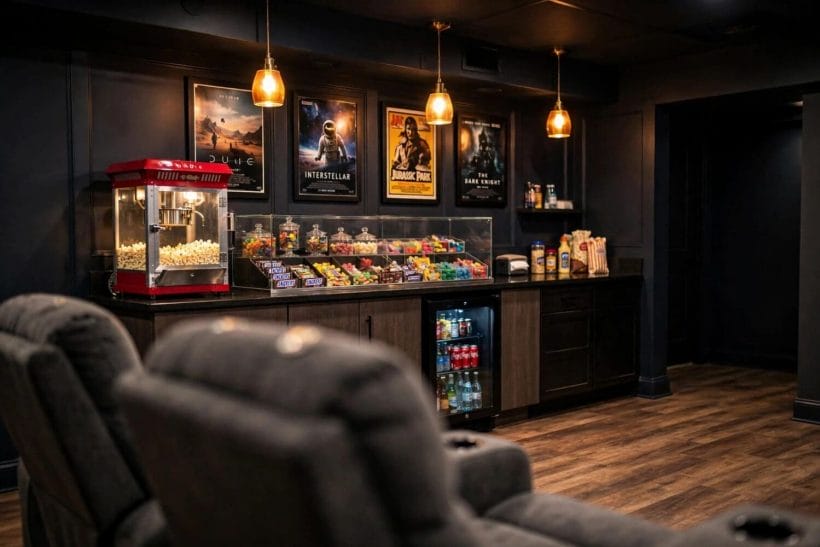
In a room without daylight, light is entirely a design decision — which is a luxury. The theater needs four states of light: full for cleaning, warm for arriving, low for trailers, and near-black for the film, with the path to the door never quite disappearing.
34. Layer the light: ceiling, walls, steps and glow
Downlights for the bright state, wall washers or sconces for the social state, step and skirting lights for the film state, and a faint cove glow for atmosphere. Each layer on its own control, and the room shapeshifts.
35. Put the sconces behind the last row
Wall lights between screen and viewers reflect in the picture and glare in peripheral vision. Behind the seating they wash the room warmly and stay out of the film entirely.
36. Use step lights in the platform edge
Small warm lights set into the platform’s face mark the step in the dark and look like cinema — because they are. Wire them to the film-state circuit so they come on with the projector.
37. Dim by scene, not by switch hunting
A single control that calls up the four states — labelled by use, not by circuit — is the difference between a smart room and a complicated one. Guests should be able to work it without tuition.
38. Keep the screen wall’s light separate and off
Any fitting that can wash the screen wall needs its own switch, default off during films. One forgotten downlight over the screen quietly halves the picture’s contrast.
39. Light the bar and snack end warmly
The rear of the room is a social place before the film and at the interval: warm light there, pooled on the counter, keeps the theater a room and not only a machine.
40. Add a curtain of darkness at the door
A heavy curtain inside the door catches the corridor’s light when the door opens mid-film and adds a cinema’s sense of ceremony. It also softens the room’s sound a little for free.
41. Choose warm dimming that stays warm
Some lamps dim to a cold grey; the good ones warm as they lower, like candlelight. In a room of evenings, that behaviour is the atmosphere — specify it rather than hoping for it.
42. Hide one practical light for the cleaners
Bright, honest, unflattering light on its own switch, for finding the lost remote and the spilled popcorn. Every cinema has a work light; the trick is that nobody watches a film by it.
43. Glow the kit rack only when open
A small light inside the kit cupboard that wakes with the door serves the midnight cable swap. Kit lights that burn all evening join the standby-light disco the front wall section warned about.
44. Let the poster or sign be the room’s one lit flourish
A framed film poster with a picture light, or a small lit sign at the door, gives the theater its marquee moment. One flourish, well lit, reads as cinema; five read as a theme park.
6. Floors, Walls and Moisture-Smart Finishes
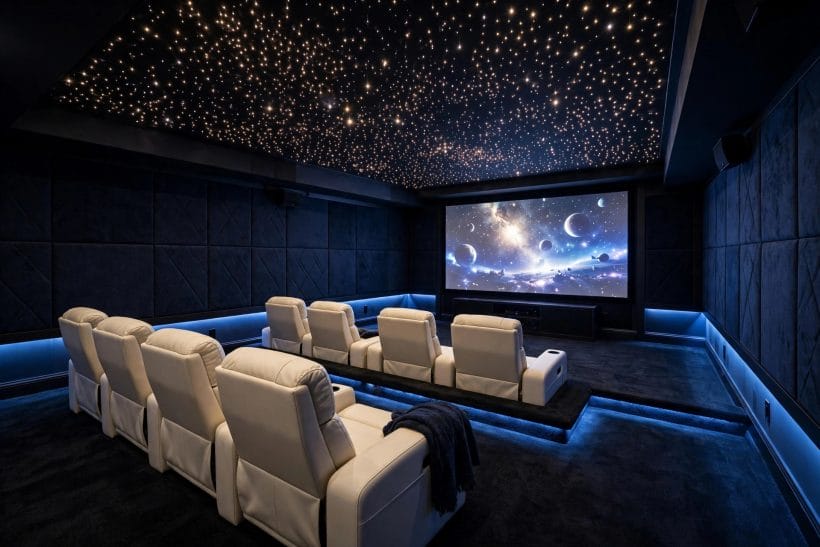
A basement theater fails from the ground up or not at all: moisture is the enemy that never appears in the photographs. This section assumes the basement is properly dry — the basement remodel cost guide in this collection covers the waterproofing order of works — and chooses finishes that forgive the little damp a basement can still breathe.
45. Choose carpet tile where risk remains
Carpet tiles give the theater its warm, quiet floor with an insurance policy: a flooded or stained square lifts and is replaced, not the whole floor. In basements with any history, that is the grown-up choice.
46. Or lay luxury vinyl plank for the spill-prone
Where the audience is young and the drinks are fizzy, waterproof plank flooring with rugs on top forgives everything and still looks like timber. It is harder underfoot than carpet — the rug layer does the softening.
47. Raise the floor on a dry, warm subfloor system
Proprietary subfloor panels lift finishes off the concrete, adding warmth and a capillary break. Bare feet notice the difference in the first week of winter, and finishes last longer for the air beneath them.
48. Paint walls with a washable matte in deep tones
The theater’s dark walls take knocks from chair arms and trays. A scrubbable matte in the deep tone of choice keeps both the darkness and the dignity, where ordinary matte chalks at every touch.
49. Panel the lower wall where traffic passes
A chair-rail height of panelling or durable cladding along the aisle takes the scuffs that paint cannot. It also gives the room its cinema-wainscot architecture without a full refurbishment.
50. Insulate the exterior walls for sound and warmth
Below-grade walls insulated and lined serve the theater twice: the room holds its temperature, and the wall cavity dulls the sound that would otherwise telegraph through the concrete to the garden and neighbours.
51. Keep a dehumidifier in the plan, plumbed
Even dry basements breathe moisture in summer. A dehumidifier with a permanent drain — silent, out of sight, never needing its bucket emptied — keeps the theater’s air at the level upholstery and electronics prefer.
52. Ventilate the room for its audience
Six people in a sealed basement for three hours make their own weather. Fresh air in and stale air out, quietly sized, is the difference between the epic’s end feeling rousing or stuffy.
53. Build the screen wall on battens, not bare board
A slight cavity behind the front wall hides cables, lets the wall be serviced, and keeps any whisper of damp off the visible finishes.
54. Choose fabrics that forgive the dark
Upholstery in the theater lives in near-darkness and popcorn grease; deep tones and forgiving weaves in washable fabrics keep the seats handsome. Pale velvet is for showrooms with staff.
55. Store the spare everything in the room
Bulbs, batteries, the spare remote, a cloth for the screen: a drawer at the rear keeps the theater self-sufficient, so a small failure never becomes a household expedition mid-film.
7. Bars, Snacks and the Second Half of the Room
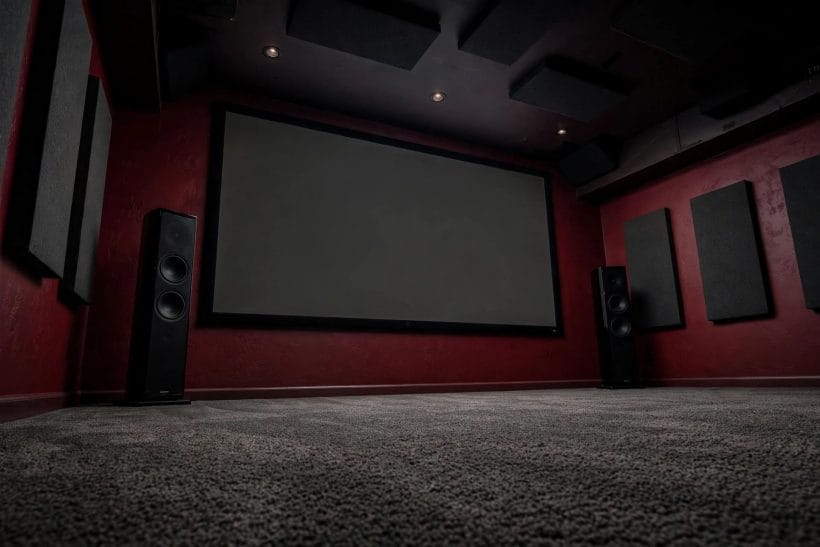
The rear of the basement theater is its social half — the reason people arrive early and linger after. It borrows its manners from the living room ideas end of this collection rather than from the cinema, and it is planned for standing, serving and talking at the interval.
56. Give the back wall a simple bar run
A counter, a small fridge, shelves for glasses and a bin that hides: the bar needs no plumbing to be complete. A sink is a luxury; a fridge is the necessity, because warm drinks end intervals early.
57. Seat the bar with stools that tuck fully under
Stools that disappear under the counter keep the rear aisle clear when the film starts. Measure the tuck with real stools before the counter is built — a stool half out is a shin hazard in the dark.
58. Build a raised rear counter for the overflow row
A deep counter behind the last recliners, with tall stools, is the theater’s third row — the teenagers’ favourite, with pizza space the recliners envy. It also gives the room a standing social edge for sport.
59. Keep the popcorn where it cannot hurt
Popcorn machines are wonderful and messy; give the maker a tray, a washable surface and a home away from the seats’ fabrics. The smell is the cinema; the oil is the tax — collect it at source.
60. Store the games at the rear for the second shift
The theater’s second life — cards, board games, the console tournament — lives at the bar end. A cupboard there for games and controllers makes the change of shift a two-minute affair.
61. Hang the gallery: posters, shelves and the library
The rear wall carries the room’s personality: framed posters, the disc and game shelves, perhaps the household’s film books. Seen in full light before the show, it sets the evening’s tone.
62. Light the rear like a room, not a corridor
The bar end deserves its own warm lighting state, independent of the film state, so the interval feels like surfacing into a bar rather than blinking in a cupboard. Two rooms in one footprint.
63. Plan the tray: every seat a surface
Recliners with trays, side tables between seats, the rear counter behind: nobody should hold a drink for two hours. Surfaces at every seat is the hospitality standard the cinema itself meets.
64. Sound the rear separately for party mode
A pair of speakers at the bar end, or the system switched to all-channel music, lets the room host the party without the front stage shouting from the dark. Zoning the sound doubles the room’s social life.
65. Keep the coats and bags out of the picture
Guests arrive with belongings that have no home in a theater row. Hooks and a bench at the door end absorb them; otherwise they colonise the aisles and the bar.
8. Small Basements, Priorities and Finishing Touches
Not every basement is a ballroom, and the honest news is that theater quality rises with darkness and sound control long before it rises with size. This closing section orders the priorities for small rooms and tight budgets, and ends where all these collections end: with the room in daily use.
66. Shrink the screen before you shrink the seats
In a short room the correct move is a smaller screen at the right distance, never cramped seating. Comfort is remembered; diagonal inches are forgotten by the second film.
67. Spend on the front three speakers and the seat
If the budget must choose, it chooses dialogue, the front soundstage, and the chair you sit in for three hours. Surround speakers and the second subwoofer can arrive at birthdays to come.
68. Use paint and fabric as the acoustic kit
Where panels are unaffordable, deep matte paint, a heavy rug, curtains and an upholstered sofa still transform a concrete box. The home theater tiny house design already published here is built on exactly this economy.
69. Let a large television carry a small room
In a small basement, a big television plus blackout blinds and a soundbar with a real subwoofer delivers ninety percent of the theater for a fraction of the projector build — and works for daytime sport too. The published tiny house home theater makes the same point at the smallest scale of all.
70. Keep the room’s second job possible
A small basement theater that can become a guest room with a sofa bed, or a playroom by day, justifies itself weekly. Fixed rows are for houses with rooms to spare.
71. Name the room and sign the door
Every beloved basement theater acquires a name — the family’s joke, the house’s old name, a film reference.
72. Keep the ritual: lights, trailers, then the film
The households that love their theaters most keep the small ceremony — lights down in stages, perhaps a trailer or two, then the feature. The ritual costs nothing and is the whole difference between watching and attending.
73. Maintain the darkness like a garden
New kit brings new standby lights; children bring glow sticks of clutter; batteries leak light and remotes multiply. A five-minute darkness audit each month keeps the cave a cave.
74. Invite the neighbours before they complain
A premiere invitation to the households overhead and alongside buys more goodwill than any amount of soundproofing. People forgive the bass they have been fed popcorn through.
75. Measure success at the hundred-film mark
A theater is not finished at the first showing; it is finished when the room has absorbed a hundred evenings and still asks for nothing.
9. Checks and Mistakes: Before the First Purchase or the First Fitting
Before the ceiling closes, photograph every cable run, pipe and duct with a tape measure in frame. The theater you can service without demolition is the theater that gets serviced; the rest slowly decays into workarounds.
Test the room empty and dark before furnishing it: sit in the taped seat positions, run a loud scene, and walk the house above. Sound leaks and light leaks are both cheapest to fix in that order — before the room is dressed.
Respect the moisture rule absolutely: no finish, fabric or electronic goes in until the basement has proven itself dry through a wet season, or been made dry by works you have seen tested. A theater is a long investment; damp is a short one.
10. Costs and Pulling It Together
The budget of a basement theater divides into thirds that behave very differently: the room itself (finishes, platform, door, ceiling) is largely one-time construction; the picture and sound are technology, replaceable in stages; and the seating is furniture, bought once and sat on for a decade. Fund them in that spirit — permanent money for the room, patience for the electronics, generosity for the chairs.
Staged honestly, a family can start with paint, a television and a rug, and arrive at the full cinema over years without wasting a purchase. The basement’s darkness is free and permanent; everything else is an instalment.
Final Considerations
A basement home theater succeeds when it disappears: the picture, the sound and the seat remain, and the room — its cables, its compromises, its concrete bones — is forgotten until the lights come up.
Build the darkness, tune the sound once, seat everyone honestly, and keep the popcorn at the back. The paint tins can find another wall; the house has a cinema now.




0 Comments