

Your tub is stained, the surround is tired, and an advert promises a new-looking bath in a single day — no demolition, no weeks of dust. It sounds perfect, which is exactly why it deserves a careful hour of checking before you sign anything.
This guide explains how one-day liner remodels work, how to read bath fitter reviews like an inspector rather than a marketer, and the questions that separate a good installation from an expensive cover-up.

1. Bath Fitter and One-Day Liner Remodels at a Glance
The central entity here is the tub-over-tub liner remodel: a custom-moulded acrylic or similar shell fitted over your existing bath, usually with matching wall panels, installed by a franchise dealer — Bath Fitter being the best-known name in the category. Understanding the model first makes the reviews readable.
| What is it? | A liner measured and moulded to fit over your existing tub, with new wall panels, trim and sealant — the old tub stays in place underneath. |
| How long does it take? | Typically marketed as a one-day installation once the liner is made; measuring and manufacture happen weeks before the fitting day. |
| What does it fix? | Appearance and surface wear — stains, chips, tired surrounds and dated colours. It is a resurfacing solution, not a structural repair. |
| What does it not fix? | Rotten floors, leaking plumbing, damaged subfloors or a badly laid-out bathroom. Problems under the liner stay under the liner. |
| What decides a good outcome? | Accurate measuring, a sound existing tub and subfloor, careful sealing, and a dealer who stands behind the installation in writing. |

At a glance: a liner remodel is a cosmetic refit over a sound base — check the base, the dealer and the warranty paperwork before the price.
2. What a One-Day Liner Remodel Actually Involves
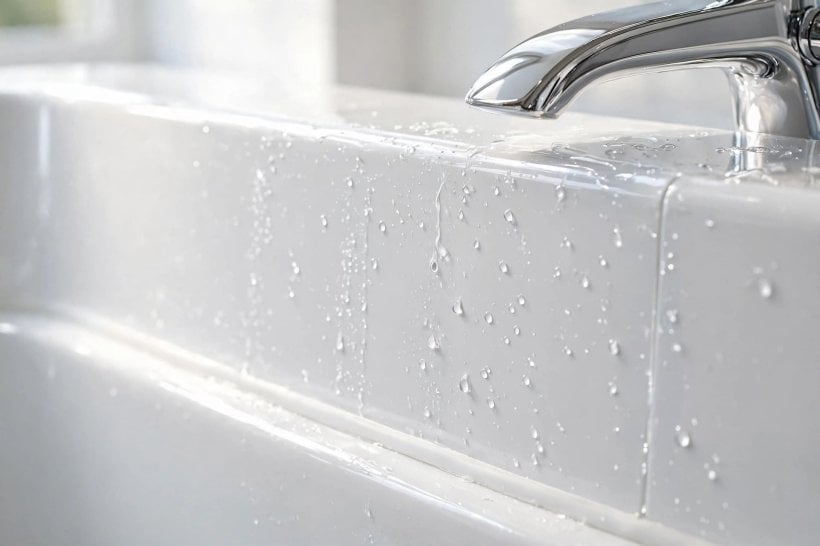
The process starts long before installation day. A consultant measures your existing tub — liners are moulded to match specific tub shapes, which is why the category is sometimes described as a made-to-measure skin. The old fixtures are removed, the new liner is bonded over the cleaned tub, wall panels or a surround are fitted, edges are sealed, and new trim and fixtures complete the picture.
Because the old tub remains, there is no skip, no plaster repair and usually no re-tiling — that is the genuine appeal, and for a bathroom whose bones are sound it is a rational trade. The trade-off is equally real: anything hidden stays hidden. A liner is only as good as what it covers, which is why the checking in the next sections matters more for this purchase than for almost any other bathroom decision, including bigger projects like those costed in the tiny house cost breakdown, where structure is exposed and inspected as work proceeds.
3. Who a Liner Suits — and Who It Does Not
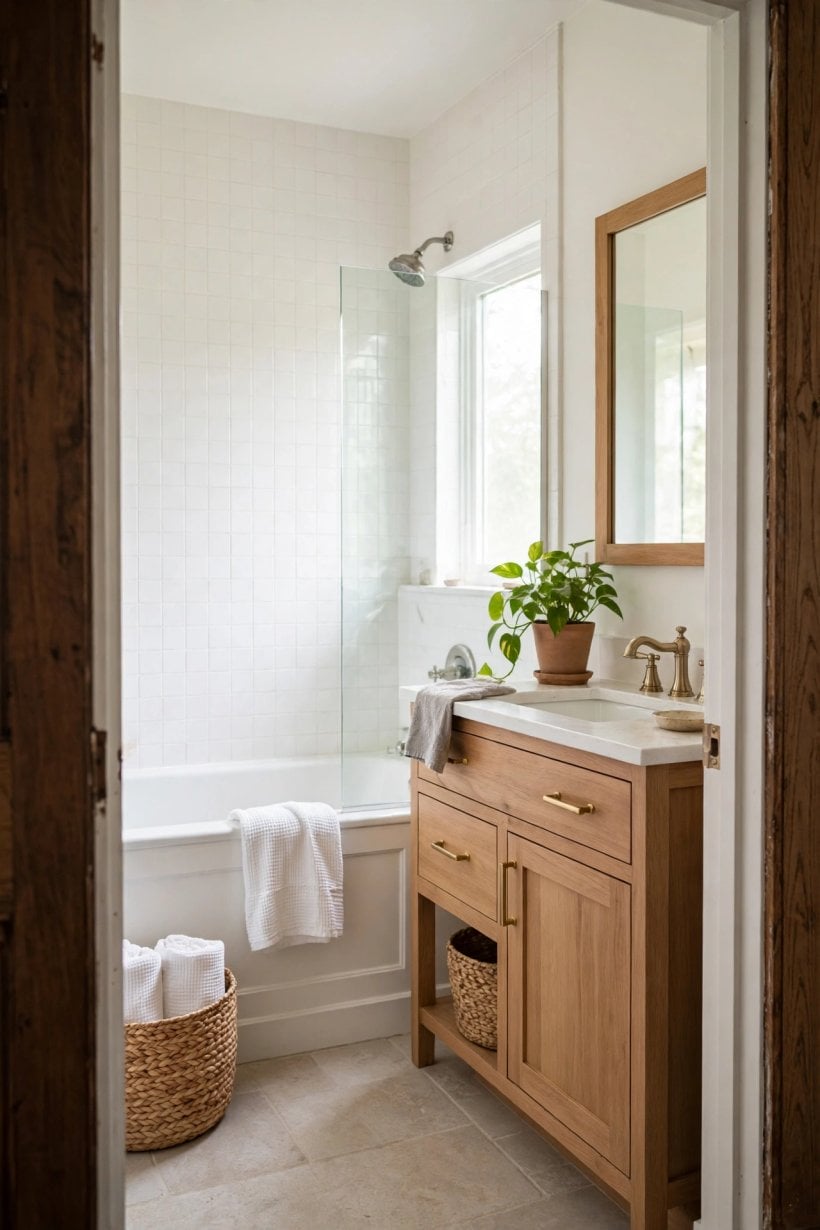
A liner suits a household whose tub is structurally sound but cosmetically finished: surface staining that no cleaner shifts, a colour from another decade, a worn surround, a rental or sale preparation where weeks of works are impossible, or anyone for whom a bathroom out of action for days is a genuine hardship. In those cases the speed and cleanliness of the model are real advantages, and a well-fitted liner can serve for years.
It does not suit a bathroom with soft or spongy floors, persistent leaks, mould that keeps returning, plumbing that needs moving, or a layout you already dislike — a liner preserves the layout exactly, including its faults. Small bathrooms deserve the same honesty: the compact wet rooms in tiny houses inside designs work because their plumbing and waterproofing were solved first and decorated second. If your long-term plan is a different bath position, a walk-in shower conversion or proper waterproofing repairs, money spent on a liner is money spent postponing the real job. Be honest about which situation you are in before the consultant arrives; the rest of this guide assumes your base is sound and checks everything else.
4. How to Read Reviews Like an Inspector
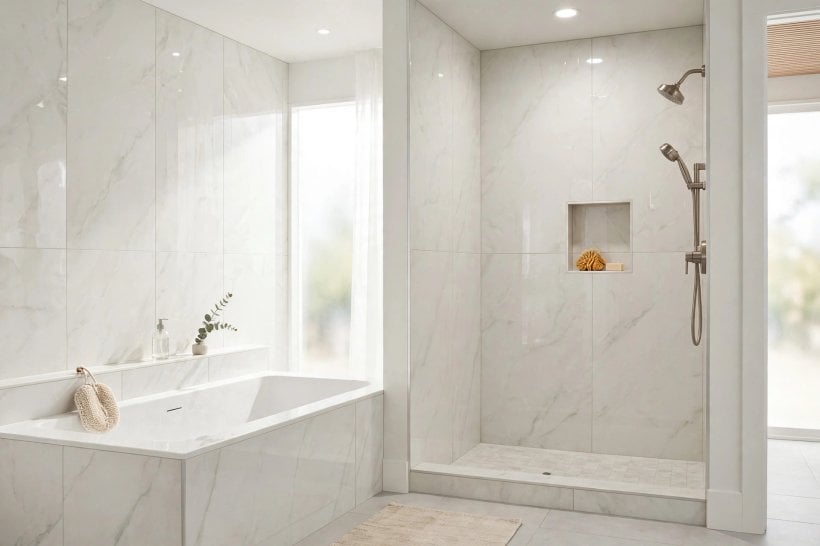
Reviews for dealer-installed products have a pattern problem: the product is national, but your experience will be entirely local. Read reviews for the specific dealer or franchise that would do your work, not the brand in the abstract — a five-star brand can contain a careless local crew, and vice versa. Weight recent reviews over old ones, and detailed ones over star-only ratings.
Photographs in reviews are worth more than paragraphs. Owners who post pictures a year or two after installation show you the sealant lines, the panel joints and the finish as they actually age — the two details that decide whether a liner still looks fitted or starts to look applied. A dealer whose reviewers keep posting tidy long-term photographs is showing you a system that survives contact with real bathrooms. Be equally attentive to timelines in the text: praise written on installation day describes a sales experience, while comments written months later describe the product, the sealing and the aftercare. Favour the second kind, and discount any review — glowing or furious — that never mentions a single specific.
Look for repeated specifics rather than general happiness. Mentions of measuring accuracy, how sealing and edges were finished, whether the crew protected floors and cleaned up, and — most valuable of all — how the company responded when something went wrong carry the real signal. A dealer with a few complaints that were visibly resolved is often a safer bet than one with a wall of identical short praise. Check independent platforms as well as the company’s own site, and notice whether negative reviews cluster around the same issue: scheduling, sealing failures, water getting behind panels, or aftercare. Clusters point at systems, and systems are what you are buying.
5. Questions to Ask Before You Sign
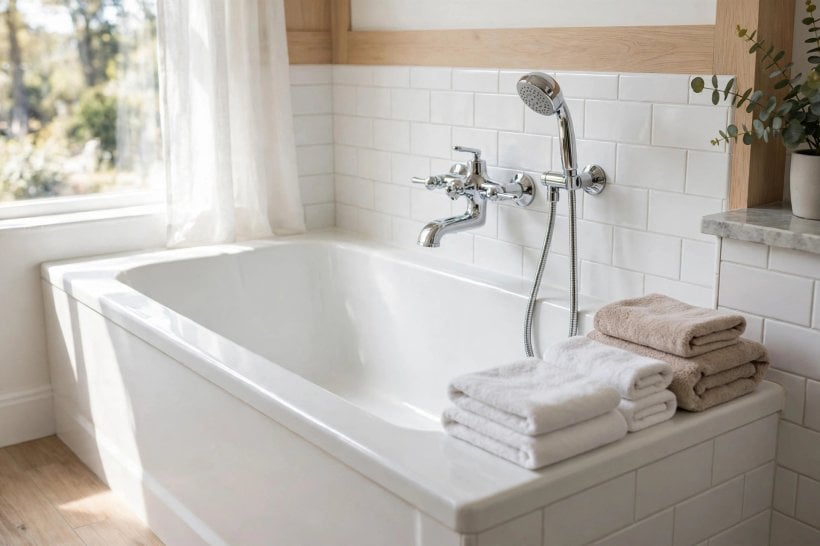
Ask what happens if the crew finds damage when fixtures come off — who repairs a rotten section, at what cost, and does the installation pause or proceed over it? Ask what the liner is made of, how thick it is, and how it is bonded and sealed. Ask who exactly will install it — the dealer’s own fitters or subcontractors — and what the plan is if the liner does not fit on the day.
Ask about the drain, overflow and taps: are fixtures included, what quality are they, and can you choose? Ask what preparation they do to the old surface and what they seal it with. Finally, ask for the whole agreement in writing before any deposit: measured drawings, materials, fixtures, the total price, and the circumstances under which the price could change. A confident dealer answers these questions easily — they hear them from careful customers every week, in bathrooms of every size, from family ensuites to the compact wet rooms in small space interior design ideas.
6. The Quote: What Should Be Itemised
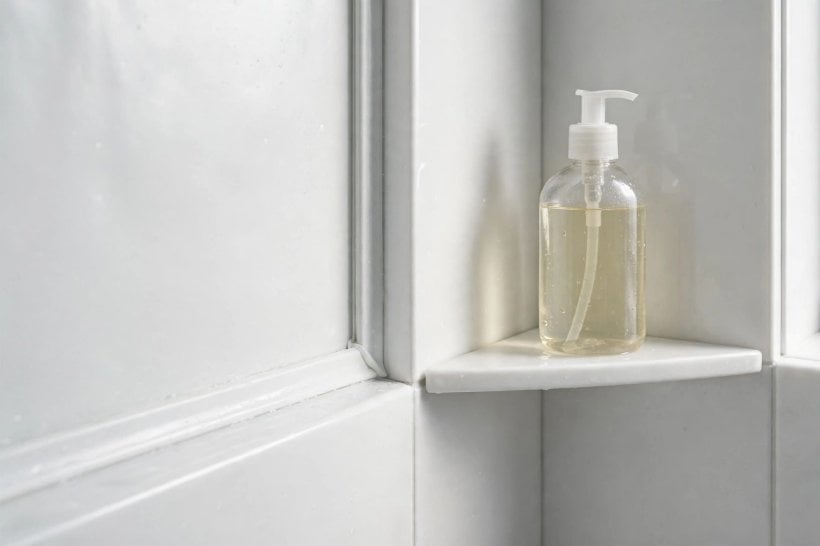
Ask for the quote broken into its parts: the liner itself, wall panels or surround, fixtures and fittings, trim and sealants, any plumbing adjustments, disposal or preparation work, and taxes. A single bottom-line figure hides where the money sits and makes comparison with a full replacement — or with a competing liner dealer — impossible.
Check what is excluded, in writing. Common exclusions across home-improvement quoting include repairing hidden damage, moving plumbing, and electrical work for fans or lighting; none of these are unreasonable, but all of them become expensive surprises if discovered mid-job. Ask how long the quote holds and what deposit is required, and be wary of prices that are only available “today” — pressure is a sales technique, not a pricing model, and it appears in negative reviews of pushy dealers across the whole home-improvement industry.
7. The Warranty: Read the Document, Not the Headline
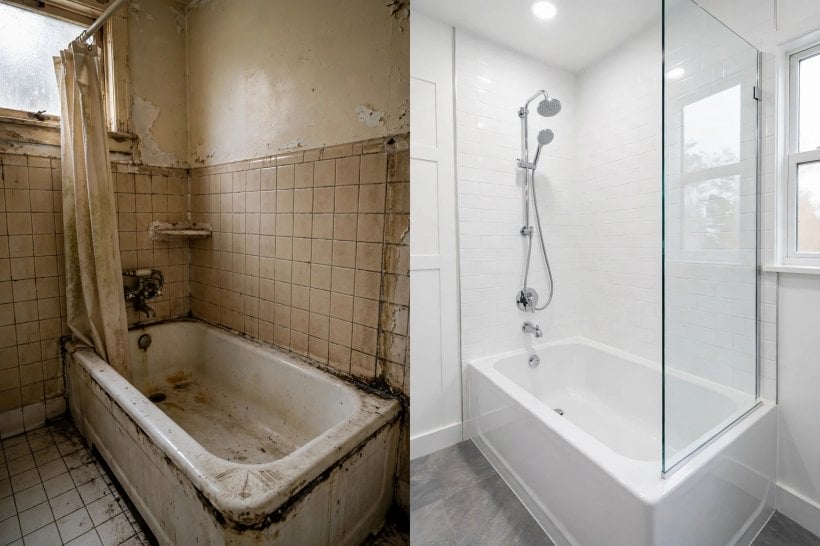
Liner remodels are often sold with long warranties, and the length is the least important part. Read — or ask for — the actual warranty document and check four things: what is covered (the liner, the installation, the sealant, the fixtures — they may all differ), what is excluded (water damage behind the liner, sealant renewal and accidental damage are common boundaries), who provides the cover (the manufacturer, the dealer, or an insurer — it matters if the dealer closes), and what you must do to keep it valid, such as using specified cleaners.
Ask specifically how a claim works in practice: who inspects, who pays for access if a panel must come off, and what the typical timeline is. Get the answers in the contract pack, not as verbal reassurance. Durability claims in this category are testable over time — the same sceptical approach used for whole buildings in how long tiny houses last applies: materials last when water is managed, and fail early when it is not.
8. Installation Day: What to Watch and Check
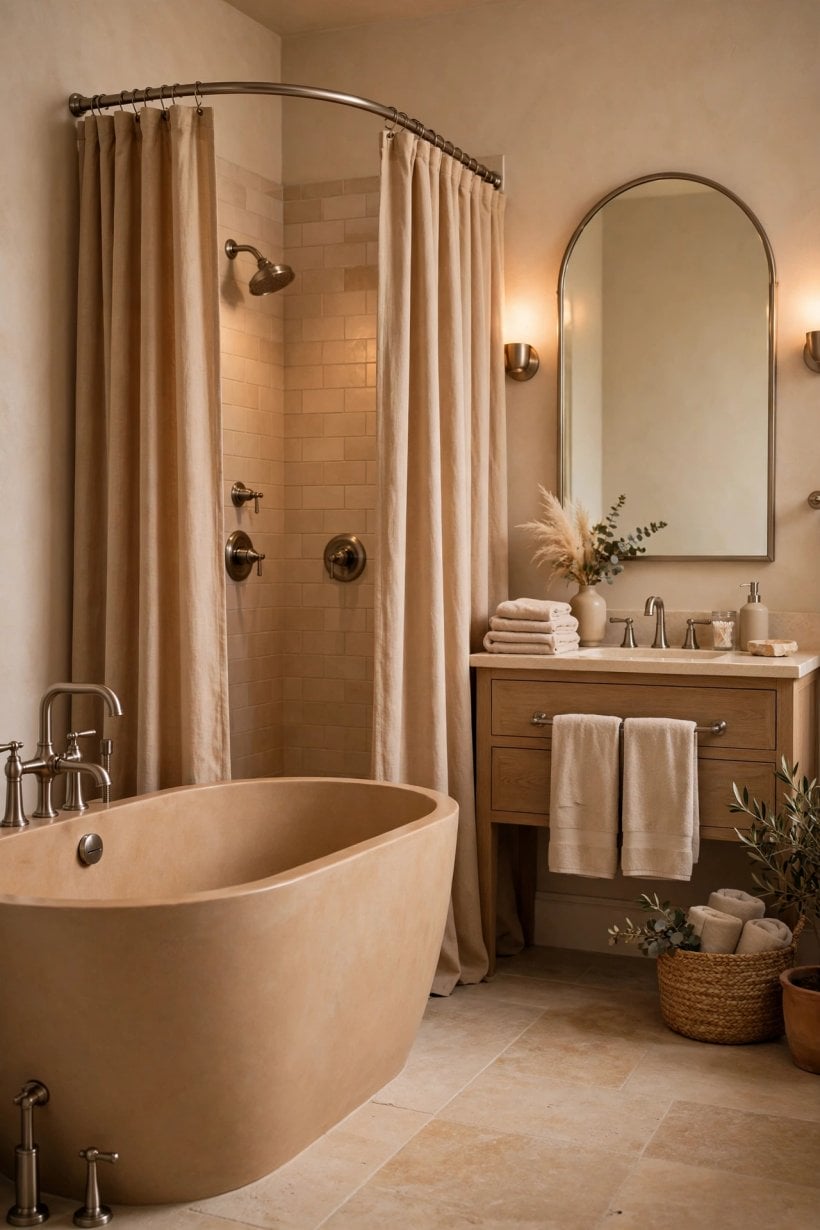
Before work starts, photograph the bathroom as it is, and agree where tools, materials and the old fixtures will go. During the fit, the details that decide longevity are the preparation of the old surface, the bedding of the liner so it feels solid underfoot with no flex or hollow drum, and the sealing at every edge — especially the rim, the tap and shower penetrations, and the junction with the floor.
At handover, run your own checks before signing completion: step into the tub and feel for movement or sponginess; run the shower and taps and look for leaks at every joint; inspect sealant lines for gaps and skips; check the drain and overflow are secure; and confirm every included fixture works. Note anything unfinished on the completion paperwork rather than relying on a promise to return. Most conscientious dealers walk this checklist with you themselves — treat a rushed handover as information.
9. Aftercare, Cleaning and If Something Goes Wrong

Acrylic liners want gentle care: non-abrasive cleaners, soft cloths, and no scouring powders or harsh solvents, which dull and can damage the surface — your contract pack should name what is approved, and using it protects both the finish and the warranty. Sealant is the maintenance item: it is the first line of defence against water getting behind the liner, so inspect it whenever you clean and raise any lifting or discolouration with the dealer early, while it is a reseal rather than a repair.
If something does go wrong — flex in the base, water sounds behind panels, persistent mould at edges — document it with dated photographs and contact the dealer in writing first. Escalate through the brand’s head office or your local consumer-protection route only if the dealer stalls. This orderly approach works wherever the bathroom sits, from a family house to the compact bathrooms planned in modern tiny house interior design.
10. Liner vs Full Replacement: Who Should Pick Which
Choose the liner route if your tub and floor are sound, your layout already works, and your problem is honestly cosmetic — surface wear, colour, a tired surround — or if time and disruption are your binding constraints. Pick a dealer with strong local reviews, an itemised quote and a warranty you have actually read, and the one-day model delivers what it promises.
Choose full replacement if there is any sign of leaks, soft floors or returning mould, if plumbing needs moving, if you want a different layout or a walk-in shower, or if the existing tub is damaged rather than merely worn. Replacement costs more and takes longer, but it exposes and fixes the hidden layer instead of sealing over it — and if budget is the obstacle, staging a proper job later usually beats covering a problem now, as the staged thinking in building a tiny house for cheap shows in another context: cheap and cheerful is fine, cheap and hidden is not.
Final Considerations
Bath fitter reviews, read properly, are not really about the liner — they are about measuring, sealing and aftercare, delivered by a local dealer whose name is on your contract. Verify the base is sound, choose the dealer on specific local evidence, insist on an itemised quote, and read the warranty document itself.
Do those four things and a one-day remodel is what it claims to be: a fast, clean cosmetic transformation. Skip them, and the same purchase becomes a smooth surface over unanswered questions.




0 Comments