
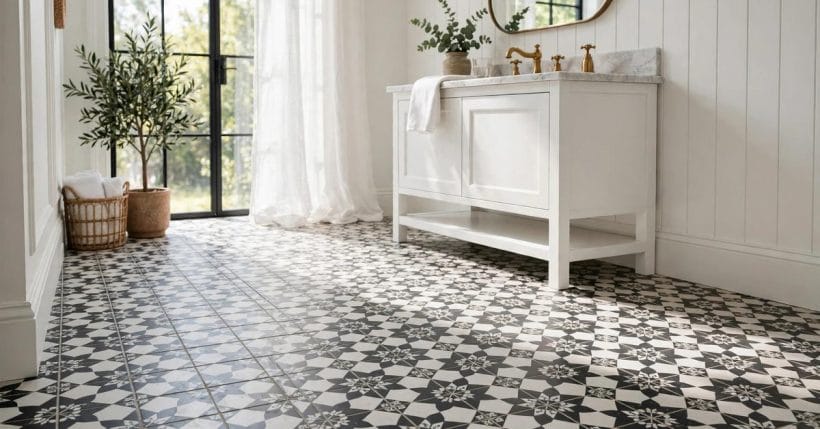
A bathroom floor does more visual work than any other surface in the room: it is the largest unbroken plane, the first thing bare feet judge in the morning, and the surface that has to shrug off water every single day. Get it right and the whole bathroom feels considered; get it wrong and no vanity can save it.
This collection stays strictly underfoot — seventy-five bathroom flooring ideas across tile, pattern, layout and finish. Tile on walls and inside showers lives elsewhere; here, every idea is about the floor and how it behaves in a wet room.
1. Bathroom Flooring at a Glance
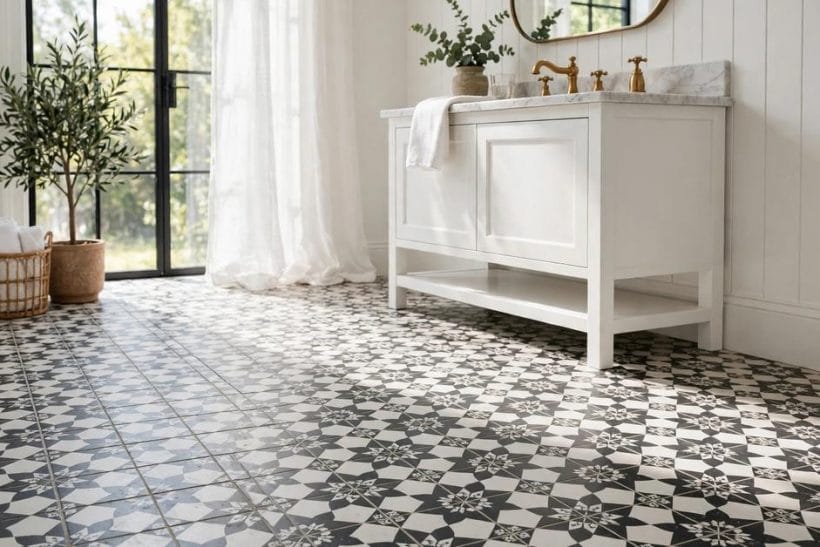
The scope first, because this corner of the bathroom is crowded. This post owns bathroom floors only: the materials, patterns and layouts that work underfoot in a wet room. Ceramic tile as a wall and shower material — its colours, formats and finishes — is owned by ceramic tile bathroom ideas, and the two posts deliberately do not overlap: nothing here re-teaches wall tiling. The bathroom as a whole lives in bathroom ideas, and the surface that pairs with the floor is covered by bathroom countertops. The feature floor shows the ambition: a bold black-and-white patterned tile that turns the floor into the room’s artwork while the vanity and walls stay quiet. Underneath the pattern, though, every good bathroom floor is chosen the same way — material first, then pattern, then layout, with water behaviour checked at every step.
| Floor family | Character underfoot |
|---|---|
| Porcelain tile | The workhorse — dense, water-shrugging, in every look from timber to stone |
| Ceramic tile | The classic — endless pattern and colour, best kept to floors with gentler traffic |
| Patterned / encaustic-look | The artwork floor — pattern carries the room, fixtures stay plain |
| Natural stone | The luxury — real variation and cool touch, with sealing as the upkeep |
| Vinyl and sheet | The pragmatist — warm, quiet and forgiving, kind to budgets and renters |
2. Wood-Look Floors Without the Worry
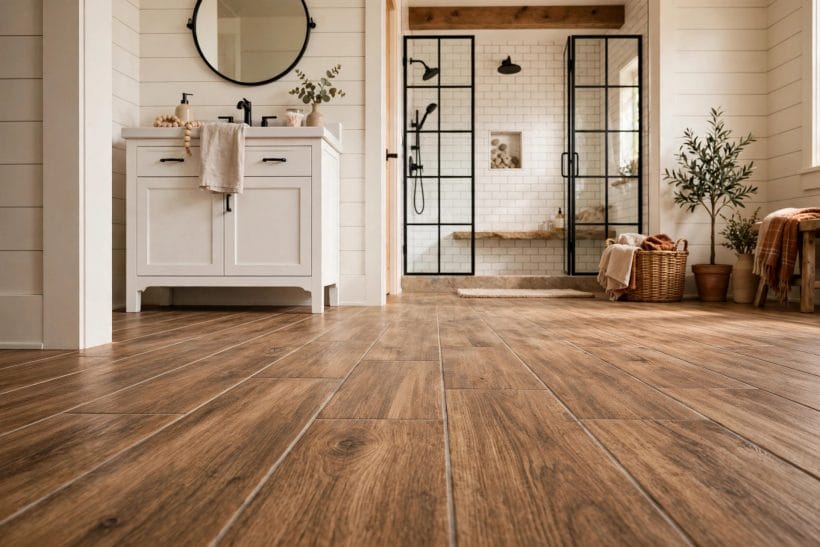
Timber is the look bathrooms always wanted and water never allowed — until porcelain learned to impersonate it. The gallery floor runs long wood-look planks through a farmhouse bathroom and into the shower’s orbit, giving the warmth of boards with a surface that treats splashes as a non-event. The dedicated survey of this family is wood-look tile bathroom ideas; the strongest floor-level versions are here.
1. Long planks laid the room’s length
Running plank tiles along the room’s longest axis stretches a small bathroom visually and mimics how real boards would be laid. Keep the grout line close to the plank tone so the eye reads timber, not tiles.
2. A warm mid-oak tone
Mid-oak is the forgiving middle: warm enough to flatter skin and white sanitaryware, light enough not to darken a windowless room, and dark enough to hide the everyday dust that pale floors advertise.
3. Planks that run into the shower
Carrying the same plank tile across the whole wet-room floor, shower included, removes every visual threshold. The room reads as one calm surface; the falls to the drain are formed beneath, invisibly.
4. A staggered, board-like bond
Offsetting plank ends irregularly, as a floor-layer would, sells the timber illusion. Perfectly regular brick bonds can look mechanical in plank format; the casual stagger is what real floors do.
5. Wood-look with white shiplap walls
The farmhouse pairing in the gallery — pale panelled walls over a timber-tone floor — works because both halves borrow from the same rural vocabulary. Add black fittings for edge and the room is complete.
6. Grey-washed planks for cooler schemes
Where the bathroom’s light is warm or its fittings are chrome, a grey-washed plank cools the floor to match. It keeps timber’s grain and pattern while suiting marble and white schemes.
7. Narrow planks in a small room
Shorter, narrower plank formats suit compact bathrooms, where full-length boards would need awkward cuts. The smaller scale also multiplies grout lines, which quietly helps grip under wet feet.
8. A plank border around a plain field
Framing a plain centre field with a plank border gives a large floor architecture without pattern overload. It suits long bathrooms especially, drawing the eye down the room’s length.
9. Matt finish, always
Wood-look tile in a gloss finish betrays itself the moment light hits it — real timber is never mirror-shiny. A matt or soft satin surface keeps the illusion and behaves better under wet feet.
3. Porcelain, Ceramic and Vinyl: The Practical Floors
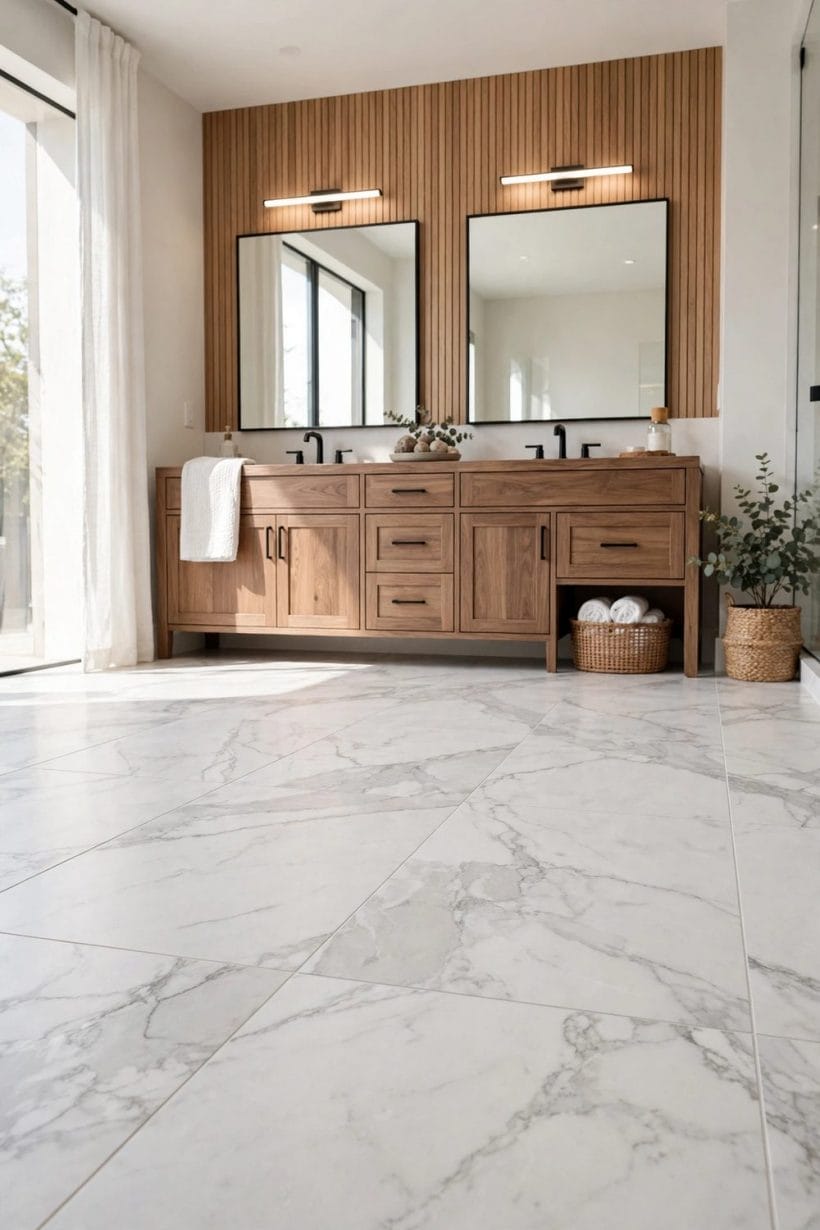
Beneath the looks sit three working families. Porcelain is the dense, through-bodied tile that shrugs off water and wear; ceramic is its lighter, more decorative cousin; modern vinyl — plank, tile and sheet — is the warm, quiet pragmatist. Most real bathrooms are floored by one of these three, chosen by traffic and budget as much as by taste.
10. Plain porcelain in a stone tone
A large, quiet porcelain in a warm stone tone is the floor that never dates and never argues with a scheme change. It is the default recommendation for family bathrooms that will be re-styled around it for years.
11. Ceramic pattern classics
Ceramic’s gift is pattern at friendly prices: the traditional motifs — stars, petals, lattice — that patterned floors are built from. On floors, keep ceramic to bathrooms without heavy through-traffic and it will serve for decades.
12. Luxury vinyl planks for warmth
Vinyl planks feel warmer and softer than any tile, which bare feet notice in winter. In a household bathroom with ordinary splashing — not a wet room — they are a genuinely comfortable, low-fuss floor.
13. Sheet vinyl for the seamless budget floor
One sheet, almost no seams: sheet vinyl is the watertight budget answer for rentals and first homes, and modern stone and tile prints are convincing at standing distance. Its honesty is its charm — it never pretends to be the luxury option.
14. Through-body porcelain for hard wear
Where chips would show a different colour beneath, through-body porcelain hides its injuries: the colour runs the tile’s full depth. Busy households with dropped bottles and dragged stools should start here.
15. Small tiles where the floor must flex
On floors that need many cuts — around soil pipes, in odd-shaped rooms, over shower falls — small formats bend to the geometry instead of fighting it. Mosaics earn their keep in awkward rooms.
16. A single material, wall of the shower to door
Running one floor material across the entire bathroom, wet zone and dry zone alike, is the calmest practical choice. Fewer junctions means fewer edges for water to test and a room that reads larger.
17. Vinyl tile for the tiled look, softly
Vinyl tiles printed as marble, slate or pattern give the tiled read with a warmer, quieter step and a far simpler fitting day. They suit ensuites and guest bathrooms that see gentle use.
18. Check the rating, then forget it
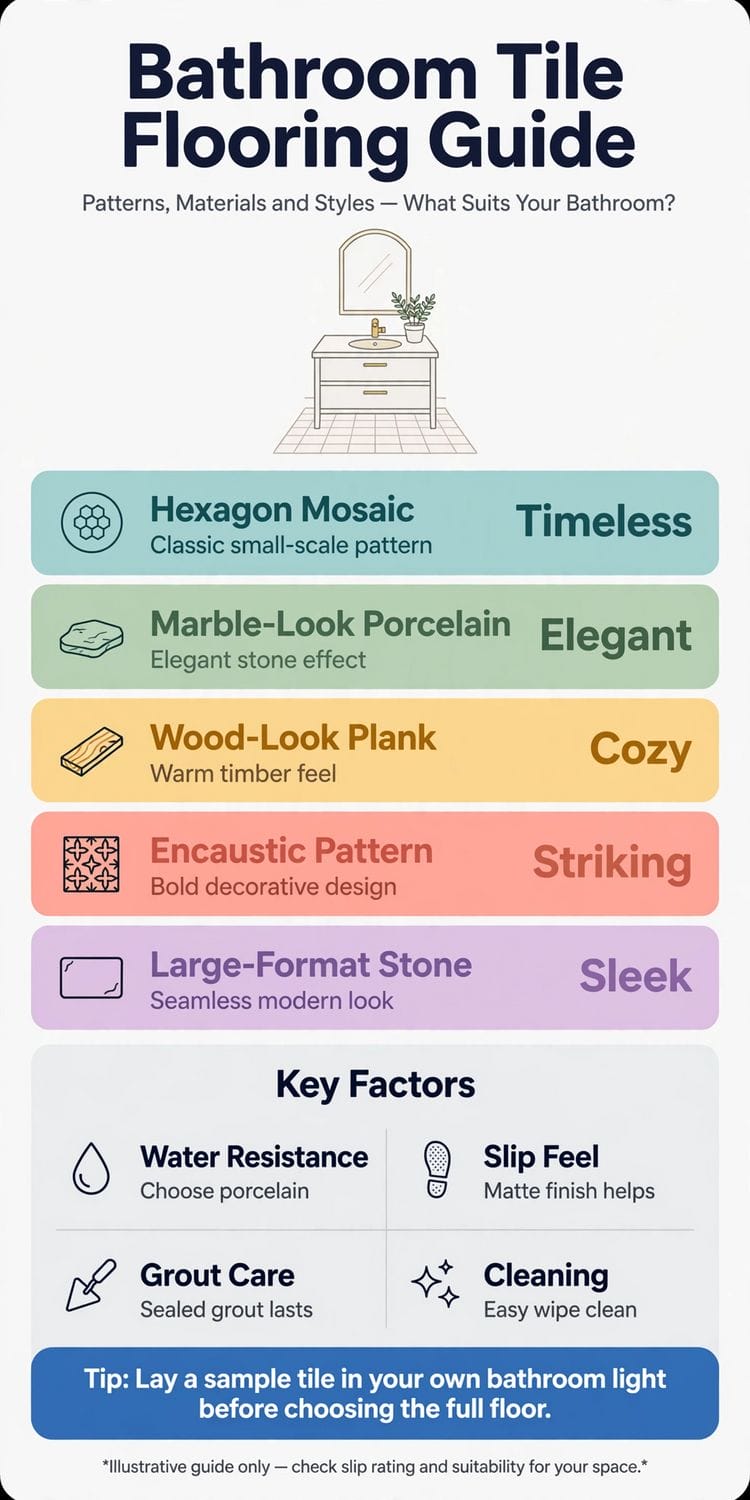
Every floor here carries manufacturer guidance for wet use and slip behaviour; check it for your exact product, in writing, before ordering — then choose on looks. The paperwork takes ten minutes and settles the question properly.
4. Patterned and Encaustic-Look Floors
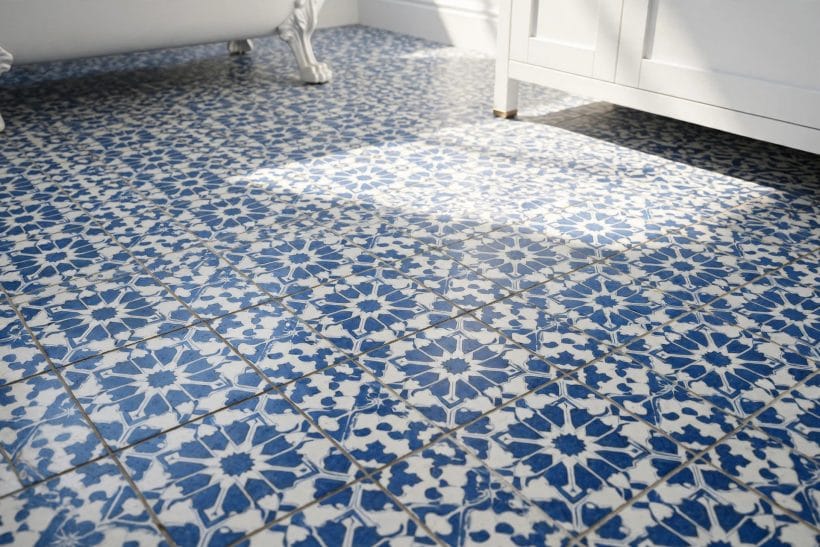
Pattern is the floor’s chance to be the room’s artwork. The gallery floor — a blue-and-white encaustic-look design spreading under a clawfoot tub — shows the rule: when the floor performs, everything above it dresses plainly. Patterned floors reward confidence and punish clutter, and they hide a week of everyday marks better than any plain surface.
19. The full-room patterned carpet of tile
Laying one repeating motif wall to wall turns the floor into a woven carpet in ceramic form. It suits period houses and plain modern rooms alike, provided the walls stay quiet enough to let it sing.
20. Blue and white, the Mediterranean register
Blue pattern on white is the sunlit, seaside dialect of the patterned floor — fresh against white sanitaryware and timber accents. The gallery bathroom’s clawfoot tub completes a combination that has worked for a century.
21. A patterned centre, plain border
Confining pattern to a central field with a plain tiled border gives large bathrooms a rug-like structure. It also contains the cost and the visual energy where the room can carry both.
22. Pattern only in the dry zone
In a wet-room layout, run the bold pattern in the vanity and dressing zone and a plainer, grippier tile inside the shower itself. The room keeps its artwork; the wettest square metre keeps its footing.
23. Monochrome pattern for modern rooms
Black, white and grey motifs read contemporary where coloured patterns read traditional. A monochrome patterned floor pairs cleanly with black fittings and frameless glass in a modern scheme.
24. Scale the motif to the room
Big motifs need floor area to repeat gracefully; in a small bathroom a large pattern may show only twice and look accidental. Small rooms take small motifs — or one bold medallion treated as a single picture.
25. Pattern with a plain, dark grout
Dark grout outlines each tile and sharpens a pattern’s geometry, and it forgives the staining that pale grout collects in a working bathroom. The look is bolder and the upkeep is kinder.
26. Let pattern climb one step, not the walls
Running the floor pattern up a single step, a plinth or the bath panel ties the room together without the full patterned-wall commitment — a gesture the wall-tile post next door would call restraint, and it is.
5. Checkerboard and Classic Black-and-White
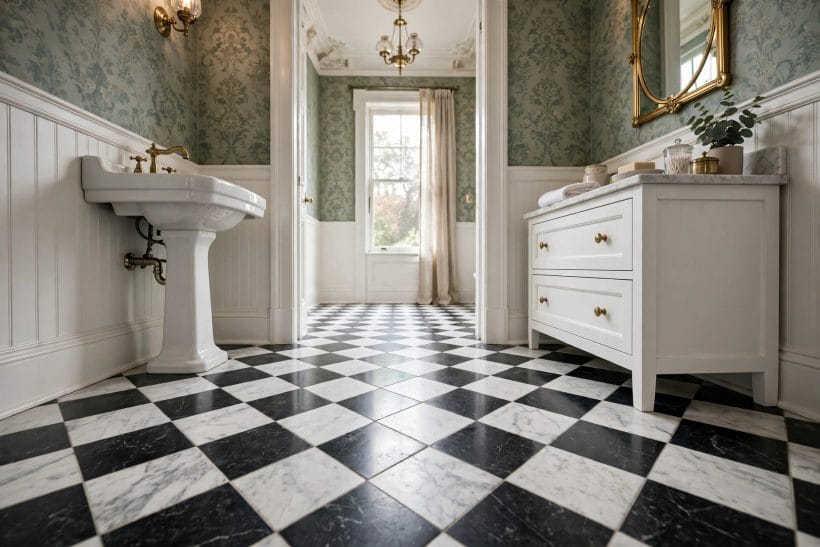
The checkerboard is the bathroom floor that has never once gone away. The gallery version — marble squares on the diagonal, a pedestal basin, panelled walls — shows its range: hotel, townhouse and cottage all speak it. Black-and-white floors generally share the gift: they are a pattern made only of contrast, so they match everything and date almost nothing.
27. The classic diagonal checkerboard
Laying the chequers on the diagonal makes a small floor feel larger and a large one feel grander. It is the layout in the gallery, and the one most people picture — for good reason.
28. Straight-set chequers for calm
The same black-and-white squares set square to the walls read quieter and more modern. Choose the straight set where the room’s other lines are already busy.
29. Marble chequers for the formal register
Real marble squares bring veining that no two floors share; the upkeep is sealing and a relaxed attitude to patina. In a principal bathroom used gently, it is the aristocrat of this section.
30. Porcelain chequers for family life
Porcelain printed and cut as chequers delivers the same geometry with none of marble’s anxieties. For most households this is the checkerboard to actually buy.
31. A black border around white field
Where full chequers feel busy, invert the emphasis: a mostly white floor held in a black tiled border. The room gains the classic contrast with a fraction of the visual noise.
32. Tiny chequers in tiny rooms
Small-scale checkerboard is the small bathroom’s friend — the pattern repeats enough to read as pattern, and the dense grout grid helps underfoot. It is a period-correct look for compact cottages too.
33. Black-and-white with brass
Warm brass taps and fittings against a monochrome floor is the combination hotel bathrooms have used for decades: the metal warms the contrast, the contrast sharpens the metal.
34. Grey-and-white for the softer version
Replacing black with deep grey softens the chequerboard into something gentler that suits family bathrooms and north light. The structure stays classic; the mood relaxes.
6. Herringbone and Layout Patterns
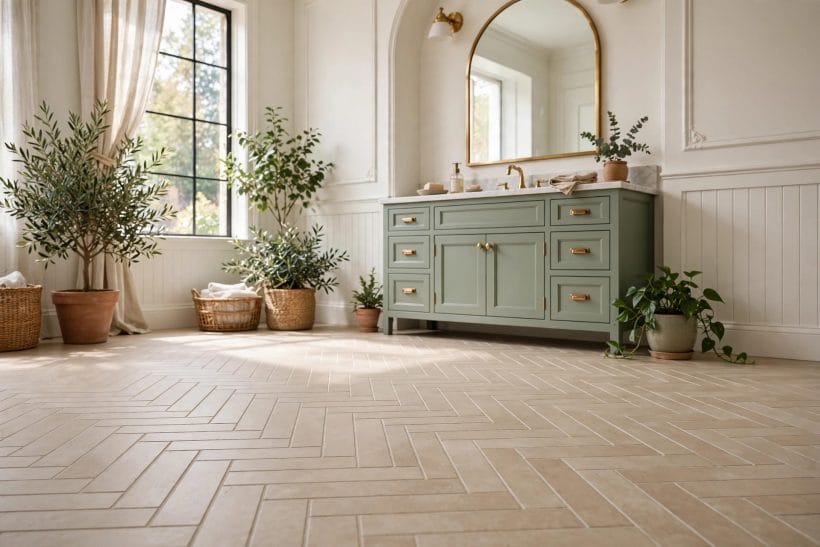
Sometimes the tile is plain and the pattern is the laying. Herringbone, chevron, basketweave and brick bonds turn simple rectangular tiles into floors with movement — the gallery’s pale herringbone under a sage vanity shows how quietly luxurious a layout pattern can be. Layout is also the cheapest pattern there is: the tiles cost no more, only the laying takes longer.
35. Herringbone in pale stone tones
The gallery combination — light herringbone, white panelling, a soft-coloured vanity — is the serene end of the layout spectrum. It suits bathrooms meant to feel like dressing rooms.
36. Herringbone that points at the window
Herringbone has a grain, and pointing its arrows toward the room’s light source draws the eye and the morning across the floor. Decide the direction on the plan, not on the day.
37. Chevron for the sharper line
Chevron’s continuous zigzag reads sleeker and more tailored than herringbone’s broken rhythm. It wants precise cutting and rewards it — the tailored suit of floor layouts.
38. Basketweave in marble or porcelain
The woven basket pattern is a period classic that flatters traditional fittings and pedestal basins. In porcelain it is also one of the most practical patterns here — many small pieces, many grout lines, steady footing.
39. Brick bond for the simple rectangle
A plain rectangular tile laid in brick bond is the layout every tiler knows and every bathroom can carry. In a gloss finish it feels metro-classic; in matt stone tones, quietly modern.
40. Stacked layout for modern minimalism
Aligning tiles in a strict grid — stacked, not staggered — gives the floor a graphic, architectural calm that suits frameless, fitting-led bathrooms. It exposes any wall that is out of square, so measure honestly first.
41. A layout change to mark the shower
Keeping one tile but changing its layout inside the shower zone marks the wet area without a threshold or a colour change. The room stays serene; the zoning is done by geometry alone.
42. Border the layout with a plain edge
Patterned layouts need a frame: a plain border tile around a herringbone or basketweave field stops the pattern neatly at walls and gives the tiler a forgiving margin to absorb crooked rooms.
7. Hexagons, Mosaics and Large Format
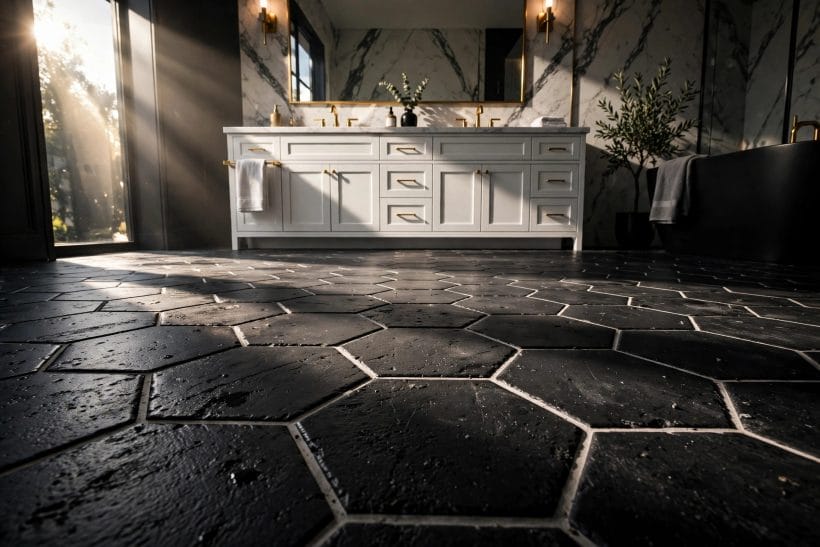
Scale is the third pattern language. Small hexagons and mosaics bring grip, period charm and forgiving geometry; giant slabs bring calm and few grout lines. The gallery floor — oversized black hexagons under dramatic light — proves the hexagon works at both ends of the scale.
43. Classic small hexagons in white
The little white hexagon with dark grout is the vintage bathroom floor, still unmatched for small rooms: hundreds of grout lines for footing, and a pattern that hides a multitude of daily marks.
44. Hexagons with a flower motif picked out
Swapping a few hexagons for dark ones in a repeating flower is the period detail restorers love. It takes planning on paper and looks like it has always been there.
45. Oversized hexagons for drama
The gallery’s giant black hexagons invert the classic: same geometry, monumental scale. In a large bathroom with good light it is a floor that behaves like architecture.
46. Penny rounds for soft texture
Penny-round mosaics give a gentle, pebbled texture underfoot and bend happily around curves and falls. Their charm is tactile as much as visual.
47. Large-format slabs for calm
Very large tiles with tight joints give a floor an almost seamless, stone-slab calm that suits modern and spa-leaning bathrooms. They demand a flat subfloor and honest falls — plan the preparation properly.
48. Mosaic inside the shower, large outside
Pairing small mosaic on the shower floor — where its grout grid helps footing and its pieces follow the falls — with large tiles in the dry zone is the professional’s standard combination.
49. Mixed-scale hexagons in one field
Blending two hexagon sizes in one floor creates a soft, randomised texture that hides wear patterns well. Keep the colour single so the scale play stays subtle.
50. A mosaic rug inlay
Laying a mosaic panel as a “rug” in front of the vanity or tub gives a large plain floor its one jewel. It is also a kind way to use a small quantity of a beautiful, expensive mosaic.
8. Grip, Grout and Wet-Zone Sense
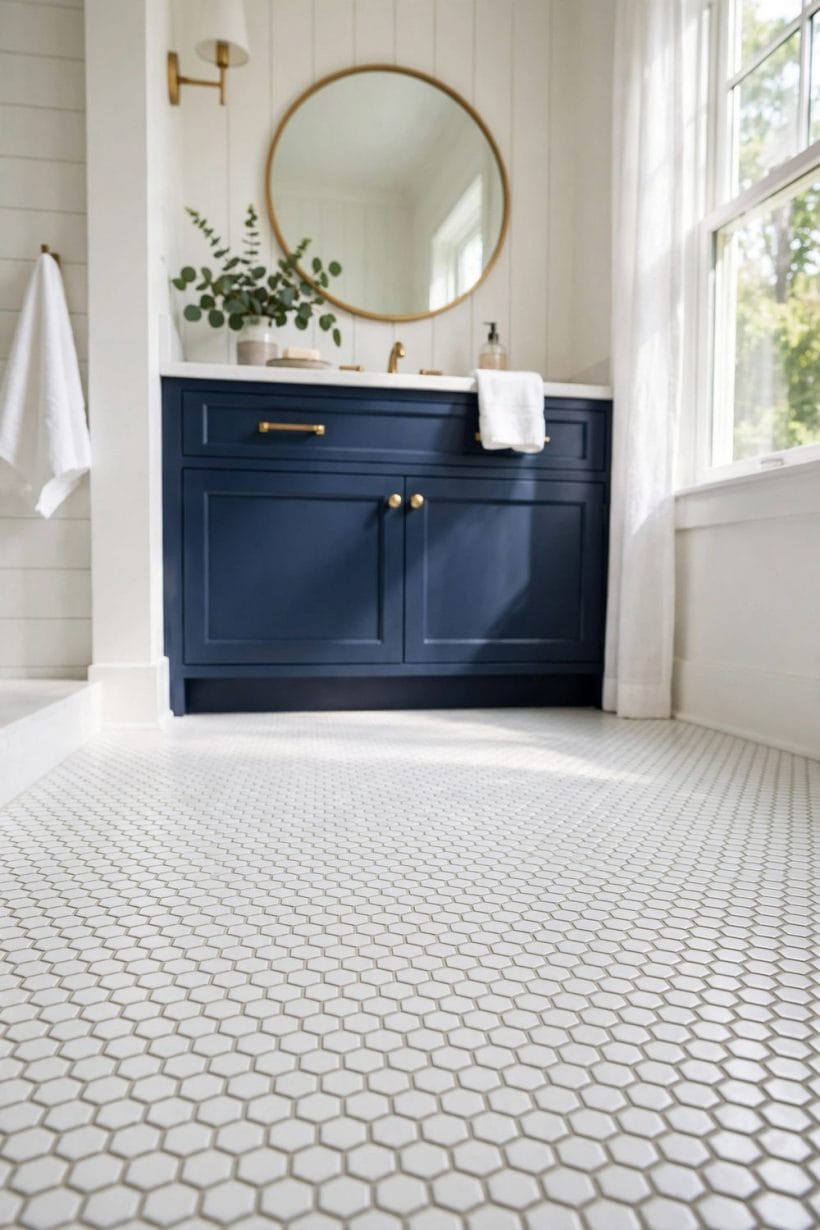
A bathroom floor is a safety surface wearing a design costume. This section is the practical core: how floors stay steady under wet feet, how grout behaves, and how the wettest zones should be detailed. Everything is stated generally — every product carries its own ratings, and the manufacturer’s word for your exact tile is the one that counts.
51. Texture is grip
Matt, honed and lightly textured finishes hold a wet foot better than polished ones. Save the high polish for walls; underfoot, a surface with some tooth is the standing rule in wet zones.
52. More grout lines, more footing
Small tiles and mosaics multiply grout joints, and each joint is a tiny channel and grip edge. It is why the classic small formats dominate shower floors across every style in this collection.
53. Sealed grout lasts and stays cleaner
Grout is the floor’s sponge; sealing it (and re-sealing as the manufacturer directs) slows staining and water uptake. It is unglamorous, inexpensive and the difference between a floor that ages and one that merely gets dirty.
54. Dark grout in the traffic lanes
Where feet pass daily — door to vanity, vanity to shower — mid-to-dark grout keeps the floor looking composed between cleans. Pale grout is a beautiful choice that should be made with open eyes.
55. Falls you cannot see but always feel
Wet-zone floors are laid with gentle falls toward the drain, invisible to the eye and obvious to a puddle. If water stands in corners on a new floor, the falls — not the tile — are the conversation to have with the fitter.
56. Warm feet: the quiet luxury
Tile floors in cold climates benefit from the radiant warmth people add beneath them; stated generally, it is a comfort decision made before laying, never after. Vinyl and timber-look floors feel kinder where that layer is not planned.
57. Threshold-free, with honest detailing
A level entry between bathroom and landing is achievable and kind to everyone, but it depends on the waterproofing detailing at the doorway being done properly. This is professional work, specified in advance — not a detail to improvise.
58. Mats where the water lands
A washable mat at the tub edge and shower exit catches the first wet steps and warms the morning floor. Choose low-pile, quick-drying ones and the practical layer stops looking like a compromise.
9. Terrazzo, Stone and Soft Minimal Floors
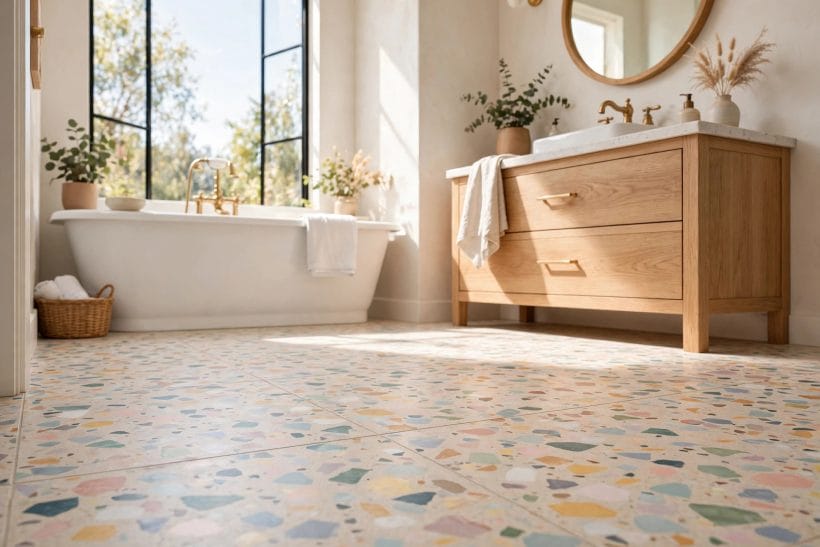
The last family is the quiet-luxury one: terrazzo’s scattered chips, real stone’s cool weight, and the pale minimal floors that let fittings and light do the talking. The gallery bathroom — pastel terrazzo under a freestanding tub and an oak vanity — shows the mood: soft colour, natural materials, nothing shouting. The wider cost picture for bathroom work sits in bathroom remodel cost guidance, stated there in general terms as it is here.
59. Pastel terrazzo for gentle colour
Terrazzo carries colour as confetti — many small notes, no single loud one — which makes it the friendliest patterned floor for colour-shy rooms. The gallery’s pastel chips warm a white bathroom without committing it to a theme.
60. Classic grey-chip terrazzo
The traditional grey-and-white terrazzo is the mid-century classic that suits both period renovations and crisp modern rooms. It hides wear gracefully and photographs like a much more expensive floor.
61. Real marble, chosen with open eyes
Marble underfoot is cool, weighty and unmistakably real — and it etches, stains and asks for sealing. Choose it for the bathrooms where its patina will be read as character, not damage.
62. Limestone and travertine warmth
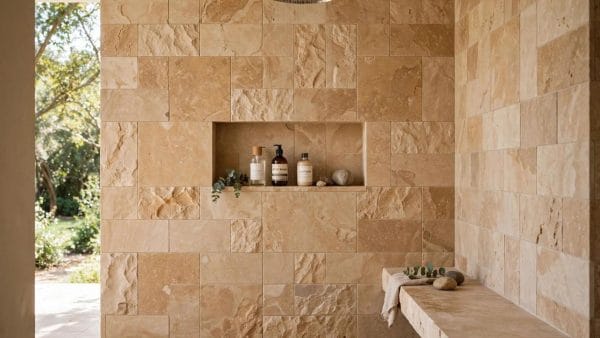
The softer stones bring warm, sandy tones and a matt calm that suits spa and Mediterranean moods. Their porous nature is managed with sealing and prompt wiping — a routine, not a burden, once habitual.
63. Slate for texture and grip
Slate’s natural cleft surface gives texture, depth and honest footing in one material. Its dark, varied tones hide the realities of a working bathroom better than almost any floor here.
64. The pale seamless minimal floor
A pale, large-format or micro-textured floor with minimal joints is the minimalist’s choice: the room’s interest moves to the tub’s silhouette, the tapware and the light. It needs disciplined tidiness to look its best.
65. Concrete-look porcelain
Porcelain printed as polished concrete gives the industrial floor without the sealing, cracking or cold-touch questions of the real pour. It pairs naturally with black fittings and timber warmth.
66. Stone-look in the dry zone, mosaic in the wet
Large stone-look tiles through the main floor with a small mosaic continuing into the shower keeps one material story with two sensible scales — the combination most spa bathrooms in photographs are actually using.
10. Choosing, Laying and Caring for the Floor
The last ideas are the decision itself. A bathroom floor is chosen once and lived with daily for years, so the choosing deserves the same care as the laying — and the rooms it has to suit are the modern ones surveyed in modern bathroom ideas as much as the period ones. Work through the checks in order and the shortlist usually shortens itself.
67. Sample it on the floor, in your light
Tiles change completely between showroom and bathroom light. Buy or borrow samples, lay them where the floor will be, and live with them through a day and an evening before ordering a room’s worth.
68. Decide the grout with the tile
Grout colour is half the floor’s design, as several ideas above show. Choose it at the same meeting as the tile, from grout sticks laid in the joints — never as an afterthought on fitting day.
69. Prepare the subfloor honestly
Every beautiful floor in this collection sits on a flat, sound, properly waterproofed base. Money spent under the tiles is invisible forever and missed forever if skipped; it is the least optional line in the budget.
70. Order with a breakage allowance
Order beyond the measured area to cover cuts, breakages and a small reserve kept afterwards for repairs. Matching a discontinued tile years later is a misery this small over-order prevents.
71. Protect the new floor during the rest of the work
Vanities, tubs and ladders arrive after floors in most refits. Insist the finished floor is boarded over until the room is done; most early damage to new bathroom floors is done by the project itself.
72. Match cleaning to the material
Stone wants gentle, suitable cleaners; glazed tile and porcelain forgive almost anything; vinyl wants no abrasive enthusiasm. The manufacturer’s care note for your exact floor is the whole rulebook — keep it with the spare tiles.
73. Re-seal on the maker’s rhythm
Stone and grout sealing is a calendar task, not a crisis response. Note the interval the manufacturer states, diarise it, and the floor’s tenth year looks much like its first.
74. Keep the paperwork with the spares
Tile name, batch, grout colour and sealer, kept in one envelope with the spare tiles, turns any future repair from archaeology into a phone call. Future-you, mid-leak, will be grateful.
75. The floor that suits the household wins
Children, dogs, guests, mobility, cleaning appetite — the right floor is the one whose upkeep and footing fit the household that will actually use it. A beautiful floor resented daily is a worse floor than a plainer one loved for a decade.
Final Considerations
Bathroom flooring rewards the rooms that choose it in the right order: material for the water, pattern for the eye, layout for the geometry, and grip and grout treated as design decisions rather than afterthoughts. Whether the answer is the feature’s bold pattern, the gallery’s quiet herringbone or a sheet of honest vinyl, the floor that is chosen deliberately — and checked against the manufacturer’s word for wet use — will carry the bathroom gracefully for years. The walls and showers have their own post; underfoot, this is the whole story.


0 Comments