

Clay, glaze and water: a ceramic wall has been shrugging off the bathroom’s worst weather for centuries, and still does it more gracefully than almost anything invented since.
These 75 ceramic tile bathroom ideas stay on the tile itself: what glazed ceramic is, where it earns its place, its colour and pattern, the wet zone, and the grout lines and gentle care that keep it bright for decades.
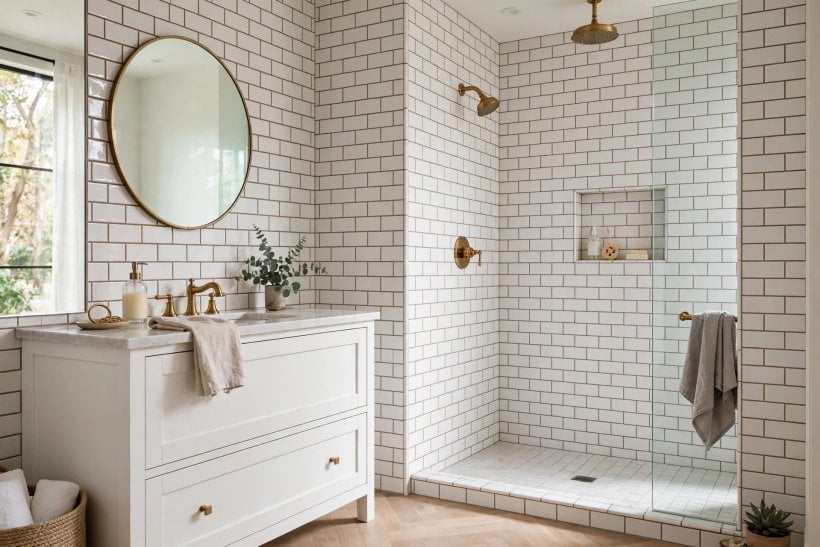
1. Ceramic Tile Bathroom Ideas at a Glance
The central entity is ceramic tile in the bathroom: a fired clay body carrying a glazed, glass-like face, defined by its attributes — body and glaze, format and finish, placement on walls, splash zones and floors, pattern and layout, and the grout, trim and sealant system that completes it. Judged rightly, it is not a surface but a partnership between the tile and everything that holds it.
| Question | Short answer |
|---|---|
| Where does ceramic tile work best? | Walls and wet zones first — showers, bath surrounds and splashbacks — with floors judged separately by the maker’s floor rating and wet grip. |
| Gloss or matt? | Gloss where light is scarce and wiping must be easy; matt where calm is wanted and water spotting should show less. |
| What decides whether a scheme looks crafted? | The grout, trims and edges: joint width suited to the tile, grout colour chosen as design, and corners finished in the room’s metal or a glazed edge. |
| How long should it last? | Decades, if the substrate is sound, the batch was bought whole with spares kept, and cleaning stays gentle — glaze outlives fittings when it is not scrubbed to death. |
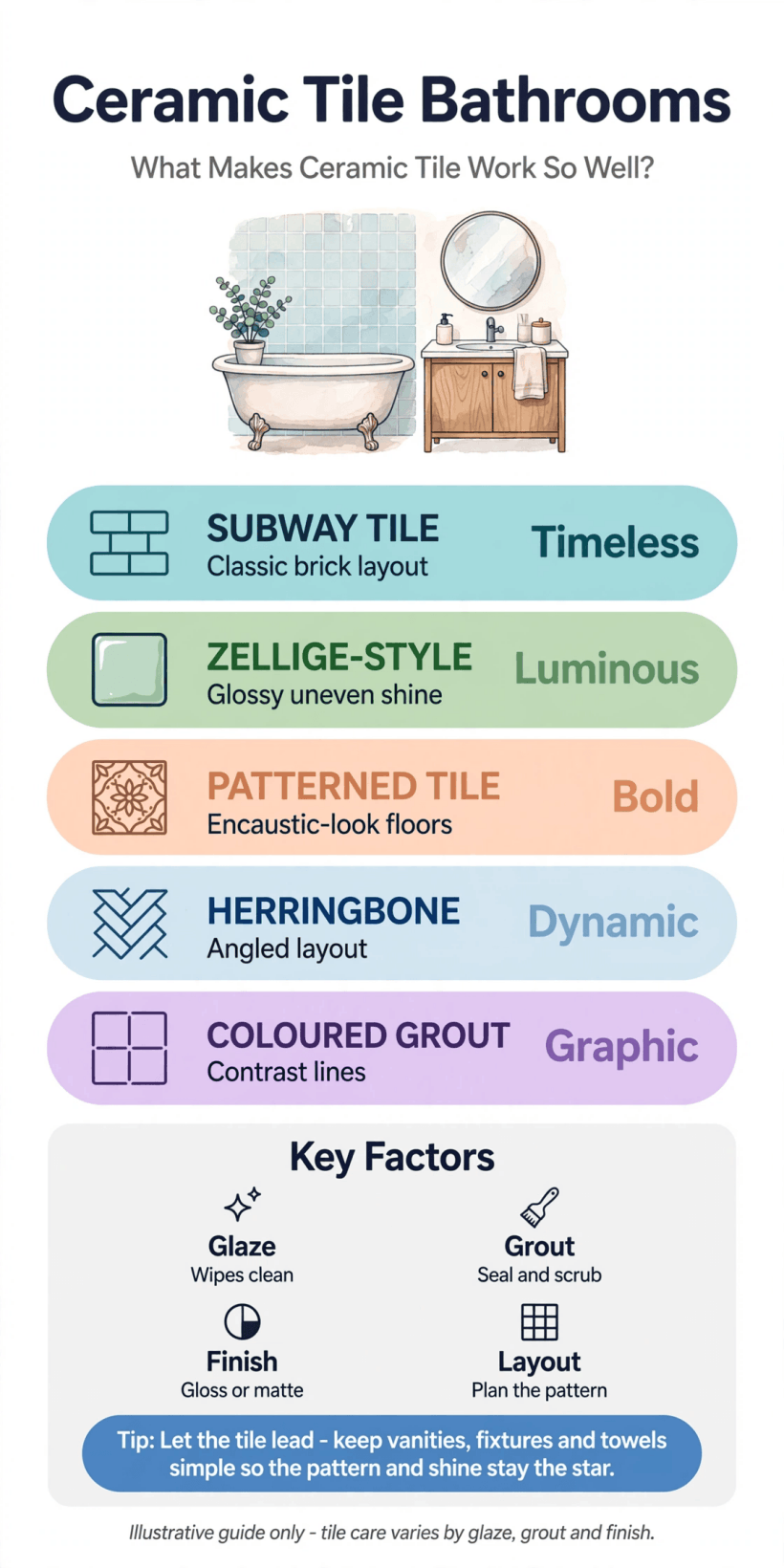
2. Ceramic Tile Defined: Glazed Clay, Body and Finish
Ceramic tile is the bathroom’s oldest partnership: clay, glaze and water in daily negotiation. This post stays on ceramic alone inside the wider survey of the bathroom ideas pillar — what the material is, where it earns its place, how its colour, pattern and grout behave, and how it is kept — so the tile itself, not the whole bathroom, gets the full hearing.
1. Start With What Ceramic Tile Actually Is
A ceramic tile is shaped clay, fired, and finished with a glaze — a thin glass skin that carries the colour and seals the surface.
2. Respect the Glaze as the Working Surface
The glaze is the tile’s face and armour in one: it resists water and stains, takes the colour, and sets the shine.
3. Choose Gloss Where Light Is Scarce, Matt Where Calm Is Wanted
Glossy ceramic bounces light around small, dim bathrooms and wipes clean with a cloth’s single pass. Matt finishes calm the glare and show less water spotting — the choice is the room’s light budget, honestly counted.
4. Understand the Body Beneath: Wall Tiles and Floor Tiles Are Different Jobs
Wall ceramic is made lighter and thinner for vertical duty; floor work needs tiles made and rated for floors.
5. Let Handmade-Look Variation Soften Large Areas
Tiles with gentle variation in tone and edge — the handmade mood, whether truly handmade or well imitated — keep big tiled walls alive.
6. Keep Formats Few: One Field, One Accent at Most
A ceramic scheme coheres when one main format does the field work and, at most, one smaller format accents it.
7. Judge Tiles in the Room’s Own Light Before Ordering
Glaze colour shifts under warm bulbs, north windows and the bathroom’s actual fittings.
8. Plan the Tile Map Before the First Box Opens
Which walls, to what height, meeting what at every edge: the tile map is drawn on paper first.
9. Buy the Whole Batch in One Order
Glaze and tone vary between firings, and a later top-up order can arrive as a visibly different family.
10. Store the Spares and Note the Maker Forever
A handful of leftover tiles, kept dry with the maker’s name and range written down, turns a future cracked tile from a retiling project into an afternoon’s repair.
11. Remember Ceramic Is a System, Not a Surface
Tile, adhesive, grout, sealant and the wall behind them succeed or fail together. The prettiest ceramic over a soft, damp or moving substrate is decoration on a countdown — the system gets its own sections below.
3. Where Ceramic Earns Its Place: Walls, Splash Zones and Floors Judged Honestly
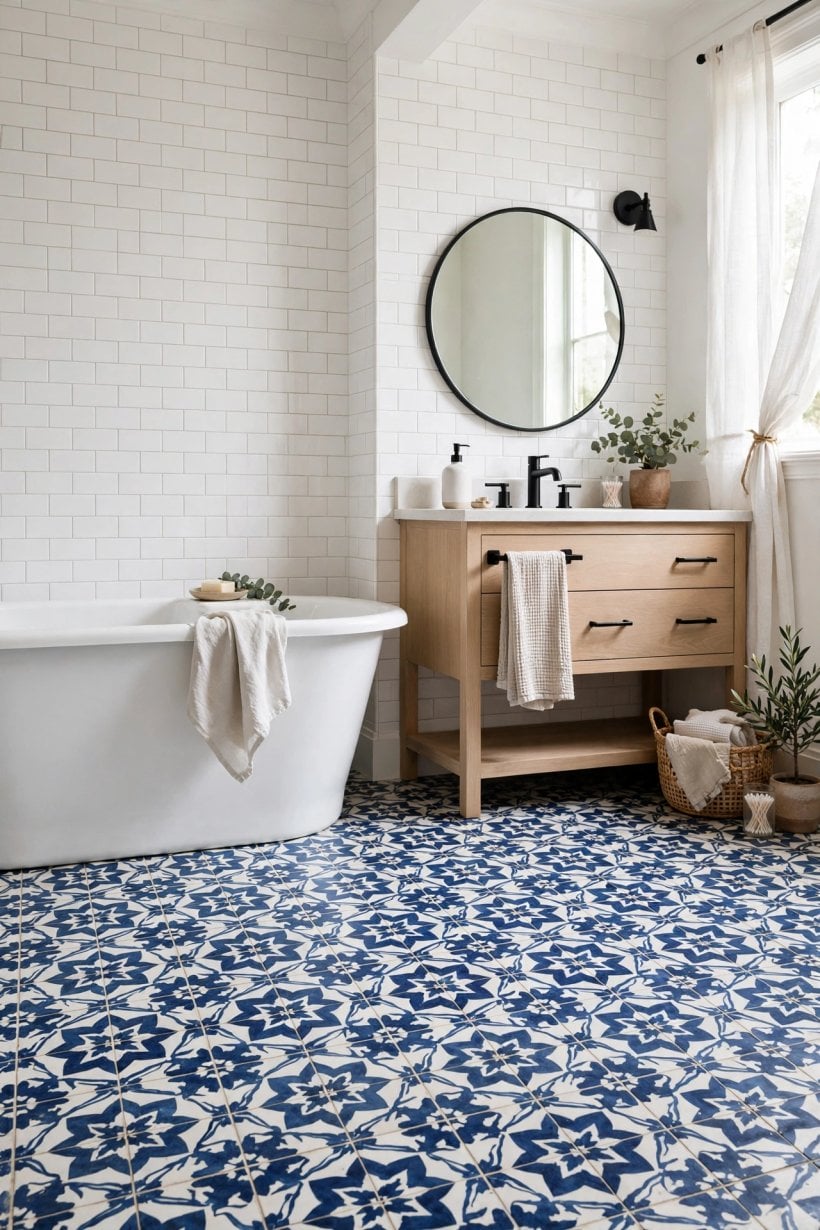
Placement is ceramic’s first design decision: the material is glorious on walls and in wet zones, and asks harder questions underfoot. The layouts it must fit are the territory of the tiny house bathroom layouts post; here each surface of the room is judged for ceramic on its merits.
12. Tile the Shower Walls Without Hesitation
The shower is ceramic’s home ground: glazed, jointed, washable and unbothered by daily water. Run the tile to the ceiling where the room allows, and the enclosure reads as one clean, intentional volume.
13. Carry Ceramic Behind the Basin as a True Splashback
The basin’s wall takes the room’s hardest daily weather in miniature. Ceramic behind it — a few courses or a full panel — turns a painted wall’s slow damage into a wipe-clean non-event.
14. Use a Half-Tiled Wall With a Finished Top Edge for the Classic Compromise
Tile to dado height with a proper trim or a glazed edge tile gives period character, protects the splash zone, and leaves paint or paper above to carry colour cheaply and changeably.
15. Tile the Whole Room Only Where the Room Is Small and Wet
Full tiling suits compact, hard-working bathrooms where every wall earns its washability. In larger, calmer rooms, total tile can turn chilly and echoing — ceramic everywhere is a decision, not a default.
16. Judge Floor Ceramic by Grip Before Beauty
Underfoot, the questions change: the tile must be made for floors and chosen with wet grip honestly in mind, tested by the maker’s ratings rather than a dry showroom thumb.
17. Prefer Larger Formats on Floors for Fewer Grout Lines
Fewer joints mean fewer lines to keep clean and a calmer floor visually. Large floor tiles also demand a flatter base — the preparation is part of the price, and skipping it shows in every lipped corner.
18. Keep Small Mosaics Where the Floor Curves or Slopes
In shower trays and wet-room floors that fall to a drain, small formats follow the slope and their many joints help the foot. Mosaic there is not decoration; it is engineering wearing a pretty face.
19. Tile a Bath Panel to Make the Bath Belong
A bath panel tiled in the wall’s ceramic knits a fitted bath into the room’s architecture. Keep an access plan for the plumbing beneath — the panel that cannot open turns a washer’s replacement into demolition.
20. Use Ceramic as the Window Reveal’s Defence
Bathroom window reveals collect condensation and splash in equal measure. Tiling the reveal in the room’s ceramic ends the peeling-paint cycle there, and frames the glass with the same clean logic as the walls.
21. Leave One Honest Painted Surface for Warmth
A single painted wall or ceiling in a warm, well-chosen colour keeps a tiled bathroom human. The room needs one surface that is not hard, cold and reflective — ceramic’s excellence does not require a monopoly.
22. Match the Tile’s Ambition to the Room’s Ventilation
Steam is the bathroom’s climate, and tile shows every failure of extraction as condensation and tired grout. The drier the room’s air is kept, the longer any ceramic scheme stays the scheme that was installed.
4. Colour and Glaze: From Cottage White to Deep Green
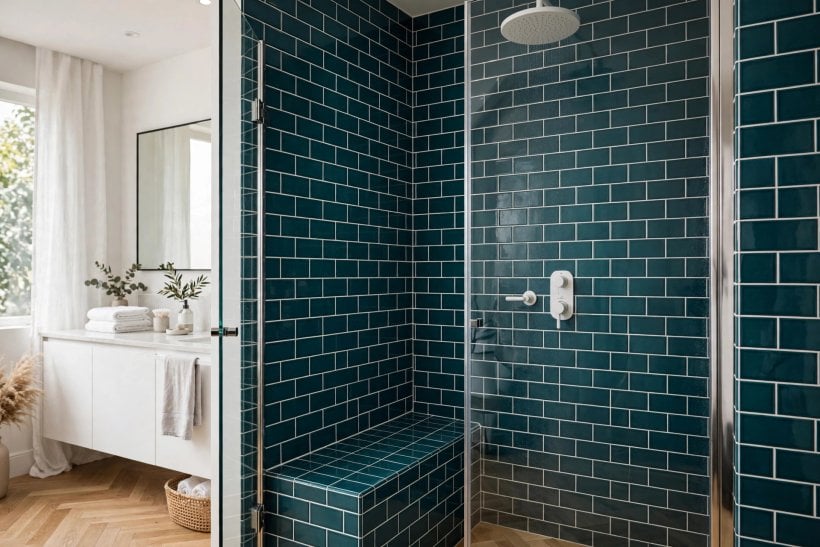
Ceramic colour is permanent in a way paint never is, so this section spends the care the decision deserves. The sleek end of the same palette — large calm surfaces, one metal, no fuss — is developed in the modern bathroom ideas post; here colour stays in ceramic’s own, glossier tradition.
23. Let White Ceramic Be a Decision, Not a Default
White metro and white gloss are classics because they bounce light, suit every fitting and never argue with towels.
24. Use Deep Green or Blue Glaze Where Drama Is Wanted Once
A single wall or the shower enclosure in saturated green or blue gives the bathroom its jewel-box moment.
25. Keep Cottage Colours Soft: Cream, Sage and Powder Blue
For gentler rooms, the cottage register — warm cream, sage, dusty blue — flatters skin, suits period fittings and ages kindly. These are colours a household can live beside for decades without negotiation.
26. Exploit Glaze Variation Instead of Fighting It
In ranges with natural tone movement, shuffle tiles from several boxes as you fix, so variation spreads as weather rather than patches. The wall should shimmer evenly, not wear one dark corner like a bruise.
27. Let the Grout Colour Be Half the Design
Dark grout on pale tile draws the grid and suits busy, graphic rooms; grout matched to the tile melts the joints away into calm.
28. Carry One Metal Finish Across Every Fitting
Chrome with chrome, brushed brass with brushed brass: ceramic schemes look finished when the taps, rails and trims speak one metal. The tile is the room’s cloth; the fittings are its jewellery, and jewellery should match.
29. Use Black Ceramic Sparingly, as Punctuation
A black tiled niche, a border line or the shower’s back wall gives graphic depth that photographs beautifully. Whole rooms of gloss black show every watermark like a confession — punctuation yes, whole novel no.
30. Borrow Colour From What Will Not Change
Fittings, the bath and the floor outlast towels and paint by decades. Take the tile’s colour cue from those permanent citizens, and let the changeable things — linen, pots, pictures — supply the fashion.
31. Test Deep Glazes for Water-Mark Honesty
Dark glossy ceramic displays dried droplets faithfully, which in hard-water homes means daily evidence. If the household will not wipe, choose the forgiving mid-tone or the matt finish — honesty about housekeeping is a design skill.
32. Let a Coloured Ceiling Line or Border Finish the Field
A single course of contrast at the top of a tiled wall, or a border at dado height, gives the field its hem.
33. Remember Light Colour Is Not the Same as Light Room
Pale tile on walls the window never reaches will still sit grey at noon. Colour decisions follow the room’s real light — borrowed samples, watched through the day — not the showroom’s flattering rig.
5. Pattern and Layout: Brick, Herringbone, Stack and Grid
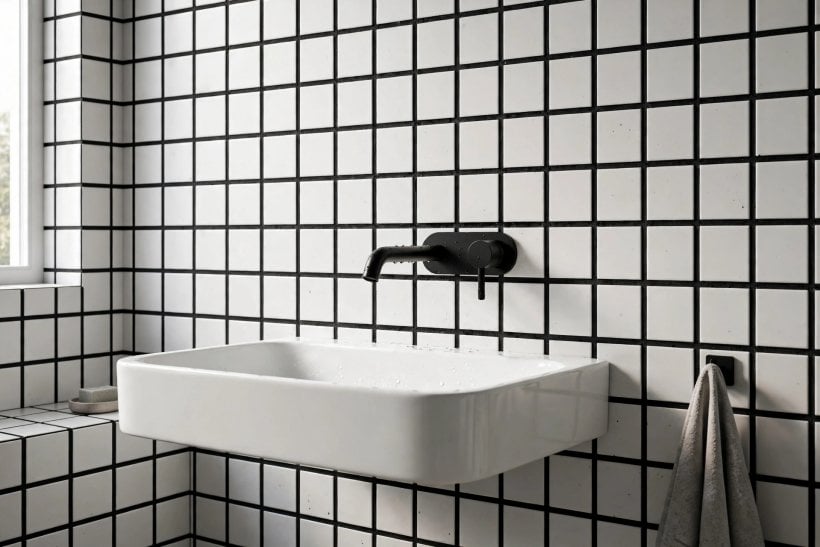
The same tile becomes four bathrooms under four layouts, so pattern gets its own hearing — cuts, lines and the geometry of joints. The rooms these patterns must serve, from family baths to ensuites, are surveyed in the tiny house bathroom designs post; here the trowel stays on the wall.
34. Run Metro Tiles in Brick Bond for the Timeless Wall
The offset brick pattern is ceramic’s most forgiving classic: it hides minor unevenness, suits every era of fitting, and reads as craft rather than fashion.
35. Stack Tiles in a Clean Grid Where the Room Is Modern
Aligned joints, straight up and across, give the contemporary calm — and expose every wobble mercilessly. Stack bond demands flat walls and a careful hand; its simplicity is earned, never free.
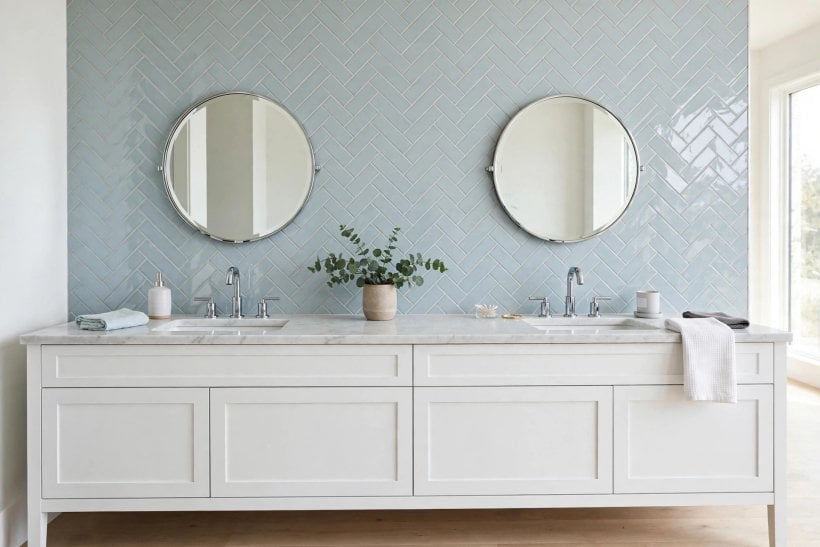
36. Spend Herringbone on One Wall, Not Four
Herringbone’s zigzag is pattern at full volume: glorious behind a bath or basin, exhausting around a whole room. One wall of it, with plains elsewhere, is the arrangement that still looks rich in ten years.
37. Use Vertical Stacking to Lift a Low Ceiling
Rectangles run upright pull the eye up and lend height to low bathrooms. The trick costs nothing but a decision, and pairs especially well with a tall mirror continuing the same upward sentence.
38. Let Diagonal or Large Grids Calm a Small Floor
On floors, a simple large grid — or a gentle diagonal where the room is awkward — keeps the ground plane quiet. Small floors under busy patterns feel busier; calm underfoot lets small rooms breathe.
39. Centre Every Pattern on the Wall’s True Focus
Patterns should be centred on the bath, the basin or the window — the thing the eye lands on — never merely started from a corner.
40. Plan Cuts So Slivers Never Happen
Thin sliver cuts at edges and corners are the mark of an unplanned wall.
41. Align Grout Lines Across Corners Wherever the Eye Travels
Lines that continue around a corner read as one wrapped surface; lines that jump read as two separate accidents. Wrapping the pattern is slower and worth it precisely where the room is smallest and closest seen.
42. Break a Long Wall With a Vertical Feature Strip
A column of the accent format or a change of direction gives long tiled walls their full stop and the tiler a clean place to change pace.
43. Keep Pattern Off the Wettest Corners if Cleaning Is the Priority
Every joint is a line to keep bright, and busy patterns multiply joints. In the shower’s hardest-working corners, plainer fields with bigger tiles are the kindness the future cleaner will thank the present designer for.
44. Dry-Lay the First Metre Before Committing
A section laid loose on the floor or propped on the wall reveals the pattern’s real rhythm, its cut sizes and its arguments with the fittings. Patterns are arguments settled best before they are set in adhesive.
6. The Shower and the Bath Surround: Ceramic in the Wet Zone
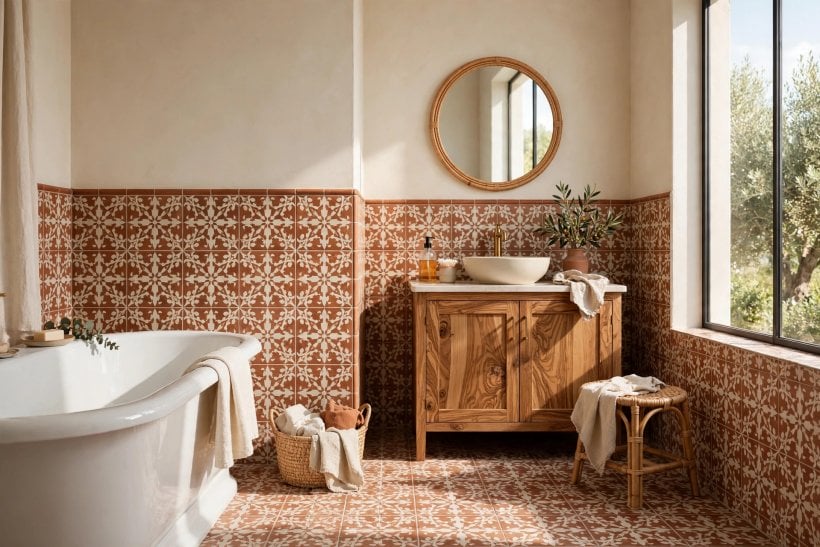
The wet zone is where ceramic schemes are proved, and where their preparation matters more than their pattern. The waterproofing beneath — membranes, falls and the wet-room logic — is owned by the waterproof tiny house bathroom wet bath post; this section keeps to the tile layer and the details swimmers and soakers actually meet.
45. Tile the Shower to the Ceiling Where Height Allows
Stopping tile short leaves a painted band exactly where steam gathers thickest. Full height reads cleaner, protects completely, and makes the enclosure feel built rather than decorated — the ceiling line becomes the design’s natural full stop.
46. Give the Shower One Calm Field and Let the Fittings Shine
In the enclosure, tile is the backdrop and brassware the performance. A plain field in a beautiful glaze, perfectly laid, flatters good fittings better than any pattern competing for the same small stage.
47. Build a Tiled Niche Where the Bottles Actually Live
A niche lined in the field tile — or its one allowed accent — keeps shampoo off the floor and the enclosure’s lines unbroken.
48. Use a Contrasting Tile Inside the Niche Only
The niche is the wet zone’s permitted jewel box: the single place a richer tile can live without overwhelming the room. It rewards the restraint shown everywhere else, which is exactly how accents are supposed to work.
49. Carry the Wall Tile Down Over the Bath’s Edge Cleanly
Where bath meets wall, the tile line and the sealant line do the room’s wettest work. A considered overlap, a neat trim and fresh flexible sealant there matter more than any feature wall across the room.
50. Choose a Bath Surround Height by Splash, Not Habit
Tile to the height the household’s showers and children actually throw water, with the shower-over-bath wall fully defended. Bathroom conventions under-tile the enthusiastic and over-tile the sedate; fit the defence to the family.
51. Keep the Shower Floor’s Tile Small, Matt and Honest
Under wet feet the rules sober up: small formats for the fall, finishes chosen for grip, and the maker’s guidance followed over the photograph’s promise.
52. Let a Half Screen of Glass Show the Tile, Not Hide It
Where a glass screen serves the bath or shower, the tile behind it becomes the room’s picture.
53. Seal Every Movement Joint in Flexible Sealant, Never Grout
Corners, bath edges and material changes move; grout cracks where movement lives, and flexible sealant belongs in those joints by design.
54. Slope Every Horizontal Tile Surface to Shed Water
Window sills, niche shelves and bath ledges in tile should fall gently toward the room, never hold a puddle against the wall. Standing water finds joints the way weather finds roofs — give it nowhere to sit.
55. Ventilate the Wet Zone Like the Tile Depends on It
It does: extraction that actually clears steam keeps grout bright, sealant sound and glaze free of the dull film of damp rooms.
7. Grout, Trim and Edges: The Lines Between the Tiles
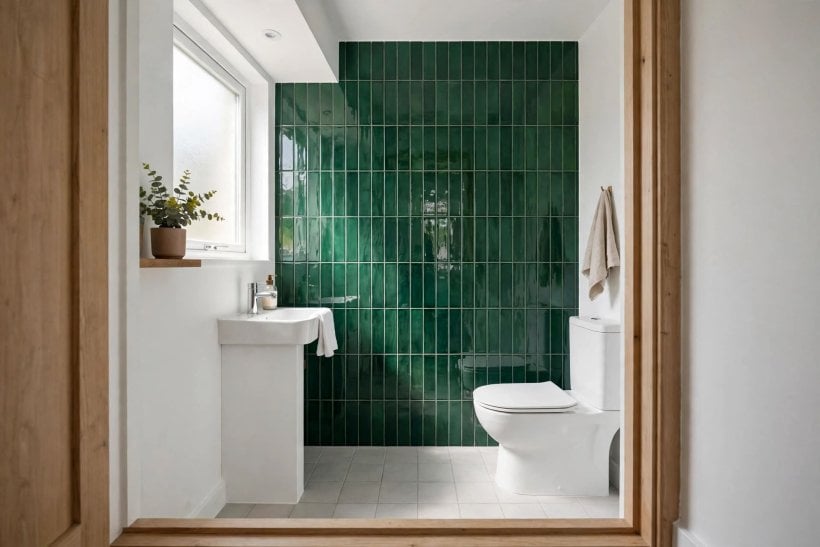
Visitors see tiles; owners live with grout. This section gives the joints, edges and trims their due — the unglamorous lines that decide whether a scheme reads as crafted or merely stuck on. The grand rooms where such detail scales up are the master bathroom ideas post’s territory; the rules below hold at every size.
56. Choose Grout Width for the Tile’s Honesty, Not Fashion
Rectified, precision-edged tiles can run tight joints; handmade-style tiles need wider joints to absorb their variation. Forcing a rustic tile into a hairline grid guarantees wavy lines — the joint must suit the tile’s true edges.
57. Pick Grout for the Room’s Soil, Not the Photograph
Pale grout in a family shower is a cleaning contract signed in optimism. Mid-tone grouts forgive the week and flatter most tiles; reserve the bright white joints for rooms whose use is genuinely gentle.
58. Consider the Newer Stain-Resistant Grouts Where Life Is Messy
Modern grout formulations resist staining and shrug off mould better than the old sand-and-cement. In hard-used bathrooms their modest premium returns itself in hours of scrubbing never done — ask the tiler what they trust.
59. Finish External Corners With Trim That Matches the Metal Story
Edge trims in the room’s fitting metal — or a glazed ceramic edge tile in period rooms — turn the tile’s raw edge into a designed line.
60. Use Pencil and Bullnose Pieces to Crown Tiled Walls
Traditional ceramic ranges offer shaped finishing pieces for a reason: they give half-tiled walls their tailored top line. Where the range lacks them, a painted timber bead in the woodwork colour does the same office politely.
61. Seal Grout in Splash Zones Where the Maker Advises It
Some grouts and some zones benefit from sealing; others are harmed by the wrong product. Follow the grout maker’s guidance rather than the internet’s folklore — the joint’s chemistry is not a matter of opinion.
62. Keep a Grout Pen and Spare Sealant in the House Kit
Small renewals — a brightened line, a resealed corner — done in the month they are needed keep a tiled bathroom looking installed rather than ageing. The kit costs little; the habit is the whole product.
63. Rake Out and Renew Failed Grout Before Water Finds the Wall
Cracked or missing grout is an open door behind a wall that looks merely tired. Renew it promptly and the tile field survives; ignore it and the repair graduates from the joint to the substrate.
64. Let Sealant Lines Be Few, Straight and Fresh
Sealant is the scheme’s handwriting: thin, even lines at the true movement joints, renewed when they tire. Blobs and double lines undo careful tiling at the exact places the eye inspects closest.
65. Judge the Finished Wall at Grazing Light
Stand by the door at evening and look along the wall: lipping, wavy joints and lazy cuts confess themselves in raking light.
8. Care, Repair and Living With Ceramic
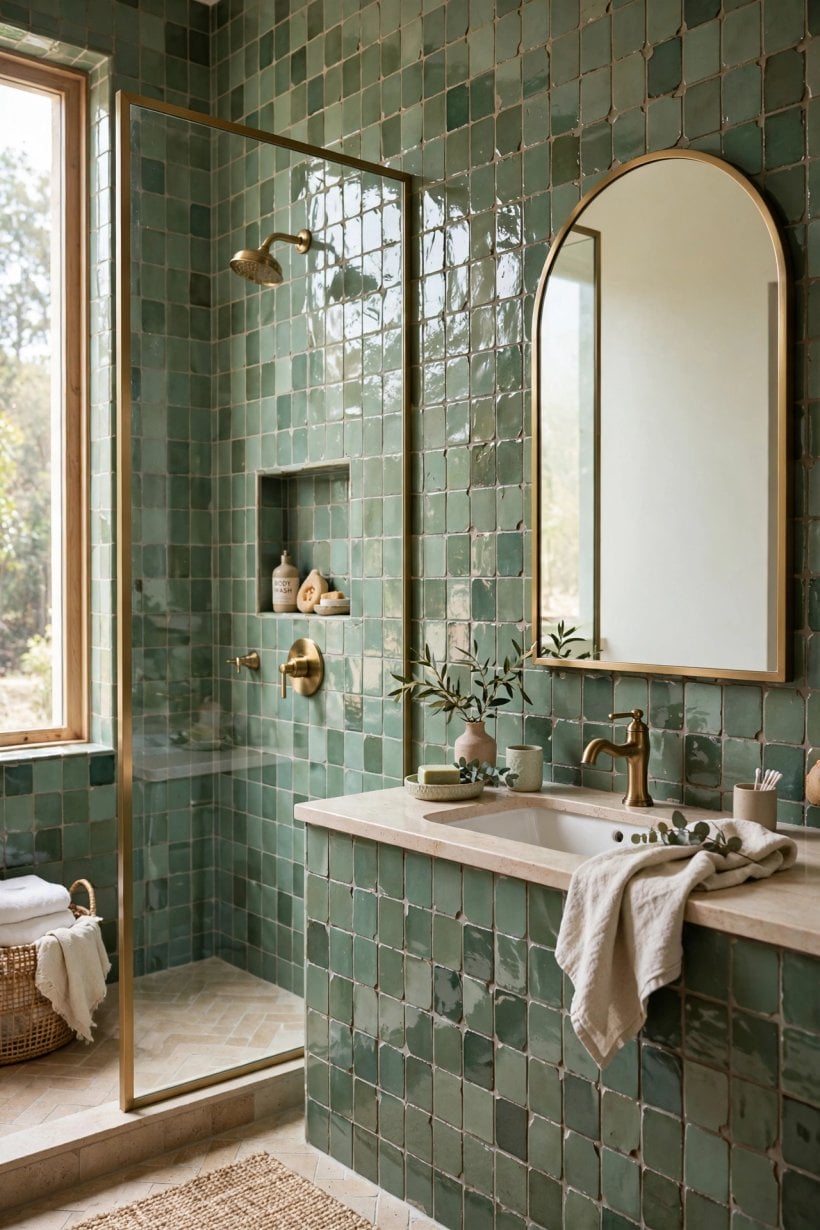
A ceramic bathroom is a long relationship, and this closing section is its housekeeping: gentle cleaning, prompt small repairs and honest ageing. The wider interior context — how bathrooms sit within a small home’s whole design — is rounded out by the bathroom interior design ideas for tiny houses post, linked here as the tile story rejoins the house.
66. Clean Glaze Gently and It Will Outlive the Fittings
Warm water, a soft cloth and mild cleaner are ceramic glaze’s whole appetite. Abrasives and harsh acids dull the glass skin slowly and permanently — the tile that is scrubbed hardest ages fastest, which is housekeeping’s neatest irony.
67. Squeegee the Shower Walls as a Thirty-Second Ritual
A blade down the glass and tile after showering keeps water marks and grout film from ever establishing. Households that adopt the ritual report the shower cleaning itself, which is only a slight exaggeration.
68. Replace a Cracked Tile From the Spares Box, Not the Whole Wall
One damaged tile, carefully cut out and replaced from the stored spares, disappears into the field. This is the day the one-batch order and the labelled spares box repay their small storage forever.
69. Refresh the Room Around the Tile, Never the Tile Itself
When the bathroom tires, change towels, paint the one plain wall, swap the mirror — the tile field is the room’s permanent architecture and should be the last thing questioned.
70. Keep Metal Polish Off the Grout Lines
The cloth that shines the taps can grey the joints it crosses. Work fittings and grout as separate parishes, each with its own cloth, and both keep their brightness longer for the small discipline.
71. Watch the Sealant at the Bath Like a Roof Valley
The bath’s seal takes the room’s movement and its water in one line, and tires first.
72. Let Honest Age Show as Patina, Not Neglect
A handmade-look glaze deepening, grout toned evenly by years: cared-for ceramic ages with dignity. The line between patina and neglect is simply whether the small renewals kept happening — the tile records the household’s habits faithfully.
73. Hand the Next Owner the Tile’s Paperwork
Maker, range, batch note and the spares, left with the house’s papers, is the final courtesy of a well-run tile scheme. Bathrooms outlive their installers’ memories; write the tile’s name down while it is known.
74. Budget the Bathroom’s Money in the Tile’s Order
Substrate and waterproofing first, tile second, fittings third, decoration last — the order this post has kept throughout. Reversed budgets produce beautiful taps above failing walls, which is the bathroom trade’s oldest sad story.
75. End With the Morning Test
Steam clearing, glaze bright, grout lines calm, everything wiping clean in minutes: if the ceramic bathroom passes its ordinary Tuesday morning with grace, the scheme was designed — not merely installed, but designed — correctly.
9. Checks and Mistakes: Before the First Pour or Purchase
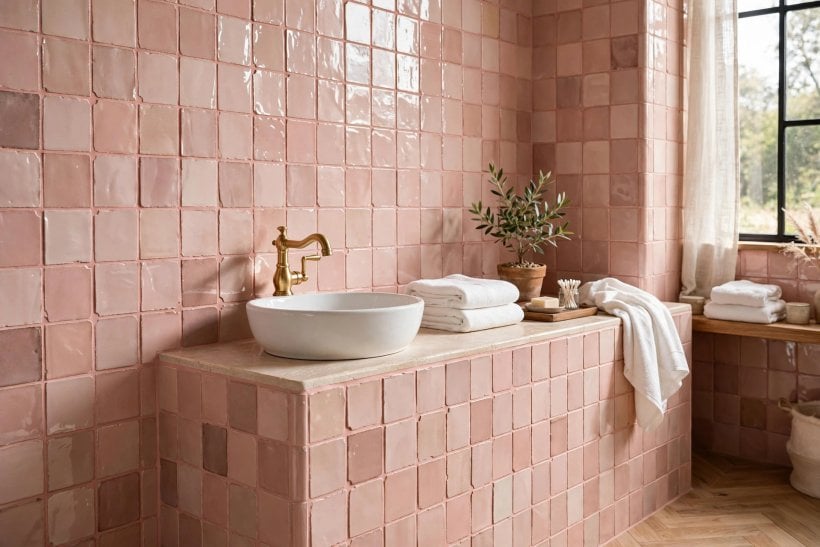
Check the walls before the tiles: sound, flat, dry and properly prepared, with wet areas tanked or membraned as the system requires and local rules demand. Ceramic faithfully telegraphs every fault beneath it — the preparation nobody sees is the scheme everybody lives with.
Check the tile against its duty with the maker’s own ratings: wall tiles on walls, floor tiles on floors, and finishes in wet areas chosen for the feet that will trust them. The showroom’s enthusiasm is not a specification; the maker’s guidance is.
The common mistakes are all shortcuts against this post’s order: patterns uncentred, batches split across firings, grout treated as an afterthought, and sealant asked to do grout’s job in field joints. Each is avoided by planning the tile map, buying whole, and finishing the lines as design.
10. Costs and Pulling It Together
Costs stay qualitative, as honest tiling must: the economical end is the classic end — metro and standard formats, expertly laid, with the money saved spent on preparation and grout. The expensive end is handmade and large-format work, where the tiles cost more and the flatness, cutting and time they demand cost more again; in tiling, labour and preparation are always the larger half of the truth.
Pull it together in the order this post kept: material, placement, colour, pattern, wet zone, lines, then care. Followed in that sequence, these seventy-five ideas become a bathroom whose walls wipe clean in minutes and still look deliberate in twenty years.
Final Considerations
Ceramic tile asks little and gives decades: a sound wall beneath it, its lines finished with care, and a cloth rather than a scourge in the cleaning. Choose it deliberately, lay it honestly, keep its spares — and the bathroom’s hardest-working surface becomes its most graceful one.



0 Comments