

Gray walls are the bedroom’s quiet argument for calm: a colour that recedes without vanishing, that flatters pale bedding and warm timber equally, and that changes its mood with the day’s light like a held breath.
These seventy-five ideas build the room outward from its walls — reading the gray itself, then the bed, the furniture, storage, the soft layers, light, and the accents that finish it — with the wider ground of the room surveyed in the bedroom ideas pillar, to which this colour-led room links back.
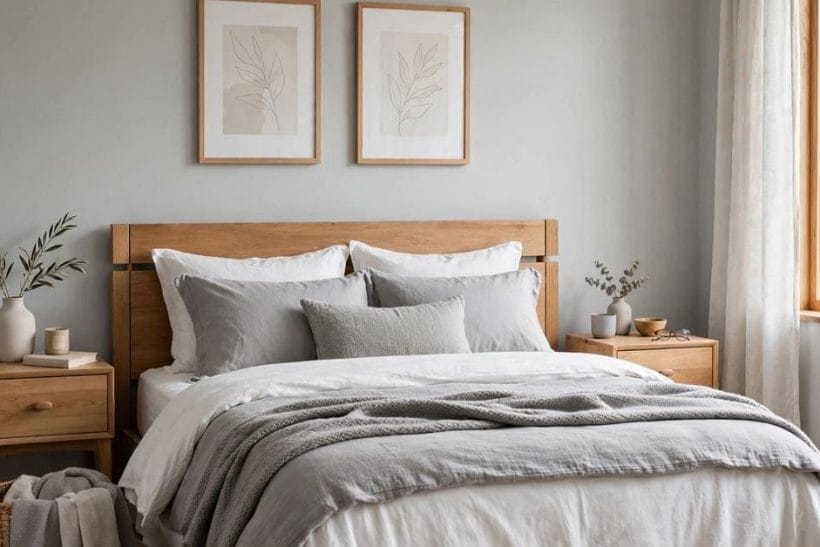
1. Bedroom Ideas with Gray Walls at a Glance
A bedroom with gray walls is a bedroom whose walls are painted gray — pale silver, mid greige or deep charcoal — with bedding, furniture, textiles and light chosen in relation to that ground.
| Question | Short answer |
|---|---|
| What shade of gray suits a bedroom? | Pale gray for small or north-facing rooms, mid gray as the tailored all-rounder, deep charcoal only where daylight is generous. The undertone matters more than the depth: warm grays forgive, cool grays demand. |
| What bedding goes with gray walls? | White for the classic crisp contrast, creams and stone for a warmer picture — always with texture doing the detail work, and one accent colour at the bed if colour is wanted at all. |
| What furniture finish warms a gray bedroom? | Timber. Pale oak keeps the scheme light and northern; warm mid-tones and walnut rescue a cool gray from chill; one dark piece gives the room its bass note. Two timber tones at most, chosen deliberately. |
| How do you stop a gray bedroom feeling cold? | Warm bulbs, natural textiles with real texture, timber in the room, and a plant — plus a ceiling in warm white so the walls stay the shade they were chosen as. |
| Should the gray be on one wall or all four? | Both work: one deep wall behind the bed anchors the room, while gray on all four walls wraps it into a restful envelope. All four in a pale tone is the calmer, more forgiving arrangement. |
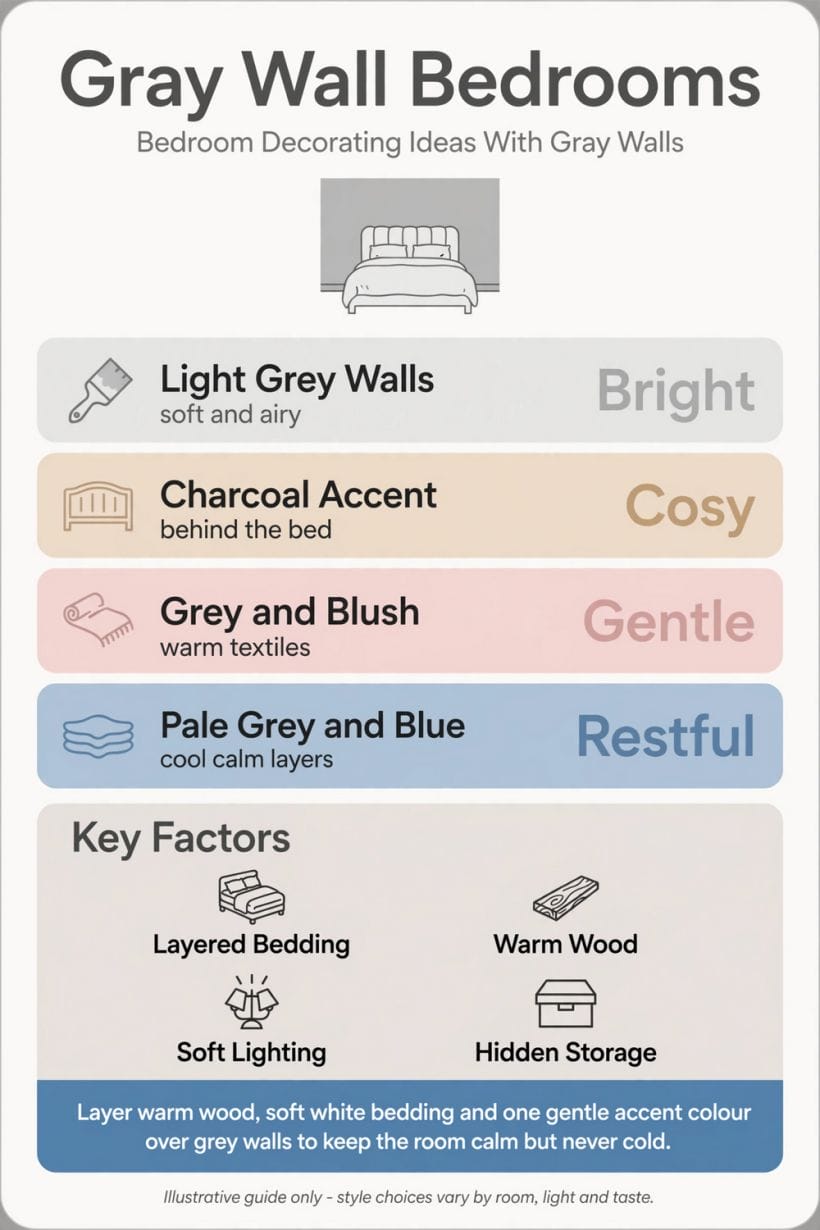
2. Reading the Gray: Undertone, Depth and Light
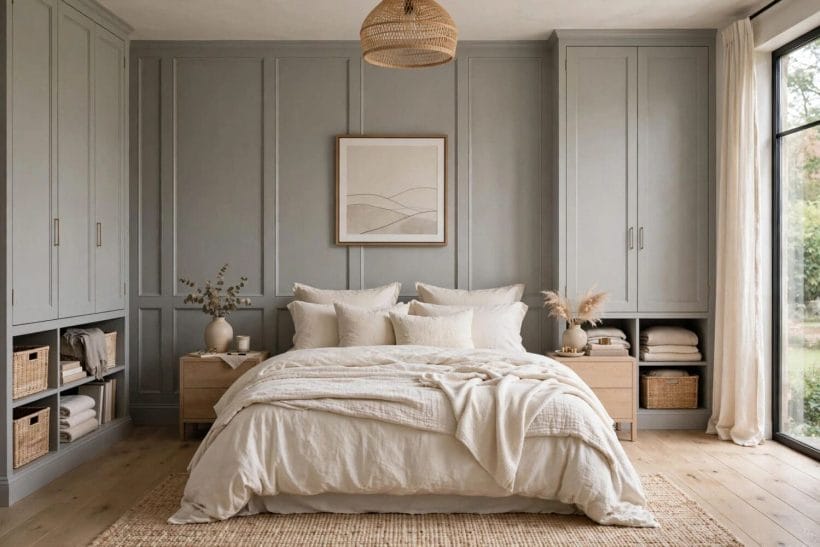
A gray wall is not a backdrop; it is the room’s largest colour decision, and everything in these seventy-five ideas answers to it. The whole-room version of the colour — gray carried through bedding, furniture and floor as well — is surveyed in gray bedroom ideas; this post keeps the gray on the walls and treats the rest of the room as its company.
1. Name the undertone before anything else is chosen
Grays lean warm toward beige and stone, or cool toward blue and slate. The lean decides which whites, timbers and metals will flatter the room, and misreading it is the source of nearly every gray bedroom that feels wrong without anyone knowing why.
2. Test the paint on the wall the bed faces, in daylight and lamplight
A gray wall changes character between morning and evening more than any other colour. Paint a generous patch where the sleeper will actually see it, and judge it at the hours the room is used — dawn and lamplight, not the shop’s noon.
3. Keep pale gray for small rooms and north light
Pale gray keeps a small or north-facing bedroom airy while still reading as a colour, not an apology. It pairs with white bedding and pale timber for the calmest version of the scheme.
4. Use mid gray as the tailored, forgiving middle
Mid-tone gray is deep enough to make white bedding glow and pale enough not to drink the light.
5. Reserve deep charcoal walls for rooms with generous windows
Near-black gray walls make a bedroom cocooning and dramatic, and they need daylight to stay handsome rather than gloomy.
6. Paint all four walls for a wrapped, restful envelope
Gray on every wall settles a bedroom: no single loud surface, the colour become atmosphere. It suits sleep precisely because it stops asking for attention at the door.
7. Use one deep wall behind the bed where the room needs an anchor
A single deep gray wall at the head of the bed, with paler walls around it, gives the room its focus and its depth in one gesture — the classic arrangement, and classic because it works.
8. Let the ceiling stay a warm white to keep the gray honest
A cool blue-white ceiling cools the walls beneath it and can turn a warm gray muddy. A warm white overhead keeps the colour true and the light kind where faces meet the mirror.
9. Match the gray’s depth to the room’s architecture, not its size alone
Period rooms with cornices and tall windows carry deep gray with ease; plain modern rooms often suit paler, cleaner tones.
10. Choose a matte or eggshell finish for a plaster-calm wall
Low-sheen finishes keep gray walls soft and forgiving of imperfect plaster — the bedroom register. Gloss on gray is a statement for other rooms; here it hardens everything it touches.
11. Decide the trim colour with the wall, not after it
Skirting, architraves and doors in the same plan — crisp warm white for contrast, or the wall’s own gray carried down for calm — should be settled with the paint order, not discovered at the end.
3. Beds and Bedding: The Pale Field Against the Gray
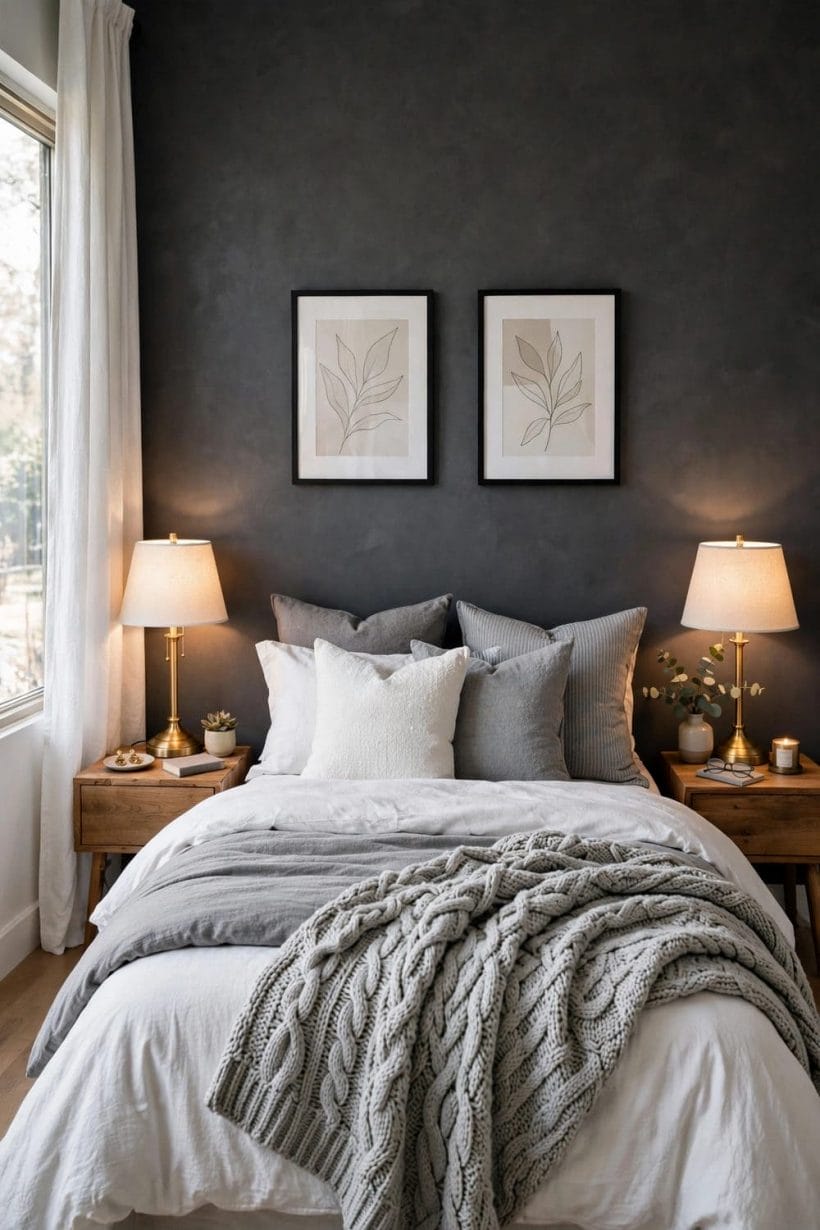
The bed is the gray-walled bedroom’s largest piece of furniture and its main light source in effect: pale bedding against gray walls is the scheme’s central picture. The colour-pair rooms take this contrast further — the violet version is composed in purple bedroom ideas — but here the bed stays the calm centre and the walls do the colour work.
12. Dress the bed in white for the classic contrast
White bedding against gray walls is the pairing that made the scheme popular: crisp, calm, and kind in every light.
13. Layer creams and stone tones for a softer, warmer bed
Where pure white feels stark against a cool gray, cream and stone bedding warms the picture without leaving the tonal family.
14. Use linen’s texture to keep pale bedding interesting
Plain colours at this scale live or die by texture. Linen’s slub, cotton’s weave and wool’s loft give a monochrome bed its detail at arm’s length, where the sleeper actually experiences it.
15. Choose a headboard that mediates between bed and wall
The headboard is the bed’s frame against the gray: upholstered in a mid tone it softens the junction, in timber it warms it, in the wall’s own gray it disappears into calm.
16. Let a dark headboard anchor a pale-gray room
Against pale walls, a deep headboard — charcoal, ink, dark timber — gives the bed the gravity the walls have declined to supply, and ties the room to its deepest accent.
17. Add one accent colour at the bed, and let it be the room’s only shout
A single colour on cushions or a throw — rust, ochre, deep teal, blush — against gray walls and pale bedding composes the whole room in one move.
18. Keep the bed skirt or base quiet and the frame low
A low, plain base keeps the bed’s silhouette calm against a coloured wall and lets the bedding do the dressing.
19. Fold a throw across the foot as the bed’s horizon line
A throw folded at the foot draws the bed’s one horizontal accent and gives hands something to adjust in the daily making.
20. Store spare bedding in the room, invisibly
A blanket box or drawers beneath the bed keep the second set, the winter layer and the guest pillows out of sight.
21. Make the bed the room’s test piece before buying anything else
Dress the bed fully — sheets, throw, cushions — against the painted wall before ordering furniture or curtains. The bed-and-wall picture is the room in miniature; if it composes, the rest will follow.
22. Keep bedside symmetry loose: matched lamps, unmatched objects
Perfect symmetry can make a gray room feel staged. Lamps that match and objects that do not — a book stack one side, a plant the other — keep the composition designed but lived in.
4. Furniture Finishes: Warmth and Contrast in Timber and Paint
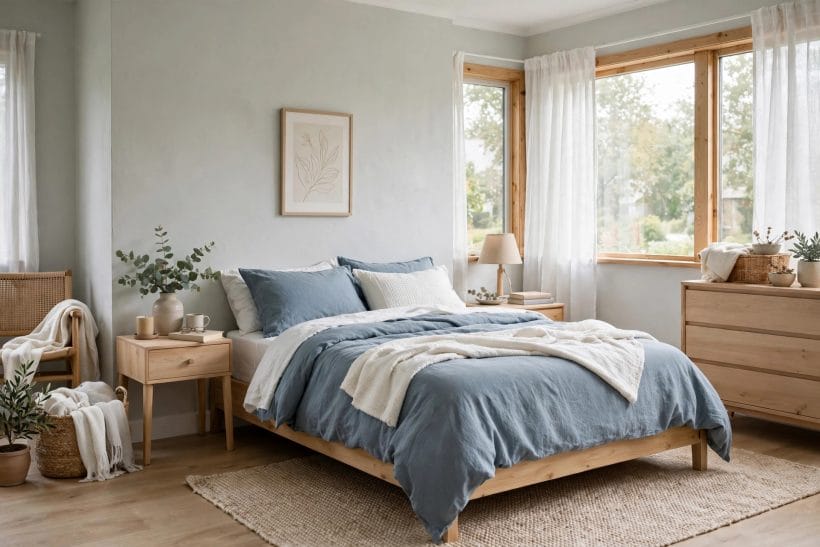
Furniture is where a gray-walled bedroom gains or loses its temperature. Pale timber and white paint lighten the scheme; dark timber and black give it bones. The contemporary end of the same conversation — clean lines, integrated storage — is carried in modern bedroom ideas; here the furniture is judged by its finish against the walls.
23. Bring pale oak or ash to keep the scheme northern and light
Pale timber against gray is the scheme’s Scandinavian register: calm, matte, daylight-friendly. It suits pale and mid grays best and asks for white textiles and very little else.
24. Use warm mid-tone timber to rescue a cool gray from chill
Honey and walnut tones against a blue-leaning gray perform the room’s central act of warmth. If the walls ever feel cold, the cure is more likely a timber wardrobe than a different paint.
25. Let one dark piece — a chest, a wardrobe — give the room its bass note
A single dark timber or near-black piece grounds a pale gray room the way the deep headboard grounds the bed. One is composition; a suite of dark furniture turns the room solemn.
26. Paint some furniture white to lighten a deep-gray room
Against charcoal walls, white-painted bedside tables and a pale chest keep the room breathing. The contrast is graphic and fresh, provided the whites are warm enough for the gray’s undertone.
27. Carry the wall gray onto one painted piece for a tonal room
A chest or wardrobe painted in the wall’s own gray disappears into the architecture — the tonal trick that makes small rooms feel larger and calm rooms calmer.
28. Choose black metal accents for a graphic, tailored edge
A black-framed mirror, metal lamp bases, a rail or bench in black — small doses sharpen gray walls into tailoring.
29. Mix two timber tones at most, and make them deliberate
Pale oak furniture with a walnut box; ash with one dark chair — two timbers can converse. Three start an argument, and in a quiet gray room every argument is audible.
30. Keep handles, knobs and hinges in one metal across the room
The small metalwork is the furniture’s jewellery and the room’s quiet discipline: one finish — brushed nickel, black, warm brass — on every handle, hinge and lamp, so the eye never trips.
31. Prefer a low, long chest to a tall, narrow one against the wall
Gray walls reward horizontals: a long low chest echoes the bed’s line and keeps the wall’s upper half serene. Tall narrow pieces compete with the wall’s height and crowd its calm.
32. Leave one wall section empty of furniture entirely
A stretch of bare gray wall is not unfinished; it is the room’s rest. Against it, every chosen piece composes better, and the sleeper’s eye gets the quiet the colour was bought for.
33. Buy the wardrobe for the wall it will cover, not the corner it fits
The wardrobe hides the largest patch of gray; its finish therefore does the wall’s work. Choose it as a surface — pale to lighten, tonal to vanish, dark to anchor — before choosing it as a cupboard.
5. Wardrobes, Storage and the Dressing Corner
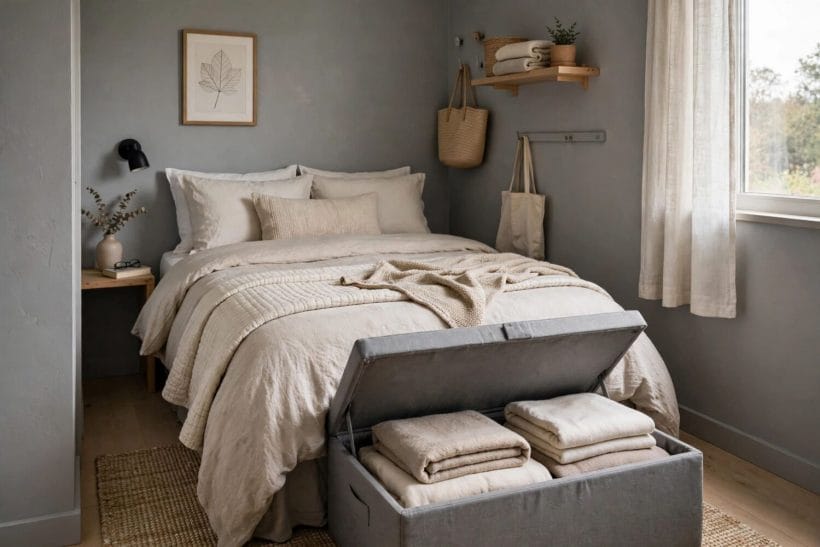
Bedroom storage decides whether gray calm survives contact with real clothes. The aim is a room whose surfaces stay clear at nightfall: everything the day used returned to a home behind a door or in a drawer, the walls left to be walls.
34. Favour drawers over shelves for the clothes actually worn
Drawers swallow folded clothes without displaying them, which is most of what bedroom storage is for. A chest of deep drawers keeps the daily rotation invisible and the room’s lines unbroken.
35. Fit the wardrobe interior before judging its size
Hanging space, drawers, a shelf for the awkward things — a wardrobe fitted to the household’s actual clothes holds more than a larger empty box.
36. Use the bed’s footprint for the season not in use
Under-bed drawers or boxes are the right home for the off-season layer, the spare duvet and the guest pillows: near, dry and entirely out of the eye’s way.
37. Give the room a dressing corner only if it earns its floor
A chair, a hook rail and a small table near the wardrobe can serve dressing better than a dedicated table in a small room.
38. Keep a valet or chair for the day’s clothes, and nothing else there
Every bedroom needs an honest answer to the worn-once clothes. One chair or valet, used for that alone, stops the category spreading across the bed, the chest and the floor.
39. Put hooks inside the wardrobe doors for belts, scarves and tomorrow’s outfit
The inside faces of doors are free storage the tidy mind overlooks. Hooks there keep the small hanging things ordered without a single visible rail in the room.
40. Decant the dressing table to the daily few in plain containers
Bottles and jars multiply on open surfaces and shout against a quiet wall. A tray or a drawer for the daily few, the rest behind a door — the dressing area becomes a composition again.
41. Choose a laundry basket that suits the room’s register
Laundry is a permanent furnishing; it should look like one. A lidded basket in a natural weave or the room’s timber replaces the plastic witness to the week’s washing.
42. Keep shoe storage closed and near the door
Shoes belong by the room’s exit, in a closed cabinet or the wardrobe’s base — visible shoe rows are a corridor’s furnishing, and they cheapen a calm wall faster than almost anything.
43. Reserve one drawer for the room’s own upkeep
A drawer for the spare bulbs, the linen spray, the button box and the duster keeps the bedroom self-sufficient, and stops its calm depending on trips downstairs.
44. Plan storage for the room’s next decade, not its first season
Children grow, wardrobes of clothes change, hobbies arrive. Storage planned with a margin — one empty drawer, one spare shelf — is what keeps a finished bedroom finished.
6. Curtains, Rugs and the Soft Layers

Soft furnishings are the gray wall’s climate control: they set the room’s warmth, its acoustics and its softness underfoot. Against the purest version of the pale scheme — the all-white room composed in white bedroom ideas — the gray-walled room’s softness comes from texture and tone rather than colour, and it should be layered as deliberately as the paint was chosen.
45. Hang curtains in a tone between the wall and the bedding
Curtains a step paler than the walls and a step deeper than the bedding sew the room’s palette together at its largest soft surface.
46. Choose white or cream curtains to lighten deep gray walls
Against charcoal, pale curtains are the room’s second light source in effect — they frame the window in brightness and keep the deep walls a choice rather than a condition.
47. Let a rug carry the room’s texture underfoot
A woven rug beside and beneath the bed gives bare feet their morning kindness and the room its softest geometry.
48. Size the rug to the bed, not the room
The rug should receive both feet at the bed’s sides and foot, and need not fill the floor.
49. Use a runner where the floor’s run is long and narrow
In a galley-shaped bedroom, a runner along the bed’s side draws the eye down the room’s length and warms its whole route to the door.
50. Add cushions in the accent colour’s family, varied in texture
The bed’s cushions are the accent colour’s home ground: two or three, in the family’s shades, mixed in linen, velvet and knit.
51. Choose a throw with real weight for the foot of the bed
A wool or heavy cotton throw is the bed’s warm layer and the room’s most-touched textile. Against gray walls it can carry the deepest tone in the scheme without darkening a wall.
52. Keep window dressing simple where the wall colour is the event
When the gray is deep or interesting, blinds and plain curtains respect it; swags and pelmets belong to other rooms. The window should frame the light, not compete with the wall.
53. Blackout-line the curtains where sleep is the room’s purpose
A beautiful bedroom that brightens at dawn fails its first duty. Linings are invisible in the composition and decisive in the sleeping — specify them and forget the subject.
54. Repeat the soft palette in the en-suite or dressing area if there is one
Towels and a mat in the room’s own tones, through the doorway, extend the scheme’s calm into the morning’s next room. The echo costs little and composes much.
55. Edit soft things seasonally: wool for winter, linen for summer
The gray room’s wardrobe of textiles can change with the year — heavier throws and deeper cushions in winter, pale linen in summer — while the walls, the constant, hold every version kindly.
7. Lighting and Mirrors: Flattering a Truthful Colour
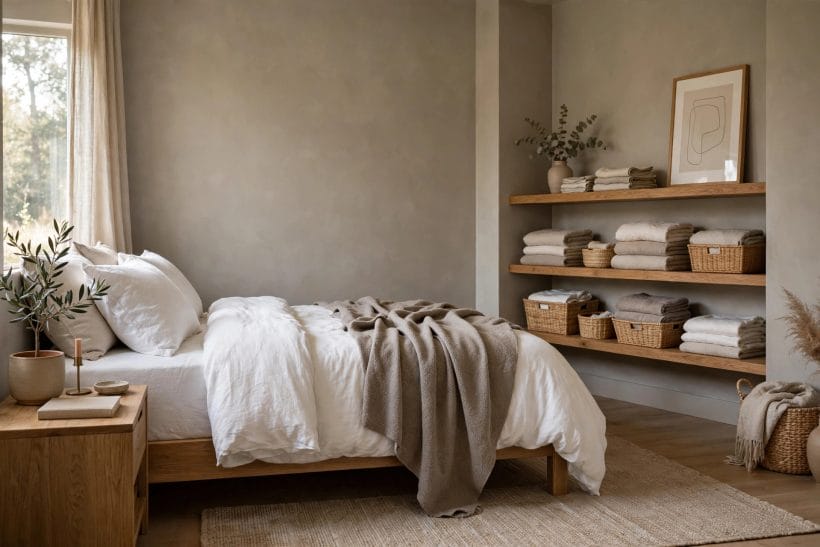
Gray is the most honest of wall colours: it shows the light it is given, exactly. Lighting a gray bedroom is therefore lighting the colour itself — warm lamps make it glow, cold bulbs make it accuse — and the mirrors must be placed where they multiply light rather than gloom.
56. Choose warm bulbs everywhere; gray forgives no cold light
Cool-toned bulbs turn warm grays greenish and cool grays blue. Warm light — the colour of lamplight and late sun — keeps the walls the shade the tin promised and faces the colour they own.
57. Light the room in layers: ceiling for cleaning, lamps for living
An overhead light is for finding things; the room’s real light is its lamps — bedside, dressing, one low glow.
58. Match the bedside lamps and let them be generous
Bedside lamps are the bedroom’s working lights: tall enough to read by, shaded enough not to glare, matched as a pair for the bed’s composition.
59. Hang a mirror where it reflects the window, not the bed
A mirror opposite the light doubles the room’s day; opposite the bed it doubles the sleeper’s restlessness.
60. Use a round mirror to soften the room’s straight lines
Bedrooms are rectangles upon rectangles; one circle — a mirror, a round shade — rests the eye.
61. Keep mirror frames in the room’s one metal or its timber
The frame should agree with the handles and lamps — the same single metal, or the furniture’s timber — so the mirror joins the scheme instead of starting a new one at eye height.
62. Add a low night light route to the door and bathroom
A small, warm, low-level light for the night route — a shaded lamp left low, a lit landing glimpsed through the door — serves the household’s real nights without waking the room’s full brightness.
63. Dim the main lamps if the wiring allows, for the evening descent
Light that can descend gradually with the evening is the gray room’s luxury feature: the walls deepen kindly as the light falls, and the room itself becomes the signal to sleep.
64. Place the dressing light at face height, from the front
Light for faces belongs in front of them and at their level — beside the mirror, never above it alone. Against truthful gray, unflattering light is a daily tax nobody should pay.
65. Keep one candle or small lamp ritual for the room’s last hour
A final low light — a candle in a safe holder, a small lamp on the chest — marks the room’s slowest hour.
8. Accent Colours and the Finishing Touches
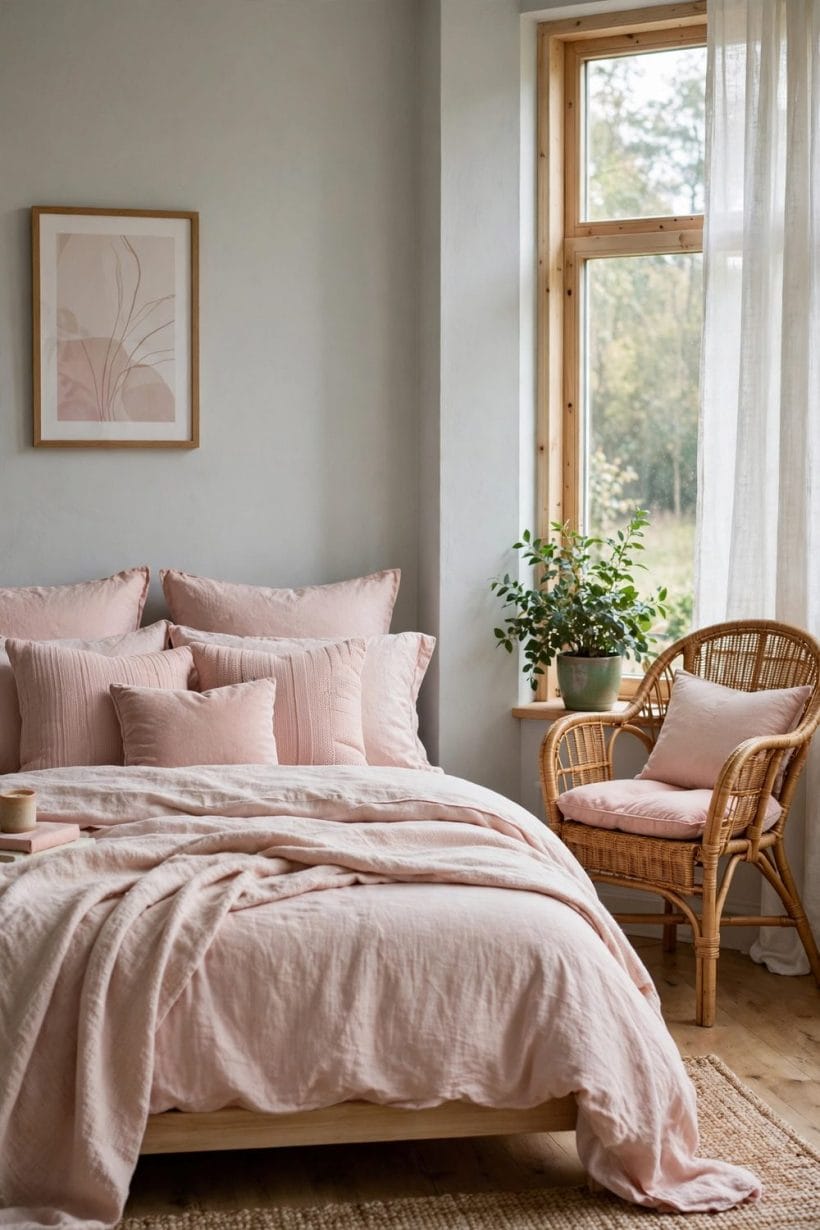
The finishing layer is where the gray-walled bedroom declares its personality: one accent colour, art that means something, plants, books — and the dark pole of the same family, the near-black room composed in black bedroom styling, stands as the reminder that gray’s own deepest shade is an accent strategy too. Finish in one direction at a time, and finish completely.
66. Pick one accent and let it recur in three places at most
The accent — a colour, a metal’s warmth, a timber’s tone — should appear at the bed, at one other furnishing, and nowhere else. Three sightings compose a room; ten make a theme.
67. Use blush and dusty pink to soften cool grays
Pink is gray’s classic softener: against blue-leaning walls, blush cushions and a rose-toned throw warm the scheme into welcome without surrendering its calm.
68. Try ochre, rust and terracotta against warm grays
Earthy accents double a warm gray’s warmth and give the room its autumn register — cushions, a pot, a picture’s frame. They suit timber furniture and northern light alike.
69. Let deep teal or ink blue deepen a mid-gray room
Blue-greens are gray’s sophisticated company: a teal throw or ink cushions deepen the palette while staying inside its cool family — the scheme for rooms that dress rather than merely rest.
70. Keep one green plant as the room’s living colour
A plant on the chest or by the window supplies the colour no paint can: living green, changing slowly.
71. Hang art that the sleeper chose, in quiet frames
Pictures in a bedroom are for the person who wakes to them. One or two pieces, simply framed in the room’s metal or timber, hung where the bed sees them — the gallery of one viewer.
72. Stack books by the bed as the room’s honest ornament
The reading pile is the bedroom’s truest decoration: current, personal, changing. A small stack with a considered top book composes better than any bought ornament.
73. Add a carafe and glass on the bedside as the oldest finishing touch
Water by the bed is hospitality to oneself — a plain carafe and glass on a tray, kept filled.
74. Scent the room lightly and consistently
One scent, lightly held — linen spray, a candle, a drawer sachet — becomes the room’s invisible signature. Against gray’s visual quiet, scent carries further; keep it gentle.
75. Finish the bed’s making as the room’s daily picture
The gray-walled bedroom is finished every morning, at the bed: sheets straight, throw folded, cushions standing. The colour rewards the ritual with a room that looks composed by breakfast.
9. Checks and Mistakes: Before the First Purchase or the First Fitting
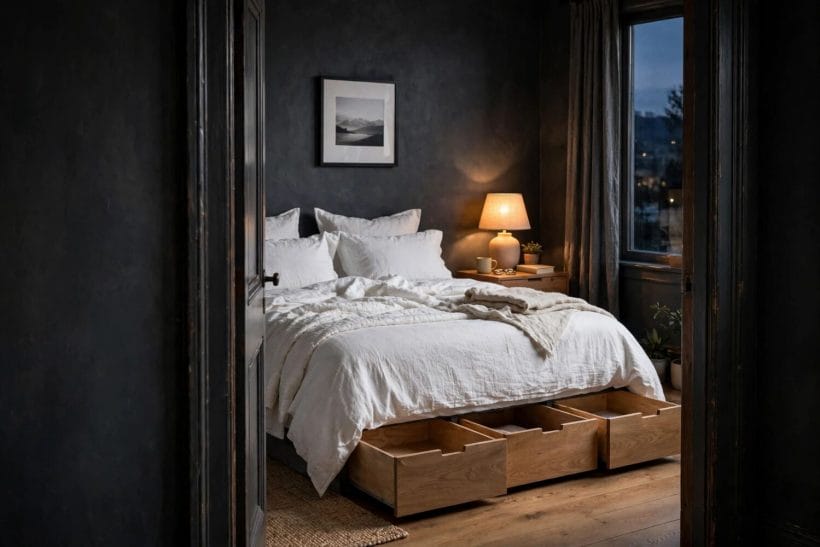
The gray bedroom’s classic mistakes are undertone mistakes: a cool gray painted under warm bulbs until it turned greenish, a white ceiling too blue for the walls, an accent chosen from a screen instead of the room.
Plain duties in their plain sentences: test any deep shade at the room’s darkest hour before committing all four walls, keep the test patch generous, and remember that paint is the cheapest layer in the room to change — which argues for choosing the undertone carefully rather than the shade timidly.
Finally, dress the bed completely against the finished wall before another purchase is made. Bed and wall together are the room in miniature; when that picture composes, everything else is furnishing.
10. Costs and Pulling It Together
Costs follow the bedroom’s usual order: the paint is the cheapest decision in the room and the one everything else answers to, bedding and curtains are the middle spend, and the bed and wardrobe — used daily for a decade — are where quality earns its keep.
Pull the room together by repeating the undertone, not the colour: the curtains a step paler, the throw a step deeper, the timber chosen to warm or cool in the same direction.
Final Considerations
A bedroom with gray walls succeeds when the colour feels less like a decision than like the room’s natural weather — quiet, kind, and right at every hour.
Start with the paint patch on the wall the bed faces, judged at dawn and by lamplight, and the rest of the room tends to fall into place behind it.



0 Comments