

Reading hardwood flooring reviews is easy; knowing which ones to trust is the real skill. This guide shows you how to judge a hardwood-look floor on its construction, wear layer and finish, and how to read other people’s experiences without being misled by them.
Everything here is qualitative on purpose, because honest judging starts with how a floor is made, not with headline numbers.
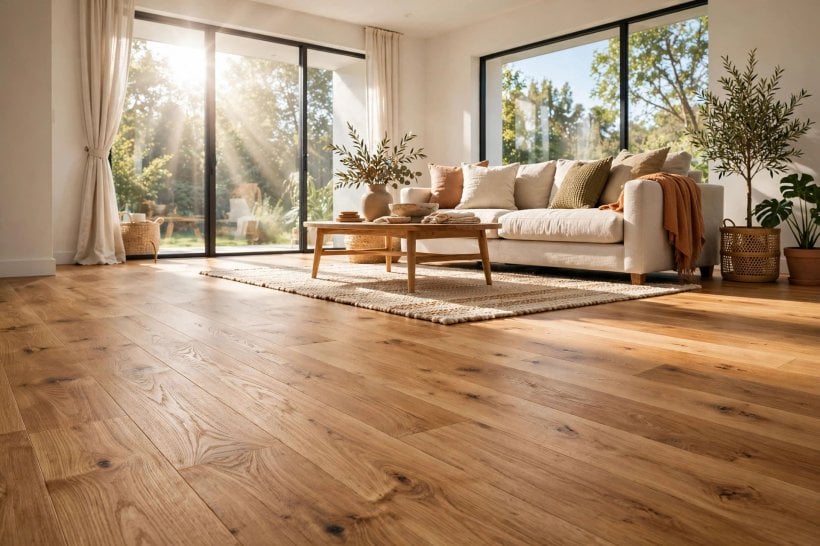
1. Judging Flooring Quality at a Glance
A good floor earns its reputation slowly. In the first months almost any well-made board looks handsome; the differences appear after seasons of grit at the door, chair legs, sunlight and mopping. That is why a careful buyer judges construction before colour, and treats reviews as evidence about time, not just about first impressions. Ask what the board is made of, how thick its working surface is, how it is finished, and how it will be installed and repaired. A floor that scores well on those four questions usually reviews well for honest reasons.
It also helps to read reviews in clusters rather than one by one. A single glowing or angry account tells you about one household; a repeated pattern across many households tells you about the floor. The table below turns the most common review questions into a quick reference you can use with any hardwood or engineered board you are considering, whatever name is printed on the box.
| Question | What to look for |
|---|---|
| Is the surface real wood? | On engineered boards the top layer is genuine timber, so the floor can look, feel and age like wood; printed or embossed look-alike surfaces behave differently and cannot be refinished. |
| How substantial is the wear layer? | A more generous wear layer generally means a longer working life and more scope to refresh the surface later; a very thin one leaves little margin for sanding or repair. |
| What do reviewers repeat? | Look for recurring themes about scratching, denting, fading, squeaks or gaps rather than isolated praise or complaints. |
| How were complaints handled? | Reviews that describe clear warranty terms and helpful responses suggest a maker who stands behind the product. |
| Does the price make sense? | Compare floors with similar construction, not similar photographs; value lives in the build, the finish and the support behind it. |
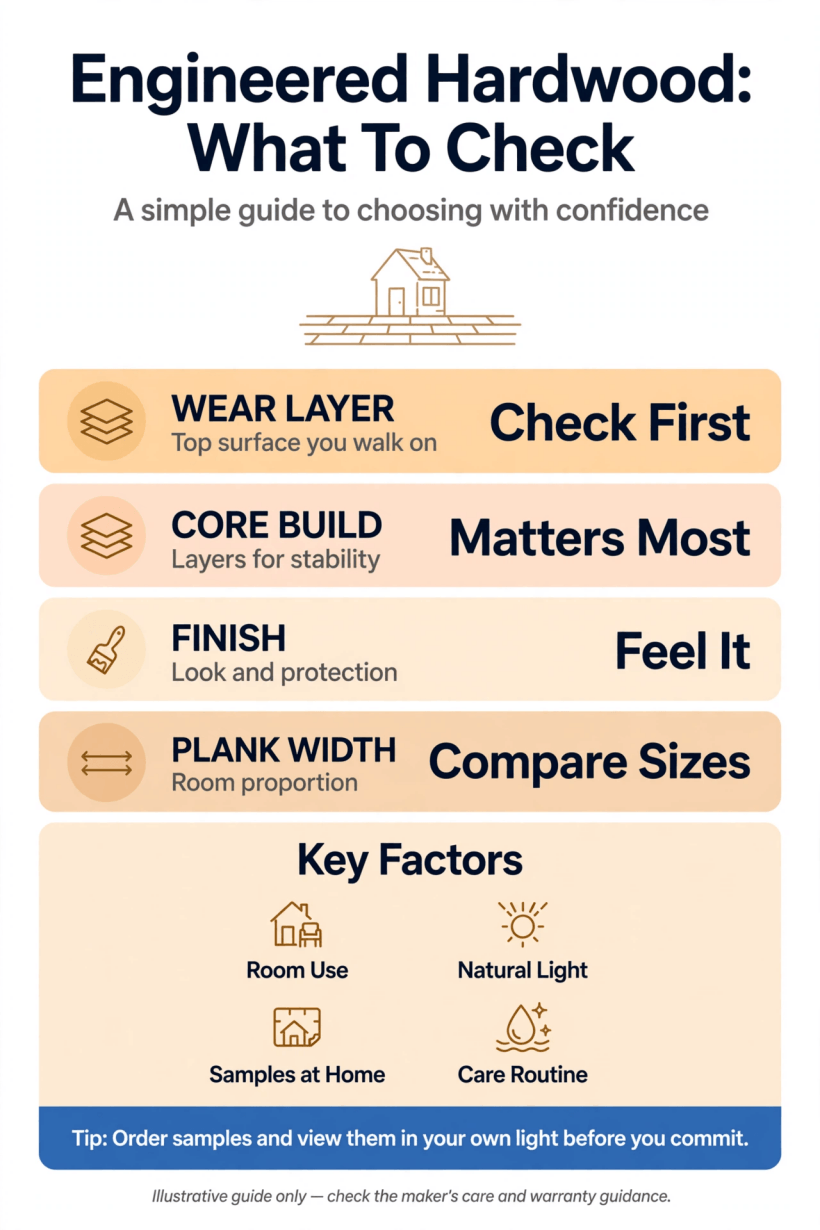
A visual checklist for judging hardwood and engineered flooring: construction, wear layer, finish, installation and the patterns hidden inside reviews.
The sections that follow work through each part of that checklist in turn, so that by the end you can pick up any sample board or review page and know exactly which questions to ask of it.
2. Start With How the Floor Is Made
Solid hardwood is milled from a single piece of timber. It feels substantial, can usually be refinished several times across a long life, and responds noticeably to seasonal moisture, expanding and contracting across its width. Engineered boards are built in layers: a real timber surface bonded to a stable core of plywood, softwood or fibreboard. That layered build resists movement better, which is why engineered boards are often chosen for kitchens, basements and rooms over underfloor heating where a solid board might complain.
Hardwood-look products go one step further and reproduce the appearance of timber on a non-timber surface. They can be practical and convincing at a glance, but they age differently: once the printed or textured surface is damaged, there is no wood beneath to sand back. When you read reviews, first identify which of these families the floor belongs to, because expectations should differ. A complaint that a look-alike surface cannot be refinished is really a complaint about choosing the wrong family for the job, and our guide to how to build your own tiny house makes the same point about materials generally: match the product to the conditions it will actually live in.
3. Wear Layers: The Working Surface That Decides Longevity
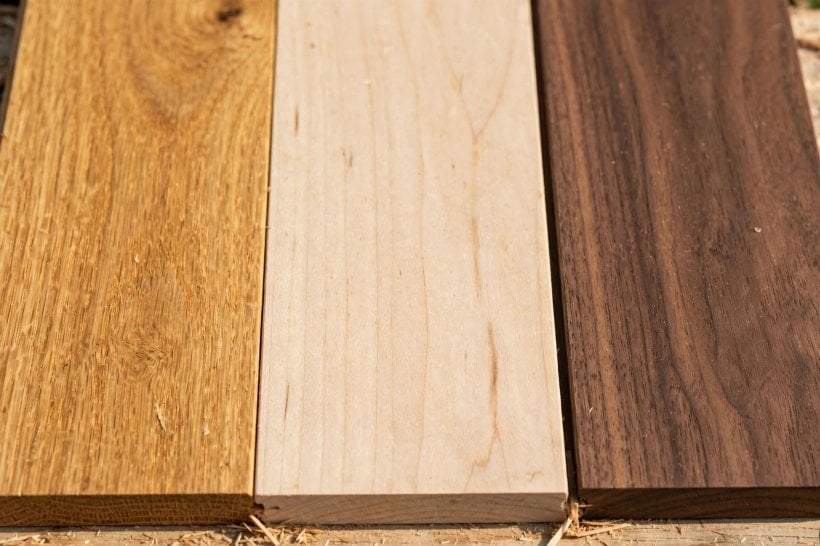
On an engineered board, the wear layer is the slice of real timber on top, and it is the part you actually live on. Everything you do to the floor happens to this layer: foot traffic polishes it, grit scratches it, sunlight tans it, and, if it is deep enough, a sander can one day refresh it. A generous wear layer is therefore the closest thing flooring has to a savings account; it stores future options. A very thin veneer may look identical in the showroom yet offer almost no margin for repair or refinishing.
Reviewers rarely use the term wear layer, but they describe its effects constantly. Comments about a floor still looking good after years in a busy hallway, or about a scratch being repaired invisibly, usually reflect a decent working surface. Comments about damage going straight through to a pale core, or about a floor that could not be sanded when it tired, point the other way. When a listing or review gives you the chance, compare the relative depth of the timber surface between boards rather than chasing headline claims, and prefer the board that keeps more of its future in reserve.
4. Core, Stability and How a Floor Behaves in a Real Room
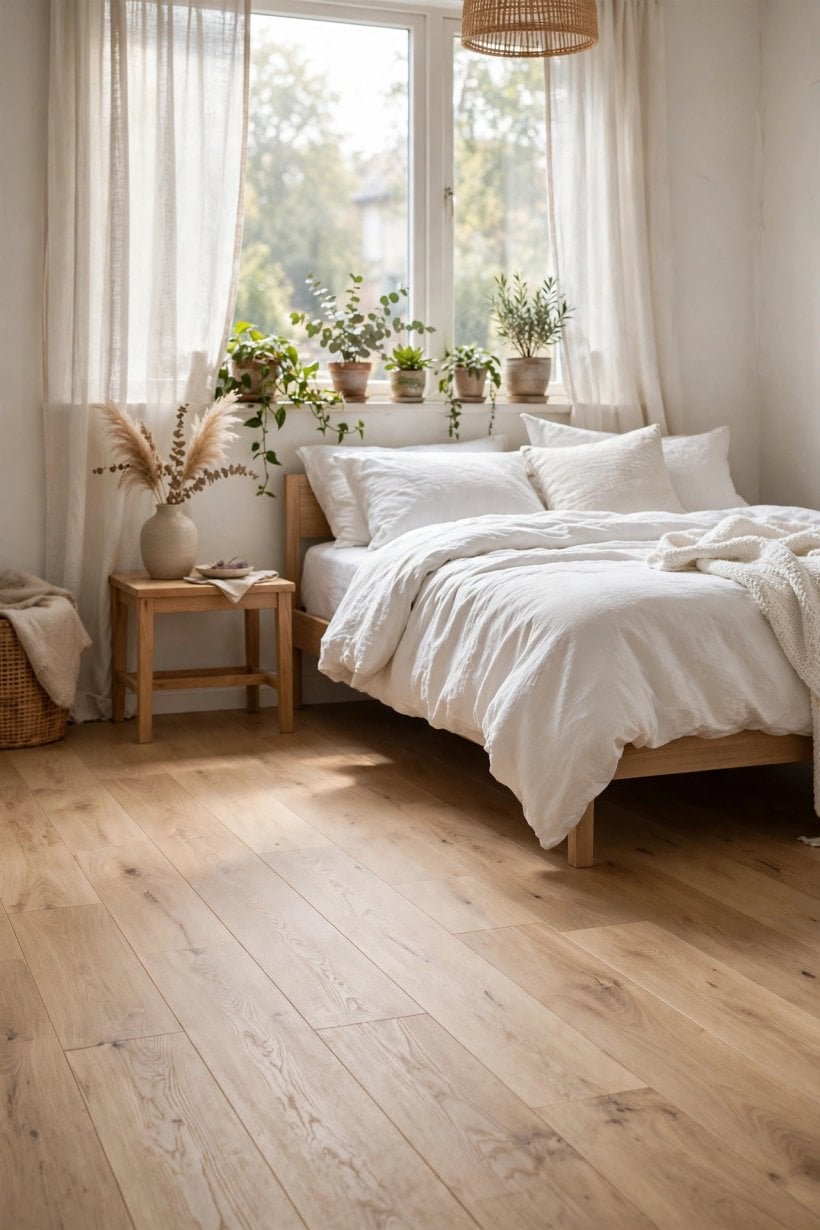
Under the wear layer sits the core, and the core decides how calmly a floor lives with moisture and temperature. A well-made multi-layer core, laid with its layers working against each other, keeps boards flatter and gaps tighter through the seasons. Cheaper cores can feel spongy underfoot, let edges lift, or allow joints to click and move. In reviews, stability problems appear as seasonal gaps, cupped boards, creaks that were not there at installation, or planks that rock slightly on an otherwise sound subfloor.
Room choice matters just as much. Solid timber in a steamy bathroom, or any wood floor laid over a damp slab without proper preparation, will gather unhappy reviews that say more about the installation than the product. Judge a floor’s stability claims against your own rooms: how humid they get, whether heating is under the floor, and how level and dry the base is. Readers planning compact spaces will find the same logic in our guide to designing your own tiny house plans, where material choices are matched room by room to the life each space will lead.
5. Finish, Texture and What Photographs Cannot Show You
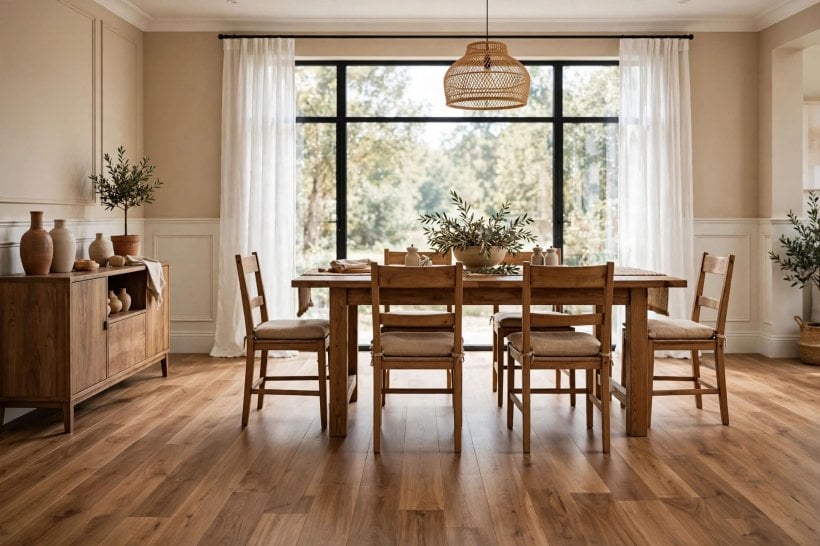
The finish is the floor’s skin. Site-applied oils and factory-cured coatings each have loyal followings: oils tend to give a low, natural sheen and allow local repairs, while tough factory finishes can shrug off daily wear but may need professional attention when they eventually fail. Texture matters too. A lightly brushed surface that follows the grain hides small marks gracefully and feels like timber under bare feet; a perfectly flat, glossy surface shows every scratch and crumb and can feel less forgiving in a busy home.
None of this photographs reliably, which is why review language about feel is worth mining. Phrases like looks plasticky, feels warm, shows every footprint or hides the dog’s scratches are data about finish and texture. Weigh them heavily, because they describe the floor you will actually live with rather than the floor in the showroom photograph. If reviewers repeatedly praise how a floor looks in natural light from different angles, that usually reflects an honest, varied grain and a finish with some depth to it, both signs of a board made with care rather than simply made to photograph well.
6. How To Read Reviews: Patterns Over Star Ratings
Star ratings compress too much. A floor can average well while hiding a consistent weakness that matters to you, or average modestly because of delivery complaints that say nothing about the boards. Read the words instead. Sort reviews by the details they share with your life: similar rooms, similar households, pets, children, climate, installation method. When several owners independently mention the same behaviour, such as edges chipping at the joints or the colour mellowing attractively, you are probably reading the truth about that floor.
This is where hardwood flooring reviews earn their keep, provided you stay sceptical in both directions. Be wary of reviews written in the first week, when every floor looks wonderful, and of clusters of vague praise with no specifics. Value the long, slightly grumpy review that describes year three honestly, lists what was tried, and says what the maker did about it. Note also what reviewers do not mention: if nobody complains about gaps, squeaks or fading across many accounts, that silence is itself reassuring evidence about stability and finish quality.
7. Samples, Full Boards and Whole-Room Checks
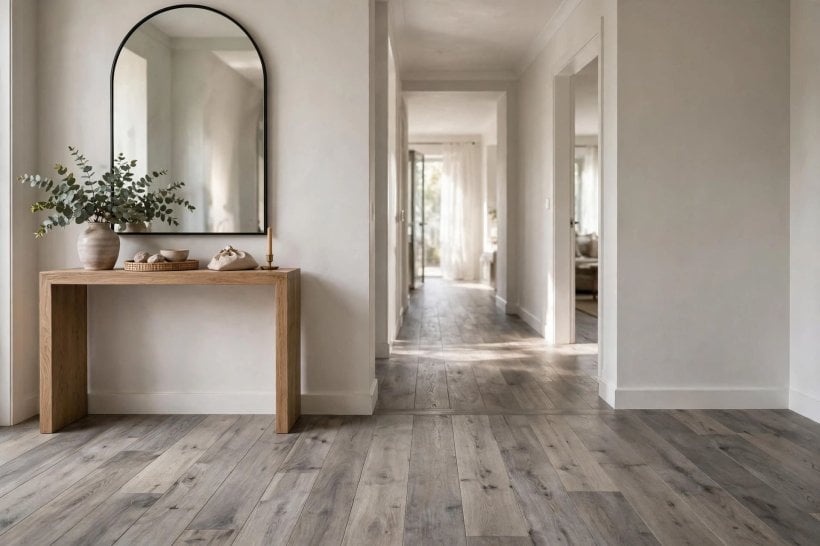
A small sample square is a promise, not a floor. Timber varies from board to board, and a single hand-picked sample shows the prettiest version of that variation. Before committing, see several full boards together, ideally in the room where they will live. Lay them out, live with them for a few days, and look at them in morning and evening light. Check how the colour sits with your walls and furniture, and how the grain pattern repeats across boards, because obvious repetition is a common disappointment with printed look-alike surfaces.
Do the humble tests too. Drag a chair leg, drop keys, walk grit across a sample in shoes, and mop it the way you really mop. These small cruelties predict years of ordinary life better than any brochure. Our round-up of modern interior design ideas for tiny houses shows how strongly a floor’s tone steers a whole scheme, especially in small rooms where the floor is a large share of what you see. A floor that survives your sample tests and suits your light has passed the checks that reviews can only describe second-hand.
8. Installation Method and Subfloor Compatibility
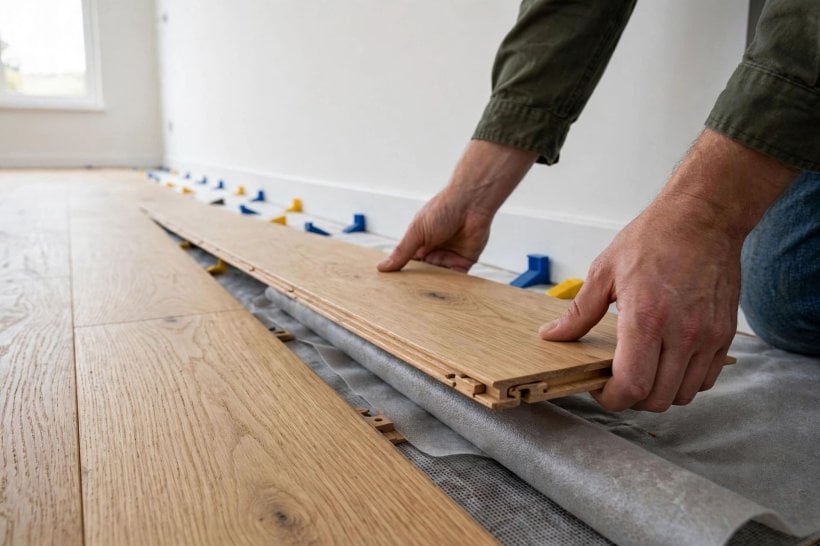
Many disappointed reviews are really installation stories. Boards can be glued down, nailed or stapled where the build allows, or floated as a connected surface over underlay with click-style joints. Each method suits different subfloors and rooms, and each punishes shortcuts differently: poor preparation telegraphs through as bounce, hollow sounds or joints opening. Acclimatising boards in the room before fitting, checking moisture in the subfloor, and leaving proper expansion space at the edges are unglamorous steps that decide whether a good floor reviews well or badly.
Before you buy, confirm that your chosen floor’s installation method matches your subfloor type, your heating, and your installer’s experience, and ask what underlay, adhesives or fixings the maker expects to be used. Kitchens deserve special care, since water and heavy appliances test every joint; our guide to tiny house kitchen design discusses why compact, hard-working rooms reward materials chosen for the conditions rather than the catalogue photo. If reviews for a floor split sharply between delighted and disappointed owners, installation differences are very often the hidden explanation.
9. Care, Repair and Refinishing Over Time
A floor’s second decade is decided by how it can be cared for. Ask how the finish should be cleaned, which products to avoid, and whether worn areas can be refreshed locally or only by treating the whole room. Timber surfaces with enough wear layer can typically be sanded and refinished when they tire, which can make an older floor look newly laid; thin surfaces and printed look-alikes cannot, so their end-of-life moment arrives sooner and is decided by their worst scratch rather than their average condition.
Reviews written by long-term owners are gold here. Look for accounts of refinishing, board replacement after leaks, and how repairs blended with the surrounding floor. Keep spare boards from your own installation, stored flat somewhere dry, and note the exact product and finish while you still have the paperwork; future you will be grateful. Sensible day-to-day care is undramatic: mats at doors, felt pads under furniture, prompt attention to spills, and a vacuum or soft brush for grit. Floors rarely fail from one dramatic event; they fade from a thousand small ones that good care quietly prevents.
10. Value: Comparing Like With Like
Value in flooring is the relationship between what a board is, how long it will serve, and what it asks of you along the way. A modestly presented engineered board with a sound core and a workable wear layer can be far better value than a glamorous surface with little beneath it, just as a fairly priced solid floor can outlast several cheaper replacements. Compare floors within the same family and construction class, and count the whole cost of ownership in your head: installation, underlay or adhesive, trims, spare boards, care products and eventual refinishing all belong in the honest total.
Let reviews inform value rather than set it. A floor that owners describe as uneventful year after year is usually the one that was worth its money, whatever it cost. If budget is tight, our notes on how to make a tiny house for cheap offer a transferable lesson: spend where the wear happens and save where it does not. In flooring terms that means prioritising construction and wear layer in halls and kitchens, and letting quieter rooms carry simpler boards without any loss of pleasure.
Final Considerations
Judge a hardwood-look floor the way a good reviewer experiences it: over time, in a real room, under real life. Start with construction, respect the wear layer, read the finish with your hands as much as your eyes, and mine reviews for repeated patterns rather than star counts. Check samples cruelly, match the installation method to your subfloor, and plan for care and eventual refinishing before you buy rather than after the first scratch.
Do that, and the name on the box matters far less than the board under your feet. A floor chosen on evidence will look right in your light, behave through the seasons, and gather the kind of calm, satisfied reviews that helped you choose it in the first place.


0 Comments