

The cheap tiny house is not the lesser tiny house — it is the original one: a simple rectangle on a used trailer, raised by its owner’s weekends, finished with salvaged wood and tracked to the last receipt. This guide follows the build the money way: the philosophy, the $20,000 breakdown, the salvage game, the tracked budget — and the mortgage-free life at the end of it.
How to Make a Tiny House for Cheap: At a Glance
Knowing how to make a tiny house for cheap is mostly knowing how to run a budget: assign every dollar before it is spent, donate the labor, hunt the materials, and keep the receipts honest. This guide follows that discipline in its real order: the philosophy, the worked $20,000 breakdown, the DIY strategy and the salvage game, the simple shell and the minimal systems, the commandments and the tools, the phases, the schedule and the tracking — and the payoff: a home owned outright, and the skills that stay forever.
| Topic | What It Covers | Key Fact or Figure |
|---|---|---|
| 1. The Philosophy | The goal, the method, the mindset | The cheap is the clever |
| 2. The $20,000 Breakdown | Every dollar assigned before it is spent | Trailer $4,000 · shell $6,000 · systems $5,000 · finish $5,000 |
| 3. The DIY Strategy | Learned skills, weekend time, friends fed | The DIY saves the labor |
| 4. The Salvage Game and Materials | Reclaimed wood, the ReStore, shopped and compared | The cheap materials are the hunted |
| 5. The Shell and Designing Simple | The rectangle, the shed roof, standard dimensions | The rectangle is the cheapest shape |
| 6. Systems and the Trailer Hunt | Simple electrical, minimal plumbing, the inspected trailer | Used: inspected · new: warranted |
| 7. Insulation, Roof, Openings and Finish | Fiberglass and air-sealing; the metal roof; paint and pine | The sealed beats the stuffed |
| 8. Commandments, Tools and Mistakes | The ten rules, the essential five, the errors | Never the unsafe |
| 9. Phasing, Schedule and Tracking | Weather-tight, livable, finished; the spreadsheet and the 10% contingency | Weekend builds: 6–12 months |
| 10. The Payoff and the Life After | The owned home, the loan question, the community, the legacy | The last receipt is the victory |
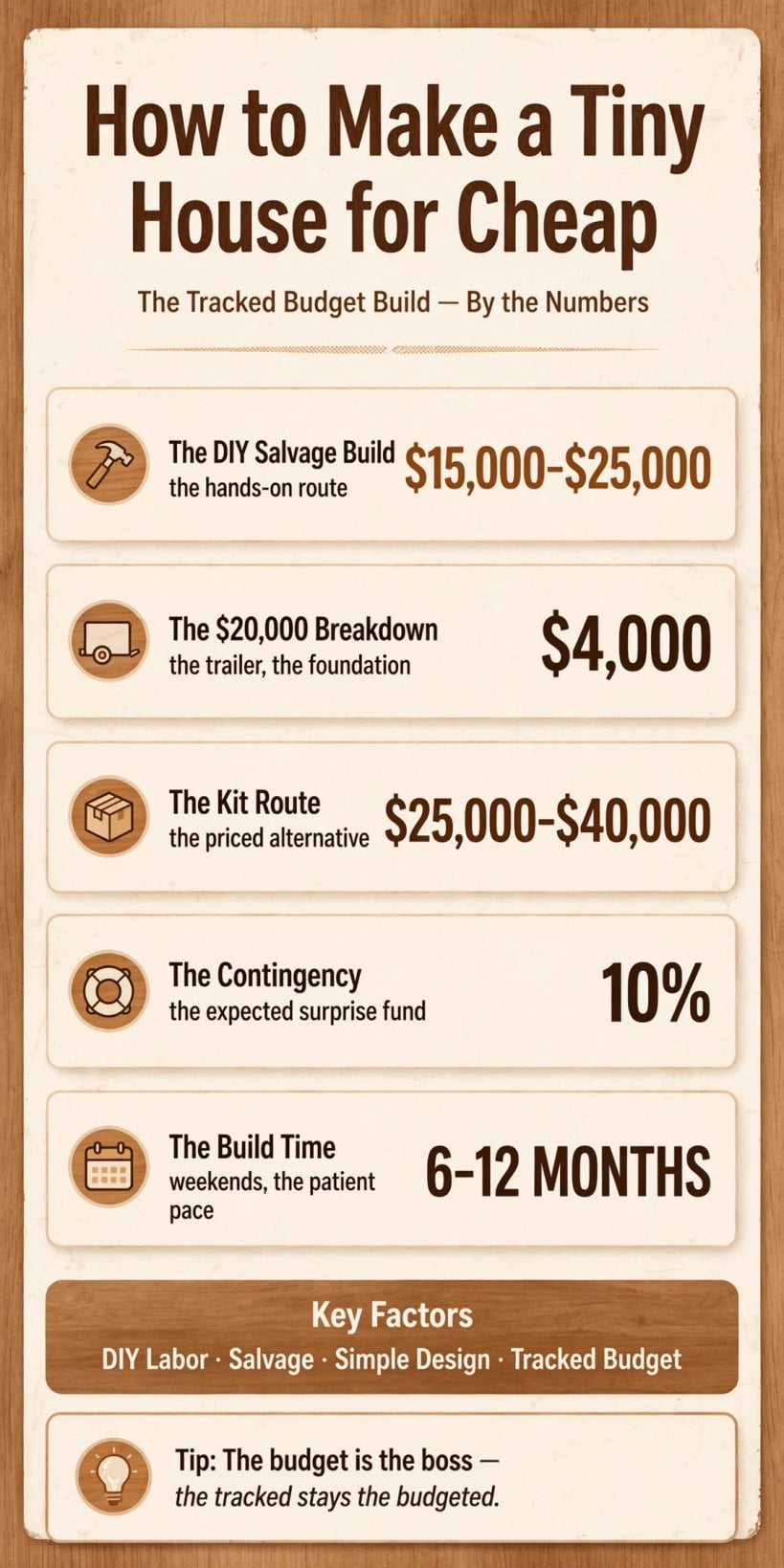
The tracked build by the numbers: a DIY salvage build at $15,000–$25,000 against the kit route at $25,000–$40,000, the trailer at $4,000 of the $20,000 plan, a 10% contingency for surprises — and weekends measured in months, not money.
1. The Cheap Tiny Philosophy
The philosophy comes first, because a cheap build is not a smaller ambition — it is a clearer one. The goal is the affordable — the owned: a home whose price ends at the build, not one that follows you for decades. The method is the DIY — the salvage: your own labor and other people’s leftovers, the two great discounts. The mindset is the resourceful — the patient: the builder who can wait for the right used trailer and the right reclaimed beam pays less. The rule underneath the whole guide: the cheap is the clever — the built. Cheap, done this way, is not the absence of money; it is the presence of a plan. The cheap tiny is the DIY dream — and it starts as a number on a page.
2. The $20,000 Breakdown
The original prices this build as one worked example: $20,000, assigned line by line before a single board is bought. The trailer takes $4,000 — the foundation. The shell takes $6,000 — the framing. The systems take $5,000 — the essentials. The finish takes $5,000 — the livable. Four lines, no mystery: every dollar has a job, and a dollar without a job is the one that wanders off. The rule governing the table: the budget is the boss — the obeyed.
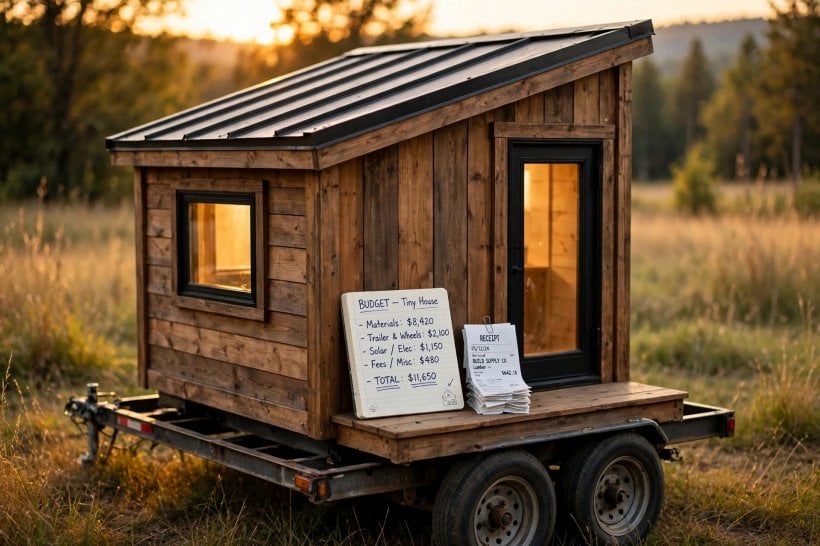
Two of the FAQ’s answers hang directly off that table. How cheap can you build a tiny house? The DIY salvage build runs $15,000–$25,000; the kit runs $25,000–$40,000 — the cheap is the possible, and the budget sets the build. And can you really build one for $20,000? Yes — the disciplined DIY, the salvage, the simple systems. The $20,000 is the real: the budget built, not the wished. Our sister guide prices the same $20,000 ambition a different way — a different split of the same discipline — in how to make a cheap tiny house; both breakdowns agree the money is assigned first, and spent second.
3. The DIY Strategy
The strategy replaces the build’s biggest cost — other people’s hours — with three currencies of your own. The skills are the learned — the YouTube: what builders once apprenticed years to learn is now taught free, one video per task, the night before the task. The time is the weekends — the invested: evenings and Saturdays converted directly into equity. The help is the friends — the fed: the classic exchange of the raising day, labour for lunch and gratitude. The rule: the DIY saves — the labor. Which is also the FAQ’s answer to the cheapest way to build a tiny house: the DIY on a used trailer with salvaged materials. The cheapest is the hands-on — the labor is the savings.

4. The Salvage Game and Materials on a Budget
Salvage is the second discount, and it is played like a game — because it is one. The reclaimed is the wood — the character: beams and boards with a past, priced like a problem someone else wants removed. The Habitat is the ReStore — the treasure: the donated doors, windows and cabinets cycling through at a fraction of shelf price for the builder who checks weekly. The rule: the salvage is the cheap — the beautiful. The FAQ names the hunting grounds in full: the ReStore (the Habitat), the salvage yards, the Craigslist free listings, the demolition sites. The cheap materials are the hunted — the patient find the deals.
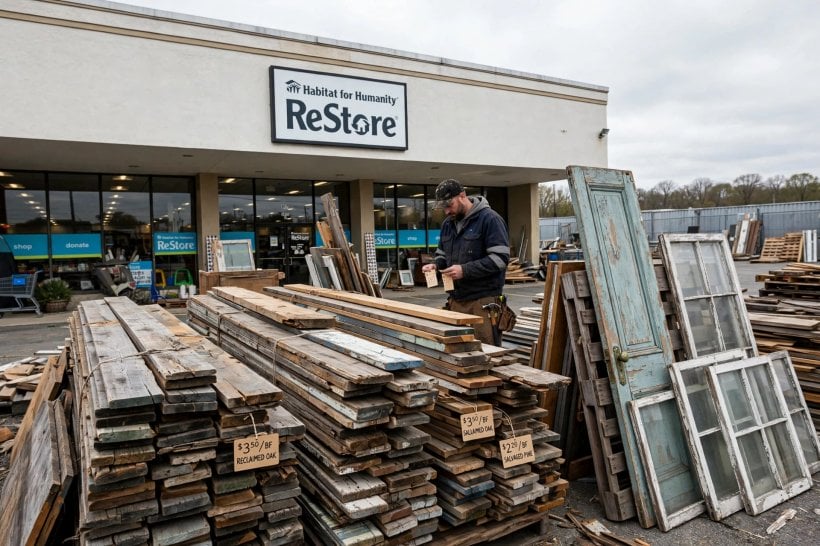
What cannot be salvaged is bought — but bought the same way: shopped. The lumber is the standard — the straight: stock sizes, sighted down the length before it leaves the yard. The insulation is the adequate — the sealed. The finishes are the simple — the durable. The rule: the materials are the shopped — the compared. No material in a cheap build is bought at the first price seen; the comparison is itself a line item, paid in attention instead of money.
5. The Shell and Designing Simple
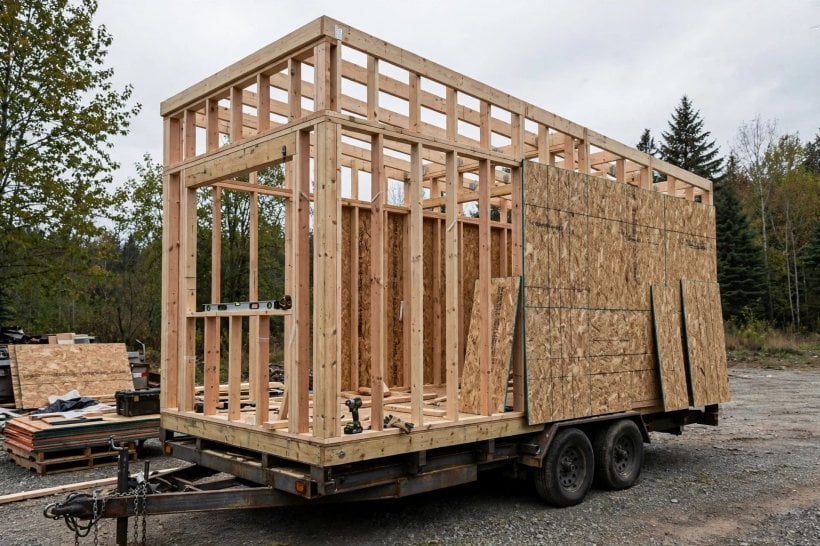
The shell is where simple design pays its first dividend. The framing is the simple — the rectangle: straight walls, standard cuts, no geometry tax. The sheathing is the standard — the sealed, stock panels closing the frame without a single custom order. The rule: the shell protects — the first. The design section says the same thing three ways: the rectangle is the cheapest — the shape; the shed roof is the simple — the single, one slope to frame, flash and shingle; the standard is the dimensions — the waste-free, a house designed around the sizes lumber and sheet goods already come in, so the offcuts shrink to kindling. The truth: the simple designs — the cheapest. The roof itself is framed step by step in our guide to how to frame a shed roof tiny house, and the shell it covers is raised on its trailer in our guide to how to frame a tiny house on a trailer.
6. Systems on a Budget and the Trailer Hunt
Systems stay minimal, and they stay honest. The electrical is the simple — the safe: a small load, a small layout, nothing clever between the panel and the outlet. The plumbing is the minimal — the functional: short runs, few fixtures, everything reachable. The rule: the systems work — the inspected. That last word carries the FAQ’s sharpest answer: should you hire out any of a cheap build? The electrical and the plumbing — the licensed, the inspected. The cheap hires the critical: the safety is the non-negotiable. The pipework is compared in our guide to tiny house plumbing: PEX vs copper. And the original points deeper budget readers to two companions: our guide to super-affordable tiny homes and the full accounting in the true cost of tiny houses: prefab vs DIY.
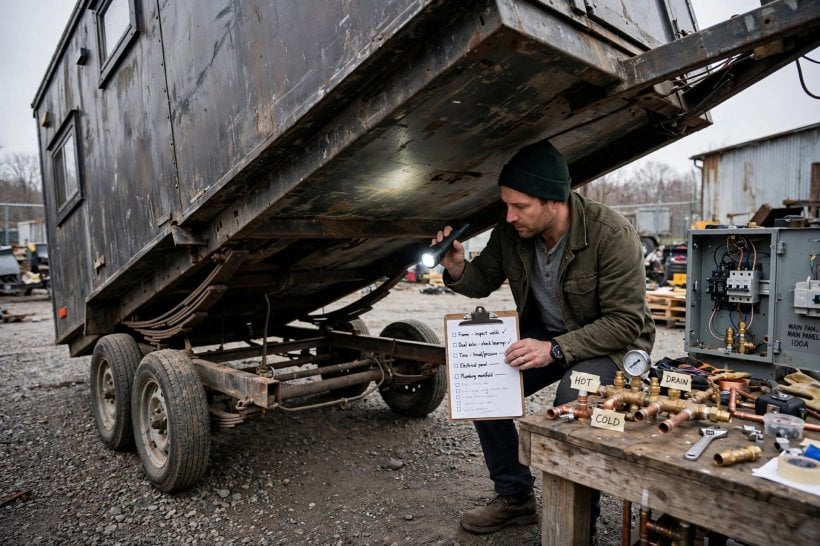
The trailer hunt decides what all of it stands on. The used is the inspected — the solid: the found deal, checked for rust, straightness and rating before money moves. The new is the warranted — the pricey: the same foundation with a guarantee, at a guarantee’s price. The rule: the trailer carries — the everything, which is why it is hunted with more patience than any other purchase in the build. The regional market is surveyed in our guide to tiny house trailers for sale in Texas.
7. Insulation, the Roof, Windows & Doors and the Interior Finish
Insulation on a budget is a lesson in priorities. The fiberglass is the cheap — the adequate, the batt that fills the standard bay the rectangle provides. The air-sealing is the free — the critical: the tape, the foam and the patience that stop the leaks no batt can fix. The rule deserves its boldness: the sealed beats — the stuffed. At the opposite end of the insulation budget sits the premium panel option, examined in our guide to vacuum insulated panels explained — the cheap build chooses the batt and the tape.
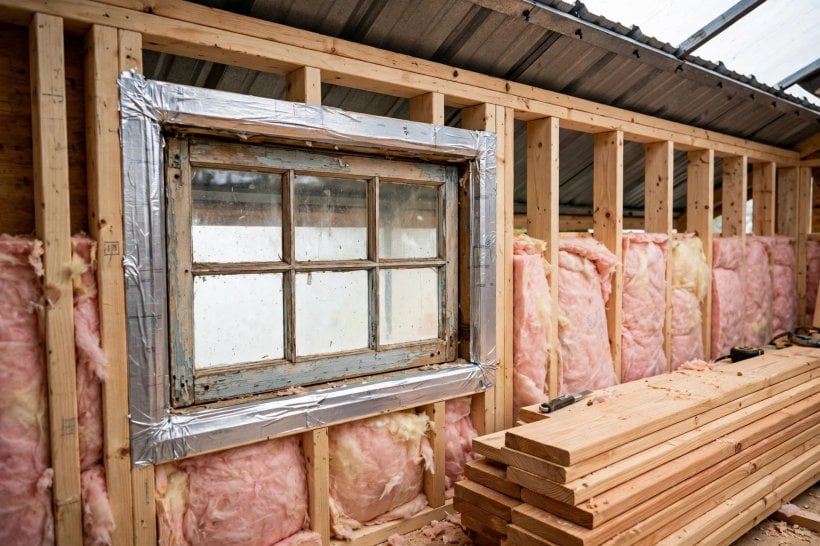
The roof is bought once and bought to last. The metal is the DIY — the lasting: panels a careful owner-builder can install, on a roof simple enough to install them on. The simple is the slope — the single. The rule: the roof protects — the invested. Windows and doors follow the salvage discipline: the salvaged are the sized — the sealed, openings framed to the found unit rather than the catalogue; the standard are the new — the affordable. The rule: the openings are the shopped — the sealed. And the interior finish closes the house into a home: the paint is the cheap — the transformative; the pine is the walls — the warm. The rule: the finish is the phased — the lived-in, completed in the order life needs it. The wider finishing framework lives in our tiny house and small-space interior design hub.
8. The 10 Commandments, the Tool Kit and the Mistakes
The ten commandments of the cheap tiny compress the discipline into orders: budget the real; DIY the most; salvage the much; simplify the design; shop the compared; learn the skills; inspect the systems; phase the finishes; track the spending; finish the proud. Note what is not among them: there is no “spend the least” — the commandments govern the method, and the method governs the money. The tool kit obeys the same economy: the borrowed are the friends — the free; the bought are the essential — the kept. The rule: the tools are the invested — the once. The FAQ fixes the essential list exactly: the circular saw, the drill, the level, the square, the ladder. The essential five build the house — the rest is the borrowed.
The mistakes are the commandments broken, and three account for nearly every cheap build that stops being cheap — or stops being safe. The no-permit is the fined — the permitted: the saving that arrives later as a penalty. The no-inspection is the dangerous — the inspected: cheap work nobody checked is not a saving at all. The too-cheap is the structural — the never: the one place the budget may not reach. The rule presides: the cheap is the smart — the never the unsafe. Which settles the safety question outright: is a cheap tiny house safe? The code-compliant yes — the structural, the electrical, the inspected. The cheap is the safe when the built is the right.
9. Phasing the Build, the Schedule and Tracking the Budget
Phasing is how the calendar and the cash flow are made to agree. The weather-tight is the first — the priority, the shell closed against the sky. The livable is the second — the moved-in, the systems and basics that turn a shell into a home. The finished is the third — the polished, completed as money allows. The rule: the phased finishes — the always. Keeping that sequence on schedule is the FAQ’s own question, answered procedurally: the plan (the written), the phases (the realistic), the help (the scheduled). The schedule is the kept: the plan beats the hope. The timeline is the trade the build is priced in: how long does a cheap tiny house build take? The weekend warrior: 6–12 months. The full-time: 3–6 months. The time is the trade — the cheap costs the calendar.
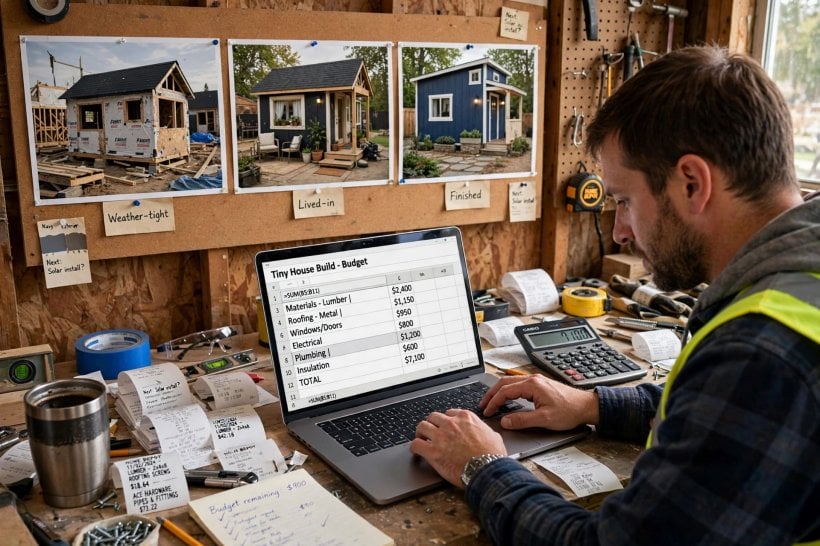
Tracking is what makes the $20,000 breakdown a fact instead of a hope. The spreadsheet is the honest — the updated: every line of the breakdown against every dollar actually spent, while there is still time to correct the difference. The receipts are the kept — the totaled: the paper trail that proves the build, useful for insurance, resale and simple pride. The rule: the tracked stays — the budgeted. And the surprises are budgeted too: the expected is the 10% — the contingency, a line held back for the beam that is rotten and the part that is discontinued; the absorbed is the planned — the calm. The truth: the surprises come — the prepared.
10. The Payoff, the Loan Question and the Life After
The payoff is why the receipts were worth keeping. The owned is the outright — the free: a monthly cost that falls to the minimal. The skilled is the learned — the kept. The proud is the built — the hands. The truth: the payoff is the freedom — the owned. The invitation the original leaves standing: budget, build, live — the cheap awaits. Financing gets its honest paragraph: can you get a loan for a cheap tiny house build? The personal loan, the RV loan, the savings. The financed cheap is the careful — the debt is the weighed against the dream, and the phased build, which can pause, is kinder to a borrowed budget than a contract build that cannot.
Nobody builds entirely alone. The forums are the answered — the shared: every mistake you are about to make, already made and documented by someone kind. The workshops are the taught — the hands-on. The truth: the community builds — the together. Then the first night: the moved-in — the unfinished, the home; the slept — the proud, the built. The truth: the first night is the earned — the sweetest. And the skills outlast the build itself: the learned — the forever, the hands; the applied — the always, the life. The truth: the skills are the kept — the priceless.
The closing cadence of the original is the victory lap, and it is worth walking in its own order. The done build: the finished — the imperfect, the home; the lived — the daily, the loved; the truth: the done beats — the perfect. The proud tour: the shown — the friends, the amazed; the told — the cost, the disbelieved; the truth: the tour is the reward — the built. The inspiration: the shared — the story, the blogged; the inspired — the next, the builder. The mortgage-free life: the owned — the outright, the monthly; the freed — the income, the choices. The sweat equity: the invested — the weekends, the worth; the returned — the tenfold, the freedom. The dream funded: the saved — the disciplined, the built; the spent — the wise, the owned. The cheap & proud: the said — the cost, the smiled; the lived — the free, the tiny. The hammer down: the last — the nail, the driven; the stepped — the back, the beheld. The home at last: the entered — the finally, the owned; the exhaled — the deeply, the free. The builder’s legacy: the built — the hands, the years; the passed — the skills, the stories. And the last receipt: the totaled — the under, the budget; the filed — the away, the proof. The truth: the last receipt is the victory — the cheap.
Final Considerations
Learning how to make a tiny house for cheap is learning to run a budget like a build: assign the dollars, donate the labor, hunt the materials, track every receipt, and never let the cheap reach the safety. The $20,000 is real when it is built, not wished. Build it cheap, build it right, live it proud. Costs vary by region and materials — verify current prices locally, and always follow building codes and get inspections for structural, electrical, and plumbing work.


2 Comments