

Paint is the hardest-working budget tool in a small home, and doors are the most overlooked place to use it. Black interior doors can turn plain slabs and tired panels into a deliberate design feature in a single weekend.
This guide walks through eleven practical reasons the look works, where it suits best, and the prep, finishes and styling choices that help it last.
1. At a Glance: Why This Small Change Works So Hard
Before the detailed reasons, here is the honest summary. A dark door is not a trend you have to rebuild a room around. It is a contained, reversible change: one door, one tin of paint, one afternoon of prep. Yet because doors sit at eye level, repeat down a hallway and appear in almost every sightline of a compact home, the effect travels far beyond the surface you actually painted. In a tiny house, where every wall is close and every junction is visible, that repetition is exactly what makes the change feel considered rather than accidental.
| Aspect | What a dark door does | Best for / watch out |
|---|---|---|
| Visual impact | Adds contrast and a clear focal point | Best in pale, light-filled rooms; test in very dark halls |
| Cost and effort | Uses little paint compared with a full wall | Prep, not paint, takes most of the time |
| Upkeep | Shows fewer scuffs and grubby marks | Dust shows more; choose a wipeable finish |
| Flexibility | Works with modern, farmhouse and classic schemes | Hardware and trim choices steer the mood |
| Reversibility | Can be repainted in a lighter colour later | Light over dark needs a good primer coat |
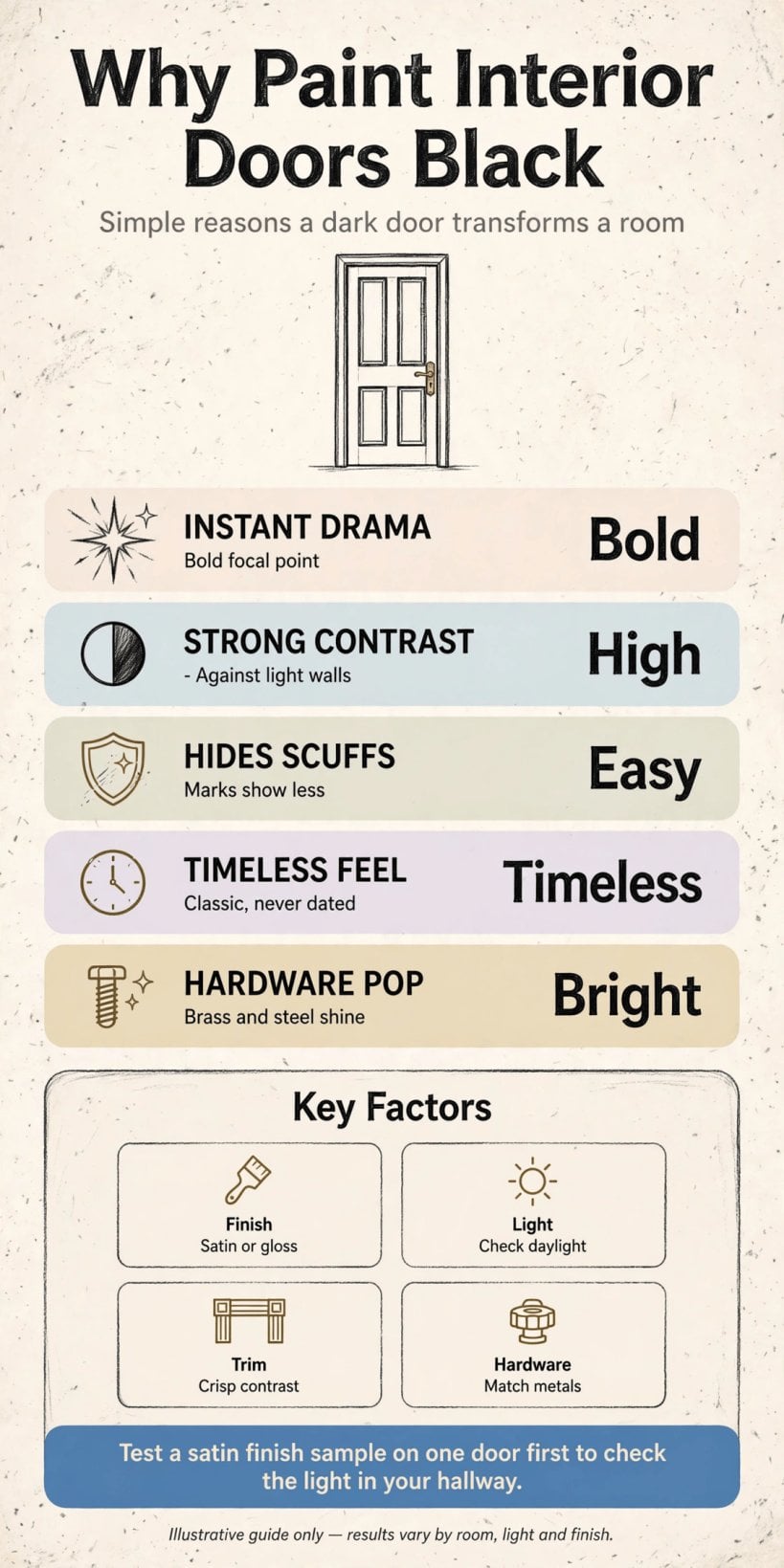
A quick visual summary of the eleven reasons, the best finishes, and the rooms where dark doors earn their keep.
Read the table as a reality check rather than a promise. If your hallway has no natural light, a softer charcoal may serve you better than a true jet tone. If your doors are damaged or heavily grained, the paint will not hide that, and filling and sanding matter more than the colour itself. With those caveats noted, the reasons below explain why so many small-home owners who try one door end up painting the rest.
2. Reasons 1 and 2: Instant Contrast and a Finished, Architectural Feel
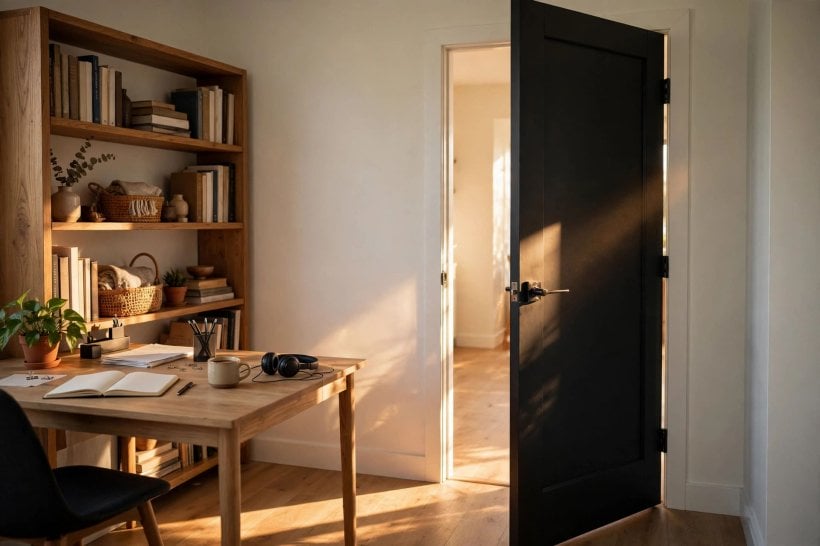
Reason 1: instant contrast. Most interiors in small homes lean pale for good reason: light walls make limited square footage feel calmer and brighter. The risk is that everything blends into one soft wash, and the eye finds nowhere to rest. A dark door breaks that wash cleanly. It frames the opening, sharpens the lines of the room and gives pale walls something to play against, so they actually look brighter by comparison. You do not need dark walls, dark floors or a bold personality to pull this off; the door carries the drama on its own, in a neat rectangle you can repaint any time.
Reason 2: a finished, architectural feel. Plain white doors often read as background, especially the flat slabs fitted in many compact builds. Painted dark, the same door suddenly looks like a piece of joinery. Panels cast small shadows, mouldings catch the light, and a simple door gains the presence of something made on purpose. That matters in open-plan spaces styled along the lines of these tiny house living room ideas, where the door is part of the main view all day. Visitors rarely name what changed; they just say the place feels more put together, and this is usually why.
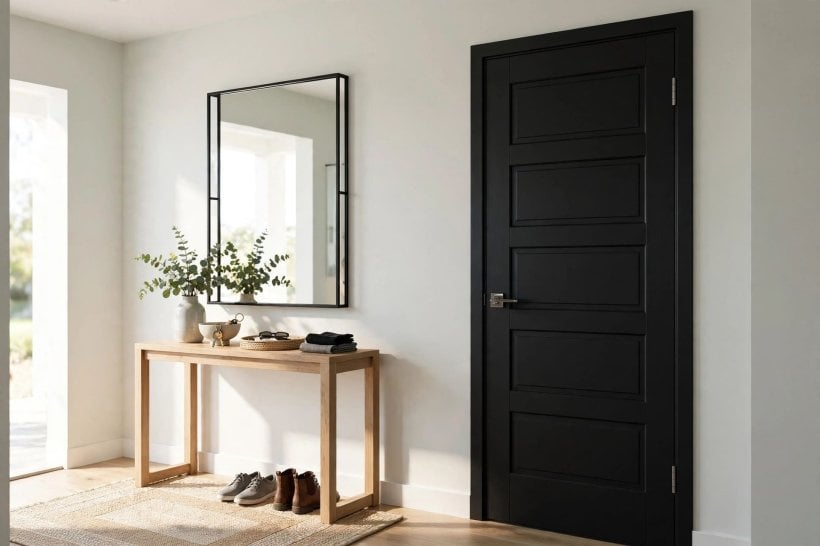
Together, these first two reasons explain the speed of the transformation. Contrast does the attention work, while the architectural weight does the quality work, and both arrive with the first coat.
3. Reasons 3 and 4: It Grounds a Small Room and Makes Colour Elsewhere Braver
Reason 3: it grounds a small room. Compact rooms can feel floaty when every surface is light: pale walls, pale floor, light furniture, nothing anchoring the scheme. One dark vertical element works like a full stop. It gives the room a visual base note, the same way a dark frame settles a picture. Bedrooms benefit most, because restful schemes often stay very pale; a dark wardrobe or bedroom door adds depth without disturbing the calm, a balance explored in these tiny house bedroom ideas. The room still feels airy, but it stops feeling temporary.
Reason 4: it makes your other colours braver. Once one strong note exists, mid-tone colours stop looking muddy. Sage, clay, dusty blue, warm oak and aged brass all sit more confidently next to a dark door, because the scheme has a clear darkest value for them to relate to. That is liberating in a small home, where you may not want to repaint walls you already like. The door becomes the anchor, and cushions, throws, art and rugs can move around it freely. If you later change your accent colour, the door rarely needs to change with it, which cannot be said for a wall painted in that accent.
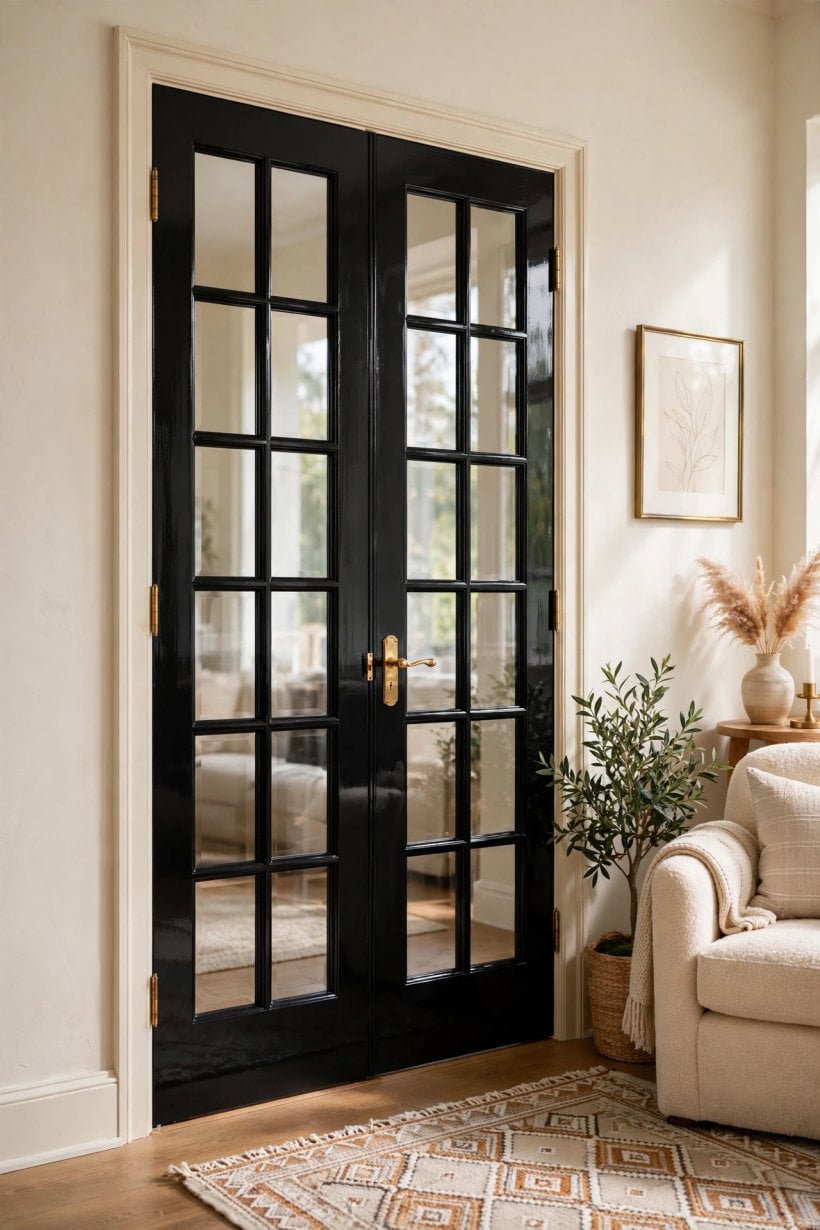
Grounding and confidence sound abstract until you live with them. In practice they mean fewer almost-right purchases, fewer repainted walls, and rooms that hold together even when the styling is simple.
4. Reason 5: Scuffs, Fingerprints and Everyday Wear Show Less
Reason 5: everyday marks show less. Doors are the most touched surfaces in any home. Hands land at the same height, bags swing against the same corner, pets brush the same panel, and in a tiny house the traffic per door is higher because there are fewer routes through the space. On white paint, that contact map appears quickly as grey smudges around the handle and scuffs along the bottom rail. Dark paint hides the majority of it. The marks are still there, and you should still clean the door, but the surface stays looking presentable between cleans instead of pleading for a touch-up every month.
This is a practical reason, not a glamorous one, and for busy households it may be the decisive one. Hallways, utility spaces and the door to a compact bathroom all take knocks; pairing a hard-wearing finish here with the space-saving thinking in these tiny house bathroom ideas keeps the hardest-working corners of the home looking intentional. One honest caveat: pale dust and pet hair show more on dark paint, so the trade is fewer visible scuffs in exchange for a quicker weekly wipe with a damp cloth. For most people, that is a trade worth making.
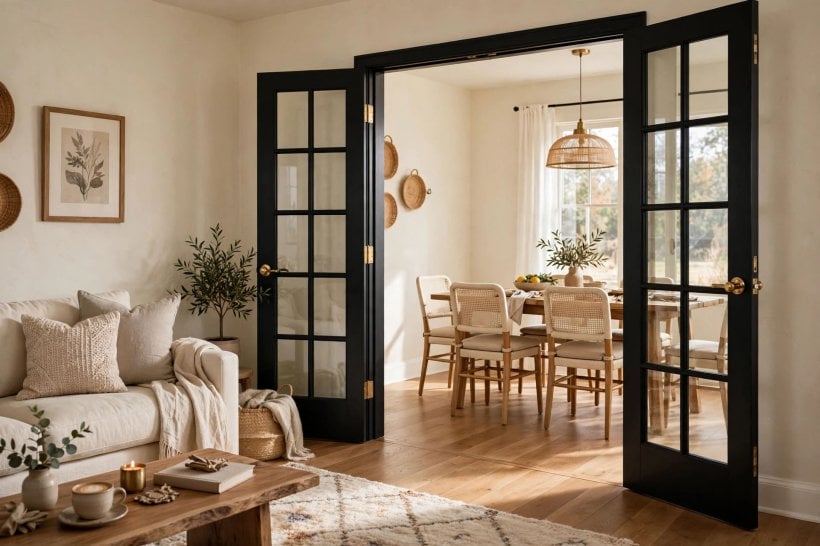
Choose a scrubbable paint in a satin or eggshell sheen for this benefit to hold. Flat matt finishes mark more easily, whatever the colour, and they burnish where hands rub them.
5. Reason 6: It Makes Plain, Inexpensive Doors Look Deliberate
Reason 6: it upgrades the doors you already own. Replacing doors is disruptive and surprisingly costly once hinges, latches, trimming and disposal are counted, and in a small home the mess spreads everywhere. Paint asks far less. A hollow-core slab or a dated moulded panel that currently disappears into the wall becomes a feature once it is dark, because the colour gives it a finished, furniture-like quality. Even a very ordinary door reads as a choice rather than a compromise, which is the cheapest kind of upgrade there is: the one that changes how existing things look instead of replacing them.
Preparation decides how convincing the upgrade is. Fill dents, sand nibs and old drips, wash away grease around the handle, and prime bare or glossy patches so the new coat grips evenly. Take the door off its hinges if you can, or at least wedge it and mask the hinges and latch. Two thin coats beat one thick one, and a small foam roller gives the smoothest result on flat areas while a brush cuts in the panels. The effort is unglamorous, but it is the difference between painted and professionally painted, and it is almost entirely free.
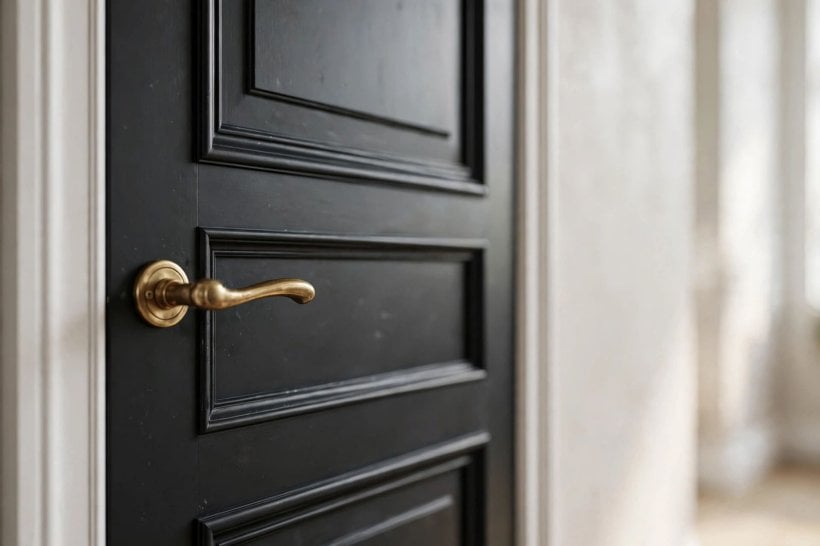
If a door is warped, split or swollen, paint will not rescue it. Spend the replacement money on that one door, and let paint handle the sound ones.
6. Reasons 7 and 8: It Unifies Mismatched Doors and Links Your Rooms Together
Reason 7: it unifies mismatched doors. Many homes, especially converted and extended small homes, have doors from different decades: a panelled one here, a flush one there, a glazed one somewhere else. In white, each difference is quietly obvious. In a single dark colour, the set reads as a set. The shared colour does the unifying work that matching joinery would otherwise do, and the hallway feels planned rather than accumulated. This is a favourite trick in homes with a colourful streak, like those in this colourful tiny house interior tour, where one repeated dark note stops varied rooms from arguing with each other.
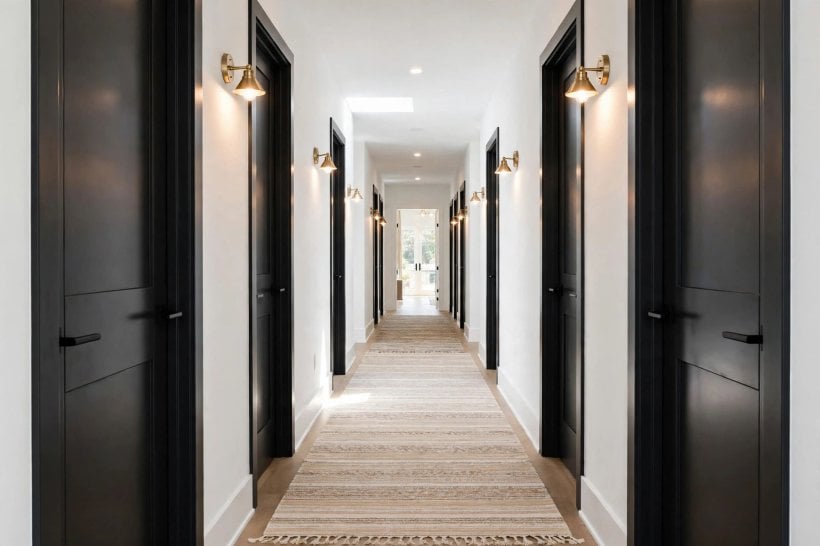
Reason 8: it links rooms into one story. Because you see several doors from any spot in a compact home, repeating the colour creates a rhythm that carries the eye from room to room. The home feels larger for it, counterintuitive as that sounds, because the spaces read as chapters of one design rather than separate boxes. You can strengthen the link with repeated hardware: the same handle finish on every door, or the same hinge colour, so the set feels collected on purpose.
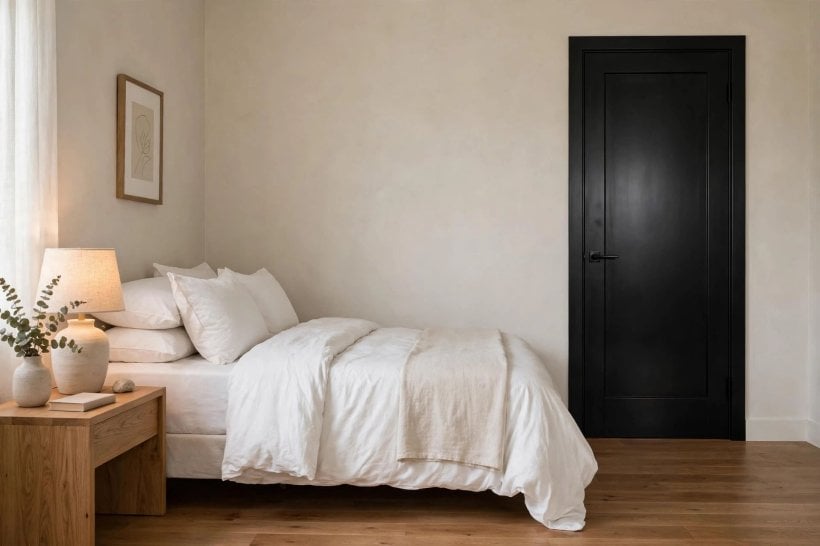
You do not have to paint every door at once. Start with the hallway set, live with them, and add the room-side faces later if you want the effect inside each room too.
7. Reason 9: Hardware, Glass and Artwork All Look Better Against It
Reason 9: it is a brilliant backdrop. Brass, chrome, matt black and even simple white porcelain handles all read clearly against a dark door, so hardware you already own looks more expensive, and new hardware makes a bigger splash for the same money. A glazed door gains too: the dark frame turns the glass into a picture, and evening light through it looks warmer. The effect continues onto the wall around the door, where art, mirrors and wall lights stand out more crisply when a strong vertical edge nearby gives them contrast to borrow.
This backdrop quality suits characterful small homes particularly well. In a conversion with beams, ledges and braces, like the homes in this tiny barn house interior feature, dark doors sit comfortably with timber and ironwork instead of competing with them. The same logic flatters a modern flat: pale walls, one dark door, one piece of decent hardware, and the entry suddenly has the poise of a boutique hotel corridor. If you enjoy changing accessories with the seasons, a constant dark backdrop makes each rotation look fresh without repainting anything structural.
When choosing handles, hold them against the painted door in daylight and lamplight. Finishes shift character between the two, and the door will be seen under both every single day.
8. Reason 10: It Suits Almost Every Style, From Farmhouse to Minimal
Reason 10: it refuses to be pigeonholed. Few design moves cross style lines as easily as this one. On a panelled door with white trim, the look is classic and tailored. On a flush door with concealed hinges, it is gallery-minimal. With rustic timber nearby it leans farmhouse; with chrome and glass it leans city. The colour itself is neutral in behaviour, even though it is bold in value, so it supports the style you already have instead of demanding a new one. That neutrality is why the idea keeps returning decade after decade while louder trends date.
For tiny homes this versatility is insurance. Small spaces often mix roles, with a living room that is also an office and a guest room, so any fixed element has to work in several moods at once. A dark door does that quietly. It also photographs honestly, which matters if you ever sell or let the property: listings show rooms with definition, and viewers remember a home with one clear idea. None of this requires committing the whole house. A single dark door in an otherwise pale rental-style scheme still delivers most of the effect, and it is the work of an afternoon to reverse if tastes change.
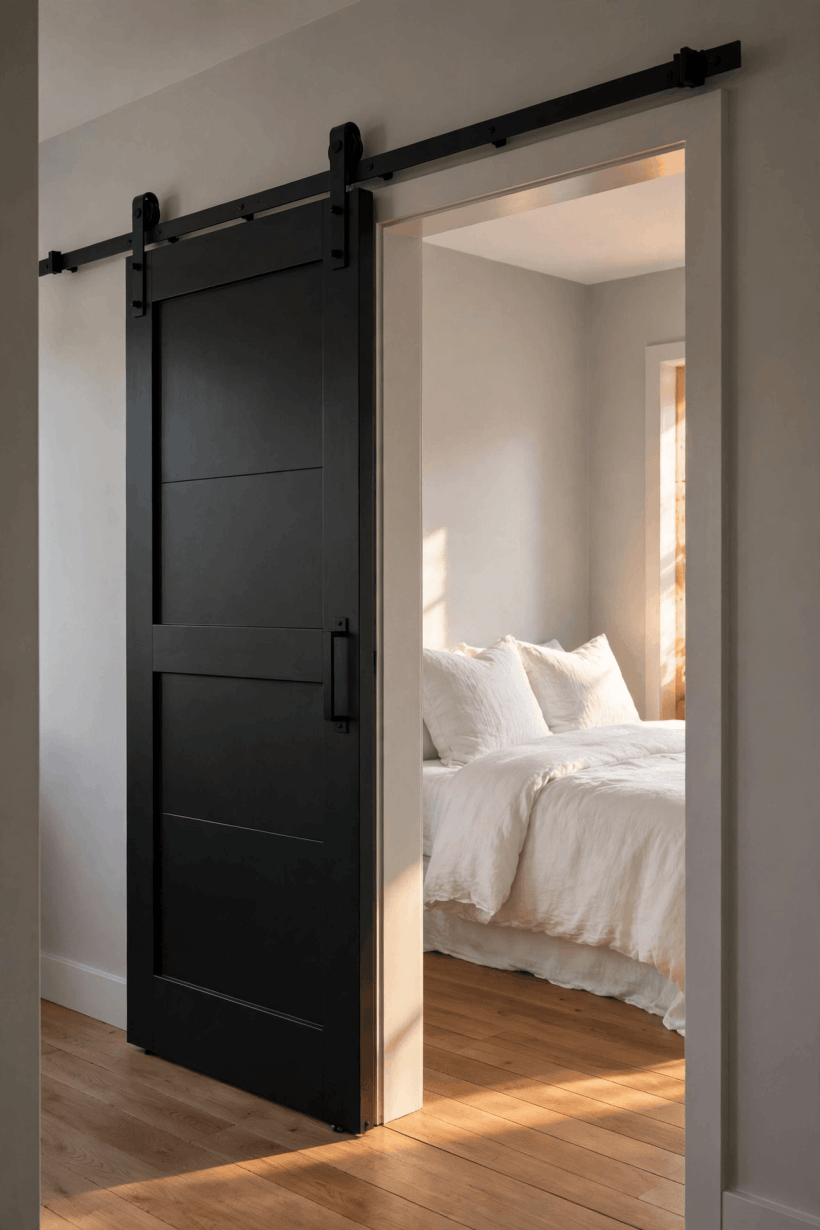
If you are torn between a true dark tone and a deep charcoal or near-black green, paint large test cards and tape them to the door. Live with them for two days before deciding; small swatches lie.
9. Reason 11: It Is Cheap, Fast and Reversible Compared With Almost Any Other Upgrade
Reason 11: the maths is kind. A door needs a fraction of the paint a wall needs, the job fits into a weekend including drying time, and no trades are required. Of the eleven reasons, this is the one that turns admiration into action, because the risk is so low. If the result disappoints, a primer and two coats return the door to pale, and the total loss is a tin of paint and some hours. Compare that with replacing doors, retiling, or refitting storage, and the door repaint is the rare project where the trial run is the real thing. Guidance on planning bigger projects, such as bedroom interior design for tiny houses, makes the same point: sequence cheap, reversible wins first.
Budget honestly, though. Paint, primer, a decent brush, a small roller, masking tape, filler and sandpaper are the real list, and worn brushes will spoil a smooth door faster than cheap paint will. Allow drying time between coats rather than rushing; a door closed too soon sticks to its frame and tears the finish at the edge, undoing your best work. Paint the edges in the right order too: the hinge edge the colour of the room it opens into, the latch edge the colour of the room it closes against, is the traditional rule and it looks right in practice.
Renters should ask first, as always, but owners will find few projects with a better reward-to-effort ratio anywhere in the house.
10. Painting, Finishes and Care: Getting a Result That Lasts
The practical method is simple and worth following in order. Remove the handles, latch and, if you can, the door itself. Wash the surface, fill flaws, sand everything lightly so the paint has a key, and wipe away dust. Prime glossy, stained or bare areas. Then apply two thin coats of a durable trim paint, sanding very lightly between coats if the finish feels rough, and give the final coat proper curing time before the door goes back into daily service. Satin is the forgiving all-rounder for black interior doors; eggshell is softer and more traditional, while gloss is striking but shows every imperfection and fingerprint.
Care is equally plain. Wipe marks early with a soft cloth and mild soapy water rather than scrubbing later. Touch in chips promptly with a small brush, because a pale chip on a dark door is conspicuous even when it is tiny. Keep a labelled jar of the leftover paint for exactly this job. Check the door edges each year for rubbing, since a swelling door will scuff its own finish against the frame. Look after the paint film this way and it should serve for years, keeping all eleven reasons working long after the weekend you painted it. If you are planning a whole-home project sequence, the order used by people who build their own tiny house applies here too: finishes last, after the dusty work is done.
Final Considerations
Painting your doors dark is not about following a fashion. It is about giving a small home contrast, rhythm and a sense of finish for the price of a tin of paint. Start with one door if you are unsure, choose a wipeable satin finish, prepare the surface properly, and live with the result for a week. Most people who try it reach for the brush again, not to undo the work, but to paint the next door.


0 Comments