
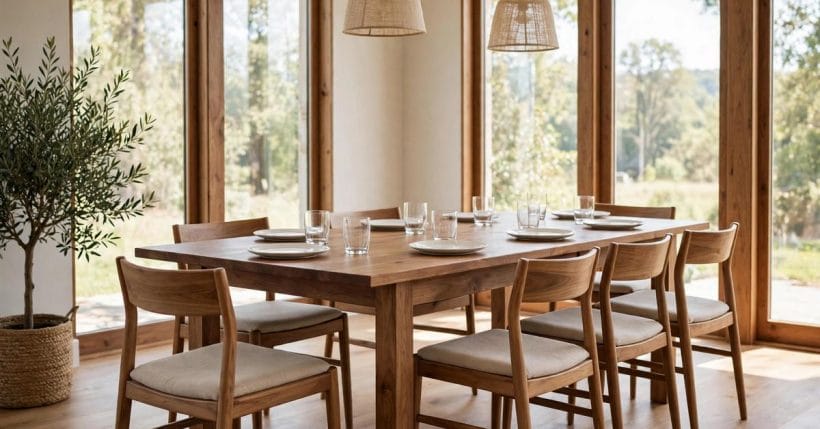
A dining table is the hardest-working piece of furniture in many homes. It hosts everyday meals, homework, work calls, board games and long gatherings, and it has to suit the room it stands in as well as the people who gather around it. Choosing well starts with how you live, not with a style label or a showroom display.
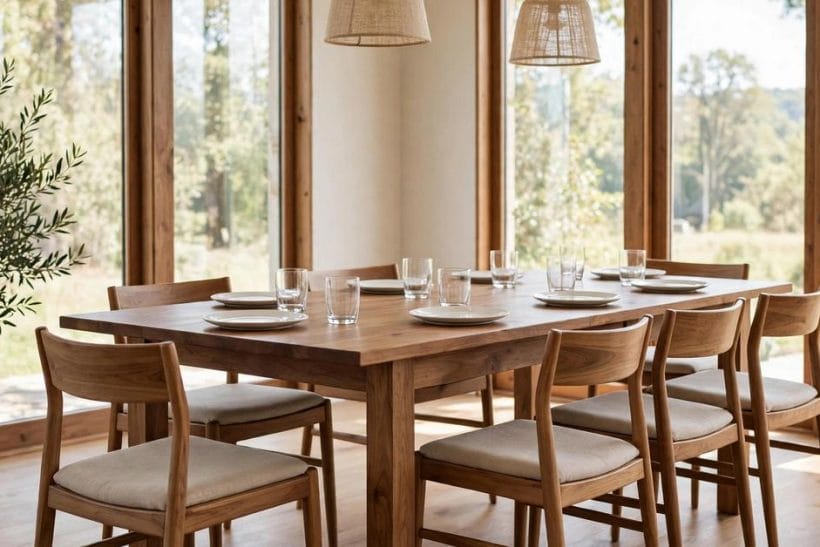
This guide walks through the dining table checks that matter before you decide: seating needs, room measurements in general terms, shape, materials, base styles, extendable mechanisms, chair pairing, walk-around space, style fit and everyday care. Each section raises the questions worth asking while you shop, so the table you bring home fits the room, the household and the way you actually eat.
Keep the room itself at the centre of the decision. A table that looks right in a large showroom can crowd a smaller dining corner, while a compact table can feel lost in a generous open room. Light, flooring, doorways and the path between kitchen and table all shape how the table will feel day after day.
1. Start With How Many Seats You Need Every Day
Begin by counting the people who eat at the table on an ordinary day, then think about how often guests join and how many extra places those occasions call for. A household that eats together daily needs comfortable everyday seating first, while a household that hosts often may want a table that can grow for gatherings without dominating the room the rest of the time.
Consider who sits where and for how long. Children doing homework, adults working from the table and guests lingering over a long meal all need elbow room and a comfortable chair, not just a place at the edge. A table that seats the household with room to spare will feel relaxed, while one filled to its edges at every meal can feel cramped even when everyone technically fits.
Think about the seasons of your household too. A table chosen for a busy family stage should still work as routines change, and a table chosen for quieter days should be able to welcome guests when they visit. Flexibility matters more than a single number, so weigh everyday comfort against occasional gatherings before narrowing the search.

2. Measure the Room Before You Fall for a Table
Measure the dining area before shopping, including the length and width of the clear floor space and the position of doors, windows, radiators and serving furniture. Note where people walk through the room, since a table that blocks a natural path will annoy daily even if it fits the measured footprint. A dining room plan that keeps traffic clear is worth more than a slightly larger tabletop.
Mark the outline of any table you are considering on the floor with tape, then place chairs around it and pull them out as if sitting down. Walk around the taped outline, carry a plate through as if serving, and check that doors still open and drawers still pull out. This simple rehearsal reveals crowding that a floor plan alone can hide.
Check delivery access as well as room fit. Doorways, stair turns and lift sizes decide whether a table can reach the room at all, and some tables arrive assembled while others need building in place. Ask about delivery, assembly and packaging removal before ordering, so arrival day brings no surprises.
3. Compare Round, Rectangular and Square Shapes
Shape changes how a table feels in a room and how conversation flows around it. Rectangular tables suit longer rooms and larger gatherings, with places arranged along both sides and clear ends for hosts or extra guests. They also line up neatly against a wall when floor space is tight, though a table pushed to a wall loses seats on that side.
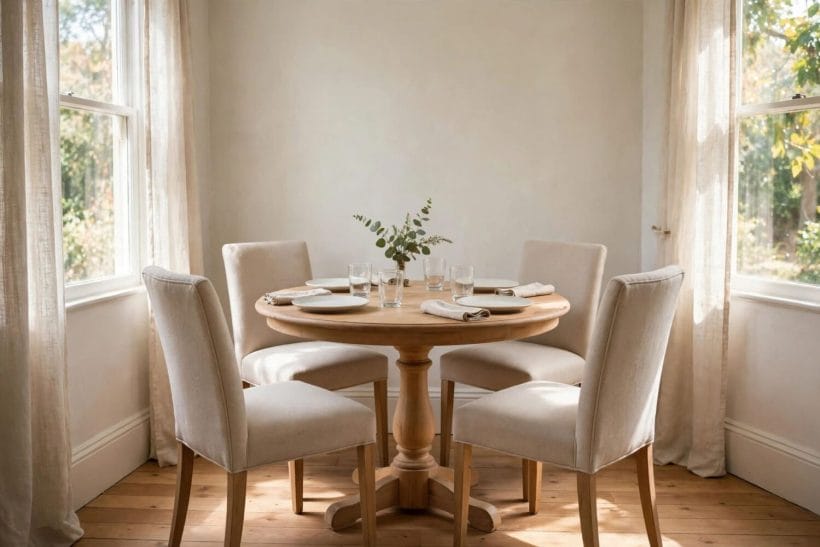
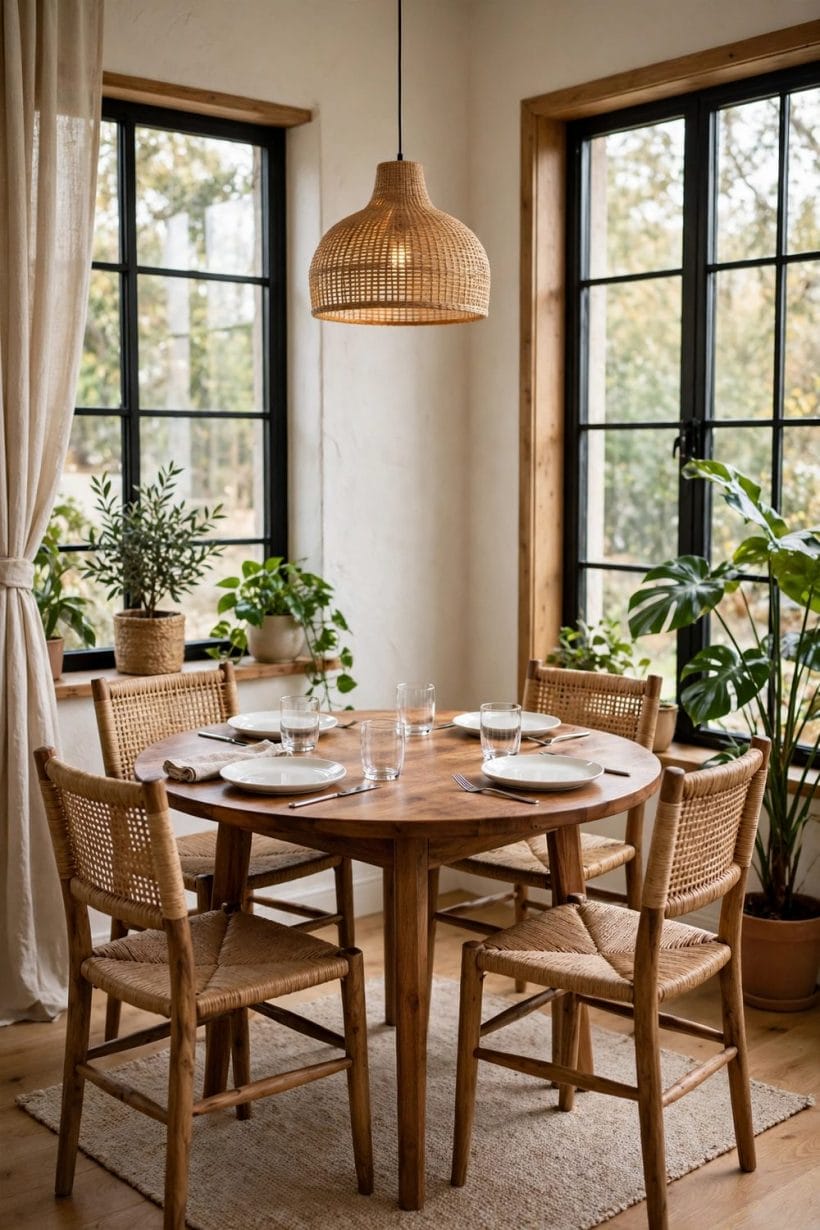
Round tables suit squarer rooms and smaller groups, since everyone faces the centre and conversation travels easily across the table. A round top has no corners to bump into in a tight corner, and a pedestal base leaves legroom uncluttered. Very large round tables, though, can put diners far apart and make shared dishes hard to reach.
Square tables suit compact rooms and smaller households, offering a balanced shape that fits neatly into a corner or nook. They work well for everyday meals for a few people, and they can feel intimate in a way longer tables do not. For larger gatherings, a square top can feel stretched, so match the shape to the room shape and the usual group size rather than to habit alone.
4. Weigh Solid Wood, Veneer and Stone Tops
Tabletop material sets the look, the feel and the care routine. Solid wood brings warmth, visible grain and a surface that can be refinished when it shows wear, and each top carries its own grain pattern. Wood responds to heat, moisture and sunlight over time, so coasters, mats and a sensible cleaning routine protect the finish and keep the top in good condition.
Veneer tops pair a thin layer of attractive wood over a stable core, giving a refined look with less movement than solid timber. They suit rooms where a consistent grain and a lighter build matter, and they generally ask for gentle cleaning and protection from standing water and hot dishes. Deep scratches and heat marks are harder to repair on veneer, so everyday habits matter more.
Stone and composite tops bring a cool, smooth surface that resists heat and suits a more formal dining room. They tend to be heavy, which affects delivery, floor loading and any future move, and they can feel cold and hard for homework or long working sessions. Ask about sealing, stain care and repair options for any stone top, since care routines differ widely between stone types.
5. Check the Base for Knee Room and Chair Tuck-In
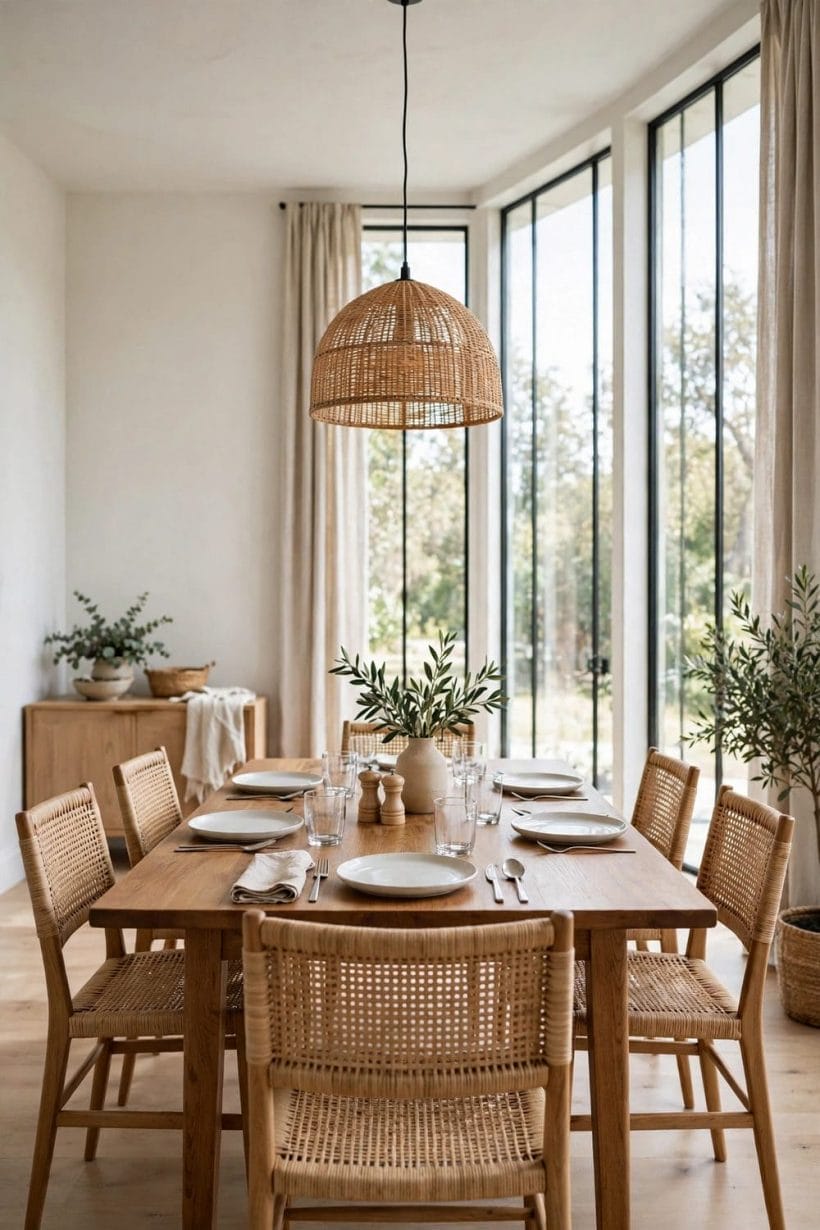
The base decides how comfortable a table is to sit at, whatever the top looks like. Four-leg tables give a classic look and a sturdy stance, but legs can land where a diner wants to place their knees or where a chair wants to tuck in. Sit at the table in the shop, slide a chair fully under, and check that legs do not crowd knees or chair backs.
Pedestal bases free the corners and sides, making it easier to slide chairs in and to seat people at the ends, which suits round and smaller square tables especially well. Trestle bases offer a middle path, with solid end supports and open space along the sides for chairs and legs. Each base changes the look of the room, so weigh comfort against the style you want.
Check stability as well as comfort. A table should sit level without rocking, and the base should feel planted when someone leans on an edge or pushes back a chair. Wobble on a shop floor may come from the floor itself, so test the table on a level surface and ask how levelling is handled at home.
6. Test Extendable Tables in Both Positions
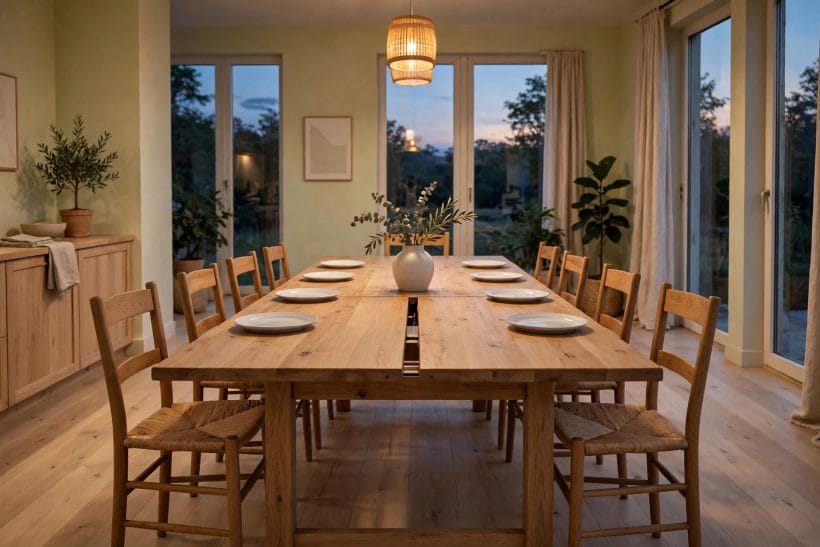
Extendable tables answer the tension between everyday size and gathering size, but only when the mechanism works smoothly and the extended table still fits the room. Open and close the mechanism yourself, listen for grinding or sticking, and check whether one person can manage it alone or whether it needs two. A mechanism that fights you will stay closed, however often guests visit.
Test the table in its extended position with chairs in place, not just as an empty top. Walk around it, pull chairs out, and check doorways, serving paths and sideboard drawers still work. An extended table that blocks traffic or crowds the room may be worse than a fixed table sized for everyday use plus a separate plan for larger gatherings.
Ask where extension leaves live when they are not in the table, since loose leaves need a safe, flat storage spot that will not warp or scratch them. Some designs store leaves inside the table, which suits homes short on storage, while others need a cupboard or a space under a bed. Storage practicality is part of the purchase, not an afterthought.
7. Pair Chairs by Height, Depth and Elbow Room
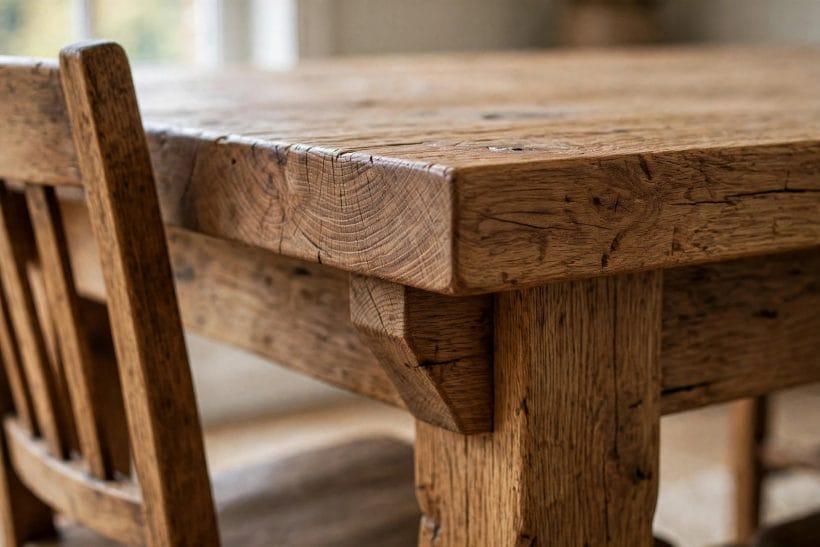
Chairs decide whether a good table feels good to sit at. Seat height should let diners sit with feet resting comfortably and arms reaching the tabletop without hunching, and seat depth should support the sitter without pressing behind the knees. Try the exact chairs with the exact table where possible, since heights that look compatible on paper can feel wrong together.
Elbow room matters as much as seat width. Diners need space to eat, gesture and rise without bumping neighbours, and chairs with arms need extra clearance beside the table and against walls. A small-space dining plan benefits from armless chairs that tuck fully under the table, freeing floor space when the table is not in use.
Consider how chairs live in the room between meals. Chairs that tuck under the table keep walkways clear, while heavier or wider chairs may need a permanent footprint of their own. Think about cleaning too, since dining chairs collect food, spills and daily wear, and washable or wipeable upholstery suits busy households better than delicate fabrics.
8. Plan Walk-Around Space and Traffic Paths
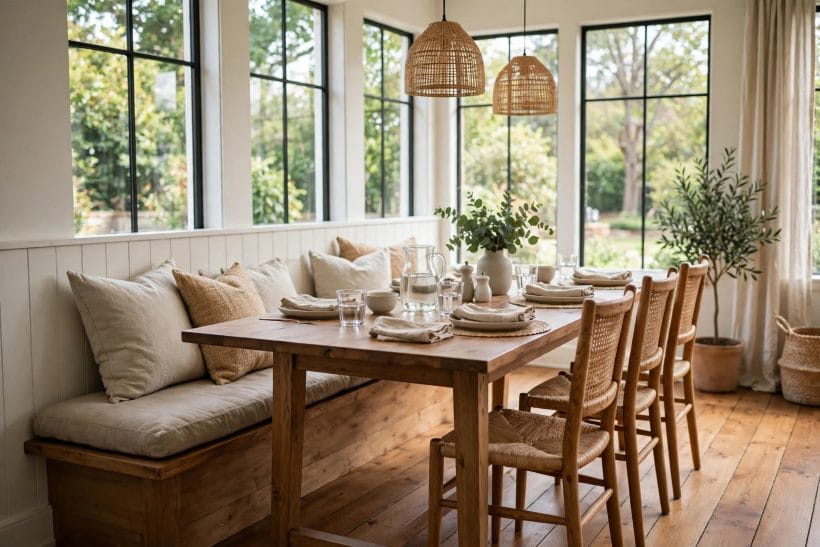
A dining table needs breathing room on every side that serves a chair, plus clear paths for serving and for moving between kitchen and table. Pull chairs out, walk behind them, and imagine carrying a hot dish through the room. If the route feels tight empty, it will feel tighter with people seated and food on the table.
Flooring under and around the table deserves thought too. A rug should sit well clear of pulled-out chairs so chair legs do not catch its edge, and hard floors should be protected where chairs drag daily. Flooring choices around a dining table face constant chair movement, crumbs and spills, so durability and easy cleaning matter as much as looks.
Lighting belongs in the same plan. A pendant hung over the table centre anchors the dining area, lights faces and food, and marks the table as the room’s gathering point. Check the pendant height against sightlines across the table, since a light hung too low blocks conversation and one hung too high leaves the tabletop dim. Dining light should flatter the meal without glaring in diners’ eyes.
9. Match the Table to Your Room’s Style
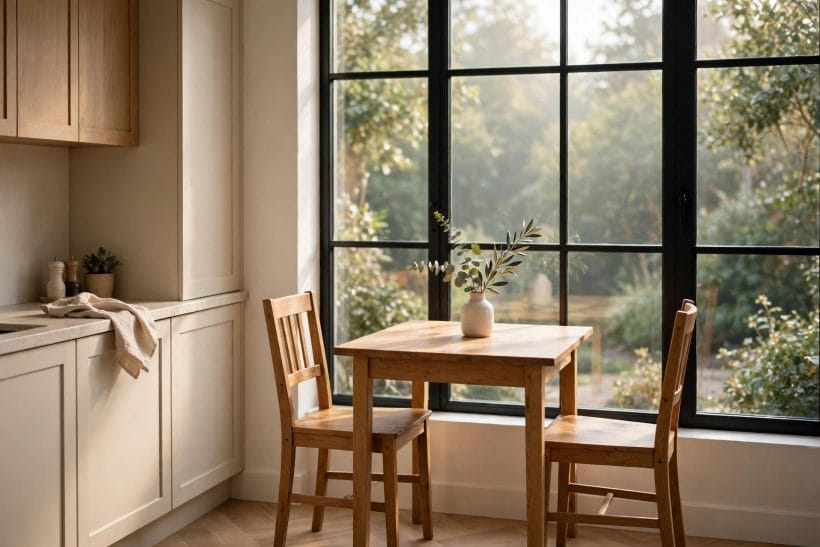
A dining table should sit comfortably with the room around it rather than competing with it. Timber tones, leg shapes and top finishes echo the room’s other furniture, and a table that repeats a tone or material already present in the room feels settled from the first day. House interiors feel calmer when the dining table shares the room’s palette instead of introducing a clashing finish.
Style also means scale and visual weight. A chunky trestle table anchors a generous room but can overwhelm a compact nook, while a slim pedestal table suits a lighter room but can feel insubstantial beside heavy sideboards. Look at the room as a whole, including window frames, shelving and lighting, before deciding how much visual weight the table should carry.
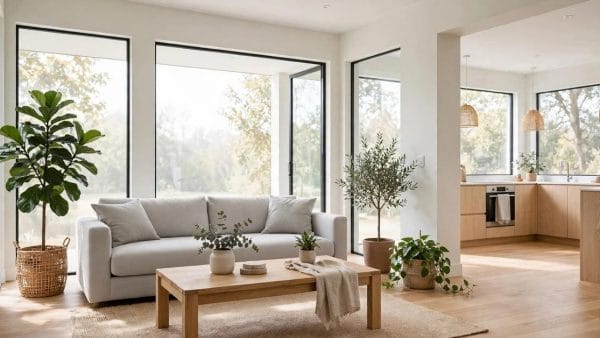
For open-plan homes, the dining table also bridges kitchen and living areas. Kitchen dining corners and eat-in layouts ask the table to work beside worktops and cooking zones, so finishes that wipe clean and shapes that leave cooking paths clear suit these rooms. A table that respects the kitchen workflow will be used far more than one that fights it.
10. Protect the Surface and Plan Everyday Care
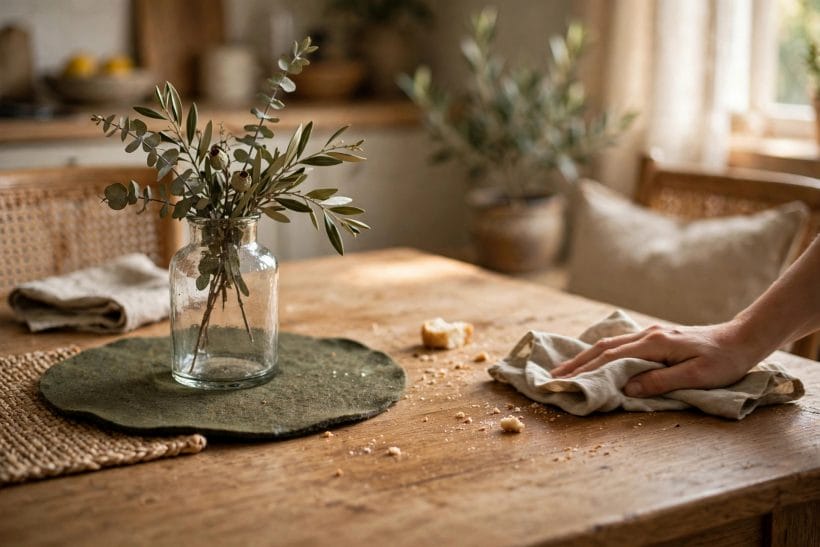
Everyday care starts the day the table arrives. Mats under hot dishes, coasters under drinks, felt pads under vases and a prompt wipe after spills protect any top, whatever its material. Teach the household the same habits, since a single hot pan or a forgotten wet glass can mark a surface that careful years kept clean.
Cleaning routines differ by material, so learn the maker’s guidance before the first spill rather than after it. Wood tops generally ask for a soft cloth and gentle cleaning, stone tops may need sealing on a schedule, and veneer tops ask for care against standing water and sharp objects. Keep the care guidance with the household notes so anyone can check it.
Plan for the life of the table, not just its first year. Ask how scratches, dents and stains can be repaired, whether spare parts or matching leaves remain available, and how the finish ages with sunlight and use. A table whose wear can be softened and repaired will serve far longer than one whose first mark feels like the end of its good looks.
Final Considerations
Choosing a dining table well comes down to a short set of honest answers: who eats here daily, how often guests join, how much room the table truly has, and how much care the household will give it. Shape, material and base follow from those answers, and style settles naturally once the practical questions are answered. Run through these dining table checks once more before ordering, and let the room and the household, not the showroom, make the final call.
When the table arrives, live with it before judging it. Eat at it, work at it, host at it and notice where chairs catch, where light falls and where traffic tightens. Small adjustments, like shifting a rug, moving a sideboard or changing a pendant height, often settle a new table into a room better than any second purchase. A dining table earns its place over shared meals, and the right one quietly supports them all. For broader inspiration, explore tiny house designs and kitchen ideas to see how dining tables sit within whole-home plans.
Finally, keep the decision grounded in the room you have rather than the room you wish you had. A table that fits the space, seats the household comfortably and asks for care the household will actually give will outlast a grander choice that crowds the room or demands upkeep nobody enjoys. Measure honestly, sit at the table before deciding, and choose the table that makes everyday meals easier and gatherings more welcoming.



0 Comments