

No colour settles a room quite like this one. Get the depth, light and layers right, and bedtime starts the moment you open the door.
These seventy-five ideas cover layouts, shades, storage and styling in a sensible order, so you can build a restful space that looks composed in daylight and feels like a deep breath at night.
1. Choosing Your Shade: Depth, Light and the At-a-Glance Guide
Start with the light, not the paint chart. North-facing rooms cool every shade further, so warmer, greyer tones stay friendly there, while bright south-facing rooms can carry cleaner, deeper colour without turning cold. Decide how much of the room the colour will own: one wall is a backdrop, four walls are an embrace, and the ceiling is a commitment best tested with a large painted board moved around for two days. A blue bedroom works when the shade, the daylight and the bedding are chosen as one team rather than three separate purchases. Test large samples, live with them through a full day, and check with your paint supplier which finish suits your walls, because matte hides flaws while satin survives wiping. The testing discipline in our tiny house interior paint colours guide applies perfectly here.
| Shade Family | Feels Like | Best Paired With |
|---|---|---|
| Pale mist | Airy, coastal, gentle | White linen and pale timber |
| Mid denim | Relaxed, familiar, liveable | Warm greys and worn leather |
| Deep navy | Cocooning, dramatic, sleepy | Brass, cream and walnut |
| Teal-leaning | Rich, artistic, warm-cool balance | Mustard, rust and charcoal |
| Grey-leaning slate | Calm, tailored, grown-up | Stone, chrome and crisp cotton |
| Dusty cornflower | Romantic, vintage, soft | Floral cotton and painted furniture |
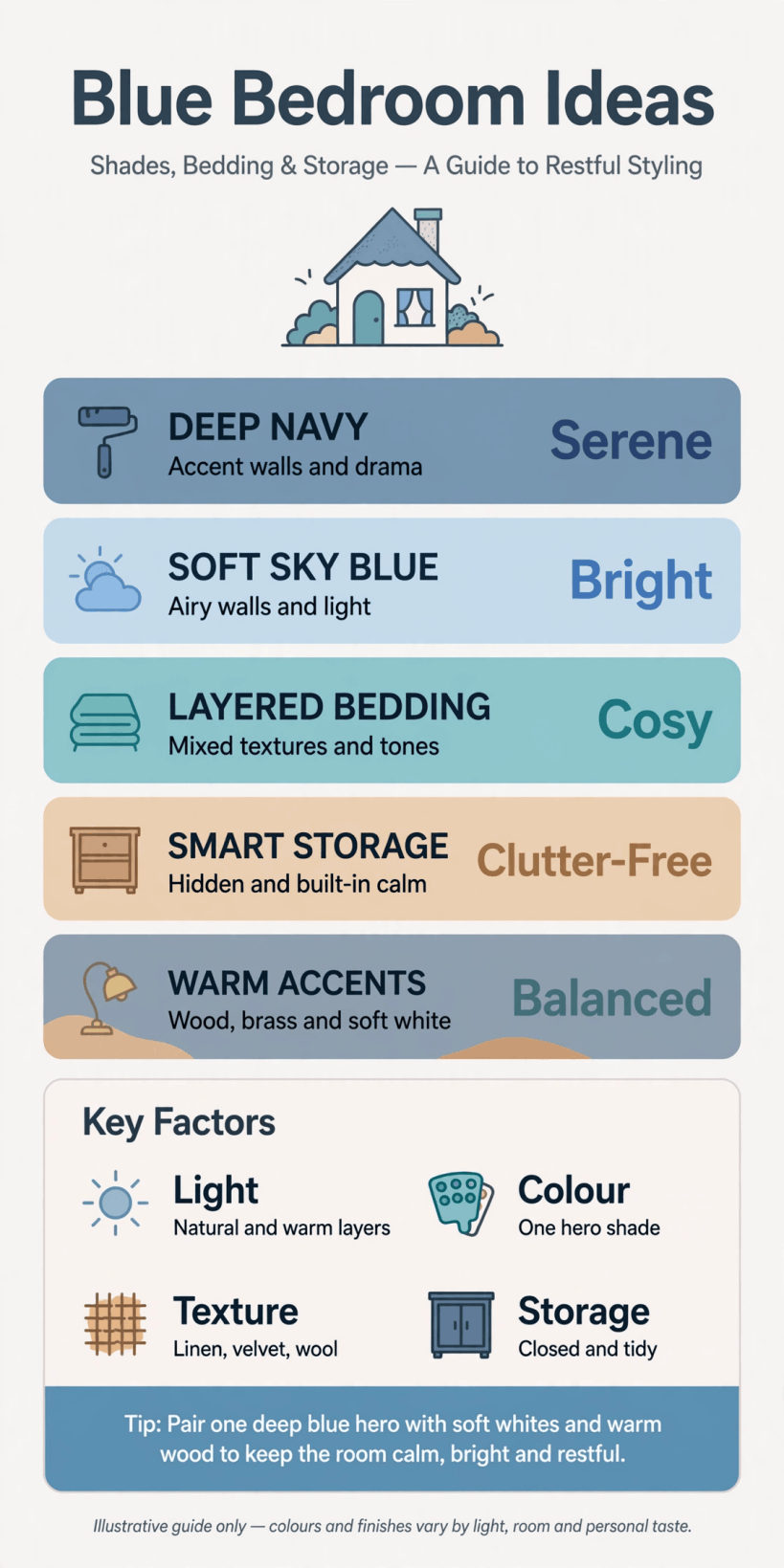
Shade families, partners and lighting notes in one quick reference for the paint-shop trip.
2. Layouts That Start With the Bed
The bed is the room’s landscape, so place it before anything else and let storage, light and walking routes arrange themselves around it. You need honest space at both sides, a view that rewards waking, and a route to the door that never involves climbing over a partner or a laundry basket. The space-planning in our tiny house bedroom ideas is worth borrowing even in a large room, because small-space discipline produces calm bedrooms at any size.
1. Headboard wall as the only feature. Centre the bed on the plainest wall, colour it deeply, and keep every other wall quiet so the bed owns the room completely.
2. Window-facing wake-up. Angle the bed toward the morning window where the plan allows it, so daylight, not a screen, is the first thing the day shows you.
3. Symmetrical twin tables. Matching tables and lamps calm the visual field and end the nightly negotiation about whose side holds the water, book and charger.
4. Asymmetrical, lived-in balance. A table one side and a small desk or chair the other suits single sleepers and rooms where one side works harder.
5. Bed in the alcove. Tuck the bed into a natural alcove with curtains or a shelf above, creating a room-within-a-room that children and adults both adore.
6. Floating bed with walk-around space. In a generous room, pulling the bed off the wall with a console behind it creates a hotel-like circuit and a display surface.
7. Low platform for small rooms. A low frame increases the sense of ceiling height and pairs beautifully with deep wall colour that might otherwise feel enclosing.
8. Corner daybed arrangement. A daybed along two walls serves a guest room, a reading teenager and a Sunday nap without owning the whole floor plan.
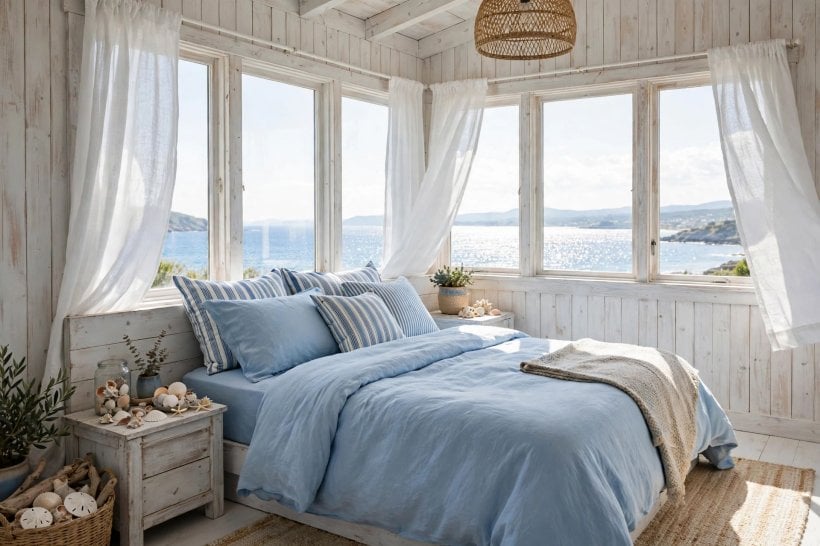
9. Keep the doorway sightline serene. Arrange the room so the first view from the door is the made bed and a calm wall, never storage, mirrors or visual clutter.
3. Colour Partnerships That Never Fight
Blue is generous: it flatters warm metals, pale timbers, crisp whites and most other colours, provided the proportions behave. Let one partner be warm, because an all-cool room can feel like a waiting room in winter. Repeat each partner at least twice so nothing looks lost, and keep the total cast small enough to describe in one sentence. The schemes in our modern tiny house bedroom ideas show how restraint makes a single colour feel expensive.
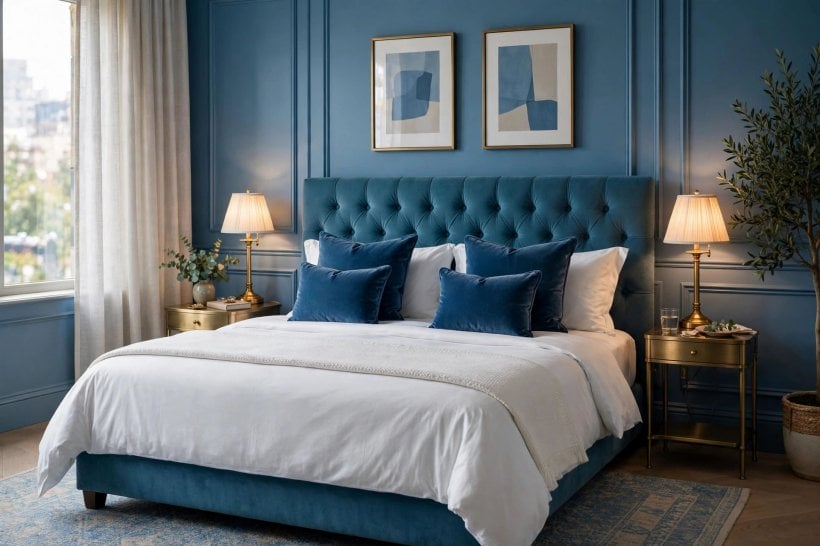
10. Navy with warm white. The classic pairing: deep walls or bedding, warm white linen and timber, and one brass detail to keep it from feeling nautical-costume.
11. Denim with tan leather. Mid-tone walls meet a leather cushion, belt or bench, giving the room a worn, travelled comfort that improves with age.
12. Pale mist with bleached oak. Barely-there colour and pale wood create the airy, coastal calm that small, darker rooms benefit from most of all.
13. Teal-blue with mustard. One mustard cushion or throw against teal-leaning walls is the oldest stylist trick in the book, because it always works.
14. Slate with stone grey. A tone-on-tone grey partnership feels tailored and hotel-quiet; texture, not contrast, does all the interesting work here.
15. Cornflower with cream and rose. Dusty colour plus cream bedding and a single rose accent gives vintage softness without a hint of nursery sweetness.
16. Ink walls with pale everything. The boldest scheme: near-black-blue walls, then white bedding, pale rugs and light art so the room glows from its centre.
17. Blue with natural rattan and cane. Woven textures warm any shade, add holiday ease and suit baskets, headboards and pendant shades equally well.
18. Two blues, layered. Pale walls, mid-tone curtains and deep bedding in one family create depth that photograph-loving guests always ask about.
4. Bedding, Layers and the Five-Minute Hotel Bed
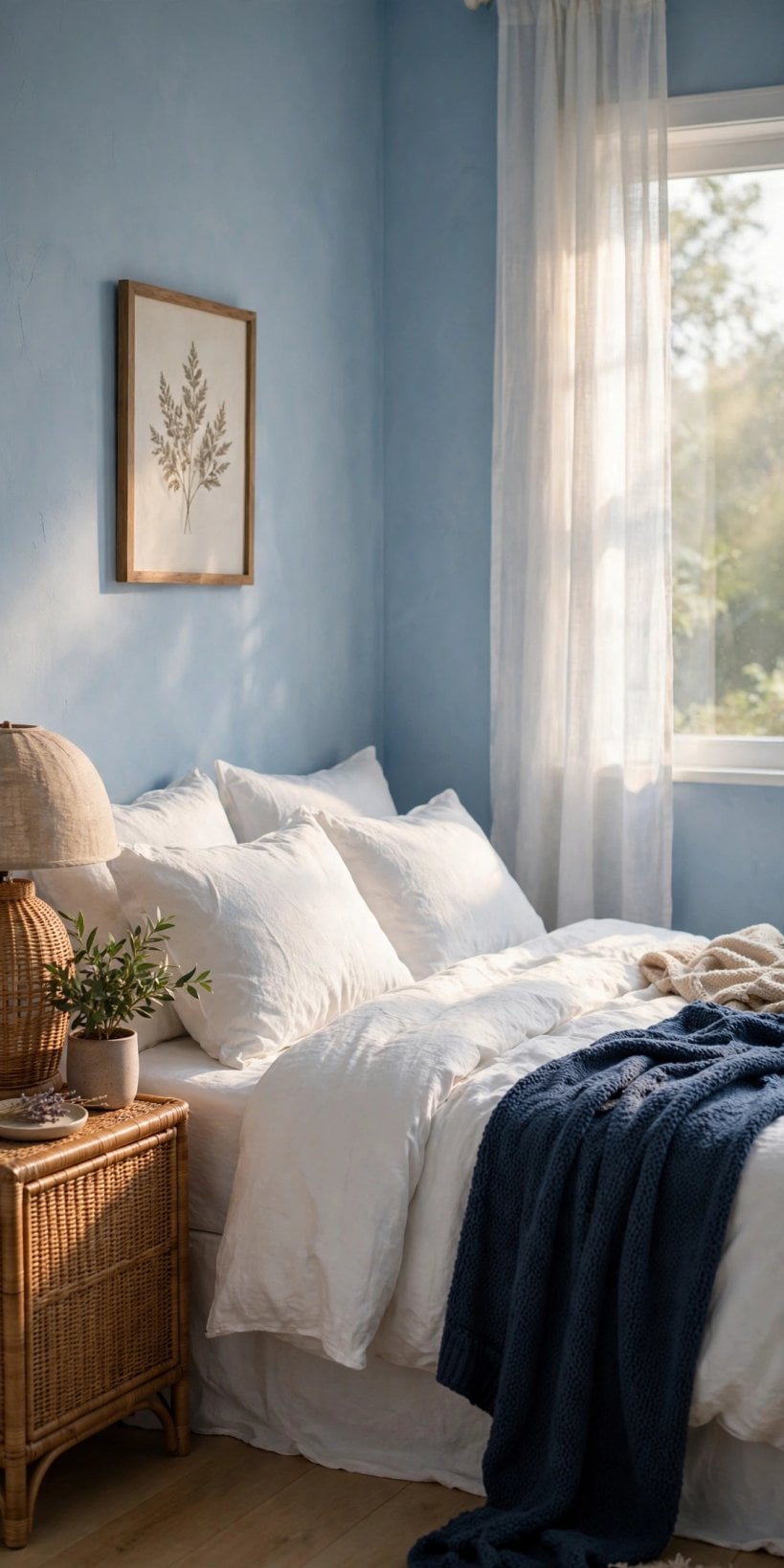
Bedding is where this colour scheme meets your skin, so buy the best hand-feel the budget allows and layer for seasons rather than owning one heavy set. A calm recipe repeats everywhere in this guide: a smooth base layer, a mid layer for warmth, one textured throw, and pillows in two sizes only. Washability matters more than thread-count boasting, and a spare folded set in the room ends the midnight search through landing cupboards.
19. White base, coloured top layer. Crisp white sheets under a coloured throw or quilt give hotel freshness with the colour commitment kept to one washable piece.
20. Reversible duvet for two moods. A reversible cover, deep on one side and patterned on the other, redecorates the bed in the time it takes to shake it out.
21. Linen for summer, brushed cotton for winter. Swapping the sheet fabric twice a year tunes the bed to the season better than any thermostat argument ever will.
22. One long lumbar cushion. A single long cushion replaces the cushion mountain, looks tailored, and takes one second to move at bedtime instead of ten.
23. Throw folded at the foot. A throw in the room’s warm partner colour, folded in thirds at the foot, is the stylist’s signature and the napper’s best friend.
24. Pattern only in the smallest piece. Keep pattern to a cushion or the reverse of the throw, so the room stays restful and the laundry stays interchangeable.
25. A bed skirt or valance that disappears. In the wall colour or plain white, it hides storage and frames under-bed boxes without adding a single visual event.
26. Spare set stored in the room. Fold the spare set inside one of its own pillowcases and keep it in the bedside drawer, labelled by season.

5. Walls, Headboards and Artwork
Walls carry the colour, so give them one clear job each. The headboard wall can be painted, panelled, papered or simply hung with a large textile, but it should be the only wall performing. Headboards themselves can be tall and upholstered for readers, low and timber for minimalists, or painted directly onto the wall for the smallest budget in this entire guide. Artwork above a bed should be light, securely fixed and calm in subject, for obvious reasons of both sleep and safety.
27. Painted panel moulding. Simple applied moulding rectangles on the headboard wall, painted out in the wall colour, give tailored architecture for the price of timber strips.
28. Upholstered headboard in a deeper tone. One shade deeper than the walls, in a washable weave, it reads luxurious and hides the evidence of bedtime reading habits.
29. Timber slat section. A run of warm timber slats behind the pillows balances cool walls and adds the crafted note guests photograph first.
30. Large textile hanging. A woven hanging or quilt softens acoustics, adds pattern without paint and moves with you from home to home effortlessly.
31. Gallery pair, not a gallery wall. Two large, calm prints hung low and close above the headboard look deliberate; twelve small frames look like a waiting room.
32. Picture ledge for changeable art. A slim ledge lets art, books and postcards rotate with the seasons without new holes or commitment issues.
33. Painted ceiling in the palest tint. The lightest version of the wall colour overhead feels like sky and dusk at once, and makes white ceilings look stark by comparison.
34. Half-painted wall. Colour to picture-rail height with soft white above suits low ceilings and renters, and the line can follow the headboard height exactly.
6. Storage That Keeps the Calm Visible
Restful rooms hide their logistics. Clothes, chargers, books and laundry all need assigned homes at the height and place they are actually used, or they will colonise the bedside table by Thursday. Closed storage calms a sleeping space more than open shelves ever can, and the discipline in our tiny house closet design ideas scales up beautifully: zones, labels and one-in-one-out honesty.
35. Bedside drawers, not open tables. One drawer swallows chargers, creams and cables, leaving the surface for a lamp, a book and a glass of water only.
36. Under-bed boxes on wheels. Wheeled, lidded boxes turn dead space into the out-of-season wardrobe, and wheels mean they are actually used, not abandoned.
37. Wardrobe doors painted out. Painting fitted wardrobe doors in the wall colour makes storage architecture disappear, doubling the room’s sense of calm instantly.
38. A lidded laundry basket in the room. Laundry with a home and a lid stops the famous chair-drobe forming; choose a woven texture to keep it furniture-like.
39. Hooks behind the door. Tomorrow’s outfit, dressing gowns and gym kit live on door hooks, off the bed and off the floor, every single day.
40. Trunk or bench at the foot. A foot-of-bed bench holds spare blankets, gives dressing a seat and visually anchors the bed in larger rooms.
41. Charging drawer with a cable hole. Phones charge inside a drawer overnight: cooler for batteries, darker for sleep and tidier for everyone involved.
42. One small tray for jewellery and watches. A single tray on the dresser corrals the tiny, losable things that otherwise migrate across every surface in the room.
7. Lighting and Window Dressing for Real Sleep
Bedrooms need light in three moods: bright enough to dress and clean by, soft enough to read by, and almost none at all for sleeping. Warm-toned bulbs, dimmers and lamps at pillow height cover the first two; blackout lining, honestly fitted, covers the third. Curtains in the wall family keep the colour story continuous, while sheers protect daytime privacy without stealing the light the shade was tested in. Borrow the layering habit from our tiny house bedroom decor ideas and test every bulb from the pillow, not the doorway.
43. Wall lights at reading height. Fixed reading lights free the bedside surface, aim light at the book instead of a partner’s eyes and look quietly hotel-smart.
44. Dimmers on every circuit. One dimmer transforms a practical ceiling light into evening ambience; it is the cheapest mood upgrade in this entire list.
45. Blackout lining, properly wide. Curtains wide and long enough to close past the frame stop the streetlight stripe that ruins deep sleep for light sleepers.
46. Sheer layer for daytime. A sheer behind the main curtain softens glare on screens and neighbours’ sightlines while keeping the room’s daylight personality.
47. Low, warm night path light. A gentle low-level light toward the door or bathroom prevents the phone-torch expedition and the stubbed toe at 3 a.m.
48. Matching lamps for symmetry schemes. Where the layout is symmetrical, identical lamps complete the calm; where it is relaxed, one lamp and one wall light keep it casual.
49. Curtain colour one tone deeper. Curtains a single tone deeper than the walls add tailored depth without introducing a new colour to manage.
50. No overhead light as the only light. Always give the room a second, lower source; faces, books and moods all look kinder in lamplight than in ceiling glare.
8. Small Rooms, Guest Rooms and Children’s Versions
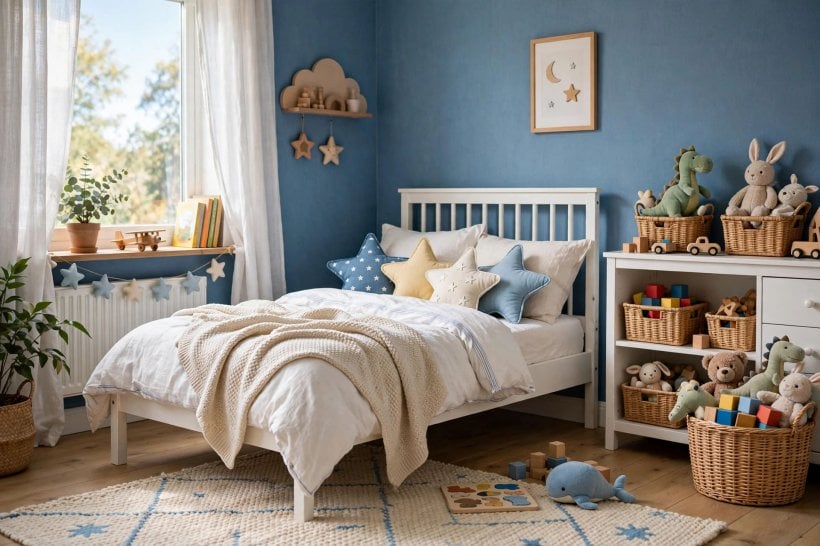
Small rooms should take the colour bravely but the furniture lightly: pale-to-mid shades, leggy pieces that show floor, and mirrors placed to catch window light rather than the unmade bed. Guest rooms win with the same palette plus genuine hospitality, while children’s versions need washable everything and a colour depth that survives the journey from toddler to teenager without a full repaint. The flexible thinking in our tiny house decorating ideas is made for exactly these multi-duty rooms.
51. Mid-tone walls, white ceiling, pale floor. The small-room formula: colour confidence at eye level, lightness above and below, and furniture that floats on legs.
52. Mirror opposite the window. Placed to bounce daylight, not reflections of laundry, a mirror doubles a small room’s light and its sense of air.
53. Guest tray with water and a note. A carafe, a glass and a handwritten Wi-Fi note on the bedside make guests feel expected rather than accommodated.
54. Luggage rack or clear surface. Guests need somewhere that is not the bed for a suitcase; a folding rack or an honest empty chair solves it.
55. Children’s washable walls. A wipeable finish in a mid shade hides fingerprints between washes and survives the sticker years with dignity.
56. Grow-with-them accessories. Keep walls a lasting mid-tone and let cushions, art and lamps carry the age-specific themes that change every birthday.
57. Reading corner for children. A cushion, a small shelf and a warm lamp in the room’s calm corner build the bedtime-reading habit architects cannot.
58. Spare-room honesty. If the room also stores luggage and gift wrap, zone it behind a curtain in the scheme’s tones instead of pretending otherwise.

9. Texture, Scent and the Senses You Forget to Plan
A restful room is smelled, heard and felt as much as seen. Natural fibres at the bed, a rug with real depth under bare feet, and curtains that move a little air all register before the colour does. Keep scent gentle, singular and optional, soften the room’s sounds with textiles, and let one slightly imperfect, handmade thing exist in every scheme so the calm never tips into showroom sterility.
59. Rug that fits the waking step. Size the rug so both feet land on it from the bed; a rug you step over onto cold floor fails its only job.
60. Natural fibres against the skin. Cotton, linen and wool at the bed feel right in every season and wash without the static drama of synthetics.
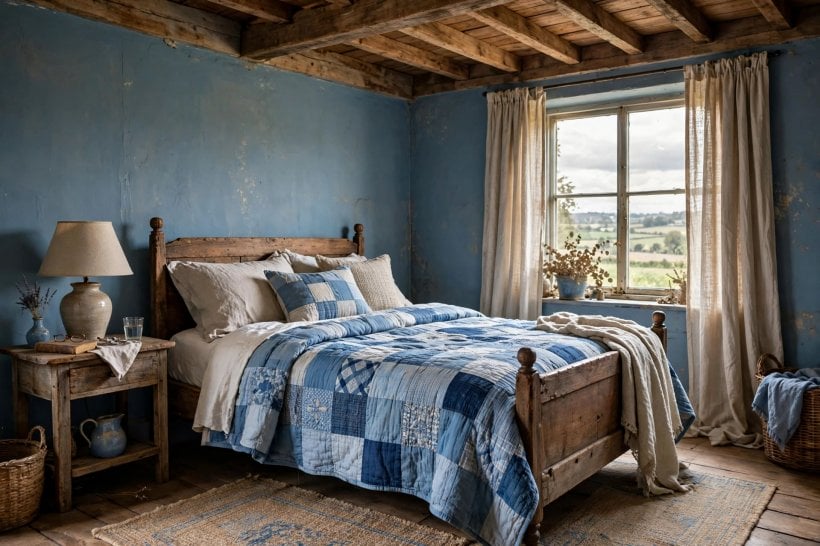
61. One handmade or vintage piece. A grandmother’s quilt, a flea-market stool or a hand-thrown lamp keeps the scheme human and quietly unrepeatable.
62. Curtains that hush the room. Lined, full curtains absorb street sound and radiator tick, a benefit nobody photographs and everybody sleeps through gratefully.
63. A single, gentle scent. One candle or a lavender bag in the drawer, never a competing chorus, so the room smells like itself and nothing louder.
64. Plants that tolerate bedrooms. A hardy plant on the dresser softens corners and improves the morning view; choose varieties that forgive irregular watering.
65. Books as the main ornament. A small, edited stack of real reading beats decorative objects for warmth, colour and the invitation to actually unwind.
66. Soft-close everything. Felt pads, soft-close drawers and a quiet door latch remove the small bangs that make a calm room feel careless at midnight.
10. Routines, Refreshes and Keeping It Restful
The final ideas are habits, because styled rooms decay without them. A two-minute morning reset, a weekly laundry rhythm and a seasonal edit keep the scheme at its photographed best with almost no effort. Refresh colour through the smallest textiles first, keep spare paint labelled for the inevitable suitcase scuff, and review light bulbs and blackout performance each autumn. Our smart tiny house design ideas preach the same gospel: systems, not heroic weekend efforts, keep small spaces serene.
67. The two-minute morning bed. Smooth, fold, plump, done: a made bed is the room’s whole mood, and it costs less time than finding your keys.
68. Weekly surface reset. Bedside surfaces return to lamp, book and water weekly, with everything else rehoused before it becomes archaeology.
69. Seasonal textile swap. Cushion covers and throws rotate by season, giving the room a new chapter four times a year for the price of storage space.
70. Paint touch-up pot, labelled. A small labelled pot of the wall colour with a brush in the wardrobe fixes travel scuffs before they become a repainting debate.
71. Autumn light check. Test blackout, bulbs and the night light before the dark months, when fixing them matters most and shops are busiest.
72. One-in-one-out for bedside books. The reading stack stays honest at three; finished books return to shelves, keeping the calm surface calm.
73. Guest-ready in fifteen minutes. A stored kit (spare set, tray items, towels) plus the morning routine makes the guest version achievable without panic.
74. Photograph your favourite version. When the room feels perfect, photograph it; future refreshes then have a target instead of a vague memory.
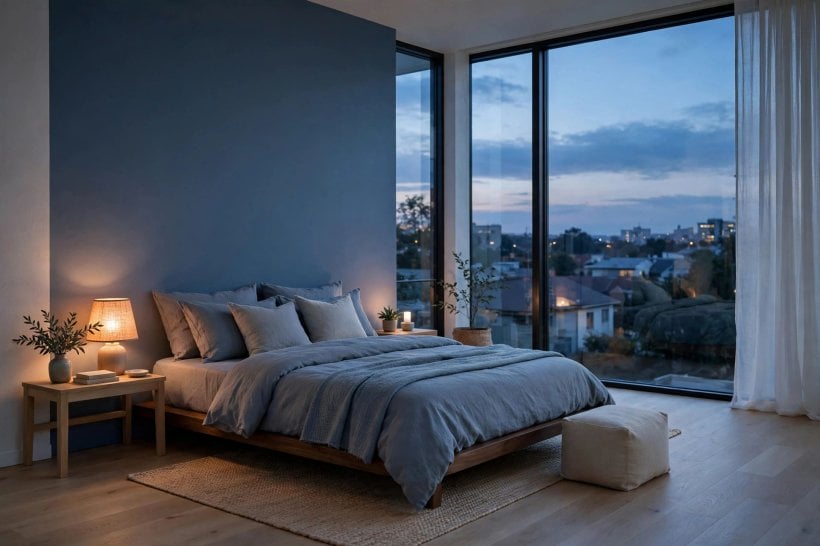
75. Protect the wind-down hour. Dim the lamps, charge phones in the drawer and let the room’s colour do its evening work: the ritual is the real design.
Final Considerations
Choose the shade with your light, layer it with warmth, and defend the room’s calm with storage and small routines. Test before committing, keep finishes washable where life touches them, and remember that the most restful version of this colour is never the boldest or the palest, but the one matched honestly to the room, the sleeper and the life actually lived there. Do that, and the door will keep giving you that small, reliable exhale at the end of every day, which is the whole point of a bedroom in any colour at all.


0 Comments