

A faucet is touched more often than almost any other fitting in the house — first thing in the morning, last thing at night, and a dozen times between. Chosen well, it disappears into the routine; chosen badly, it drips, stains and reminds you of itself daily.
This guide gives the checks that decide a good faucet: fit, materials, valves, finishes, shapes and professional fitting. It names no brands and crowns no winners — just the questions to ask of any tap.
Related Guide: Moen vs Delta vs Kohler: What To Check Before You Choose
Related Guide: Best Faucet Brands: What Makes a Faucet Reliable and What to Compare
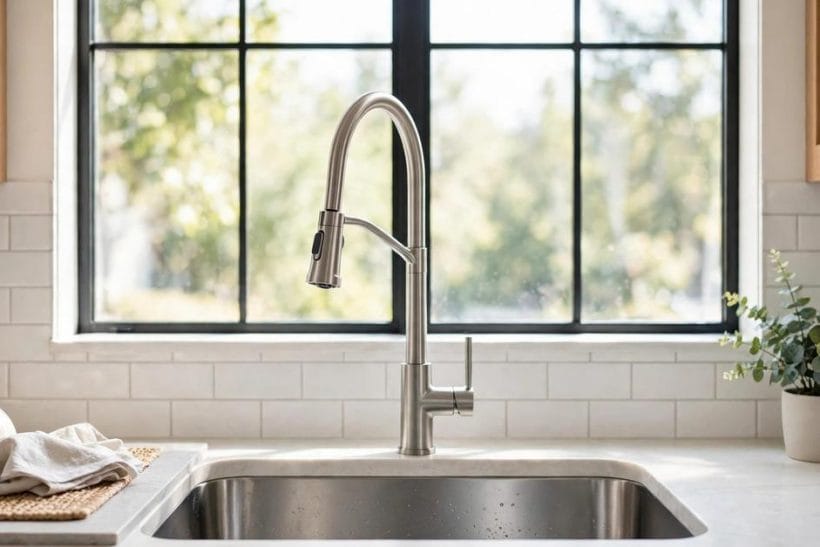
1. Faucets at a Glance
Ask homeowners what to check in a faucet and most start with how it looks. Fitters start elsewhere — with the sink. A tap is a working fitting matched to a specific basin, bath or kitchen sink, and the wider bathroom ideas collection treats it as such: measure what you have first, and let style follow inside those limits.
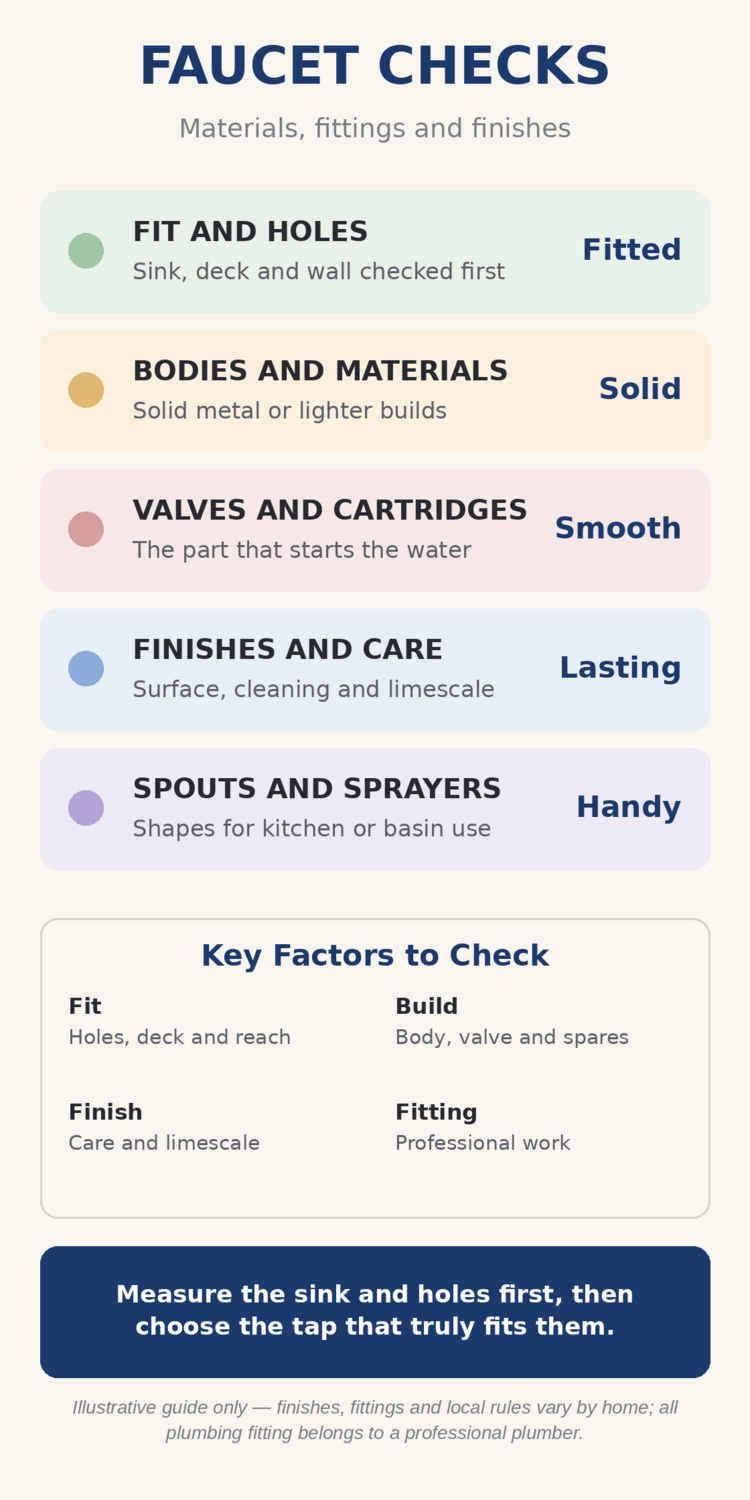
The five checks in the table below are the whole method in miniature. Work through them in order and you will set aside most unsuitable taps on paper, before a handsome finish tempts you.
| Family | Character | What it means |
|---|---|---|
| Fit and Holes | Sink, deck and wall checked first | Fitted |
| Bodies and Materials | Solid metal or lighter builds | Solid |
| Valves and Cartridges | The part that starts the water | Smooth |
| Finishes and Care | Surface, cleaning and limescale | Lasting |
| Spouts and Sprayers | Shapes for kitchen or basin use | Handy |
One honest note: people often ask which maker stands behind a particular range, and the truthful answer is that ranges and arrangements change constantly, and no guide can settle them for you. What can be settled — build, finish, warranty and spares — is printed on the packaging. Buy by the checks below and the name becomes the least important line on the box.
2. Start With the Sink and the Holes
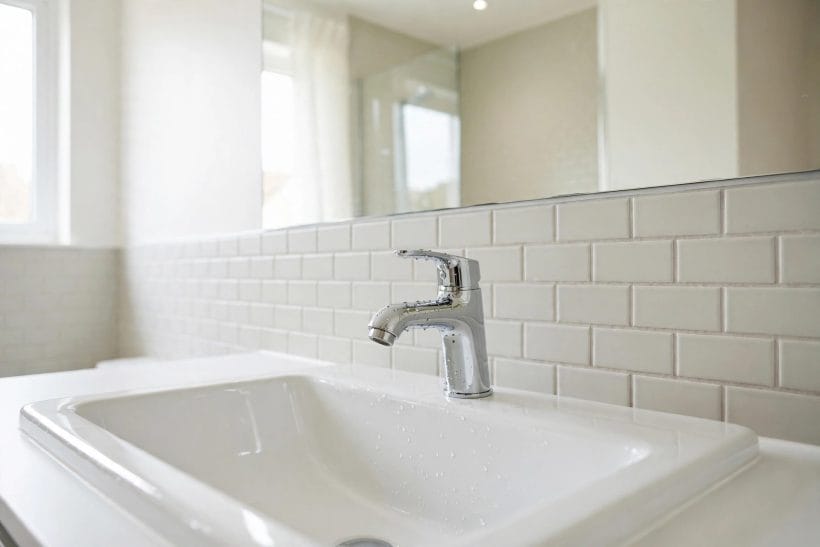
Every faucet begins at the surface it mounts on. A basin, bath or kitchen sink arrives with its fitting points already decided, and the tap must match that arrangement exactly. It is the least glamorous check here and the one that saves the most disappointment.
Measure Before You Look at Styles
Before looking at a single finish, note what you have: where the tap sits, how many holes the sink offers, how far apart they are, and how much room sits behind them for levers to move. Photograph the arrangement and take the notes with you. A tap that cannot be fitted to your sink is a return journey waiting to happen.
Deck-Mounted and Wall-Mounted
Most taps mount on the deck — the flat rim of the basin or the surface behind a kitchen sink — while others mount on the wall above, the spout reaching over the bowl. Wall mounting frees the deck and suits the clean-lined schemes in the white cabinets bathroom ideas collection, where the basin sits within a vanity. Either way, the pipework’s position decides what is possible — a fact about your room, not a preference.
Holes Decide More Than Looks
Hole patterns vary widely: a single hole for a mixer, separate holes for a pair of taps, wider spreads for bath fillers with handles set apart. Some sinks can be adapted and some cannot, and cover plates exist for some arrangements and not others. Check the pattern against the tap’s fitting notes before buying — never assume a handsome tap can be persuaded onto an unwilling sink.
3. Materials: Solid Bodies and Lighter Builds
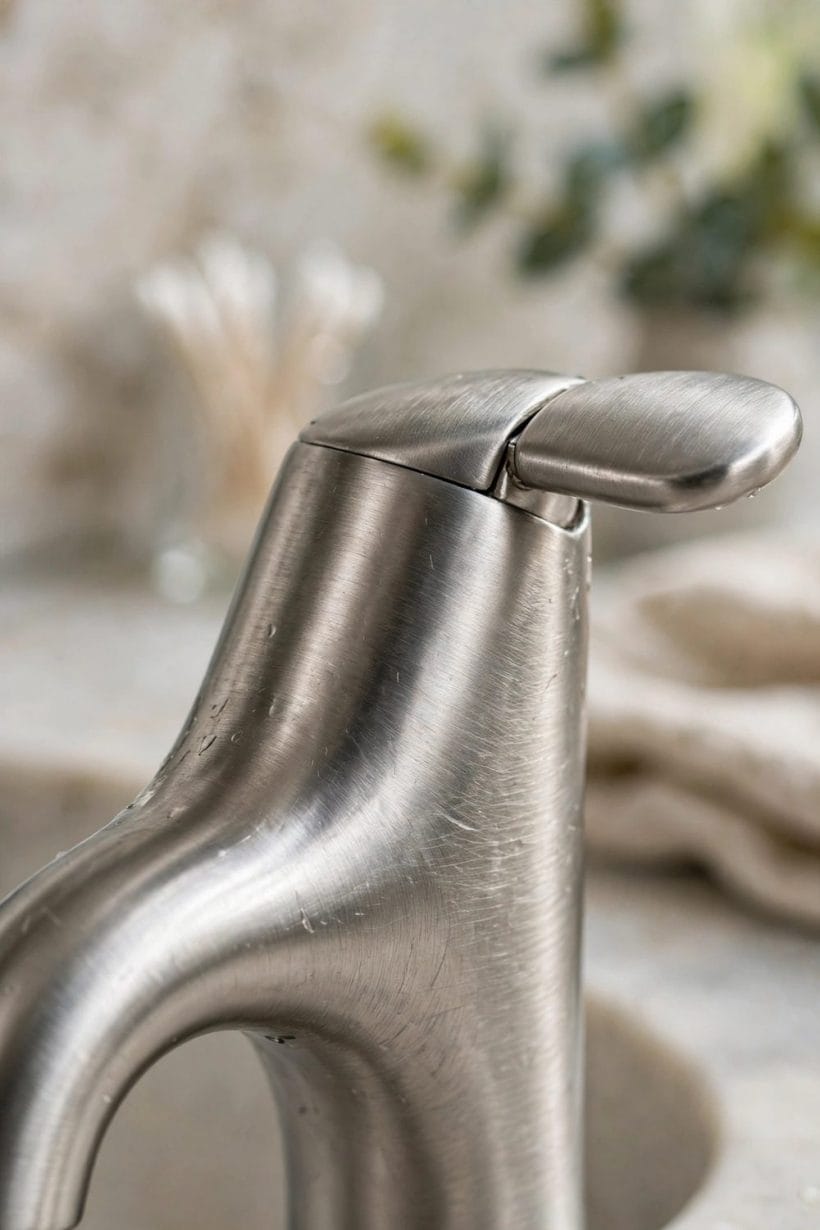
Under the finish, a faucet is a body — the casting the water passes through and the handles turn against. Bodies are made in different ways, and the difference is felt in the hand long before it is seen.
Solid Metal Bodies
Traditional tap bodies are cast from solid metal, and they carry a reassuring weight: the tap feels planted, the handles turn without flex, and the whole fitting feels made to be repaired rather than replaced. Weight alone is not proof of quality, but a solid, well-finished casting is the build most fitters trust, and the build most long-lived taps share.
Lighter Builds, Honestly Weighed
Lighter taps use thinner castings, pressed parts or plastic components where the water or the hand reaches less critically. They have their place — a cloakroom basin asks less of its tap than a family kitchen does — but the saving should be a conscious choice, not a surprise discovered when the handle begins to flex. Match the build to the workload its room will give it.
Weight in the Hand Tells a Story
In a showroom, pick the tap up and work its lever. A good action is smooth, even and free of wobble from first movement to last; a gritty action on the shelf will not improve at home. Check that threads and undersides look cleanly made. The underside is a tap’s least decorated surface, and makers who finish it carefully tend to have made the rest carefully too.
4. Valves and Cartridges
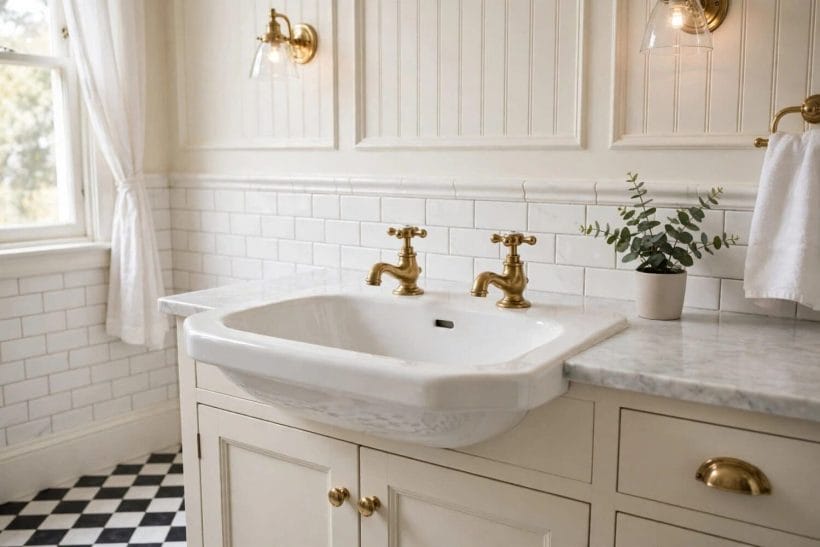
The valve is the part that starts and stops the water, and a faucet’s whole reputation quietly rests on it. Handles are only the furniture on top; the cartridge beneath decides whether the tap runs smoothly for years or drips within a season.
Ceramic Discs in General Terms
Most modern taps control water with a cartridge containing ceramic discs — hard, smooth plates that slide across one another to open and close the flow. In general terms, the discs are valued because they turn with a light, precise action, resist the wear older washer designs suffered, and need only a short turn between closed and fully open.
Drips Are Usually Wear Talking
A drip from the spout is rarely a mystery: it is usually the valve or its seals announcing wear, grit or age. The useful buying question follows — when this tap drips, can its working part be changed on its own? A tap whose cartridge can be swapped in a short visit has a future; one whose insides are sealed away will be replaced whole.
Spares Decide Whether It Can Be Kept
Before buying, ask whether replacement cartridges, seals and aerators for that exact model are sold openly and likely to remain so. Keep the model’s paperwork somewhere safe — the spares question is asked years later, usually with water already dripping, and the answer lives in the manual you kept. A maker who sells spares expects its taps to be kept.
5. Finishes and Care
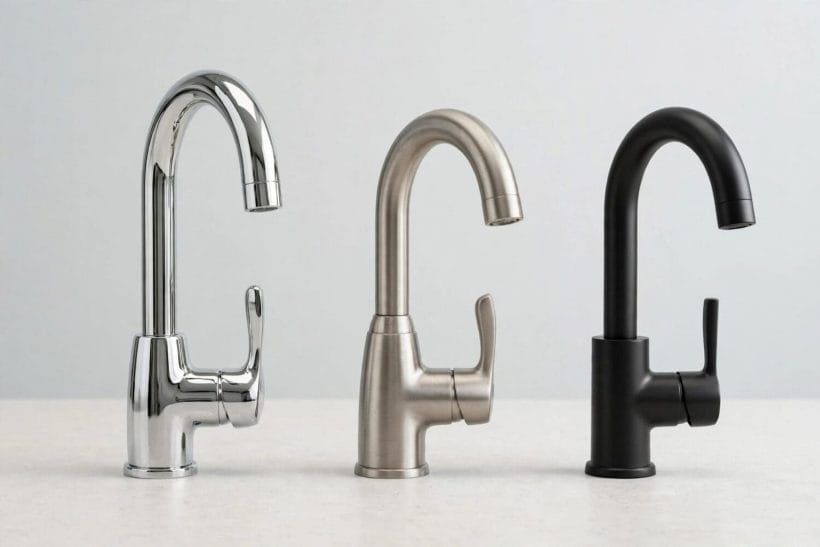
The finish is the tap’s public face — the surface you see, touch and clean every day. Finishes differ in how they show water marks and how forgiving they are in a hard-water home. Choose with your cleaning habits in mind, not just your eyes.
Chrome, Brushed and Matt
Bright chrome is the classic: hard, smooth and easy to wipe, though it shows every splash mark until you do. Brushed finishes scatter the light, hide fingerprints kindly and pair well with the softer tile palettes in the slate tile bathroom ideas collection. Matt finishes — black most often — give the strongest outline against pale ceramics and ask for the gentlest cleaning.
Limescale and Water Marks
Where the water is hard, scale gathers wherever water rests and dries: around the spout’s mouth, at the base of the body, along the lever’s joint. Polished surfaces show it soonest; brushed surfaces forgive it longest. A quick wipe with a soft cloth after the morning rush defeats most of it, and a shape that sheds water always looks cleaner than one with ledges.
Gentle Cleaning Only
Every finish is a surface, and surfaces are ruined by enthusiasm: abrasive pads, gritty creams and strong descalers can dull a finish that warm water and a soft cloth would have kept for decades. The maker’s care note is the authority — read it before the first clean, not after the first mark. If a finish needs products you would not enjoy using, choose another now.
6. Spouts, Sprayers and Everyday Shapes
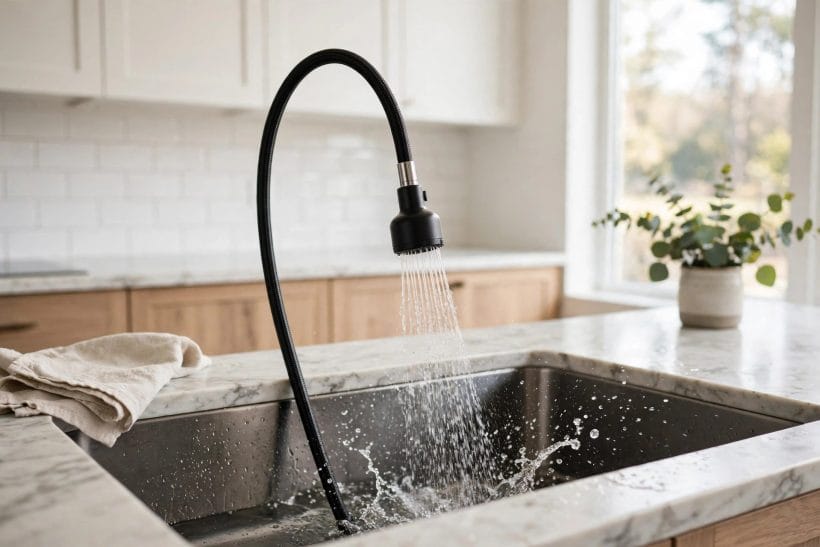
Shape is where a faucet meets daily life: the height a jug must pass under, the reach across a deep sink, the clearance hands need at a small basin. The same tap can delight in one room and irritate in another, purely through its spout.
Kitchen Pull-Downs and Sprayers
Kitchen taps work hardest at the largest sink in the house, and the pull-down sprayer is the room’s favourite answer: a tall arch for filling pots, a head that draws down to rinse the bowl where it lies. The kitchen ideas pillar shows the type in place. Check that the hose moves freely, the head docks securely, and the reach covers your sink’s corners, not merely its middle.
Basin Taps for Small Rooms
At a bathroom basin the virtues reverse: a modest spout, a short reach, water delivered into the bowl rather than at its rim. Tall, dramatic spouts over small basins splash heroically and soak sleeves. Choose height and reach from the basin in front of you — the pairing of tap and bowl is the design, and it is why calm bathrooms feel calm at the sink first.
Bath Fillers and Tall Spouts
Bath fillers work at the largest scale: a generous flow into a deep tub, handles placed for a seated reach, sometimes a hand shower alongside for rinsing. The tile surrounds in the bathtub tile ideas collection show how filler, bath and wall meet. Whatever the room, the spout must clear the rim and reach the water’s proper place.
7. Water Flow and Pressure
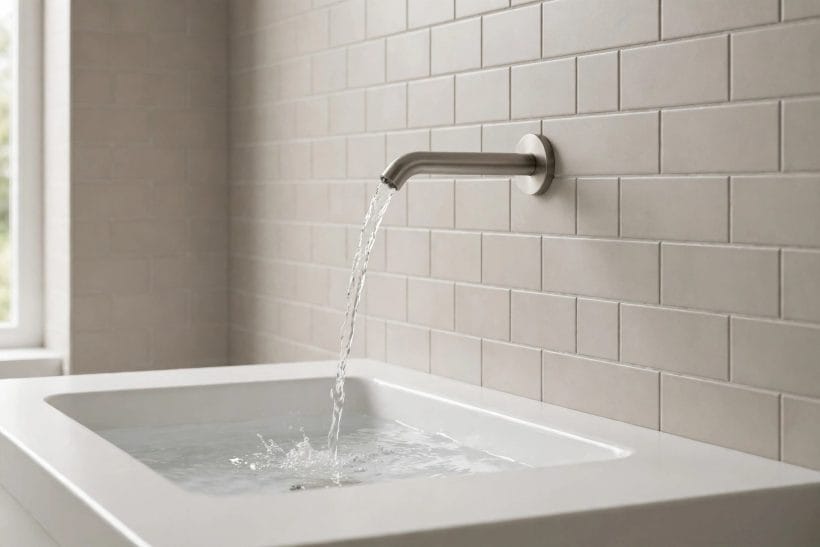
A faucet does not make pressure; it meets the pressure your home already has and shapes what arrives. Two identical taps can behave quite differently in two houses, which is why this section talks about fit between tap and home rather than figures.
Pressure Varies by Home
Homes differ: some are fed directly from the mains, others from a tank, and many mix the two across different rooms. Some taps work happily at gentle pressures; others expect a stronger supply and feel lazy without one. The tap’s own notes state the supply it suits, in general terms — match them to your home, and ask your plumber if you are unsure.
Aerators and the Feel of Flow
Many spouts end in a small aerator — a mesh that mixes air into the stream so the flow feels full and soft rather than thin and splashy. Aerators also catch grit, which is why a weakening stream is so often cured by rinsing that one small part. Judge a showroom stream’s feel as well as its force: a calm, even column signals a well-matched tap.
When Flow Feels Wrong
If a new tap disappoints — a thread of water where a stream should be, or a spray that splashes the whole basin — the cause is usually a mismatch, not a defect: the wrong tap for the home’s pressure, a partly blocked aerator, or a weak supply at that outlet. All three are conversations for the fitting stage, which the next section gives to a professional.
8. Fitting Is a Plumber’s Job
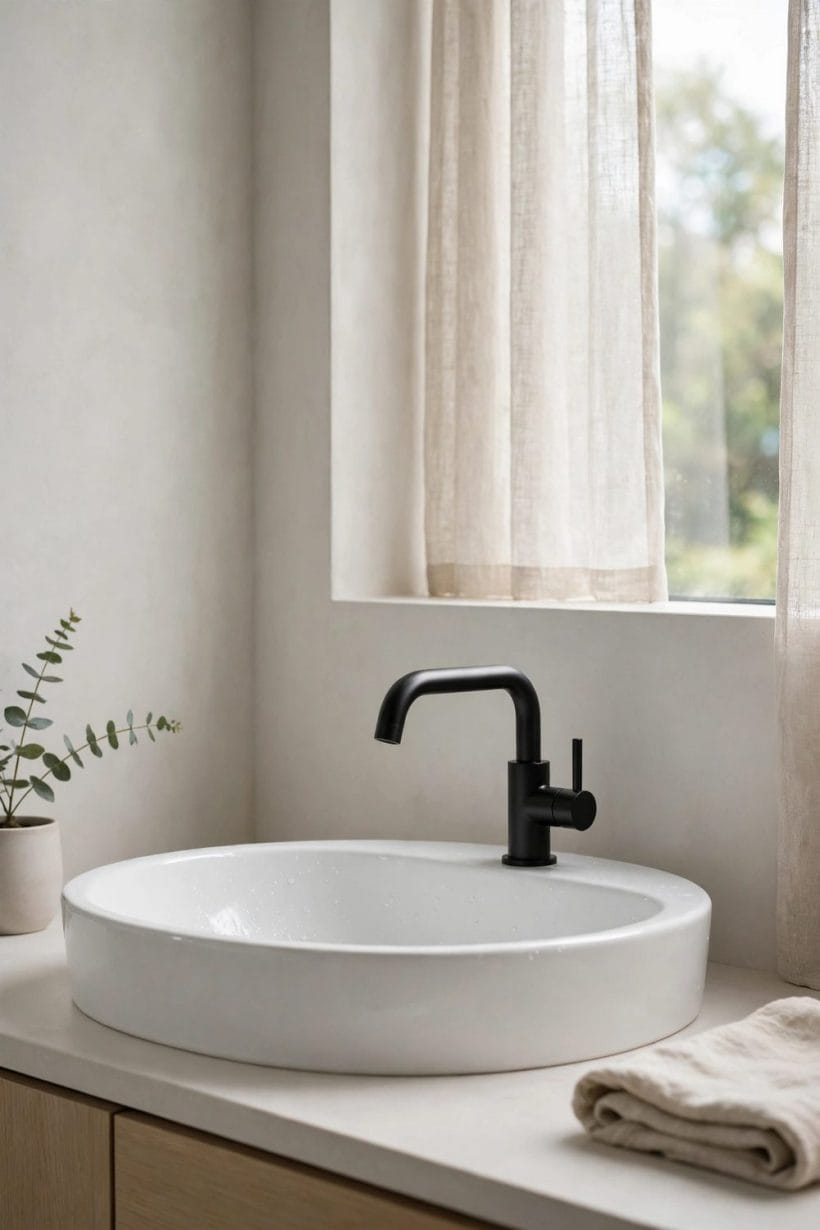
A faucet joins pressurised water to a finished room, in a tight space, above surfaces that water ruins. Its fitting is a professional plumber’s work, and this guide treats it as such throughout — the homeowner’s craft is the choosing and the brief.
What the Professional Brings
The plumber brings the unglamorous certainties: connections that do not weep, seals seated properly, supplies balanced between hot and cold, and a finished tap tested under pressure before the tools are packed away. In rooms where taps meet showers and baths together — the paired arrangements in the tub and shower side by side collection — that oversight lets several fittings share one calm wet zone.
Shut-Offs and Connections Vary
No two homes present the same job. Shut-off valves may sit under the sink or elsewhere, and in older homes may be limited in ways that shape the whole visit; connections differ in position and condition, and wall-mounted taps ask for pipework set into the wall itself. It is territory a plumber surveys daily and a first-time fitter discovers the hard way.
Your Part Is Preparation
Your part is everything before the visit: the tap chosen by these checks, its fitting notes read, the space beneath the sink cleared, and the model’s paperwork to hand. A plumber given a suitable tap, an honest brief and room to work will leave you a fitting you forget about — the highest praise a daily fitting can earn.
9. Warranty and Spares Checks

The last checks happen at the shelf, and they concern the years after fitting day. A faucet should outlast several redecorations of its room, and the maker’s cover and spares are where that length is either promised or quietly withheld.
Read the Maker’s Cover
Read the warranty as the maker wrote it: what it covers — body, cartridge, finish — and for how long, and what it asks in return, usually no more than gentle cleaning and professional fitting. Cover that separates the parts is normal and honest; a finish covered as seriously as the body says something good about both. Keep the wording with the paperwork, not in memory.
Keep the Model Details
Keep the exact model name, its fitting notes and its care note together, somewhere drier than under the sink. Years later, every useful conversation — a cartridge, a seal, a matching second tap for the other basin — begins with that model name. Photograph the paperwork as a backup; paper under sinks lives a damp and dangerous life.
Spares, Seals and Cartridges
Ask the spares question one final time: are cartridges, seals, aerators and handles for this model sold openly, and listed by model so a plumber can order without detective work? A yes turns future repairs into short visits. A vague answer is also an answer — it describes a tap designed to be replaced, and you may choose differently while choosing is yours.
10. Questions to Ask Before You Buy
Bring the decision together in the shop, in this order. The fitting questions first: does this tap match my sink’s holes, deck or wall exactly? Is it made for my home’s kind of supply? Does its spout clear, reach and suit the bowl it will serve?
The Daily-Use Questions
Then the living questions. Is the lever easy to turn with wet, soapy hands? Does the action feel smooth through its whole travel? Will the finish forgive my water and my cleaning habits, or record both? Stand at the display sink and mime the morning routine — filling, washing, rinsing — and let your hands vote before your eyes do.
The Keeping Questions
Then the long questions. Can its cartridge and seals be changed on their own, and are they sold openly by model? What does the maker’s cover actually promise, part by part? Have I kept a note of the model where I will find it in years to come? A tap that answers these well has earned its place; one that cannot has told you, kindly, to keep looking.
The Fitting Question, Last and First
And finally, the question beneath all the others: who is fitting it, and have they seen the tap’s notes and my sink’s arrangement before the day? Book the plumber as part of the purchase, not an afterthought. The best-chosen tap still arrives as a box of parts — professional fitting turns it into the quiet, daily pleasure it was bought to be.
Final Considerations
A faucet is a small decision with a long shadow: it will be touched on tired mornings and busy evenings for many years. The checks in this guide — fit, materials, valves, finishes, shapes, flow, professional fitting and spares — take an hour to apply and repay it daily.
Ask them of every tap, let the sink and the supply have their say before style has hers, and choose the fitting your home can keep. The wider bathroom ideas collection carries the rooms around it; this guide’s ambition is narrower and, in its way, larger — water that starts and stops, cleanly and quietly, for as long as you live with it.



0 Comments