

The best boathouses earn their place twice: once as a hardworking home for a boat, and again as the room everyone drifts towards on a slow afternoon by the water.
This collection of boathouse design ideas covers layouts, decks and styling in equal measure, so you can plan the practical bones first and still finish with a place that feels like a holiday.
1. Planning a Boathouse by the Water
Start at the shoreline. Note where the water is deepest, where the wind pushes waves, where the sun sets and where people actually arrive, by boat and on foot. A good boathouse design answers all four before it worries about paint colours. Check with your city, county or lake authority about shoreline permits, setbacks and any rules on docks and building over water, because these vary widely and can shape the whole project. If you love small buildings with a strong sense of place, the thinking in How to Build Your Own Tiny House applies here too: design the daily routine first, then the roofline.
| At a Glance | Good Choice | Why It Works |
|---|---|---|
| Most versatile layout | Boat bay below, living space above or beside | Storage and leisure each get their own zone |
| Best first upgrade | A wide deck at water level | Launching, sitting and drying gear all get easier |
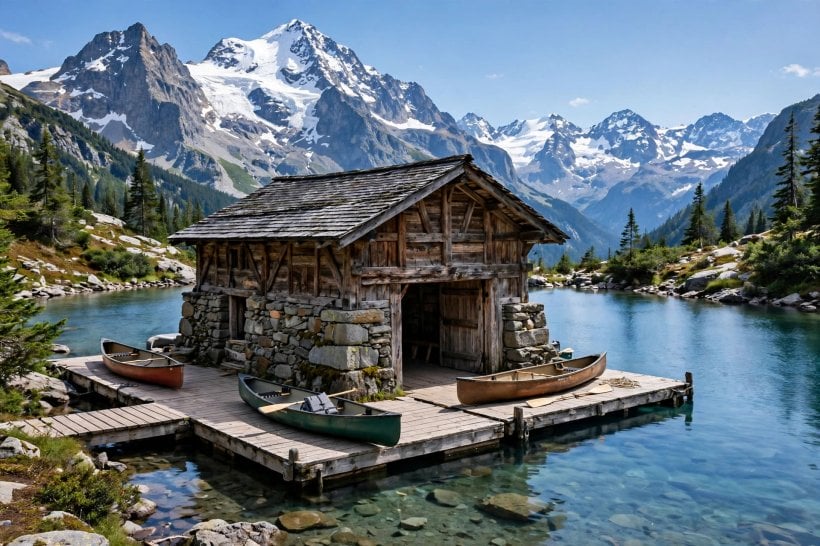
| Most classic look | Timber cladding with a pitched roof | Sits gently in a lakeside landscape |
| Biggest watch-out | Water levels and shoreline rules | Floods and permits shape what is possible |
| Best finishing touch | Big doors that open the room to the lake | The view becomes part of the interior |
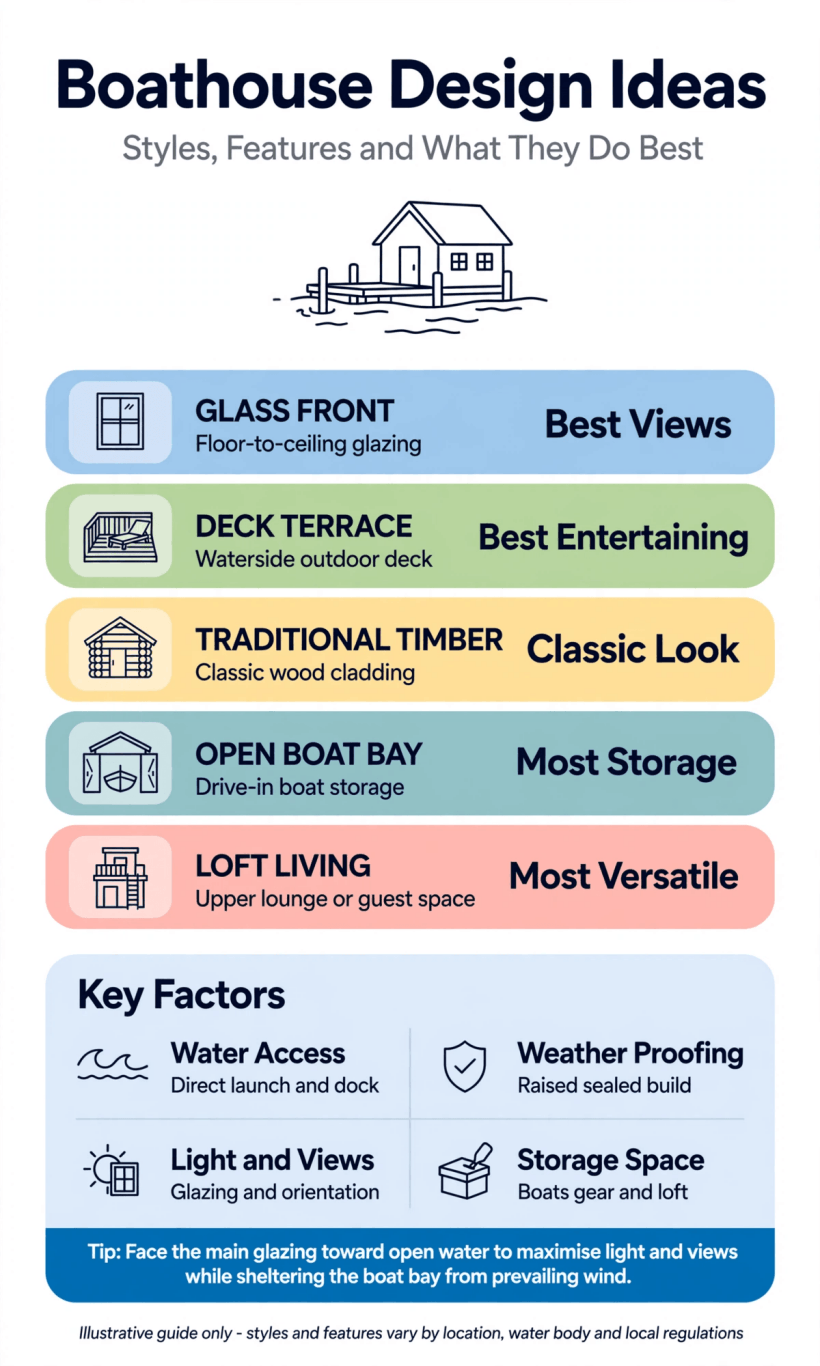
A quick at-a-glance guide to planning a boathouse layout, deck and finish before you commit to a design.
2. Layouts for Boats, Gear and Guests
Separate the wet, gritty work of boating from the clean, comfortable business of relaxing, and the building stays pleasant for both. Keep a clear route from water to storage so nobody carries a dripping sail through a sitting room, a lesson in zoning that Tiny House & Small-Space Interior Design: The Complete Guide teaches well.
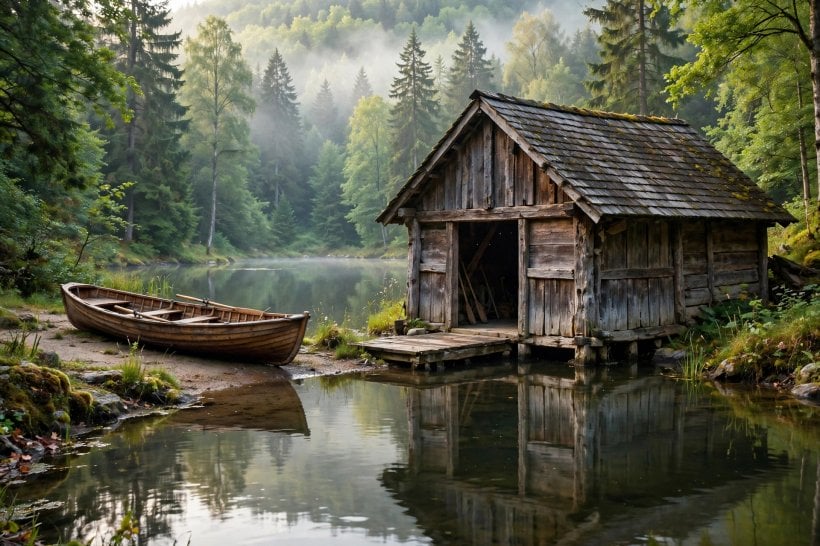
1. A single open boat bay. One generous space that takes a boat, trailer or kayaks with room to walk around is the simplest and most flexible start. Everything else can be added around it later.
2. Living quarters above the bay. A small apartment over the boats keeps the footprint tight and the views superb. Plan sound insulation and a separate entrance so guests and gear never collide.
3. A bunk room beside the boats. Ground-floor sleeping for swimmers and grandchildren keeps wet feet out of the main house. Bunks, hooks and a hard floor are all this happy room really needs.
4. An L-shaped plan around a deck. Two wings, one for boats and one for people, wrapped around a sheltered deck give the building a courtyard feel and protect outdoor sitting from the prevailing breeze.
5. A sail and gear loft. A dry loft over part of the bay swallows sails, cushions and life jackets through winter. Good stairs or a hatch with a simple hoist make the space genuinely usable.
6. A workshop corner with a view. A bench, natural light and storage for tools turn repairs into a pleasure rather than a chore. Keep it at the opposite end from soft furnishings and food.
7. A changing nook near the door. A bench, hooks and a place for wet swimwear stop puddles spreading through the whole building. It is a tiny space that saves endless mopping.
8. A kitchenette on the dry side. A sink, kettle and small fridge near the deck door make lakeside lunches easy. Keep it compact, wipeable and firmly out of the boat manoeuvring zone.
3. Decks, Docks and Outdoor Rooms
The deck is where a boathouse becomes social. Size it for the chairs, swimmers and sunset-watchers you actually expect, connect it smoothly to the dock, and give it shade, because water doubles the glare on a bright afternoon.
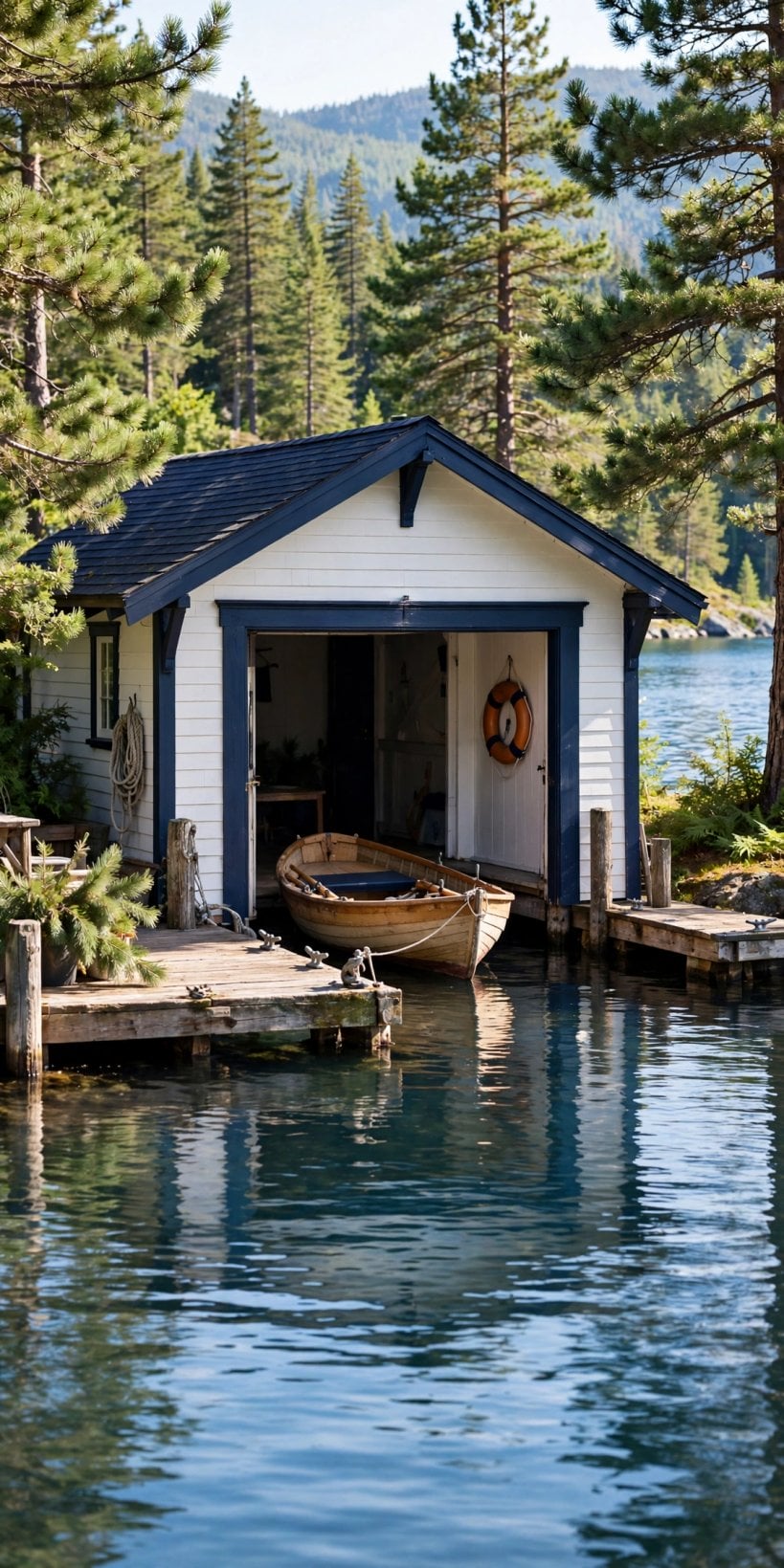
9. A full-width deck at water level. Running decking across the whole front creates a stage for launching, sunbathing and evening drinks. Keep the surface grippy and the edge clearly defined for younger swimmers.
10. An upper balcony over the bay doors. A balcony off an upper room makes the most of the view without using shoreline space. Strong rails and a door that opens fully connect inside and out beautifully.
11. A covered porch for rainy days. A roofed section of deck keeps the lakeside ritual alive in drizzle. Add a bench and hooks so it becomes the natural place to wait out a shower.
12. A dock that doubles as seating. A slightly wider section of dock with a built-in bench is perfect for fishing, dangling feet and watching boats come in. Keep the main walkway past it clear.
13. Steps straight into the water. Easy, generous steps make swimming part of daily life rather than an expedition. A handrail helps everyone, and a non-slip finish matters more here than anywhere else.
14. An outdoor shower on the deck edge. A simple shower rinses off lake water, sand and sunscreen before people head inside. Screen it lightly with planting or a slatted panel for privacy.
15. A fire pit terrace beside the boathouse. A level, hard-surfaced area a sensible distance from the building extends evenings long after the light fades. Check local rules about outdoor fires near the shoreline first.
16. A pergola for dappled shade. A light structure over part of the deck, with climbers or a shade cloth, keeps lunch cool without blocking the breeze or the sense of being outdoors.
4. Timber, Shutters and Lakeside Materials
Materials by the water work hard: spray, sun, frost and feet in wet shoes. Choose finishes that can be repaired in sections, expect silvered timber and softened colours, and let the building settle into its landscape like the examples in Tiny House Landscaping Ideas.
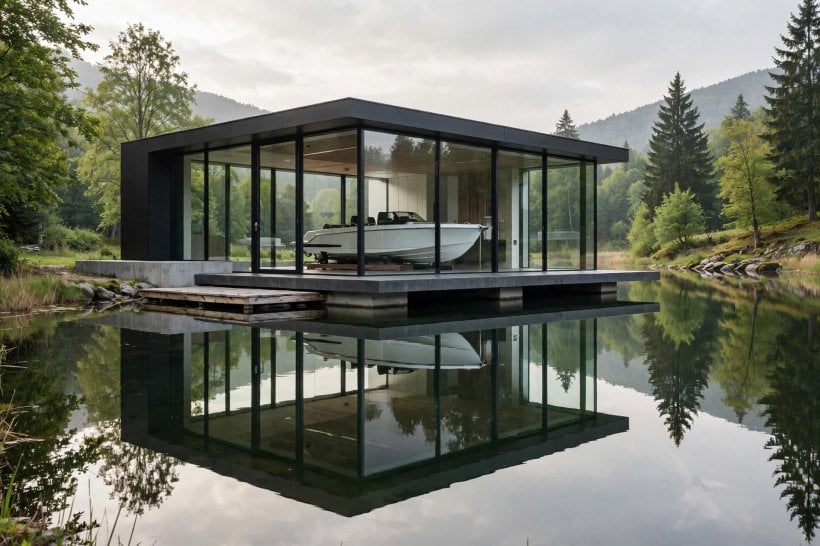
17. Weatherboard cladding, painted softly. Horizontal boards in a muted colour are the lakeside classic for a reason. They are easy to repaint in sections and suit both new builds and gentle renovations.
18. Natural timber left to silver. Some woods weather to a silvery grey that needs little attention and looks wonderful against water. Take local advice on species and treatment for a wet environment.
19. Shutters that actually close. Working shutters protect glass in storms and secure the building between visits. Painted in a contrasting colour, they are also the prettiest detail on the front.
20. A metal roof for hard weather. A well-fixed metal roof shrugs off storms, falling branches and heavy snow loads better than most. Its soft patter in rain is, for many owners, a feature.
21. Stone at the waterline. Masonry where waves and ice do their worst protects the building’s base and anchors it visually. Above that line, lighter cladding keeps the structure economical.
22. Big sliding doors in timber and glass. Doors that glide away open the whole front to the deck and lake. Choose hardware made for exposed, damp conditions and keep tracks clear of grit.
23. A boat door with personality. Paint the main boat door a bold colour, add a simple cross brace or a round window, and the working end of the building becomes its signature.
24. Decking boards with room to drain. Correctly spaced boards shed water, dry faster and feel better under bare feet. Leave access to any services below rather than sealing the whole deck shut.
5. Sleep, Cook and Gather Inside
Inside, think shipshape: everything has a place, surfaces wipe clean, and the view does the decorating. Small, well-planned rooms, like those in Home Interior Design Ideas for Tiny Houses & Small Spaces, feel generous when storage is built in from the start.
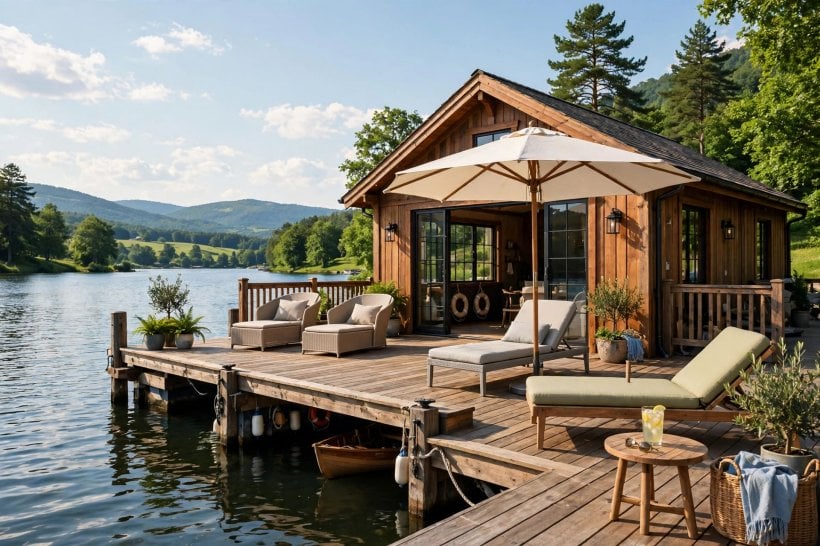
25. A window seat along the lake wall. A deep seat under the main window is bed, sofa, reading nook and storm-watching post in one. Store blankets and board games in drawers beneath it.
26. Bunks with curtains and lights. Built-in bunks make a small sleeping room feel like a cabin on a ship. Individual lights and a little privacy turn them into favourite spots for guests of all ages.
27. A fold-down table for suppers. A table that seats six for dinner and folds away for yoga, games or boat repairs is small-space gold. Sturdy hinges and a level floor matter.
28. A compact galley kitchen. A single run of units with a sink, small cooker and fridge covers lakeside cooking without stealing the room. Open shelves keep everyday things visible and easy.
29. A wood-burning stove, safely installed. A small stove extends the season and dries the building beautifully. Have it installed and checked by qualified local professionals and follow all clearance guidance.
30. Painted panelling for easy care. Tongue-and-groove or simple boards, painted in a washable finish, forgive knocks from oars and coolers. A pale colour bounces lake light around the room.
31. A hammock corner indoors. Hooks in strong timbers let a hammock appear on lazy afternoons and vanish when the floor is needed. It is the most contested seat in any boathouse.
32. A games and chart wall. Pin a lake chart, a tide or weather board and a shelf of games where people gather. The wall becomes a record of summers spent on the water.
6. Storage, Launching and Boat Care
The working side deserves the same design care as the pretty side. Smooth launching, dry storage and a place for everything wet are what separate a boathouse that is used weekly from one that becomes a beautiful garage.
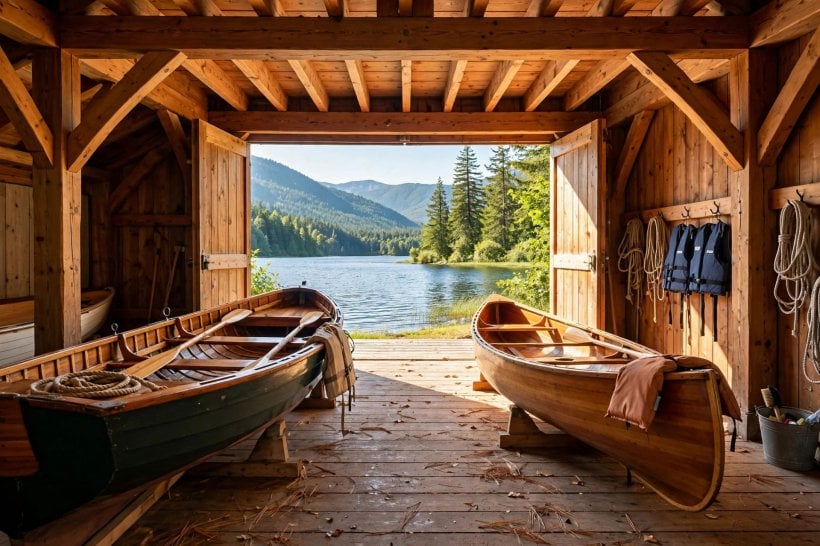
33. A slipway or rails into the water. A gentle, well-maintained route for launching saves backs and paintwork. Check local rules about structures at the water’s edge before building anything new.
34. Vertical storage for paddles and oars. Oars, paddles and boat hooks stand neatly in a tall rack near the door. They dry faster, trip nobody and are quick to grab on the way out.
35. Kayak and paddleboard racks. Horizontal racks on a wall or under a deck keep boards safe, flat and out of the sun. One slot per craft ends the tangled pile in the corner.
36. A winch point, professionally assessed. Hauling a boat out is far easier with mechanical help, but anchor points and loads need expert design. Ask a local marine or structural professional before installing anything.
37. Life jackets on open hooks. Safety gear that is visible, dry and easy to grab gets worn. Hang jackets by size near the exit and check their condition at the start of each season.
38. A drying rail for sails and ropes. A rail or line in the airiest part of the building prevents mildew and prolongs the life of expensive kit. Keep it clear of the stove and lights.
39. A rinse station for gear. A tap and drained area by the entrance let you wash sand and weed off equipment before storage. The building stays fresher and floors last longer.
40. Locked storage for fuel and tools. Anything hazardous belongs in a ventilated, secure store away from sleeping areas, following local safety guidance. A tidy system also makes inventories quick.
7. Light, Air and Views
Water reflects light in every direction, so a boathouse can glow if you let it. Plan openings for the best views and the prevailing breeze, and protect interiors from glare and damp with simple, adjustable layers.
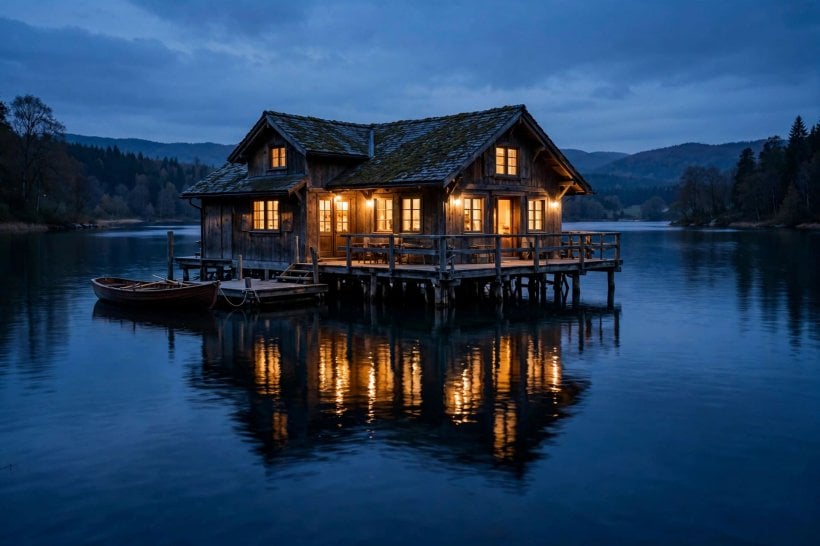
41. A picture window at seated eye level. Frame the best view where people actually sit, not only where they stand. The lake becomes a living painting that changes with every hour and season.
42. High windows for privacy and light. Clerestory glazing lights a bunk room or bathroom without overlooking the dock. It also lets warm air escape when combined with low openings on the other side.
43. Cross-ventilation by design. Openings on opposite walls pull a breeze through on still, hot days. Screens keep insects out so the system works through the evening too.
44. Exterior lights that respect the dark. Warm, shielded fittings at doors and steps are enough for safety. Lakes and night skies are a partnership; harsh floodlighting spoils both for everyone nearby.
45. Blinds for glare and winter. Simple blinds tame low sun bouncing off water and add a layer of insulation on cold nights. Choose materials that tolerate a damp building.
46. A glass gable facing the view. Glazing the upper gable turns an ordinary roof into a lantern of light for an upper room. Take structural and energy advice early, because glass changes both.
47. Mirrors to borrow the lake. A mirror placed opposite a window doubles the shimmer in a small room and brightens a shaded corner. It is an old interior trick that works beautifully by water.
48. Ventilation for the boat bay itself. Boats, fuel and damp gear need moving air even in winter. Passive vents, kept clear, reduce condensation, smells and the corrosion that follows both.
8. Weather, Water Levels and Safety
A boathouse lives closer to the elements than any other small building. Design for the worst week, not the best: rising water, driving rain, ice and guests who do not know the routines. Check local guidance on everything in this section.
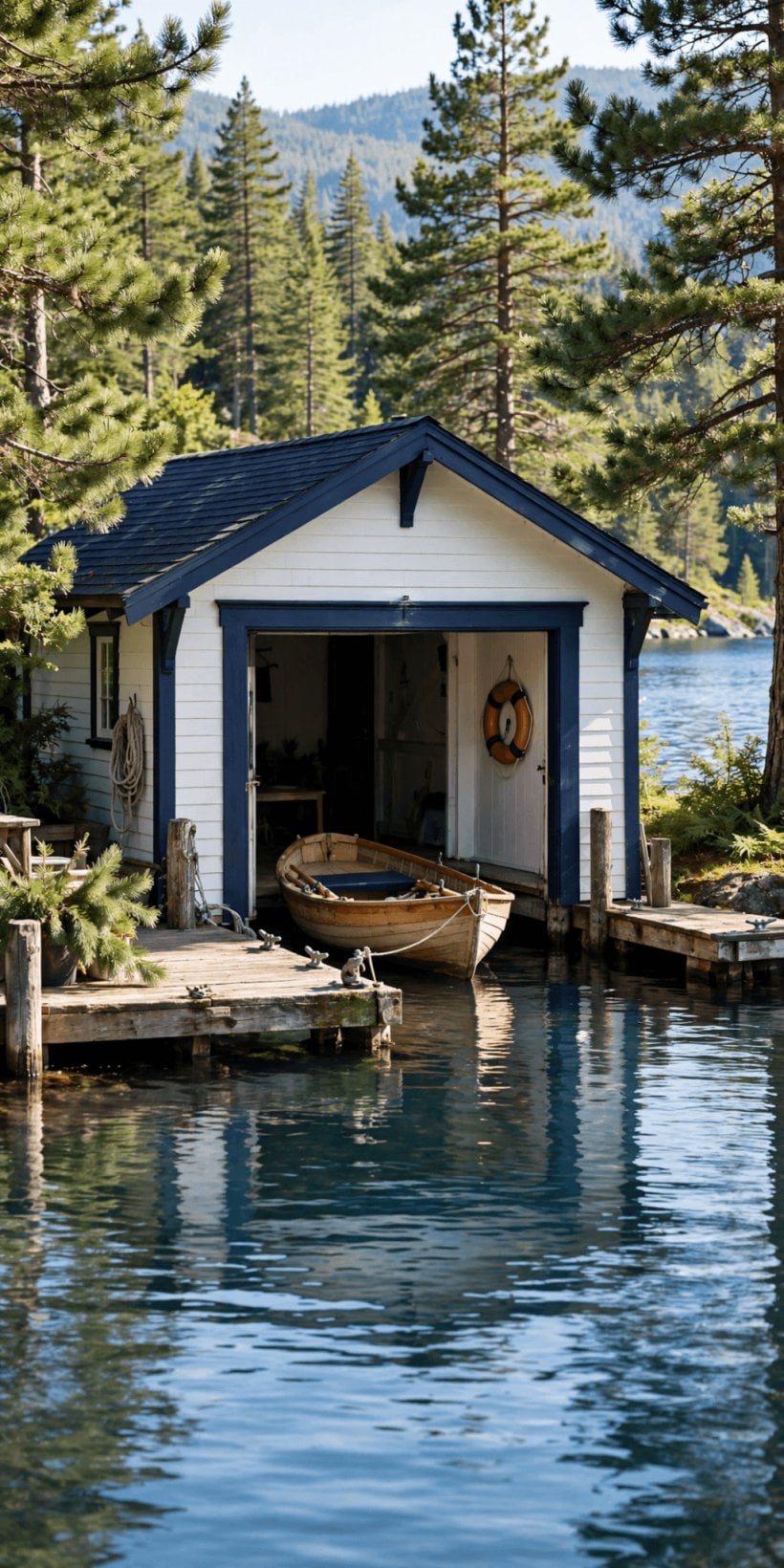
49. A floor level set with local knowledge. Ask long-standing neighbours and your local authority about historic high water before fixing floor levels. A few extra inches of height can save a building’s contents.
50. Flood-friendly ground floor materials. Where water may occasionally enter, finishes that can be washed and dried, and electrics placed high, reduce damage and worry. Plan this with local professionals.
51. Storm shutters and door bars. A simple, practised routine for securing doors and windows before a storm protects the whole building. Store the fittings in the boathouse so they are always to hand.
52. Non-slip surfaces on every wet route. Decks, steps and docks get slippery with algae and frost. Textured finishes, regular cleaning and clear edges are a year-round habit, not a one-off job.
53. Life rings and clear safety gear. A visible life ring, a reaching pole and basic first aid, checked seasonally, are essentials wherever people swim or launch. Follow local water safety guidance on placement.
54. Lighting the route back after dark. Low, warm lights from dock to door help guests find their way after an evening on the water. Keep them shielded so they guide rather than dazzle.
55. A lightning and storm plan. Know in advance when to leave the water, where to shelter and how to secure boats quickly. Share the plan with regular guests at the start of a stay.
56. Insurance and records kept dry. Photograph the building and its contents, and store documents and inventories away from the shoreline. A small administrative habit that matters enormously if the worst happens.
9. Styling, Planting and Seasonal Care
Styling a boathouse is mostly restraint: a palette taken from the shore, hardy planting that frames rather than fights the building, and a seasonal rhythm of opening up and closing down. The garden thinking in Building a Tiny ADU in Charlotte, NC about small outdoor rooms translates well to a lakeside plot.
57. A shoreline palette of three colours. Pick one colour for the building, one for trim and one for doors, drawn from local stone, timber and water. The building will look right in every season.
58. Native planting at the edges. Plants that belong by your shore need less care and support local wildlife. Ask local nurseries or conservation groups what suits your water’s edge conditions best.
59. A simple path from house to shore. A clear, well-drained path makes the boathouse part of daily life, not a destination for expeditions. Light its edges softly if it is used after dark.
60. Planters with tough, wind-proof choices. Containers on a deck need weight, drainage and plants that tolerate gusts and spray. Group them in sheltered corners and secure lighter pots before storms.
61. A spring opening-up ritual. Air the building, check for winter damage and pests, test water and electrics with qualified help where needed, and clean gutters and vents before the season starts.
62. Summer checks for nests and wasps. Eaves, lofts and boat covers attract tenants. Check regularly and take local, humane advice, because some lakeside creatures are protected and must not be disturbed.
63. Autumn drainage and leaf clearing. Leaves block gutters and make decks treacherous. A few short sessions through autumn keep water moving away from the building and surfaces safe underfoot.
64. A proper winter close-down. Drain what local guidance says to drain, store soft furnishings dry, secure doors and shutters, and leave ventilation working. A checklist on the door beats memory.
10. Finishing Touches Worth Saving For
Once the building is dry, safe and useful, spend on the details that make people linger: warmth, seating, a name, a bell, a shelf of well-loved things. These are the touches guests remember long after they forget the floor plan.
65. A named boathouse sign. A carved or painted name board gives the building an identity and a sense of occasion. Choose lettering that can be read from the water on a bright day.
66. A ship’s bell by the door. One clear note calls swimmers in for supper and delights children of every age. Mount it securely and agree house rules before it becomes a dawn alarm.
67. Built-in seating around the deck edge. A continuous bench makes room for a crowd without storing a dozen chairs. Add cushions from a deck box and the whole front becomes a grandstand.
68. A small library of field guides. Birds, stars, fish and local history books belong by the water. A shelf of them, plus a notebook for sightings, quietly enriches every stay.
69. Hooks for towels by the swimming steps. The simplest ideas are the best: towels off the ground, steps clear, swimmers happy. Sturdy, rust-resistant fittings will outlast several summers of use.
70. A flag or windsock. A small flag shows wind direction for sailors and adds instant cheer to the roofline. Replace it when it frays; a shabby flag makes a smart building look tired.
71. An outdoor rug under the deck table. A washable rug defines the dining spot and feels kind to bare feet. Shake it out weekly and store it dry through winter to keep it fresh.
72. Solar lanterns for the table. Portable lanterns give a gentle glow without wiring and move wherever the evening goes. Charge them on the sunniest part of the deck during the day.
73. A telescope or binoculars by the window. Water, birds and weather reward a closer look. Keep optics on a shelf by the main window and they will be used every single day.
74. A visitors’ book on the counter. Catches, storms, swims and suppers recorded over years become the boathouse’s real treasure. Start it with the building’s first season and protect it from damp.
75. One perfect seat for the sunset. Choose the spot where the light is best and put the two most comfortable chairs there. Everything else in the building can be simple if that seat is right.
Final Considerations
Plan for water first, people second and decoration last, and a boathouse will reward you for decades. Confirm shoreline rules and levels locally before you build, keep wet and dry zones honestly separate, and let the view do the heavy lifting in every room. For more small-building inspiration, explore Tiny Barn House Interior and imagine those warm, practical interiors translated to the water’s edge.



0 Comments