
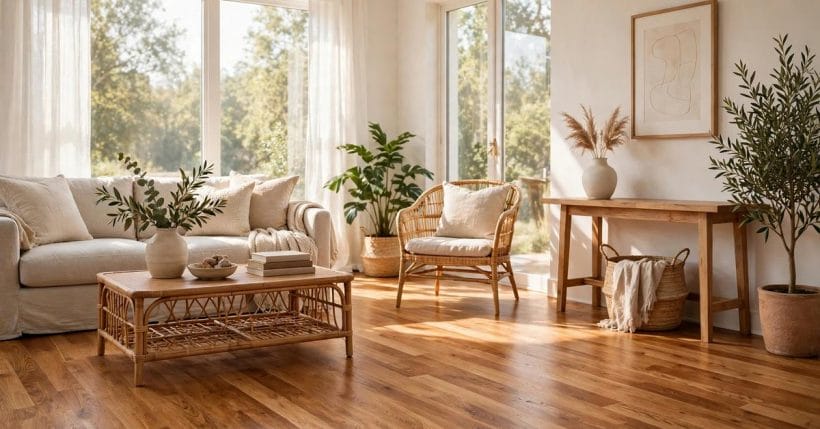
Hardwood flooring is a long-term choice, and it deserves a careful check before ordering. Boards, finish, fit and care all affect how the floor looks in five years, not just on installation day. This guide walks through the checks that matter: board types, widths and grain, finishes, colour ageing, fit for the room, seasonal movement, busy rooms, heating and moisture in general terms, care basics, and the questions to ask before ordering.
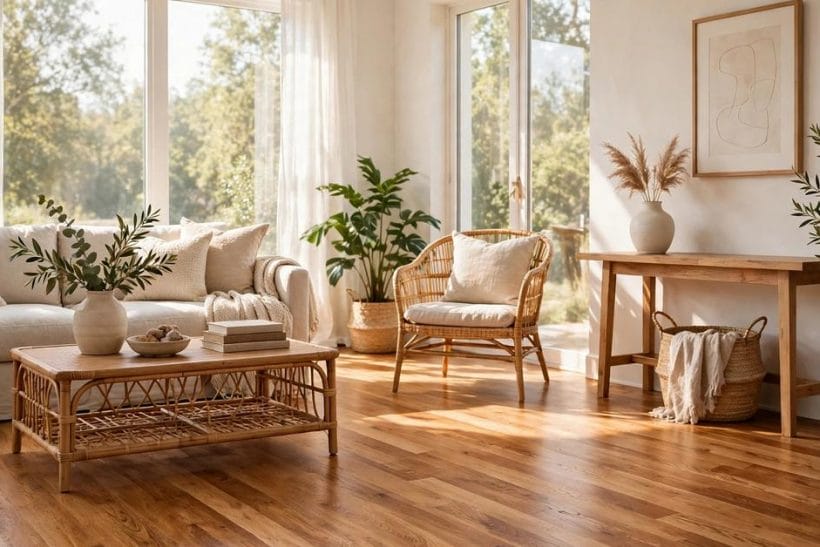
No brand is named here and no product is judged. The checks below apply to hardwood flooring generally, whatever the maker or retailer. Prices, ratings and product verdicts are deliberately left out: the right floor is the one that suits the room, the subfloor and the household, and only those specifics can settle it.
1. Solid, Engineered and What the Difference Means
Solid hardwood boards are single pieces of timber, thick enough to sand and refinish several times over a long life. They feel solid underfoot and age gracefully, but they move more with moisture and temperature, so they suit stable, dry rooms and need room to expand at the edges. Engineered boards carry a hardwood top layer over a stable core, which moves less and suits rooms where moisture or temperature varies more.
The top layer thickness matters for engineered boards. A thicker top layer can be sanded and refinished, like solid timber; a thin one cannot, and once its finish wears, the board must be replaced rather than refinished. Ask about top-layer thickness and refinishing, not just total board thickness, since the two are often confused. A board that can be refinished lasts far longer than one that cannot.
Neither type is better in itself. Solid suits long-term rooms with stable conditions and owners who value refinishing. Engineered suits wider conditions, including rooms over concrete or with underfloor heating, where solid boards would move too much. The choice follows the room and the subfloor, not a ranking. For the vinyl alternative, see our luxury vinyl plank problems guide, which covers the other side of the hard-floor choice.
2. Board Width, Length and Grain
Board width changes a room’s feel. Wide boards show more grain per board and suit larger rooms, where their scale reads calmly. Narrow boards give a busier, more detailed pattern and suit smaller rooms, where wide boards can dominate. Mixed lengths look natural; uniform lengths can look tiled. Ask to see boards laid out, not just a single sample, since one board never shows the pattern a floor makes.
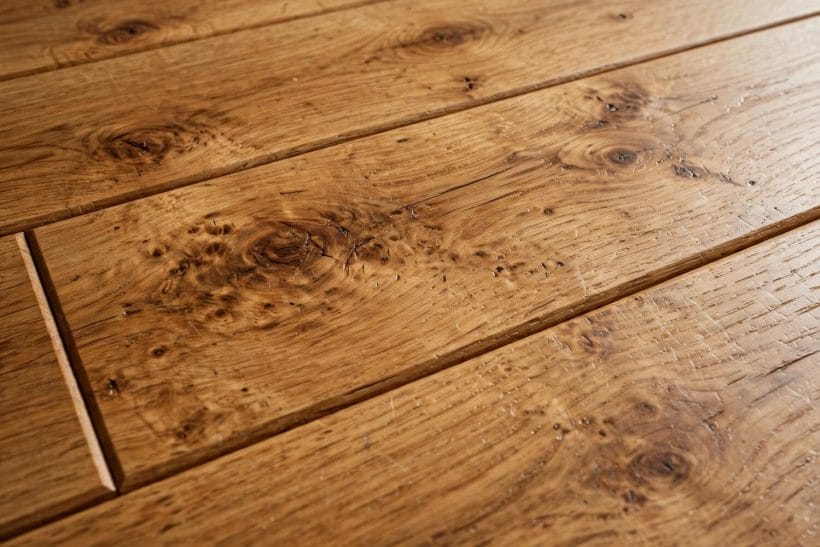
Grain and grade affect looks more than durability. Clear grades show even grain with few knots; rustic grades show knots, colour variation and character marks. Neither grade is stronger; the difference is visual and budgetary. A rustic floor hides wear and dirt better, while a clear floor shows both sooner. Households with pets and children often prefer the forgiving grade, whatever its name.
Colour variation between boards is normal for real timber. A floor laid from one box can look patchy if boards are not mixed across boxes during fitting. Good fitters open several boxes and blend boards across the room, so colour variation spreads evenly instead of clustering. Ask whether blending is part of the fitting, since it costs nothing and changes the result greatly.

3. Finish: Oiled, Lacquered and Unfinished
Finish protects the timber and sets its look. Oiled finishes soak in and leave a natural, matte surface that can be spot-repaired: a worn patch can be re-oiled without refinishing the whole floor. Oiled floors need re-oiling periodically, more often in busy areas, but the maintenance is simple and local. Lacquered finishes sit on the surface as a hard coat, resisting stains and wear, but scratches show and repairs usually mean recoating a whole area.
Unfinished boards are finished on site after fitting, which gives an even coat across the whole floor and lets the owner choose the finish. Site finishing takes longer and keeps the room out of use while coats dry, but it avoids the micro-bevels and slight level differences of prefinished boards. Prefinished boards are ready to walk on sooner, with factory finishes that are hard and even, though joints show slightly more.
Sheen matters for daily life. Matte and satin finishes hide dust, scratches and footprints; high gloss shows all three. A glossy floor in a sunny room shows every mark, while a matte floor in the same room looks calm. Choose sheen for the household’s tolerance of visible wear, not for the showroom’s lighting, which flatters gloss far more than a lived-in room does.
4. Colour and How It Ages
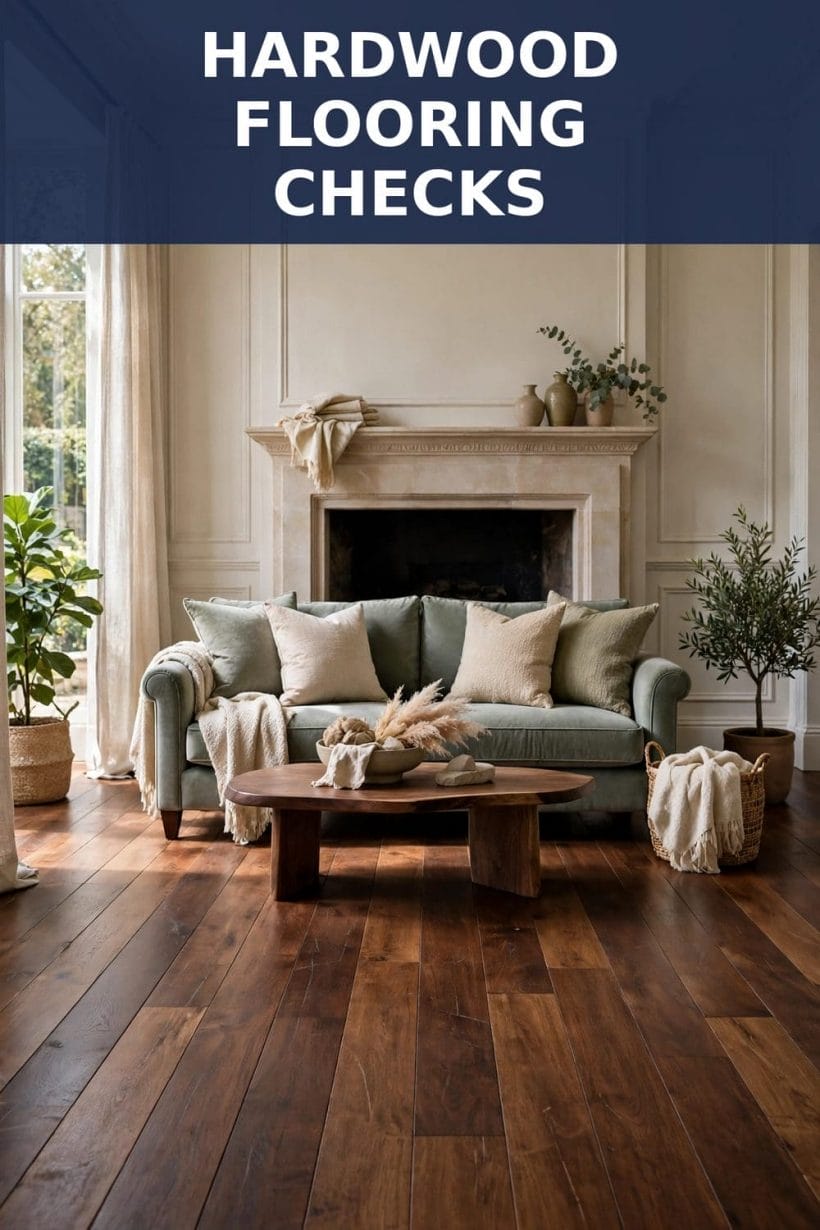
Hardwood colour changes with light and time. Some species darken, some lighten, and all change unevenly where rugs and furniture shade them. A floor that looks one colour in the shop will look different after a year of sun, and the area under a rug will differ from the exposed floor when the rug moves. This is normal timber behaviour, not a defect, but it surprises buyers who expect a fixed colour.
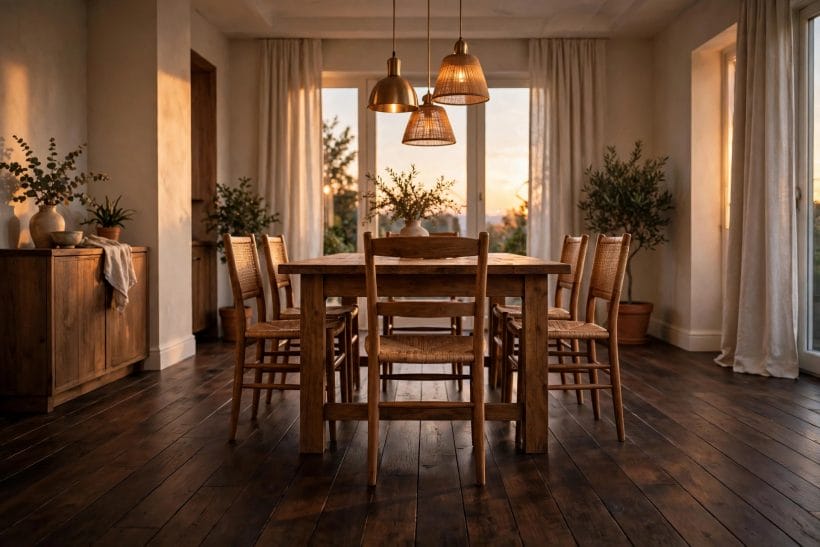
Test colour in the room, not the shop. Borrow samples, lay them where the floor will go, and look at them in morning, afternoon and evening light, with the room’s own lighting on. Colours shift dramatically between shop lighting and home lighting, and a sample viewed only under shop lights is a guess. Live with samples for a few days before ordering, since a colour liked at noon may disappoint at dusk.
Stained finishes add another variable. A stain evens out colour variation between boards, giving a more uniform floor, but it also hides grain and wears unevenly in traffic areas, showing lighter patches where feet pass most. Natural finishes show grain fully and age more evenly, but keep the timber’s own variation. Neither is wrong; the choice is between uniformity now and even ageing later.
5. Fit: Fit for the Room and the Subfloor
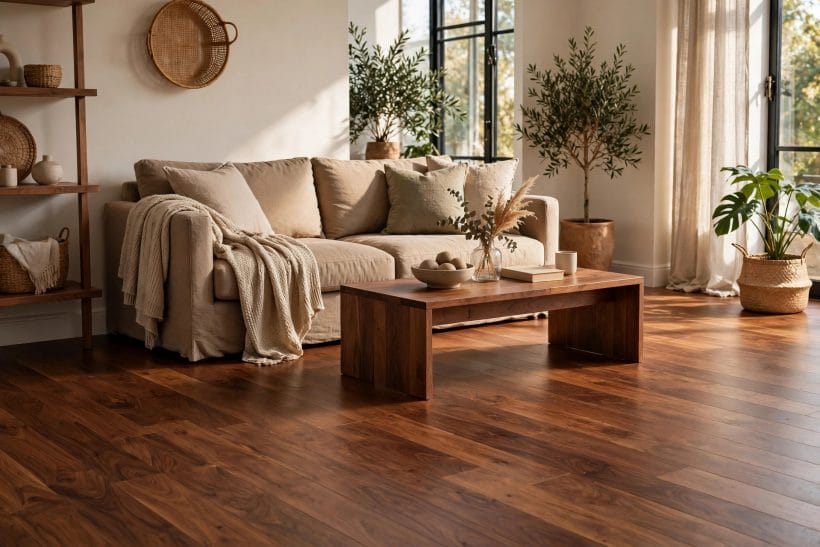
Fit starts with the subfloor. Hardwood needs a flat, dry, stable subfloor, whether timber or concrete. Uneven subfloors cause bouncing, creaking and gaps; damp subfloors cause cupping and failure. Moisture testing before fitting is not optional: a floor laid on a damp slab will fail, and the failure appears months later when the guarantee argument starts. Ask what testing was done, and keep the results.
Expansion gaps around the edges let boards move with the seasons. A floor fitted tight to walls buckles when humidity rises; one with proper gaps moves quietly. Gaps hide under skirting or beading, so they cost nothing visually. Rooms joined without breaks need care too: long continuous runs across rooms move as one and need expansion provision, or they buckle at the narrowest point.
Doorways, steps and level changes need planning. A hardwood floor meeting tile, carpet or a step needs a threshold strip that handles the height difference and the movement. Strips that are too high trip; ones that are too low leave a sharp edge. Plan thresholds when the floor is planned, not when the fitter reaches the doorway with no strip to hand. For the underlayment side of fitting, see our LVT underlayment checks guide.
6. Gaps, Movement and the Seasons
Seasonal gaps are normal for hardwood. Boards shrink in dry winter air and swell in humid summer air, so small gaps open and close through the year. Gaps that appear in winter and close in summer are the floor behaving properly, not failing. Gaps that grow year on year, or boards that cup and stay cupped, signal a moisture or fitting problem rather than seasonal movement.
Indoor humidity control reduces movement. Stable humidity, within the range the maker recommends, keeps gaps small and boards flat. Very dry heated rooms in winter shrink boards most; humid rooms without ventilation swell them. A humidifier in a dry house or ventilation in a damp one protects the floor as well as the household’s comfort. The floor’s movement is a humidity gauge for the whole room.
Cleaning affects movement too. Wet mopping soaks boards and swells them; a barely damp mop or a vacuum and dry cloth keeps them stable. Spills wiped promptly cause no harm; spills left standing soak in and stain. The rule is simple: hardwood likes damp cleaning, not wet cleaning, and the difference is how much water the mop holds.
7. Kitchens, Halls and Busy Rooms
Busy rooms test hardwood hardest. Kitchens add water, dropped items and chair movement; halls add grit from shoes and constant traffic; living rooms add furniture dragged across boards. Hardwood survives all of these with care, but the care must be real: mats at doors to catch grit, felt pads under furniture, and prompt wiping of spills. A floor without those habits wears fast in busy rooms.
Kitchens deserve special thought. Water around sinks, dishwashers and fridges finds board joints, and a slow leak under an appliance can ruin a section before anyone notices. Mats in wet zones, leak trays under appliances, and prompt attention to plumbing drips protect the floor. Some households prefer a harder-wearing floor in the kitchen itself and hardwood elsewhere; that split is sensible, not a failure of nerve.
Halls benefit from runners. A runner protects the traffic line, catches grit and adds warmth, while the hardwood shows at the edges. Runners should be fixed so they do not slip, and the floor beneath should be cleaned when the runner is lifted, since grit trapped under a runner grinds the finish. Busy rooms do not rule out hardwood; they rule out hardwood without habits.
8. Underfloor Heating and Moisture in General Terms
Underfloor heating and hardwood can work together, but only within limits stated generally. Heating must run at moderate temperatures, ramped up and down gradually, since rapid temperature changes move boards and open gaps. Engineered boards generally suit heated floors better than solid boards, because their core moves less. The maker’s guidance for the specific floor and heating system governs, and it should be read before ordering, not after fitting.
Moisture from below is the hidden risk. Concrete slabs, especially new ones, hold moisture for months, and a floor laid too soon fails. Moisture barriers and testing exist for this reason, and they should be part of any quote for a ground-floor installation. A quote that skips moisture testing is a quote that skips the most important check. Ask what barrier and testing are included, and what readings were found.
Moisture from above matters too: bathrooms, entrances and rooms with frequent spills need care, and hardwood beside a bath or a back door lives a harder life. Mats, prompt wiping and ventilation help, but some spots suit a different floor. A hardwood floor that stops at the bathroom door and resumes beyond it is a sensible design, not a compromise. For the vinyl comparison, see our vinyl plank flooring checks guide.
9. Care and Cleaning Basics
Daily care for hardwood is light: sweep or vacuum with a soft head to remove grit, which is the main scratcher of finishes. Weekly, a barely damp mop with a cleaner made for wood floors keeps the surface fresh. Avoid steam mops, which drive moisture into joints, and avoid generic cleaners that leave residues or dull the finish. The maker’s cleaner guidance is worth following, since finishes vary.
Furniture needs felt pads, replaced when they wear flat or pick up grit. Chairs dragged daily wear through finish fastest; lifting chairs or using castor cups prevents it. Pet claws scratch finishes too, though oiled finishes hide scratches better than lacquered ones, and rugs in pet traffic lines help. None of this is onerous; it is the small-habits price of a timber floor.
Refinishing renews a hardwood floor when the finish wears through. Solid boards and thick-top engineered boards can be sanded and refinished, giving decades more life. Thin-top engineered boards cannot, so their life ends when the finish does. Knowing which kind of board is underfoot, before buying, decides whether the floor is a twenty-year floor or a lifetime one. Keep the board details with the house papers for the next owner or the next refinish.
10. Questions to Ask Before Ordering
Before ordering, ask the questions that prevent the common regrets. What is the top-layer thickness, and can the board be refinished? What moisture testing and barrier are included for the subfloor? What expansion provision is planned, and where? What finish is it, and what does its maintenance involve? What does the guarantee actually cover, and what voids it? Answers to these five questions separate a careful quote from a vague one.
Ask for samples in the room, for boards blended across boxes, and for thresholds and trims included in the quote. Ask how long the room will be out of use during fitting and finishing, and what happens to furniture and skirting. Ask what the fitter does if the subfloor fails testing. A fitter who answers clearly is a fitter who has thought about the job; one who waves questions away has not.
Finally, ask yourself the household questions. Who walks on the floor, in what shoes, with what pets, and with what tolerance for visible wear? A floor that suits a quiet couple may not suit a house full of children and dogs, and the reverse. The right hardwood floor is the one that fits the household’s real life, not the showroom’s lighting. For the wider design context, see our tiny house designs, our interior design ideas and our craftsman living room ideas.
Final Considerations
Hardwood flooring rewards a careful check before ordering: board type and top layer, width and grain, finish and sheen, colour in the room’s own light, subfloor moisture and flatness, expansion provision, and the household’s real habits. None of these checks is difficult, and together they prevent nearly every common regret.
Order samples, live with them for a few days, ask the five questions, and choose for the room and the household rather than for a brand name or a showroom display. A hardwood floor chosen that way is a floor that looks good on installation day and still looks good years later, which is the only test that matters.

0 Comments