
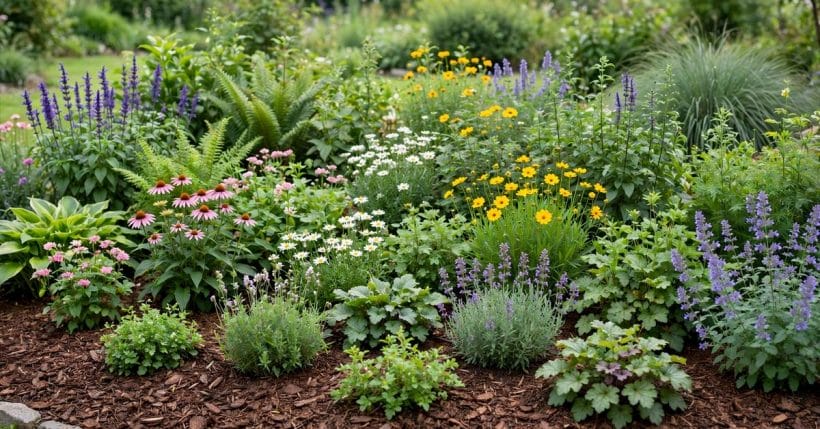
Weeds do not arrive by accident. They arrive wherever soil sits bare, light reaches the ground, and nobody is watching. A garden that stays covered, edged and densely planted gives them very little room to start.
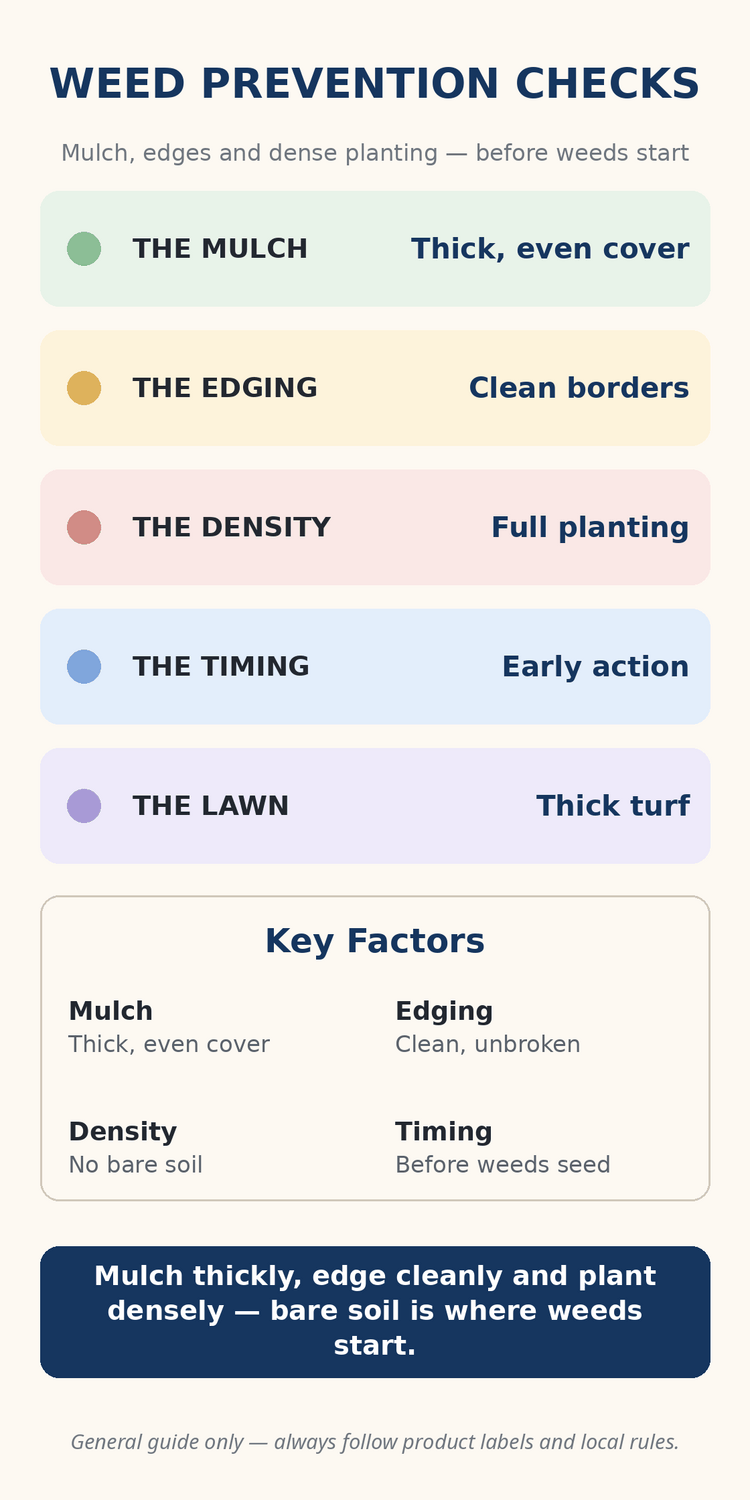
This guide walks through the checks that keep weeds down without drama: mulch, edging, planting density, timing, lawn health and the label-first habit that matters whenever a bought product enters the picture.
1. Start With Bare Soil, Not With Weeds
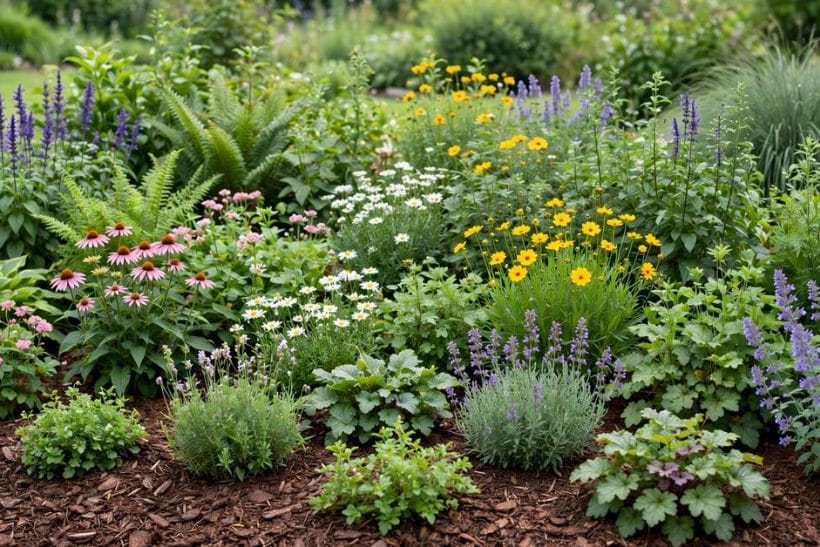
Every weed problem begins as an empty patch. Seeds blow in, wash in or sit dormant in the soil, and they germinate where light, moisture and space meet. A bed that is fully planted, thickly mulched or neatly edged offers far fewer of those openings than a bed left half empty through the season.
Walk the garden and look for the gaps first: the strip along the fence, the corner behind the shed, the bed that was cleared and never replanted. Those are the places weeds colonise first, and they are the places where a little cover goes furthest. Filling a gap with a plant, a mulch layer or even a temporary ground cover changes the whole equation for that patch.
The habit to build is simple: never leave soil bare for long. When a plant comes out, something else goes in, or mulch goes over the spot until planting time arrives.
2. Mulch: The Cover That Does Most Of The Work
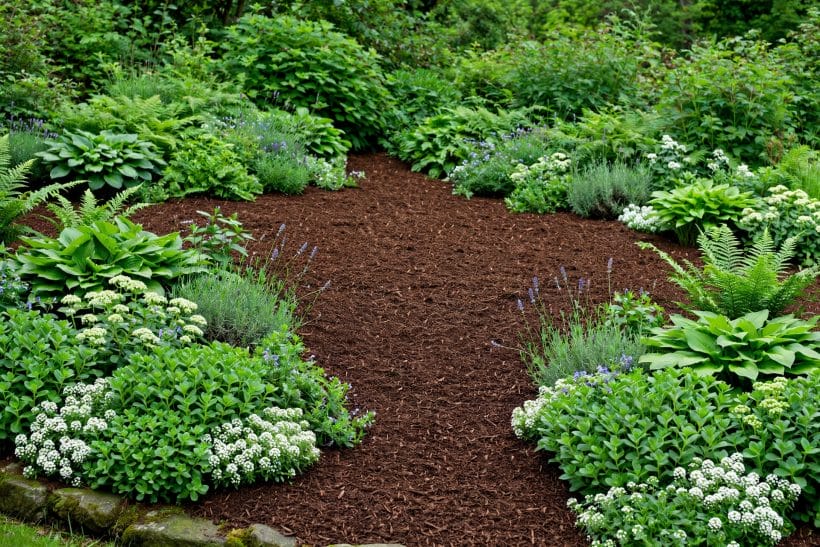
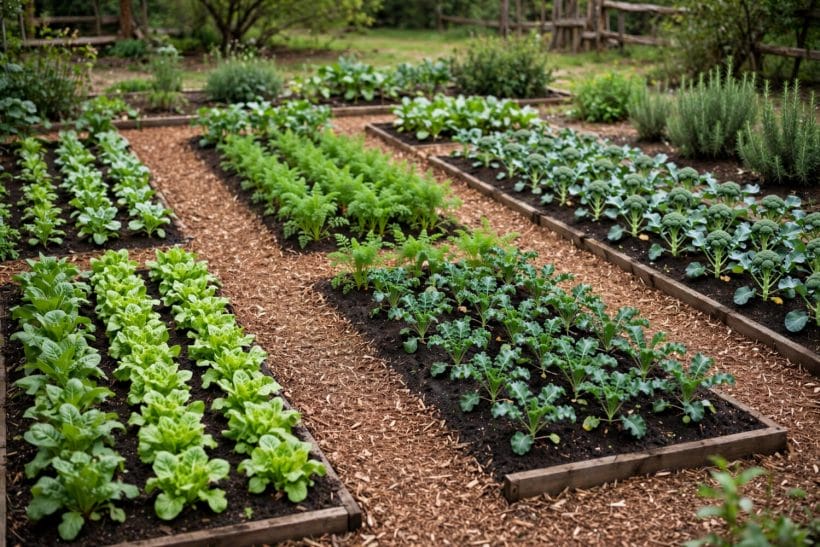
A mulch layer shades the soil surface, holds moisture and makes it harder for weed seeds to reach light. Bark, wood chip, compost and leaf mould all serve the same purpose, and the choice usually comes down to what suits the bed and what is available locally.
Check the depth by eye and by hand: a thin scattering that still shows soil through it is doing very little, while a thick, even blanket changes conditions underneath completely. Top it up when it thins, especially after heavy rain or a windy spell, because mulch settles and breaks down over time.
Keep mulch pulled slightly back from plant stems and tree trunks rather than piled against them, and keep it out of drains and paths where it will wash away. A tidy mulch edge also makes the bed look finished, which makes it easier to spot the first weed that does push through.
Under every garden lies a bank of dormant seeds, some of which wait years for light and disturbance before germinating. Deep digging brings those seeds to the surface, which is why a bed that is dug over thoroughly often weeds worse in the weeks afterwards than a bed that was only lightly forked. Shallow cultivation, mulch laid over undisturbed soil, and planting into small pockets rather than turning whole beds all keep the seed bank buried. When a bed must be dug — for a new planting, say — mulching immediately afterwards covers the freshly exposed soil before the seed bank can respond.
3. Edging: The Line Weeds Cross First
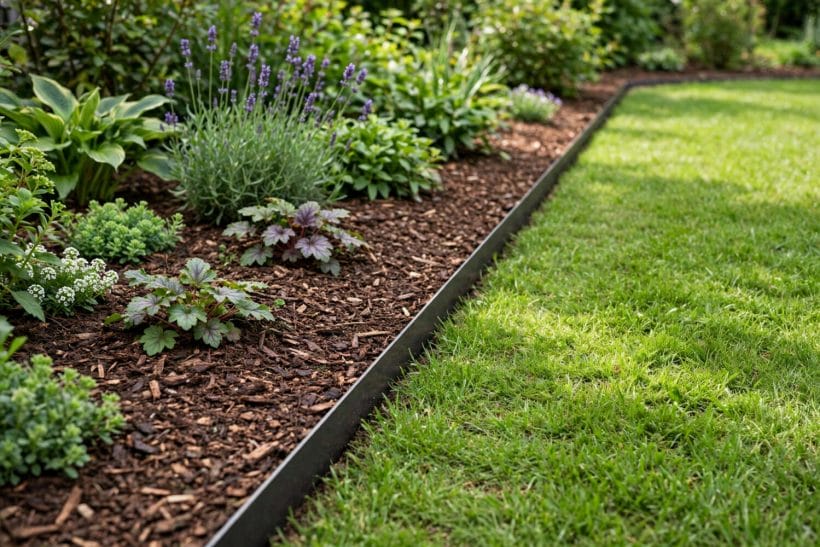
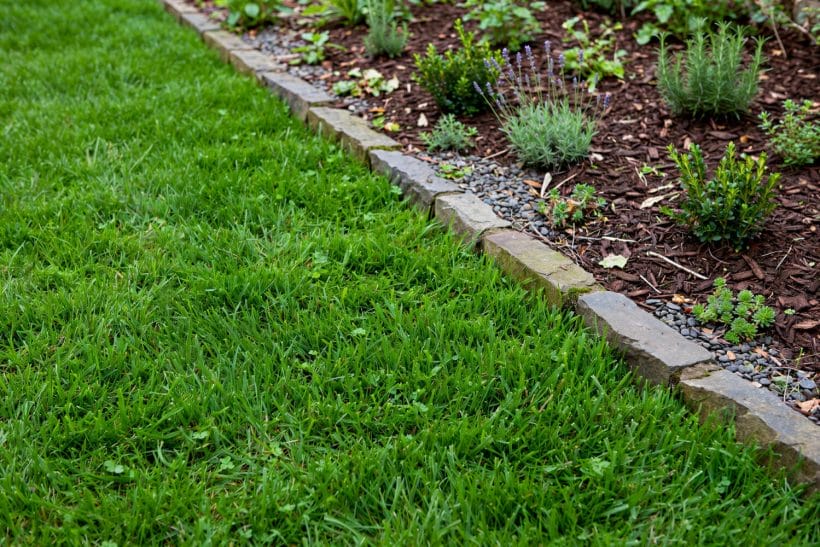
Lawn grass and creeping plants invade beds from the sides, not just from above. A clean edge — a cut line, a stone border, a timber strip or a metal strip set into the soil — slows that sideways spread and gives mowing and trimming a clear line to follow.
Check edges after mowing, because a mower that throws clippings into the bed is seeding it. Re-cut a ragged edge before it collapses, and clear the debris that collects along it, since a drift of clippings and leaves is itself a seed bed.
Edging is also a diagnostic tool: when weeds appear in a neat line along one border, the source is usually on the other side of it, and fixing the source beats pulling the same weeds every week.
4. Plant Densely And Let Plants Do The Shading
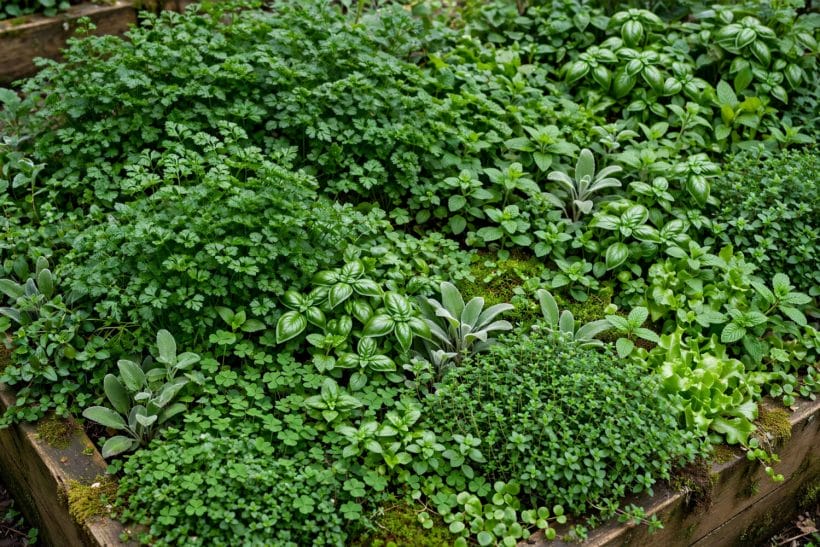
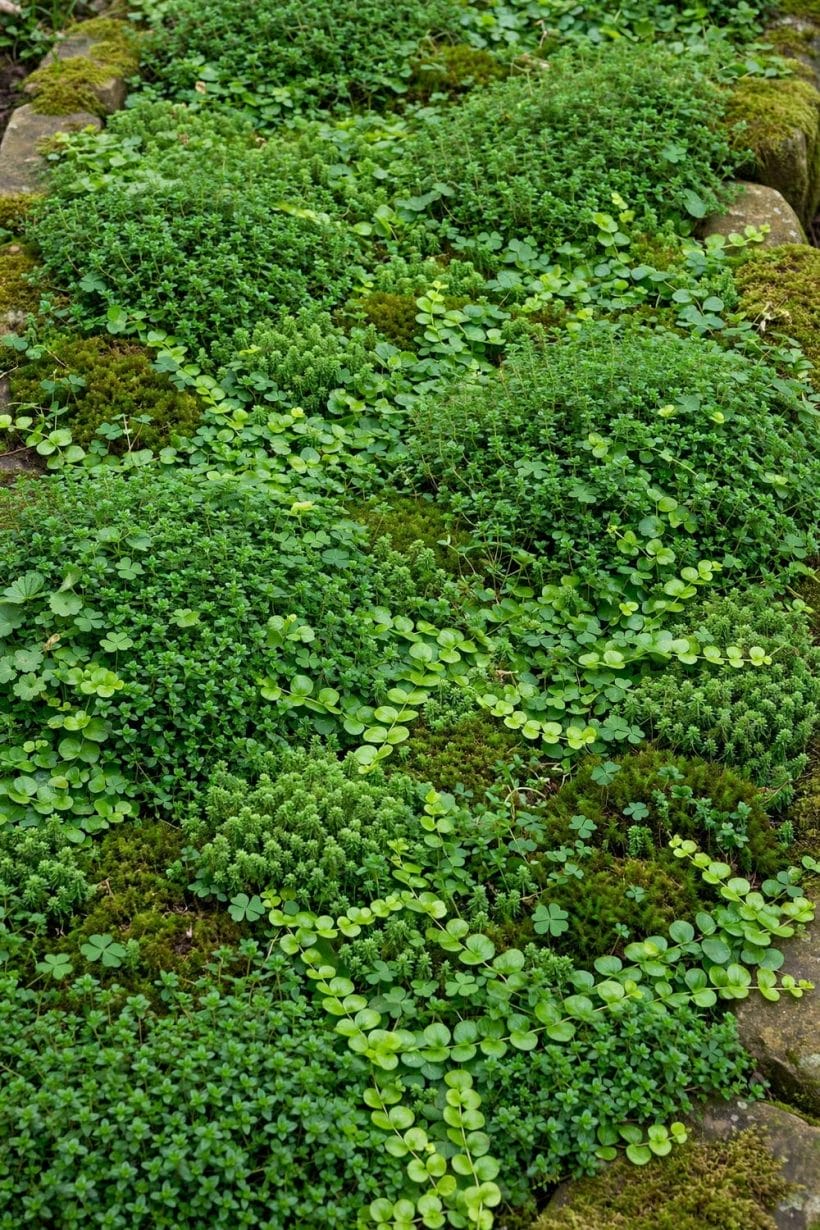
Dense planting is weed prevention that looks like gardening. Ground-cover plants, spreading perennials and closely spaced shrubs shade the soil between them, and shaded soil grows far fewer weeds than open soil.
When planning a bed, think about what it will look like once plants fill out, not just on planting day. A bed that looks sparse in its first season will usually fill in if the plants are suited to the spot; a bed that is still sparse in its second season probably needs more plants, or different ones.
Mix heights and habits: low spreaders at the front, taller plants behind, and something evergreen in the mix so the bed is never fully bare in the cold months. The aim is a canopy that closes over the soil for as much of the year as possible.
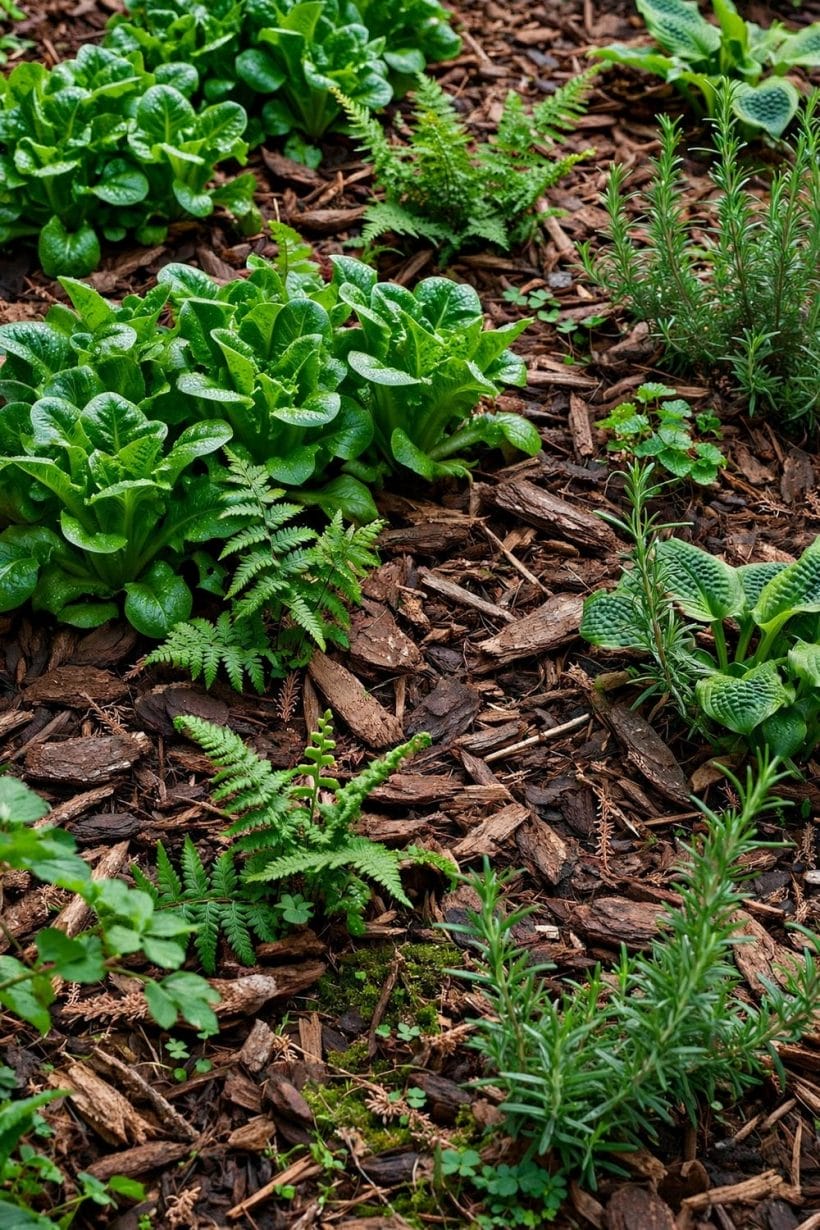
Weeding and mulching belong together as a single job, not two separate ones. Pull the weeds first, while the soil is soft after rain, then lay or top up mulch over the cleared ground in the same session, so the bed is covered before new seeds arrive. Doing it the other way round — mulching over weeds — merely hides them for a week while their roots strengthen underneath. A bed cleared and covered in one visit stays clear far longer than a bed weeded one weekend and mulched the next, because the gap between the two jobs is exactly when new seeds settle.
5. Timing: Catch Weeds Small, And Catch Them Early
A weed pulled when it is small comes out easily, roots and all, and leaves almost no disturbance behind it. The same weed left for a month needs real effort, disturbs neighbouring plants and may already have set seed.
Build a short, regular round into the gardening week: a walk with a hand fork, ten minutes at a time, checking the beds that weed fastest. After rain is the best moment, when soil is soft and roots slip out cleanly. Dry, baked soil grips roots and snaps stems, leaving the root to regrow.
Watch for seeding above all else. A weed that has gone to seed has already won the season for that patch, so removing flower heads before they ripen matters more than any amount of later pulling.
6. The Lawn As A Weed Barrier
A thick, healthy lawn crowds out weeds in the same way dense beds do. Thin, patchy turf invites them, because every bare patch is an opening with light and space.
Check the lawn the way you check a bed: where is it thin, where does it wear, where does water sit? Overseeding thin areas, feeding according to the product label and the season, and mowing at a height that leaves the grass long enough to shade its own soil all help the turf close ranks.
Mowing height matters more than most gardeners expect. Grass cut very short lets light reach the soil and stresses the plants; grass left a little longer shades the ground and competes harder. Set the mower one notch higher and see how the lawn responds over a few weeks.
A few simple tools make hand-weeding far easier: a hand fork for tap-rooted weeds, a hoe for surface seedlings, a kneeling pad for comfort, and gloves that protect without dulling grip. Keep tools clean and dry between sessions, since soil left on blades encourages rust and dulls edges, and a dull hoe tears weeds rather than cutting them. Sharpen a hoe occasionally with a file, following the maker’s guidance, and replace handles that have cracked or loosened. Tools that are pleasant to use get used; tools that fight back stay in the shed.
7. Hand-Weeding, Done Properly
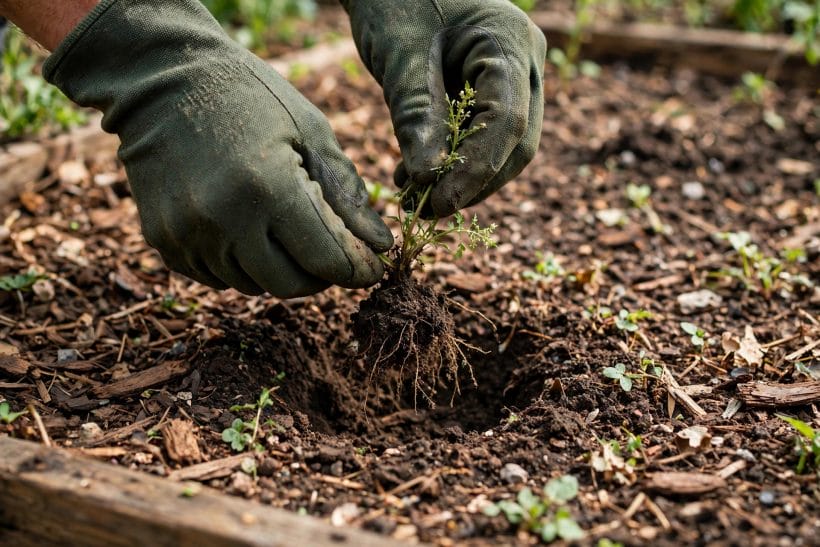
Hand-weeding is still the most precise tool in the garden, and it is the right first response in beds, borders and anywhere near plants you care about. The technique matters: grip low, pull steadily, and get the root, because a snapped stem usually regrows.
Use a hand fork for tap-rooted weeds and a hoe for surface seedlings on a dry day, when sliced seedlings wilt quickly. Avoid digging deeply around established plants, whose roots you do not want to disturb, and always clear pulled weeds from the bed rather than leaving them to re-root.
Dispose of seeding weeds away from the compost heap unless the heap genuinely runs hot enough to kill seeds; a cold heap turns pulled weeds into next year’s weed problem, neatly delivered back to the beds.
8. Pre-Emergent Products: The Label-First Check
Pre-emergent products work by stopping seeds from establishing, which makes them a different kind of tool from anything that kills existing weeds. They suit some situations — a lawn or a bed where the planting is established and the problem is annual seed — and they suit others badly, including anywhere you plan to sow seed soon, since they do not distinguish between weed seed and wanted seed.
Before any bought product is used, read its label in full: what it is for, where it must not be used, what it must be kept away from, and how long treated ground should be left before planting or sowing. Labels carry the conditions that general advice cannot, and they change between products, so last year’s product is not a guide to this year’s.
Keep bought products away from edible plants, ponds and watercourses unless the label explicitly allows the use, store them as the label directs, and never mix products or guess at amounts. If the label’s conditions do not fit your garden — a vegetable patch nearby, a pond at the boundary, seed about to be sown — choose a non-product approach for that area instead, such as mulch, edging or hand-weeding.
For gardeners who prefer to avoid bought products altogether, the rest of this guide already covers the full alternative: mulch, density, edging, timing and a thick lawn will carry most gardens a long way on their own.
Boundaries deserve their own check, because weeds do not respect fences. A neighbour’s seeding hedge, a shared alley that sheds soil, or a boundary strip nobody owns all feed weeds into beds on both sides. A quick conversation about a shared boundary — who cuts what, whether a seeding plant can be trimmed before it sets seed — prevents more weeding than any product. Where a boundary cannot be managed jointly, a dense hedge or a clean edging strip on your side at least slows what crosses over.
9. Paths, Patios And The Forgotten Corners
Weeds love the places gardeners forget: the cracks in a path, the gravel drive, the strip behind the bins, the base of a wall. These spots get no mulch and no planting, so they need their own routine.
Brush paths and sweep gravel regularly, because the grit and organic matter that collect in cracks is the soil weeds grow in. Pull seedlings from joints while they are small, before roots wedge paving out of place, and re-sand or re-point joints that have opened up.
For gravel areas, a weed-suppressing membrane underneath helps, but only if it stays covered; exposed membrane degrades and collects debris on top, which defeats it. Keep gravel topped up and raked level, and the surface stays far less welcoming.
10. A Seasonal Rhythm That Keeps Weeds Down
Weed prevention works best as a rhythm rather than a campaign. In the growing season, the round is short and frequent: mulch checks, edge checks, a quick pull after rain. In the quiet season, the jobs are structural: re-cutting edges, topping up mulch, planning denser planting for the gaps that weeded worst.
Keep a mental note of which beds weed fastest and why. A bed that weeds every year in the same corner has a cause — a gap, a thin spot, a neighbour’s seeding plant, a path that sheds soil into it — and fixing the cause beats repeating the cure.
Local rules and neighbours matter too: some plants are restricted in some areas, and a seeding weed on your side of the fence becomes your neighbour’s problem as well. Check local guidance when you are unsure about a plant, and talk to neighbours about shared boundaries before a problem grows across them.
Finally, think about where pulled weeds go. A hot, well-managed compost heap breaks down most weed material, but a cool, slow heap preserves seeds and returns them to the garden with the compost. Seeding weeds are safer in council green-waste collections, where commercial composting runs hotter, or bagged and left to rot down separately. The same logic applies to lawn clippings full of seed heads: compost them only if the heap genuinely runs hot, and spread them on beds only when you are sure they are seed-free.
Final Considerations
Weed prevention is mostly about cover: covered soil, edged beds, dense planting and a thick lawn leave weeds very little to work with. Products have a place for some gardeners, but only ever under the label’s conditions, and never as a substitute for the basics.
Start with the worst bed, cover it properly, edge it cleanly and plant it densely, then move to the next. A garden kept covered is a garden that largely looks after itself — and the weeding round shrinks to a few pleasant minutes rather than a weekend chore.
For more garden ideas, see Asian landscaping ideas, southwestern landscaping ideas, why citrus fruit stays pale, Florida backyard patio ideas, tiny house designs and interior design ideas.


0 Comments