
A fireplace alone makes a room look at one wall. Add a bookcase on either side and the wall becomes a library with a fire at its heart — storage, symmetry and warmth settling into a single piece of joinery.
These seventy-five ideas cover the bookcase around fireplace only: the joinery, shelving and styling of a fireplace with bookshelves on each side — heat and clearances stated generally throughout, and costs kept to honest drivers.
1. Bookcase Around Fireplace Ideas at a Glance
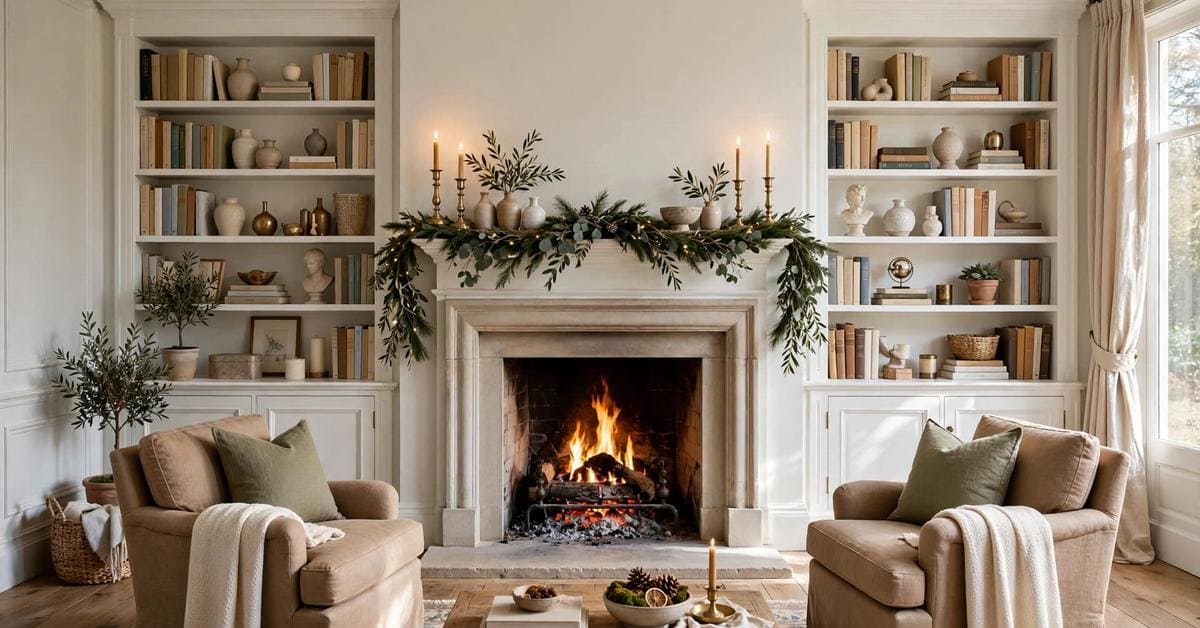
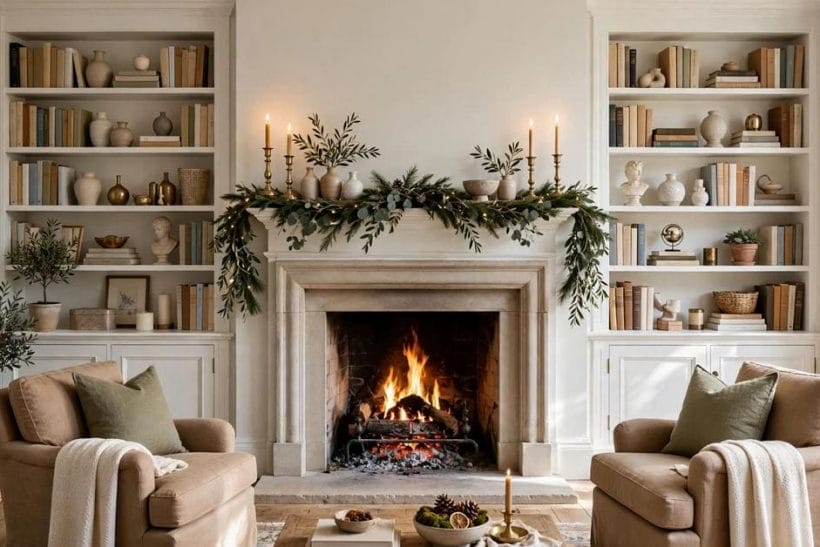
The central entity is the flanking bookcase wall: a fireplace centred between two bookcases, whose attributes are the symmetry of the pair, shelf depth and spacing, the cabinet storage below, materials and finish, and the safe distance kept between books and heat. This post keeps one slice of the fireplace family: the whole fireplace room lives in the fireplace living room pillar; the hearth itself — its materials and styling — belongs to fireplace hearth ideas; brick as the surround material is explored in brick fireplace living room ideas; and the room around the wall answers to the living room ideas pillar. Here the fire is assumed and the shelves are the subject. The feature photograph shows the arrangement at its most composed: painted built-ins, cabinets below, a garlanded mantel, and two reading chairs angled to the flames.
| Question | Short answer |
|---|---|
| Why bookcases either side? | The alcoves beside a chimney breast are otherwise dead depth; shelving them gains a library wall, balances the fire visually, and hides storage in the cabinets below |
| Built-in or freestanding? | Built-in joinery fits the alcoves exactly and reads as architecture; a matched freestanding pair suits renters and rooms where the breast is shallow |
| What about heat near books? | Clearances are code matters, stated generally here: the fire’s surround and hearth do the protecting, shelves begin beyond them, and your local rules and installer set the distances |
| What does it cost? | Drivers only: joinery versus flat-pack, materials, cabinet work, electrical points for lighting, finishing, and whether the chimney breast needs making good first |
| Which style suits? | Painted traditional, natural timber, or a mixed wall — the shelves should match the room’s existing trim so the wall reads as one decision |
2. Layouts and Symmetry: The Pair Either Side
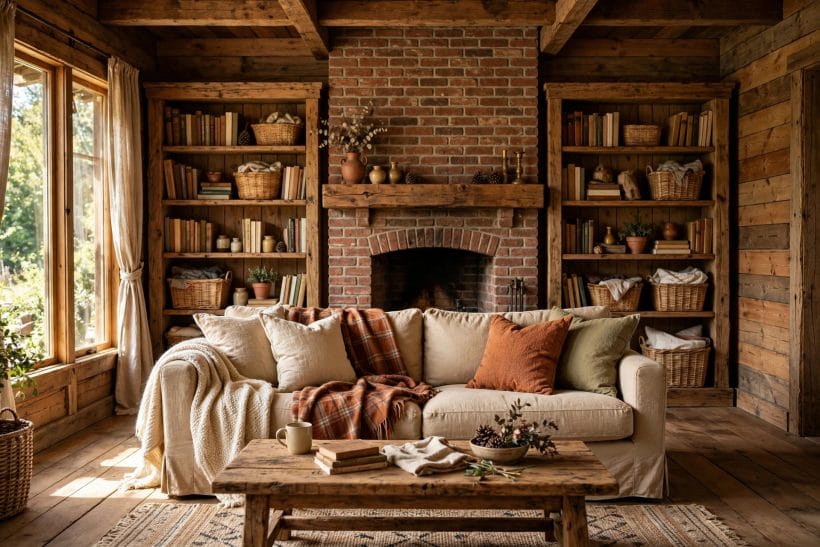
The arrangement is older than the fitted carpet: two alcoves, one fire, and shelving that makes the wall read as a single composed elevation. The gallery photograph shows the rustic reading — raw timber cases against a brick breast in a cabin room — while the layouts below run from perfect symmetry to the honest asymmetry of real houses.
1. Perfectly matched built-ins
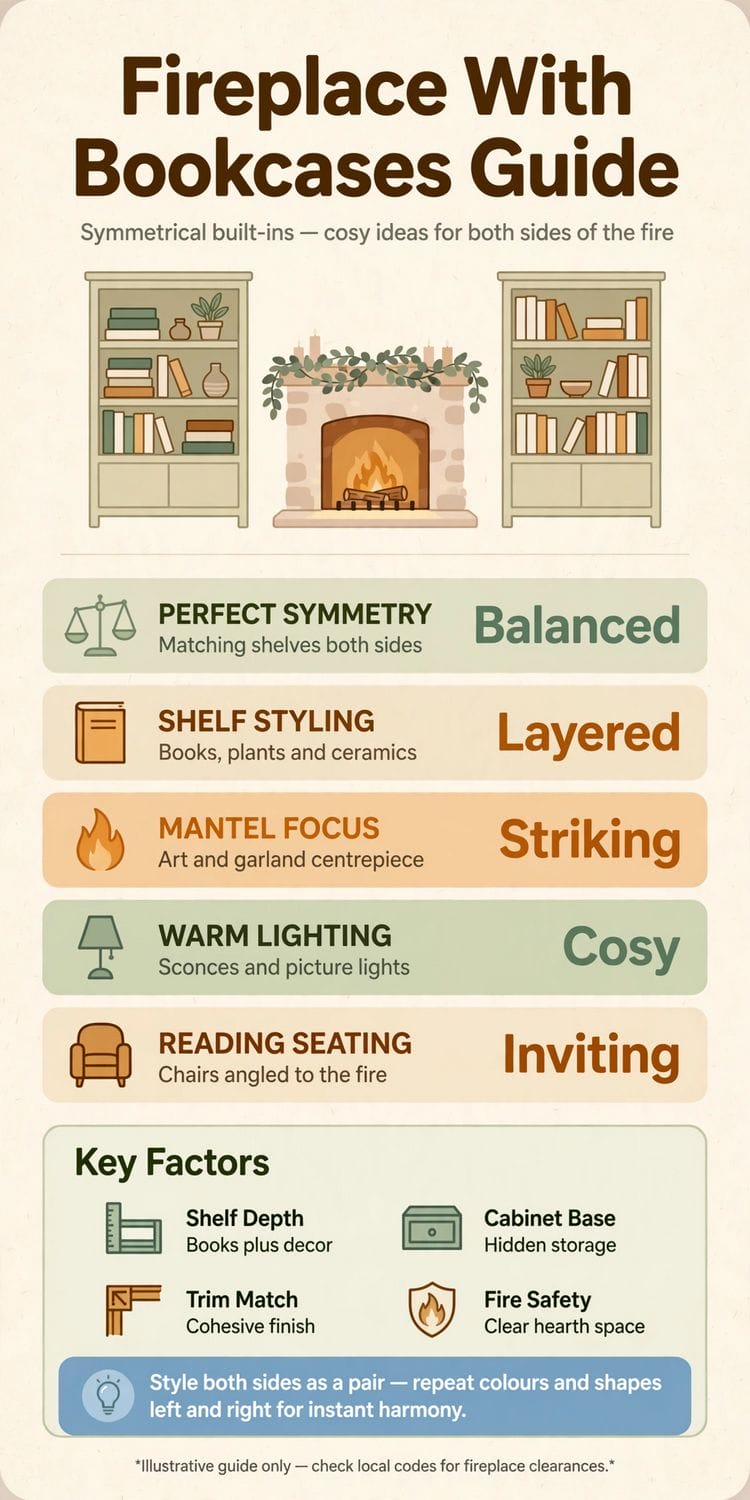
Identical cases, identical shelves, mirrored styling: the classical answer and the one the infographic leads with. Symmetry calms a room and makes even an ordinary fireplace feel architectural.
2. Full-height shelves to the ceiling
Running the cases to the ceiling uses the whole alcove and draws the eye up, making low rooms feel taller. The top shelves earn display pieces rather than daily books — keep the ladder in mind.
3. Cabinets below, shelves above
The workhorse layout of the feature photograph: cupboards at the base for logs, games and the television box, open shelves above for books. Closed storage low, open display high, is the balance most rooms settle on.
4. One bookcase, one cabinet or log store
Where one alcove is shallower or holds a door swing, balance a full bookcase against a lower cabinet or an open log store. The pairing stays intentional if the top lines and finishes match.
5. A window seat under one side
In a wide room, one flank can drop to a window seat or reading bench with shelving above it, the other staying a full case. The fire gains a seat drawn close — the oldest reading chair there is.
6. Freestanding matched bookcases
A bought pair, levelled and fixed safely to the wall, gives renters and cautious renovators the look without the joinery. Choose cases deep enough to look settled, and bridge the gap above with a shared pelmet or shelf.
7. Shelves wrapping onto the side walls
Where the alcoves are deep, the shelving can turn the corner and run a short way along the side walls, wrapping the seating in books. It suits libraries and studies more than television rooms.
8. A low bookcase wall
Half-height cases either side keep the wall light and leave room for art above each — a good answer where the ceiling is low or the fireplace surround is tall and deserves its own space.
9. The library wall with a ladder
Full-height, full-width, unapologetic: shelves across both alcoves and above the mantel line, with a rolling or hook-on ladder. It is a commitment to books first and a room organised around them.
3. Joinery and Construction: Built-In Craft
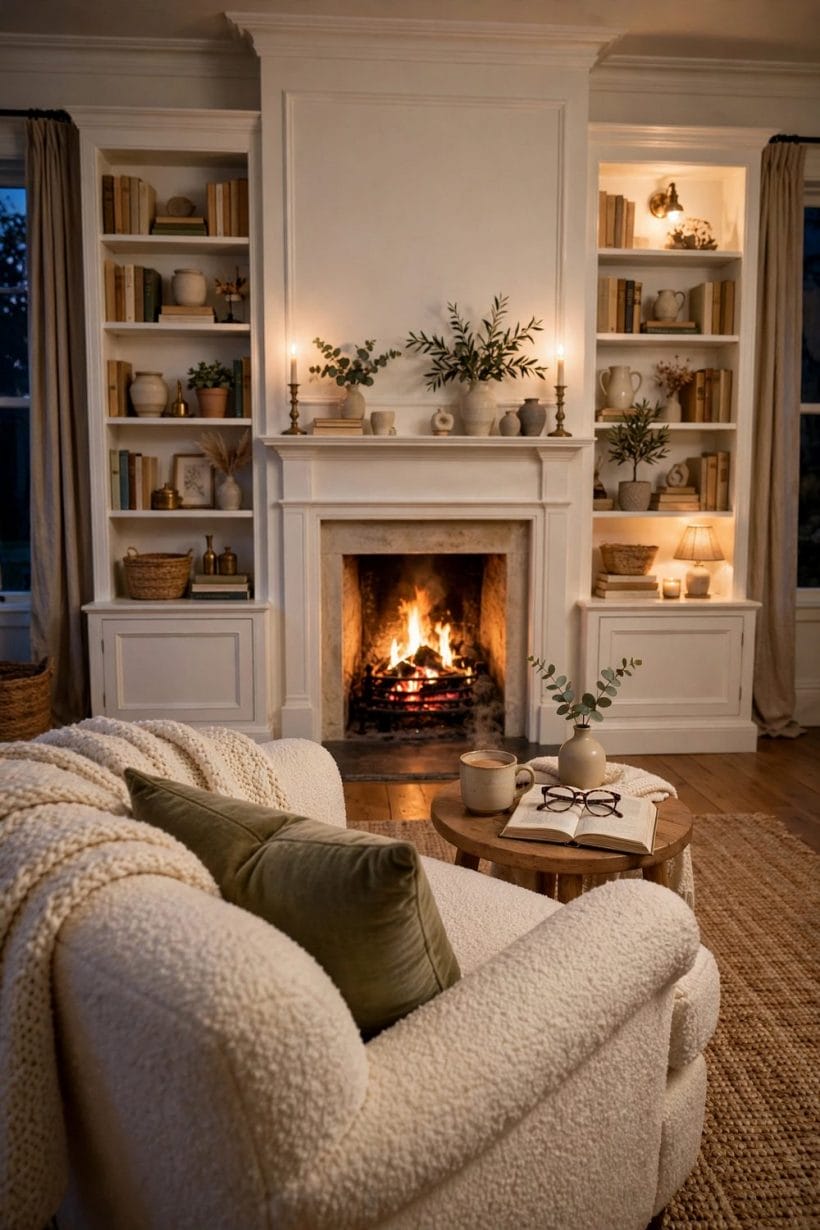
Built-ins succeed or fail in the details nobody photographs: scribing to walls that are not plumb, shelves that do not sag, and a finish that matches the room’s trim. These are the construction decisions to settle before styling is even mentioned.
10. Scribed to the alcove
Alcove walls wander; good joinery is cut to fit them, with filler pieces and scribing that leave no shadow gaps. It is the difference between furniture placed in a hole and a wall that was always shelved.
11. A plinth that meets the skirting
Running the room’s skirting profile across the base of the cases ties them into the architecture. The eye accepts the bookcases as part of the house rather than guests in it.
12. Cornice carried across the top
Where the room has cornice or crown moulding, carrying it across the bookcase tops completes the built-in illusion. Even a simple matching trim at the ceiling line does most of the work.
13. Adjustable shelves on pins or tracks
Book heights change with the collection. Shelves on discreet pins or housed tracks let the spacing evolve — fixed shelves should be set for the tallest books you actually own, not a catalogue’s.
14. Shelf thickness against sag
Books are heavy and shelves answer honestly or not at all. Thicker shelves, shorter spans, or a discreet front rail keep long runs level; a sagging shelf announces itself in every photograph of the room.
15. A framed face: stiles and rails
Face-framed cases, with vertical stiles and horizontal rails edging the shelves, read traditional and hide carcass edges. The frame also stiffens the whole unit — craft and structure in the same detail.
16. Frameless modern cases
Clean, frameless carcasses with shadow gaps suit contemporary rooms and let the books supply the texture. Keep the palette quiet and the styling disciplined, or the wall becomes noise.
17. Backs: panelled, painted or papered
The shelf back is the wall’s largest background. Tongue-and-groove, a deep paint colour, or a subtle paper behind the books changes the whole reading — dark backs make pale ceramics and book spines glow.
18. Doors that disappear
Base cabinets with push-latch or shaker doors keep the closed storage calm. Where the television box, router and chargers live behind them, a ventilated back and a cable route are worth planning at build stage.
4. Shelf Depths, Cabinets and Storage Below
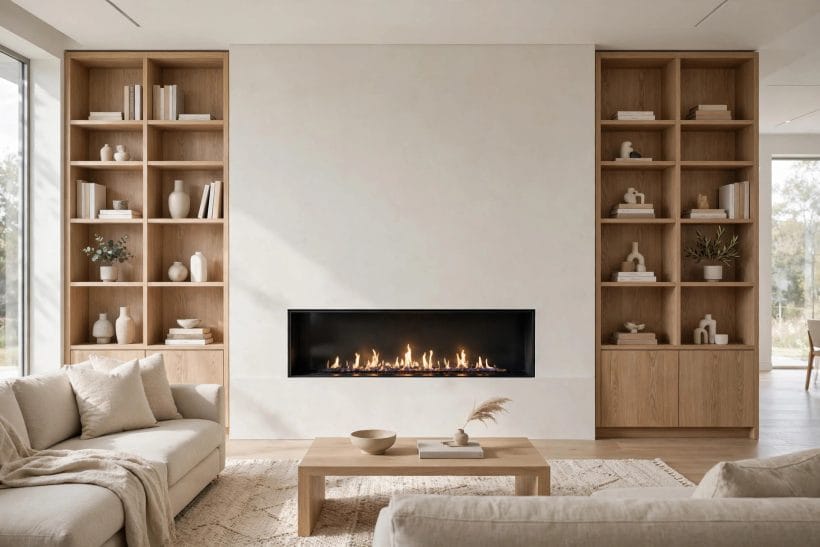
Depth is the quiet decision: too shallow and the books overhang, too deep and they vanish into shadow. The storage below the shelves is where the arrangement earns its keep daily, long after the styling is forgotten.
19. Depths matched to book sizes
Paperbacks, standard hardbacks and art books ask for different depths, and a wall can offer all three across its shelves. Measure the collection you own; the library you imagine will fill whatever remains.
20. A deep shelf for art books and albums
One deeper run — often the lowest open shelf — takes the oversize volumes and photograph albums that defeat standard cases. Lying a few flat as stacks doubles them as display.
21. Log storage in one base cabinet
An open or ventilated base bay for firewood keeps fuel at hand and reads beautifully against books. Keep it on the hearth’s side of the arrangement and sweep it often; bark and dust travel.
22. Closed cabinets for the unsightly
Every living room owns things that should not be displayed. Base cabinets swallow board games, chargers, photograph boxes and the vacuum’s attachments, which is precisely why the open shelves above can stay beautiful.
23. A media bay with ventilation
If the television or its boxes live in one case, give the bay air: a slatted or open back, space around the units, and doors that can stay open without blocking the fire’s view.
24. Drawers in the base
Drawers beat cupboards for small things — remotes, candles, matches in their proper place, the fire irons’ gloves. One drawer bay among the cabinets adds a furniture rhythm to the wall.
25. A fold-down desk shelf
In small homes one cabinet can hide a fold-down writing flap and a letter rack: a study that closes away. It suits the alcove depth perfectly and keeps work out of the fireside mood.
26. Glass-fronted cabinets
Glazed doors on a base or upper section protect special bindings and ceramics from fireside dust while keeping them visible. The glass also breaks the wall’s rhythm pleasantly with reflected firelight.
27. Baskets and boxes on open lower shelves
Where cabinets are not possible, uniform baskets impose order on open lower shelves — kindling in one, magazines in another, children’s books in a third at small-hand height.
5. Materials and Finishes: Painted, Timber and Brick
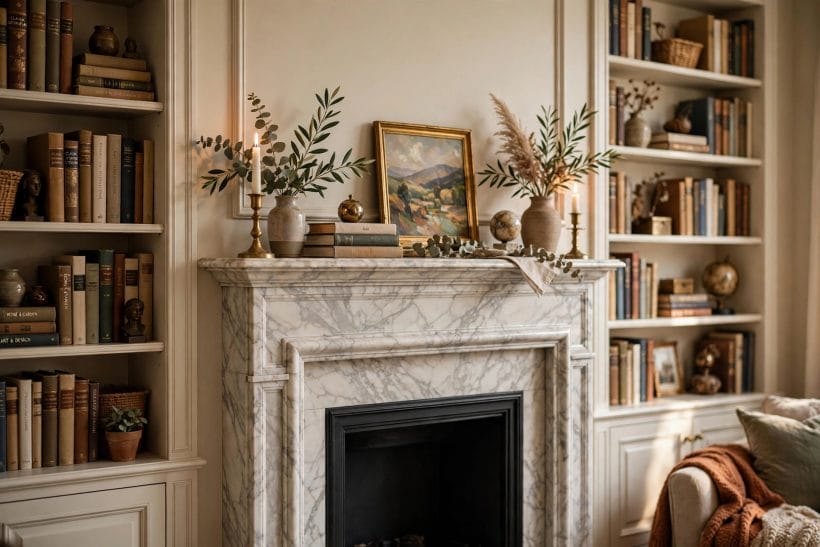
The bookcase wall takes its material cue from the fireplace it flanks and the room it anchors. Small-space versions of the same wall are gathered in the fireplace ideas for tiny houses collection; here the full-size materials are weighed.
28. Painted in the room’s trim colour
The safest and often the best answer: cases painted to match skirting and architraves, reading as architecture. A satin or eggshell finish shrugs off fireside dust and wipes clean.
29. Painted a deep library colour
Deep green, ink blue or oxblood cases make a wall of books feel like a club library and throw the fire’s glow forward. Commit the mantel shelf and backs to the same colour for the full effect.
30. Natural oak cases
Oak brings grain and warmth that suit stone surrounds and older houses. Left natural or lightly oiled, it asks little and ages with the room rather than against it.
31. Rustic reclaimed timber
The gallery photograph’s world: weathered boards and chunky uprights around a brick breast, at home in cabins and farmhouses. Accept the irregularities as the finish — they are the point.
32. Dark walnut for contrast
Against a pale surround, walnut cases give the wall gravity and make brass and ceramics shine. It is the formal option, best where the room’s other furniture can hold its own.
33. Two-tone: painted frame, timber shelves
A painted carcass with natural timber shelves — or the reverse — splits the difference between architecture and furniture, and lets a later repaint change the room without touching the wood.
34. Brick slips or exposed breast
Where the chimney breast is brick, letting it stay brick between painted cases gives the fire its traditional centre and the books a textured neighbour. The brick-fireplace survey linked earlier takes the material further.
35. A stone or marble mantel shelf
The mantel shelf is the wall’s crown: one handsome slab of stone, marble or solid timber that the styling sections below will dress. Its material should echo the hearth for a composed elevation.
36. Brass and black hardware
Cabinet knobs, shelf rails and a ladder’s fittings are the wall’s jewellery. One metal, repeated — aged brass or matte black — ties cases, fire tools and lighting into a single scheme.
6. Heat, Clearances and the Fire’s Safety, Stated Generally
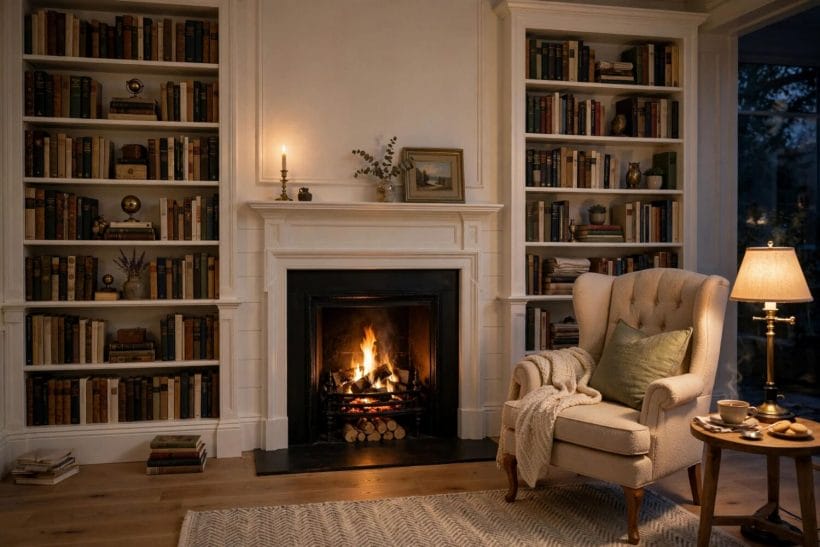
Books and open flame are neighbours that need a well-kept distance. Everything in this section is general principle only: the specific clearances around any fire are set by your local building code, the appliance maker’s instructions, and your installer — and those three authorities, not any article, decide your distances.
37. Shelves begin beyond the surround
The fireplace surround and hearth are the fire’s protective frame; shelving starts outside them. Building cases hard against a hot surround is the classic error this whole arrangement exists to avoid.
38. Non-combustible hearth zone kept clear
The hearth’s clear zone stays clear: no book stacks, baskets or paper on it, however decorative they look. Treat the hearth as the fire’s floor, not the library’s overflow.
39. Distance for paper and bindings
Paper, leather and cloth bindings dislike sustained heat even where no rule is broken — they dry, fade and crack. Favourite and valuable books belong on the shelves furthest from the firebox.
40. Stoves need their own clearance
A wood-burning stove throws heat on every side, more than an open fire in a deep recess. Cases near a stove follow the stove maker’s stated clearances, checked with the installer, without exception.
41. Flue and chimney breast warmth
A chimney breast in use is warm to the touch along the flue’s path. Shelving fixed to it should stand off sensibly, and nothing heat-sensitive — candles, wax, recordings — should live against it.
42. Ventilation for the room and fire
Fires draw air, and sealed modern rooms can starve them. Purpose-made vents and the room’s ventilation are part of the fireplace’s safe working, arranged with your installer rather than improvised.
43. A guard where children or pets visit
A fireguard is unfashionable and wise in a house with small children, visiting grandchildren or enthusiastic dogs. Choose one that folds away; the bookcase wall loses none of its calm.
44. Alarms and a swept chimney
Smoke and carbon-monoxide alarms, and a chimney swept on the schedule your sweep advises, are the unglamorous foundation under every pretty photograph in this post. The styling is optional; these are not.
45. Candles on the mantel, with care
The feature photograph’s candlesticks are beautiful and near garlands and books. Keep flames in holders, away from foliage and paper, and never leave them burning in an empty room — the oldest rule is the whole rule.
7. Styling the Shelves: Books, Objects and Breathing Room
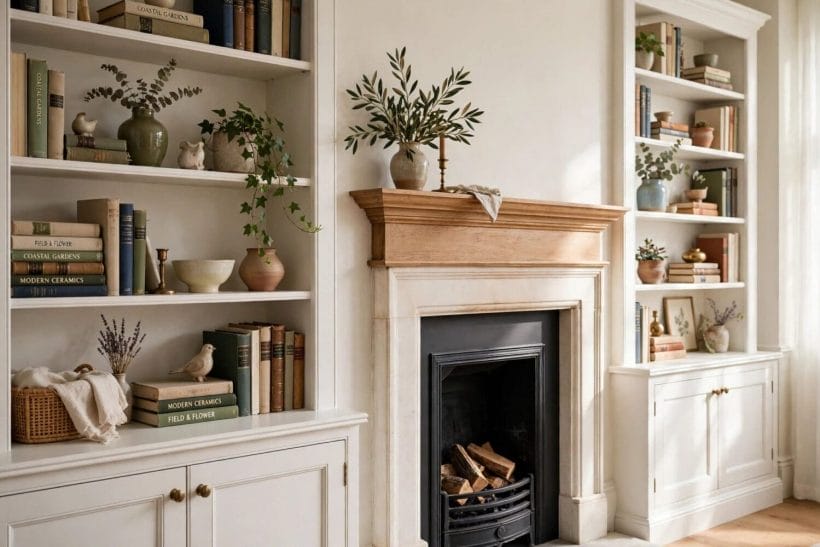
A styled bookcase is edited, not filled. The infographic’s tip — style both sides as a pair, repeating colours and shapes left and right — is the governing rule; the ideas below are its working details, and the small-room reading of the same art lives in the tiny house living room collection.
46. The rule of thirds: books, objects, air
Roughly a third books standing, a third objects and stacks, a third deliberate empty space. The air is what makes the rest read as chosen rather than stored.
47. Vertical runs broken by horizontal stacks
A short stack lying flat interrupts a long vertical run, gives the eye a rest, and creates a plinth for a small object. Alternate the pattern from shelf to shelf, mirrored loosely across the fire.
48. Repeating a colour across both cases
Pick two or three spine and ceramic colours and let them recur on both sides. The repetition is what the eye reads as harmony long before it notices any single object.
49. Ceramics and vessels as punctuation
Pots, bowls and vases — the feature shelves are full of them — rest the eye between book runs and catch firelight on their glazes. Odd numbers and varied heights keep them lively.
50. A plant on the shelf
One trailing or upright plant per side softens the joinery’s geometry. Keep it on the cooler outer shelves, in a saucer, and choose kinds that tolerate warm, dry fireside air.
51. Art and photographs leaned in
A small framed picture leaned against the shelf back, in front of the books, layers the wall like a gallery. It is also the easiest element to change with the seasons.
52. Bookends that earn their place
Heavy, beautiful bookends — stone, brass, a found object — hold short runs upright and double as sculpture. They let a shelf end mid-air without the lean that spoils a run.
53. Hiding the spines you do not love
Reference books and manuals can face a cabinet or a basket rather than the room. A library is allowed to curate; the working clutter has a home in the base cabinets.
54. Seasonal rotation
Swap a few objects with the seasons — pinecones and candles in winter, shells and glass in summer — and the wall stays interesting without growing. The fire’s garland in the feature photograph is the same instinct.
8. Lighting the Bookcase Wall
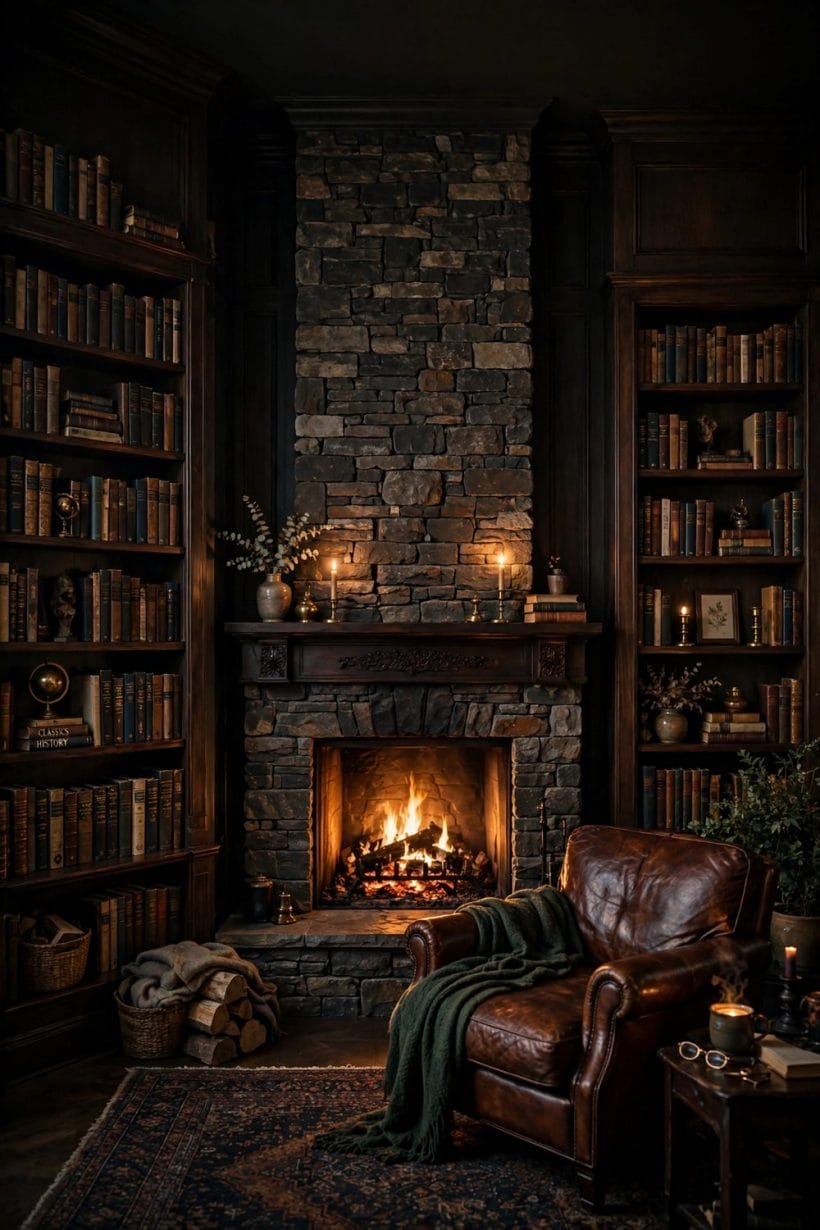
Firelight flatters the centre of the wall and leaves the shelves in gloom. A little deliberate lighting — planned at build stage, with the cables hidden in the joinery — turns the bookcases into the room’s evening backdrop.
55. Picture lights over the cases
Small brass picture lights mounted above each case wash the shelves in warm light, exactly as the infographic’s warm-lighting row suggests. On a dimmer, they take over from the fire on summer evenings.
56. Sconces on the chimney breast
Wall lights flanking the mantel frame the fire and balance the bookcases’ glow. Keep them clear of the flue’s path and on the same dimming circuit as the rest of the wall’s light.
57. In-shelf strip lighting
Concealed strips under shelf fronts light the books below without visible fittings. They suit modern frameless cases best and make small print findable after dark — a library that works, not just glows.
58. A reading lamp at each chair
The two chairs in the feature photograph each deserve their own lamp at shoulder height. Shelf light is for looking at the wall; reading light is for the book in hand, and the two should not be confused.
59. Candlelight as the finishing layer
Real or good imitation candles on the mantel add the flicker that electric light cannot. Observed with the care stated in the safety section, they complete the wall’s oldest lighting scheme.
60. Uplighting a tall case
A small uplight at the base of a full-height case models the books with shadow and makes the ceiling feel higher. It is a theatrical touch — use it on the pair together or not at all.
61. Lighting the log store
A soft light spilling into an open log bay makes the fuel part of the evening picture and the fetching of logs less of a fumble. Keep fittings and flexes well away from the wood itself.
62. Matching the metal finish
Picture lights, sconces and cabinet hardware in one finish — the brass family usually — stop the wall’s lighting from reading as three separate purchases. Consistency here is what polish means.
63. Dark shelves need more light
Deep-coloured cases drink light. If the library-colour idea appeals, budget its lighting with it: brighter washes, lighter backs, or both, so the wall glows rather than broods.
9. Small Rooms, Alcoves and Awkward Chimney Breasts
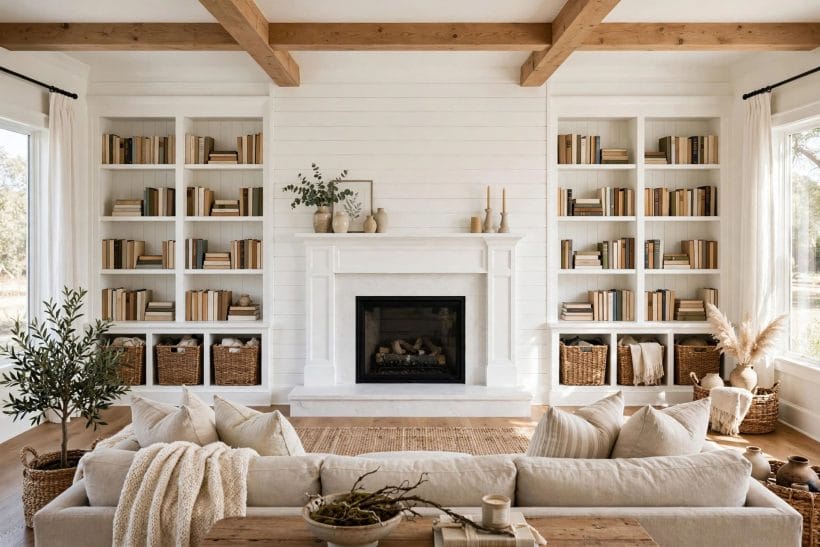
Not every breast is centred, deep or flanked by twins. The arrangement adapts — narrow alcoves, shallow breasts, off-centre fireplaces and the stove in the corner all have their version of the bookcase wall.
64. Shallow alcoves: shelves, not cabinets
Where the alcove is shallow, skip the base cabinets and run slim shelves to the floor instead. Paperbacks and display fit happily where cupboards would crowd the room’s corners.
65. One deep alcove, one shallow
Give the deep side the full case and the shallow side a picture ledge, a mirror, or a single column of shelves. The wall stays balanced by weight of attention rather than identical joinery.
66. An off-centre fireplace
Where the breast sits off-centre, let the longer side take a longer case and the shorter side a log store or seat. Forcing symmetry onto an asymmetric wall makes both sides look wrong.
67. A corner stove with a bookcase flank
A stove in the corner can still gain a bookcase on its room side, at the maker’s clearance, turning a dead corner into the reading corner. The fireside chair completes what the stove began.
68. Shelves above the mantel line
In cottages with low breasts, a shelf run above the mantel — set with the heat principles of section six — connects the two cases into one continuous library elevation.
69. A bookcase that hides a door
The secret-door bookcase is a delight and a genuine space-saver in small homes: one case swings to reveal a study or stair. Its hinges and clearances are specialist work; commission it properly.
70. Television in one case
Where the television must live on this wall, give it one case behind doors or on a pull-out, sized honestly. The fire stays the room’s centre; the screen is a guest that can be put away.
10. Costs, Care and Choosing Well
What the bookcase wall costs is decided by its drivers, not by any figure quotable from a distance: bespoke joinery versus a bought pair, the timber or board material, cabinet and drawer work, electrical points for lighting, the finish, and making good the breast and floor first. Care is gentler than the fire’s: dust the shelves as the books allow, keep heat-sensitive bindings on the outer shelves, check that no shelf is creeping under its load, and re-oil or repaint on the room’s own cycle rather than the calendar’s alarm.
71. Choosing built-in for a forever room
If the house and the habit are settled, bespoke joinery repays itself in fit and finish. It is the version of this wall your household will simply call the library, without remembering it was ever a project.
72. Choosing freestanding for flexibility
Where tenancies, budgets or future plans argue against fixing, a good bought pair, levelled and secured, delivers most of the effect and all of the storage — and leaves with you if you leave.
73. Measuring the collection first
Count the books, measure the tallest and deepest, and let those honest numbers size the shelves. A library designed around the collection you own never wastes a run or strands an atlas.
74. Planning power and light at build stage
Sockets inside a media cabinet, cable routes, and the shelf lighting’s wiring are all ten-minute decisions before the joinery and weekend projects after it. Decide them on paper first.
75. Letting the wall grow up gracefully
Leave one shelf deliberately unfilled at the start. Collections grow, children add their books, travels add their objects — a bookcase wall with a little room left in it is a wall with a future.
Final Considerations
Sit where the reading chair will go, at the hour the fire is usually lit, and look at the wall as a whole: fire centred, books balanced, mantel dressed, nothing precious too near the heat. If the elevation composes from that seat, the joinery has done its work and the styling can be trusted to follow.
A bookcase around a fireplace earns its place by being several good decisions at once — alcoves rescued from dead depth, storage hidden below and books honoured above, clearances respected without anxiety, and both sides styled as a pair so the fire sits in the middle of a library rather than in front of a wall. Keep the family splits clean — the hearth with the hearth post, brick with the brick survey, the whole room with its pillar — and let this wall be the fireside library, chosen once and read by for years.

0 Comments