

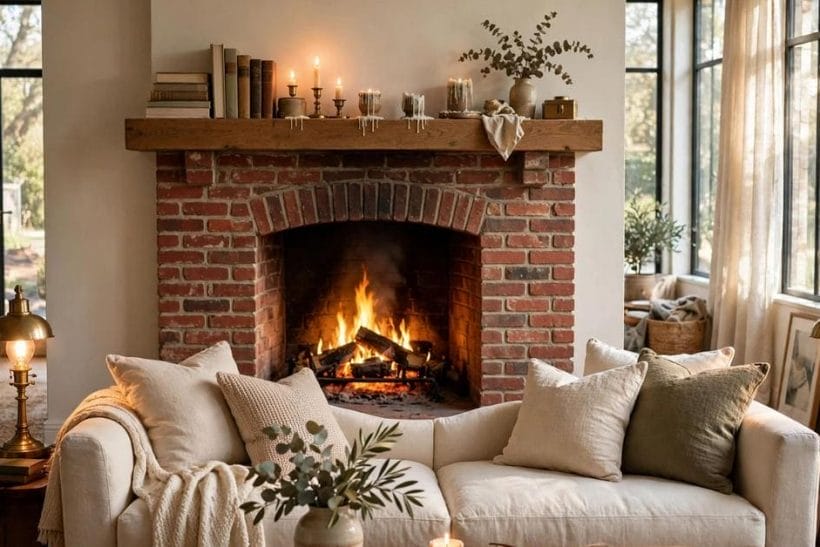
Brick does something no other fireplace material quite manages: it makes a living room feel built rather than decorated — as if the fire came first, the chimney rose around it, and the house was arranged afterwards in its honour.
This collection works outward from the hearth in the order the room itself demands: the layout first, then the seating, the brick’s own finish, the mantel, the colours around it, the lighting, and finally the everyday business of living with a real fire.
1. Brick Fireplace Living Room Ideas at a Glance
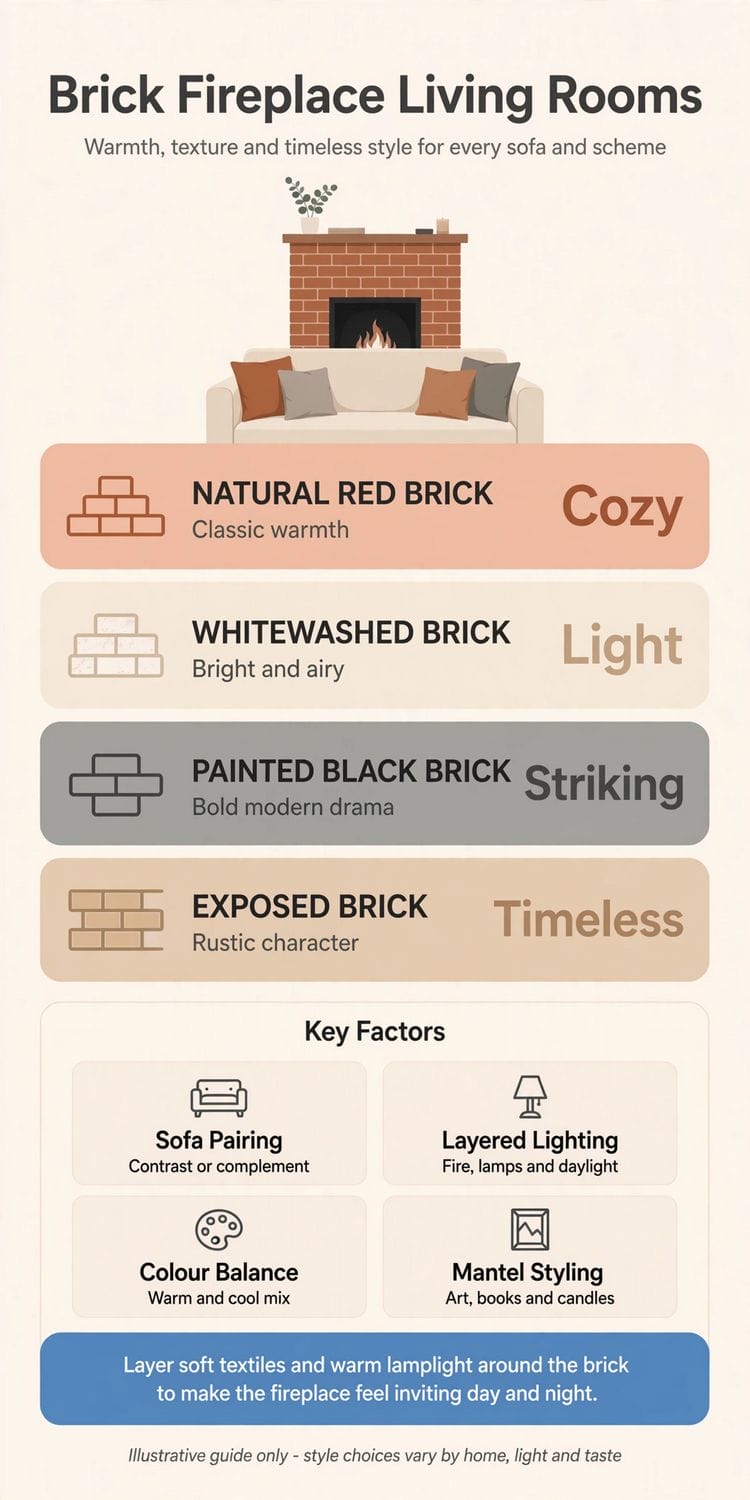
The brick fireplace living room is the brick-material slice of this collection’s living room ideas pillar: a room organised around a masonry hearth, where the fire is the fixed point and everything else — sofa, rug, lamps, colour — takes its cue from the brick. It belongs to the wider family gathered under fireplace living room ideas, alongside its stone, corner and remodelled siblings, and it owns the brick angle outright: material first, everything else in support.
| Question | Short answer |
|---|---|
| What is the brick fireplace’s role in the room? | The anchor. Layout, seating, colour and light all take their lead from the hearth, which cannot be moved and should not be fought. |
| Bare, washed or painted brick? | Bare for character, limewash to lighten while keeping texture, paint only as a whole-room commitment — it is nearly irreversible. |
| What sofa suits a brick fireplace? | One with presence: deep, low-backed and square to the fire, in a fabric — wool, leather, heavy cotton — that tolerates the fireside. |
| Which colours sit well with brick? | Warm quiet neutrals on the other walls, one brick tone repeated in the soft furnishings, and warm light throughout. |
| What is the most common mistake? | Competing with the brick: patterned floors, patterned curtains and a second feature wall all quarrel with its texture. |
| Does a brick fireplace suit a modern room? | Yes — left plain with a simple opening, no mantel and calm furniture, brick reads as warm minimalism. |
2. Layouts Around the Brick Fireplace
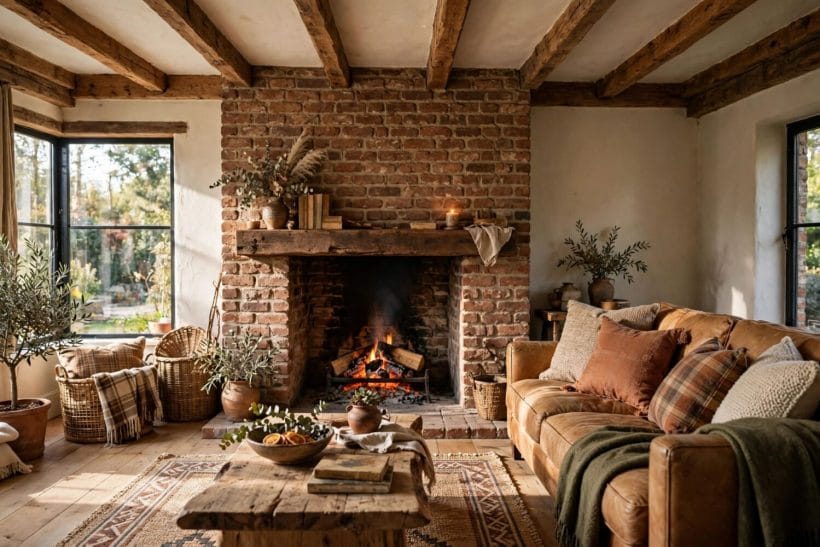
A brick fireplace is the one piece of furniture in a living room that cannot be moved, lightened or apologised for — so the layout starts at the hearth and works outward, giving the fire the wall it deserves and the seating a reason to face it.
1. Give the fireplace the room’s main wall
Brick has the visual weight to hold a room’s longest wall, and the layout calms down the moment it does.
2. Face the main sofa squarely at the fire
The classic arrangement survives because it works: the principal sofa opposite the hearth, close enough for warmth and conversation with the flames. Angled feature sofas belong in rooms without a fire worth watching.
3. Build a conversation square, not a corridor
Two sofas facing each other across a rug, with the fireplace closing one short end, makes a room people talk in. Keep the through-route behind the seating, never between the chairs and the fire.
4. Use the hearth as the room’s dividing line
In a long room, the fireplace wall can split the space into a fireside zone and a quieter reading or work zone beyond it. The brick mass does the dividing honestly, without screens or bookcases pretending.
5. Centre the rug on the chimney breast
A rug centred on the breast rather than on the room pulls the whole seating group into alignment with the fire.
6. Keep the fireside seat for one
Every brick-fireplace room deserves a single chair close to the hearth — the reader’s seat, the thinker’s seat. A wing chair or a low armchair angled at the flames gives the room its most-used place.
7. Plan the wood store into the layout
Logs need a home that is part of the plan: a niche beside the breast, a deep basket with a dedicated spot, or a built-in alcove cupboard.
8. Respect the corner fireplace’s different geometry
Where the fire sits in a corner, the seating turns with it — the diagonal arrangement of the corner fireplace ideas in this collection, with furniture angled to the corner rather than squared to the walls.
9. Leave the hearth’s foreground empty
The stretch of floor directly before the fire is working space — for kneeling, for the basket, for stretched feet. Keep it clear of coffee tables pushed too close and the room gains both safety and ceremony.
10. Let a second zone borrow the fire’s glow
A desk, a games table or a window seat placed within sight of the hearth shares its warmth without crowding it. Brick fireplaces anchor open plans precisely because their presence carries across a large room.
11. Decide the television’s place honestly
If a screen shares the room, settle its position at the planning stage — mounted above the mantel, or on the perpendicular wall — rather than letting it drift into competition with the fire later.
3. Sofas and Seating That Respect the Hearth
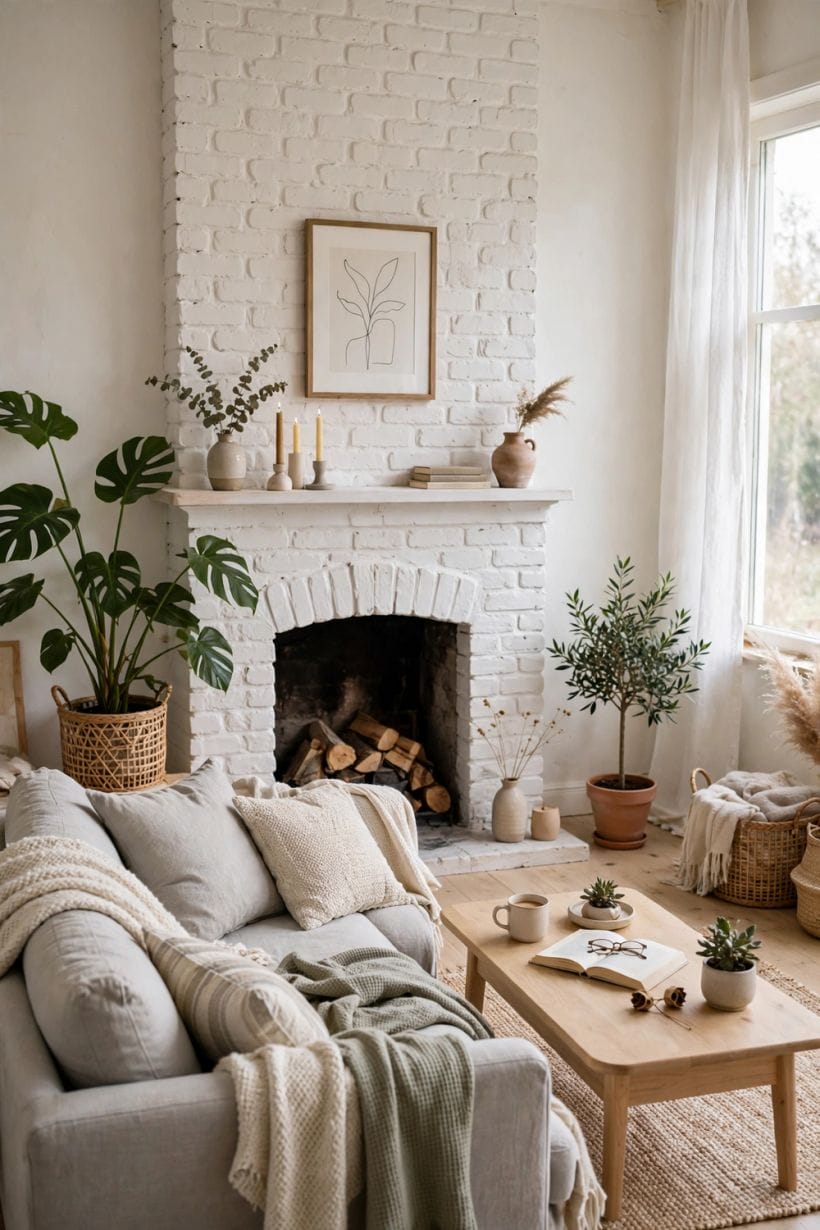
Furniture in a brick-fireplace room has one job before all others: to turn people toward the fire without turning the room into a waiting room. Scale, height and fabric all answer to the brick — heavy architecture asks for seating with some presence of its own.
12. Match the sofa’s weight to the brick’s weight
A massive chimney breast swallows slight, leggy furniture. Choose sofas with substance — deep seats, rolled or track arms with some heft — so the seating holds its own against the masonry instead of apologising to it.
13. Keep backs lower than the mantel line
Seating that rises above the mantel shelf cuts the fireplace in half visually.
14. Choose fabrics that can take the fireside
Wool, heavy cotton and leather age gracefully near heat and the occasional spark in a way delicate silks and loose weaves do not. The fireside is a working place; dress it in working cloth with good manners.
15. Angle the armchairs, square the sofa
The composed arrangement: the sofa square to the fire, the armchairs angled inward at its ends. The slight turn makes conversation natural and keeps every seat with a view of the flames.
16. Add a fireside bench for flexible seats
A long bench or a pair of stools on the hearth side of the rug seats extra guests without blocking the fire’s view for those behind. It is the oldest fireside solution and still the most graceful.
17. Use swivel chairs where the room has two lives
In rooms that are fireside by night and playroom or office by day, a pair of swivel armchairs turns between duties in seconds. The brick stays the anchor; the seating simply reports to it from different angles.
18. Pick a coffee table that stays below the hearth line
A low, solid table — timber, stone or iron — keeps sightlines to the flames open from every seat. Glass tables vanish politely but suit the brick’s earthiness less; the fire room rewards materials with texture.
19. Give the reading chair its own small table and lamp
The single fireside chair becomes the room’s most contested seat when it has a side table for a cup and a lamp of its own. Small completeness is what turns a chair into a destination.
20. Let leather earn its place by the fire
Leather near a brick hearth is a partnership of two materials that improve with use and forgive heat. A leather chair or sofa in a warm mid-tone sits against brick as if the two were quarried together.
21. Keep a throw within arm’s reach of every seat
Brick rooms hold a pleasant cool at their edges even when the fire is lit. Throws folded on chair arms are not styling; they are the difference between a room that looks warm and one that is.
22. Test the seat-to-flame distance before fixing the rug
Sit in the main seats with a fire lit before the layout is final.
4. The Brick Itself: Colour, Wash and Bare
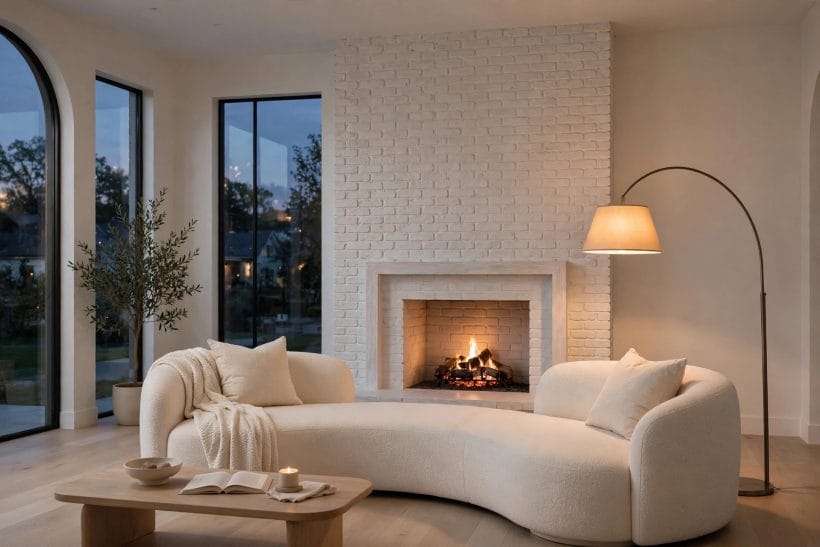
Everything in the room is negotiable except the brick — and even the brick offers more choices than its reputation suggests. Bare, limewashed, painted or simply cleaned, its finish sets the room’s temperature of colour and decides how much texture the walls will carry.
23. Live with bare brick before changing anything
Cleaned and left alone, sound brick has a range of colour — rust, plum, buff, soot-dark — that no paint chart reproduces.
24. Limewash when you want the texture without the darkness
A limewash or German schmear softens brick’s colour while keeping its relief: the mortar lines and the brick faces still read, but the wall lightens by half.
25. Paint brick only with a whole-room plan
Painted brick — white, charcoal, deep green — can be superb, but it is nearly irreversible and it trades texture for colour.
26. Repoint before you judge the colour
Much of what reads as ‘dark, dingy brick’ is tired mortar. Fresh pointing in a lighter lime mortar can lift a chimney breast by a surprising amount and may make washing or painting unnecessary altogether.
27. Contrast the firebox with a darker brick or slate
A blackened firebox opening — heat-proof finish or a slate lining — gives the flames a dark stage and hides soot honestly. The fire reads brighter against darkness, and the surround’s brick stays cleaner-looking.
28. Compare honestly with the stone alternative
Brick and stone are the two great hearth materials, and they set different rooms in motion: the stone fireplace ideas in this collection run cooler and more rustic, while brick runs warmer, more regular and more urban. Knowing which family your room belongs to settles half its decisions.
29. Seal dusty brick rather than covering it
Old brick that sheds dust onto the mantel needs a breathable masonry sealer, not paint. A matt, vapour-open sealant stops the dust, deepens the colour slightly and leaves the wall looking like itself on a good day.
30. Carry brick beyond the breast only with restraint
Exposing a whole brick wall can be glorious in a converted space and overwhelming in an ordinary room.
31. Mind the brick’s colour temperature
Brick leans warm — orange-reds, warm browns — and cool schemes fight it. If the room’s palette runs cool, a limewash cools the brick to meet it halfway; bare warm brick with grey-blue walls pleases almost no one.
32. Repair with matching brick, never near-enough brick
A patched panel in slightly wrong brick shouts forever from the room’s most-looked-at wall. Source reclaimed brick of the same stock for repairs, or re-face the damaged area as one deliberate panel.
33. Keep the hearth stone honest and plain
A single slab of slate, stone or brick pavers as the hearth keeps the fire’s base quiet and practical.
5. Mantels, Surrounds and What Sits on Them
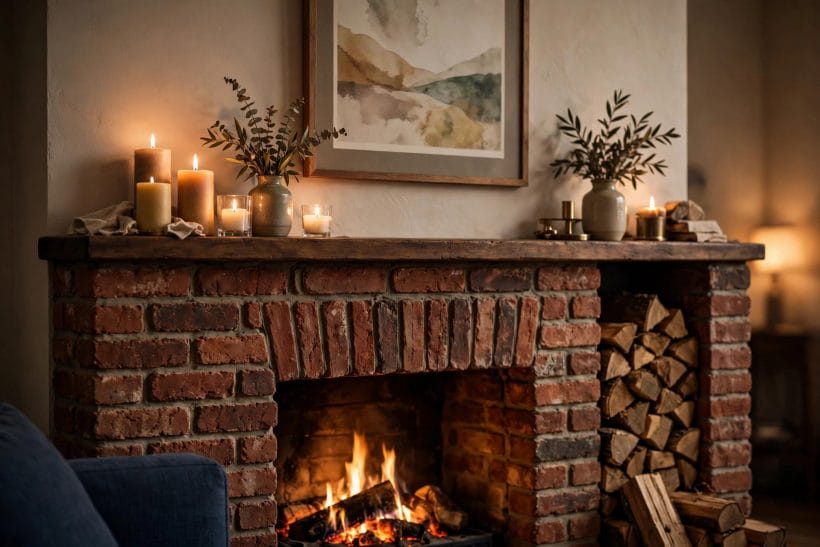
The mantel is where a brick fireplace meets the room’s manners: the shelf that carries the clock, the candles and the season’s greenery, and the surround that frames the flame. Brick is strong enough to take a bold mantel — or to need none at all.
34. Fit a deep timber beam mantel for weight and warmth
A single oak or reclaimed beam across a brick breast is the classic partnership: the timber’s grain answers the brick’s texture, and the shelf is deep enough to be genuinely useful.
35. Or let the brick run plain, with no mantel at all
A clean brick breast with a simple firebox opening and no shelf has a modern, almost sculptural calm. It suits rooms where the styling lives elsewhere and the fire itself is the only ornament wanted.
36. Build a full surround when the room is formal
A complete surround — legs, frieze and shelf in stone, slate or painted timber — dresses a brick fireplace for a formal living room.
37. Style the mantel in odd numbers with one tall piece
The reliable mantel arrangement: one tall element — a mirror, a picture, a clock — flanked by lower groups of three or five.
38. Hang a mirror to double the firelight
A mirror above the mantel catches flame-light and throws it back into the room, doubling the fire’s effect on dark evenings. Keep its frame simple; the brick is already the decoration around it.
39. Keep candles on the mantel, not in the firebox
Candlesticks along the shelf echo the fire above it and light the brick’s texture from below.
40. Dress the hearth, not the firebox
Fire tools, a basket and a fender belong on the hearth where hands can reach them.
41. Use the mantel for the season, sparingly
Greenery at winter festivals, a bowl of pinecones in autumn, nothing forced in summer — the mantel is the room’s calendar. One gesture per season keeps it fresh; permanent decoration becomes invisible within a month.
42. Match the fender and tools to the room’s metal
Black iron suits brick almost always; brass warms it for traditional rooms; steel cools it for modern ones. One metal across fender, tools, lamp bases and picture frames ties the fireside together without a word.
43. Consider the screen above the mantel, placed with care
Where the television must live over the fireplace — the arrangement weighed in this collection’s tv above fireplace ideas — keep the screen’s size modest against the breast’s width, and let the mantel objects stay low so the two never quarrel.
44. Leave the centre of the shelf empty sometimes
A mantel with breathing room — objects at the ends, air in the middle — looks deliberate and calm against busy brick. Emptiness on the shelf is as much a styling decision as any object placed on it.
6. Walls, Floors and Colours Around Brick
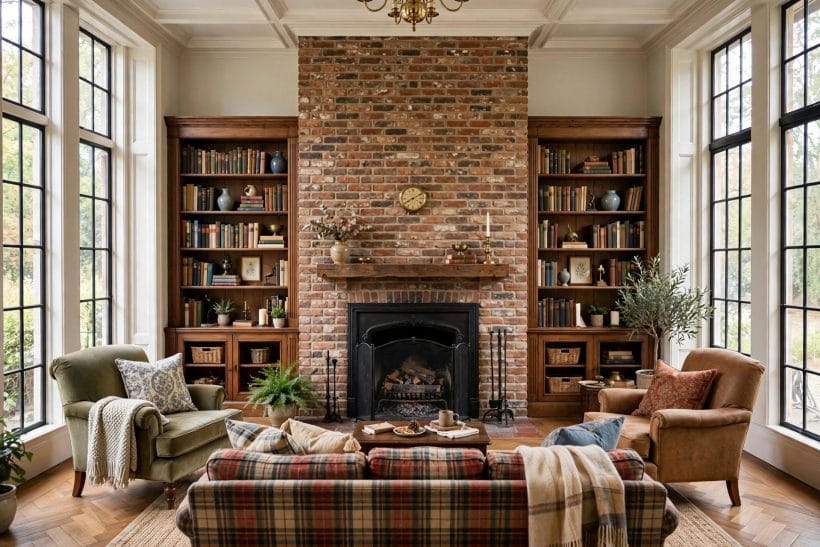
Brick brings its own colour and texture to the room in quantity, so every other surface has a simpler job: to be quieter. The walls, floor and soft colours around a brick fireplace succeed by supporting the hearth, not by auditioning beside it.
45. Paint the other walls a warm, quiet neutral
Warm whites, pale stone and soft greige let brick be the room’s colour event. Pure brilliant white fights brick’s warmth; a shade with a drop of warmth in it sits beside the masonry like family.
46. Try deep colour on the breast’s own wall only
A chimney breast wall painted deep green, ink blue or charcoal — with the brick left bare within it — can frame the hearth like a picture mount.
47. Lay floors that can stand next to masonry
Wide timber boards, stone flags or large plain tiles hold their own beside brick; small patterned floors quarrel with it.
48. Use the rug to soften brick’s geometry
Brick is all straight lines and right angles.
49. Repeat one brick tone in the soft furnishings
A cushion, a throw or a curtain in one of the chimney breast’s own colours ties the seating to the hearth without matching anything exactly.
50. Keep curtains plain and full-length
Patterned curtains next to patterned brick is texture on texture. Plain linen or wool, hung full-length, gives the eye a rest on the window wall and lets the fireplace keep the room’s one busy surface.
51. Borrow period confidence for older houses
Period rooms take brick in their stride: the victorian living room ideas in this collection pair exposed brick with deep colours and dark timber in a way modern schemes can borrow from — one rich wall colour, honest wood, and the fire at the centre of the evening.
52. Let white-painted brick carry a brighter scheme
Where brick has been painted white or cream, the room can take clearer colour elsewhere — blue sofas, patterned rugs — because the wall’s texture now works quietly. The same scheme against bare brick would feel like an argument.
53. Treat the ceiling as the room’s fifth quiet surface
A plain ceiling in a warm white keeps attention where it belongs. Beams can suit a brick room in a cottage or conversion, but in an ordinary house they add a second texture the room rarely needs.
54. Choose artwork larger and plainer than instinct says
One large, calm picture reads well against brick; a gallery of small frames dissolves into the mortar pattern. Where art hangs on the breast itself, a wide mount and a simple frame give it the authority to be seen.
55. Mind the light colour of the room’s bulbs
Warm light flatters brick; cold light greys it. Every lamp in a brick-fireplace room should lean warm, so the masonry looks like the glowing heart of the house rather than a wall left over from outdoors.
7. Layered Lighting for Brick and Flame
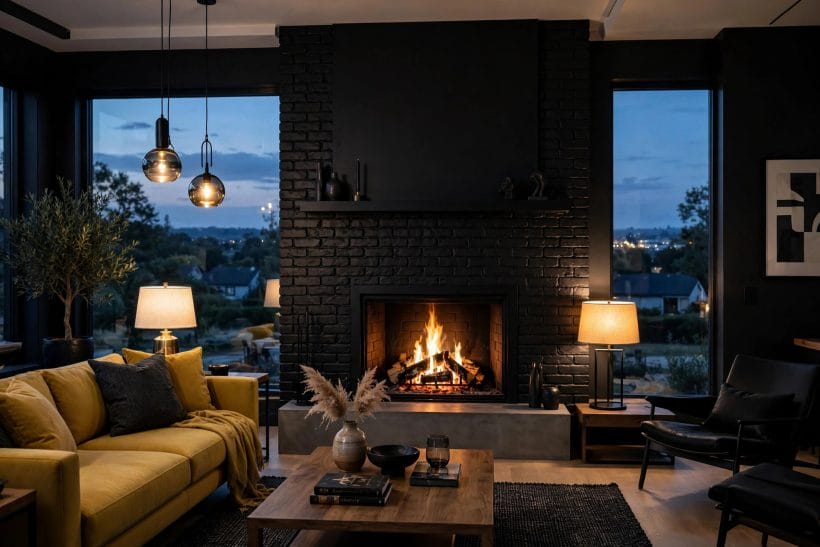
A brick fireplace is itself a light source — flickering, low and warm — and the room’s other lighting has to harmonise with it rather than drown it. The plan is layers: gentle ambient light, task light at the seats, and accents that wash the brick’s texture.
56. Wash the brick with light to show its texture
A picture light, a pair of wall lights or a low uplighter grazing the chimney breast turns flat brick into relief. Raking light across masonry is the single most effective evening trick in a brick room.
57. Keep overhead light soft and secondary
A fierce central ceiling light flattens brick and kills firelight. Use dimmable, warm overhead light at low level for practical moments, and let lamps and the fire carry the room the rest of the time.
58. Put a lamp at each end of the sofa
Symmetrical lamps at sofa ends give the reading light conversation needs and frame the seating against the brick. Their glow, not the ceiling’s, is what makes a fireside evening feel composed.
59. Light the reading chair as its own place
The single fireside chair deserves a floor lamp arched over it or a wall light at shoulder height. A chair with its own light becomes a room within the room — the seat everyone hopes is free.
60. Use candlelight as the third layer
Candles on the mantel and the coffee table bridge the gap between firelight and lamplight, softening faces and brick alike.
61. Dim everything that can be dimmed
Firelight flickers at low intensity, and any fixed bright light makes it look weak. Dimmers on the ambient and accent layers let the room settle to the fire’s level on winter evenings.
62. Avoid downlights aimed at the breast
Ceiling spots pointed at the fireplace glare off the firebox and bleach the brick directly below them. If the brick is to be lit, graze it from the side or below — never interrogate it from above.
63. Add low light at the hearth for safety and glow
A small light near the hearth — a lantern, a low lamp on the bookshelf beside it — marks the step and the tools in the dark and doubles the fire’s presence when the fire itself is unlit.
64. Let daylight be judged before electric light
Brick changes character across the day: morning light cools it, evening sun sets it alight. Live with the room through a full day before finalising lamp positions, and light for the brick’s dullest hour, not its finest.
65. Keep switches by the door and the sofa
Layers are useless if adjusting them means crossing the room. Switches or smart controls at the entrance and within reach of the main seats are what turn a lighting plan into an evening habit.
8. Styling, Storage and Everyday Living
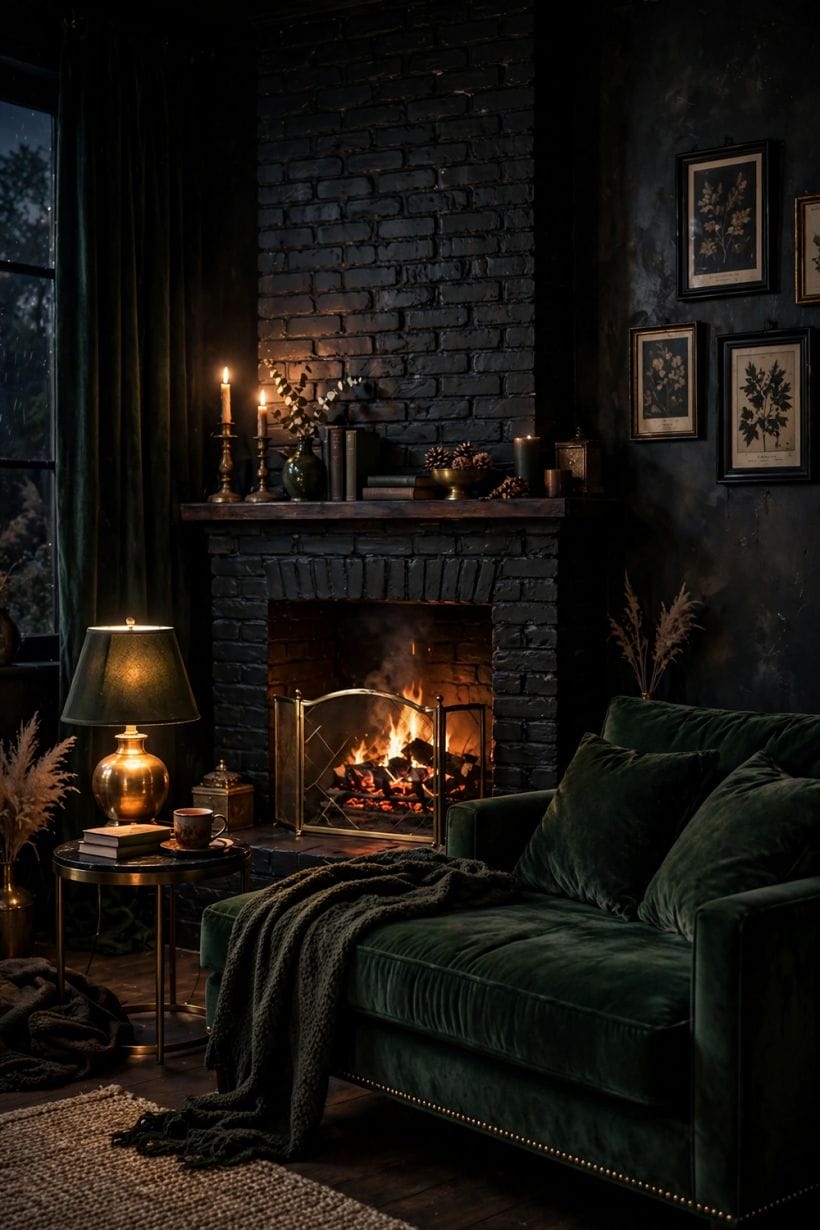
The last layer is life itself: the books, baskets, boots and blankets of a room that is used daily. A brick fireplace forgives everyday clutter more kindly than most focal points — its texture hides a multitude — but the room still needs its storage planned.
66. Build storage into the alcoves
The recesses either side of a chimney breast are the room’s natural cupboards and shelves. Fitted alcove storage swallows the television box, the games and the spare throws, and its symmetry around the brick pleases the eye for free.
67. Stack the log store as part of the styling
A neat stack of logs in an alcove or a deep niche is texture answering texture — timber against brick. Kept tidy and genuinely used, the wood store is the one piece of fireside styling that never looks staged.
68. Keep a working basket, not a decorative one
Choose the log basket by capacity first — a weekend’s wood — and looks second. A small pretty basket that needs refilling twice an evening teaches the whole household to leave the fire unlit.
69. Hide the screen’s supporting cast
Boxes, consoles and cables need a ventilated home in the alcove cupboard or a media unit low against the breast. The brick fireplace predates all of it and should never be asked to wear it.
70. Rotate books and objects on the alcove shelves
Alcove shelves beside brick fill fast and fade faster. A seasonal edit — fewer books, one object with space around it — keeps the fireside walls as calm as the scheme promised on the first day.
71. Give boots and outdoor things a threshold home
Fireside rooms are often the house’s warm front room, and wet boots gravitate to the hearth. A boot tray and hooks at the door keep the migration honest and the hearth clear for its real work.
72. Protect the floor in front of the hearth
A hard-wearing rug or a washable runner across the hearth’s foreground takes the ash, the sparks’ fallout and the basket’s drips. Choose its colours from the brick and it disappears into the scheme.
73. Keep fire tools complete and matched
Poker, brush, shovel and tongs in one stand, in one finish, oiled and sound — the set is used weekly and seen daily. Mismatched borrowed tools make even a grand fireplace look under-kept.
74. Sweep the hearth into the weekly routine
Ash dust dulls brick and slate faster than any other neglect. A weekly brush-down of hearth and firebox, and an annual chimney sweep booked without fail, keep the room’s heart clean and safe.
75. Let the room rest unlit in summer
An unlit brick fireplace in summer wants one calm gesture — a green plant before the opening, a stack of books, a basket of pinecones — or simply to be left empty and clean.
9. Checks and Mistakes: Before the First Purchase or the First Fitting
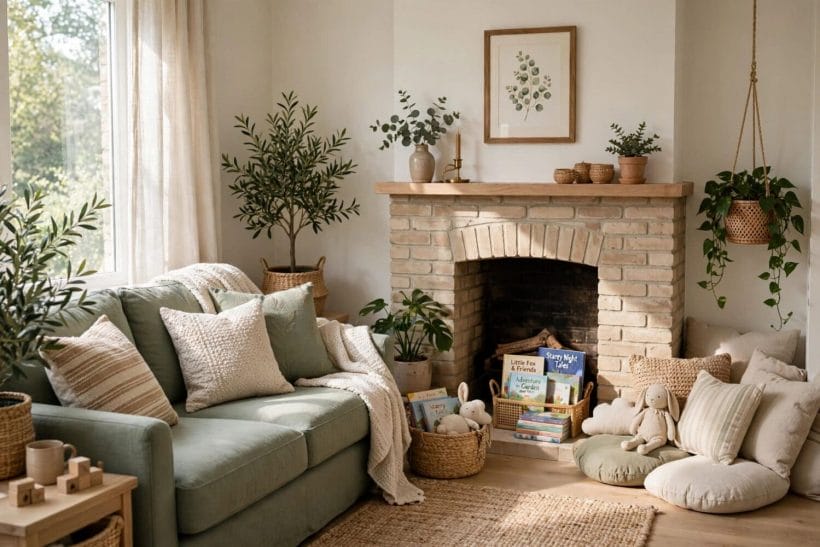
Walk the room’s decisions once more before ordering anything: sit where the sofa will sit, look at the brick in morning and evening light, and check that no other surface is trying to compete with the chimney breast.
Check the working fireplace in writing before styling it: chimney swept, flue sound, hearth meeting your local rules for clearances and materials. A brick fireplace is a real fire in the middle of the house, and its safety checks come before its styling every time.
Resist the late extra feature — the patterned tile insert, the second accent colour, the ornate surround proposed mid-project. Brick rooms succeed on restraint everywhere except the brick itself.
10. Costs and Pulling It Together
Costs in a brick fireplace living room follow the order of permanence: chimney and flue work first, then any repointing or brick repair, the hearth and surround, and only then the furniture and soft layers. Money spent on the masonry outlives every sofa the room will ever hold, so it earns its place at the front of the budget.
Finish with the small budget that makes the room daily: tools, basket, throws and lamps. From the home design ideas hub, the same discipline — one strong material, everything else in support — carries into every other room of the house.
Final Considerations
A brick fireplace living room is not a theme; it is a room with a heart of masonry and a real flame, around which the ordinary evenings of a household arrange themselves without being asked.
Build it in the order this collection follows — hearth, layout, seating, surface, colour, light, life — and the brick will do what it has done for centuries of front rooms: make the house feel founded.

0 Comments