

Every room has a place the eye goes first. In a living room with a fire, that place was decided centuries ago, and no television, bookcase or view has ever successfully argued with it.
These 75 fireplace ideas build the whole room around that fact: placement, surround, flame, seating and styling, with the fireplace kept at the centre from the first idea to the last.
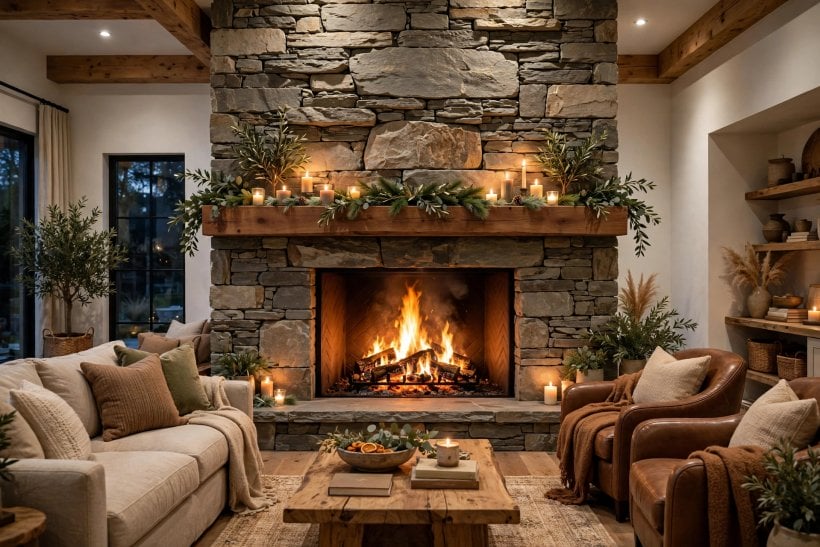
1. Fireplace Living Room Ideas at a Glance
The central entity is the fireplace as the living room’s centre: a heat source and focal point whose attributes are its placement and proportion, its surround material, its flame type, the seating gathered around it, and the mantel and wall above it. It is judged by one test: whether the room’s life naturally arranges itself around the fire.
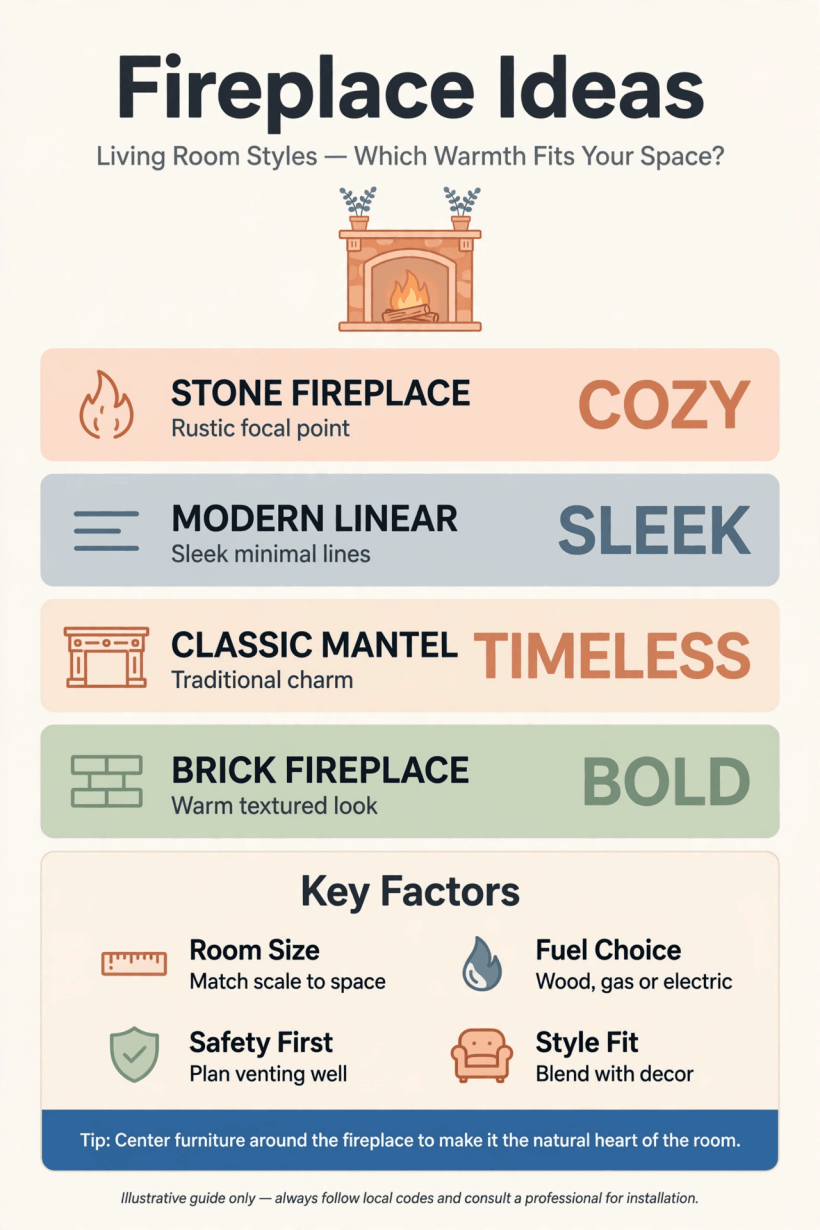
| Question | Short answer |
|---|---|
| Where should the fireplace sit? | Centred on the main wall, or deliberately balanced off-centre; never apologised for. |
| What surround suits most houses? | The house’s own material, brick, stone, timber or plaster, in proportion to the wall. |
| Which flame should a household choose? | The one matching how often it will honestly be lit: ceremony or convenience. |
| What makes a fireside work? | Seating that can talk, see the flame and reach a drink without negotiation. |
2. The Fireplace as Centre: Placement and Proportion
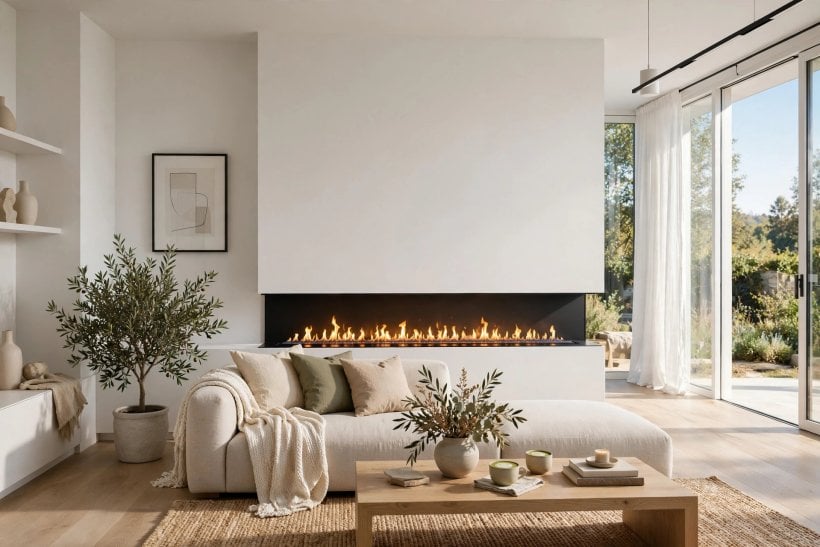
Every other post in the living-room cluster arranges furniture; this one starts with the flame. The pillar survey of living room ideas treats the fireplace as one feature among many; here it is the room’s centre of gravity, and everything else is placed in relation to it.
1. Centre the Fireplace on the Room’s Main Wall
A fireplace centred on the longest wall gives the room a clear axis: seating faces it, pictures hang level with it, and the eye settles. Off-centre fires can work, but they must be balanced deliberately, never apologised for.
2. Let an Off-Centre Fire Create Two Zones Instead of One Problem
An off-centre fireplace divides a long room naturally: the fire end for sitting, the far end for a desk, shelves or dining. Leaning into the asymmetry, with rugs marking each zone, turns a flaw into the floor plan.
3. Scale the Surround to the Wall, Not the Catalogue Photograph
A grand surround in a modest room eats the wall and dwarfs the furniture; a mean one in a tall room looks lost. The fireplace should be the wall’s clear leader without being its only citizen.
4. Keep the Hearth at a Height That Suits Sitting Eyes
Flames are watched from chairs, so the firebox belongs where seated eyes rest naturally. A fire placed too high becomes a picture; too low, a trip hazard with ambitions.
5. Give a Corner Fireplace a Diagonal Seating Plan
Corner fires free the main walls but demand furniture angled toward them, which can feel wonderfully gathered when done on purpose. A rug turned to the corner, two chairs angled in, and the awkward geometry becomes the room’s character.
6. Use a Double-Sided Fire to Warm Two Spaces at Once
A double-sided fireplace between living and dining areas shares its flame with both and keeps the plan open. It is a commitment in structure and cost, repaid every evening by two rooms feeling like the house’s heart.
7. Build a Fireplace Wall as the Room’s One Statement
One fully treated wall, fireplace, shelving, panelling and all, gives a plain room architecture. The other walls stay quiet. A statement wall succeeds by being singular; two statement walls are an argument conducted in furniture.
8. Align the Fireplace With the Room’s Best View Where Possible
Where a room has both a fire and a view, seating arranged to enjoy both, angled between hearth and window, is the connoisseur’s solution.
9. Keep Walkways Clear of the Hearth’s Working Space
A fireplace needs its own working apron: room to tend it, set down a basket, and pass without threading between knees and flame. Plan the traffic route first and let the seating settle in the calm that remains.
10. Let a Disused Fireplace Earn Its Place as Architecture
Keeping its surround handsome honours the house’s history, a theme the older-house specialists in fireplace interior design ideas for tiny houses know well.
11. Decide the Fireplace Before the Sofa, Always
Furniture can be moved in an afternoon; a fireplace cannot. The order of decisions in this post is the order of permanence: hearth first, seating second, decoration last. Rooms planned backwards feel it forever, however expensive the sofa.
3. Surrounds and Materials: The Fire’s Frame
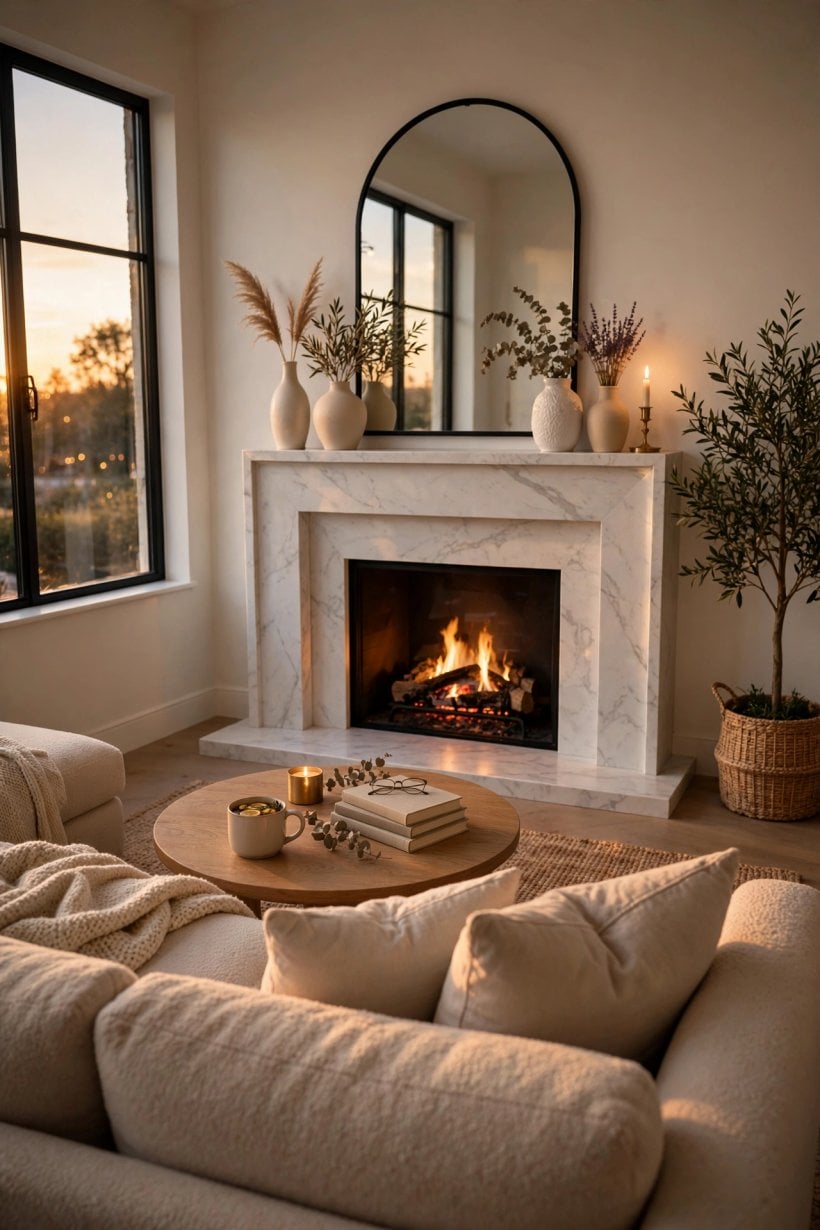
The surround is the fire’s picture frame and the room’s handshake with geology, craft or industry. Materials must suit both the heat they live beside and the house they live in, and everything said here stays at the level of look and character; specification belongs to qualified installers.
12. Choose Brick for Warmth That Suits Almost Every House
Brick around a fire feels inevitable in the best way: warm in colour, honest in texture, forgiving of soot. Painted brick lightens a heavy surround; bare brick suits cottages, lofts and every room that leans unpretentious.
13. Use Stone Where the Room Wants Weight and Permanence
A stone surround gives a fireplace the gravity of a building’s foundation brought indoors. Rough stone leans rustic, cut stone leans formal, and both ask for simple furniture that does not compete with the geology on display.
14. Tile the Surround for Colour and Pattern in a Small Footprint
Tiles let a fireplace carry colour, pattern and craft in a compact area: handmade-look tiles for charm, large plain tiles for calm. The surround is the one place a bold tile can live without overwhelming the room.
15. Plaster a Surround Smooth for the Quietest Modern Look
A smooth plastered surround, painted with the wall or a tone deeper, makes the flame itself the entire decoration. This is the minimalist’s fireplace: architecture reduced to an opening, a hearth and firelight.
16. Set a Simple Timber Mantel Shelf Over a Plain Opening
One honest beam or shelf above the fire gives the room its display line and visual anchor without a full surround. The mantel shelf is where the room’s changing life, cards, candles, greenery, gets exhibited.
17. Frame the Fire in Dark Metal for an Industrial Calm
Dark steel or iron framing reads modern, urban and composed, and pairs naturally with concrete, brick and pale wood. Metal surrounds suit linear fires particularly well, underlining their long, low geometry.
18. Use a Pale Stone-Look Finish to Lift a Dark Room
Pale surrounds bounce firelight and daylight alike, brightening rooms that face away from the sun. In a dim room, the fireplace should be the lightest large surface, leading the eye and cheering the proportions.
19. Run the Surround Material Up the Whole Chimney Breast
Carrying brick, stone or tile up the full chimney breast gives the fireplace wall its complete statement and makes tall rooms feel intentional.
20. Keep the Hearth Stone Plain and the Surround the Star
Where the surround is rich, the hearth should be quiet: one plain slab that grounds the composition and does its practical work unnoticed. Two competing stars around one small flame is the surround equivalent of shouting.
21. Match the Surround to the House’s Own Materials
Brick houses take brick fires naturally; stone cottages, stone; timber houses, wood and plaster. Echoing the building’s own fabric makes the fireplace feel original even when it is new, which is the highest compliment a surround can earn.
22. Let a Raised Hearth Double as Fireside Seating
A deep, raised hearth edge is the warmest seat in the house at gatherings, close to the flame and the conversation alike. It is an old idea that modern rooms, short on perch points, are happily rediscovering.
4. Fireboxes and Flame Types, in General Terms
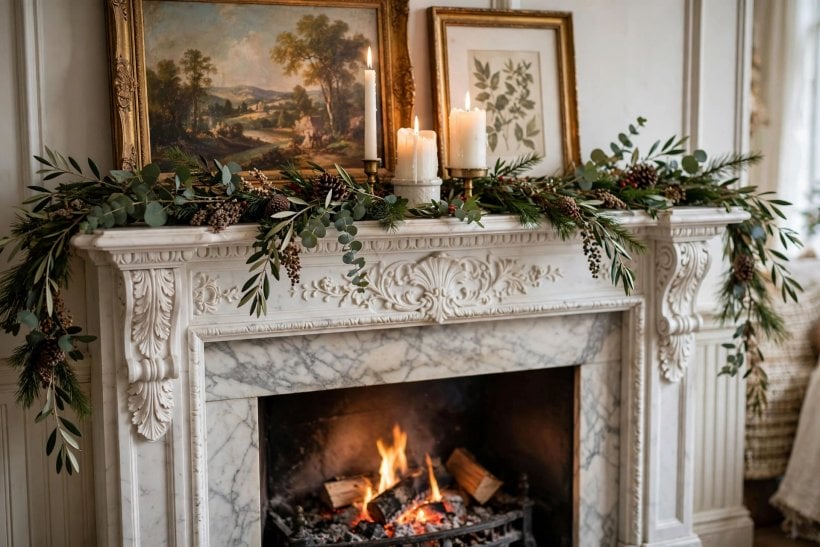
This section compares flames by character and convenience only. Every real installation, flue, fuel and fitting is governed by local rules and belongs in professional hands; the design question here is narrower: what kind of fire does the room’s life actually want?
23. Choose a Wood Fire Where the Ritual Is the Point
Burning wood asks for storage, tending and clearing, and repays it with scent, sound and ceremony no switch can copy. It suits households that will genuinely tend it; an untended wood fire is a chore wearing a romance’s clothes.
24. Choose Gas Where the Fire Must Obey the Clock
A gas fire lights for twenty minutes of reading and dies when the evening ends, suiting households whose fires are frequent and brief.
25. Use an Electric Fire Where Simplicity Rules
Electric fires need no flue and fit where no other flame can go, which is why they serve flats, rentals and tiny houses so well.
26. Consider a Stove Standing in a Large Fireplace Opening
A wood-burning stove set within a generous old fireplace opening is a beloved combination: the stove’s efficiency inside the surround’s architecture. The pairing suits period houses whose open fires waste the heat their rooms are crying out for.
27. Go Linear for a Long, Low, Contemporary Flame
A wide, low linear fire stretches the hearth’s warmth across a modern seating wall and pairs with low furniture and media walls. It is the fireplace as landscape rather than portrait, and it suits rooms arranged in long lines.
28. Keep a Traditional Grate Where the House Is Traditional
In a period room, an open grate in a period surround is not inefficiency; it is authenticity, used on the evenings that matter.
29. Place a Freestanding Fire as Furniture With a Flame
Freestanding stoves and fires can sit away from the chimney breast, turning a corner or the space between zones into the warm centre. They behave like furniture in the plan, which frees rooms whose walls are already spoken for.
30. Share One Fire Between Indoors and Out, Where Design Allows
Some houses place a fireplace where an interior wall meets a terrace, serving both.
31. Let the Firebox Be Black and Deep for the Brightest Flame
A dark firebox interior makes flames read brighter and hides soot gracefully. Whatever the surround’s colour, the opening itself usually wants darkness; it is the one place in the room where black is always the right answer.
32. Plan Log Storage as Part of the Fireplace’s Design
Where wood is burned, its storage is furniture: a niche beside the fire, a basket with presence, a bench with a log store beneath. Logs kept beautifully become decoration; logs kept badly become the room’s apology.
33. Decide Honestly How Often the Fire Will Be Lit
Twice a week argues for ceremony and wood; twice a day argues for a switch.
5. Seating Around the Fire: The Gathered Room
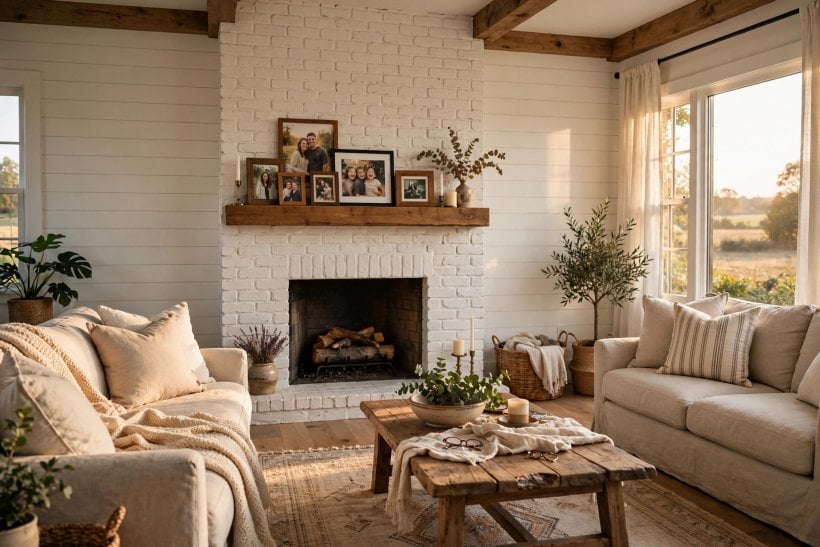
A fireplace is only half built until the seating answers it. The test of every arrangement here is conversational: can the people in the chairs talk to each other, see the fire and reach their drinks without a negotiation?
34. Face Two Sofas Across the Hearth for Conversation
Two sofas facing each other, with the fire at one end or between them, make the classic gathered room: talk flows across, warmth flows along.
35. Angle Two Armchairs as the Fire’s True Audience
A pair of armchairs angled toward the flames, with a small table between, is the fireplace’s natural congregation.
36. Pull a Sofa to Face the Fire Where Watching Is the Point
Where the fire is the evening’s entertainment, a sofa facing it squarely, with chairs at its flanks, is honest planning. Add a low table that never blocks the hearth’s view and footstools that migrate as knees require.
37. Keep a Clear Hearth Rug as the Room’s Warm Centre
A rug laid before the fire defines the warm zone, softens the floor for children and dogs, and gathers the seating into a visible circle. Its colours can carry the room’s whole palette in miniature.
38. Add a Fireside Bench for Overflow and Children
A low bench near the hearth seats the extra cousin, the storytelling grandfather and three children at once. Benches are the flexible seating that fireside gatherings always need and sofa-only rooms always lack.
39. Use Swivel Chairs to Turn Between Fire and Room
Chairs that swivel let their sitters face the fire, the conversation or the window in one motion. In rooms with several centres, swivels are diplomacy in furniture form, ending the tyranny of the fixed arrangement.
40. Set a Reading Chair at the Fire’s Quiet Edge
One chair placed at the edge of the fire’s warmth, with its own light and table, becomes the house’s most contested seat. Every fireplace room deserves this deliberate soloist among the ensemble seating.
41. Keep Distances Comfortable, Felt Rather Than Measured
Seating should sit where the fire warms without roasting and conversation carries without raising voices.
42. Give the Fire Its Own Low Table Manners
Fireside tables should be low, sturdy and few: one surface within reach of each seat for a cup or a book. A forest of small tables between chairs and flame is clutter with a trip hazard’s ambitions.
43. Let Window Seats Share the Fire’s Warmth in Winter
A window seat within the fire’s reach is the winter reader’s throne: daylight for the page, warmth at the back. Where a room offers this combination, build the seat generously and let every other chair envy it politely.
44. Arrange for the Dog, Who Has Already Chosen
Every fireside plan will be amended by the household’s animals, who take the warmest spot as a right.
6. The Mantel and the Wall Above: Dressing the Fire
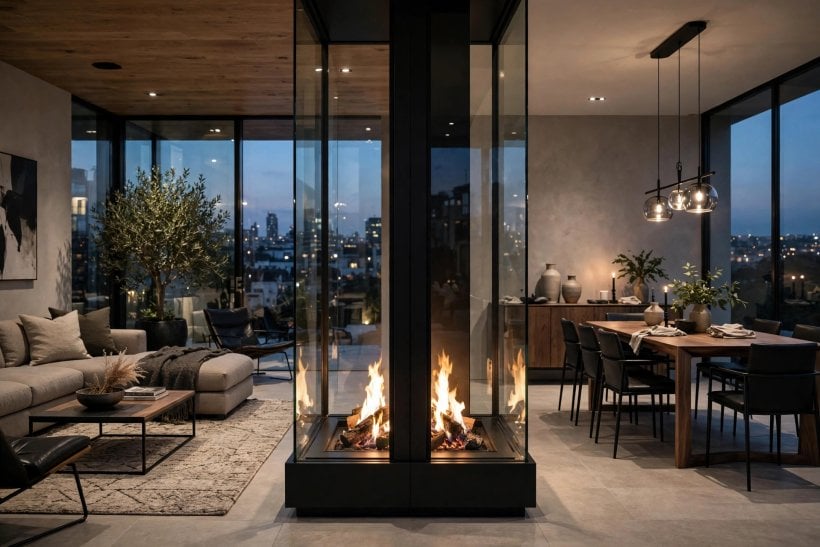
The mantel is the room’s mantelpiece in every sense: its display shelf, its seasonal stage and the place the eye visits second, straight after the flame. The styling in this section borrows the restraint of farmhouse living room ideas at their best, edited rather than accumulated.
45. Hang One Large Picture or Mirror Above the Fire
A single generous piece above the mantel gives the fireplace wall its crown. Mirrors borrow light and double the firelight; pictures bring the room’s story.
46. Style the Mantel in Threes, With Air Between
Groups of three objects, varied in height and material, with genuine space between groups, is the mantel’s reliable grammar. The air is part of the arrangement; a mantel filled edge to edge reads as storage, not display.
47. Let Candles Multiply the Firelight on Dark Evenings
Candles on the mantel and hearth extend the fire’s glow upward and outward, and serve on the evenings the fire itself is not lit.
48. Bring Greenery to the Mantel for the Months Without Fire
A fireplace in summer needs green life where the flame was: a plant in the opening, trailing green on the mantel.
49. Display Books on the Hearth Where Reading Happens
A small, honest stack of current reading beside the reading chair, or a basket of books by the fire, dresses the hearth with the room’s real life. Styling that reflects actual use always outlasts styling performed for photographs.
50. Keep the Fire Tools Handsome Enough to Live in View
Poker, brush and basket live beside the fire permanently, so they are decoration whether chosen or not. A coherent set in one material turns necessities into part of the surround’s design; a jumble announces that nobody decided.
51. Use the Mantel for the Season’s One Gesture
A garland, a bowl of fruit, a row of cards: one seasonal gesture, changed with the calendar, keeps the fireplace feeling tended. The discipline is the singleness; the mantel that celebrates everything at once celebrates nothing in particular.
52. Frame the Fireplace Wall With Shelves or Alcoves
Alcoves and shelves flanking the chimney breast are the fireplace’s natural court: books, logs and loved objects within the fire’s glow. Balanced roughly, not identically, the two sides give the wall its composed, architectural finish.
53. Let a Clock or One Loved Object Own the Centre
The mantel’s centre wants a single citizen: a clock, a vase, one painting’s focal point. Competing centrepieces split the wall’s authority. Choose the object with the best story; visitors will ask, and the fire will listen.
54. Keep the Television Off the Chimney Breast Where Possible
A screen above the fire forces two focal points into one and usually wins, to the room’s loss. Where any other wall can take it, let the fireplace keep its ancient job.
55. Light the Mantel Wall Softly From the Sides
Picture lights or soft wall lights flanking the chimney breast let the fireplace wall glow on evenings when the fire is unlit.
7. Small Living Rooms, Tiny Houses and Honest Safety
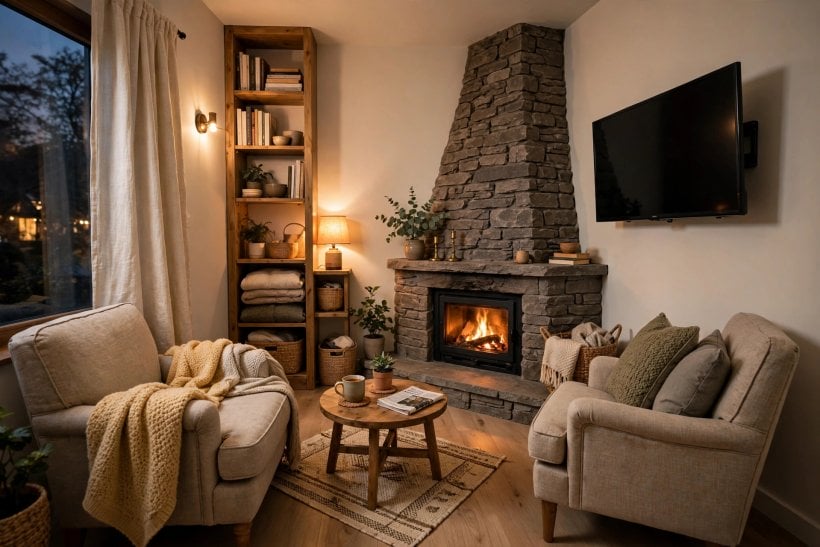
A fireplace in a small room is not a compromise; it is a concentration. The flame’s warmth and focus suit compact living particularly well, provided clearances, storage and furnishing stay honest, a discipline the small-room collections like small living room ideas and tiny living room ideas apply to every centimetre.
56. Let a Small Fire Warm a Small Room Completely
In a compact room, a modest fire is not the economy option; it is the correctly sized one, warming the whole space without driving its occupants to open windows in January.
57. Use a Corner Fire to Free a Tiny Room’s Walls
A corner fireplace leaves both main walls for seating and storage, which in a tiny room is the difference between possible and impossible. Angled seating toward the corner then makes the arrangement feel chosen, not squeezed.
58. Keep Fireside Storage Vertical in Compact Rooms
Logs, tools and blankets stored upward, in a tall niche or slim tower beside the fire, keep the small hearth’s floor clear. Vertical thinking is the tiny room’s universal solvent, and the fireplace corner is no exception.
59. Choose a Raised Firebox to Save Floor and Sightlines
A firebox set higher in the wall frees the floor beneath for a bench, storage or clear passage, and lifts the flame into the seated sightline.
60. Keep Clearances Sacred and Check Them Locally
Every fuel and fitting has clearance requirements set by makers and local rules, and in small rooms they matter most.
61. Guard the Fire Where Children and Animals Live
A fireguard in a small room is not an eyesore to apologise for; chosen in a finish that suits the surround, it is part of the furniture.
62. Ventilate and Maintain Small Fires More, Not Less
Compact rooms concentrate everything, including the effects of a poorly maintained fire. Sweeping, servicing and ventilation checks belong on the household calendar; the professional who services the fire is the right source for its specific schedule.
63. Let an Electric Fire Serve Where No Flue Exists
In tiny houses, flats and conversions without a chimney, a good electric fire gives the focal point and much of the comfort without structural demands.
64. Use the Hearth as the Tiny Room’s One Large Gesture
A small room can afford exactly one grand gesture, and the fireplace is the best candidate: one handsome surround, everything else quiet. The concentration reads as luxury, because restraint everywhere else makes the single gesture legible.
65. Keep Fireside Furniture Light Enough to Move for the Fire
In small rooms, chairs that can be drawn closer on a cold night and pushed back for a gathering make the fireplace serve the week’s different lives.
8. Evening Light, Texture and the Fire’s Companions
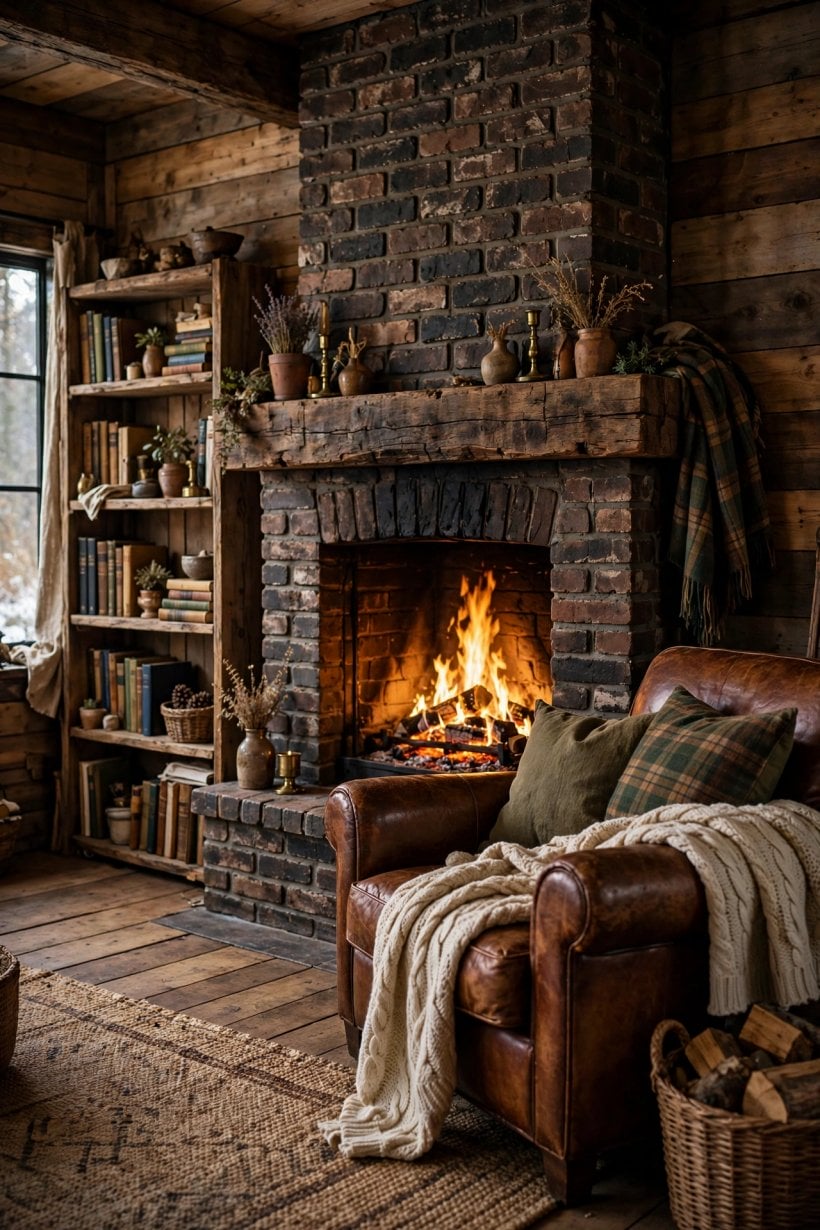
The fireplace’s final allies are light, texture and the small comforts that gather around warmth. These last ideas finish the room the fire started, and nod outward to the fire’s outdoor cousins in fire pit ideas and the built version in stacked stone fire pit, which take the same gathering instinct into the garden.
66. Dim the Room and Let the Fire Be the Light
On fire evenings, lower every other light until the flame leads.
67. Layer Wool, Wood and Warmth Against the Fire’s Glow
Throws, cushions and timber tones near the fire answer its warmth with texture. A fireside without softness is a viewing gallery; with it, the room becomes the place everyone in the house is slowly migrating toward.
68. Set Drinks and Books Within the Fire’s Reach
A side table, a small shelf, a basket: the fireside’s pleasures should be reachable without leaving the warm zone.
69. Scent the Room Lightly, From the Wood Itself
Where wood burns, its own scent is the room’s perfume and needs no assistance. Where it does not, one candle or a bowl of something seasonal near the hearth keeps the suggestion.
70. Keep a Basket of Throws as Permanent Fireside Furniture
A visible basket of blankets beside the seating invites the room to be used as it was designed. It also solves the nightly distribution of warmth more democratically than any thermostat argument the household will ever settle.
71. Let Music Live Near the Fire, Quietly
Fireside evenings pair with low music the way they pair with low light. Whatever plays it, keep the source unobtrusive and the volume beneath conversation; the fire is the headline act and crackle is its opening number.
72. Dress the Hearth for the Unlit Months, Not Around Them
Summer fireplaces dressed with plants, candles or stacked pale logs stay the room’s centre instead of becoming its embarrassment. The unlit half of the year is too long for the room’s main wall to spend it apologising.
73. Use One Deep Colour Near the Fire to Hold the Glow
A deep-toned chair, cushion or painted alcove near the fireplace gives firelight something rich to play on. Pale rooms reflect the glow; a touch of depth absorbs and returns it as atmosphere, which is warmer still.
74. Finish the Floor Route to the Fire in Something Washable
The path from door to hearth carries ash, sparks’ souvenirs and winter boots. A washable runner or an easily cleaned floor finish along that route is the unglamorous finishing touch that keeps the glamorous ones looking cared for.
75. End the Evening by Looking at the Room From the Door
Stand in the doorway with the fire lit and the lamps low, and judge the room as a guest first sees it.
9. Checks and Mistakes: Before the First Pour or Purchase
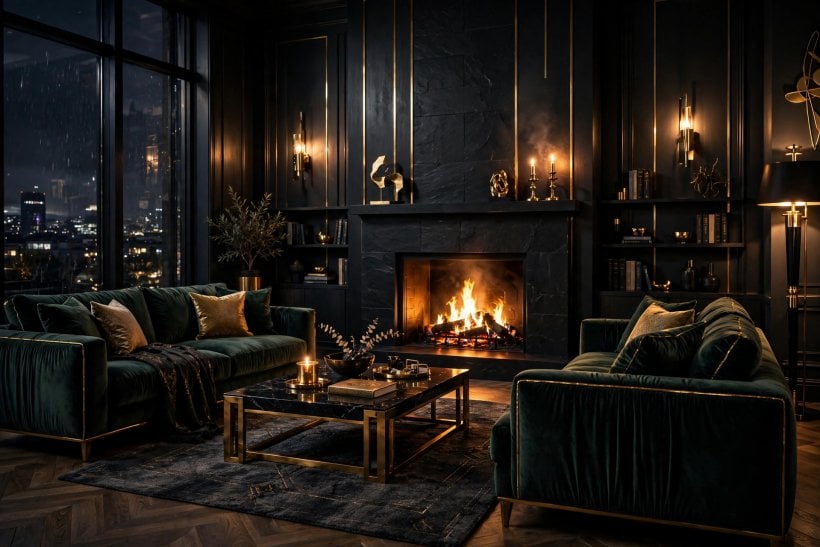
Before altering any fireplace, have its flue, structure and ventilation assessed by a qualified local professional, and confirm what your local rules require for the fuel you intend. Old chimneys hide old surprises, and the cost of discovering them early is always the smallest version of that bill.
Keep every safety figure, clearances, hearth requirements, guard and servicing intervals, to the manufacturer’s and local authority’s own documents. This post deliberately states none, because fireplace safety is specific to the fitting, the fuel and the jurisdiction, and general articles are the wrong source for it.
The design mistakes are simpler: a surround out of proportion to its wall, seating arranged for the television with the fire as an afterthought, and a mantel styled for a photograph instead of the household. Each is avoided by deciding fire first, seating second, decoration last, the order this post has kept throughout.
10. Costs and Pulling It Together
Costs stay qualitative: a disused fireplace dressed well costs almost nothing, an electric fire is the modest end of living flames, and structural work, new flues and bespoke stone surrounds are the expensive end, with professional assessment and installation a real part of any honest budget. Decorative spending, mantels, tiles, styling, is small beside structural spending and should be sequenced after it.
Pull the room together in the order of permanence: fire, surround, seating, light, dressing. A living room assembled in that order has a centre that will outlast every sofa bought to face it.
Final Considerations
A fireplace is the oldest room-planning tool there is: put the fire in the right place and the room arranges itself, as rooms have around hearths for a thousand years. Honour that order, dress it lightly, and the living room will gather itself around the flame every evening without being asked.

0 Comments