
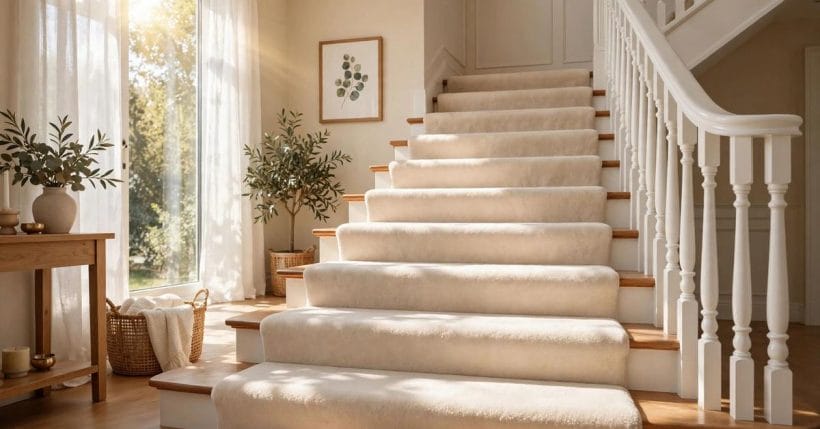
Carpet is the staircase finish that greets bare feet kindly, swallows the noise of a busy house and turns a plain flight into the home’s softest piece of design.
These seventy-five carpeted staircase ideas cover coverage and runners, colours, pattern and pile, rods and edges, awkward flights and honest care — carpet done well, on purpose.
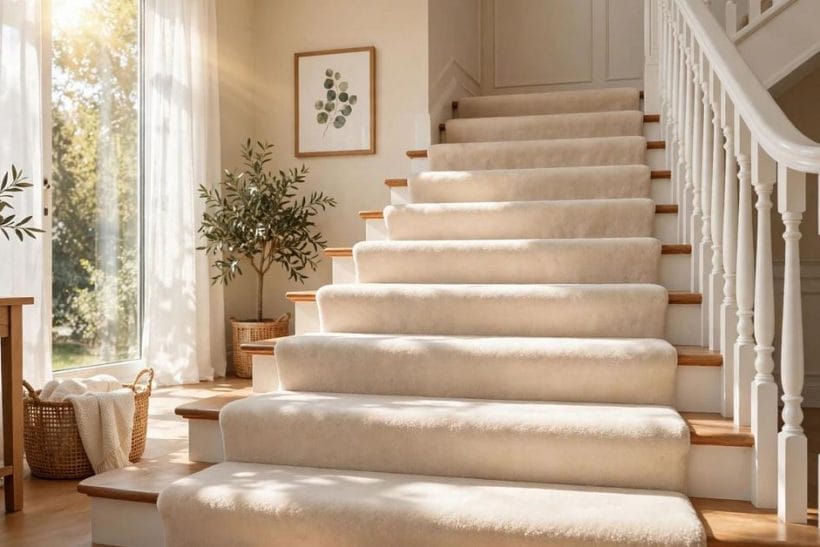
1. Carpeted Staircase Ideas at a Glance
A carpeted staircase is a finish decision with three parts: how much of the stair is covered, what the carpet is made of and how it is patterned, and how its edges and landings are resolved. Get those three right and carpeted stairs are quiet, forgiving underfoot and beautiful for years; get them wrong and the flight looks tired long before the carpet wears out. This post stays with carpet itself — the finish, its colours and its care. Whether carpet should be replaced by something else at all is a different question, answered honestly in the companion survey of carpeted staircase alternatives; here, the carpet stays, and the craft is in doing it well. The post belongs to the wider staircase ideas family.
| Question | Short answer |
|---|---|
| Full carpet or a runner? | Full carpet for quiet and simplicity; a runner where the wood beneath deserves showing and the edges can be finished beautifully |
| Which carpet suits stairs? | A dense, low, hard-wearing construction made for stairs — confirm the manufacturer’s stair rating before falling for a colour |
| What colour lasts? | Mid-tones and flecked or patterned carpets forgive the traffic line that pale plains show and dark plains exaggerate |
| What matters most for safety? | Sound treads beneath, a firm professional fit with no slack or lips, and honest lighting — carpet never excuses a worn step |
| What is the main upkeep? | Regular vacuuming of the tread centres, prompt spot care, and periodic deep cleaning — the nosing takes the traffic, so the nosing takes the care |
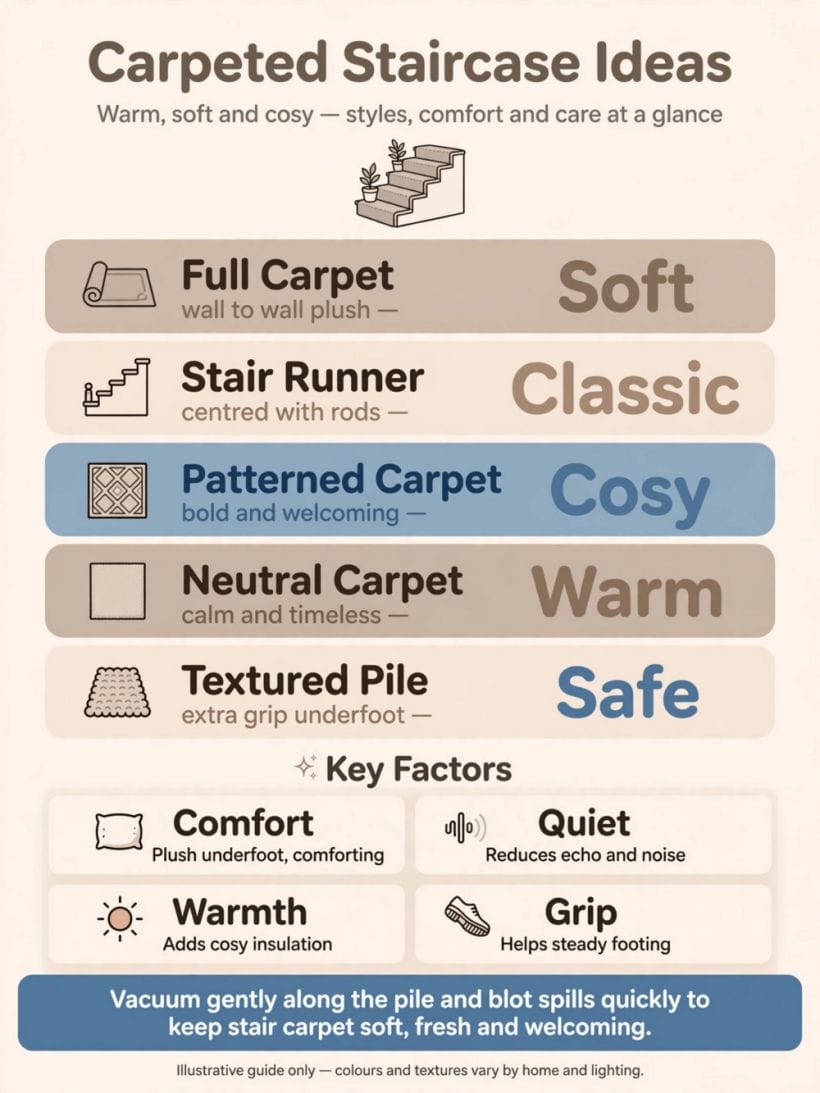
2. Full Carpet or Runner: Choosing the Coverage
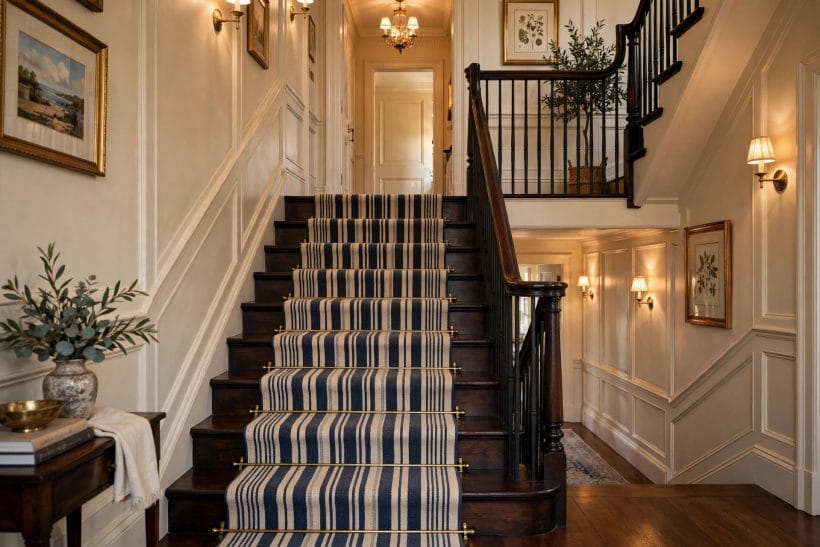
Coverage is the first and most visible decision. It changes the flight’s proportions, its sound and its cleaning, so settle it before a single colour is discussed.
1. Full-width carpet for the quietest flight
Carpet wall to wall gives the softest, quietest staircase and the simplest visual read — one texture climbing the flight. It suits family houses where the stairs carry constant traffic in socks and the wood beneath is nothing special.
2. A central runner showing painted edges
The runner leaves a margin of painted or stained tread each side, framing the carpet and making a narrow flight feel tailored. The exposed edges need a finish that can take a knock, because they will take many.
3. A runner on white-painted stairs, the classic pairing
White or off-white paint beside a coloured or patterned runner is the combination that never dates: crisp edges, a soft centre, and light bounced up the stairwell. It asks for touch-ups and repays them with its brightness.
4. A runner over natural wood, edges left honest
Where the treads are good timber, a runner that shows their grain keeps the staircase’s history in the design. The wood edges will polish with use; that sheen is patina, not damage, and it suits older houses especially.
5. Full carpet on the flight, runner across the landing
Mixing coverage by zone — full on the flight for quiet, a runner or rug across the landing for pattern — lets each surface do its best work.
6. A runner that turns the corner at a half landing
A well-mitred runner turning a landing is the fitter’s showpiece: the pattern continues around the corner without a break. It costs skill rather than material, and it is worth commissioning from someone who shows photographs of their corners.
7. Carpet wrapped over the nosing in a waterfall fit
In a waterfall fitting the carpet falls over the nosing in one smooth curve, giving a clean modern line. It shows the pile’s colour uninterrupted and suits plain carpets whose beauty is their texture rather than a pattern.
8. Carpet fitted cap-and-band for a tailored traditional line
The traditional fitting — carpet shaped over each tread and riser with a defined edge — gives a structured, almost upholstered look. It flatters patterned carpets, whose motifs sit squarely on each step like treads in a printed flight.
9. Two coverages in one house: formal below, plain above
A patterned runner on the entrance flight and plain full carpet on the private flight above is an old house’s honest hierarchy: ceremony where guests climb, simplicity where only family treads. One palette ties the two together.
10. Deciding coverage by the staircase you actually have
Narrow, steep or winding flights read better with full carpet’s simplicity; wide straight flights carry a runner’s ceremony. Let the architecture cast the deciding vote before taste is consulted at all.
3. Colours for Carpeted Stairs
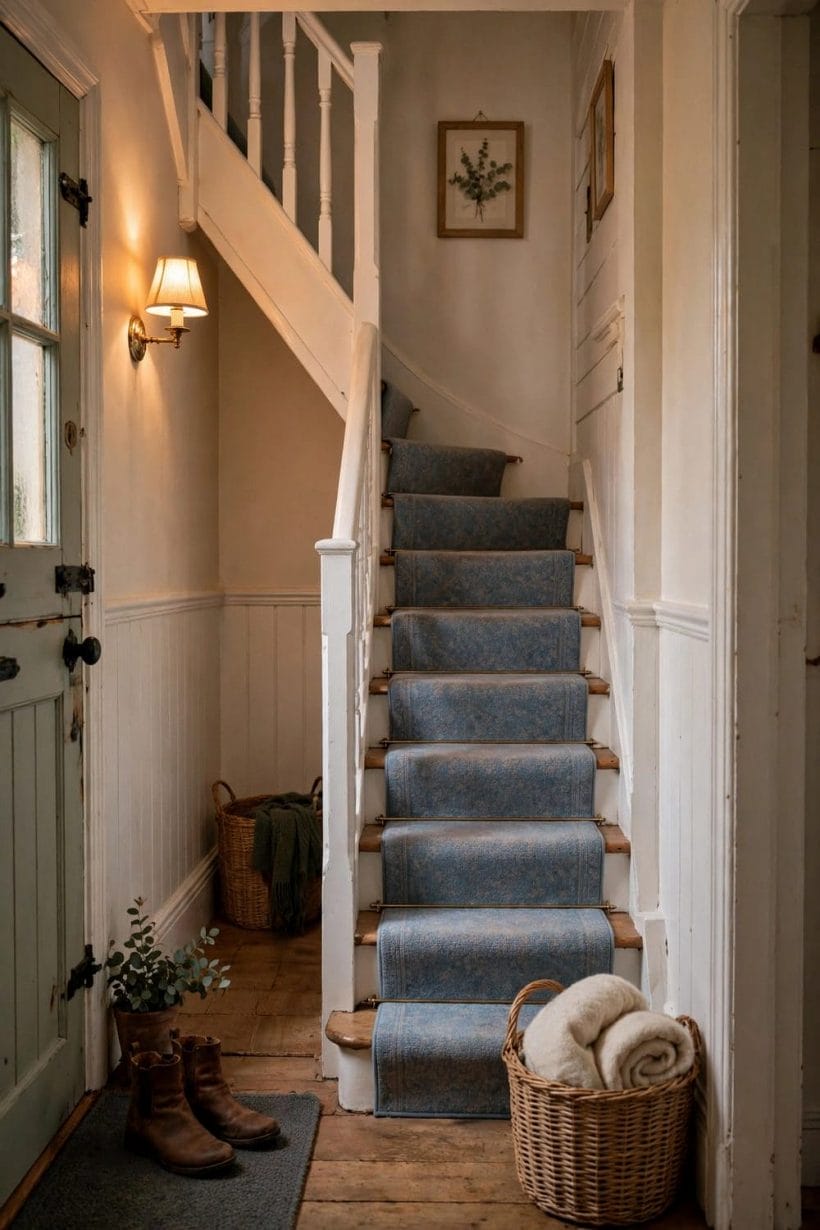
Stair carpet is seen from above, in slices, under changing light — and it takes the house’s heaviest foot traffic in its narrowest band. Colour choices that ignore those three facts age badly; these respect them.
11. A flecked mid-grey that hides a multitude
A mid-grey with a fleck or heather mix is the hardest-working stair colour in existence: it forgives dust, pet hair and the pale wear line equally.
12. Deep navy for a formal, light-edged flight
Navy carpet between white edges gives a hall its tailored, almost nautical formality. It shows pale dust more than grey does, so it suits households happy to vacuum little and often in exchange for the look.
13. Warm oatmeal for a soft, country stair
Pale warm neutrals make a cottage or country staircase feel like part of the furniture — gentle, unfussy, welcoming.
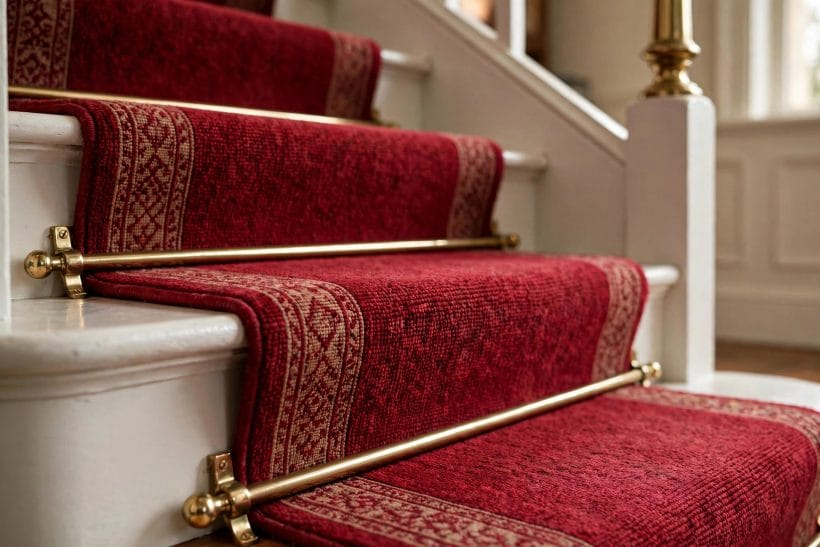
14. Burgundy and wine tones, the traditional welcome
Deep reds have warmed entrance stairs for generations because they flatter wood, hide a great deal and glow under evening light. In a modern setting they read as confident colour rather than tradition — either way, they endure.
15. Forest and sage greens climbing toward the bedrooms
Green stair carpet carries the garden’s colour up through the house and pairs beautifully with white paintwork and natural wood. Sage is the gentle version; deep forest is the dramatic one; both forgive everyday marks kindly.
16. A charcoal flight in a white stairwell
Near-black carpet in a pale, light stairwell grounds the whole vertical space and makes the handrail and pictures perform. It is a strong choice that asks for good stair lighting — which every staircase deserves anyway.
17. Stripes that run up the flight
A stripe running in the direction of travel lengthens the flight visually and gives the eye a rail to follow. Stripes also hide the centre wear line better than almost any plain — the pattern’s oldest practical trick.
18. Colour matched to the hall below, changing above
Carrying the hall’s carpet colour up the flight and changing to bedroom tones at the top landing makes the staircase a bridge between the house’s two moods. The junction belongs on the landing, never mid-flight.
19. A pale carpet protected by a darker runner
Layering a darker runner over a pale full carpet is uncommon but effective: the runner takes the traffic, the pale margins keep the flight light.
20. Testing colour on the actual stairs
Carpet colour reads differently flat on a shop floor and sliced across steps in your hall’s light.
4. Pattern, Texture and Pile
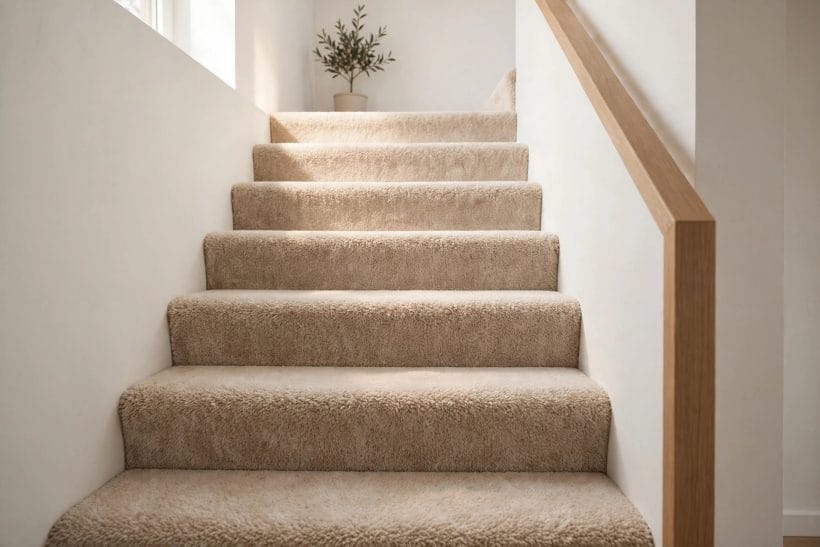
After colour comes construction: the pattern that disguises or declares, and the pile that decides how the stair feels, sounds and wears. The manufacturer’s guidance for stair use governs — these ideas choose within it.
21. A small all-over pattern for maximum forgiveness
Tiny repeating motifs — diamonds, sprigs, trellis — are the stair carpet’s camouflage: they break up the traffic line, forgive crumbs between vacuums and suit both traditional and modern halls.
22. A bold stripe as the hall’s one gesture
Where the hall is plain, a wide, confident stripe lets the staircase carry the whole entrance’s personality. Keep every other surface quiet and let visitors remember your house by its stairs — many famous houses are.
23. Herringbone and woven textures in a plain colour
A woven herringbone or ribbed texture gives a plain carpet its interest without a printed pattern, and texture hides wear by shadowing it. It is the modern answer for households that find pattern busy but plain carpet bare.
24. A low, dense loop pile for busy houses
Short, dense loops shrug off heavy traffic, resist crushing at the nosing and vacuum easily — the practical pile for stairs that carry a family.
25. A short cut pile for a smoother, formal line
A short, even cut pile gives the tailored velvety read that suits formal halls and waterfall fittings. It shows footprints and shading more than loop does; in the right house that lived-in sheen is part of its elegance.
26. Wool-rich carpet for resilience and feel
Wool’s natural spring helps fibres recover at the nosing where stairs punish carpet hardest, and it ages by mellowing rather than thinning.
27. Hard-wearing synthetic for rental and high-traffic homes
Modern solution-dyed synthetics resist stains and fading with a toughness busy households and landlords value, and their colour runs through the fibre rather than sitting on it.
28. Natural fibre runners for texture lovers
Sisal, jute and their kin give stairs a dry, architectural texture that suits coastal and country houses.
29. A patterned carpet that turns the landing gracefully
Patterns with a small, frequent repeat turn corners and landings without the motif breaking awkwardly, while large motifs demand careful planning at every turn.
30. Underlay chosen as part of the finish
The underlay beneath stair carpet shapes its feel, its sound and its wear at the nosing. A firm, quality underlay made for stairs is not an upgrade; it is half the carpet. Budget for it before budgeting for pattern.
5. Rods, Bindings and Edge Details
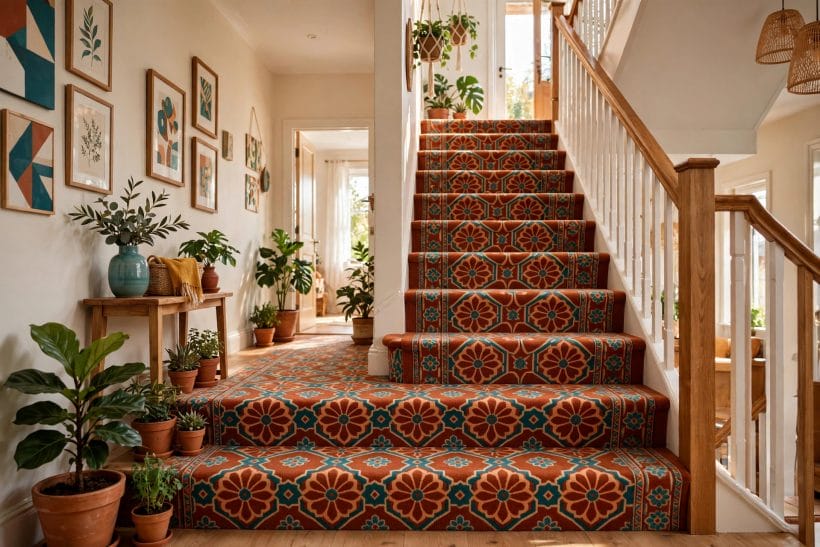
The details at the carpet’s edges are where a fitted staircase declares its quality. Rods, bindings and painted margins are small expenses with an outsized effect on the finished flight.
31. Stair rods in brushed brass for a traditional runner
Metal rods at the back of each tread are the runner’s jewellery — historically functional, now mostly decorative, always handsome. Brushed and antique finishes forgive fingerprints better than polished ones in a busy hall.
32. Black rods on a pale runner for a graphic line
Dark rods against a light carpet draw a crisp dotted line up the flight, echoing black handrails and ironwork. It is the contemporary way to keep the rod tradition without the formality of brass.
33. Wooden-effect and painted rods for a quiet finish
Rods finished to blend with the carpet or the paintwork keep the detail subliminal — the runner looks held, not decorated. Choose this where the carpet itself is the pattern and the fittings should not compete.
34. Bound edges in a contrast whip or tape
A runner’s long edges are bound to stop fraying; making that binding a deliberate contrast — or a perfect match — is a design decision, not a workshop default.
35. Leather-look binding for a tailored, hotel finish
A wide tape or leather-effect binding gives a runner the composed, almost luggage-like finish of good hotels. It suits plain carpets best, where the binding becomes the pattern the eye follows up the stairs.
36. Painted tread margins in the hall’s trim colour
Where a runner leaves wood visible, painting those margins in the same colour as the skirting and handrail unifies the staircase with the hall’s woodwork. One colour, carried through, is what makes the composition look commissioned.
37. Stained margins that match the handrail
Alternatively, stain the exposed treads to match the handrail’s timber and let the carpet sit between two bands of the same wood tone. The flight reads as furniture — the most traditional and most forgiving of scuffs.
38. A painted stripe continuing the runner’s line
On full-carpeted stairs there are no margins to paint — but a painted line on the adjacent wall, following the flight at handrail height, borrows the runner’s graphic effect. It is a renter-friendly nod to the classic look.
39. Landing edges resolved as carefully as the flight
The landing is where fittings go to be forgotten: carpet edges at door thresholds, the turn onto the landing, the last riser.
6. Landings, Winders and Awkward Flights
Real staircases turn, narrow, steepen and arrive at odd landings. Carpet, fitted by a skilled hand, is the most forgiving finish for every one of those awkwardnesses — which is one reason it endures.
40. Winders wrapped smoothly in a plain carpet
Winders — the wedge treads that turn a flight — take carpet beautifully in plains and small patterns, the pile flowing around the turn. Large motifs distort on winders; let texture, not print, do the work here.
41. A pattern planned tread by tread on a straight flight
On a straight flight with a bold carpet, the fitter can centre the motif on every tread so the pattern climbs in perfect steps.
42. The half landing given its own rug moment
A generous half landing can take the flight’s carpet plus a flat rug or a contrasting landing piece that marks the pause.
43. A runner that widens the feel of a narrow flight
On a narrow staircase, a runner set close to the edges with only a slim painted margin makes the flight feel wider than wall-to-wall carpet does — the margin frames space in.
44. Carpet calming a steep flight’s look and sound
Steep stairs feel steeper in hard finishes; carpet softens their sound and their psychology at once, especially for children and older feet at night.
45. Open-tread stairs carpeted on the treads only
Open risers can take carpet pads or fully wrapped treads that keep the flight’s floating architecture while adding grip and quiet. This is specialist work: the fixing method belongs to the fitter and the stair’s maker, not to improvisation.
46. Spiral and curved flights in a textured plain
Curved stairs twist every pattern; a textured plain carpet follows the geometry honestly and lets the staircase’s own shape be the decoration. The railing and balustrade ideas in stair railing ideas complete a curved flight’s composition.
47. The top step and threshold given a deliberate finish
The last tread meets the landing’s floor — wood, carpet or otherwise — and that threshold is seen on every descent.
48. Basement and attic stairs carpeted for warmth
Secondary stairs to cold storeys gain the most from carpet: warmth underfoot, quiet on the return and a finished feel that invites using the rooms beyond.
7. Light, Sound and Comfort Underfoot
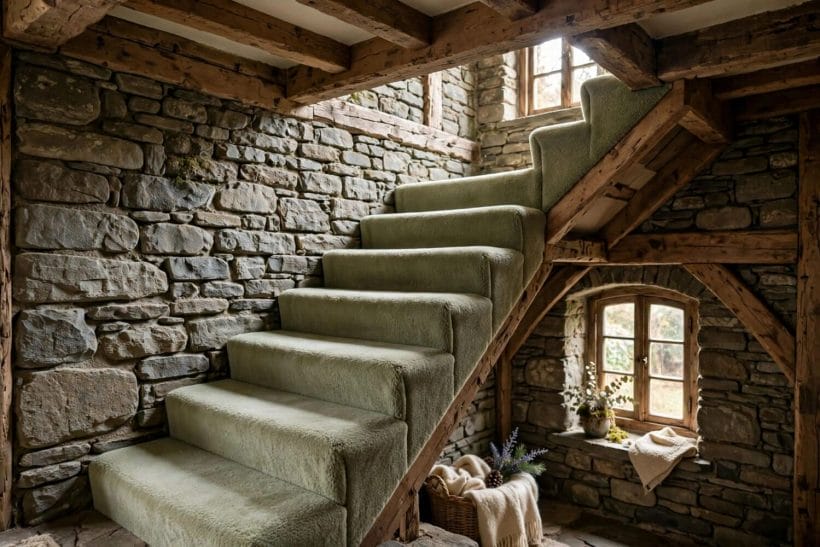
A staircase is experienced with the feet and ears as much as the eyes. Carpet is the finish that serves all three — and lighting is what lets it do so safely after dark.
49. The quiet flight: carpet’s first gift
A carpeted staircase absorbs the thunder of household feet that makes hard stairs the house’s drum. In homes with bedrooms off the landing and sleepers on different schedules, that quiet is not a luxury; it is the peace treaty.
50. Warmth underfoot on the midnight route
Bare feet find carpet kind at every hour, and especially on the night route to a child’s room or the kitchen. In houses with cold halls and stone floors below, the carpeted flight is the warm bridge between storeys.
51. Lighting that washes every tread evenly
Safe stairs are lit stairs: a fitting that washes the whole flight without glare or a dark tread at the turn. Judge the lighting standing at the top looking down — the descent is where honest light matters most.
52. A window on the landing feeding the carpet’s colour
Natural light on a landing transforms stair carpet from background to feature for half the day.
53. Grip that comes from fit, not from roughness
A carpet’s security underfoot comes from its sound fit over sound treads — professionally stretched, fixed and free of slack or lifted edges.
54. Cushioned landings for the household that pauses
Thick, comfortable carpet at the landing rewards the pause — the conversation on the stairs, the cat’s chosen step, the child reading where the light falls. Houses are lived on their stairs more than their plans admit.
55. Sound carried kindly between floors
Carpet on the stairs softens the house’s vertical acoustics in both directions: footsteps above, voices below. Paired with a solid underlay it is the cheapest meaningful sound treatment most houses can make.
56. The contrast nosing question, answered honestly
Some households — especially where a member’s sight is reduced — benefit from a defined nosing line so each tread’s edge reads clearly.
8. Styling the Carpeted Staircase
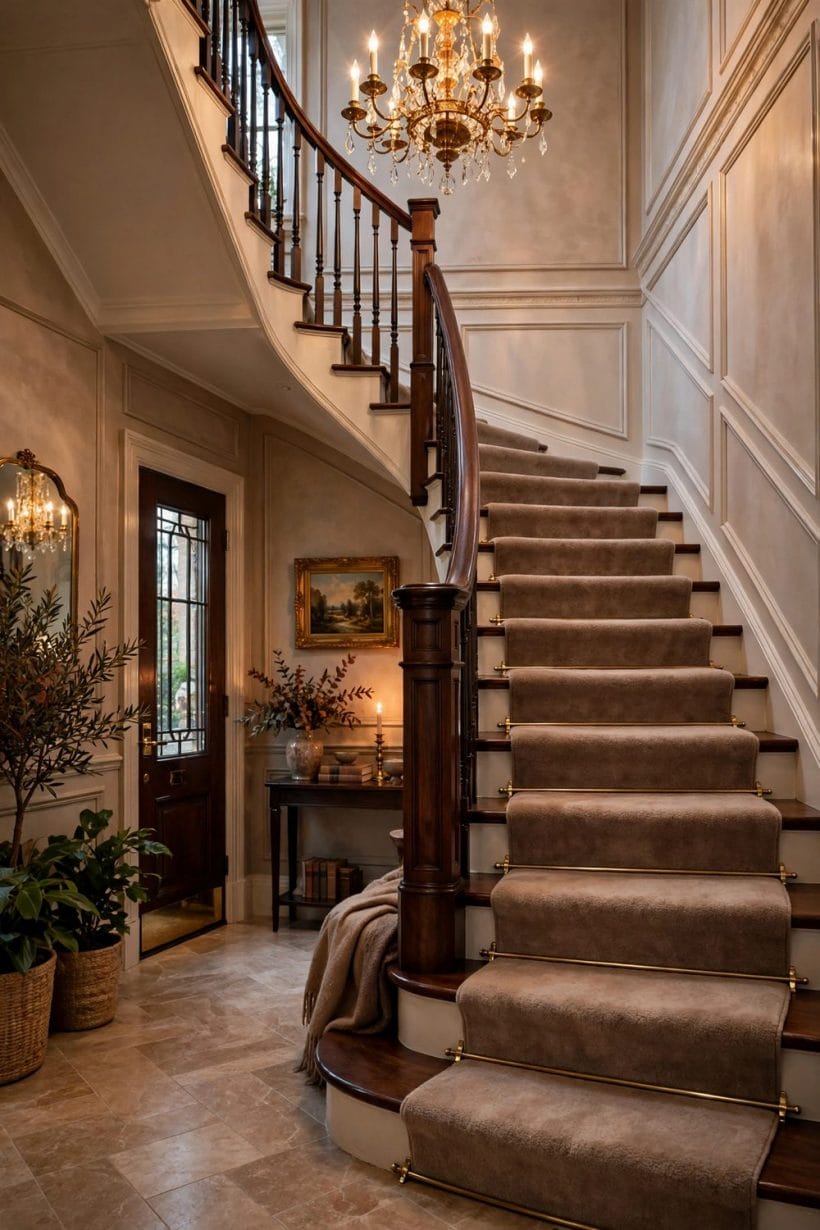
The decorated stairwell is a vertical gallery the household passes a dozen times a day. Carpet sets its floor; these ideas dress its walls, rail and light to match.
57. Pictures climbing the wall in a stepped rhythm
Hang the stairwell’s pictures following the flight’s slope, each frame’s centre at a comfortable eye height from its own tread. A single stepped line of frames over a patterned carpet is busy enough; stagger heights only over plain carpet.
58. A handrail finished to answer the carpet
The handrail is the staircase’s other long line: paint it to match the runner’s binding, stain it to match the tread margins, or blacken it against both. When carpet and rail agree, the whole flight looks commissioned, as the staircase’s wider family in modern staircase ideas shows in other finishes.
59. A pendant or lantern centred over the flight
One generous light fitting hung in the stairwell’s void gives the carpeted flight its evening stage.
60. Wainscot or panelling protecting the stair wall
Panelling the stair wall to handrail height protects the plaster from a thousand passing hands and gives the flight an architectural base. Painted in the trim colour, it frames carpet in any pattern without competing.
61. A mirror or window seat at the half landing
The landing pause deserves a destination: a mirror that doubles the light, or a small seat under the landing window. Against carpet’s softness below, one hard, bright moment at the turn refreshes the whole climb.
62. Plants on the landing, never on the treads
Greenery softens the stairwell beautifully at its landings and windows — and belongs nowhere on the treads themselves, where pots narrow the flight and water meets carpet. One generous plant at the pause outshines a staircase of small pots.
63. The staircase as the hall’s colour story
Let the carpet’s colour recur once in the hall — a cushion, a lampshade, the door’s painted inside face — and the staircase stops being a separate decision. Small echoes, deliberately placed, are how entrances become compositions.
64. Bare-wood envy answered with a runner refresh
Households that tire of full carpet rarely need a new staircase — a fitted runner over the existing sound treads changes the flight’s whole read, as the tread finishes in wooden staircase designs confirm from the other side. It is the stylistic halfway house, and a good one.
9. Carpeted Stairs in Small Homes and Tiny Houses
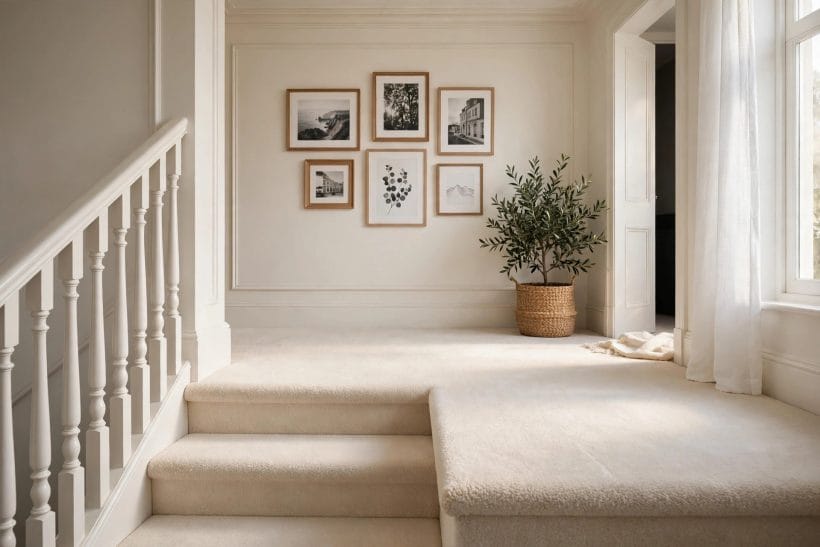
Compact houses ask their stairs to work hardest — as storage walls, room dividers and the main vertical street — and carpet serves them quietly. The space discipline of tiny house staircase interior design and the storage thinking in tiny house under-stair storage both start from the flight this post finishes.
65. A dark, practical carpet for the tiny house flight
In a tiny home the staircase is crossed constantly and cleaned quickly; a dark flecked carpet is the honest specification.
66. Stair drawers and cupboards faced to match
Where the understair is storage — and in small homes it must be — facing its drawers and doors in the stair wall’s colour keeps the carpeted flight as the composition’s single soft element. Clutter hidden, carpet calm.
67. A runner that defines the route through an open plan
In open-plan small homes, a carpeted flight and landing runner mark the vertical route the way a rug marks a seating zone. The eye reads the path instantly, and guests find the stairs without a word of direction.
68. Alternating-tread and ship’s stairs carpeted with care
Space-saving stairs with alternating treads are specialist structures; carpeting their treads is equally specialist work for the maker and fitter to agree. Done properly, the pads add the grip and warmth these steep little flights need most.
69. One carpet from hall to landing in the small flat
In a flat or small house, running the same carpet from the entrance through the hall and up the flight knits the whole plan into one calm material story. It also simplifies ordering, fitting and every future repair.
70. Pale carpet lifting a windowless internal staircase
Internal stairs with no window live on borrowed light; a pale carpet is the cheapest light they will ever get. Protect the choice with the fleck rule, good hallway lighting and a door mat that earns its place.
71. The staircase wall as the small home’s gallery
Compact homes have few walls to spare for art; the stair wall is the exception, seen daily at close range. Over a quiet carpet, a dense, joyful hang of small pictures gives the small house its museum.
72. A washable runner where muddy paws commute
Households whose dogs and boots use the stairs daily can choose runners made to be lifted and cleaned — agreed with the fitter, whose fixings must allow it. Practicality designed in beats resentment cleaned up.
73. Carpet tiles on the utility flight
For basement, attic and utility stairs, quality carpet tiles offer a repairable, replaceable finish: one damaged tile changes, not the flight. They are the working stairs’ honest uniform, and modern ranges look better than their reputation.
74. Keeping a remnant for the inevitable repair
Order and keep an offcut of the stair carpet, stored flat and dark.
75. The well-kept carpeted flight as the house’s handshake
Visitors read a house by its entrance and its stairs.
10. Costs, Care and Honest Wear
Stair carpet costs are driven by the carpet itself — its fibre, construction and pattern — by the flight’s complexity in turns and winders, by the underlay and fittings, and by the fitter’s skill, which on stairs is worth more than on any flat floor. Runners add binding and rods; patterns add planning and sometimes material; awkward flights add time. The honest comparison is the fitted price for the whole flight, measured and quoted by a fitter who has seen the stairs — never a per-metre figure multiplied in hope. Keep the remnant, as the previous section advised, and record the carpet’s name and colour while they can still be matched.
Care is a rhythm, not a campaign: vacuum the tread centres and nosings regularly with the grain of the traffic, take spills up promptly by blotting rather than scrubbing, and have the flight deep-cleaned on the household’s honest cycle — heavy-traffic homes sooner, quiet ones later. Rotate what can be rotated (landing rugs, mats), keep grit at the door with a real mat, and ask the carpet’s maker for its own care guidance rather than trusting folklore. Wear arrives first at the nosings and the centre line; a good carpet wears there gracefully for years before it looks tired, and when renewal finally comes, it is the finish — not the staircase — that changes. Any looseness, lifting or damage at an edge should be refitted promptly by a professional: on stairs, small defects are the only kind worth having, because they are the kind that get fixed.
Final Considerations
Choose the coverage your staircase’s shape suggests, the colour your hall’s light flatters and the construction the manufacturer rates for stairs — then have it fitted by someone whose corners and landings you have seen. Carpet rewards that care every day: quietly, warmly, and one soft tread at a time. The flight you climb a dozen times a day deserves to be the finish you chose on purpose.


0 Comments