
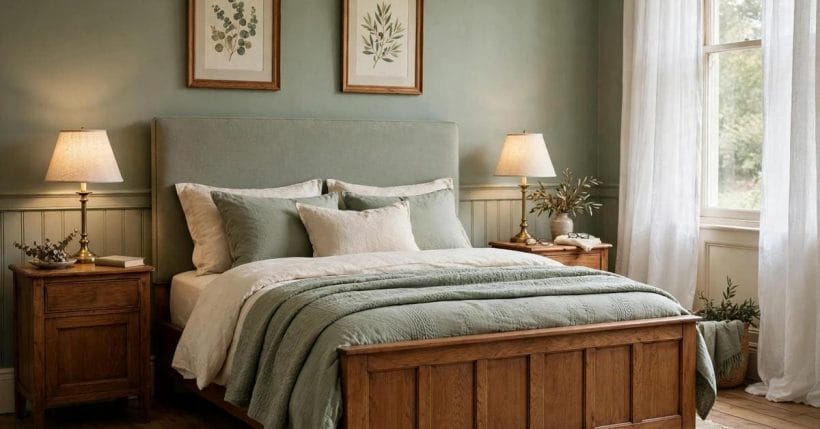
A traditional bedroom earns its calm from a few settled decisions made well: a bed placed with care, colours that stay muted, furniture with classic proportions, and storage that keeps everyday things out of sight. Nothing in the room needs to shout. The panelled headboard, the wooden nightstand, the lamp lit low in the evening — each piece has a clear job, and together they make a room that feels restful at the end of the day and easy to wake up in. These traditional bedroom ideas gather those decisions into one place, covering layouts, colours, storage and the small styling touches that finish a room without cluttering it.
The appeal of the traditional look is its patience. It does not chase a season’s trend, and it does not depend on a single showpiece. A room styled this way can absorb a new throw, a different picture frame or a changed curtain colour without losing its character, because the bones of the room — the bed, the symmetry, the wood tones, the soft palette — stay steady. That steadiness is also practical: when every piece has a place, tidying takes minutes rather than an afternoon.
1. Start With the Bed and the Room’s Shape
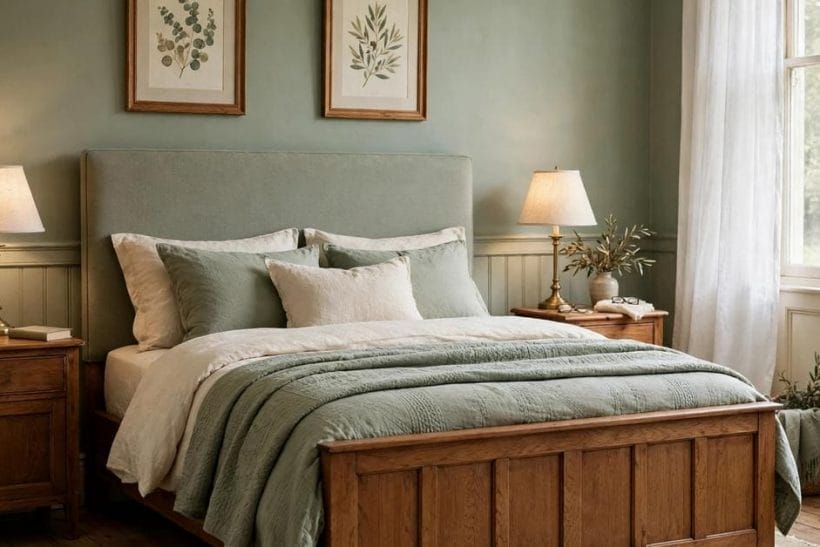
Every traditional bedroom begins at the bed, and the bed begins with the wall it stands against. The longest uninterrupted wall is usually the right home for the headboard, since it gives the bed a sense of purpose and leaves the rest of the room to arrange itself around it. A centred bed with matching pieces on either side is the classic arrangement, and it works because it is balanced to look at and simple to live with: each sleeper gets a lamp, a surface for a book and a glass of water, and a clear path around their own side.
Before moving anything heavy, walk the room as it will be used. Note where the door swings, where drawers and wardrobe doors need clearance, and where morning light falls. A bed pushed against a wall may free floor space, but it makes one side awkward to make and to get into, so it suits a child’s room or a guest room better than a main bedroom. In a room with a fireplace or a large window, let that feature set the axis instead: centre the bed on it, or place the bed so the feature is visible from the pillows, and the room will feel considered rather than merely filled.
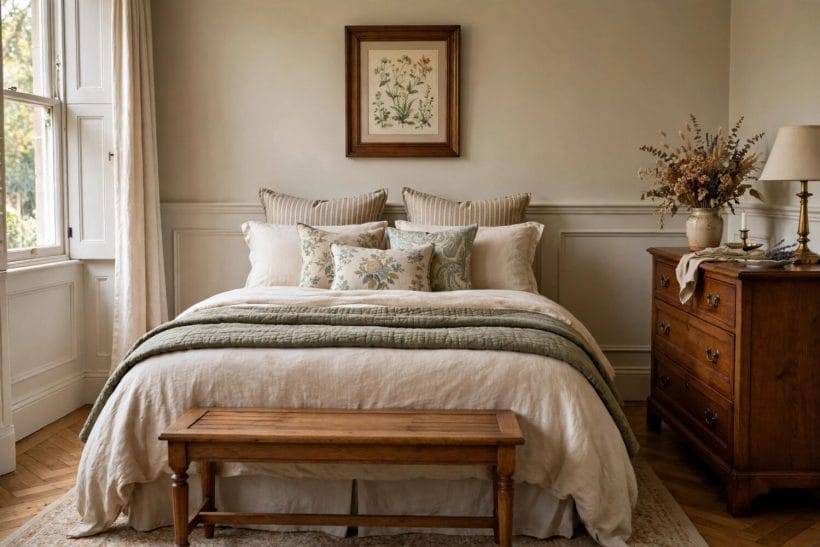
Headboard height matters more than it first appears. A tall panelled or upholstered headboard anchors the wall and gives the eye something to rest on, while a low headboard can leave a large wall feeling bare unless artwork or panelling fills the space above it. Match the headboard’s weight to the room: a chunky wooden frame suits a generous room, while a slimmer upholstered board keeps a smaller room from feeling crowded. Either way, keep the bedding’s top edge neat against the headboard, with pillows arranged in a simple order — sleeping pillows at the back, a pair of standard pillows in front — so the bed reads as inviting rather than staged.
2. Choose a Layout That Leaves Room to Move
A restful bedroom is one you can move through without thinking. Aim for a clear path from the door to the bed, to the wardrobe and to the window, and keep those routes free of low stools, trailing throws and open drawers. When walkways are generous, the room feels larger than its measurements suggest, and the daily routine — dressing, making the bed, opening curtains — runs without friction.
Symmetry is the traditional layout’s quiet tool. Matching nightstands and lamps, a pair of pictures flanking the bed, or curtains hung at equal heights on either side of a window all give the eye a sense of order. Symmetry does not have to be rigid: a chair on one side can be balanced by a small bookshelf or a plant on the other, as long as the visual weight feels roughly even. The point is calm, not a mirror image, so allow one or two personal pieces to break the pattern — a favourite chair, a framed photograph — and the room keeps its warmth.
In a room with an awkward corner, a sloping ceiling or an alcove, let the layout work with the shape instead of fighting it. A wardrobe fits neatly into an alcove, a reading chair claims a bay window, and a low chest can sit under a slope where a tall piece would crowd the ceiling. Planning around these features, rather than hiding them, is what separates a room that looks arranged from one that looks assembled. Readers planning a compact room may also find tiny bedroom ideas useful for keeping walkways and storage in balance.
3. Build a Calm Colour Palette
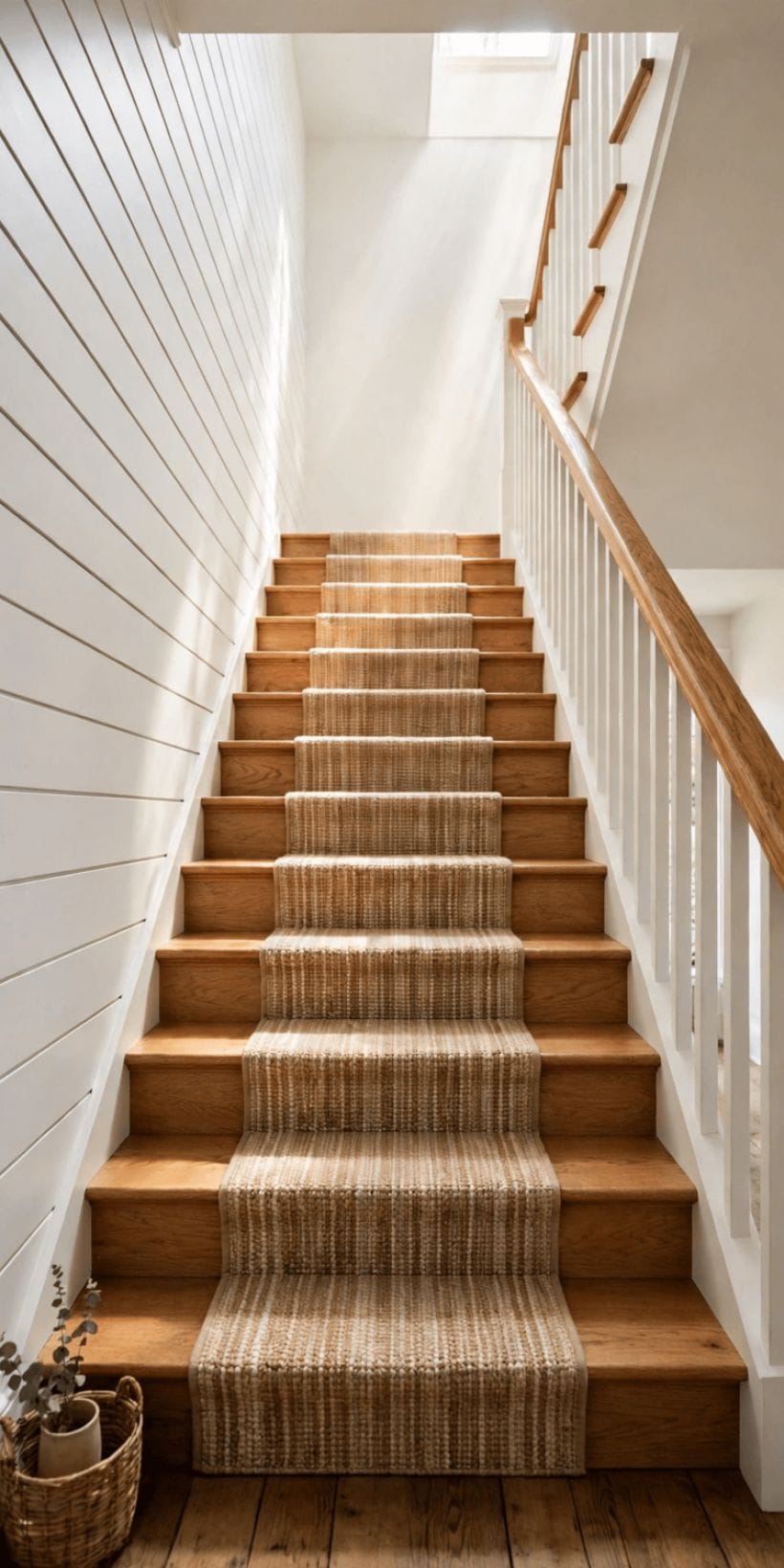
Traditional bedrooms lean on muted, nature-drawn colours: sage green, soft cream, dusty blue, warm grey and the honeyed browns of wood. These colours sit quietly together, which is exactly what a room for sleep should do. Start with one main wall colour and one wood tone, then add a second colour in bedding and curtains, and keep stronger colours for small accents — a cushion, a vase, a picture mount — rather than large surfaces.
Paint choice changes how a room feels through the day. A warm cream softens north-facing light, while a gentle sage holds its calm in bright sun. If the room is small, keep the walls and the larger furniture in related light tones so the boundaries blur a little; in a larger room, a deeper tone on the bed wall can add cosiness without darkening the whole space. Test a colour on the wall itself and live with it through a morning and an evening before committing, since artificial light at night can shift a shade noticeably.
Wood tones deserve the same attention as paint. Traditional rooms often mix two wood finishes — for example, a darker bed frame with lighter nightstands — but the mix works best when one tone clearly leads and the other plays a supporting role. Keep metal finishes consistent too: brass or aged bronze on lamps, handles and picture frames ties the room together, while a jumble of chrome, black and gold pulls the eye in too many directions at once.
4. Pick Furniture With Classic Proportions
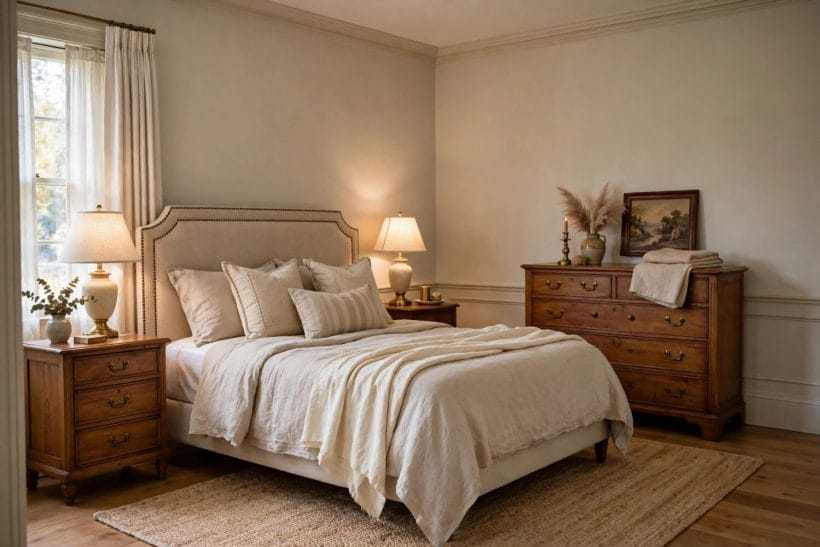
Traditional furniture is recognised by its proportions before its decoration: a bed frame with a solid headboard, nightstands with drawers rather than open shelves, a dresser with room for folded clothes and a mirror that sits at a useful height. Choose pieces that fit the room’s scale — a tall wardrobe in a low-ceilinged room will dominate it, while a small nightstand beside a large bed will look lost. Measure doorways and stair turns before ordering, and leave breathing space around each piece so the room does not read as a furniture display.
Wood is the material that carries the traditional look, whether it is oak, walnut, cherry or a painted finish. A painted dresser in cream or soft grey can lighten a room full of darker wood, and it takes kindly to new handles if tastes change. Upholstery adds the second layer of softness: a fabric headboard, a padded bench at the foot of the bed, or a chair in a plain linen or cotton weave. Keep patterns restrained — a small check, a quiet stripe, a faded floral — and let texture, rather than bold print, do the decorative work.
Buy for the room you have, not the room you wish you had. One well-made dresser that closes properly and holds a week’s clothes beats a pair of decorative chests that overflow by Wednesday. The same applies to seating: a single comfortable chair with a small side table earns its floor space, while a chaise squeezed into a corner gathers laundry instead of readers. For broader bedroom planning, tiny house bedroom ideas show how classic pieces can be scaled to rooms of any size.
5. Layer Bedding for Comfort and Order
Bedding is where a traditional bedroom shows its care. Start with a good mattress and pillows suited to how you sleep, then build upward in layers that can be adjusted through the night: a fitted sheet, a flat sheet, a light duvet or quilt, and a throw folded across the foot for cooler evenings. Layers matter because they let each sleeper find their own comfort without remaking the whole bed, and they give the bed a finished, tailored look during the day.
Colour and texture should echo the room’s palette rather than compete with it. White or cream sheets keep the bed feeling fresh, a coloured or lightly patterned duvet cover ties it to the curtains or the rug, and a throw in a contrasting texture — wool, cotton knit or linen — adds depth. Cushions finish the arrangement, but restraint keeps the bed usable: two or three cushions that are easy to lift off at night are plenty, and they should be chosen to sit comfortably against the sleeping pillows rather than tower over them.
Care keeps bedding looking its best. Wash sheets and pillowcases regularly, air the duvet when the weather allows, and rotate pillows so they wear evenly. A bed made with attention each morning — sheets smoothed, duvet straightened, throw folded rather than tossed — sets the tone for the whole room, and it takes only a few minutes once the layers are in the right order.
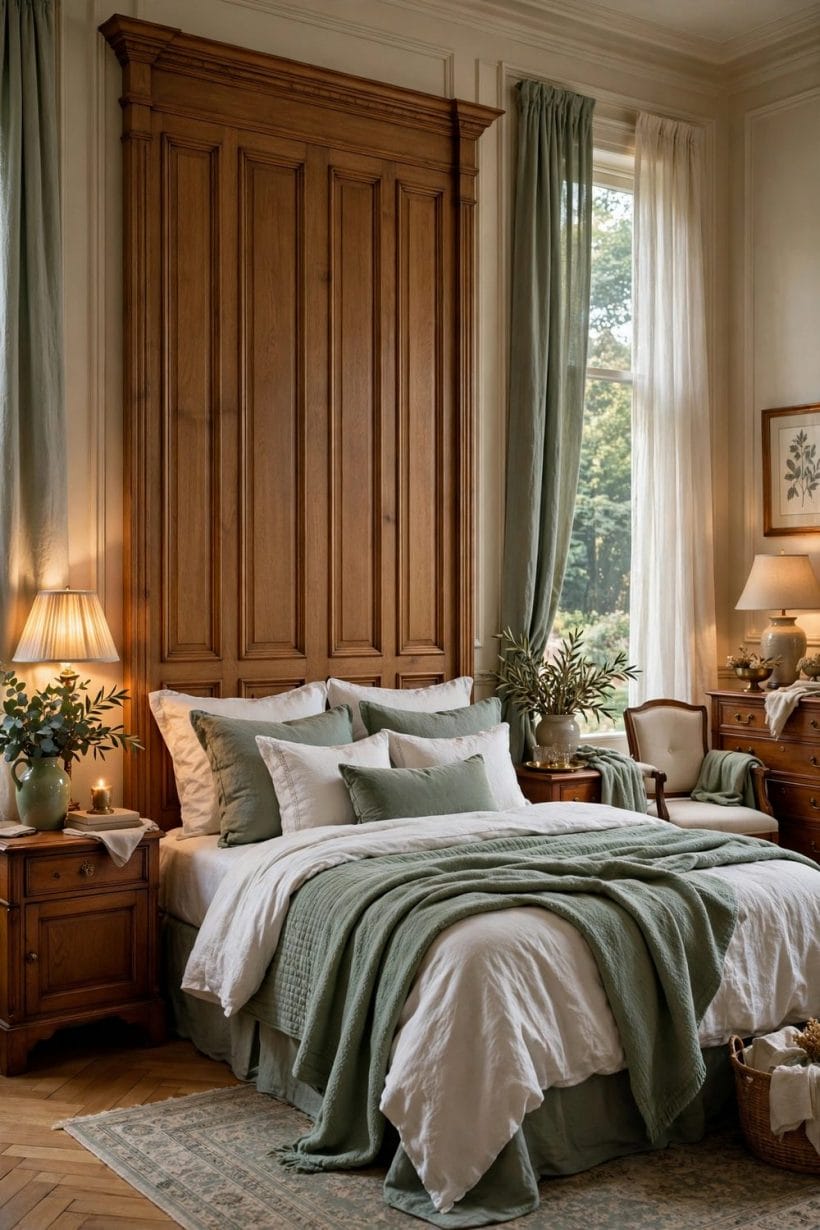
6. Plan Storage That Keeps the Room Restful
Storage decides whether a traditional bedroom stays calm or slowly fills with clutter. The rule is simple: everything used daily needs a home within arm’s reach of where it is used, and everything used rarely needs a home elsewhere. Clothes belong in a wardrobe or dresser, not on a chair; books belong on a nightstand shelf or a small bookcase, not in a pile on the floor; chargers and small electronics belong in a drawer with a tidy cable route, not tangled on the nightstand.
Wardrobes are the largest storage decision in the room. A fitted wardrobe wall uses an awkward alcove well and keeps doors flush, while a freestanding wardrobe adds a furniture presence that suits the traditional look and can move with you. Inside either, simple organisation — hanging space for shirts and dresses, shelves for folded knitwear, drawers for smaller items — matters more than clever gadgets. Leave a little empty space on each rail and shelf; a wardrobe packed tight is hard to use and harder to keep tidy.
Secondary storage finishes the job. An ottoman or bench at the foot of the bed holds spare blankets and gives a place to sit while dressing. A dresser with deep drawers takes folded clothes and bed linen, and a nightstand drawer takes the small things that otherwise gather on surfaces: reading glasses, hand cream, a notebook. For detailed wardrobe planning, tiny house closet design ideas cover layouts that keep clothes accessible without crowding the room, and tiny house storage ideas offer further ways to hide everyday clutter behind calm, closed fronts.
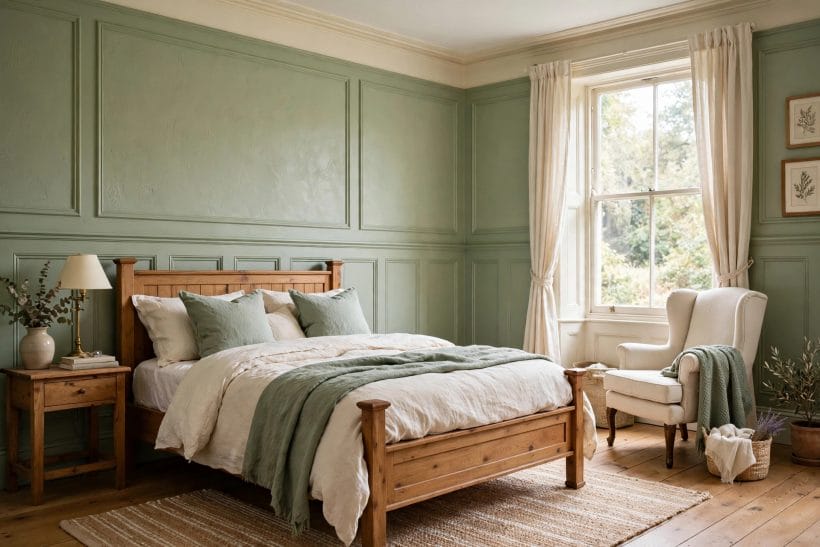
7. Layer Lighting for Morning and Evening
Traditional bedrooms rely on layered light: daylight through soft curtains by day, and a combination of ceiling light, table lamps and perhaps a wall light in the evening. No single source should do all the work. A central pendant or chandelier gives general light for dressing and cleaning, while bedside lamps at a height just above the pillow give focused light for reading without flooding the whole room.
Lamp choice shapes the evening mood. Shades in linen or cotton diffuse light gently, and warm-toned bulbs suit the traditional palette far better than stark white ones. Place lamps so their light falls on the book or the chair, not directly into the eyes, and keep switches within reach of the bed so the last lamp can be turned off without getting up. A dimmer on the central light adds flexibility: full brightness for tidying, a low glow for winding down.
Daylight deserves the same planning. Sheer curtains soften strong sun while keeping the room bright, and heavier drapes drawn at night add warmth and privacy. If the room faces a busy street, lined curtains also muffle sound a little and keep out draughts. Keep window sills clear of clutter so light can travel into the room, and position a mirror opposite or beside a window to bounce daylight deeper into the space.
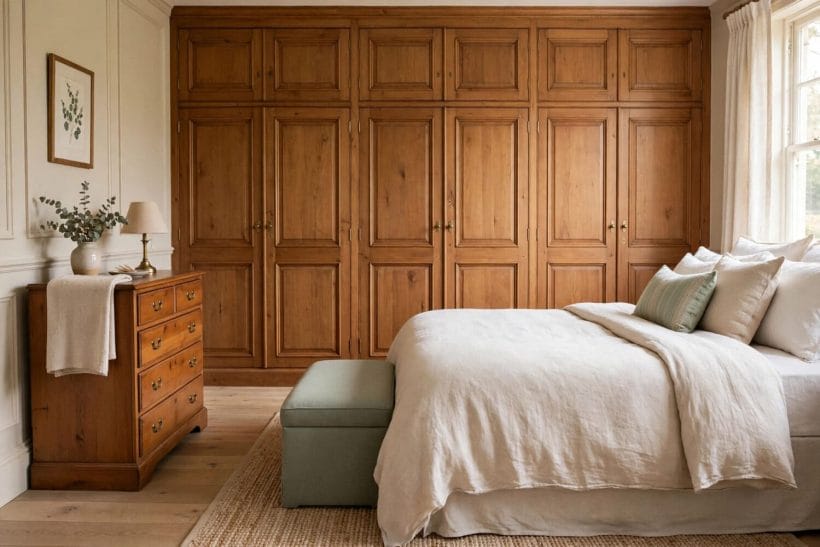
8. Dress the Windows With Softness
Windows set the mood of a traditional bedroom twice a day: in the morning, when curtains open to daylight, and in the evening, when they close the room in. Floor-length curtains in a plain or lightly patterned fabric suit the traditional look best, hung high and wide so the window appears larger and the fabric stacks clear of the glass when open. A simple wooden or brass pole, with rings that run freely, keeps the daily ritual easy.
Layering works at windows as it does on the bed. A sheer panel behind the main curtain gives daytime privacy without shutting out light, while a lined drape in front gives evening privacy and a sense of enclosure. In a small room, keep curtain fabric close in tone to the wall colour so the window treatment blends rather than dominates; in a larger room, a gentle pattern or a deeper tone can make the window a feature in its own right.
Practical details finish the job. Curtains should just brush the floor or the sill, not pool heavily where they gather dust, and they should be easy to launder or brush down. If the room has shutters, keep them in good working order and pair them with a soft curtain for warmth. Blinds alone can feel spare in a traditional room, but a Roman blind in a plain fabric, framed by side curtains, keeps the tailored look while saving space where a full drape would crowd the wall.
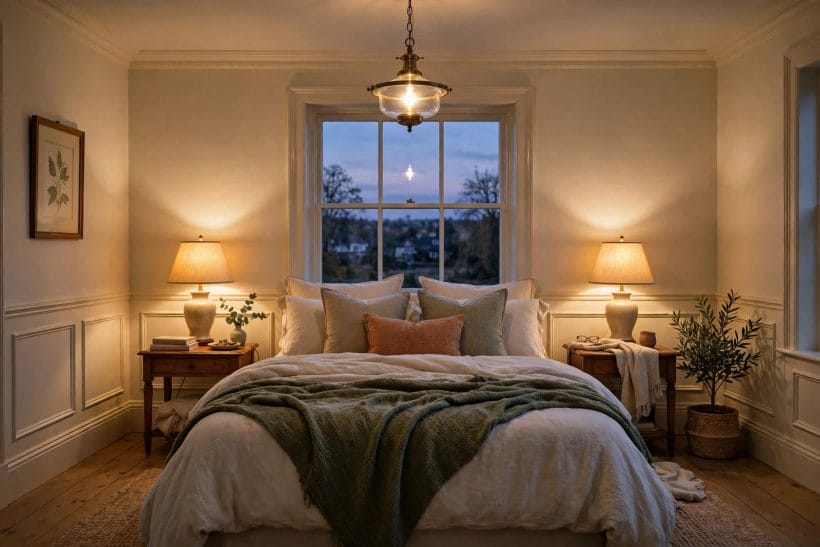
9. Add Artwork and Details in Restraint
Artwork gives a traditional bedroom its personality, but restraint keeps it restful. One larger piece above the bed or the dresser, or a pair of matching frames flanking the bed, usually does more than a scattered collection of small prints. Choose subjects that calm rather than excite — landscapes, botanical studies, quiet abstracts in the room’s palette — and hang them at eye level from the bed or from standing height, whichever view matters most.
Frames tie the room together. Matching or closely related frames in wood, gilt or a painted finish look settled, while a mix of unrelated frames can feel accidental. Keep glass clean and pictures straight; a tilted frame draws the eye more than the picture itself. If the wall above the bed is panelled, a single frame centred on the panelling reads beautifully, and a small picture light above it can make the artwork glow in the evening.
Smaller details complete the room in the same spirit. A vase of fresh or dried flowers on the dresser, a tray corralling perfume bottles or a watch, a stack of two books on the nightstand — each detail should earn its surface. Walk the room once a week and remove anything that has drifted there without a purpose: packaging, unopened post, a charger with no device. A traditional room stays traditional not by owning particular objects, but by keeping only the objects that belong.
10. Make a Small Traditional Bedroom Feel Generous
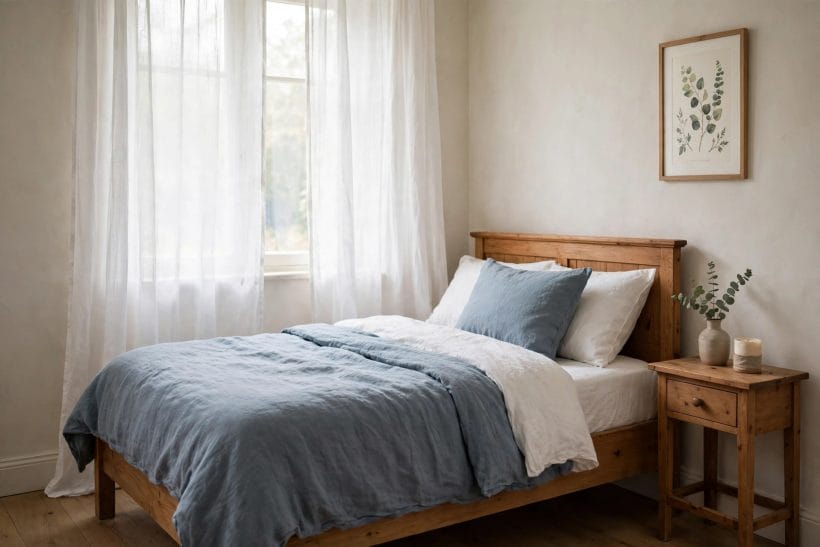
Small rooms suit the traditional look well, because its tools — symmetry, muted colour, closed storage — are exactly the tools that make a small room feel larger. Keep the palette light and consistent, choose furniture scaled to the room, and let one piece, usually the bed, lead while everything else stays quiet. A tall headboard draws the eye upward and makes the ceiling feel higher, while a mirror placed with care doubles daylight without adding decoration.
Storage matters even more when space is tight. Use the full height of the wardrobe, keep under-bed space for flat boxes of out-of-season clothes, and choose a nightstand with a drawer rather than an open table that gathers clutter. Fold the throw at the foot of the bed instead of draping it over a chair, and keep the floor visible wherever possible: a rug that stops short of the walls shows more floor and makes the room feel wider. For more compact-room planning, tiny bedroom ideas gather layouts that protect walkways and storage in the smallest rooms.
Finally, resist the urge to fill every wall. One clear wall, or one clear stretch of dresser top, gives the eye a resting place and makes the furnished parts of the room feel intentional. A small traditional bedroom does not need to pretend to be large; it needs to feel easy to be in, easy to tidy, and easy to sleep in, and those three qualities come from decisions, not square footage.
Final Considerations
A traditional bedroom comes together when its decisions agree with each other: the bed centred and well dressed, colours muted and consistent, storage closed and sufficient, lighting layered for day and night, and details kept to the pieces that earn their place. None of these choices requires a large room or a particular style of house; they work wherever a calm, classic room is wanted, and they can be made one at a time, starting with the bed and the palette.
Before buying anything new, spend a week noticing how the room is actually used: which drawer sticks, which lamp is reached for first, where clothes gather at the end of the day. Those observations point to the changes that will matter most, whether that is a larger wardrobe, a better reading lamp or simply a clearer path to the window. Small, well-chosen changes hold their value, while a roomful of new pieces bought at once often needs rearranging within a month.
Think about the bedroom in the context of the wider home, too. A calm bedroom beside a busy hallway, or a classic bedroom within a home whose shared spaces carry a similar palette, feels more settled than a room styled in isolation. Readers planning a whole-home approach may find smart tiny house design ideas and tiny house exterior ideas helpful for keeping the bedroom’s quiet character in step with the rest of the house. Done with patience, a traditional bedroom becomes the easiest room in the home to live in — and the hardest to leave in the morning.




0 Comments