

There is a band of light near the ceiling of certain rooms that changes everything below it: faces soften, colours calm, and the far wall — the one daylight usually gives up on — glows like the rest. That band is a clerestory, and it earns its keep quietly, all day, in every season.
This article takes clerestory windows apart in detail — placement, sizing, form, glazing, operation and care. What a clerestory is, and where the idea comes from, is a shorter story told elsewhere; here the subject is the window itself, treated properly.
1. Clerestory Windows at a Glance
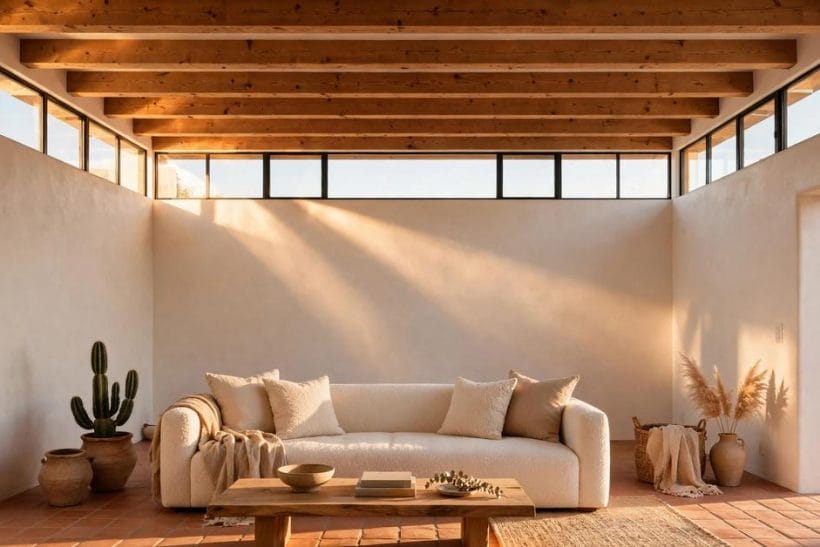
A clerestory is a band of windows set high in the wall — above eye level, usually above the roofline of whatever leans against the wall outside, or tucked under a raised section of roof. The feature room shows the classic arrangement twice over: bands running along both sides beneath a beamed ceiling, washing the whole space in even, shadow-soft light while the view at eye level stays land and sky rather than neighbours.
Scope, stated once: the feature-level explainer — what a clerestory is, its history from temple halls to engine sheds, and its near neighbours the transom and the skylight — lives in clerestory windows, the short version. This post is the detailed companion: how the band is placed, sized, glazed and opened, what each choice does to the room, and what living with high glass honestly involves. The two deliberately do not overlap.
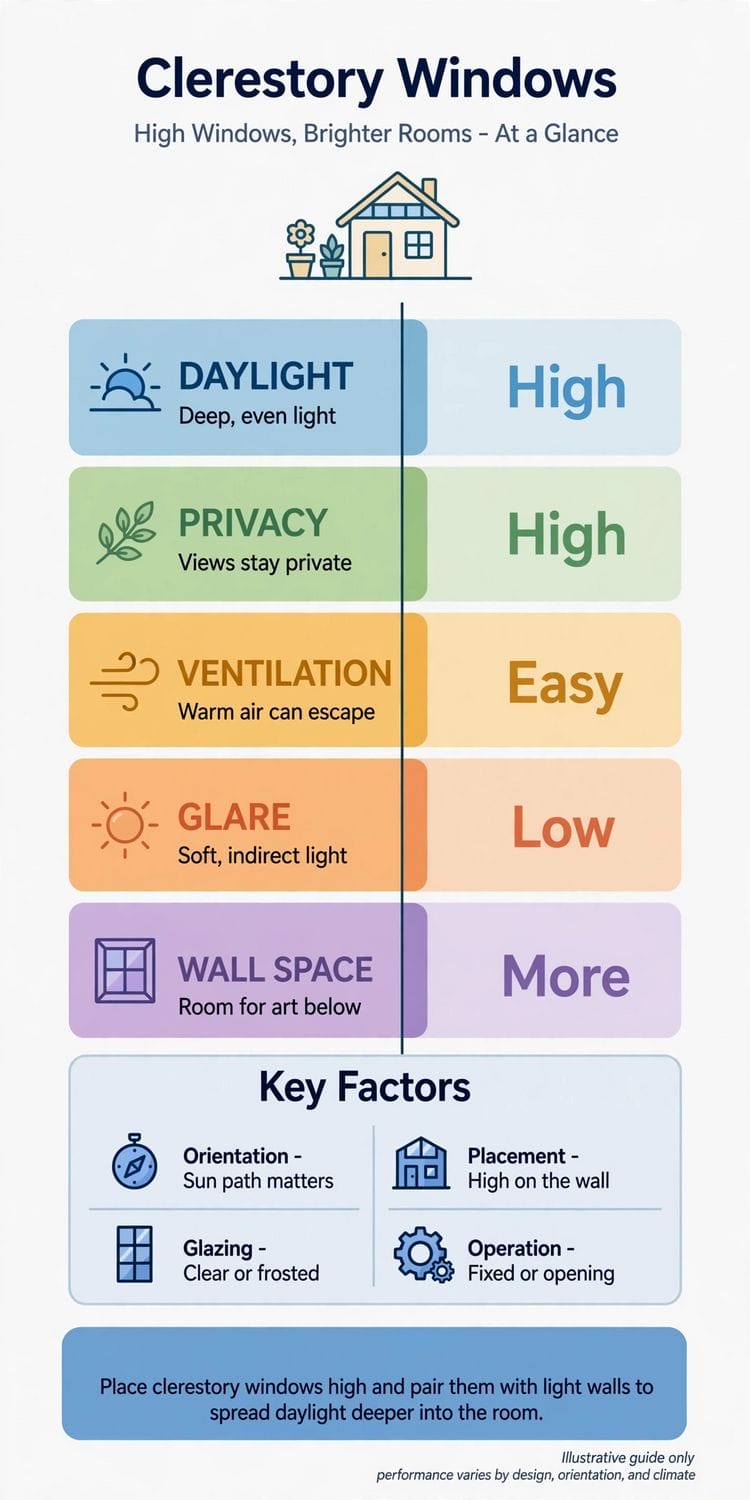
| Quality | What the high band delivers |
|---|---|
| Daylight | Deep, even light thrown across the ceiling and down the far wall |
| Privacy | Light without outlook — sightlines pass over fences, streets and neighbours |
| Ventilation | Opening sections let warm air escape at the highest point in the room |
| Glare | Soft, indirect light; the sun’s disc rarely enters the line of sight |
| Wall space | The wall below stays free for art, shelves, beds and baths |
2. Placement: Where the Band Sits
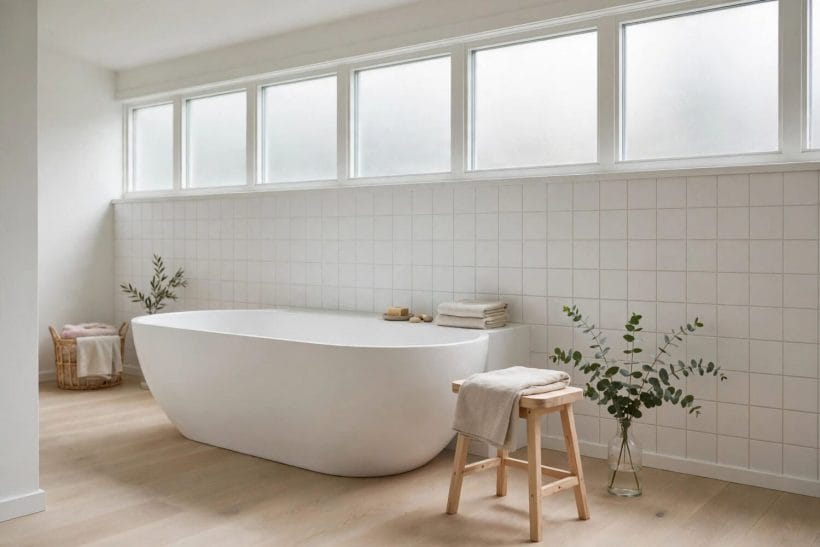
Placement is the clerestory’s whole trick, and the bathroom in gallery-1 demonstrates it perfectly: the band runs above the tile line, near the ceiling, where it can pour light over a freestanding tub while no sightline from outside — at any angle a passer-by could manage — reaches the bather. Height is not a detail of the design; it is the design.
1. High on the wall, above the sightlines
The band’s sill sits above standing eye level, so the glass exchanges light with the sky rather than views with the street. That single decision delivers the clerestory’s famous combination — a bright room that feels unwatched — and it is why the type survives every fashion cycle in bathrooms, bedrooms and street-facing rooms.
2. Above the lean-to: the borrowed-light band
The classic house position is above a lower roof: a kitchen extension, a garage, a veranda leaning against the main wall. The clerestory slips into the wall above that roof and lights the main room over the top of its own extension — daylight for rooms that additions would otherwise have darkened. Much of the type’s modern popularity starts in exactly this gap.
3. In the gable and under the ridge
Gable ends and raised roof sections offer the other great placements: a band following the slope of a vaulted ceiling, or a glazed strip at the ridge where two roof planes part. These put light at the room’s highest point, which is where light does the most work per pane — and where the architecture reads most dramatic after dark.
3. Sizing and Proportion
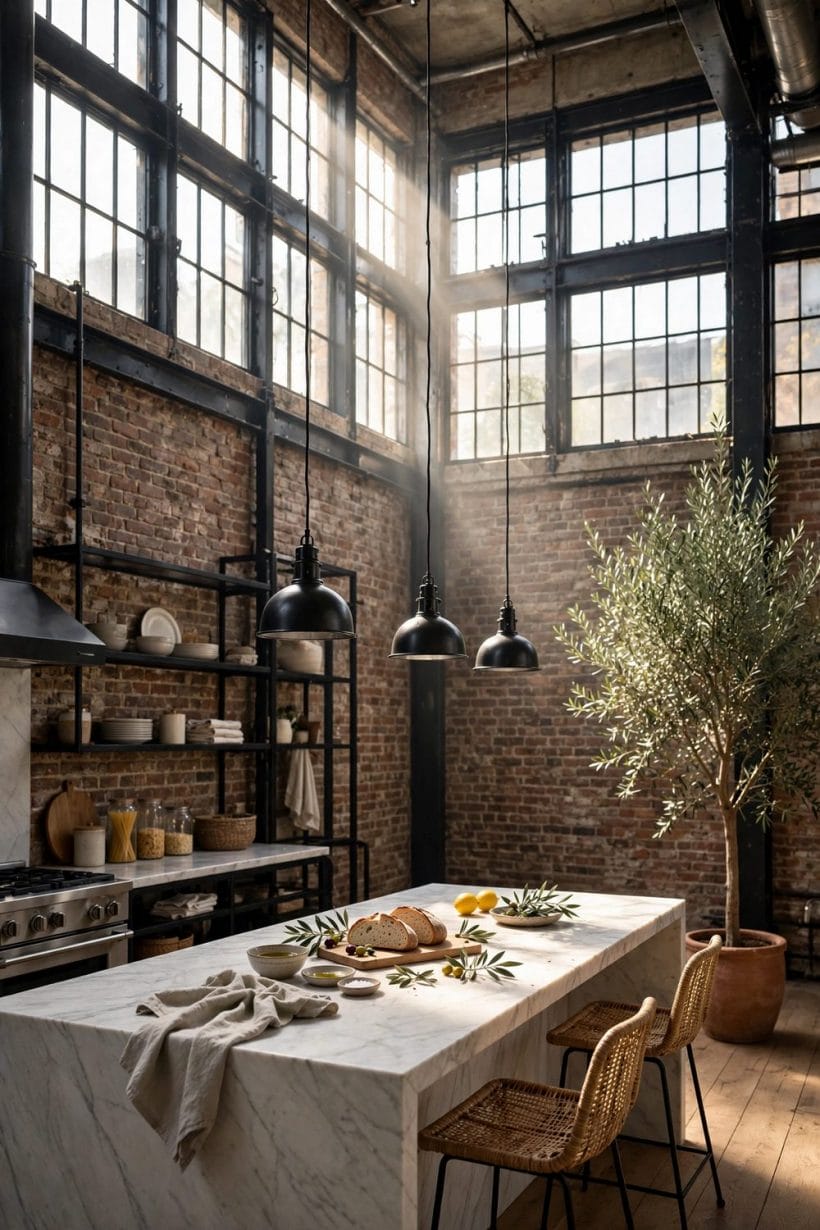
How tall should the band be, how long, and how divided? The pin image — an industrial room whose upper walls are more glass than brick — shows the generous extreme. Most houses live somewhere more modest, but the proportions obey the same few relationships.
4. Height: a band, not a ribbon or a wall
Too shallow and the band reads as a slit that lights nothing; too tall and it becomes an ordinary window that happens to start high, losing the privacy that justified it. The successful middle is a true band — tall enough to throw light deep, short enough to stay above the life of the room. The right figure depends on ceiling height and orientation, and belongs in the design conversation, not in a rule of thumb.
5. Length: run it as far as the wall allows
Clerestory light evens out as the band lengthens. A short band makes a bright pool and a moody remainder; a band run wall-to-wall — or wrapped around a corner — makes the whole ceiling a soft light source. Where structure interrupts, matching segments on two walls keep the effect continuous.
6. Mullions: rhythm over the room
The divisions of the band set its rhythm: fine, regular mullions read as a screen of light; wide, sparse divisions read as a series of pictures of the sky. Either can be right. What dates a clerestory fastest is a mullion pattern that argues with the room below it — match the band’s beat to the architecture it serves.
4. The Forms: Shed, Split-Roof and Monitor
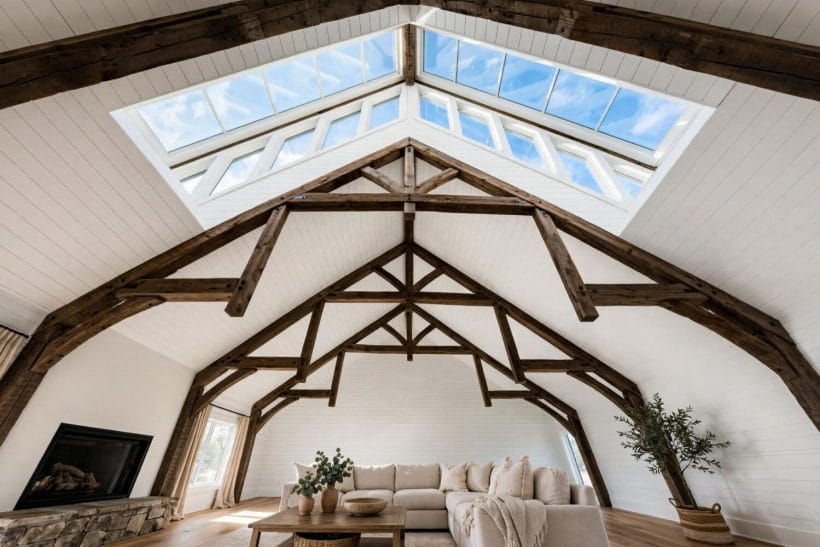
Clerestories are made by roofs as much as by walls. The barn-like room in gallery-2 — trusses, white boards, and a glazed ridge running its length — is one of the three classic forms, and recognising the trio explains most clerestory houses you will ever see. The vaulted spaces these forms create are close cousins of the ones in vaulted ceiling ideas.
7. The shed form: one raised slope
A single sloped roof lifted at its high side, with the band filling the vertical face beneath it. This is the extension-friendly form — the lean-to roof below, the band above it, the main room lit over both — and the commonest in renovated houses, because it can be added where a wall already exists.
8. The split-roof form: two slopes, a glazed gap
Two roof planes at different heights, their difference made of glass. The split roof throws light into the middle of deep plans that no side window could reach, and from outside it gives the house a distinctive stepped profile — the glowing stripe in many a modern roofline.
9. The monitor form: a raised lantern along the ridge
The oldest industrial form: a raised strip along the ridge, glazed on both sides, borrowed from the factory and the basilica before it. Monitors light and vent in equal measure — opening sections on both faces can flush a whole volume of warm air — and they suit long rooms: studios, kitchens, living halls.
5. Orientation: What Each Facing Delivers
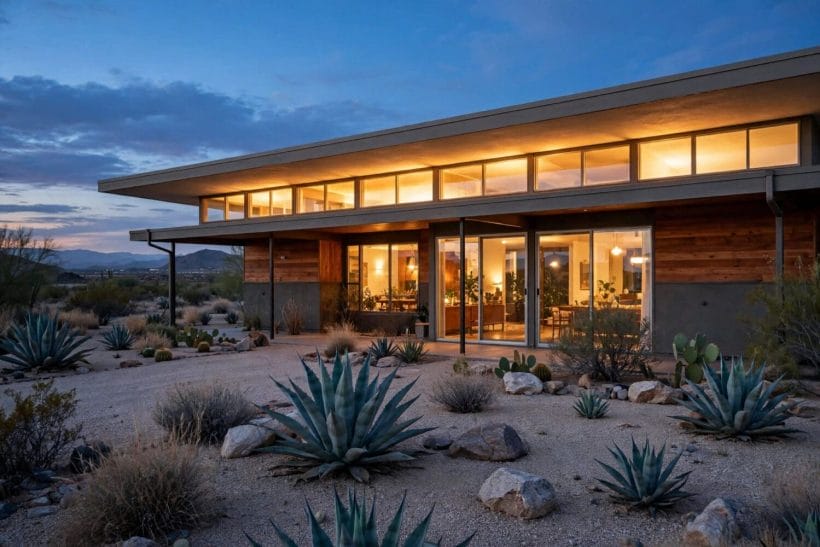
The desert house in gallery-3 wears its clerestory like a lit brow — a continuous band under a low shed roof, glowing at dusk. Which way that band faces decides the character of its light more than any other single choice, because high glass meets the sky at angles ordinary windows never see.
10. Sun-facing bands: power that needs manners
A band facing the sun’s path delivers the strongest light and the strongest heat, together. In living spaces designed for it — with overhangs, external shading or high-performance glazing chosen for the exposure — it is magnificent. Unshaded and unplanned, it can turn the top of the room into a radiator. The facing is a commitment, not a default.
11. Sky-facing bands: the painter’s light
Turn the band away from the direct sun and it trades drama for the steadiest daylight there is: bright, diffuse, shadow-soft, changing gently through the day. Studios, workspaces and rooms where colour matters have prized this facing for centuries, and it is the forgiving choice for bedrooms and bathrooms too.
12. East and west: bookends of the day
Morning-facing bands wake rooms early and leave them calm by afternoon; evening-facing ones hold the day’s last light theatrically and ask the most shading in summer. In houses with bands on two sides, the pair can be read like a clock — the room itself tells you the hour by which band is glowing.
6. Fixed or Opening: Ventilation and Operation
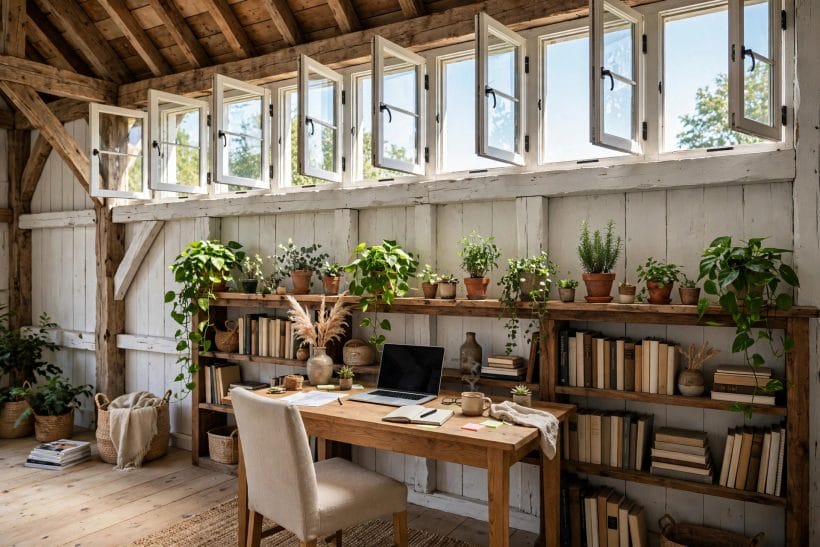
Warm air rises, and the clerestory sits exactly where it gathers. That is why the barn studio in gallery-4 — its whole band a row of casements tilted wide above the bookshelves — can be comfortable on a still day with no other opening: the band is not just the room’s lamp, it is its chimney.
13. The stack effect, working for free
Open a low window on the shaded side and an opening clerestory on the high side, and the room ventilates itself: cool air in below, warm air out above, no fan involved. The effect is gentle and continuous rather than gusty, which makes it ideal for bedrooms at night and for houses in warm climates generally.
14. Which sections should open
Not every pane needs to move. A common pattern is fixed glass for most of the band with opening sections spaced along it — enough to vent, few enough to keep hardware, seals and cost sane. The opening sections earn their place near the room’s warmest spots: above kitchens, baths and sun-catching glass.
15. Reaching the unreachable: winders and motors
High windows are opened by mechanism, not by hand: pole winders for the simple and sturdy, chain winders for the tidy, and discreet motors where the band is long or the household prefers a switch — or a rain sensor that closes the band itself. Choose the mechanism when the window is chosen; retrofitting reach is the clerestory’s commonest small regret.
7. Glazing and Privacy
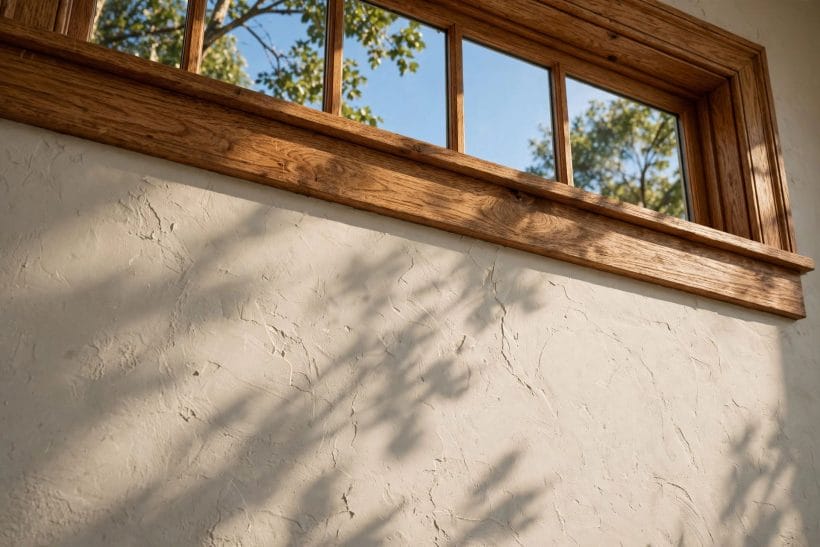
The close view in gallery-5 — a deep timber frame, treetops moving beyond clear glass — shows the clerestory’s default glazing: plain, clear, and private by altitude alone. But the band is also the one window where the full menu of glass choices can be used without compromise, because nobody needs to see through it clearly at eye level.
16. Clear glass and the altitude rule
Most clerestories need nothing fancier than clear glass: the privacy comes from the placement. What clear glass gives back is the sky itself — cloud, moon, the tops of trees — as the room’s changing picture. Where the band overlooks a higher neighbour or a slope, the rule is checked again from the actual sightlines, not assumed.
17. Frosted and textured glass: privacy with the light kept
Where sightlines do reach the band — the bathroom in gallery-1 is the type case — frosted or textured glass keeps nearly all the light and surrenders only the view out, which at that height was mostly sky anyway. It also softens direct sun into a glow, a small bonus in sun-facing bands.
18. Performance glass, stated generally
High glass meets weather and sun at full strength, so its specification matters: insulating units as a baseline, coatings matched to the facing, and frames detailed to shed water where the band meets the roof — the junction that roofers treat with respect, as the flashing discipline around roof glazing in metal roof skylight flashing illustrates. Exact specifications belong to the designer and the local climate; the principle — the band is part of the roof’s weather skin — is universal.
8. Room by Room: Bedrooms and Bathrooms
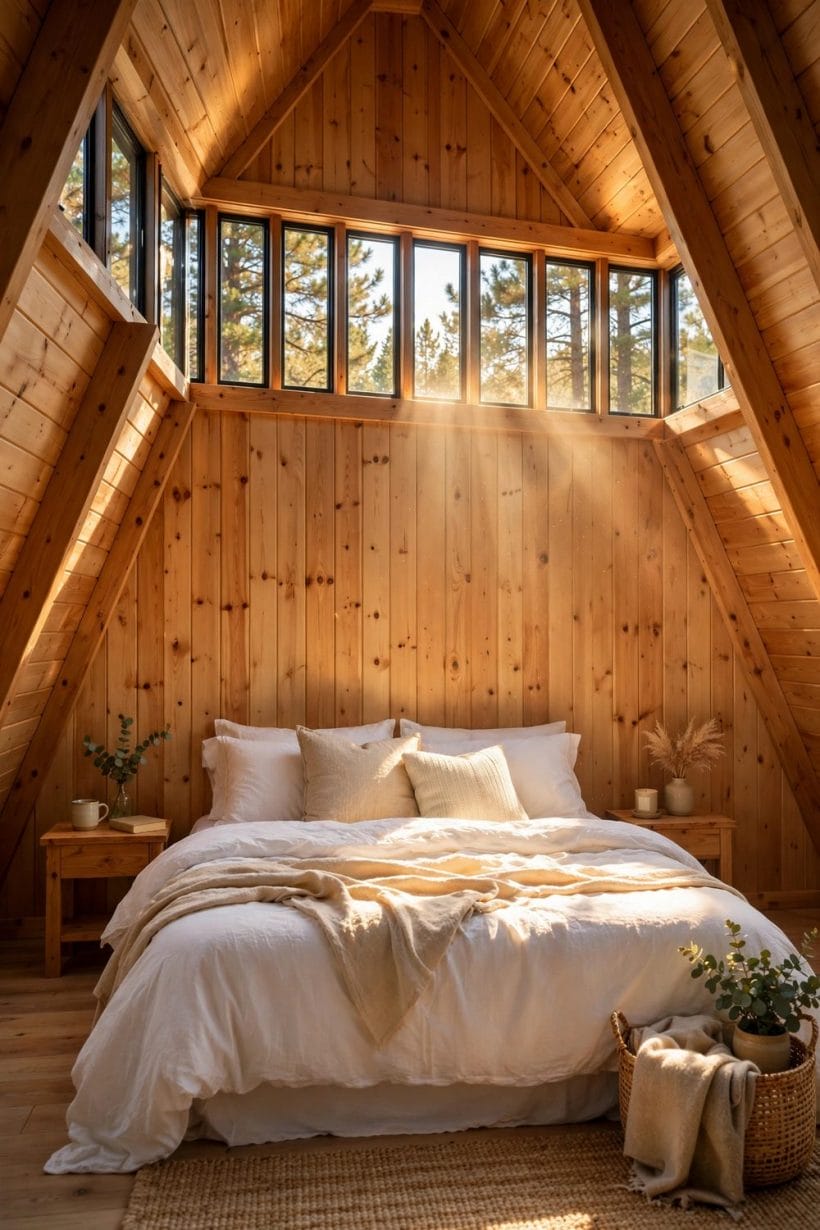
The A-frame bedroom in the pin — bed tucked under the slope, a clerestory band running along the gable above it — is the type’s most persuasive room. Private rooms are where high glass stops being a feature and becomes the obvious answer.
19. Bedrooms: light without the audience
A bedroom band delivers waking light and daytime brightness while the bed stays invisible from every angle outside — no curtains drawn at noon, no blinds sacrificed to privacy. Morning-facing bands make gentle alarm clocks; sky-facing ones keep the room restful. Blackout, if wanted, is arranged at the bed, not at the band.
20. Bathrooms: the natural home of the type
Steam, privacy and the wish for real daylight make bathrooms the clerestory’s home ground. The band sits above splash and sightline alike, vents the room’s warm damp air at its highest point, and lets a bath sit in daylight that feels like weather rather than exposure. Frosted glass, as in gallery-1, covers the rare overlooked case.
21. Guest rooms, nurseries and the spare room
Rooms used by others benefit doubly: guests get light they can leave alone — no unfamiliar blind mechanisms, no drawn-curtain gloom — and the room reads generous between visits. In small houses these are often the rooms on the borrowed-light side of the plan, where the band may be their only window; sized generously, it is enough.
9. Room by Room: Living Spaces, Kitchens and Work
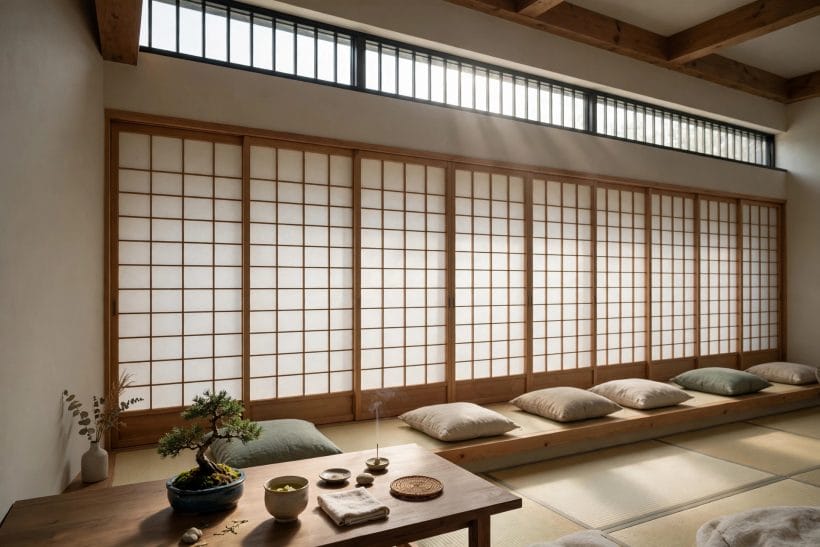
In the day rooms the calculation changes: the view matters here, so the clerestory plays a supporting role — and plays it superbly, as in the Japanese-style room in gallery-6, where a clerestory strip runs above the shoji screens and the whole wall glows without a single outlook being spent.
22. Living rooms: the band above the view
Pair a clerestory with ordinary view windows and the room gets both gifts: outlook at eye level, and a ceiling washed with light that keeps the far side of the room — usually the gloomy side — in the same register as the glass side. The combination is the standard recipe of good modern living rooms, and the band is the ingredient most often missing from imitations.
23. Kitchens and dining: light over the work
Kitchens surrender their walls to cabinets and their windows to sinks, and go short of daylight exactly where knives are used. A band above the cabinet line restores it — over worktops, over dining tables, without touching a single storage wall. In tiny-house layouts the same trick is a staple, as clerestory window tiny house layouts shows at small scale.
24. Studios and workspaces: the even light
Work wants light that does not move: no migrating sun patches, no glare on screens, no shadows from the worker’s own body. A sky-facing band is the closest a window comes to a softbox, which is why artists’ studios were built around high glass long before architects theorised it — and why home workspaces, once given a band, rarely give it back.
10. Dressing, Care and Honest Limits
The clerestory asks little, but what it asks is specific. None of its costs are hidden for long, so they are set out plainly here — the section the glossy photographs usually skip.
25. Dressing the undressable window
Most bands are left bare, and look best so. Where shading is genuinely needed — a sun-facing band over a bed — the honest options are external shading designed with the roof, or high-level blinds on mechanisms chosen with the window, not after it. Interior curtains at clerestory height are a compromise almost nobody keeps.
26. Cleaning and maintenance at height
Glass near the ceiling is cleaned less often and reached with more ceremony — a telescopic tool for the inside, a planned method for the outside, and seals inspected when scaffolding or a ladder is up for other reasons. None of this is difficult; all of it is easier decided at design stage, when access can still be drawn in.
27. Structure and cost, stated plainly
A clerestory is a hole in the wall where the wall is doing structural work, under a roof that must stay weather-tight: the band, its framing and its flashing are engineered and built as part of the structure, to local rules, by people who do that work — never an improvisation cut into a finished house. It costs more than the same area of ordinary window, and it returns more: light, privacy, ventilation and wall space, in the rooms that need all four. Where those returns are real, few owners count it the expensive option. The ceiling forms it partners with are collected in ceiling designs for the living room.
Final Considerations
The clerestory is the rare feature that gives four things at once — deep daylight, privacy, ventilation and free wall space — and asks in return only that it be placed high, glazed thoughtfully and built as structure. Treated in the detail this article has used — placement before size, orientation before glazing, operation planned rather than improvised — it turns the top of a wall into the hardest-working part of the room. The band of light near the ceiling stops being an architectural quotation and becomes what it was in the beginning: simply the best seat in the house, given to the light. For the exterior forms that carry these bands, see exterior home ideas.




0 Comments