

Closet doors are the largest moving parts in a bedroom, and often the least loved: rattling sliders, bifolds that jump their tracks, or plain slabs nobody has looked at properly in years. Yet they cover a whole wall, so changing them changes the room.
These 75 closet door ideas are organised the way the decision actually works: start with the layout and door type, then colour, then the practical details that decide whether you will still love them in five years.
1. Closet Door Ideas at a Glance
The 75 ideas in this guide fall into families: door types, colours and finishes, and hardware and fitting details. Most readers need only one idea from each family, combined. These quick answers cover the questions that come up again and again.
| Question | Short answer |
|---|---|
| Which door type saves most space? | Sliding and bifold doors need no swing room; sliding doors give up full access, bifolds keep nearly all of it. |
| What is the cheapest upgrade? | Paint and new handles on sound existing doors transform a wall for the cost of a tin of paint. |
| Which colour is safest? | The wall colour itself, or one shade deeper; the doors recede and the room feels bigger. |
| Are mirrored doors dated? | No; framed, panelled or tinted mirrors look current and bounce precious light around small rooms. |
| Can I remove the doors entirely? | Yes, if the closet interior is tidy enough to be seen; curtains are the halfway option. |
| What detail matters most? | The track and rollers; smooth, quiet hardware is what you will notice every single day. |
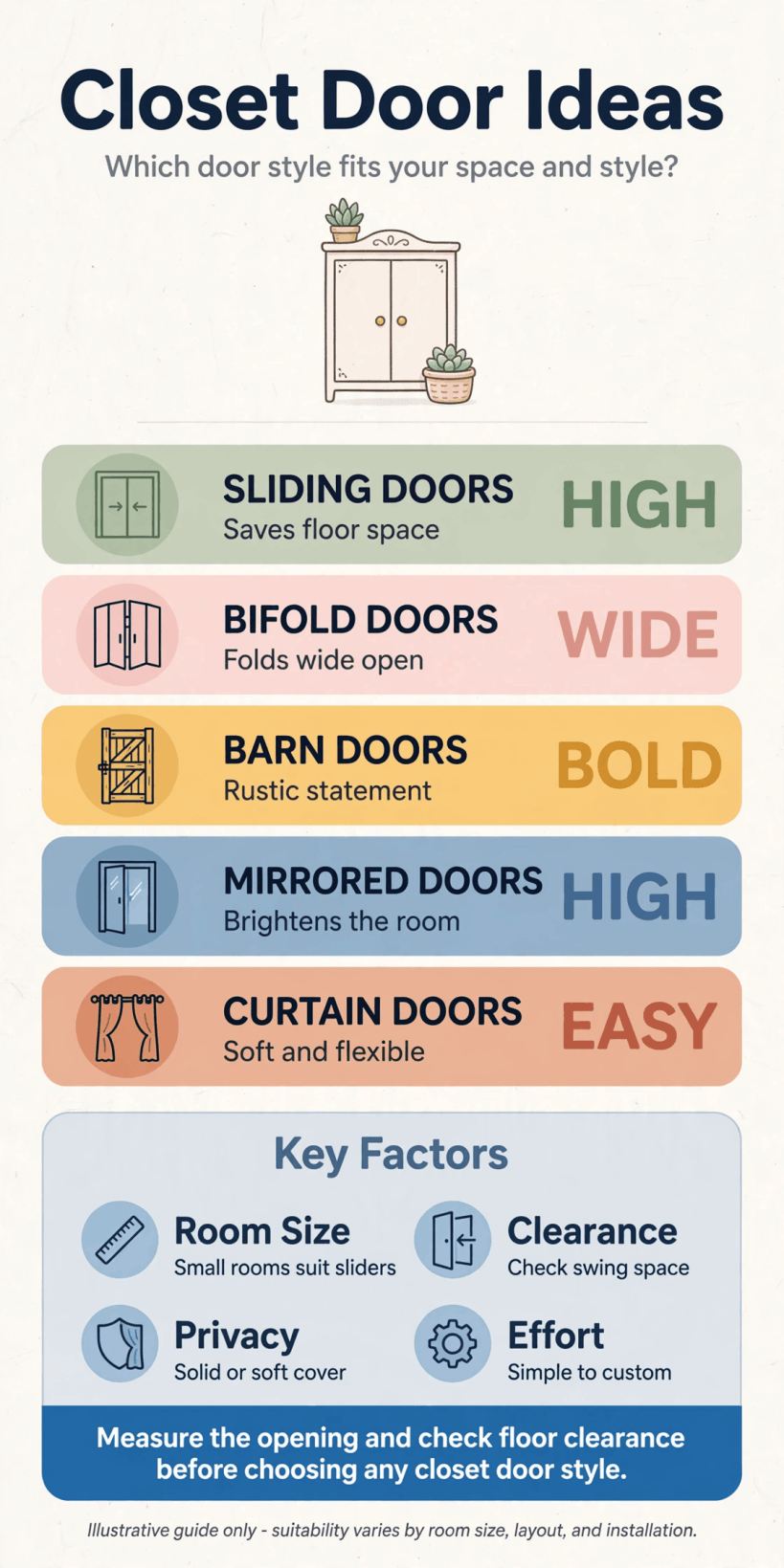
The shortlist at a glance: choose the layout first, the colour second, the hardware always with care.
One principle guides everything below: a closet wall is a wall first and a door second. However it opens, it will spend most of its life closed, facing the bed, so judge every idea by how the closed wall looks and feels. If the closed wall pleases you, the mechanics can be chosen on space and budget; if it does not, no clever track will rescue it.
2. Layouts First: Hinged, Sliding, Bifold or Open
The layout ideas start with the four ways a closet can be closed. Hinged doors are the traditional answer: full access to the opening, simple fittings, and a look that suits panelled and classic styles. Their price is swing space, the arc of floor that must stay clear in front of them, which in a small bedroom can dictate where the bed is allowed to go.
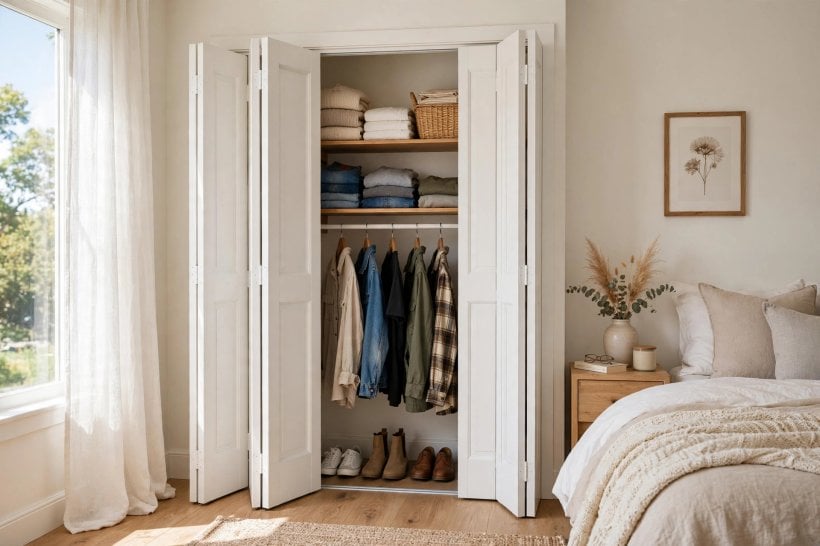
Sliding doors need no swing space at all, because they pass each other on parallel tracks, but that same overlap means only part of the closet is ever open at once. Bifolds fold back against the sides, keeping most of the opening reachable while using little floor space, at the cost of more moving parts. And the open layout, no doors at all, trades privacy for airiness and works when the storage inside is fitted, tidy and worth looking at.
Choose by walking the room, not by photographs. Stand where the bed will be, mime dressing on a dark morning, and notice which layout keeps the floor clear for the life you actually live. Compact bedrooms make this decision for you, as the layouts in tiny house bedroom ideas demonstrate repeatedly: the door type that respects the floor plan always wins.
3. Sliding Doors: Smooth Tracks and Full-Length Panels
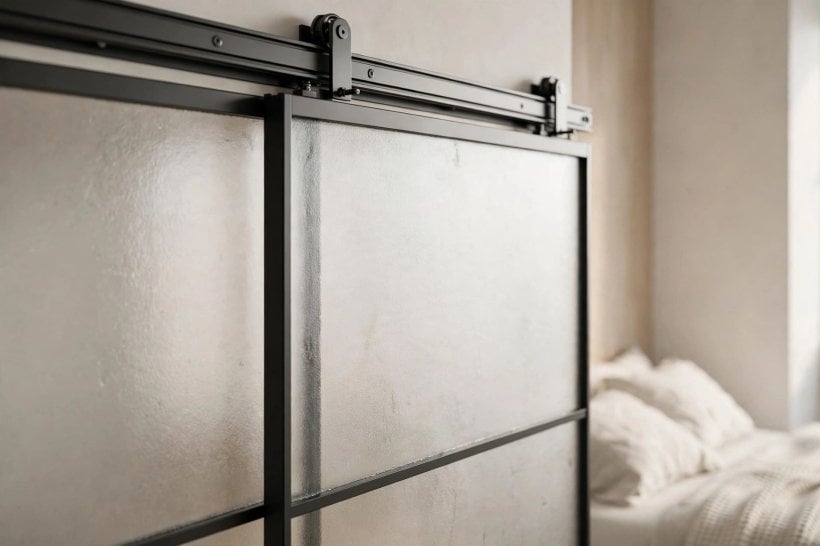
Sliding closet doors are the workhorse of small rooms and modern schemes. Their big, uninterrupted panels are the perfect canvas for the colour and material ideas later in this guide: flat colour, fine fluting, fabric-wrapped panels or a wall of mirror. Run them from a top track where you can, so the floor stays clean and threshold-free, and the doors seem to float.
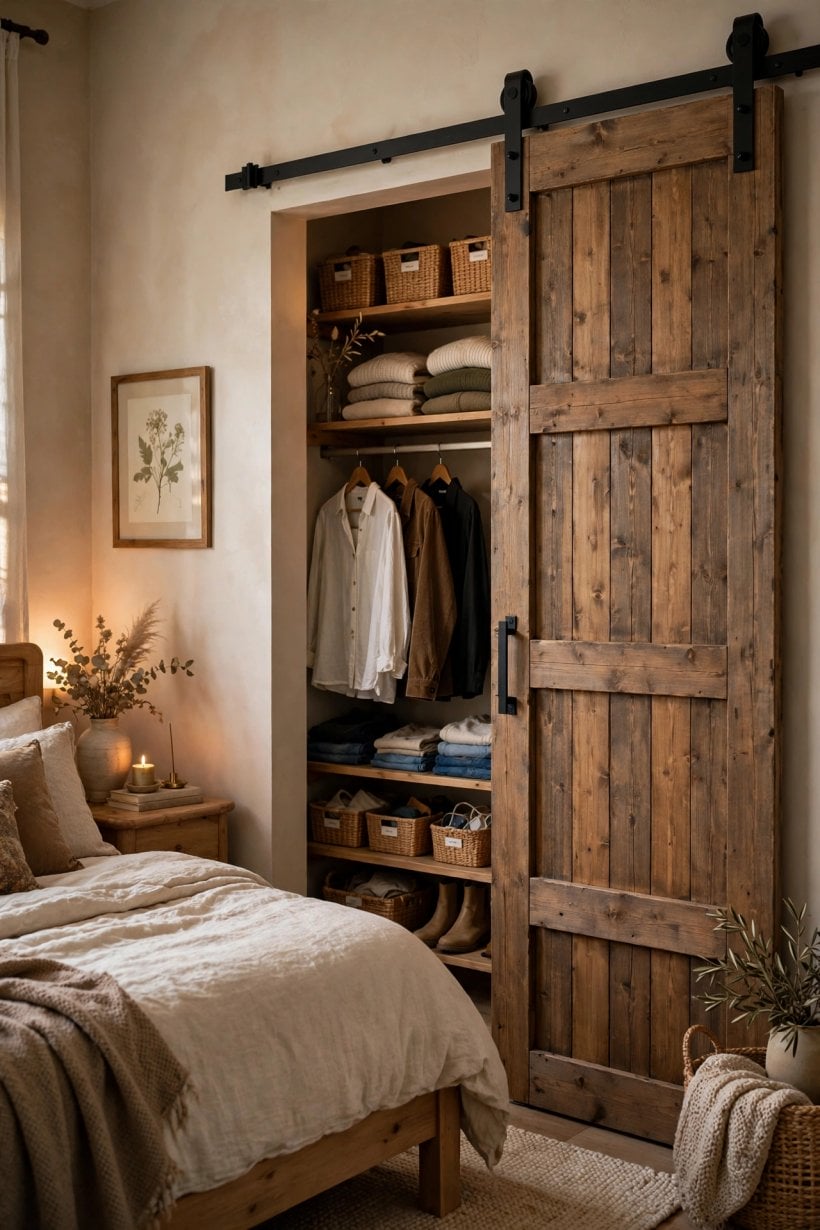
The overlap is the compromise to plan around. Arrange the closet interior so the things you reach for daily sit in the sections that each door position reveals, and put seasonal storage in the permanently shadowed middle or ends. With the interior organised that way, the half-access complaint mostly disappears, and what remains is pure gain: no swing, no door standing open into the room, no handle catching passers-by.
Quality shows in the running gear. Look for sturdy rollers, a track that does not flex, and a soft-close action if the budget allows; cheap sliders develop the rattle and shudder everyone recognises from old rental flats. A good sliding system fitted once will glide for years with nothing more than a vacuumed track, which is why this family earns its place at the front of so many small-space plans, including the storage walls in bedroom interior design for tiny houses.
4. Bifold and Accordion Doors: Folding Back the Whole Wall
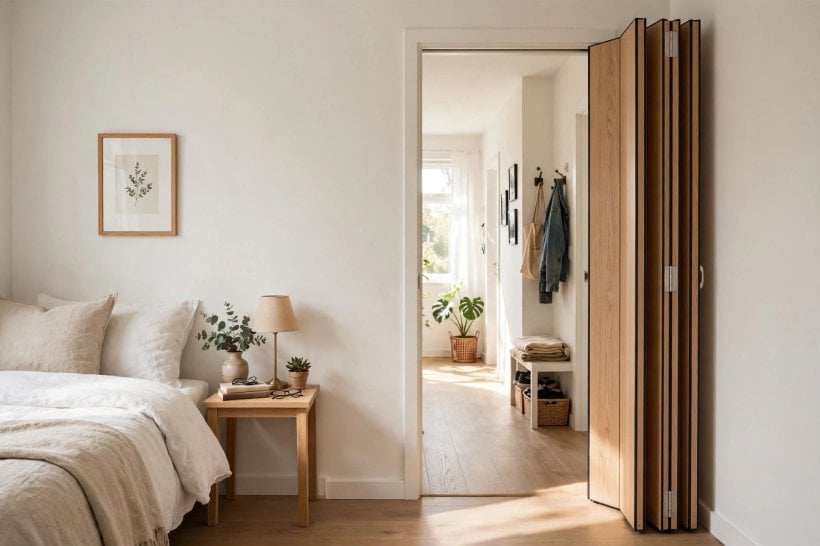
Bifolds are the diplomat’s choice: nearly the full access of hinged doors with a fraction of the swing. Folded back, a run of bifolds stacks neatly at each side and leaves the whole wardrobe available for the Sunday-morning outfit deliberation, which is exactly when partial access annoys most. Their vertical folds also add rhythm and shadow lines to a plain wall, a quiet kind of decoration.
The honest caveat is hardware again. Bifolds live or die by their pivots and guides; a well-hung set feels fingertip light, while a neglected one jumps its track and sours you on the whole idea. Buy the best mechanism you can, align it patiently at fitting, and once a year check the pivots are tight. Painted bifolds in the wall colour are one of the most elegant looks in this guide, the folds reading as panelling when closed.
Accordion-style doors, with many narrow folds, suit very wide openings and utility spaces, and their concertina action can be a feature in its own right. In bedrooms they are best in calm materials and colours, so the many folds read as texture rather than fuss. Whichever folding style you choose, keep handles or finger pulls where folded panels meet, easy to find in the dark and kind to the finish.
5. Colour: Painted Doors, Bold Choices and the Wall-Colour Trick
Colour is where the 75 ideas multiply fastest, because any door type can wear any colour. The wall-colour trick is the most requested: paint the closet doors exactly the wall colour and the whole wall visually stretches, the doors almost disappearing. It is the kindest treatment for awkward, mismatched existing doors and for rooms where the bed deserves to be the only event.
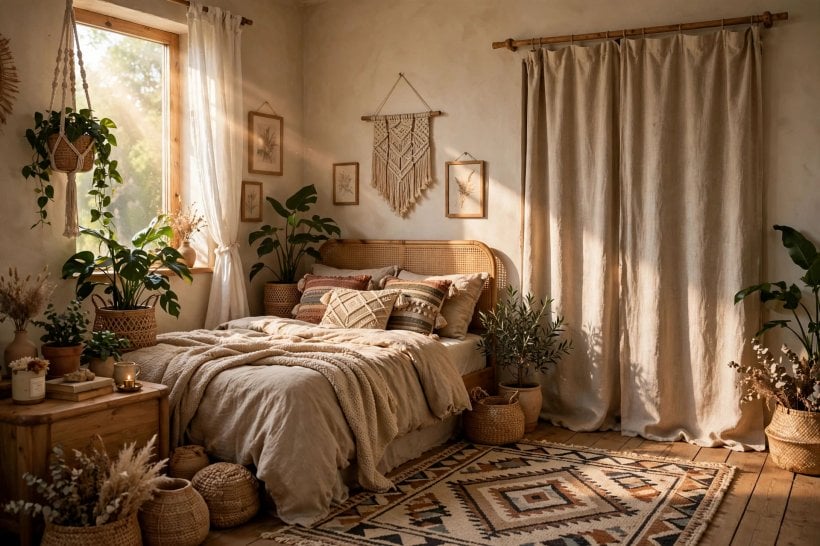
One shade deeper is the designer’s variation: same family, slightly more presence, so the closet wall feels intentional without shouting. From there, the brave options open up: a deep green or inky blue closet wall can anchor a pale bedroom beautifully; soft plaster pinks and warm taupes flatter north-facing rooms; and classic black or charcoal gives sliding panels a tailored, almost architectural calm. Match the sheen to the room: eggshell and satin hide a multitude of fingerprints better than flat matt on doors that hands touch daily.
Two practical colour notes. First, paint the edges and the track-side faces too, because those are what you see when doors stand open or overlap. Second, test the colour on one door and live with it for a week of mornings; bedroom light is the least forgiving in the house. The joyful, organised colour thinking in colorful tiny house interior schemes applies here at wall scale: commit fully or blend completely, but avoid the apologetic middle.
6. Mirrored Doors: Light, Space and Honest Reflections
Mirrored closet doors have survived every fashion swing because their benefits are physical, not stylistic: they return light to the room, they double the apparent depth of a small bedroom, and they give you a full-length mirror without consuming a centimetre of wall or floor. In a dark or small room, a run of mirrored sliders can feel like adding a window.
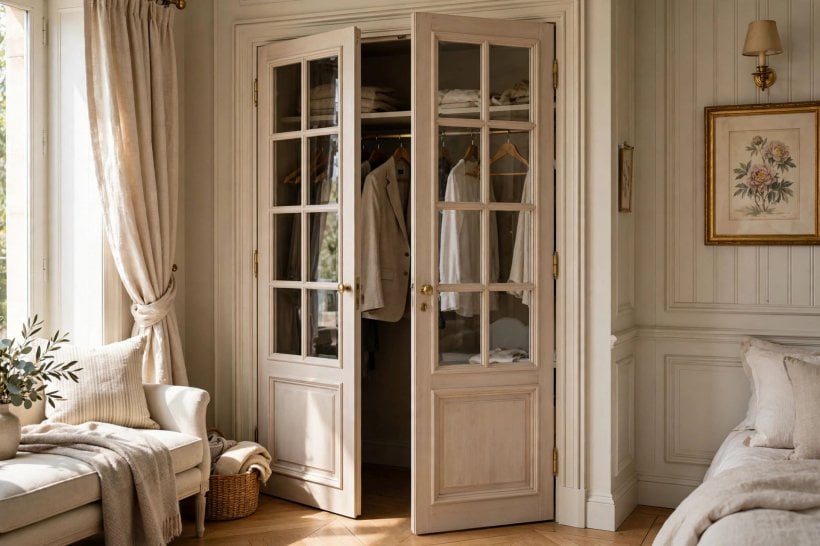
The current way with mirror is to break it up. Framed mirror panels, mirror divided by slim rails into a grid, or smoked and tinted glass all read as deliberate design rather than leftover gym wall. The reflection they return matters too: mirror opposite a tidy bed and a window is a delight, while mirror opposite a cluttered corner will show you that corner twice, forever, which is an argument for tidiness rather than against mirror.
Care is simple: a microfibre cloth and a light hand, and no abrasive sprays on the edges where mirror coatings are vulnerable. Safety glass made for doors is a must when replacing panels, and any reputable supplier will insist on it. In shared children’s rooms, weigh the fingerprints honestly; in guest rooms and small main bedrooms, mirrored doors remain one of the hardest-working ideas in this entire list.
7. Panelled, Louvred and Fluted Styles: Texture on the Wall
Flat doors are a canvas, but panelled doors are already a picture. Shaker-style panels, raised-and-fielded classics and applied moulding strips all add shadow and craftsmanship to a closet wall at modest cost; applying slim timber mouldings to plain existing doors and painting the whole is one of the most satisfying weekend upgrades in this guide.
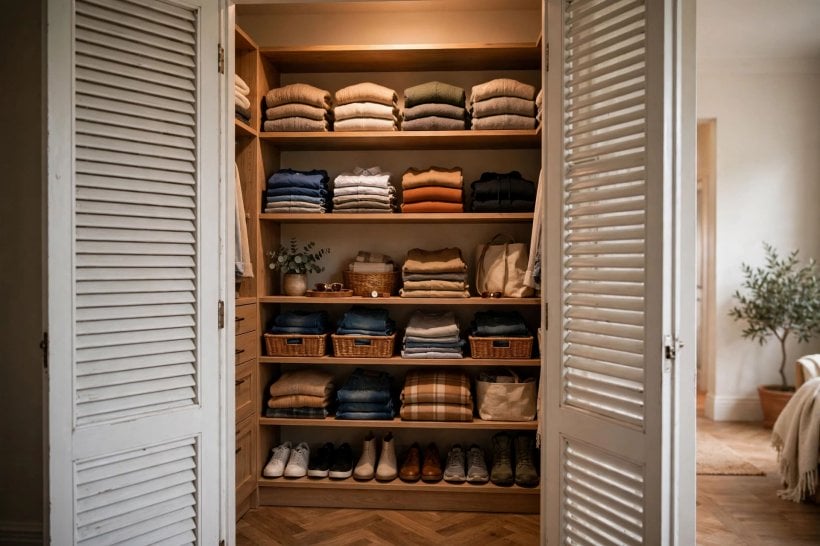
Louvred doors bring a different texture and one practical gift: ventilation. In older houses and humid climates, louvres let air circulate through the closet, which clothes appreciate. Their ledges do gather dust, so they suit households honest about their dusting habits. Fluted and reeded fronts are the modern relatives: fine vertical grooves that catch light beautifully on sliding panels, hiding fingerprints in their rhythm and giving a calm, tailored finish that suits both minimalist and warm contemporary rooms.
Whichever texture you choose, let it be the wall’s only pattern. Textured doors with plain walls, plain bedding and one or two strong colours look expensive; textured doors plus patterned curtains plus a busy rug is a room arguing with itself. The restful balance in tiny barn house interior design, where wood texture is given room to breathe, is the model to copy at closet scale.
8. The No-Door Option: Curtains, Partitions and Open Closets
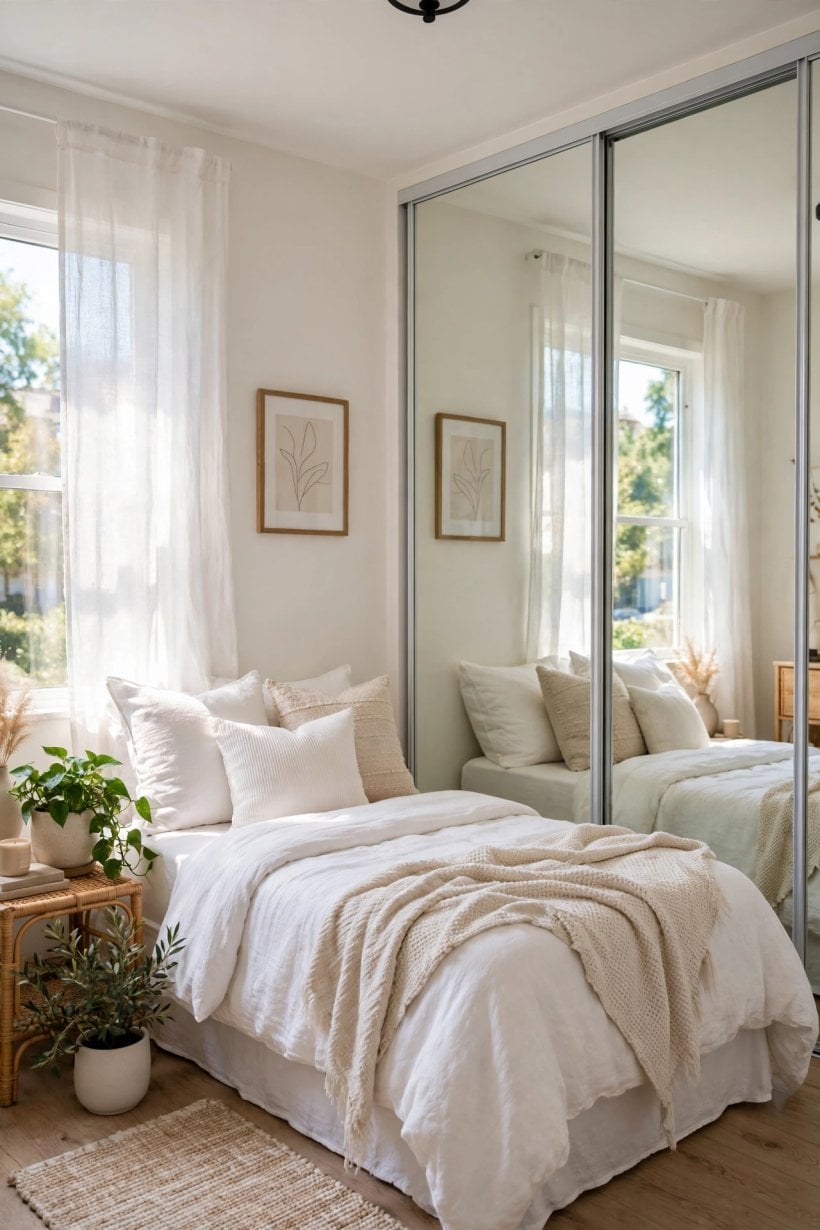
Some of the most charming closet door ideas are not doors. A full-length curtain on a simple track or pole softens a bedroom, costs little, and can be changed with the seasons or the laundry schedule. Heavy, lined curtains hang best and look most deliberate; choose a fabric that appears elsewhere in the room in miniature, a cushion or a throw, so the curtain reads as part of the scheme.
Fully open closets are the braver version, and they succeed or fail on the interior. Fitted shelves, matching boxes and hangers, and clothes edited to what earns its rail space make an open closet look like a boutique; anything less looks like a spill. Be honest about which household you are. The middle path, doors removed but a curtain or a pair of lightweight screens in reserve, gives you the boutique look with a five-second hiding place before guests arrive.
Renters should note that removing doors is usually allowed where replacing them is not, provided the originals are stored safely and refitted at the end. Keep every screw and hinge in a labelled bag taped to the back of one door; future you, rehanging doors on moving-out weekend, will be extremely grateful. The same store-the-originals wisdom runs through most small-home rental improvements, including those in tiny house living room ideas.
9. Hardware and Practical Details: Handles, Soft-Close and Sound
Hardware is the detail your hands grade daily. On hinged and bifold doors, handles should suit the door’s weight and your grip: lever handles and generous knobs out-perform dainty little pulls on a heavy door at 6am. On sliders, recessed finger pulls keep the surface clean and stop handles colliding as panels pass; edge pulls in a contrasting metal can double as a design accent on plain doors.
Soft-close mechanisms, once a luxury, are now a reasonable expectation on new sliding and hinged systems alike, and they change the emotional temperature of a bedroom: no more slamming panels or pinched fingers, just a quiet arrival. Sound in general is underrated in closet choice. A door you can operate silently while someone sleeps is a kindness built into the room, worth more than any finish.
Finally, the unglamorous essentials: tracks vacuumed monthly stay smooth, rollers appreciate the maker’s occasional recommended care, and a door that starts scraping is asking for adjustment now, not after it has gouged the floor. Five minutes with the right screwdriver, following the fitting guide, prevents nearly every closet-door complaint ever posted online. Keep the guide, and the spare Allen key, in the closet itself.
10. Measuring, Fitting and Getting It Right First Time
Every door type in this guide begins with the same measurement: the opening, taken at three heights and three widths, because old frames are rarely square and the smallest measurement is the truthful one. Measure the floor’s level across the opening too; a sloping floor that a hinged door tolerates will defeat a sliding track until it is allowed for.
Fitting order matters. Tracks and frames first, perfectly level, then doors hung and adjusted, then handles, then soft-close settings, and only then final paint touch-ups, because every adjustment stage risks a scuff. If you are painting doors yourself, take them off their tracks or hinges and paint them flat where you can; the finish will be smoother and the edges, the parts everyone forgets, get their coats too.
Know when the job wants a professional. Heavy mirrored sliders, out-of-square openings and structural changes to the closet front are all worth a fitter’s day rate, in the same way the bigger projects in how to build your own tiny house guides separate the satisfying DIY from the false economy. Painting, handles, mouldings and curtains, by contrast, are squarely weekend territory, and they deliver most of the visible transformation for a fraction of the cost.
Final Considerations
Seventy-five ideas reduce, in the end, to four decisions: the layout your floor plan allows, the colour story your bedroom wants, the texture that suits its style, and hardware good enough to disappear into daily life. Get those four right and the closet wall stops being the room’s apology and becomes one of its assets, looked at with pleasure every morning and night.
Start where your budget and confidence meet: paint and handles this weekend, tracks and doors when you are ready, and the full refit when the room is decorated around it. Closet doors are used more often than almost anything else you own, so every improvement here is repaid daily, quietly, for years.

0 Comments