

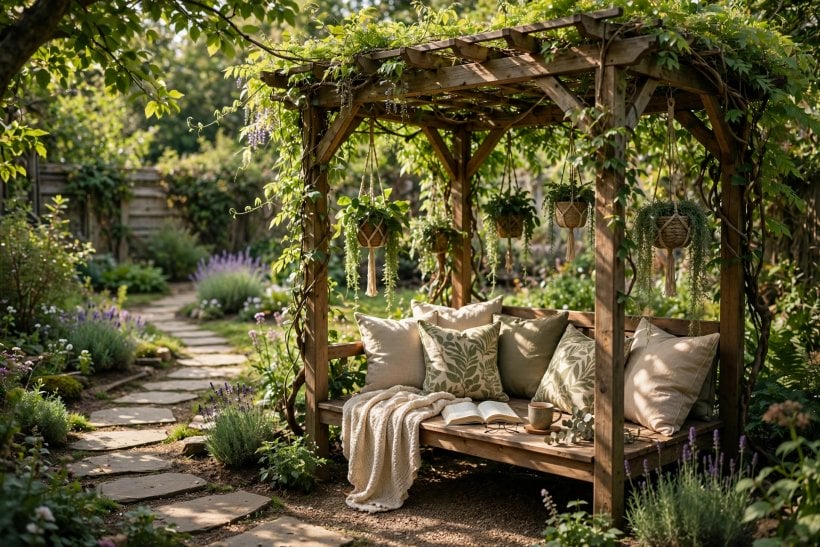
A pergola is the garden’s way of suggesting a room without building one: four posts, a lattice of sky, and shade that moves with the day. It is the oldest garden structure there is, and still the quickest way to give an outdoor space a centre, a ceiling and a reason to stay outside past lunch.
These 75 pergola ideas treat the structure as architecture first and decoration second — sited by the sun, built with honest joinery, planted and furnished as the outdoor room it becomes. The ground it stands on is surveyed at patio ideas; this post owns the frame that rises from it.
1. Pergola Ideas at a Glance
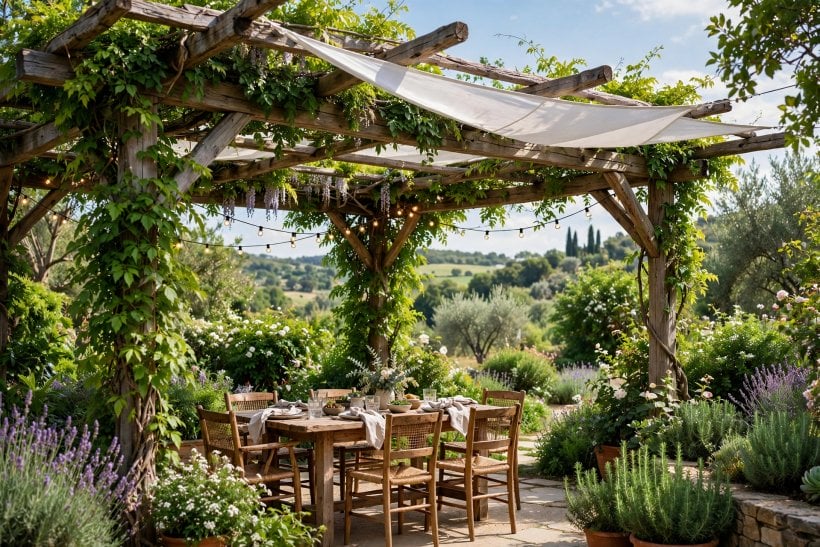
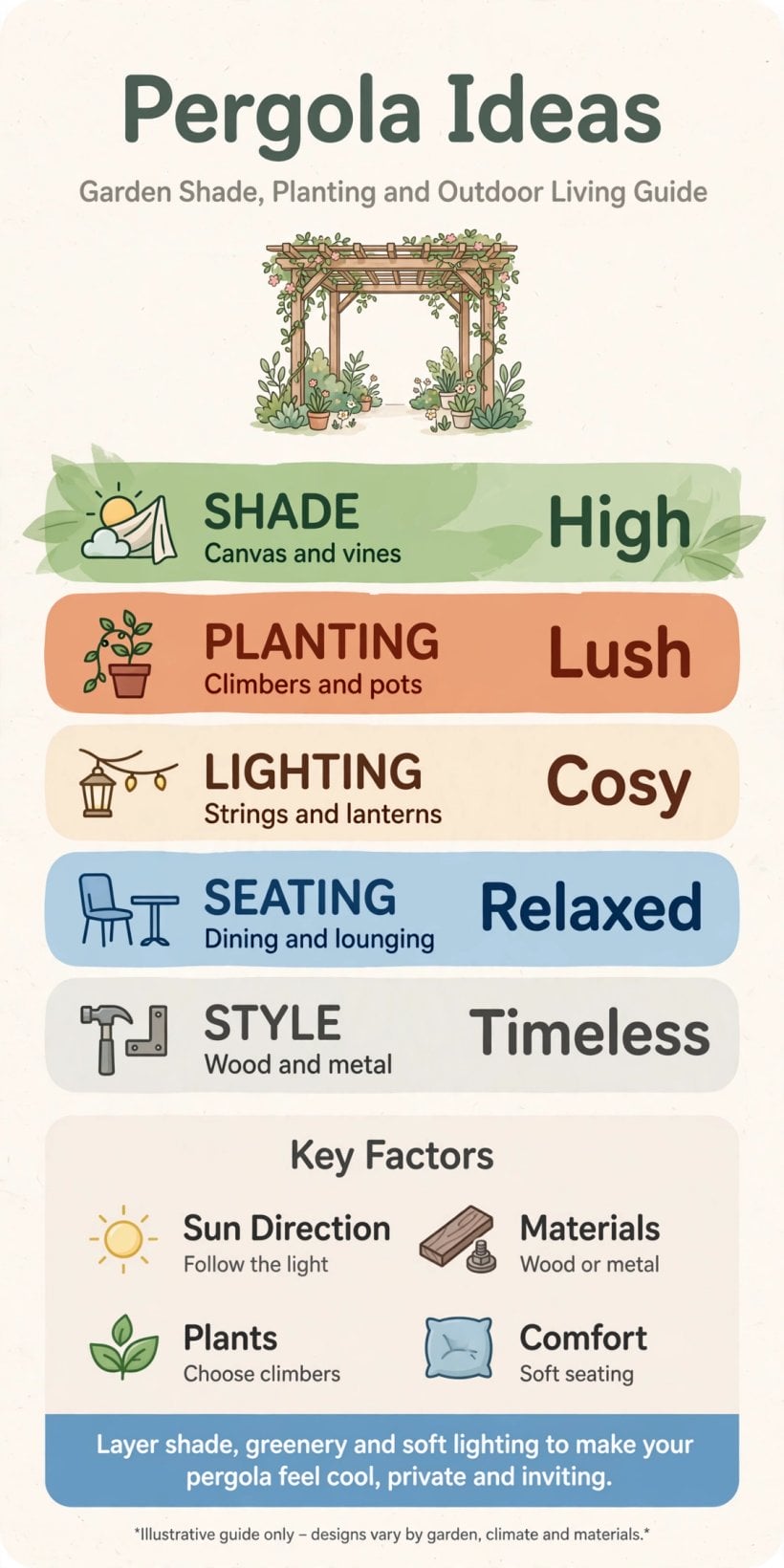
The central entity is the pergola: a freestanding or attached outdoor frame of posts and open rafters whose job is to define a room in the garden and temper the sun without excluding it. Its attributes are siting, structure, the roof layer — rafters, battens, vines or fabric — the floor it stands on, and the planting that finishes it. A pergola succeeds on one measure: whether the patch of garden beneath it becomes the most used room of the summer.
| What is a pergola for, exactly? | Three things: marking an outdoor room, giving shade without darkness, and carrying climbing plants. A pergola that does none of these is garden furniture; one that does all three is architecture. |
| Does a pergola give real shade? | Filtered shade, yes — rafters alone break the sun into stripes; with battens, a vine canopy or a fabric sail, the shade deepens to genuinely useful. Full waterproof cover is a different structure’s job. |
| Attached or freestanding? | Attached suits terraces against the house — one ledger beam does the work of two posts. Freestanding suits a destination in the garden: a room at the end of a path, arrived at on purpose. |
| What is the pergola’s most common failure? | Being built where the view is, instead of where the sun and the day’s use are. A pergola sited for the photograph sits empty; a pergola sited for 4pm shade fills every evening. |
2. Siting: Sun, Shade and the Day’s Arc
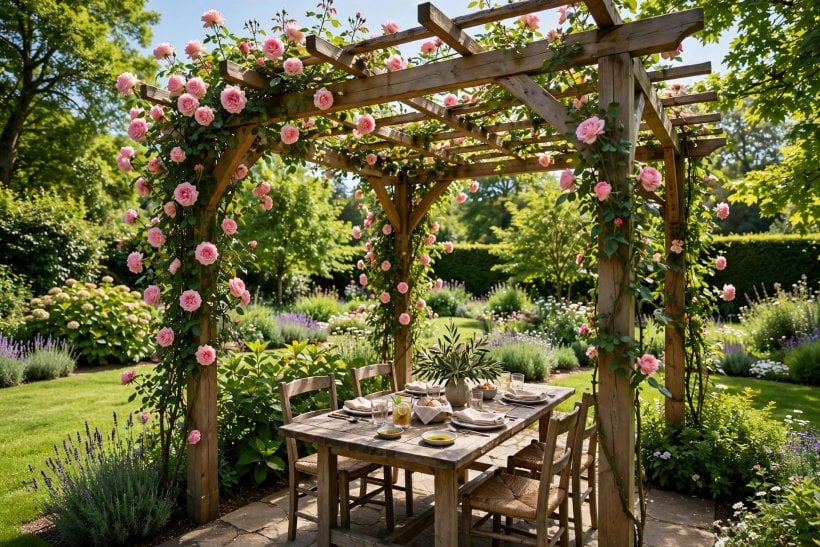
Every other pergola decision follows from this one. The structure’s whole purpose is a negotiation with the sun, and the sun’s terms are fixed: track the light across the garden for a full day before a single post is positioned, and site for the hours the room will actually be used.
1. Site for the Hours of Use, Not the Photograph
Evening households need west shade; breakfast households need the morning sun kept. Walk the garden at the hours the pergola will serve and mark where the shadow must fall. Build there.
2. Give the Pergola a Destination or a Duty
A pergola either crowns the terrace it shades or stands as a destination — the end of a path, the frame of a view. One floating mid-lawn with neither duty reads as an accident awaiting explanation.
3. Frame a View With the Posts, Not Despite Them
Set the opening between posts on the garden’s best sightline — a tree, a hill, the sunset gap. A pergola is a picture frame at architectural scale; compose what it frames before fixing its feet.
4. Attach to the House Where the Terrace Is the Room
Against the house wall, a pergola extends the living space outward and borrows the building’s shelter. The ledger attachment halves the post count and doubles the structure’s usefulness in wind.
5. Stand It Free Where the Garden Needs a Centre
In a large or plain garden, a freestanding pergola is the missing architecture — the vertical event that lawns and borders organise around. Give it a floor and a path, and the garden gains a room.
6. Check the Wind Before the Sun
Vines, sails and curtains all load a pergola in wind. The sheltered corner that seems dull on a calm day is the right site in a gale; a pergola is a sail’s anchor as much as a shade’s frame.
7. Keep Water’s Route in Mind
A pergola roof of vines or fabric sheds water at its edges. Site so the drip line falls on planting or gravel, never across the path the household uses barefoot in the rain.
8. Respect the Neighbours’ Light and Privacy
A tall structure near a boundary casts shade and invites climbing screens. Check whose garden receives both before building — a pergola that starts a boundary dispute shades the wrong things.
9. Let the Pergola Borrow the House’s Shade in Summer
On the sun side of the house, the building itself shades mornings or afternoons. A pergola sited in that moving shadow needs less roof of its own — the house and the frame can share the work.
10. Plan the Winter View From Indoors
For half the year the pergola is mostly seen through windows. Its bare structure should still compose — good joinery and one evergreen climber keep the winter picture deliberate rather than abandoned.
11. Put the Pergola Where the Ground Is Honest
Posts want firm, drained, level truth. A boggy corner or a steep fall multiplies the foundation work; the same structure on sound ground is a weekend, on poor ground a campaign.
3. Structure: Posts, Beams and Honest Joinery
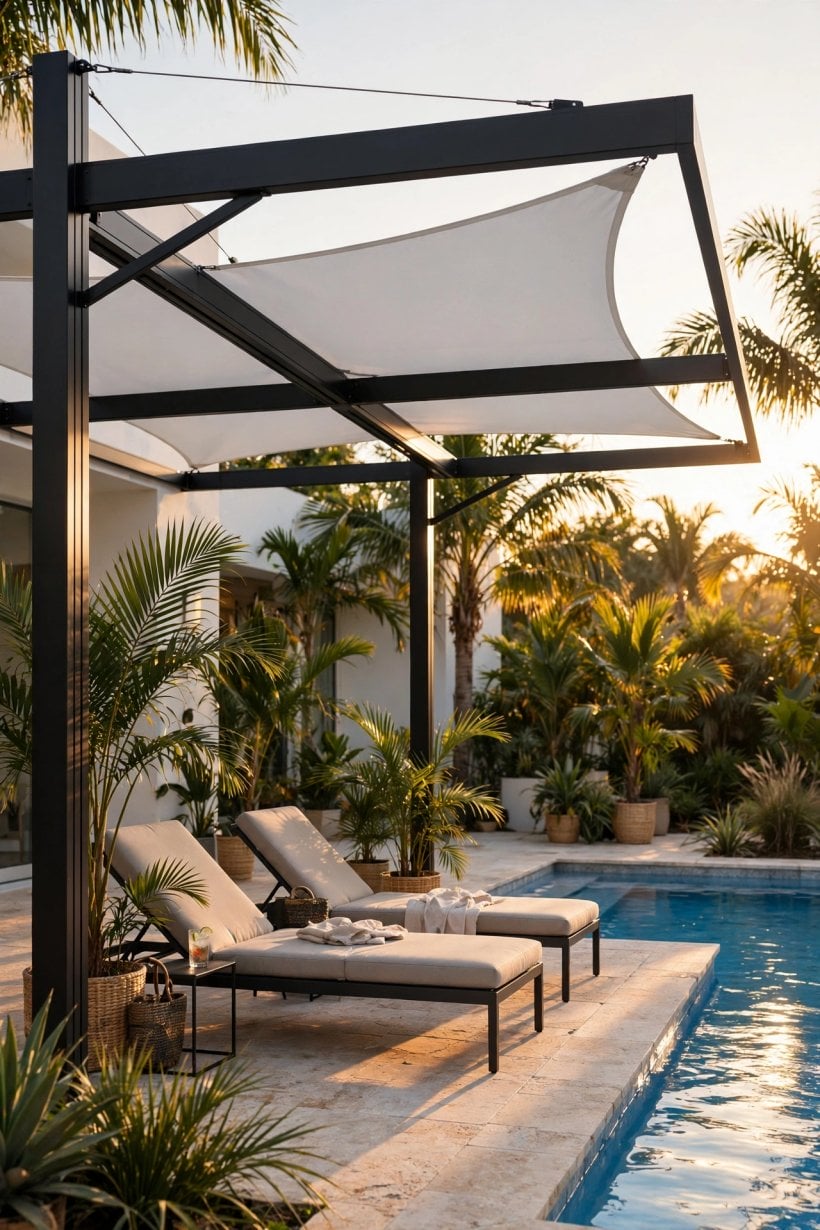
A pergola is exposed joinery — every connection visible, every member working in weather. This section builds it as carpentry: sized posts, real beams, fixings chosen for decades. The timber craft tradition behind these joints is the same one exercised in log projects for outdoor furniture and garden planters.
12. Size Posts for the Span, Then One Size Up
Undersized posts are the pergola’s false economy: they flex, they read as flimsy, and they date the structure. Generous posts give the frame its calm, architectural stance — and carry the vine’s mature weight.
13. Set Posts on Stone or Steel Feet, Never in Soil
Timber buried in earth rots on schedule. Post feet on stone plinths or galvanised shoes lift the end grain out of the wet and turn a ten-year structure into a thirty-year one.
14. Let Beams Overhang the Posts With Cut Ends
The classic pergola silhouette — beams running past the posts, rafters past the beams, ends shaped — is not decoration: the overhangs shed water off the joints and give the frame its rhythm. Plain cut ends read as a kit.
15. Brace the Corners Against Racking
An open frame wants to lean into a parallelogram. Curved or angled knee braces at the post tops lock the geometry and add the structure’s most handsome detail. Unbraced pergolas wobble by their third summer.
16. Choose Timber for Weather, Not the Showroom
Cedar, larch, treated pine, oak: the honest outdoor timbers, each with a maintenance story. Untreated softwood joinery in a damp climate is a countdown, whatever the brochure promises.
17. Consider Steel Where the Span Is Long
Slender steel posts and beams carry spans timber cannot, and suit modern houses whose pergolas should read as lines, not logs. Powder-coating is the maintenance bargain; rust is the alternative aesthetic, chosen, not suffered.
18. Bolt the Joints, Do Not Merely Screw Them
Structural connections — post to beam, beam to rafter — deserve bolts and proper brackets. Screws are for battens and trim. The distinction is invisible in photographs and decisive in storms.
19. Build the Attached Ledger as Carefully as the Frame
Where a pergola meets the house, flashing and fixing decide whether the wall stays dry. The ledger is the one joint that can damage the building; it deserves the build’s best hour.
20. Raise the Height for Vines and Headroom
A mature vine hangs low, and tall guests exist. Build the beam height with both allowances in it — a pergola that must be ducked under in August has failed at its only job in its best month.
21. Keep the Module Regular
Even post spacing and a consistent rafter rhythm are what make a pergola read as architecture rather than scaffolding. Irregular bays look improvised because they usually are.
22. Finish End Grain Like It Matters — It Does
End grain drinks water. Sealed, capped or angled to shed, the beam and rafter ends decide the structure’s lifespan more than any preservative schedule. The oldest pergolas are the ones whose ends were respected.
4. Roofs, Rafters and Climbing Shade
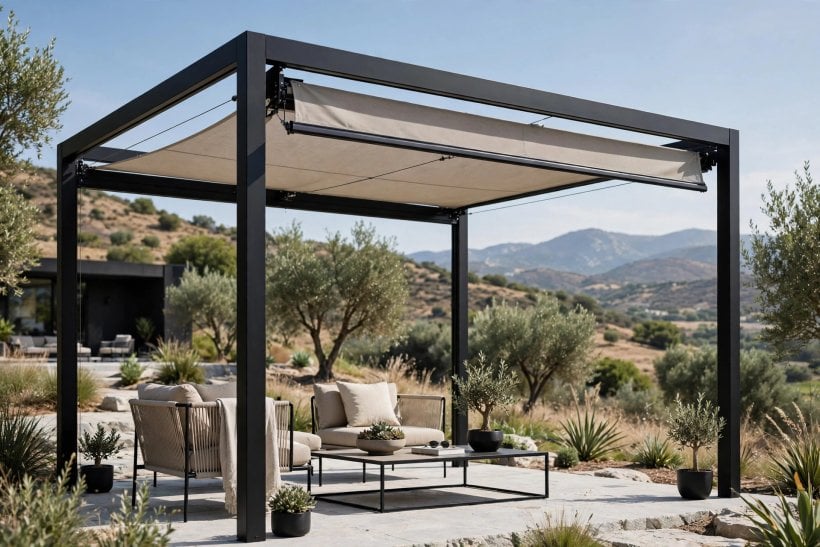
The pergola’s roof is a dial, not a lid: rafter density, batten layers, vine canopies and fabric all set how much sky the room receives. This section turns that dial deliberately, season by season, over the structure that stands on the decks and terraces of deck ideas.
23. Set Rafter Spacing by the Shade Wanted at Noon
Closer rafters, deeper shade stripes. Decide the room’s midday character — dappled or sheltered — and let the spacing follow. Rafters added later never match the original rhythm, so choose generously now.
24. Add Battens Across the Rafters for Real Shade
The second layer — slim battens running across the rafters — is what converts a symbolic pergola into a shaded room. It is also the layer a vine climbs best. Together they are the classic roof.
25. Run Rafters East–West for Afternoon Shade
Orientation steers the stripes: rafters running across the afternoon sun’s path block more of it. Where evening dining is the purpose, the roof’s direction matters as much as its density.
26. Let a Deciduous Vine Be the Living Roof
Grape, wisteria or kiwi overhead gives summer shade and winter sun — the climate control no manufactured roof matches. The price is pruning, paid twice a year, gladly, by anyone who has eaten beneath one.
27. Fit a Retractable Fabric Canopy for Control
Canvas on wires or tracks opens and closes the sky on demand — shade for lunch, stars for dinner. Choose fabric rated for outdoor years and a track that a tired person can actually operate.
28. Use a Shade Sail Where the Budget Is Slim
A tensioned sail under the rafters is the quick, honest shade layer: one season’s decision, easily reversed. It flutters, it drips at the low corner — and it works from the first afternoon.
29. Grow Evergreen Cover Where Winter Privacy Matters
Where the pergola screens a boundary year-round, an evergreen climber keeps the roof in January. The trade is summer density for permanence; boundaries usually vote for permanence.
30. Leave One Bay Open as the Sky Window
A pergola roofed edge to edge becomes a shed with ambitions. Leaving one section open — over the fire bowl, the telescope, the sun-lounger — keeps the structure’s contract with the sky.
31. Angle a Louvred Roof for the Best of Both
Adjustable louvres tilt from open to nearly shut, shedding most rain when closed. They are the pergola roof for households that will use the room daily and refuse to consult the weather first.
32. Train the Vine’s Leader Up One Post Only
A canopy trained from a single trunk reads as a tree, not a tangle. One vine, one post, then out along the beams: the structure of a vine roof should mirror the structure beneath it.
33. Keep Roof Growth Off the House Wall
Where an attached pergola carries climbers, prune a clear margin at the wall and gutter. Vines in gutters and under tiles convert a garden feature into a building defect within two seasons.
5. The Pergola as a Room: Floors and Furniture
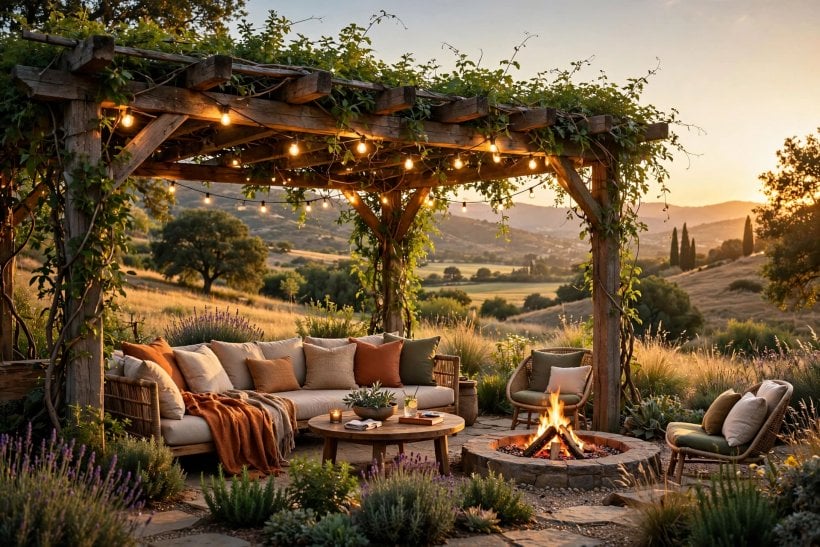
A framed patch of lawn is a structure; a floored, furnished one is a room. This section gives the pergola its floor, its seating and its table manners — the furnishing that converts shade into a place the household schedules its evenings around.
34. Give the Pergola a Floor of Its Own
Decking, stone, gravel or brick beneath the frame declares the room’s boundary and keeps furniture level and feet dry. A pergola standing on grass reads as temporary, however permanent its posts.
35. Size the Floor Beyond the Posts
The drip line and the shade line both travel. A floor that extends a step past the frame catches the moving shade and the rain’s edge — the room stays usable at its borders, where people actually sit.
36. Furnish for One Purpose at a Time
Dining pergola or lounging pergola: the furniture must choose. A table and benches make a dining room outdoors; sofas and a low table make a salon. Both at once makes a furniture store with a roof of vines.
37. Anchor the Dining Table Under the Densest Shade
Within the pergola, microclimates differ by a metre. Seat eaters where the noon shade is deepest and the drip line is kindest; the cook and the lounger can take the sunnier territories.
38. Add an Outdoor Rug to Complete the Fiction
A rug outdoors is pure theatre — and theatre is the point. It tells every guest this patch of garden is a room now, with a floor worth furnishing properly. Choose woven plastic or outdoor fibre, hose it, forgive it.
39. Keep a Bench Built Into the Frame
A bench between two posts can never be misplaced, stolen by another zone or left out in the wrong place. Built-in seating also braces the structure — furniture doing structural work is the pergola tradition.
40. Provide One Surface That Is Not the Table
Drinks, books and the speaker need a landing beside the loungers. A low side table, a wide arm, a plant stand pressed into service: the room’s comfort is measured in reachable surfaces.
41. Hang a Swing Seat From the Beam — if the Beam Allows
A hanging bench is the pergola’s most loved seat, and its most structural demand. Only a beam genuinely sized and bolted for dynamic load may carry it; when in doubt, a standing swing frame keeps the pleasure and drops the risk.
42. Store Cushions Within Carrying Distance
Outdoor cushions live or die by their storage commute. A deck box at the pergola’s edge means cushions appear and vanish in a minute; a shed across the garden means they stay out and weather.
43. Give the Cook a Pergola of Their Own, or a Corner
Where the grill lives under or beside the frame, keep its smoke route out of the vine roof and its heat off the posts. A cooking bay at the pergola’s end, open to the sky, serves both masters.
44. Let the Furniture Palette Match the Garden, Not the House
The pergola room is read against planting, not wallpaper. Timber, rope, canvas and stone sit naturally here; the indoor scheme’s accent colour can visit in cushions without moving in.
6. Planting the Pergola: Vines and Companions
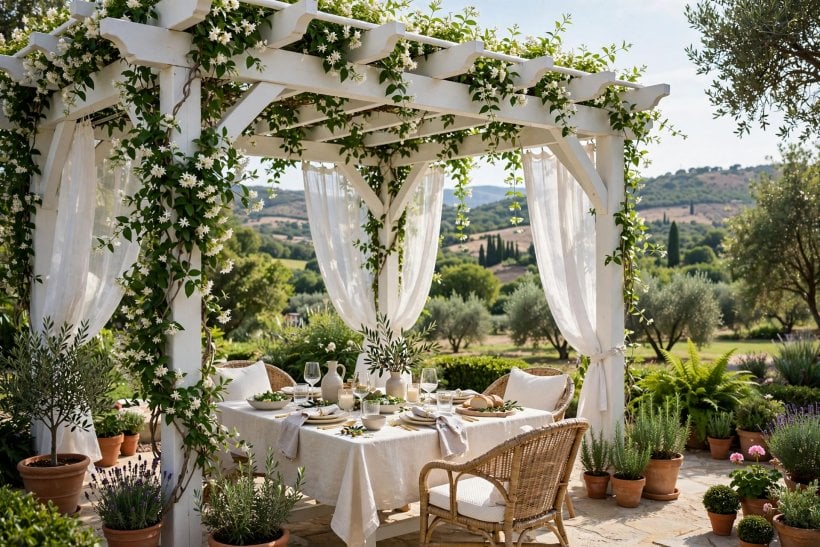
An unplanted pergola is a frame awaiting its meaning. Planting supplies the shade, the scent, the seasonal change and the privacy — and it must be chosen with the honesty that vines outlive decorating fashions and some outlive their planters’ patience. The planting philosophy is shared with the wider scheme at backyard landscaping ideas.
45. Choose the Vine for the Job, Not the Photograph
Grape for edible shade, wisteria for spring drama, jasmine for scent, clematis for a light frame’s mercy. The famous flowering photographs are three weeks of the year; choose for the other forty-nine.
46. Respect the Vine’s Mature Weight
A grown wisteria is a tree lying sideways. Light frames take light climbers — clematis, annual sweet peas, a young grape. Matching vine vigour to structure strength is the pergola’s golden planting rule.
47. Plant at the Post, Train Up a Leg
Each climber starts at a post’s foot, in a proper planting pocket of improved soil — not in the gravel of the floor. A cane or wire up the post gives the young vine its ladder to the light.
48. Feed the Soil Before the Structure Charms You
Vines planted into rubble and subsoil sulk for years. A generous, compost-rich pit at each post is the invisible investment the whole canopy depends on — dig it while the ground is open, not after.
49. Mix a Fast Annual With the Slow Permanent Vine
While the grape or wisteria builds its trunk, sweet peas, runner beans or a morning glory give this summer’s cover. The annuals retire as the permanent canopy closes — succession planting at pergola scale.
50. Keep One Post for Scent Beside the Seating
The climber nearest the chairs should earn its place in the evening air: jasmine, honeysuckle or a climbing rose. Scent is the pergola room’s wallpaper — place it where noses spend the evening.
51. Underplant the Posts With Shade-Tolerant Companions
The post bases sit in the structure’s own shade. Hostas, ferns and hardy geraniums furnish those skirts and hide the young vine’s bare legs during its unglamorous first years.
52. Grow an Edible Pergola Where Appetites Allow
Grapes overhead, kiwi on the beams, beans up the posts: an edible canopy makes the pergola the garden’s most productive room. Harvesting lunch’s shade is a pleasure no photograph prepares you for.
53. Prune on the Calendar, Not on Impulse
Each vine has its pruning season, and the canopy’s tidiness for the whole year is decided in those two sessions. Book them like appointments; a pergola’s discipline is mostly this.
54. Leave the Birds a Share of the Roof
Dense vine canopies become nesting and roosting territory. Build and prune with a margin for the tenants — a pergola humming quietly with sparrows is a sign the garden’s architecture is accepted.
55. Replace a Failing Vine Without Sentiment
A climber that sulks for two seasons in the wrong soil or aspect will not be argued round. Replace it young and the canopy loses a year; keep it and the roof loses a decade.
7. Light, Evenings and the Seasons Round

The pergola’s finest hours are arguably after sunset: the frame silhouetted, the table lit, the garden dark around a room of light. This section furnishes those hours and keeps the structure earning its place in the cold months too, when its role is to be looked at from the warm side of the glass — a picture the sunroom at sunroom ideas shares from indoors.
56. String Festoon Lights Along the Beams
The pergola’s rafters are a lighting rig awaiting bulbs. Festoon strings along the beams give the room its ceiling of stars — warm-white, outdoor-rated, and switched from the house door.
57. Add One Real Light Source for the Table
Festoons decorate; dinner needs light. A pendant over the table — or lanterns with real candlepower — lets faces and food be seen. The combination of glow and task light is the evening formula.
58. Run Power Properly, Once
A buried cable and an outdoor socket at the pergola ends the extension-lead era: lights, speakers, the projector and the heater all plug into the room itself. Dig the trench while the floor is being laid.
59. Heat the Shoulder Seasons With One Source
An overhead electric heater or a fire bowl at the pergola’s edge buys the room April and October. One heat source, honestly placed, extends the structure’s working year by months.
60. Hang Curtains or Screens on the Weather Side
Outdoor curtains on the windward posts tame the breeze and the low sun, and give the room a softness no planting matches. They also make the pergola the garden’s most theatrical room — opened and closed like a stage.
61. Keep a Winter Silhouette Worth Looking At
Prune the canopy tidy, coil the lights or leave them, set one evergreen pot pair at the posts: the winter pergola is a garden picture viewed from indoors, and it should still be composed.
62. Let the Pergola Host the Projector Screen
A white wall, a sheet screen or the sail itself turns the pergola into the summer cinema. The beam carries the screen; the lawn carries the audience; the structure adds movie nights to its duties.
63. Light the Path Back to the House
The room’s usefulness ends if the return trip is a dark obstacle course. Low path lights or the spill from the festoon strings should draw the route home — hospitality includes the way back.
64. Choose Solar Where Wiring Truly Cannot Go
Remote pergolas beyond cable reach can still glow: quality solar festoons and lanterns give a gentle light. Set expectations honestly — solar decorates an evening; it does not illuminate a dinner party.
65. Make the Pergola the Garden’s Celebration Room
Birthdays, harvest suppers, the long table at midsummer: a framed, lit, planted room outdoors hosts occasions better than any lawn. Dress it with the season’s branches and the structure does the rest.
8. Small Gardens, Patios and Tiny-House Pergolas
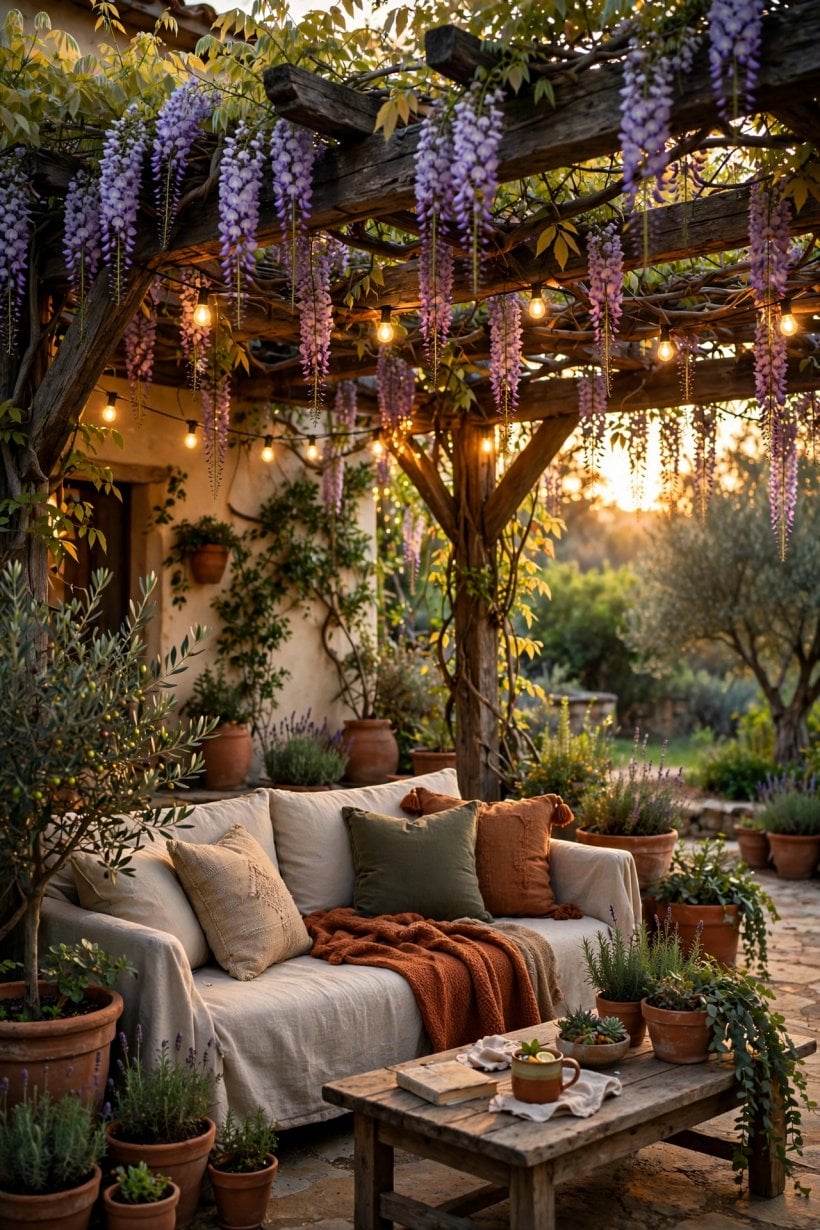
Small gardens need the pergola’s gifts most and fear its bulk — wrongly. Scaled with discipline, a pergola gives a tiny plot a ceiling, a centre and a second room; beside a tiny house it is often the largest room the household owns, as the landscaping at front yard landscaping ideas also argues from the street side.
66. Scale the Posts Down, Keep the Proportions
A small pergola works when its members slim in proportion — the rhythm of posts and rafters kept, the timber lighter. A full-size kit squeezed into a small plot reads as a building site, not a room.
67. Build Into the Corner and Borrow Two Boundaries
A corner pergola uses fence and wall as its other sides: two posts, a roof of rafters, and the garden’s deadest corner becomes its room. Corners are where small gardens hide their spare volume.
68. Attach a Lean-To Pergola to a Tiny House
Against a small house, a lean-to pergola doubles the living floor for the summer — dining, work, guests — under a roof that costs a fraction of an extension and asks no foundation campaign. The roofed-porch version of the same bargain is surveyed at porch ideas.
69. Keep the Canopy Light Where the Plot Is Shaded
Small north gardens cannot spare light. Rafters alone, or a pale fabric sail, give definition without stealing the sun the borders need. In shade, the pergola is a frame, not a roof.
70. Use the Pergola to Screen One Overlooked Side
Where neighbours overlook a small garden, a pergola with a vine side is the polite wall: privacy with leaves instead of boards, and a room gained rather than a view lost.
71. Let It Double as the Wood Store and Bike Shelter’s Roof
In tiny plots every structure must moonlight. A pergola whose end bay shelters logs or cycles — screened by planting — keeps utility invisible and the garden’s one room uncluttered.
72. Choose a Kit Where Skills or Time Are Short
Honest kits, generously sized and properly footed, beat an abandoned bespoke build. Upgrade the fixings and feet from the kit’s minimums and the structure will outlast its warranty by decades.
73. Paint a Small Pergola to Match the Fences
One colour across pergola, fences and shed unifies a small plot into a single designed space. The structure stops competing with its boundaries and the garden reads larger for the calm.
74. Keep Furniture Folding in the Small Pergola
The small outdoor room must host dining on Saturday and sunbathing on Sunday. Folding chairs and a gate-leg table give it both lives without a storage crisis between them.
75. Treat the Tiny Pergola as the House’s Summer Hall
Beside a tiny house, the pergola is not a garden feature; it is the entrance hall, dining room and veranda in one frame. Furnish it with that rank — the best outdoor pieces the household owns belong here.
9. Checks and Mistakes: Before the First Post Hole Is Dug
The pergola’s classic mistakes are all committed before the build: sited for the view instead of the sun’s arc; posts one size too shy; a vine chosen from a photograph that will spend a decade trying to demolish a frame built for a clematis; shade promised by rafters alone that arrive as stripes at the wrong hour. Run the checks with a chair and a whole day’s patience — sit the site at breakfast, lunch and dusk; check the wind, the drip line, the neighbours and the view from the kitchen window. A pergola is a decade-scale decision wearing a weekend’s costume, and an hour of sitting is the cheapest diligence in the garden.
10. Costs and Pulling It Together
Pergola money divides into timber, fixings and the floor — with labour the swing factor between a kit weekend and a bespoke frame. Spend on the bones first: posts, feet and bolts are where decades are bought. The canopy can begin as a sail and graduate to vines. Pull it together in the order built: site by the sun, frame with honest joinery, floor it, then let planting and light finish what carpentry started. Few structures return their cost so visibly.
Final Considerations
A pergola asks the garden a question: shall we stay out a little longer? Built in the right place, with structure that respects weather and planting that respects time, it answers itself every fine evening for years. It is the least a house can build and the most a garden can gain — four posts, a lattice of sky, and a room that exists only because somebody decided the outdoors deserved architecture too.

0 Comments