
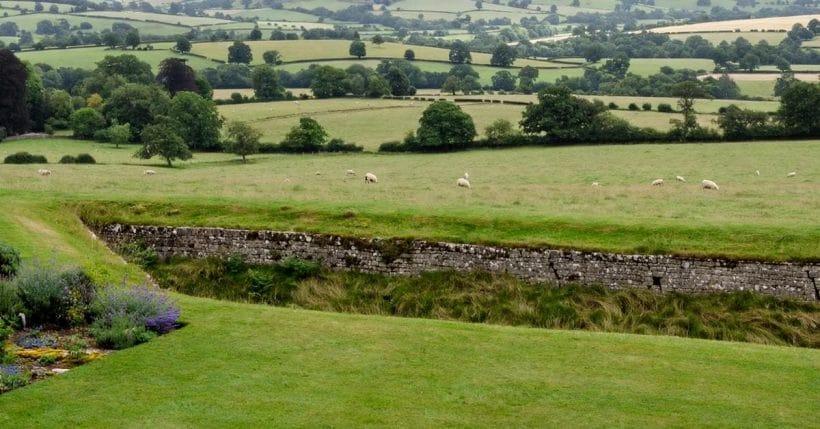
A ha-ha is one of the cleverest tricks in garden design, and also one of the easiest to miss. Stand in a fine garden and look out over the lawn, and the grass seems to run on forever, melting into parkland, fields or woodland without a fence, wall or hedge to stop the eye. Walk to the edge of that lawn, though, and the ground suddenly drops away. A ditch opens at your feet, and on its far side stands a wall. You have found the ha-ha: a boundary that keeps animals out while leaving the view completely open.
The name itself is part of the charm. It is often explained as the sound of surprise made by a visitor who strolls across a lawn, expecting open ground, and suddenly meets the hidden ditch. Whether or not that story is the true origin, it captures exactly how a ha-ha works. From the house, it is invisible. From the ditch, it is unmistakable. That double character, hidden from one side and obvious from the other, is the whole point of the feature.
This guide explains what a ha-ha is, how its parts fit together, why garden makers valued it, and what it means for a garden today. It is a feature to understand and to look for when you visit great gardens, not a project to improvise. A ha-ha changes ground levels and holds back earth, so any new one is work for qualified landscape professionals, with local rules checked first. What follows will help you recognise one, appreciate one, and judge whether the idea suits a garden at all.
1. What a Ha-Ha Actually Is
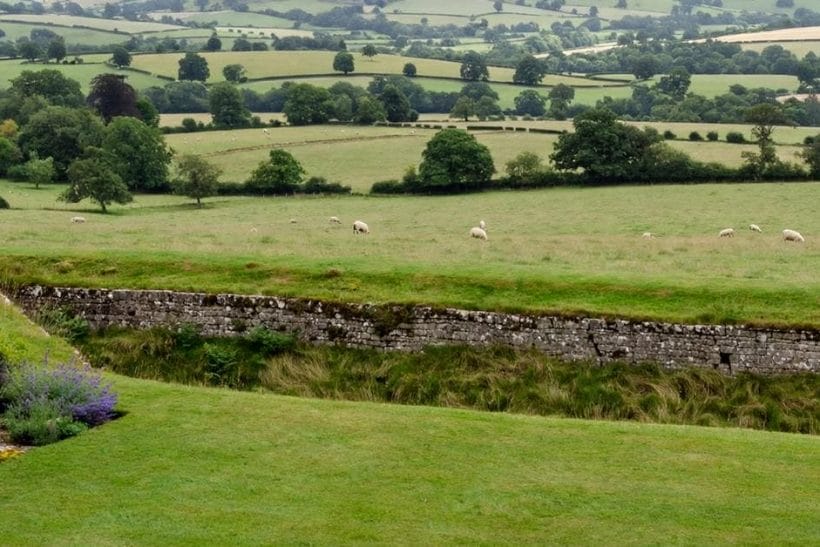
A ha-ha is a sunken fence. Instead of a barrier that rises above the ground, it is a barrier that drops below it. A ditch is dug along the boundary of a garden, and one side of that ditch is built up as a retaining wall. From the garden side, a gentle grass slope runs down into the ditch. From the far side, the wall rises to meet the level of the garden, so an animal standing in the field beyond meets a wall it cannot climb, while a person standing in the garden sees nothing but open grass and the landscape beyond.
The trick depends entirely on levels. The top of the wall sits at, or just below, the level of the garden lawn. That is why the wall disappears when you look out from the house: your line of sight passes straight over it. The ditch itself is hidden for the same reason. You cannot see down into a dip from a distance when the near edge is at your own eye level and the ground falls away beyond it. Only when you walk up to the edge does the depth reveal itself, and that sudden reveal is what gives the feature its name and its delight.
It helps to think of a ha-ha as a boundary turned on its side. An ordinary fence or wall says its business loudly, drawing a line across the landscape and cutting the garden off from everything around it. A ha-ha does the same job quietly. It marks where the garden ends and the wider land begins, and it enforces that line against wandering animals, without ever interrupting the view. The garden gains the whole landscape as its backdrop, and the landscape gains a garden that does not fence itself away from it.
2. The Ditch, the Wall and the Slope
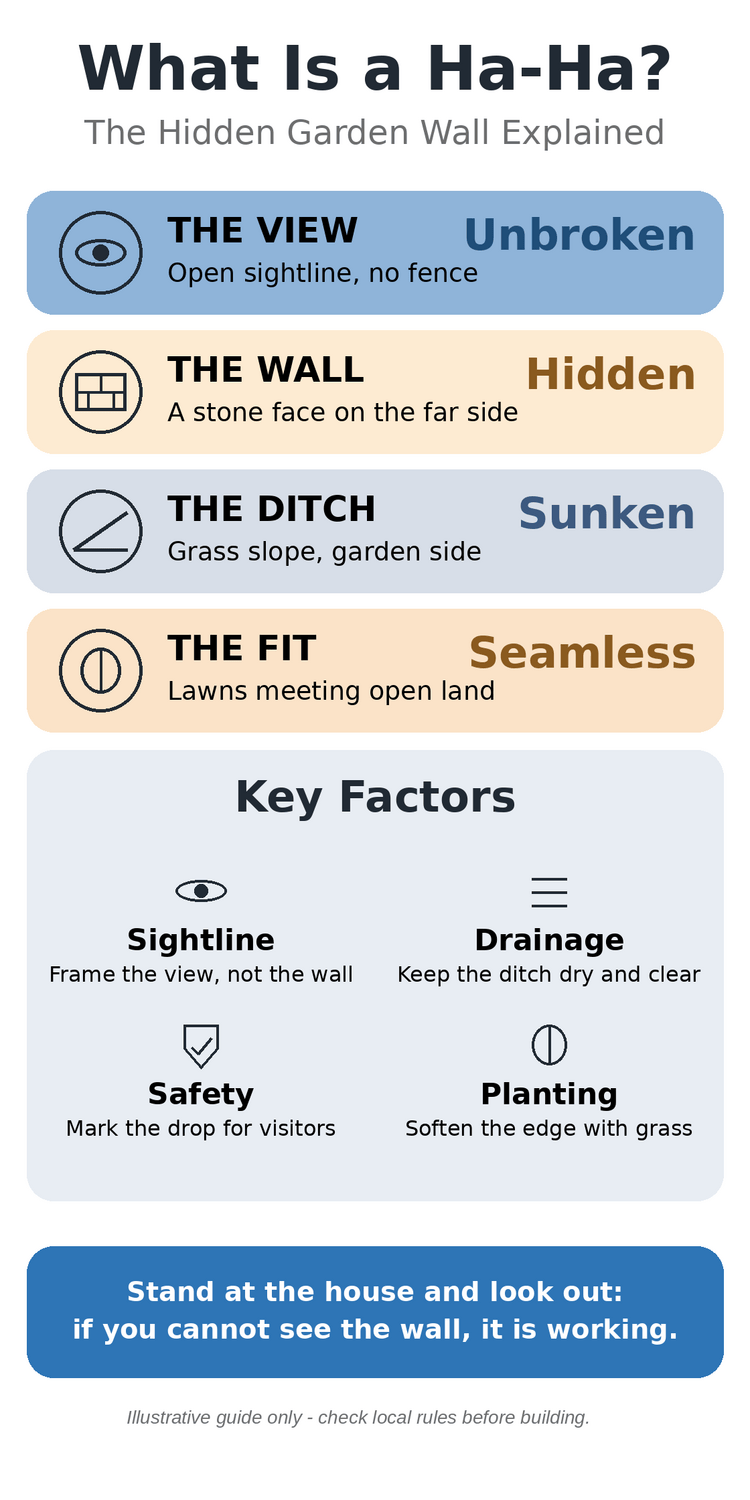
Every ha-ha has the same three parts, and each one matters. The first is the ditch itself, a trench cut along the boundary line. The second is the retaining wall, built on the far side of the ditch, which holds back the higher ground of the garden and presents a steep face to anything approaching from outside. The third is the slope on the garden side, a bank of grass that falls gently from the lawn down to the bottom of the ditch. Together they form a barrier that is easy to cross in one direction for the eye, and hard to cross in the other direction for anything on four legs.
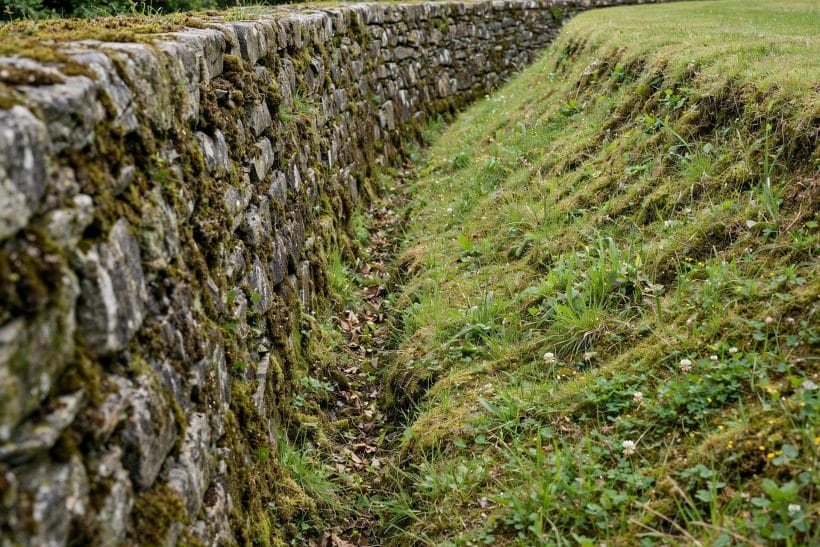
The retaining wall is usually built of stone, and in old examples the stonework can be beautiful in its own right, with weathered blocks, moss and small plants finding footholds in the joints. But the wall is not there to be admired. It is there to be overlooked, in the literal sense. Its top edge is finished to sit level with the lawn, sometimes capped with turf or stone flush with the grass, so that nothing breaks the line of the lawn as it runs toward the horizon. The wall does its work from below, unseen, and that invisibility is a design achievement rather than an accident.
The slope matters just as much. A gentle grass bank on the garden side lets the lawn flow down into the ditch without a harsh edge, and it lets rain and mowing follow the shape of the ground. From the garden, the slope reads as a natural dip in the land rather than a construction. From the ditch, the combination of slope and wall makes a trap that grazing animals cannot climb out of, since the wall is too steep on their side and the slope offers no footing back up. The whole feature is a study in using the ground itself as the fence.
3. Why the View Stays Open
The open view is the reason ha-has exist. Before the sunken fence, a garden that kept animals out needed a wall or fence tall enough to stop them, and that barrier stood between the house and the landscape. The garden became a walled enclosure, and the wider countryside, however beautiful, was something glimpsed over a wall rather than enjoyed as part of the garden. The ha-ha solved that problem by moving the barrier underground, in effect, and letting the garden borrow the landscape beyond its own boundary.
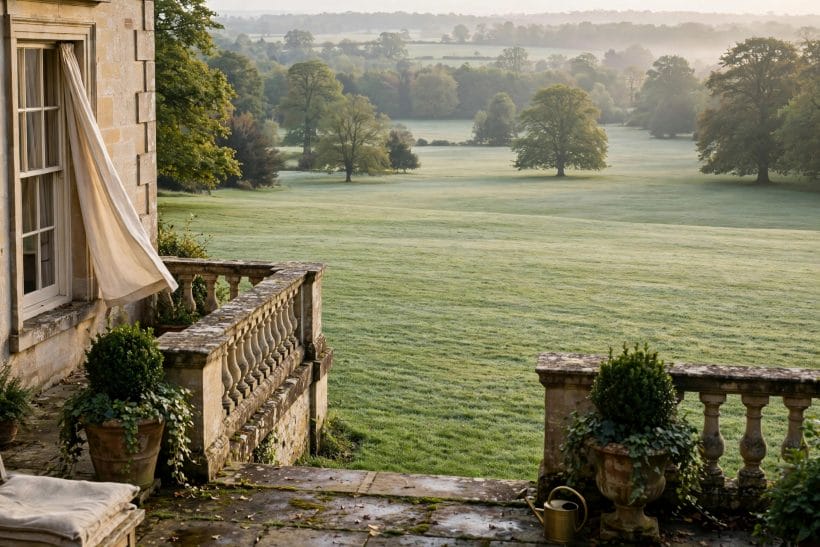
This borrowing changes how a garden feels. A lawn that ends at a ha-ha seems larger than it is, because the eye travels past the boundary without noticing it and keeps going across fields, water or woodland. The garden and the landscape read as a single composition, with the near lawn in the foreground and the distant land as the background. Designers of great gardens cared deeply about this effect, arranging lawns, trees and water so that the view from the principal rooms unfolded like a picture, with the ha-ha as the invisible frame that kept the picture intact.
The effect also changes with the seasons and the light. Morning mist lying in a valley beyond a ha-ha, evening sun across open pasture, or a line of trees catching the last light all become part of the garden’s daily display, because nothing stands in the way. A fence would have framed all of that behind bars. A hedge would have hidden the lower half of it. The ha-ha lets the garden take the landscape whole, and that generosity is why the feature still impresses visitors centuries after it first appeared in garden making.
4. Keeping Animals Out Without a Fence
A ha-ha is a working boundary before it is a visual trick. The great gardens where ha-has first flourished stood in farming country, surrounded by grazing land. Sheep, cattle and deer wandered freely, and without a barrier they would have wandered straight onto the lawns and into the flower beds, eating the planting and churning the turf. The ha-ha kept them out as firmly as any wall, while preserving the illusion that the garden and the parkland were one continuous sweep of grass.
The mechanism is simple and unforgiving. An animal approaching from the field meets the top of the retaining wall and looks down into a ditch it cannot descend safely or climb out of. The wall is vertical on its side, and the ditch floor is far enough below the field level that the animal cannot step over it. From the garden side, the same ditch is a grassy hollow that a person can walk down into and out of with care, though the drop still deserves respect. The barrier works because it is asymmetrical: gentle on the garden side, sheer on the field side.
That asymmetry also explains why a ha-ha is not a fence for every situation. It stops grazing animals, but it does not stop people, dogs or smaller creatures in the way a tall fence or a gate might, and it needs the right ground to work at all. Where the land is flat and the garden meets a road or a neighbour’s plot, a wall, hedge or fence is usually the honest answer. The ha-ha belongs where a garden meets open land and where the view is worth preserving, which is exactly the setting it was made for.
5. Where Ha-Has Came From
The ha-ha belongs to the age of the great landscape garden, when garden makers turned away from walled, formal layouts and began shaping grounds that imitated open nature. Lawns swept up to the house, trees were grouped like woodland, water wound through the grounds like a river, and the whole estate was composed as a landscape rather than a pattern. In that style, a visible fence would have been a contradiction, a reminder of enclosure in a garden that wanted to feel boundless. The sunken fence was the answer, and it spread through the finest gardens of the period as the standard way to divide garden from parkland.
Garden writers of the time praised the device for exactly this reason. It allowed a garden to be both protected and open, both a private pleasure ground and a window onto the wider estate. Visitors remarked on the surprise of it, strolling over what seemed to be uninterrupted lawn and discovering the ditch only at the last moment. The feature became a talking point, a piece of garden wit that showed the owner’s taste and the designer’s ingenuity at the same time. To build a ha-ha was to announce that your garden understood the landscape and refused to shut it out.
Over time the ha-ha became a mark of the landscape style itself, so closely tied to it that finding one today is a clue to a garden’s history. A surviving ha-ha suggests grounds laid out in the landscape manner, with lawns, parkland and borrowed views as the core of the design. Even where the house has changed or the planting has been reworked, the ditch and wall often remain, because moving earth on that scale is not easily undone. They are among the most durable traces of how a garden was once imagined, written into the ground itself.
6. Ha-Has on Slopes and Level Ground
Ha-has suit sloping ground especially well, because a slope already gives the designer a change of level to work with. Where a lawn falls away toward a valley, a ditch cut across the slope and a wall on its lower side can sit naturally in the land, with the garden above and the open country below. The eye reads the whole fall of ground as one landscape, and the wall hides in the fold of the slope. Many of the finest ha-has are found on just such ground, where the feature and the hillside work together and the boundary is all but impossible to spot from the house.
On level ground the ha-ha is still possible, but it takes more earth moving, since the whole ditch and wall must be created from flat land rather than borrowed from a slope. The result can be just as effective, with a lawn that appears to run straight into the fields beyond, but the construction is a bigger undertaking and the drainage of the ditch needs careful thought, since water will collect in any hollow. That is one reason why professional advice matters: a ha-ha is earthwork, and earthwork done badly can hold water, slip, or settle unevenly over time.
Either way, the setting decides whether a ha-ha makes sense. It needs open land beyond the boundary to borrow as a view, whether that is parkland, farmland, woodland edge or water. Without something worth looking at, the trick has no payoff, and a plain fence or hedge would serve just as well for less trouble. The ha-ha is a feature for gardens with a view to protect, and its success can be judged by a single test: stand at the house, look out, and see whether the garden seems to end at the horizon rather than at a fence. If it does, the ha-ha has done its job. Gardeners planning new planting on sloping ground can find related ideas in our backyard landscaping ideas, where terraces, steps and planting hold a slope in a similar spirit.
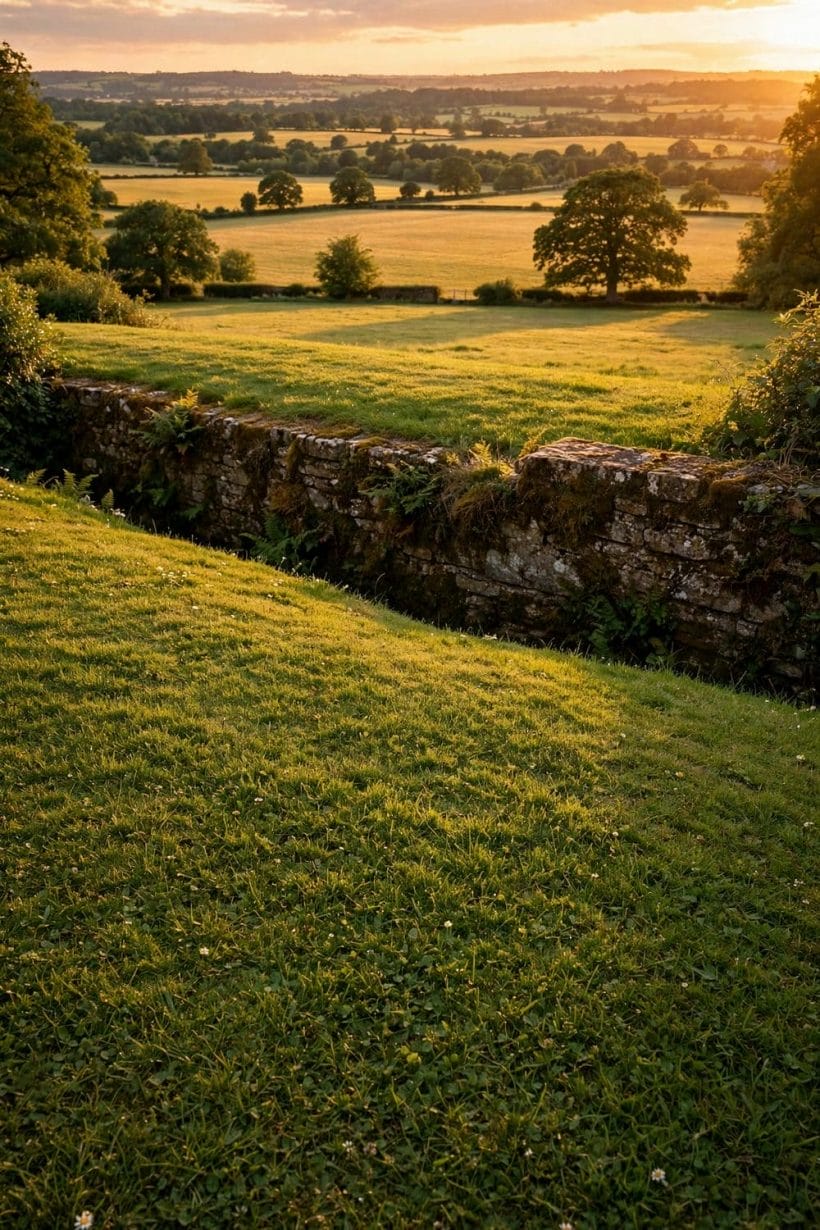
7. The Modern Garden Ha-Ha
Ha-has are not only a historic curiosity. Modern gardens use the same idea wherever a lawn meets open land and the owner wants the view without a fence. Contemporary versions often use crisp, clean stonework or rendered block rather than weathered rubble, and the ditch may be shallower and neater, with the grass slope mown as part of the lawn. The principle is unchanged: a sunken barrier, invisible from the house, keeping the boundary open to the eye while closed to grazing animals or wandering stock.
The modern ha-ha also appears in a smaller, simpler form: the sunken edge. Where a garden lawn meets a wildflower meadow, a woodland edge or a lower terrace, a short retaining wall with a grass slope above it can create the same borrowed-view effect on a domestic scale. The drop is modest, the wall is a garden feature in its own right, and the lawn seems to flow into the planting beyond. It is the same idea, scaled to a garden that does not have a deer park attached, and it suits the naturalistic planting that many gardeners favour today, where lawn, meadow and trees are meant to blend rather than sit in separate compartments.
There are limits to the modern version, just as there were to the historic one. A ha-ha needs space, since the ditch and slope take up ground that a fence would not, and it needs a reason, since the effect only pays off where there is a view to borrow. Small town gardens, where the boundary is a neighbour’s fence a few paces away, gain nothing from a sunken ditch. But where a garden opens onto fields, a valley or a stretch of open sky, the ha-ha remains one of the most elegant answers available, and one of the few historic devices that still looks completely at home in a contemporary garden. For the outdoor rooms that frame such views, see our tiny house patio ideas and, for the planting that softens a garden edge, our container garden ideas.
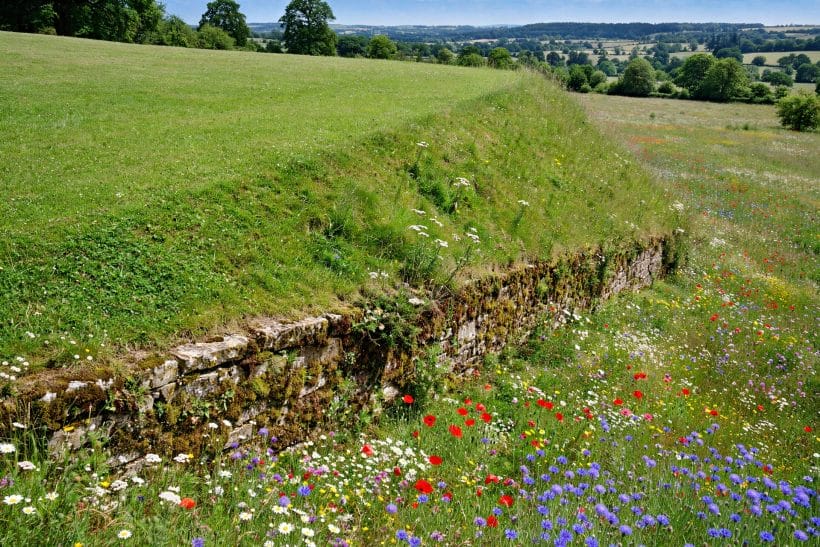
8. What to Look For When You Visit One
Visiting a garden with a ha-ha is a pleasure in itself, and knowing what to look for makes it better. Start at the house, preferably from the principal rooms or the terrace, and look out over the lawn. Notice how far your eye travels before it meets anything that reads as a boundary. Then walk out onto the lawn toward the view, and watch for the moment the ground changes underfoot, the grass begins to fall away, and the ditch reveals itself. That walk, from illusion to discovery, is the experience the feature was designed to give, and it is worth taking slowly.
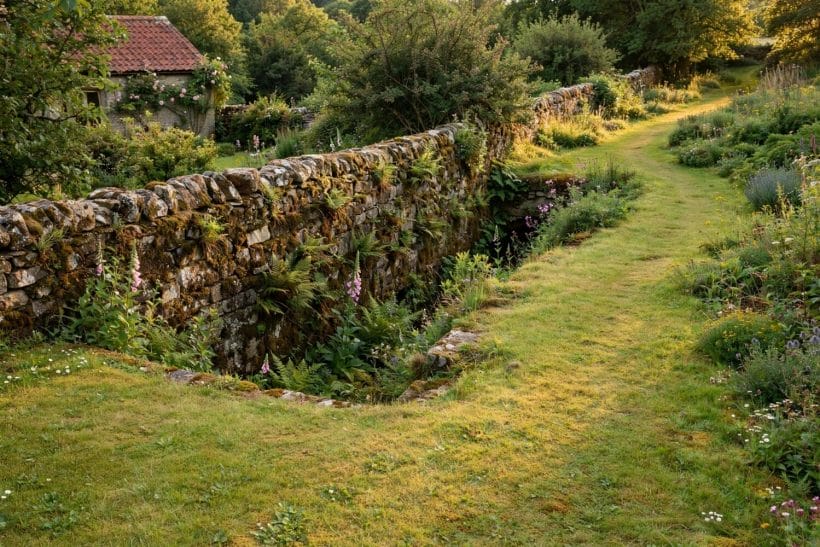
Once you are at the edge, look at the construction. The stonework of the retaining wall, the shape of the ditch, the way the grass slope is kept, and the line the ha-ha takes across the ground all tell you something about the garden’s age and care. Some ha-has run dead straight, marking a formal boundary. Others curve with the land, following a contour or sweeping around a viewpoint. Some are kept immaculately, with crisp turf and clean stone. Others have softened with time, with ferns, moss and small plants colonising the wall and the ditch floor, which suits the feature well, since a ha-ha looks best when it reads as part of the land rather than a piece of engineering.
Also notice what lies beyond the ha-ha. The view it protects is the point of the whole device, so take in the fields, trees, water or hills that the garden has borrowed, and consider how different the scene would look with a fence across the middle of it. That comparison is the quickest way to understand why garden makers went to such trouble for a ditch. A garden that lends its eye to the landscape is a generous garden, and the ha-ha is the device that makes that generosity possible. Terraces and stone surfaces near such viewpoints pair naturally with the ideas in our bluestone patio ideas, a scheduled guide to a classic garden stone.
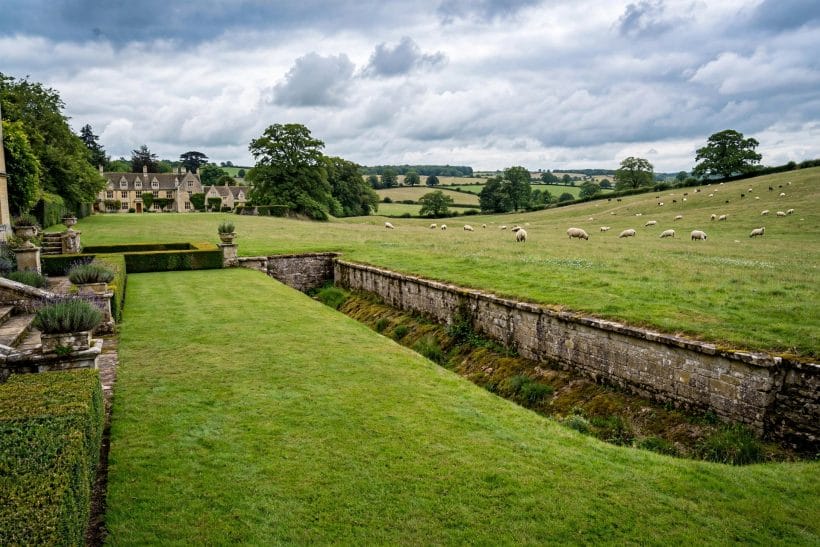
9. Living With a Ha-Ha: Care and Caution
A ha-ha in your own garden, or one you are considering, brings care duties along with its beauty. The ditch needs to stay clear so that water does not collect in it, the grass slope needs mowing as part of the lawn, and the retaining wall needs checking for loose stone, slipped coping or plants whose roots are prising the joints apart. None of this is exotic work, but it is regular work, and a neglected ha-ha soon shows it, with a ditch full of debris, a slope gone rough, and a wall that looks less like a garden feature and more like a ruin.
Safety deserves equal attention. A ha-ha is a sudden drop, and that is precisely its charm, but it is also a hazard for anyone who does not know it is there. Children, older visitors, guests arriving after dark, and anyone walking the lawn with their eyes on the view rather than their feet can all be caught out by the edge. Marking the line of the ditch with planting, a change of mowing pattern, or a discreet marker near the edge helps visitors read the ground before they reach it, and keeping the edge visible from the main paths matters more than preserving the surprise. The illusion should delight, never endanger.
Finally, remember that a ha-ha is structure as well as scenery. Its wall holds back earth, its ditch manages water, and its levels affect everything around it. Repairs, alterations and any new ha-ha belong to qualified landscape professionals, with drainage, stability and local rules considered from the start, not discovered halfway through. A well-built ha-ha can last for generations with steady care, as the surviving historic examples prove. A badly built one can slump, flood or fail, and spoil the very view it was meant to protect. The feature rewards patience and proper work, and it punishes shortcuts.
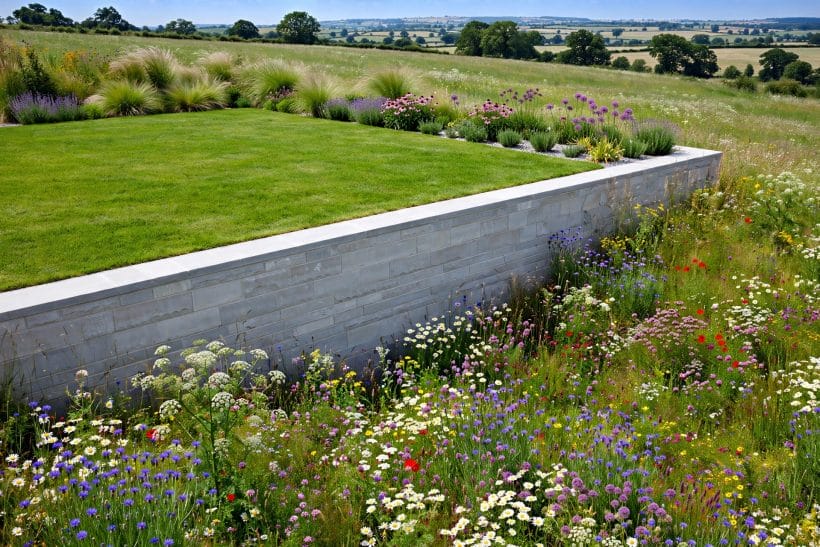
10. Ha-Has and Other Garden Boundaries
It is worth setting the ha-ha beside the other ways of marking a garden’s edge, because each one suits a different situation. A fence is the most direct boundary: cheap to erect, easy to move, and effective at keeping people and animals out, but it draws a hard line across the view and needs regular repair. A hedge is softer and greener, offering shelter for wildlife and a living screen, but it takes time to establish, needs cutting, and still blocks the lower half of any view. A wall is permanent and handsome, and it suits formal gardens and town plots, but it is the most visible of all, and it turns a garden into a room with the landscape shut out.
The ha-ha sits apart from all three because it trades visibility for openness. It is the only common boundary that disappears from the house altogether, and the only one that makes the garden feel larger rather than smaller. Its price is space, earthwork and care, and its limitation is that it only works where the land beyond is worth borrowing. Where those conditions hold, it beats every other boundary on the one test that matters most to a garden with a view: what you see when you stand at the house and look out.
That is why the ha-ha has survived as an idea long after the gardens that invented it. Fashions in planting come and go, but the desire for an open view does not, and the sunken fence remains the most complete answer to it. Whether you meet one in a great historic garden, spot one on a country walk, or consider one for a garden of your own, it is worth pausing at the edge, looking down into the ditch, and then looking out again at the landscape it has set free. Other sunken garden features work on a related principle, including the ideas in our sunken spa patio ideas, a scheduled guide, and the broader outdoor-room planning in our tiny backyard ideas and rock landscaping ideas.
Final Considerations
A ha-ha is a ditch, a wall and a slope, arranged so that a garden can keep animals out without shutting out the view. That is the whole definition, and it is enough: everything else about the feature, from its surprise to its survival, follows from that simple arrangement of levels. It is a piece of landscape wit that has lasted because it solves a real problem beautifully, and it still has something to teach any gardener who values an open outlook.
If you visit a garden with a ha-ha, walk the lawn, find the edge, and enjoy the reveal. If you own one, keep the ditch clear, the slope mown, the wall sound, and the edge readable for visitors. If you are dreaming of one, weigh the view it would protect against the space, care and professional work it requires, and check local rules before anything is dug. Done well, a ha-ha does not just mark where a garden ends. It decides where the garden’s world begins, and it lets that world stretch as far as the eye can see.
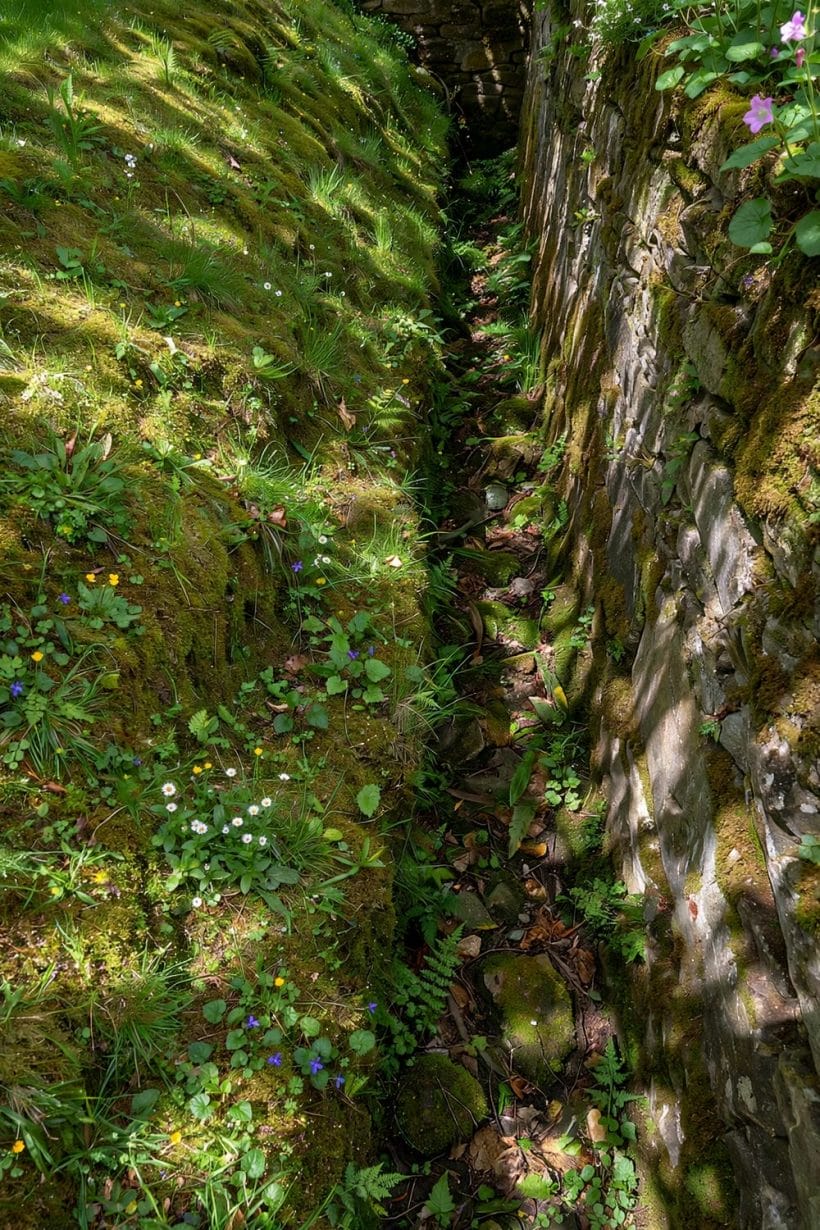
For a second portrait view of the ditch itself, the image above shows the shaded stonework and planting that make an old ha-ha feel like part of the land. Keep it in mind when you look at any garden boundary: the best ones do their work without demanding attention, and the ha-ha does that work better than any fence ever could.


0 Comments