

The coastal living room is not a theme. It is what happens when a room takes its orders from the sea: light first, air always, nothing precious, nothing that cannot be brushed down, shaken out or hosed off after a day outside. Done badly it is a souvenir shop — shells glued to lampshades. Done well it is simply the calmest room in the house.
These 75 coastal living room ideas build that calm from honest parts: a pale palette with real depth, low loose furniture, texture you can feel from the doorway, and decor edited hard enough that the room breathes. The full map of the room type lives in living room ideas; this post owns the coastal lane of it, and only that lane.
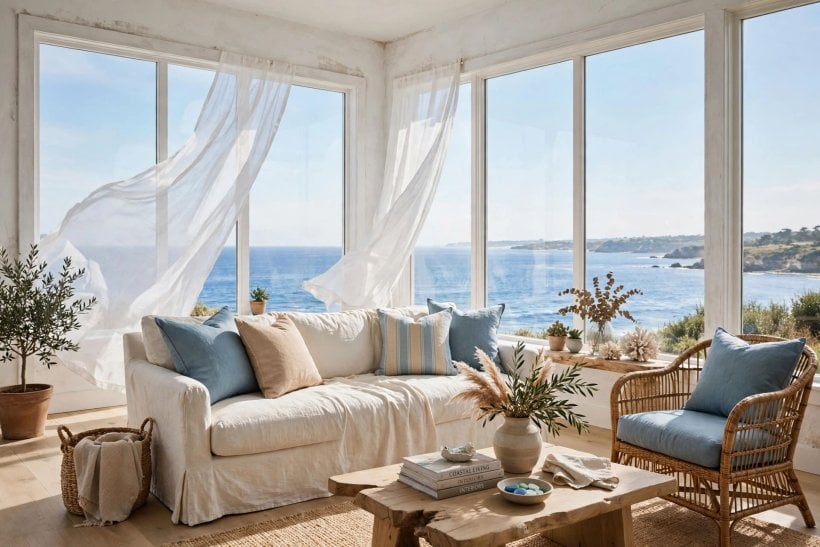
1. Coastal Living Room Ideas at a Glance
The central entity is the coastal living room: a sitting room organised around sea light, moving air and durable natural materials, whose attributes are a light-reflecting palette, low and loose furniture, layered natural texture, barefoot-friendly floors and an edited, souvenir-free hand with decoration. It is judged by one test above all: does the room feel cooler, calmer and easier than the day outside it?
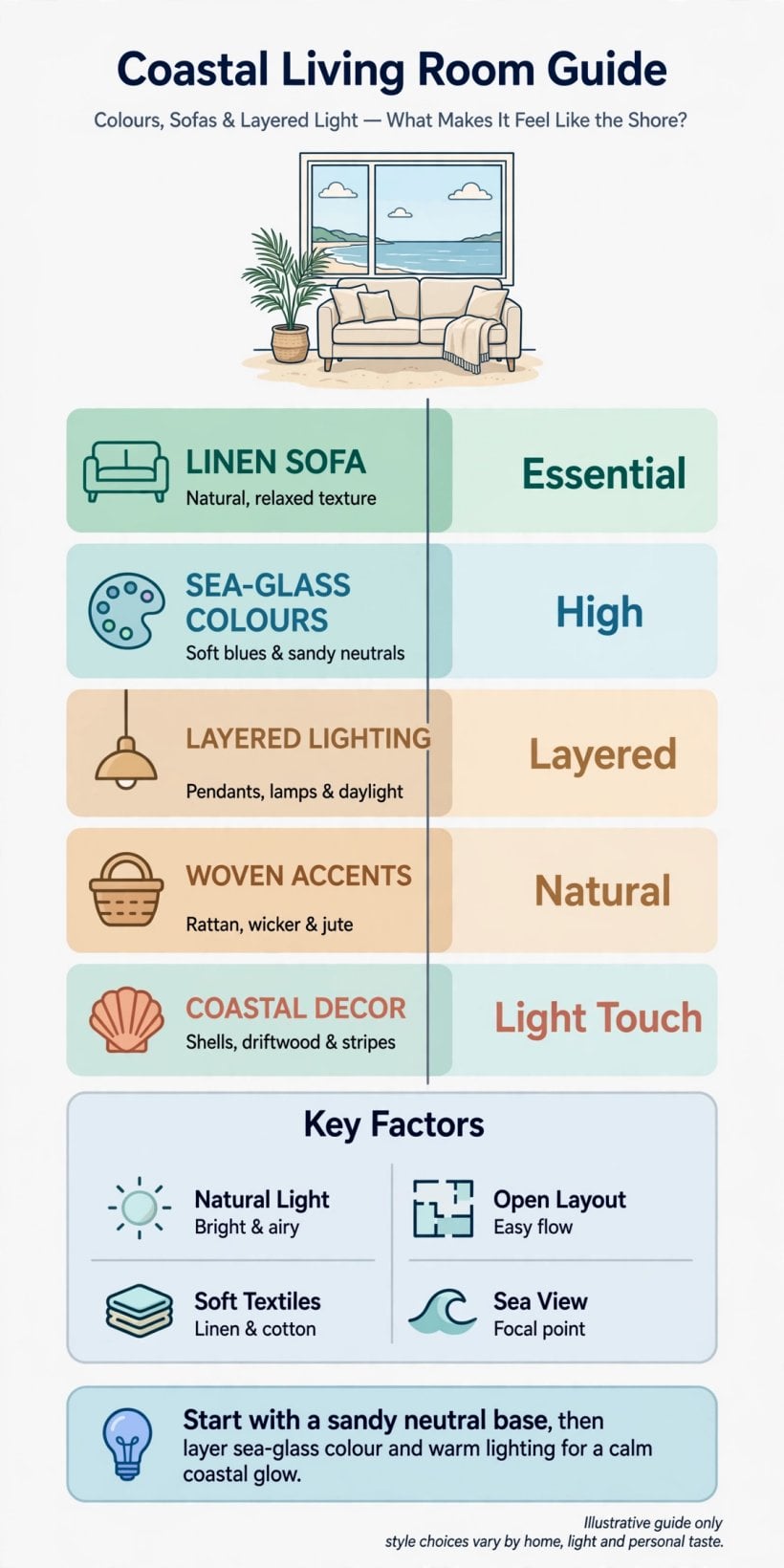
| Question | Short answer |
|---|---|
| What makes a room coastal rather than just pale? | Texture and ease: natural fibres, weathered finishes and furniture you can put wet feet near without anxiety. |
| Do I need a sea view? | No. The style copies the coast’s light and materials, not its postcode; it works in any bright room. |
| What is the biggest mistake? | Literal seaside decoration — anchors, rope and shell motifs — instead of the coast’s actual qualities. |
| Where does the money matter most? | The sofa fabric and the rug: the two largest surfaces, and the two that take the wear. |
2. Reading the Room: Light Before Furniture
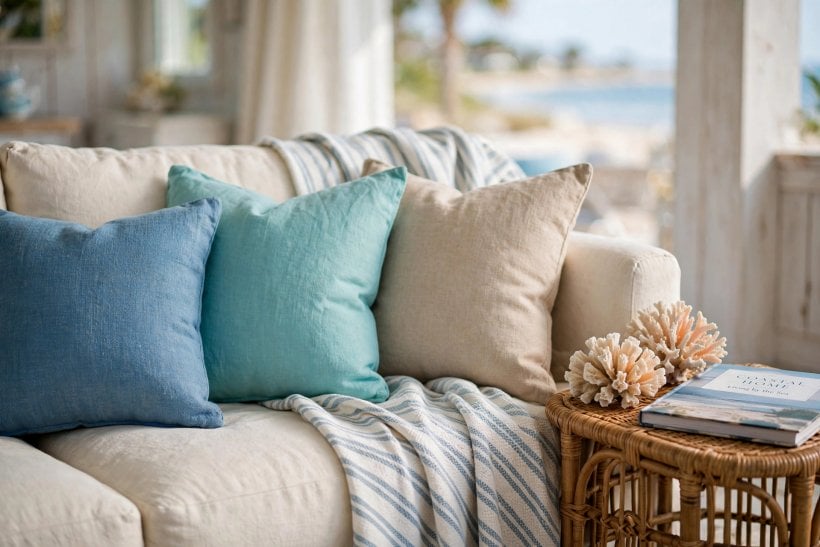
Coastal rooms are designed by their light, not their shopping list. Spend a day watching how sun moves through the space before you choose a single colour, because the palette that glows in a south-facing room turns grey and tired in a north-facing one.
1. Watch the Light for One Full Day
Note where the sun lands at breakfast, midday and evening. The bright wall can carry the palest colour; the wall that never sees sun needs warmth in its white or it will read as cold storage, not coast.
2. Put the Main Seating in the Light’s Path
The coast is a place you sit facing brightness. Arrange the sofa and best chair toward the windows or the garden rather than turning the room’s back on its best asset.
3. Keep Window Dressings Weightless
Sheer linen, simple blinds or nothing at all. Heavy curtains belong to winter rooms; a coastal room treats the window as a picture of weather and lets it stay open.
4. Choose the Room’s One View and Serve It
Every room has a best direction — garden, street trees, sky. Aim the seating, the rug and the art at it, and let everything else be quiet.
5. Let Air Move Through on Purpose
Two openings that create a through-draught are worth more than any accessory. If the room cannot open at both ends, a ceiling fan in a pale, plain finish earns its place honestly.
6. Test Colours at Dusk as Well as Noon
Coastal whites shift dramatically by evening. Paint large boards, live with them through a full day, and choose the one that stays calm under lamplight.
7. Count the Hard Surfaces and Soften Half
Tile, glass and painted wood bounce light beautifully and sound terribly. For every hard surface, plan a soft one — cushion, rug, throw — until the room sounds as calm as it looks.
8. Give the Room a Horizon Line
Keep tall furniture low and long where you can. A room whose furniture mostly sits below window-sill height feels open in the same way a beach does.
9. Respect the Architecture You Have
Beams, boards and old plaster are coastal assets already. Paint them pale and let them show rather than covering character with themed decoration.
10. Plan the Evening as Carefully as the Day
The style fails at night in many homes: bright by day, harsh by dark. Low lamps with warm bulbs and natural shades keep the room’s promise after sunset.
11. Decide the Room’s Temperature of White
Warm white for north light and old houses; cooler white for fierce sun. Write the decision down — every later purchase, from cushions to paint, should obey it.
3. The Palette: White, Sand and Sea Colour
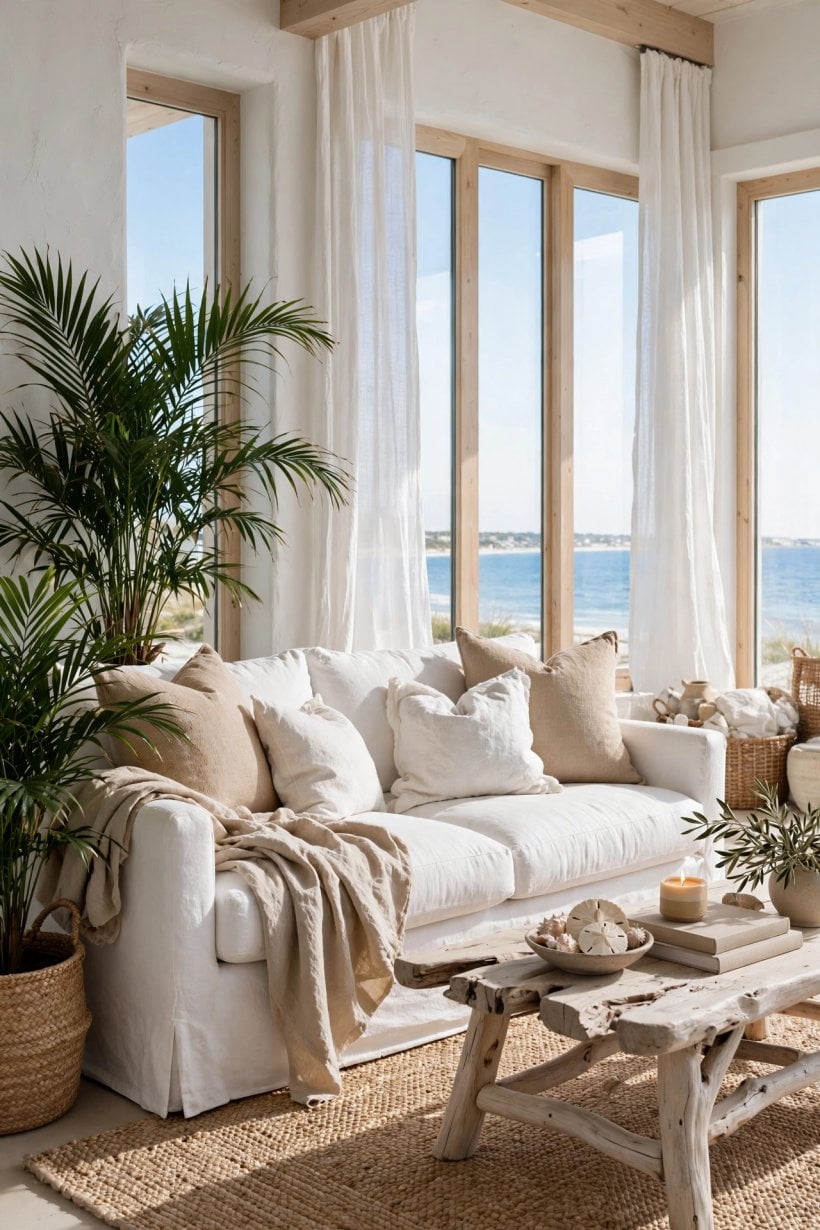
The palette is a gradient, not a trio: white at the top where the light is, sand through the middle where people live, and sea colour low and sparing, in the things that can be changed. Build it in that order and the room almost cannot go wrong. For the wider paint questions behind the palette, living room paint in a tiny house covers the same discipline at small scale.
12. Start With White Walls That Have a Pulse
Pure brilliant white is a hospital colour. Choose a white with warmth or a breath of grey-green in it, and the room gains the softness of canvas rather than the glare of a clinic.
13. Layer Sand Tones Instead of Matching Them
Three or four near-beiges — in rug, cushions, wood and weave — look richer than one beige repeated exactly. Nature never matches; the room should not either.
14. Use Sea Blue as an Accent, Not a Flood
A chair, a stripe, a painted cabinet back. Blue everywhere turns calm into cold; blue placed sparingly reads as distance and depth, the way it does outdoors.
15. Add One Deep Note for Contrast
A single dark element — navy cushion, ebonised side table, deep green plant — stops the pale scheme floating away. Coastlines have shadow; so should the room.
16. Keep Wood Pale, Weathered or Honestly Dark
Limed, bleached and driftwood-grey finishes suit the style, and so does one piece of dark honest timber. The enemy is the orange mid-tone that fights every pale colour near it.
17. Let Stripes Do the Pattern Work
A ticking stripe or a faded awning stripe is the coast’s own pattern language: graphic, calm and impossible to overdo at cushion scale.
18. Bring Green In as Living Colour
A palm, an olive in a pot, cut branches in a jar. Plant green is the palette’s freshest member and the cheapest way to stop a pale room looking staged.
19. Metal Means Brushed, Aged or Painted
Shiny chrome belongs to kitchens and yachts’ bathrooms. In the sitting room choose brushed nickel, aged brass or painted metal that can carry a fingerprint without announcing it.
20. Repeat Each Colour Three Times, Quietly
The old decorator’s rule keeps a scheme feeling deliberate: the blue in the cushion returns in the art and again in a book’s spine or a throw. Small echoes, not matches.
21. Keep the Ceiling the Palest Thing in the Room
A ceiling a shade lighter than the walls lifts the whole scheme — the sky principle. It costs nothing extra and is felt in every hour of the day.
22. Edit One Colour Out at the End
When the room is assembled, remove the one hue that appears once and explains nothing. Coastal calm is mostly subtraction wearing a palette’s clothes.
4. Furniture: Low, Loose and Washable
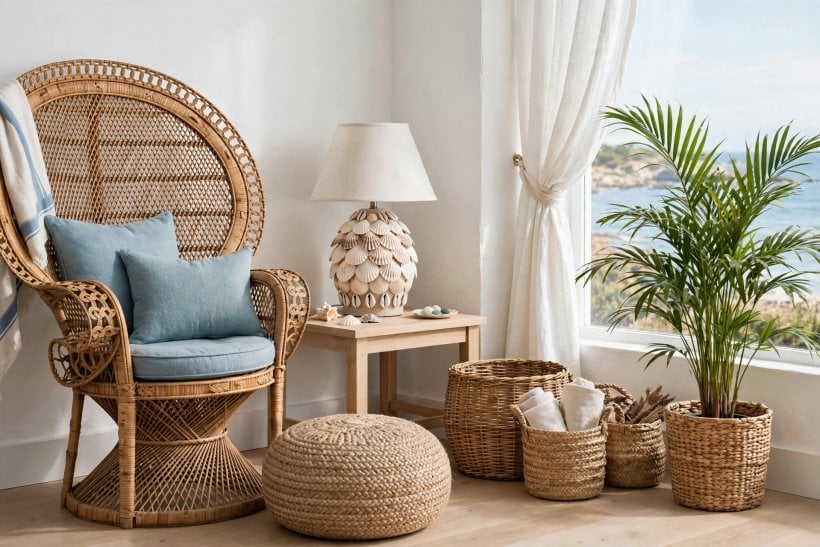
Coastal furniture behaves like good beach kit: comfortable for hours, indifferent to damp and sand, and light enough to move when the room’s use changes. If a piece needs coasters, apologies or special pleading, it belongs in another style’s house.
23. Choose a Slipcovered Sofa as the Anchor
Loose covers in washable linen-look fabric are the style’s founding piece: pale without anxiety, because the cover goes in the wash, not the bin.
24. Keep Silhouettes Low and Leggy
Visible legs and air beneath the furniture keep pale rooms from feeling stuffed. A skirted, floor-hugging sofa in white reads as a mattress showroom; raised pieces read as breeze.
25. Add Chairs That Swivel Toward Talk or View
One or two light armchairs that can turn — to the window in the morning, to the fire or screen at night — serve the room’s two lives without a furniture move.
26. Prefer Woven Seats Where You Can
Rattan, cane and woven rope chairs are light to move, comfortable in heat, and carry the texture programme for free. Keep them out of direct fierce sun to protect the weave.
27. Let the Coffee Table Be a Trunk, Tray or Ottoman
A lidded trunk stores the throws, a big tray on an ottoman serves drinks and feet alike. Hard-edged glass tables fight the style’s ease; soft or storied centres serve it.
28. Use Benches and Stools as Floating Seats
A backless bench under the window, two stools by the hearth: spare seating that doubles as side tables and never blocks the light’s path across the room.
29. Choose Storage That Hides the Modern Room
Remotes, chargers, games, the vacuum’s hose. A pale painted cabinet or a lidded basket fleet swallows it all, because nothing breaks coastal calm like visible clutter.
30. Keep One Piece With a Past
A weathered table, a chair from a grandparent, boards with paint worn by hands. The style honours age and salt; a room of all-new pale furniture reads as a showroom, not a shore.
31. Scale Down Before You Style Down
In small rooms — and most are smaller than the photographs — one generous sofa and two light chairs beat a suite of matched pieces every time. The small-room discipline in small living room ideas applies in full.
32. Let Dining Happen Here Without a Dining Suite
A drop-leaf table or a bench-and-table corner in the room’s light edge serves summer meals better than a formal set the room must host all year.
33. Test Every Seat With Wet Swimwear in Mind
The honest coastal test: could a teenager in damp shorts sit here without a family incident? Fabrics and finishes that pass get chosen; the rest get admired in shops.
5. Texture: The Style’s Real Decorating
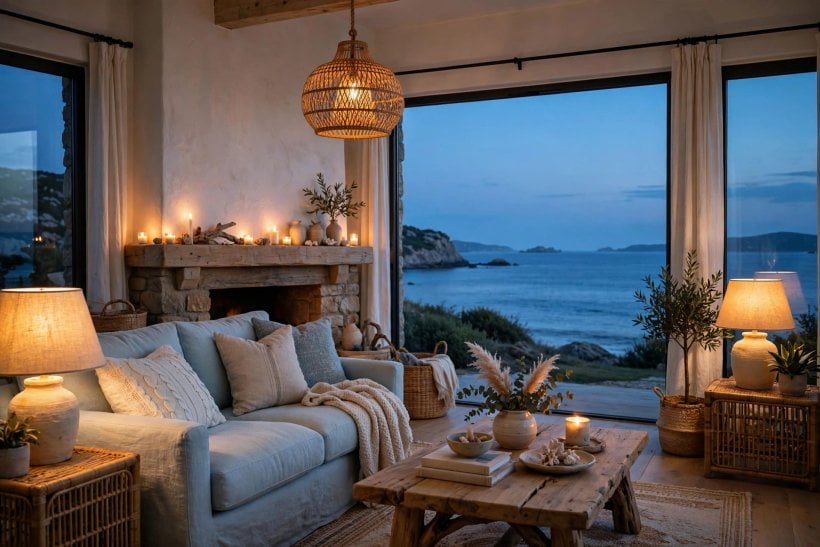
In a pale room, texture is not the garnish; it is the meal. Colour does so little work here that the eye lives on surfaces instead — weave, grain, nap, slub. Decorate with your hands as much as your eyes, a lesson beachy interior design in tiny houses teaches at the smallest scale.
34. Layer Linen in Three Weights
Sheer at the window, mid-weight on cushions, heavy slub on the sofa. One fibre in three weights gives a pale scheme more depth than three colours would.
35. Bring Rattan In at Two Scales
A chair’s weave and a basket’s chunkier braid: the same family at two scales rhymes across the room and stops the texture feeling like a single repeated note.
36. Use Rope Once, Honestly
A lamp base, a mirror frame or a stair rail detail — one rope element is a nod; five is a theme park. Choose the best one and let it stand alone.
37. Add Raw, Unfinished Wood Somewhere
A beam, a stool, a bowl. Unfinished timber among painted surfaces is the palette’s anchor to the real shore, where nothing is lacquered.
38. Choose Cushions by Hand, Not by Eye
If it does not feel good against a cheek, it does not belong on a coastal sofa. Nubbly weaves, washed cotton and linen pass; shiny synthetics announce themselves instantly in sea light.
39. Let the Rug Carry the Boldest Texture
Jute, sisal or a chunky wool weave underfoot gives the room its ground note. Flat-weave and washable where sand and dogs are real; save the deep pile for bedrooms.
40. Hang One Piece of Woven Wall Texture
A woven hanging, a framed piece of sailcloth, baskets on a wall. Pale walls need one large soft interruption more than they need a gallery of small pictures.
41. Keep Ceramics Matte and Handmade-Looking
Glossy perfection jars in this style. Matte glazes, visible throwing lines and slightly irregular shapes sit naturally among linen and driftwood tones.
42. Mix Glass Like Water: Clear, Green, Blue
A few pieces of sea-glass-toned glassware catch light the way the palette intends — as water, not as ornament collections. Three bottles on a sill beat a cabinet of them.
43. Let Books Contribute Their Cloth and Paper
Stacks of real books with pale spines are texture, colour and honesty in one. A room people actually read in always looks more coastal than a styled one.
44. Finish With One Soft Animal Fibre
A wool throw over the sofa arm warms the scheme’s temperature in every sense and keeps the natural-fibre story unbroken from floor to shoulder.
Natural fibres also ask a small, honest maintenance rhythm, and planning for it is part of choosing them. Linen covers wash and soften for years; rotate cushions so the sun takes its share evenly rather than bleaching one arm of the sofa pale; brush jute and sisal rather than soaking them; and let woven pieces rest out of the fiercest midday sun, which dries fibres the way it dries everything on a real shore. None of this is work in the upholstery sense — it is the gentle housekeeping of things that age visibly and well, and it is precisely why the style forgives family life: every material in the room is expected to weather, so nothing has to be protected from being used.
6. Floors, Rugs and Windows
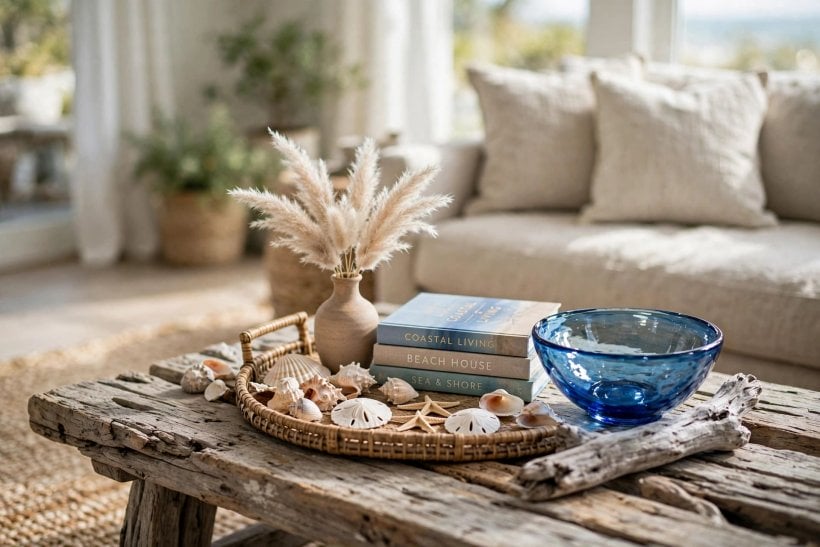
The room’s largest surfaces decide its temperature. Floors should feel like decking and piers — pale, matte, bare-foot friendly — and windows should be treated as the room’s largest artwork: the weather, framed.
45. Keep Floors Pale, Matte and Barefoot-Friendly
Limed boards, pale painted floorboards or light matt tile. Gloss and dark stain both fight the style; the floor should reflect light upward, softly, all day.
46. Paint Tired Floorboards Rather Than Replacing Them
A pale floor paint over worn boards is the coastal classic and the cheapest transformation in this whole list. It forgives, brightens and unifies odd rooms instantly.
47. Size the Rug to the Conversation, Not the Room
Front legs of sofa and chairs on the rug, always. A floating rug island in a pale scheme looks like a raft; anchoring the seating makes the group read as one calm place.
48. Choose Flat-Weave Where Life Is Sandy
Jute and sisal shed sand instead of storing it and forgive wet feet entirely. In holiday-rental or dog-heavy homes they are not a compromise; they are the correct answer.
49. Layer a Small Patterned Rug Over the Plain One
A faded kilim or striped cotton rug over the jute adds the scheme’s one pattern moment and can go in the wash — layering is how pale rooms gain interest without gaining colour noise.
50. Frame Windows Simply and Paint Them Pale
Plain architraves, the wall colour or a shade lighter. The window’s job is to disappear into the light, leaving the view as the only picture that matters.
51. Hang Sheers From as High as Possible
A sheer linen curtain hung near the ceiling and puddling slightly makes modest windows read tall and lets in light while keeping privacy — the coast’s own compromise.
52. Use Shutters or Blinds Where Sun Is Fierce
Painted shutters earn their keep in hot climates: shade at noon, air still moving, and striped light across the floor that no accessory could imitate.
53. Keep Sills Almost Empty
One plant, one piece of glass, nothing else. A crowded sill chops the light and the view into fragments; an empty one lets the room breathe at its edges.
54. Let Doors Match the Room’s Calm
Paint internal doors the wall colour or a soft sand so they stop interrupting the scheme. The coastal room’s surfaces should flow the way water does — without hard stops.
55. Add a Washable Runner at the Threshold
The strip between door and sofa takes the sand, the dog and the shopping. A washable pale runner there protects everything behind it and states the room’s rules kindly.
The same surfaces carry the room through winter, which is the coastal scheme’s quiet examination. When the light shortens, the pale room does not need redecorating; it needs warming at the edges — the wool throw promoted from arm to lap, one deeper cushion colour drawn from the scheme’s own accent, lamplight lowered and multiplied so the room’s evening face (§2) does the work the windows did at noon. A style that only works in July is a holiday let. The test of this one is a wet Tuesday in November, and floors, rugs and windows chosen as above pass it: barefoot becomes slippered, bright becomes glowing, and the room keeps its promise in the other half of the year.
7. Styling: The Cliché Edit
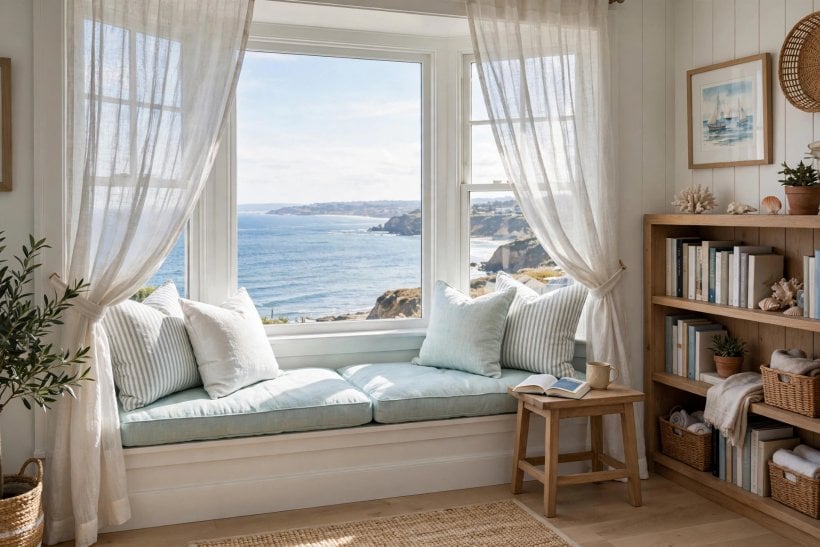
Every coastal room is styled twice: once by adding, once by removing. The second pass is the one that separates the calm rooms from the gift shops, and it is free. Small rooms feel the benefit most, as decorating a tiny living room shows: editing is the smallest room’s largest tool.
56. Ban Words From the Walls
Signs that say beach, relax or live-laugh-anything date a room instantly and say what the room should be showing. If the feeling needs a label, the styling has not finished.
57. Limit Shells to One Honest Grouping
A bowl of shells the family actually collected is a memoir; shells glued, scattered and purchased by the bag is a theme. Keep the memoir, retire the rest.
58. Treat Rope, Anchors and Oars as a Quota of One
Any single nautical object can be charming and personal. The second one starts a collection; the third starts a restaurant. Choose your one with love.
59. Display Art That Is About Light, Not Boats
Seascapes in pale frames can work, but so can abstracts, maps of real family places, and photographs of weather. Art should serve the room’s calm, not its label.
60. Style Shelves With Air Between Objects
Groups of three, then space. Coastal shelves are half empty by design — the emptiness is the style’s signature and costs nothing at all.
61. Keep the Coffee Table Book Stack Low
Two or three real books, a small bowl, room for cups. A table styled to the edges is a table nobody can use, and unused rooms lose their ease within a week.
62. Let One Plant Be Large
A single generous palm or fig in a woven basket does more for the room than six small pots scattered about. Scale is the difference between styling and clutter.
63. Hide the Screen’s Dominance
A television on a pale wall is a black hole in the scheme. Frame it, flank it with shelving, or accept it honestly at low height among the furniture — but plan its presence rather than enduring it.
64. Scent the Room Like the Coast, Lightly
Open windows first; a beeswax candle second. Air fresheners with seaside names work against everything the room is trying to be.
65. Photograph the Room and Remove One Thing
The camera sees clutter the eye forgives. Take the picture, remove the object that explains itself least, and live with the gap a week before replacing anything.
8. Small Coastal Rooms and Tiny Houses
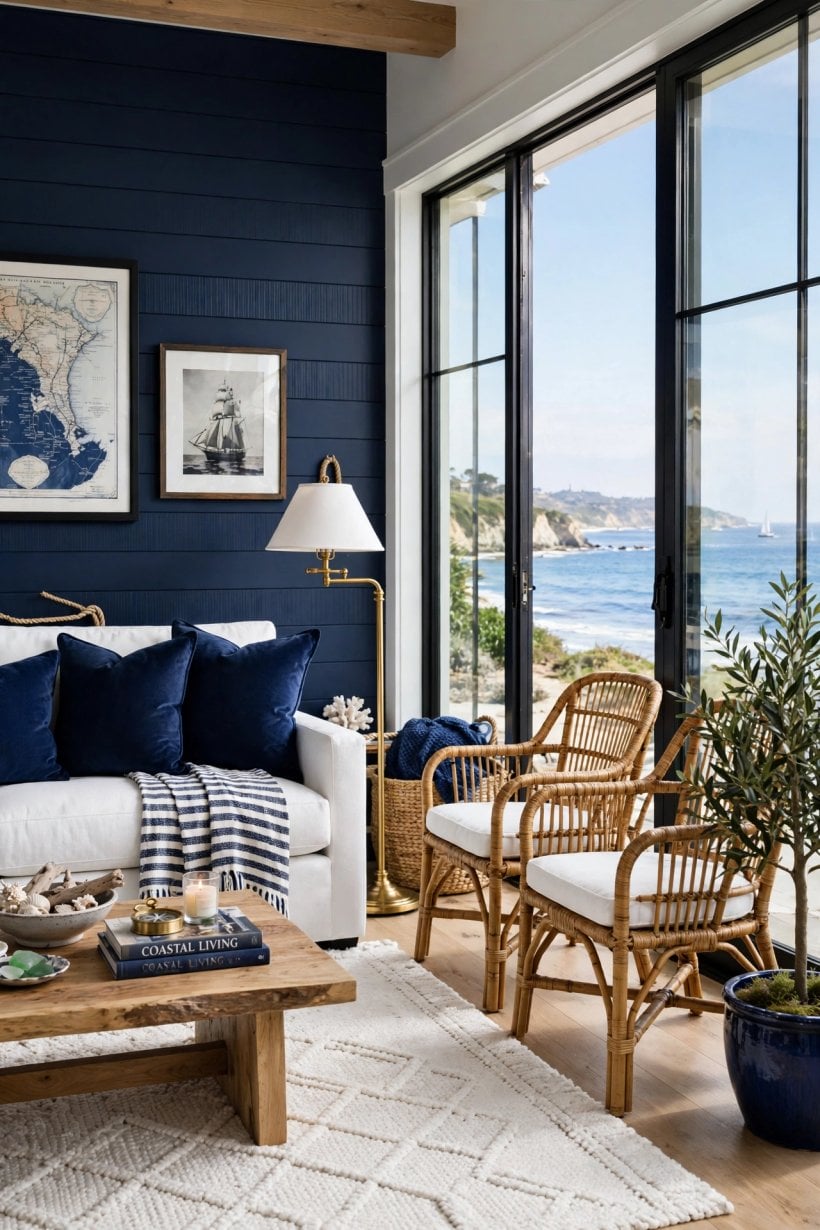
The style was practically invented for small rooms: pale, light, washable and uncluttered is exactly what a compact space needs. The tiny-house treatment in tiny living room ideas and this lane agree on almost everything.
66. Let One Sofa Do the Sitting Room’s Whole Job
In a small room, a single deep sofa against the long wall plus one light chair outperforms any suite. Depth where bodies land; lightness everywhere else.
67. Use the Window Wall as the Room’s Art
Skip the gallery wall entirely in a compact coastal room. The window is the picture; frame it, clear it, and let the scheme’s calm do the decorating.
68. Choose a Glass or Pale-Topped Table
Where floor space shows through furniture, the room reads bigger. A pale wood or glass top keeps the rug visible and the scheme light on its feet.
69. Build Storage Into the Window Seat
A lidded seat under the window is the small coastal room’s best piece: seating, storage and the best seat in the house in one pale box.
70. Keep the Palette to Three Tones, Ruthlessly
White, sand, one sea colour. In a small space every extra tone is visible from everywhere, so discipline here pays double.
71. Hang the Curtain Sheers Wide of the Frame
Stacking the fabric on the wall rather than the glass makes a small window read wider and floods the room with the light the style runs on.
72. Let Furniture Earn Two Jobs Each
Stool as table, bench as shelf, ottoman as storage and seat. In the tiny version of this style, single-job furniture is the only true luxury.
73. Keep the Floor as Bare as Honesty Allows
One rug, nothing else stored at floor level. Visible floorboards are the small room’s spaciousness; every object parked on them spends it.
74. Borrow the Farmhouse Lane’s Warmth Carefully
A piece or two from farmhouse living room ideas — a worn pine table, a quilt — warms a coastal room without leaving the lane, if the palette stays pale.
75. End Every Small Coastal Room With Air
Stand at the door. If your eye lands somewhere soft and your shoulders drop, the room is done. If not, remove rather than add — it is always remove.
9. Checks and Mistakes: Before the First Purchase
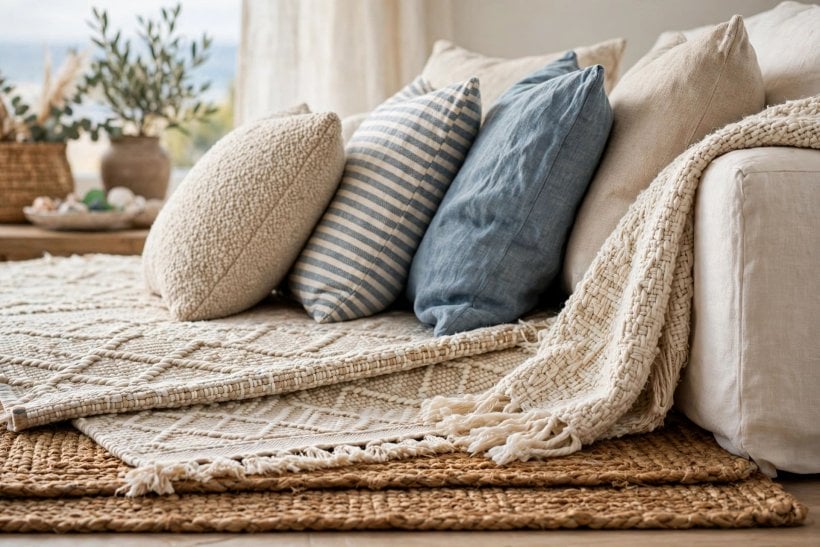
Measure the room’s light, not just its walls: a pale scheme in a dark room needs warm whites and lamplight planned from the start. Check the sofa’s covers truly come off and go back on — some “slipcovers” are a wrestling match that happens once. Sit in woven chairs before buying a set; comfort varies wildly. Test one cushion fabric against a wet towel and a muddy paw print, in that order, before committing to the pale life. The mistake that ruins more coastal rooms than any other is buying the accessories first: rope lamps, shell frames and anchor cushions purchased before the palette exists, forcing the room to serve the souvenirs. The second is cold light bulbs. The third is forgetting the evening entirely. Buy the big pale pieces first, live in the room a month, and let the sea earn its references slowly.
10. Costs and Pulling It Together
Costs in this style sort by surface area. The sofa and its washable fabric are the one genuine investment — the largest object, the hardest wear, the piece the whole room leans on. Paint is the transformation bargain: walls, ceiling and tired floorboards in pale tones change the room’s light for the price of a weekend. Texture is mid-priced and patient work — linen, jute and rattan reward second-hand hunting and slow collecting far more than a single showroom order. Accessories should cost the least and arrive last, or the room inverts its budget and its calm. Pull the room together in order: light plan, palette decision, big pale furniture, floor and rug, texture layers, and only then — after a month of living — the single honest objects that make it yours. Do that, and the room stops being a style you bought and becomes what the coast actually is: the easiest place you know.
Final Considerations
A coastal living room succeeds when it makes the whole house feel like the good end of the day: lighter, slower, kinder to bare feet and wet dogs. Keep the palette pale and warm, the furniture loose and washable, the texture natural and the souvenirs rationed, and the style will hold for years without dating — because the sea it copies has never once gone out of fashion. For the room type in full, return to the living room ideas pillar; for its smallest expression, the tiny-house rooms linked through this post carry the same calm at a fraction of the size.



0 Comments