

Some houseplants ask for a shelf and a watering can. Ant plants ask for something stranger: in the wild, they offer rent. These epiphytes grow hollow, chambered bodies — swollen stems, bulbous bases, pouch-like leaves — that ants move into, and in exchange the ants defend the plant and feed it with their debris. It is one of nature’s neatest tenancy agreements, and it works surprisingly well on a windowsill, where the plant keeps its side of the bargain beautifully even when no ants ever sign the lease.
This is a light guide to ant plants (myrmecophytes) as houseplants: what the partnership actually is, the nine plants collectors grow most, and the general care that keeps them happy indoors. It is general guidance, not botany — for the buildings these plants might one day decorate, greenhouse ideas is the natural next read.
1. Ant Plants at a Glance
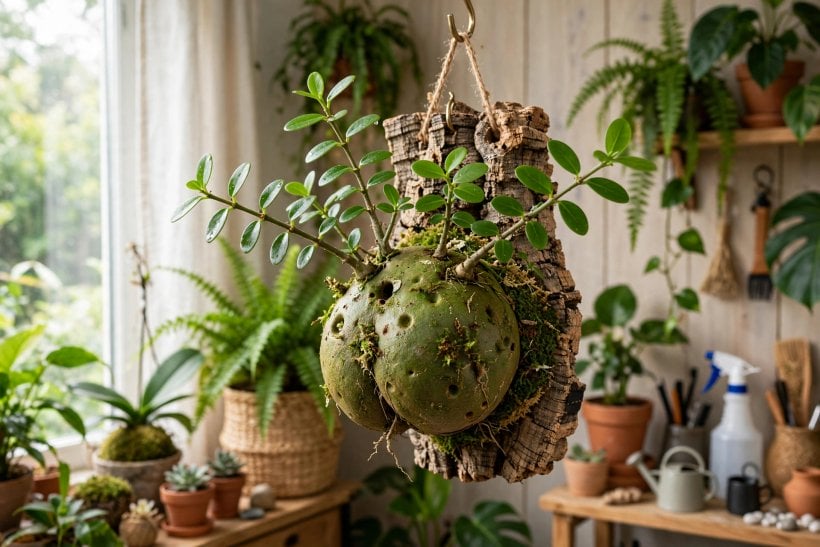
The central entity is the ant plant (myrmecophyte): a plant that has evolved hollow structures — called domatia — which ants inhabit in the wild. Its attributes are its epiphytic habit (growing on trees, not in soil), its chambered body, its partnership with ants, and its indoor care needs: bright indirect light, warmth, humidity, moving air and patience. It is judged by one test indoors: given treetop conditions in miniature, it grows slowly, strangely and entirely happily without a single tenant.
| Question | Short answer |
|---|---|
| Do I need ants to grow one? | No. Indoors, the plants grow perfectly well untenanted; the partnership is a wild story, not a care requirement. |
| Are they difficult houseplants? | Not difficult, but particular: warmth, humidity and bright indirect light matter more than feeding or fussing. |
| Will they attract ants into my house? | No more than any houseplant. The hollow chambers invite wild colonies in the tropics; they do not summon ants indoors. |
| Are they fast growers? | No — slow, sculptural growers. That slowness is most of their charm and all of their price. |
2. The Partnership: What a Myrmecophyte Actually Is
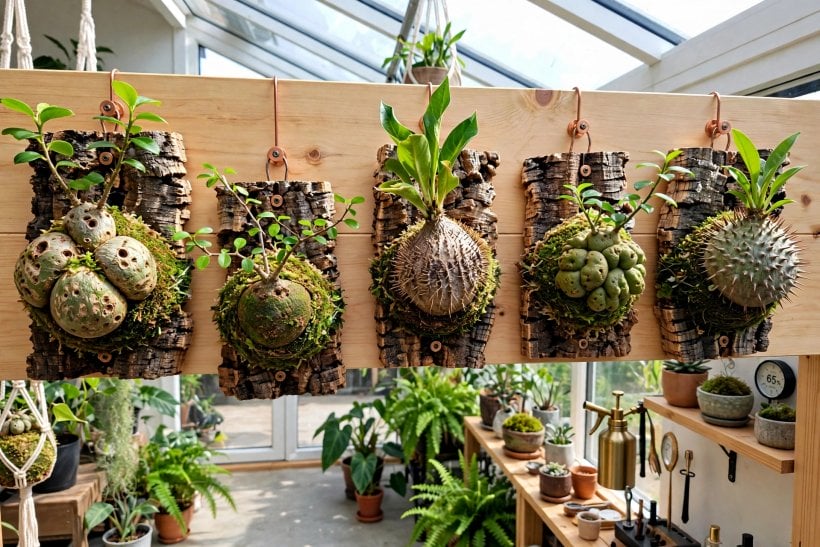
In the tropical treetops where these plants originate, life is bright, wet and poor: no soil, little nutrition, and herbivores everywhere. The ant plant’s answer was architecture. Its body swells into a hollow, many-chambered structure; a colony of ants moves in; and the arrangement that follows is a fair trade in both directions. The plant gets a standing army that stings and bites anything that tries to eat it, plus a slow delivery of nutrients from the colony’s waste and stored debris, absorbed through the chamber walls. The ants get a dry, defensible home that grows. Botanists file the lodgings under domatia and the plants under myrmecophytes — ant plants — and the relationship under mutualism: both sides better off, neither side able to say exactly when the tenancy began.
Three habits follow from that address, and they explain every care rule in this post. These are epiphytes: they perch on branches, rooted in bark crevices and leaf litter, not soil. They live in bright, humid, moving air. And they are fed, in the wild, largely by their tenants — which is why they respond to the light, frequent feeding described in §5 in place of ants they do not have.
3. The Nine Ant Plants Worth Growing
Hundreds of species qualify as myrmecophytes; the nine below are the ones that circulate among indoor growers, chosen for availability, character and a reasonable fit with home conditions. Names matter when buying — these plants are sold by their Latin names far more than by common ones.
1. Myrmecodia — The Ant Plant Itself
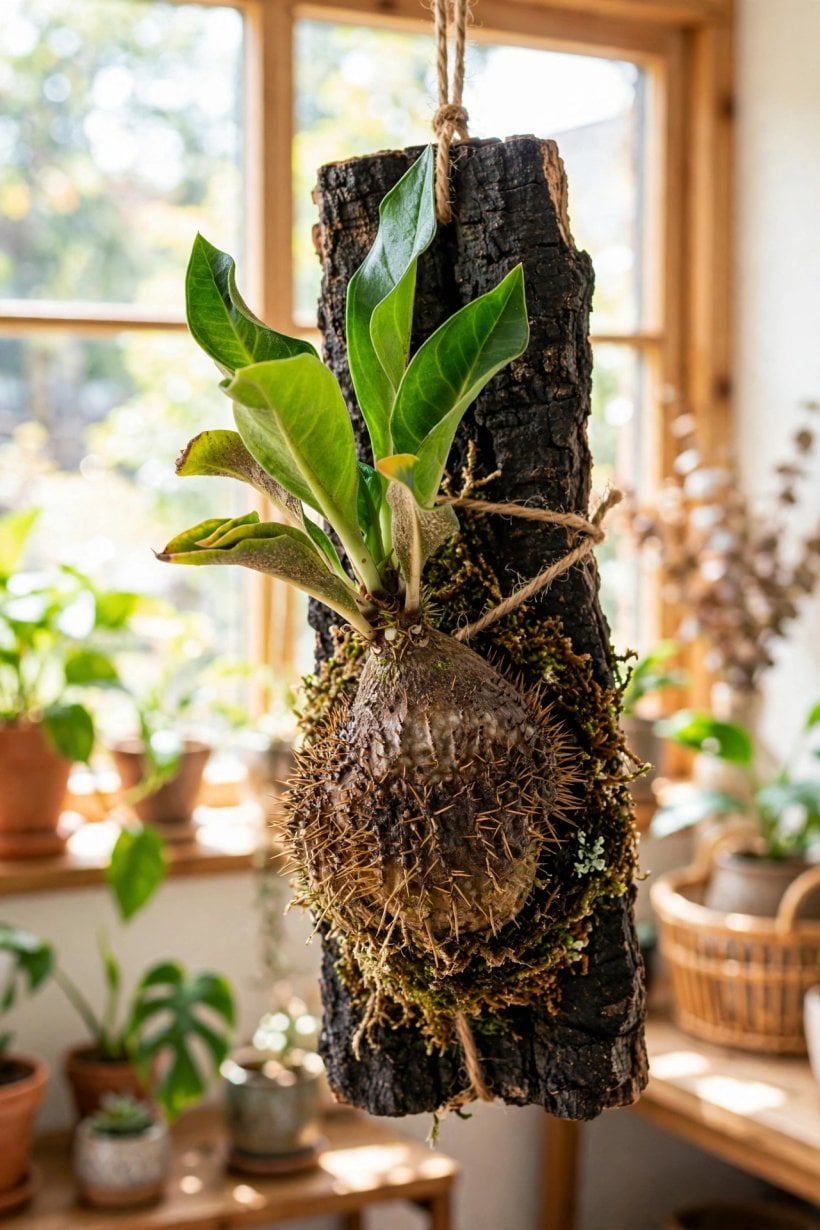
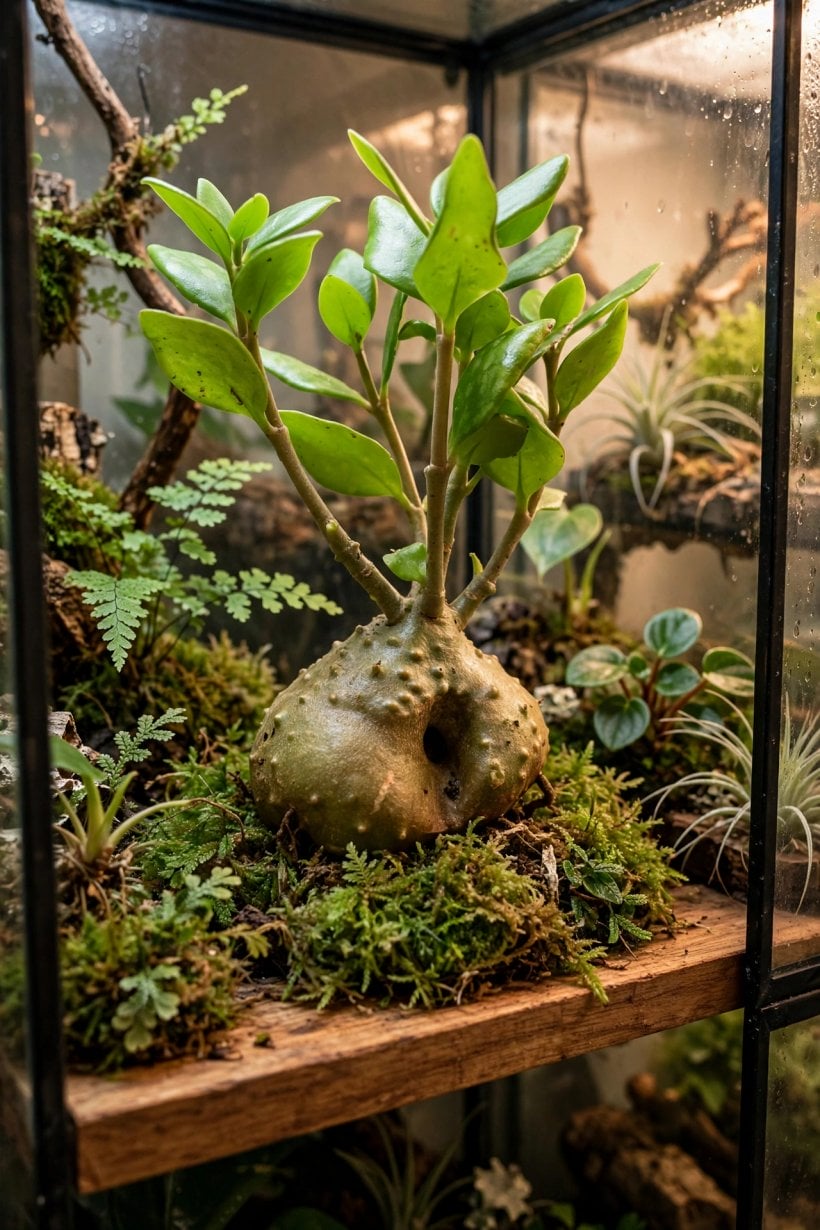
The genus that gave the group its reputation: a swollen, spiny, chambered caudex with a small crown of leaves, like a green hedgehog designed by an architect. The classic collector’s plant and the one in most photographs of the group.
2. Hydnophyta — The Maze Plant
Myrmecodia’s rounded cousin, its smooth swollen base hollowed into a labyrinth of tunnels — cut one open (growers do, on dead specimens) and the floor plan is genuinely maze-like. A little softer in outline, a little easier in temper.
3. Dischidia major — The Rattlesnake Plant
A trailing epiphyte whose trick is in its leaves: some develop into hollow pouches that ants occupy in the wild. Grown hanging or climbing, it is the most conventionally pretty plant on this list.
4. Dischidia vidalii — The Kangaroo Pouch
Another pouch-leaved trailer, grown for its clusters of small round leaves and its occasional pouch leaves, which read as tiny green purses. Happy in a hanging pot with its stems allowed to travel.
5. Hoya imbricata — The Shingle Plant
A hoya that grows flat against tree trunks, its round leaves overlapping like shingles, sheltering ants beneath the leafy roof. Indoors it wants a plank or mount to press itself against — the group’s most architectural grower.
6. Lecanopteris — The Ant Fern
Ferns join the arrangement too: lecanopteris species grow thick, fleshy rhizomes — like green antlers or spare ribs — that hollow with age into ant housing, with fronds rising above. Strange, sculptural, and a fern collector’s trophy.
7. Solanopteris — The Potato Fern
Named for the little round tubers strung along its creeping stems, which hollow and house ants in the wild. Easier-going than most on this list and content in a hanging basket where its oddity can be appreciated at eye level.
8. Tillandsia bulbosa — The Bulbous Air Plant
The most available plant here by far: an air plant with a swollen, onion-like base — hollow, and ant-tenanted in the wild — and twisting tentacle leaves. The beginner’s ant plant, sold everywhere air plants are sold.
9. Myrmecophila — The Ant Orchid
Orchids keep lodgers too: this genus (long filed under Schomburgkia) grows tall hollow pseudobulbs that ants colonise, and rewards bright conditions with dramatic flower spikes. The largest plant on the list and the sunniest in its tastes.
4. Light, Warmth and Air: The Treetop Indoors
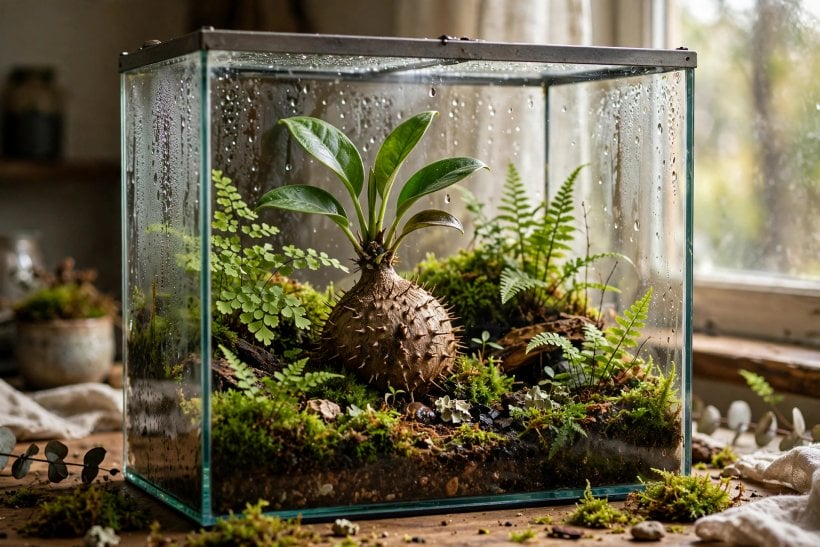
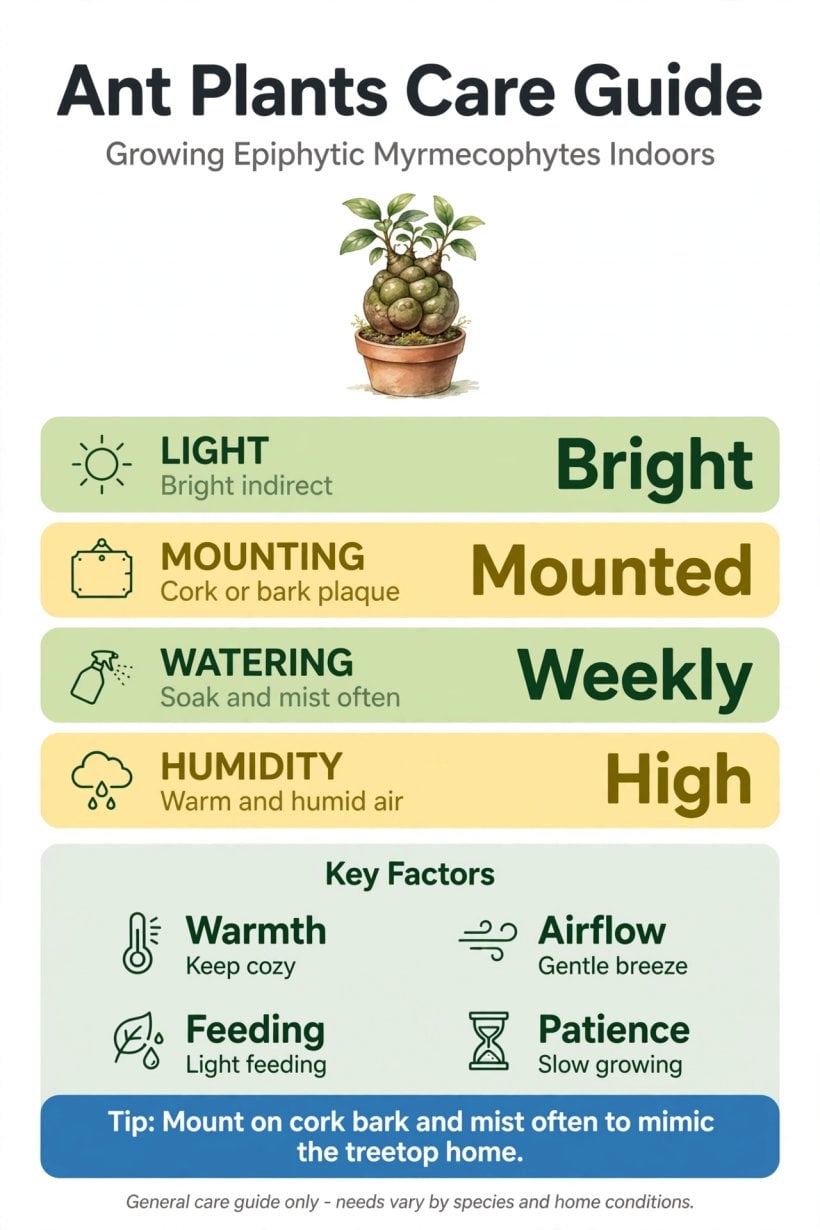
Every care rule for these plants is a translation of one address — a tropical branch — into a room. Bright indirect light is the first line of the address: the strength of light near a bright window, out of the harshest midday beam, which scorches leaves that in the wild are dappled by canopy. Warmth is the second: these are plants of the warm tropics, happiest in the same temperatures people find comfortable and sulking in cold, draughty spots, so keep them away from winter windowsills that turn chilly at night and from heating vents that blast dry air. Airflow is the third and the one indoor growers forget: treetops are never still, and a gentle movement of air — an open window’s drift, a room’s natural circulation — keeps mounted plants and their moss healthy where stagnant air invites rot. A bright bathroom often suits them better than a grander, darker room, because it adds the fourth line of the address, humidity, for free. Where humidity is low, the usual answers apply — group the plants, set them near (not on) a pebble tray, mist often — all general houseplant craft of the kind container garden ideas also leans on.
5. Watering and Feeding Without Tenants
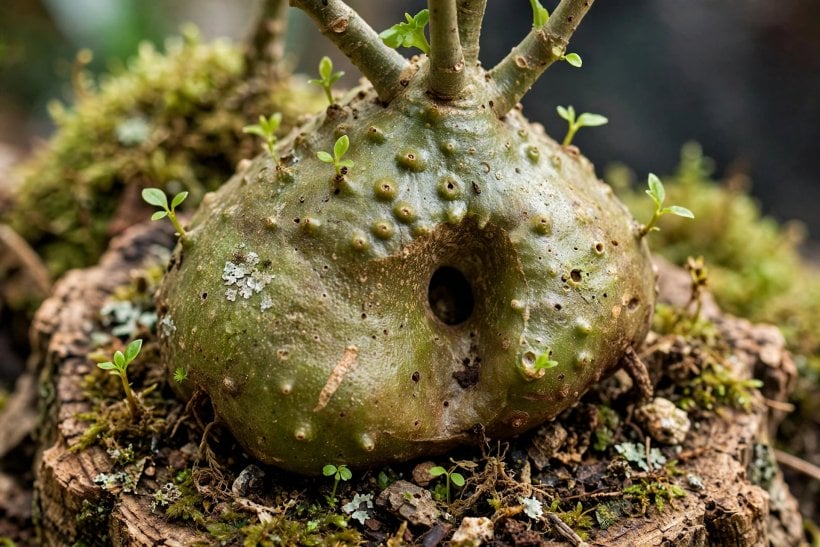
Epiphytes drink like birds: often, briefly, and never sitting in it. The usual rhythm for mounted and bark-potted ant plants is a thorough soak or drench, then drainage until the roots and caudex are merely damp, repeated roughly weekly and adjusted to the season — more in bright growing weather, less in the dim months. Misting between waterings keeps humidity up around the foliage and is the habit our infographic singles out, because a mounted plant’s whole world dries faster than a potted one’s. Rainwater or soft water suits them best where it is available, since they evolved drinking what fell from the sky; ordinary tap water, rested overnight, serves most growers perfectly well.
Feeding is where the missing tenants are replaced. Wild plants eat, in effect, ant deliveries; indoor ones get a very dilute feed, given little and often during the growing season, at a fraction of the strength used for hungry houseplants. Orchid and general epiphyte feeds are the usual choice, kept weak on purpose — these are plants adapted to poverty, and generosity with fertiliser burns roots and softens growth. If in doubt, feed less: a hungry ant plant merely grows slowly, while an overfed one can rot at the base, and slow is always recoverable.
6. Mounting and Display
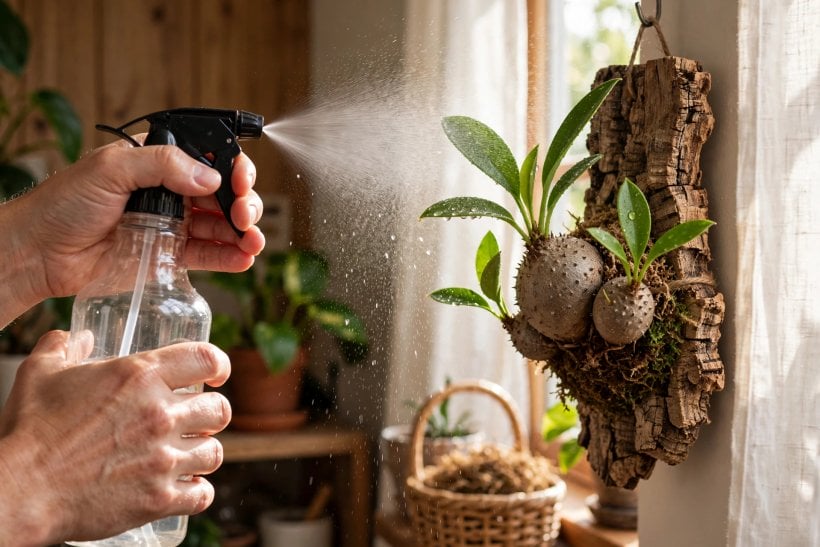
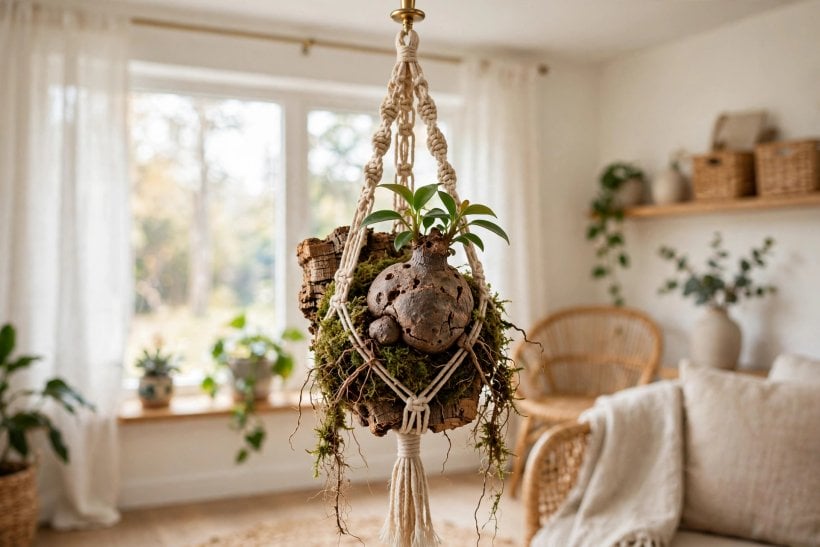
The natural home of most of these plants is the side of a tree, and the mount is the houseplant version: a slab of cork bark or a bark plaque, the plant tied gently against it with a pad of sphagnum moss at its roots, hung or stood where the light is. Mounting is not showmanship — it keeps air around the caudex, drains perfectly, and lets the plant take the sculptural form it evolved. Cork is the classic material and the one the care guide in this post illustrates: light, rot-resistant, and kind to roots. Plants that trail — the dischidias, the potato fern — take equally well to hanging pots in a very open, barky mix; the hoya wants a flat mount to shingle against; the caudex plants (myrmecodia, hydnophyta) are the mount’s natural sculptures and the usual centrepieces.
Display them as the slow sculptures they are: one plant per mount, hung at eye level where the chambers and spines can be studied, grouped with other epiphytes for shared humidity. The climbers among this post’s plants share their mounting logic with the wider family of climbing plants grown indoors, and growers scaling up to a dedicated glass case or sunroom shelf will find the same rules hold at any size: bright, warm, humid, moving air.
7. Living With the Ants Question
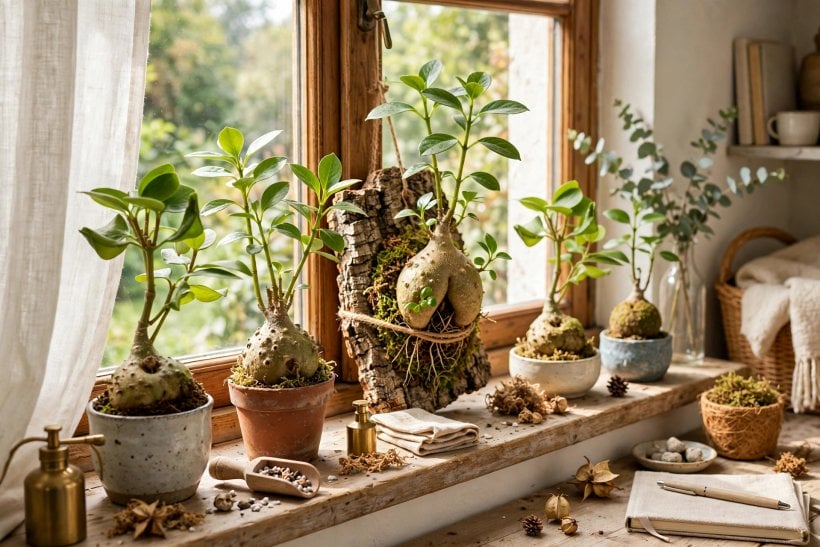
The question every buyer asks first deserves a straight section. Will the plant attract ants into the house? No — the chambers are housing, not bait. Wild colonies move in because tropical ants are constantly house-hunting and a hollow plant is prime real estate; the plant produces no lure that summons ants across a living room, and an indoor plant in a temperate home simply stays vacant, the way a bird box in a quiet garden may. Nor do the plants need tenants to thrive: growers have raised them untenanted for decades, and the light feeding in §5 stands in for the colony’s deliveries.
Two honest footnotes. First, houseplants of any kind can host the usual indoor pests — the tiny flies of damp compost being the commonest, whose habits are covered in getting rid of tiny flies in house plants — and ant plants in open, airy mounts are if anything less prone to them than soil-heavy pots. Second, in genuinely tropical homes with open windows, a wild scout ant may inspect any plant in the house; that is geography, not the plant’s invitation, and it is managed like any other ant visit. The tenancy, in short, is a wild story the plant carries with it — indoors it simply becomes the most interesting landlord on the shelf, happily between tenants for life.
8. Ant Plant Questions, Answered
Are ant plants safe around children and pets?
They are grown as ornamental houseplants and are not known as a common poisoning risk, but they are not food plants either: the sensible house rule applies — admire, do not eat — and curious pets are best kept from chewing any houseplant. Check the individual species before buying if your household chews first and asks later.
How big do they get indoors?
Slowly is the honest answer. The caudex plants build their swollen bases over years, staying shelf-sized for a long time; trailers extend at their own pace and can be trimmed. Nobody’s ant plant has ever taken over a room — impatience, not pruning, is the grower’s usual task. Supplementary light of the kind LED grow lights for plants describes can steady growth in dim homes and dim seasons.
Can I grow one from seed?
Yes, and many collectors do — the caudex species are raised from seed into their first little chambers with real satisfaction — but it is the slow road. Buying a young plant buys years. Either way the care in this post is the whole recipe.
Why is mine not growing?
Usually the treetop is missing a line: light too dim, air too still, nights too cold, or water sitting where it should drain. Check those four against §4 and §5 before reaching for feed. A healthy ant plant at rest is still alive; these plants pause, and punishing a pause with water is the classic error.
Do they flower indoors?
Several do, modestly — small flowers on the caudex species, showier spikes on the ant orchid — but they are grown for their bodies, not their blooms. Treat any flower as a dividend, never as the point.
Where do I buy one?
Specialist epiphyte and rare-houseplant growers are the reliable source, and the Latin names in §3 are the search terms that find them. Buy from a named-plant listing rather than a mystery box: with slow plants, correct identification is half the value.
9. Checks and Mistakes: Before You Bring One Home
Check the plant at purchase the way you would check fruit: the caudex or base should feel firm, not soft or hollow-collapsed; roots, where visible, pale and alive-looking; no black, mushy patches at the base, which speak of rot already in residence. Ask how it has been grown — mounted or potted, and in what light — and change its conditions gradually rather than all on the first evening. The mistakes that follow beginners home are the usual epiphyte three: potting the plant deep in ordinary compost, where the caudex stays wet and rots; placing it in a dim corner because it looks sculptural there, and starving it politely; and watering to a schedule instead of to the plant, soaking a plant that has not dried and parching one that has. The partnership may be exotic; the failures are the familiar ones, wearing a stranger plant.
10. Costs and Pulling It Together
Costs sort by rarity and size rather than by anything the plant does. The widely grown air plant is inexpensive and everywhere; young caudex plants from specialist growers sit in the middle band, priced by years of slow growth; large, old, sculptural specimens are genuinely costly, because nobody can hurry a decade. Mounts, moss and bark mix are small money and mostly bought once. Running costs are negligible — a weak feed, water, a bright spot — which makes these plants the rare collectors’ hobby whose expense is patience rather than upkeep. Pull it together in order: choose the plant whose form you cannot stop looking at, give it the treetop’s four lines — bright indirect light, warmth, humidity, moving air — mount or pot it openly, feed it like something adapted to poverty, and then practise the virtue the care guide ends on: patience. The plant will do the rest at its own geological pace, and one day you will notice the shelf’s strangest tenant has quietly become its favourite.
Final Considerations
Ant plants are grown for wonder, and they deliver it reliably: a plant that built rooms for tenants it feeds and is fed by, sitting calmly on a shelf, asking only for bright air and time. Keep the care general and gentle, the expectations slow, and the Latin names straight, and a myrmecophyte will repay you the way it repays its ants — with architecture. For the wilder end of the same idea — gardens designed for their residents — wildlife friendly garden planning scales the partnership up to a whole plot.

0 Comments